Xinjiang to send 5,000 bilingual teachers to kindergartens each year

Starting this fall, Xinjiang will send 5,000 people each year to the south of the region to work as bilingual teachers for local preschoolers, said local authorities on Saturday.

According to the education department of northwest China’s Xinjiang Uygur Autonomous Region, the 5,000 people include 3,000 civil servants and 2,000 teachers, who will work for a year in Kashgar, Hotan, Aksu or the Kirgiz Autonomous Prefecture of Kizilsu.

Kashgar, Hotan, Aksu and Kizilsu have had a shortage of bilingual teachers in kindergartens, and many teachers cannot teach Mandarin Chinese.

Xinjiang plans to open or expand 4,387 kindergartens to serve as bilingual kindergartens in rural areas, including 3,223 in southern areas, in order to extend free three-year bilingual preschool education to the entire region.

German questions

Occasionally I am invited to appear on German television. I usually agree, as I find I learn more about current German attitudes from the bias or drift of the questions.

This week I was surprised that many of the questions still seemed to be rooted in the idea that the UK was somehow going to remain part of their EU plans. In preparation I was asked what it was I disliked about the EU. Realising this would lead to a line of questions that either led them to tell me I had interpreted the EU wrongly, or to propositions that if we stayed in these disagreeable features could be toned down or changed, I gave my answer. “Everything” I said. I wanted to move us on to the more productive issues of what relationship will an independent UK have with Germany and the EU.

Instead they pressed the issue. What in particular was annoying, they asked. I clarified by saying it was the EU’s ability to make our laws and tell us what to do that we rejected. There were various individual cases that the UK was particularly unhappy about, but it was the general power, the ability to force more bad laws and policies on us in the future that led to the decision to leave. They seemed to think if there was some fudge or fix on migration the UK would be happy. They still have not grasped the meaning or significance of the winning phrase of the campaign, we want to take back control.

It made me think how absurd this whole so called negotiation the EU wants us to have about leaving is. The Treaty gives us an absolute right to leave. It imposes no additional bill or other requirements. All we had to do was send a letter and give them two years notice, which we have done. That notice will cost us more than £20bn and we accept that. It is not an invitation to negotiate over which of their laws and financial demands we need to carry on with in the future.

IN the interview proper the German presenter had got it, and allowed me to make clear that as far as the UK is concerned we are leaving. The UK is very willing to talk about our future relationship, and has made a generous offer of continuing free trade without tariffs. It is up to the EU to decide whether they want that or wish instead to impose what barriers they can on their trade with us under WTO rules. Clearly this all comes as news to many in Germany, who still see us a fellow paymaster of the EU under its control.

China to push through domestic law on Antarctic activities

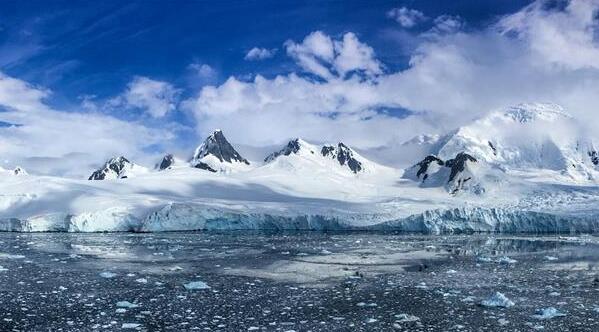
The South Pole has become a popular destination for Chinese tourists in recent years. During the 2016-2017 travel season, China exceeded Australia to become the second largest origin of tourists in Antarctic, following the United States. [Photo/Shanghai Daily] 

With increasing numbers of Chinese tourists heading for the South Pole, China is pushing through domestic legislation on Antarctic activities to regulate related human activities and better protect the environment there, officials said on Thursday.

The domestic legislation is in urgent need and needs to be speed up, said Qin Weijia, director of the Chinese Arctic and Antarctic Administration, during the 2017 annual meeting of the Asian Forum for Polar Sciences, which was held in Shanghai.

During the 2016-2017 travel season, China exceeded Australia to become the second largest origin of tourists to Antarctica, following the United States. The travel season is usually between November and March.

A total of 5,286 Chinese tourists traveled to the South Pole during that period, accounting for 12 percent of the total number of tourists, according to the International Association of Antarctic Tour Operators.

Qin added that the total number of expedition members from China’s state-organized Antarctic expedition was only around 5,000 during the past 30 years.

He said only four of the Antarctic Treaty’s 29 consultative members do not have domestic laws regarding Antarctic regulations, and that includes China. The other three are India, Poland and Ecuador.

“With international regulations on the protection of the Antarctic getting increasingly detailed, China’s domestic legislation is in urgent need,” Qin said.

He added that the international rescue operation for trapped Russian vessel Akademik Shokalskiy in the Antarctic in 2013 triggered discussion on how to share rescue bills in such Antarctic rescues.

Qin said that domestic regulations would contribute to regulating coordination on related rescues if tourists encountered accidents on the South Pole.

“The legislation aims to both regulate activities among ordinary residents like tourists, as well as state-organized activities on the Antarctic,” Qin said.

In April, Lin Shanqing, deputy director of the State Oceanic Administration of China, also said that the national legislative body has started to pay attention to the promotion of legislation on domestic Antarctic law, Xinhua News Agency reported.

Extremely popular

Eying the booming business, travel agencies in China started offering charter cruise tours to the pole.

In November and during the Spring Festival holiday, Tongcheng, an online travel operator, organized two charter cruise trips with more than 800 tourists in total to visit the South Pole.

Taking MS Midnatsol of Hurtigruten Cruises, they visited the China Antarctic Great Wall Station, watched penguins, whales and seals, crossed Drake Passage, appreciated magnificent glaciers, and tried ice-swimming in the South Pole.

Middle-aged people and seniors were the major participants, with more than 50 percent of South Pole cruise passengers aged above 50 years of age, the travel agency said.

“Celebrating the Spring Festival in the South Pole is becoming a fresh and exciting way for Chinese to experience travel overseas, and seniors are more interested than youngsters,” said Wang Kai, vice president of Tongcheng. “Visiting the South Pole and stepping onto the pure holy land is the dream of many people.”

On the website, a 23-day tour including the South Pole, Falkland Islands, Chilean Fjords and Chile, setting off on December 15, is priced at 87,999 yuan per person for the cheapest suite. The cheapest 35-day itinerary is 132,999 yuan per person.

Some travel agencies offer high-end itineraries with experts specializing in ocean, wildlife and history hosting guides and in-depth exploration experiences on the pole.

They are priced from 189,000 yuan to 665,000 yuan per person minimum on HHtravel, a luxury travel operator affiliated with Ctrip.

The majority of luxury tourists are senior managers at companies and private entrepreneurs aged between 35 and 50 years old, HHtravel said.

Deng Shen, a 28-year-old professional traveler who has been to about 100 countries, was at the South Pole in January and February this year.

She did not rely on travel agencies and booked a cruise ticket to the South Pole online herself.

“A ticket can only be secured if you book it at least six months or one year in advance of your departure because of the South Pole trip boom among Chinese,” she said.

Deng said tourists are required not to bring any food or beverages onto the pole, and they are also told to keep a distance from wildlife.

She said she did not see uncivilized behavior on the pole, but she heard it was chaotic when charter cruise ships arrived as many people jostled to the front. She said she heard that there were also some Chinese tourists chasing penguins.

“But the South Pole is the most beautiful among all these places I have ever visited. It is heaven.”

Press Releases: Tajikistan Independence Day


Press Statement

Rex W. Tillerson

Secretary of State

Washington, DC

September 8, 2017


On behalf of the Government of the United States of America, congratulations to the people of Tajikistan as you celebrate your independence on September 9.

Since gaining independence in 1991, Tajikistan has been a strong partner to the United States in promoting regional security and stability. For 26 years, our partnership has been based on mutual respect and cooperation, especially in the areas of security, energy, and economic development. This cooperation has benefitted our two nations and the Central Asian region as a whole.

I am confident that our partnership will continue to benefit our countries and achieve success on issues of mutual interest and concern in the next year and beyond.


Press Releases: Secretary of State Tillerson Travel to the United Kingdom


Press Statement

Heather Nauert

Department Spokesperson

Washington, DC

September 8, 2017


U.S. Secretary of State Rex Tillerson will travel to London from September 13 through September 14 for UK-hosted meetings on DPRK and Libya. In London, Secretary Tillerson will meet with senior British officials, including Foreign Secretary Boris Johnson and National Security Advisor Mark Sedwill. Secretary Tillerson will discuss a range of issues with his counterparts, including the need for increased pressure to counter the threat to global security posed by the DPRK’s nuclear and missile programs. The Secretary will also participate in a ministerial on Libya with UN Special Representative of the Secretary General for Libya Ghassan Salamé.

Follow Secretary Tillerson’s travel via @StateDept on Twitter and go to the Department’s Flickr account for the latest trip photos. Stay connected at https://blogs.state.gov/engage, and keep track of all of the Secretary’s travels at https://www.state.gov/secretary/2017travel/index.htm.