- EUR 250m for modernisation of Energa’s distribution network under Juncker Plan
- EUR 730m for research and development in Poland under InnovFin financial instrument
At the Economic Forum in Krynica Zdrój the European Investment Bank (EIB) has confirmed its strong commitment to supporting the Polish economy by providing financing totalling almost EUR 1bn for strategic investments in energy and science. In line with its aim of promoting competitive and secure energy, the EIB has provided EUR 250m of financing to Energa for the upgrading and extension of its electricity distribution network in northern and central Poland. This financing, in the form of innovative hybrid bonds, is guaranteed under the European Fund for Strategic Investments (EFSI), a central element of the Juncker Commission’s Investment Plan for Europe. A further two EIB loans are providing Poland with EUR 730m for research, development and innovation activities in research institutes, universities and enterprises. The latter operations are the first to be supported by InnovFin Science, a facility with the financial backing of the European Union under Horizon 2020, its research and innovation programme.
During the signing ceremony held at the Economic Forum in Krynica Zdrój, Deputy Prime Minister Mateusz Morawiecki said: “Investments constitute one of the pillars of the government’s Responsible Development Strategy. We would like to fully utilize available financing sources both in terms of small and medium enterprises, as well as large-scale government initiatives. For the last year and a half the Ministry of Economic Development has been coordinating and monitoring the implementation of the Juncker Plan in Poland and we are very happy to observe and report its effects. Data published by the European Investment Bank shows that Poland ranks 6th among all EU countries in terms of transforming funds from this source into investments. The current contract is third in a series of contracts supporting government investment projects. The total value of the three investments – Energa, Tauron and Przewozy Regionalne – altogether amounts to PLN 5.6bn.” He added: “The EIB remains our main partner among the international financial institutions, so I am very happy to sign two new loan agreements with the Bank, which will provide financing for R&D projects, essential for economic growth. The new loans together with the previous ones granted since 2004 for Polish research, development and innovation projects amount in total to some EUR 7bn. They contribute to advancing the development of almost every scientific discipline: from quantum optics technologies to supramolecular chemistry and 3D holographic imaging.”
EIB Vice-President Vazil Hudák, responsible for the Bank’s activities in Poland, said: “Supporting competitive and secure energy is one of the EIB’s priorities, so we are glad to finance Energa’s modernisation programme, as it will improve the reliability and quality of electricity supply. The hybrid bonds under the Juncker Plan are again proving to be a successful means of innovative financing to boost investments in the energy sector in Poland.” The Vice-President added: “We are also proud to continue our backing for Polish research and innovation, as they play a key role in driving growth in Europe, ensuring its long-term competitiveness and creating high-value jobs. We aim to strengthen research, promote efficiency, foster better links between research and industry, and leverage more private investment for applied development and innovation activities in Poland and across Europe.”
Carlos Moedas, European Commissioner for Research, Science and Innovation, said: “Today’s agreement in Poland under the InnovFin Science programme is momentous. With a fresh injection of EUR 730m for research, development and innovation activities, research institutions in Poland will see huge benefits. I am also proud that the Juncker Plan is helping to upgrade and improve the electricity networks in Poland. The European Fund for Strategic Investments is already set to trigger more than EUR 225bn in investment across the EU, with 26 projects already approved in Poland. I encourage project promoters and small companies seeking financing to make the most of the support offered by the Juncker Plan.”
Daniel Obajtek, CEO of Energa SA, commented: “The hybrid bonds’ issuance is the third project implemented in cooperation with the European Investment Bank. The funds raised will be allocated to investment in the distribution segment and to the expansion and modernisation of the power grid, including the strengthening of its reliability. This is a priority investment direction for us, which will allow us to provide high quality services to our customers”.
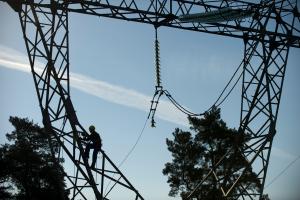
Energa will use the funds obtained from the issue of hybrid bonds to implement its priority investment programme in 2017-2019. The company estimates its total capital expenditure in this period to be in the order of EUR 814m. The innovative nature of the hybrid bond product stems from its equity-type features and partial equity recognition by rating agencies. The main objective of Energa’s programme is to increase the security of electricity supply while limiting network losses and improving the quality of service. The project will also include investments in the connection of renewable energy sources (mainly in low and medium voltage) to increase the hosting capacity of the network. Apart from these tasks, investments in smart meters and network automatisation as well as in new connections in the distribution network are also planned.
As for the support for Polish science under the new InnovFin Science – EU Finance for Innovators facility targeting scientific projects, an EIB loan of EUR 425m will finance the statutory research tasks performed by all categories of scientific and academic staff employed by Polish public universities and research institutes in the majority of scientific disciplines. The EU bank is lending a further EUR 305m for R&D project grants, which will be awarded by the National Science Centre and the National Centre for Research and Development through open calls to PhD students, post-doctoral fellows, senior scientists and research consortia. These projects will concern either basic or applied research and will be implemented in public research institutes, universities and enterprises across Poland. The main objective of this EIB financing operation is to leverage applied R&D carried out by enterprises and the innovative activities of companies, as well as to foster better links between research and industry.
Some 150 000 researchers, technicians and other research support staff work in the Polish public science sector. Both projects will be carried out in 2017 and 2018 and will not only help to maintain current employment in the R&D sector in Poland during this period but, more importantly, will open up a great number of new career opportunities, in particular for young researchers. Together with the 16 previous loans extended since 2004 to co-finance the Polish science sector, the loans signed today underpin the EIB’s long-term commitment to supporting Polish research, development and innovation programmes at various levels in a range of disciplines.
Background information:
About the European Investment Bank
The European Investment Bank (EIB) is the long-term lending institution of the European Union owned by its Member States. It makes long-term finance available for sound investment in order to contribute towards EU policy goals. Last year, the EIB provided loans amounting to EUR 4.44bn for Polish projects.
About the Investment Plan for Europe
The Investment Plan for Europe focuses on strengthening European investments to create jobs and growth. It does so by making smarter use of new and existing financial resources, removing obstacles to investment, and providing visibility and technical assistance to investment projects. On 14 September 2016, the Commission proposed extending EFSI by increasing its firepower and duration as well as reinforcing its strengths.
About InnovFin Science
InnovFin Science is one of a range of products introduced under “InnovFin – EU Finance for Innovators”, a new generation of financial instruments and advisory services launched by the European Commission and the European Investment Bank Group (EIB and EIF) under Horizon 2020, the EU research programme for 2014-20. InnovFin Science aims at supporting R&I investments by public or private entities such as research institutes, universities and research organisations, including the financing of buildings and other infrastructure directly related to R&I activity. InnovFin Science will be delivered directly by the EIB in the form of debt or equity-type operations from EUR 25m.
About Energa
ENERGA Group is one of the four largest power groups in Poland and one of the three largest electricity suppliers in Poland. Its core business entails distribution, generation and sales of electricity, heat and gas.