Abuse, exploitation and trafficking ‘stark reality’ for migrant children trying to reach Europe – UN report

12 September 2017 – More than 75 per cent of migrant and refugee children trying to reach Europe via the Central Mediterranean route face appalling levels of abuse, exploitation and trafficking, the United Nations Children’s Fund (UNICEF) and the International Organization for Migration (IOM) said, calling on the continent to establish safe and regular pathways for migration.

&#8220The stark reality is that it is now standard practice that children moving through the Mediterranean are abused, trafficked, beaten and discriminated against,&#8221 said Afshan Khan, the UNICEF Regional Director and Special Coordinator for the Refugee and Migrant Crisis in Europe.

The grim picture is revealed in Harrowing Journeys: Children and youth on the move across the Mediterranean Sea, at risk of trafficking and exploitation, a joint UNICEF-IOM report, which notes that children from sub-Saharan Africa are targeted more than any other group, pointing to impact of discrimination and racism.

Based on testimonies of some 22,000 migrants and refugees, including some 11,000 children and youth, the report also shows that while all migrants and refugees are at high risk, children and youth are far more likely to experience exploitation and trafficking than adults aged 25 years and above.

Furthermore, children and youth traveling alone or over longer periods, along with those possessing lower levels of education, were also found to be highly vulnerable to exploitation at the hands of traffickers and criminal groups over the course of their journeys.

On top of these perils, young people reaching Europe often arrive heavily laden with debt, exposing them to further risks. On average, they have to pay between $1,000-$5,000 for the journey.

We must re-invigorate a rights-based approach to migration, improving mechanisms to identify and protect the most vulnerable throughout the migration process, regardless of their legal statusEugenio Ambrosi, IOM Regional Director

&#8220For people who leave their countries to escape violence, instability or poverty, the factors pushing them to migrate are severe and they make perilous journeys knowing that they may be forced to pay with their dignity, their wellbeing or even their lives,&#8221 said Eugenio Ambrosi, the IOM Regional Director for the European Union (EU), Norway and Switzerland.

&#8220We must re-invigorate a rights-based approach to migration, improving mechanisms to identify and protect the most vulnerable throughout the migration process, regardless of their legal status,&#8221 he noted.

&#8220EU leaders should put in place lasting solutions that include safe and legal migration pathways, establishing protection corridors and finding alternatives to the detention of migrant children,&#8221 added UNICEF Regional Director Afshan Khan.

In addition to safe and regular pathways for children on the move, the UNICEF-IOM report also urges all concerned parties − countries of origin, transit and destination, the African Union, the EU, international and national organizations with support from the donor community &#8211 to prioritize strengthening of services to protect migrant and refugee children, finding alternatives to the detention of children on the move, working across borders to combat trafficking and exploitation, and combatting xenophobia, racism and discrimination against all migrants and refugees.
News story: Better co-ordination to stop illegal waste carriers

The Environment Agency and Driver and Vehicle Standards Agency (DVSA) have agreed on steps to stop illegal waste carriers and improve road safety in England.

Sir James Bevan, Environment Agency Chief Executive, and Gareth Llewellyn, DVSA Chief Executive, signed an agreement today (12 September 2017) in London.

How being a waste carrier works

Companies must register as a waste carrier if they:

  • transport waste
  • buy, sell or dispose of waste

However, some carriers operate illegally without the necessary licence, and don’t dispose of waste legally.

Companies who use a waste carrier must check they’re registered to dispose of waste, and not allow the waste carrier to dispose of their waste illegally.

Every year waste crime costs taxpayers and businesses £1 billion. The Environment Agency spent almost £15 million stopping illegal waste activity between April 2015 and March 2016.

What the agreement will do

The Environment Agency and DVSA will share intelligence and carry out joint operations in England to:

  • stop waste being illegally transported
  • target unsafe drivers and vehicles

The agreement will see:

  • DVSA staff working within Environment Agency teams, making sure enforcement action is coordinated and effective
  • information and intelligence shared between the 2 agencies, increasing the effectiveness of roadside enforcement activity on waste industry vehicles
  • enforcement teams provided with up-to date and relevant intelligence about waste industry operators
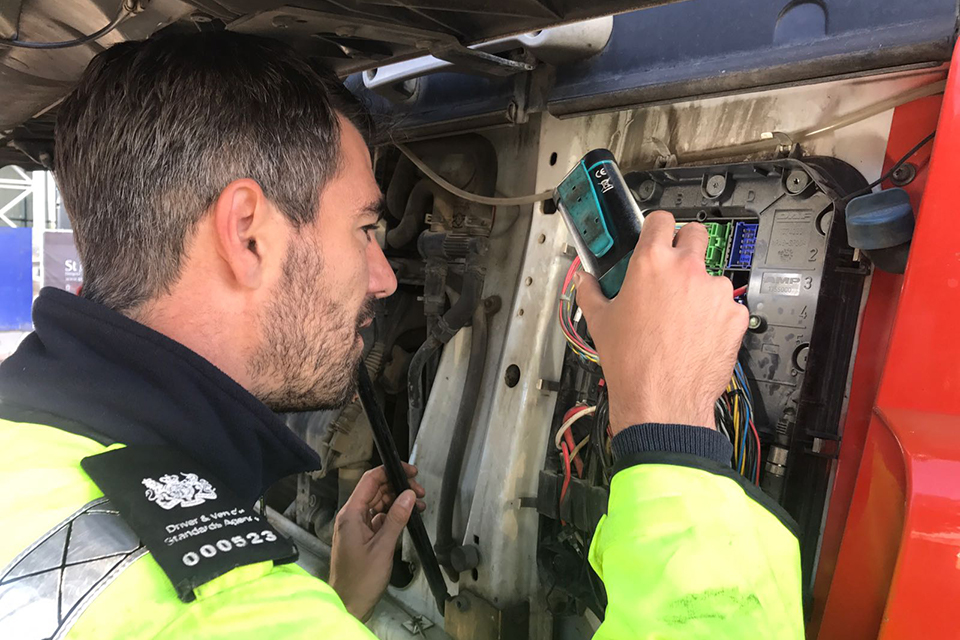
DVSA traffic examiner inspects a waste carrier
A DVSA traffic examiner inspects a waste carrier

This will all help to:

  • identify high-risk or illegal goods vehicle operators who are involved in the transport of waste
  • reduce the number of seriously and serially non-compliant waste industry vehicles on England’s roads

Report unsafe operators

You can report any information you have about to unsafe vehicle operators to DVSA.

DVSA intelligence team

Report vehicle operators or lorry, bus and coach drivers breaking safety rules and laws.

Monday to Friday, 7:30am to 6pm.

Building on years of joint work

Staff from the Environment Agency and DVSA in London
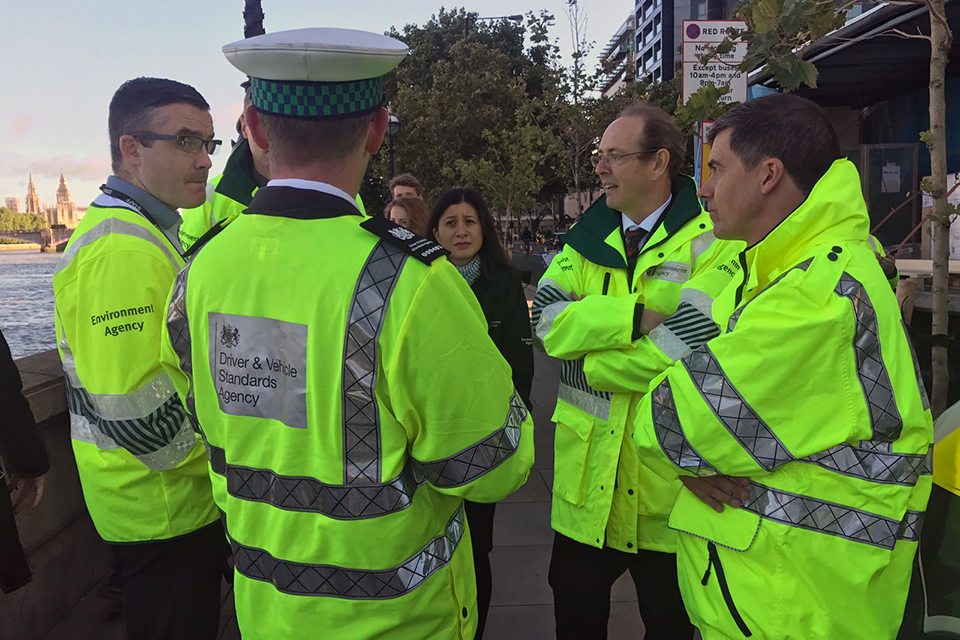
Sir James Bevan and Gareth Llewellyn (right) talk to Environment Agency and DVSA staff at a joint operation in London

For a number of years, the Environment Agency and DVSA have worked together to stop waste crime, making sure companies are operating legally and vehicle safety is improved.

Gareth Llewellyn said:

DVSA priority is to protect you from unsafe drivers and vehicles.

I am delighted that we will be working with the Environment Agency to tackle those who illegally transport waste. By combining our enforcement powers and intelligence we’ll be able to target those who break the rules more effectively.

DVSA traffic examiners will issue fines to those waste carriers we find to be operating in and unsafe manner. These operators are putting themselves and other road users at risk and pose a danger to our environment.

Sir James Bevan said:

We want to protect people and communities from the impact that vehicle and waste crime can have and create a level playing field for all operators.

This memorandum of understanding with DVSA will help both organisations target the waste industry to improve compliance and vehicle and driver safety standards.

To help us with this, we are encouraging people to check with the Environment Agency if the company they are employing to take their waste away is a fully registered waste carrier.

News story: Better co-ordination to stop illegal waste carriers

The Environment Agency and Driver and Vehicle Standards Agency (DVSA) have agreed on steps to stop illegal waste carriers and improve road safety in England.

Sir James Bevan, Environment Agency Chief Executive, and Gareth Llewellyn, DVSA Chief Executive, signed an agreement today (12 September 2017) in London.

How being a waste carrier works

Companies must register as a waste carrier if they:

  • transport waste
  • buy, sell or dispose of waste

However, some carriers operate illegally without the necessary licence, and don’t dispose of waste legally.

Companies who use a waste carrier must check they’re registered to dispose of waste, and not allow the waste carrier to dispose of their waste illegally.

Every year waste crime costs taxpayers and businesses £1 billion. The Environment Agency spent almost £15 million stopping illegal waste activity between April 2015 and March 2016.

What the agreement will do

The Environment Agency and DVSA will share intelligence and carry out joint operations in England to:

  • stop waste being illegally transported
  • target unsafe drivers and vehicles

The agreement will see:

  • DVSA staff working within Environment Agency teams, making sure enforcement action is coordinated and effective
  • information and intelligence shared between the 2 agencies, increasing the effectiveness of roadside enforcement activity on waste industry vehicles
  • enforcement teams provided with up-to date and relevant intelligence about waste industry operators
DVSA traffic examiner inspects a waste carrier
A DVSA traffic examiner inspects a waste carrier

This will all help to:

  • identify high-risk or illegal goods vehicle operators who are involved in the transport of waste
  • reduce the number of seriously and serially non-compliant waste industry vehicles on England’s roads

Report unsafe operators

You can report any information you have about unsafe vehicle operators to DVSA.

DVSA intelligence team

Report vehicle operators or lorry, bus and coach drivers breaking safety rules and laws.

Monday to Friday, 7:30am to 6pm.

Building on years of joint work

Staff from the Environment Agency and DVSA in London
Sir James Bevan and Gareth Llewellyn (right) talk to Environment Agency and DVSA staff at a joint operation in London

For a number of years, the Environment Agency and DVSA have worked together to stop waste crime, making sure companies are operating legally and vehicle safety is improved.

Gareth Llewellyn said:

DVSA priority is to protect you from unsafe drivers and vehicles.

I am delighted that we will be working with the Environment Agency to tackle those who illegally transport waste. By combining our enforcement powers and intelligence we’ll be able to target those who break the rules more effectively.

DVSA traffic examiners will issue fines to those waste carriers we find to be operating in an unsafe manner. These operators are putting themselves and other road users at risk and pose a danger to our environment.

Sir James Bevan said:

We want to protect people and communities from the impact that vehicle and waste crime can have and create a level playing field for all operators.

This memorandum of understanding with DVSA will help both organisations target the waste industry to improve compliance and vehicle and driver safety standards.

To help us with this, we are encouraging people to check with the Environment Agency if the company they are employing to take their waste away is a fully registered waste carrier.

News story: Better co-ordination to stop illegal waste carriers

The Environment Agency and Driver and Vehicle Standards Agency (DVSA) have agreed on steps to stop illegal waste carriers and improve road safety in England.

Sir James Bevan, Environment Agency Chief Executive, and Gareth Llewellyn, DVSA Chief Executive, signed an agreement today (12 September 2017) in London.

How being a waste carrier works

Companies must register as a waste carrier if they:

  • transport waste
  • buy, sell or dispose of waste

However, some carriers operate illegally without the necessary licence, and don’t dispose of waste legally.

Companies who use a waste carrier must check they’re registered to dispose of waste, and not allow the waste carrier to dispose of their waste illegally.

Every year waste crime costs taxpayers and businesses £1 billion. The Environment Agency spent almost £15 million stopping illegal waste activity between April 2015 and March 2016.

What the agreement will do

The Environment Agency and DVSA will share intelligence and carry out joint operations in England to:

  • stop waste being illegally transported
  • target unsafe drivers and vehicles

The agreement will see:

  • DVSA staff working within Environment Agency teams, making sure enforcement action is coordinated and effective
  • information and intelligence shared between the 2 agencies, increasing the effectiveness of roadside enforcement activity on waste industry vehicles
  • enforcement teams provided with up-to date and relevant intelligence about waste industry operators

A DVSA traffic examiner inspects a waste carrier

This will all help to:

  • identify high-risk or illegal goods vehicle operators who are involved in the transport of waste
  • reduce the number of seriously and serially non-compliant waste industry vehicles on England’s roads

Report unsafe operators

You can report any information you have about to unsafe vehicle operators to DVSA.

Building on years of joint work

Sir James Bevan and Gareth Llewellyn (right) talk to Environment Agency and DVSA staff at a joint operation in London

For a number of years, the Environment Agency and DVSA have worked together to stop waste crime, making sure companies are operating legally and vehicle safety is improved.

Gareth Llewellyn said:

DVSA priority is to protect you from unsafe drivers and vehicles.

I am delighted that we will be working with the Environment Agency to tackle those who illegally transport waste. By combining our enforcement powers and intelligence we’ll be able to target those who break the rules more effectively.

DVSA traffic examiners will issue fines to those waste carriers we find to be operating in an unsafe manner. These operators are putting themselves and other road users at risk and pose a danger to our environment.

Sir James Bevan said:

We want to protect people and communities from the impact that vehicle and waste crime can have and create a level playing field for all operators.

This memorandum of understanding with DVSA will help both organisations target the waste industry to improve compliance and vehicle and driver safety standards.

To help us with this, we are encouraging people to check with the Environment Agency if the company they are employing to take their waste away is a fully registered waste carrier.

Press release: Your chance to take a look at preferred route for A303 Stonehenge scheme

Secretary of State for Transport Chris Grayling announced the preferred route for upgrading the A303 at Stonehenge this week.

As part of the biggest government investment in roads in a generation, the £1.6 billion scheme includes the construction of a tunnel past one of the world’s most famous prehistoric monuments, a free-flowing, mile-a-minute dual carriageway and a much-needed bypass north of Winterbourne Stoke.

Highways England is hosting drop-in sessions where members of the public are invited to call in to see the proposals and to discuss the preferred route with the project team.

Consultation on the proposed upgrade between Amesbury and Berwick Down attracted considerable feedback earlier this year and Highways England has used this to inform its choice of preferred route, including moving the position of the western portal to avoid conflict with the solstice alignment.

Highways England project director Derek Parody said:

We are pleased to offer an opportunity for people to find out what happens next and to understand the benefits we are working to deliver.

We have listened to feedback from more than 9,000 people and organisations in our consultation earlier this year, and from this, and further surveys and studies, we can move forward with a solution to help improve traffic flow, reduce rat running on surrounding roads, bringing improvements to local communities and benefits to the South West economy, while at the same time enhancing and protecting one of the UK’s most iconic landscapes.

We will continue to work with all our heritage partners, and local communities to help shape the scheme’s future development, and we look forward to giving everyone an opportunity to see the revised preferred route at these public sessions.

Further consultation on the details of the route will take place in 2018, but in the meantime, the public will be able to view information, including copies of the preferred route booklet, and meet members of the Highways England project team at this month’s drop-in sessions.

The events will take place at:

The Manor Barn, High Street, Winterbourne Stoke SP3 4SZ

  • Saturday 16 September 11am to m5pm
  • Friday, 29 September 2pm to 8pm

Antrobus House, 39 Salisbury Road, Amesbury SP4 7HH

  • Friday, 22 September 2pm to 8pm
  • Saturday, 23 September 11am to 5pm

Details of the preferred route are also available on the scheme consultation page.

General enquiries

Members of the public should contact the Highways England customer contact centre on 0300 123 5000.

Media enquiries

Journalists should contact the Highways England press office on 0844 693 1448 and use the menu to speak to the most appropriate press officer.