Speech by FS at 2026 Business of Intellectual Property Asia Forum (English only) (with photos/video)

     ​Following is the speech by the Financial Secretary, Mr Paul Chan, at the 2026 Business of Intellectual Property Asia Forum today (November 19):

Deputy Director-General Shen Changyu (Deputy Director General of the World Intellectual Property Organisation), Deputy Head Jiang Tung (Deputy Head of the Patent Office of the China National Intellectual Property Administration), Director General Wang Zhicheng (Director General of the Copyright Department of the Publicity Department of the Communist Party of China Central Committee), Sophia (Executive Director of the Hong Kong Trade Development Council, Ms Sophia Chong), distinguished guests, ladies and gentlemen,

     Good morning.

     It is my pleasure to welcome you to the 16th Business of Intellectual Property Asia Forum. To our guests from the Mainland and overseas, a very warm welcome to Hong Kong.

     The theme of this year, "Powering Commercial Success through IP and Innovation", rests on a simple premise: that ideas have become the main source of commercial value. Let me begin with how far that is now true.

A world built on intangibles

     For most of economic history, wealth was something that could be counted, weighed or fenced in: land, factories, ships. Today, the most valuable things a company owns are often those that cannot be seen.

     Across the economies tracked by WIPO, the World Intellectual Property Organisation, investment in intangible assets such as software, data, brands and know-how passed US$10 trillion for the first time last year. Since 2008, it has grown more than three times as fast as investment in buildings and machinery. At the same time, artificial intelligence will only accelerate the shift, for its lasting value will lie less in data centres than in the intangible assets built on top of them.

Asia: from creating to earning

     Much of this story is being written in Asia, where seven in ten of the world's patent applications are now filed. Our country is the largest source of international patent applications, and WIPO ranks the cluster running from Shenzhen through Hong Kong to Guangzhou as the world's leading innovation cluster. And from Korean drama to Chinese designer toys and creative brands born in this region are winning fans on every continent.

     Yet creating IP (intellectual property) and monetising it are two very different things. Most economies in our region still pay more for the use of IP than they receive. Asia has learned how to create. The task for the coming decade is to capture more of the value of what it creates.

Four challenges

     So what stands in the way? Let me touch briefly on three challenges that this audience knows well. IP is hard to see: some 80 per cent of the intangible value of the world's listed companies do not appear on balance sheet. IP is hard to finance: a bank can visit a factory, but it cannot visit an idea. And IP is hard to trade across borders, because rights stop at the border while business does not.

     Asia is already testing the answers. Mainland banks extended close to RMB 300 billion in loans secured on IP last year, and in Korea IP finance has more than doubled in five years. The lesson is that lenders need credible valuation, some risk sharing, and a market in which IP can be sold if a loan goes wrong.

     AI now adds a fourth challenge by changing the terms on which IP is created and used. Who owns what a machine that helps to create? On what terms may creative works be used to train a model? No jurisdiction can claim to have settled the matter. Last week in Geneva, WIPO's Director General, Mr Daren Tang, put it very well.  The question, he said, cannot simply be who has the legal power to say no. We must also ask how to create workable ways for people to say yes. Asia, a leading producer of both technology and content, has every reason to help build them.

Hong Kong's contribution

     Ladies and gentlemen, no single economy can meet these challenges alone. Let me turn to what Hong Kong is doing, and where we go next.

     The National 15th Five-Year Plan supports Hong Kong in deepening its development as a regional IP trading centre. Our own First Five-Year Plan sets out how, including by bringing finance and IP closer together, and by making it less costly, and easier, to hold and trade IP here.

     We have started with where the need is the greatest, bank credit for smaller firms. Our IP Financing Sandbox, launched with the Hong Kong Monetary Authority last December, has seen its first seven loans approved. The numbers may be small, but banks, valuers and borrowers are discovering together what makes IP bankable. The next phase of the initiative will draw in more participants. And a new pilot scheme will help smaller firms obtain professional valuations of their patents, in line with the national standard. Our task now is to move from sandbox to scale.

     Bank credit is only the first link. As companies grow, they need investors who can price ideas. For example, since 2018, more than 90 biotechnology companies have listed in Hong Kong under rules written for firms yet to earn revenue. Together, they have raised over US$19 billion on the strength of their science, including their patents. Some of the medicines now being licensed to the world came from companies financed in this way.

     None of this works without sound foundations. A patent is only as strong as the examination behind it. So we are expanding our team of examiners. By 2030, we aim to examine applications in major technology fields in-house.

     A deal is only as attractive as its cost. So our patent box allows qualifying IP profits to be taxed at just five per cent. And a Bill now before the Legislative Council will widen tax deductions for buying and licensing IP.

     An agreement is only as reliable as its enforcement. So IP disputes can be settled here by arbitration or mediation, under a bilingual common law system that international parties know well.

     Hong Kong's particular role is to connect. Last year, a patent granted in Hong Kong helped to back a securitisation listed in Shenzhen, the first time IP from outside the Mainland has been used in this way. It was small, but it showed that an idea protected on one side of the boundary can raise capital on the other. The traffic can run both ways. We also want Mainland enterprises to use Hong Kong to take their IP to the world. 

     Above all, a market for ideas depends on people. It takes professionals fluent in both IP and business to value a patent, negotiate a licence or lend against either. This afternoon we will launch the Hong Kong IP Academy to train more of them. Working with the Vocational Training Council, the Academy will offer structured, recognised training to practitioners in innovation and technology, the creative industries, commerce and professional services.

     On AI, we are still listening: to creators, to developers and to the experience of others. What Hong Kong can offer is a place to test ideas. And we will share our experience with our partners on the Mainland and around the world.

Closing 

     Ladies and gentlemen, this Forum is where much of that sharing takes place. My thanks to the Hong Kong Trade Development Council, our co-organiser, and to all our speakers and partners.

     I began with the things we cannot see. Our shared task is to make them easier to see, to finance and to trade, and to keep our rules fit for an age of AI, so that a good idea born anywhere in Asia can travel the world and prove its worth. I wish you all a rewarding Forum and enjoyable stay in Hong Kong. Thank you.
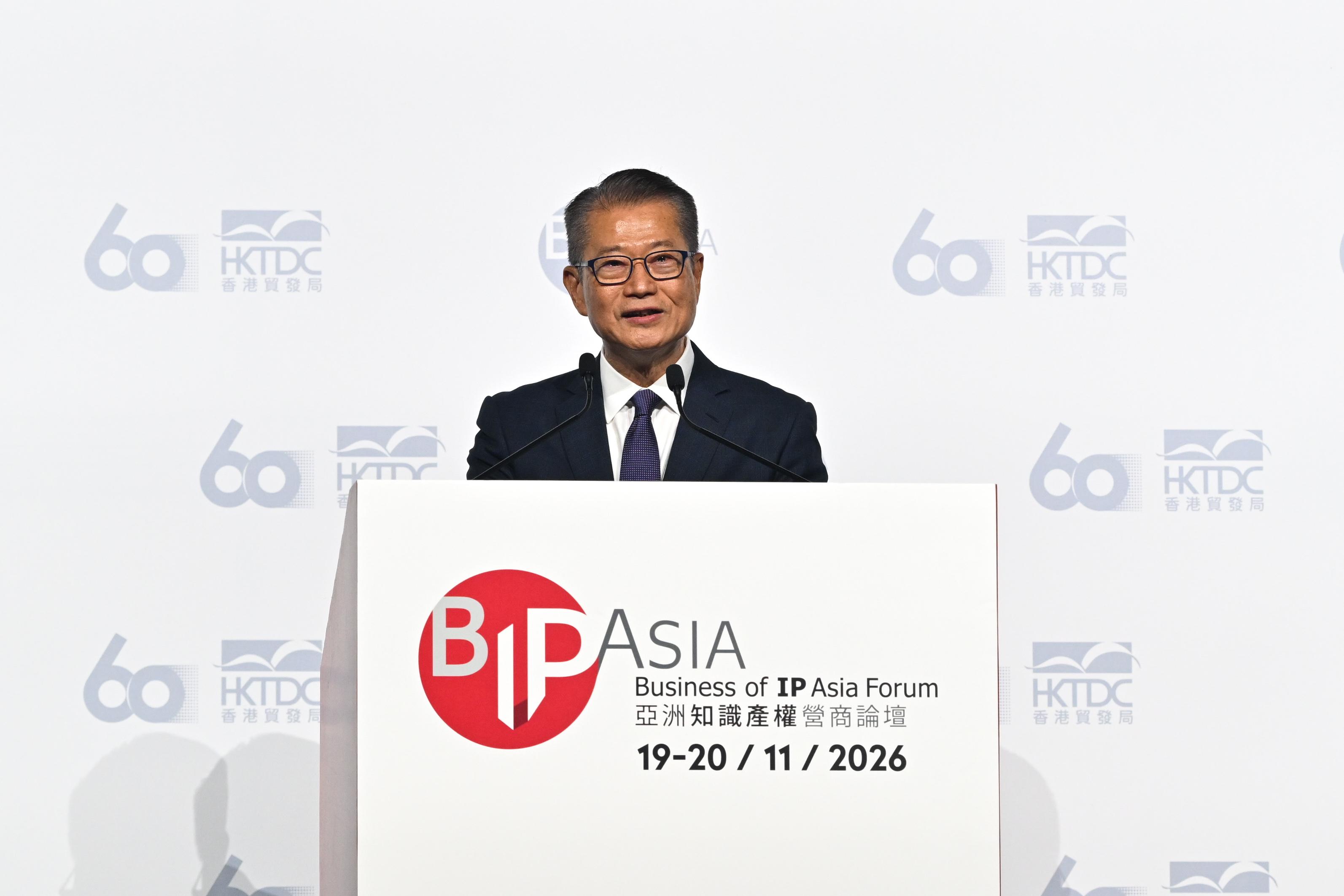
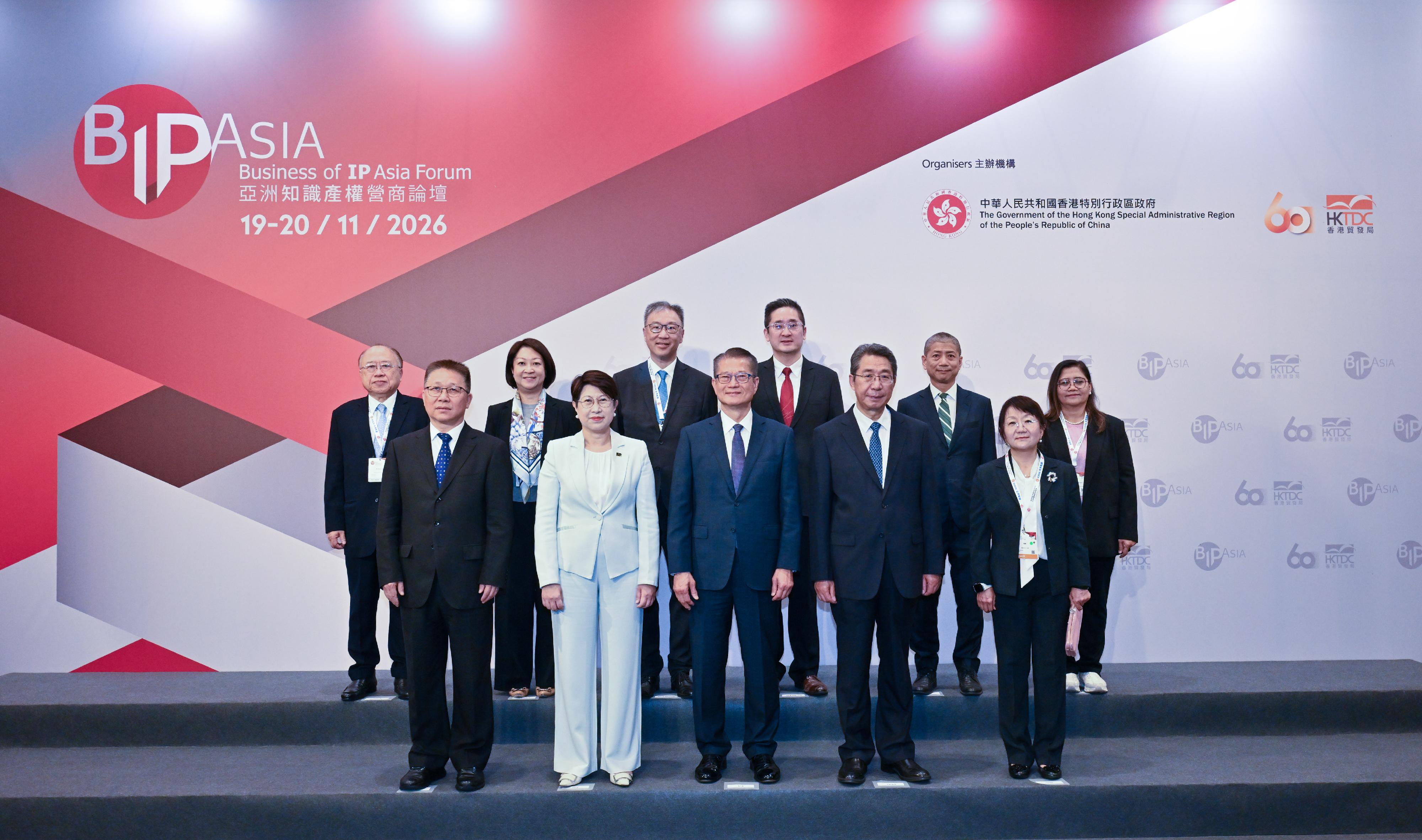
Photo  Photo  

Red flag hoisted at Silverstrand Beach

Attention TV/radio announcers:

Please broadcast the following as soon as possible:

     Here is an item of interest to swimmers.

     The Leisure and Cultural Services Department announced today (November 19) that due to big waves, the red flag has been hoisted at Silverstrand Beach in Sai Kung District. Beachgoers are advised not to swim at the beach.

London ETO promotes I&T opportunities under Hong Kong’s First Five-Year Plan at Slush 2026 in Finland (with photos)

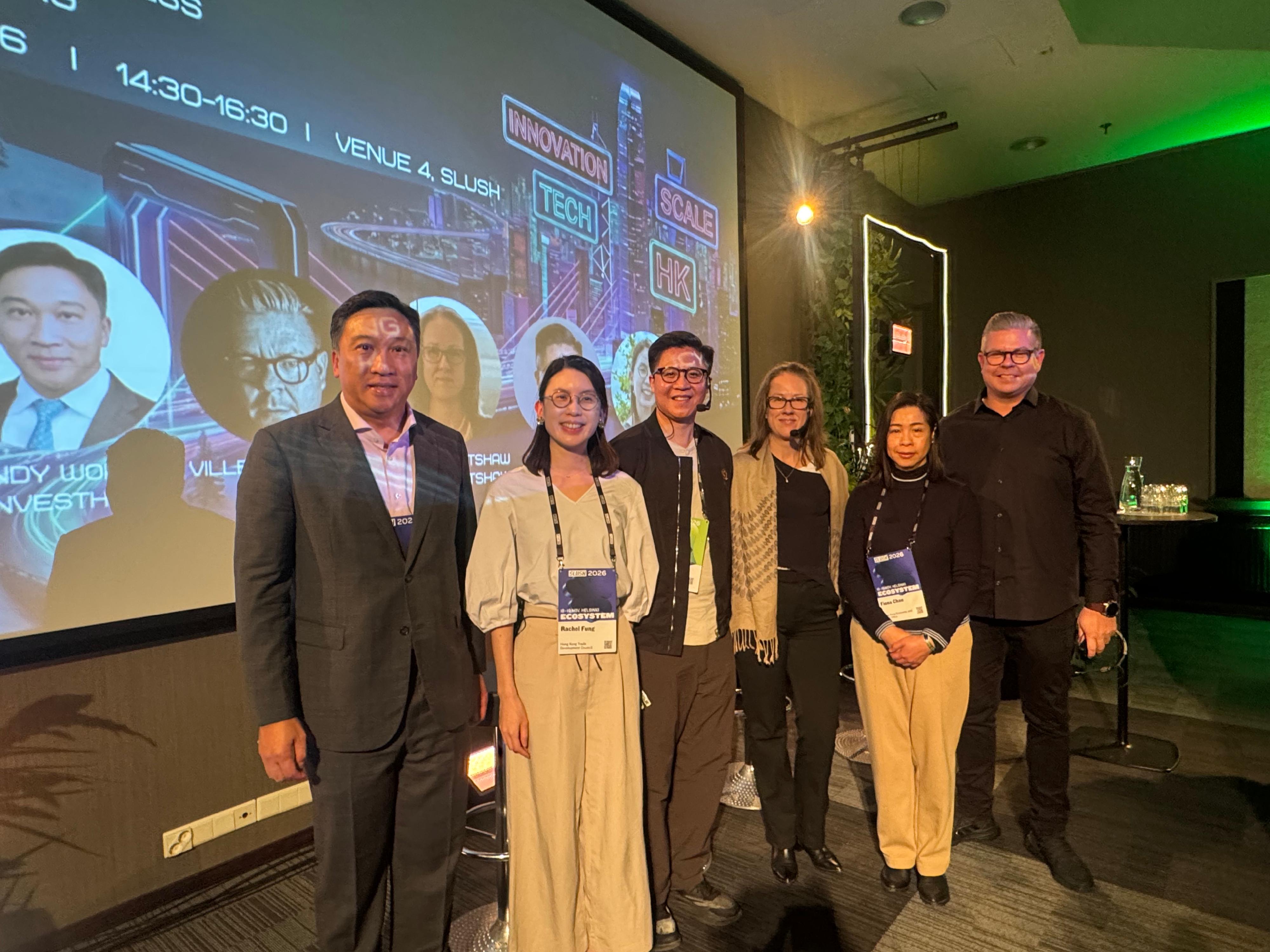
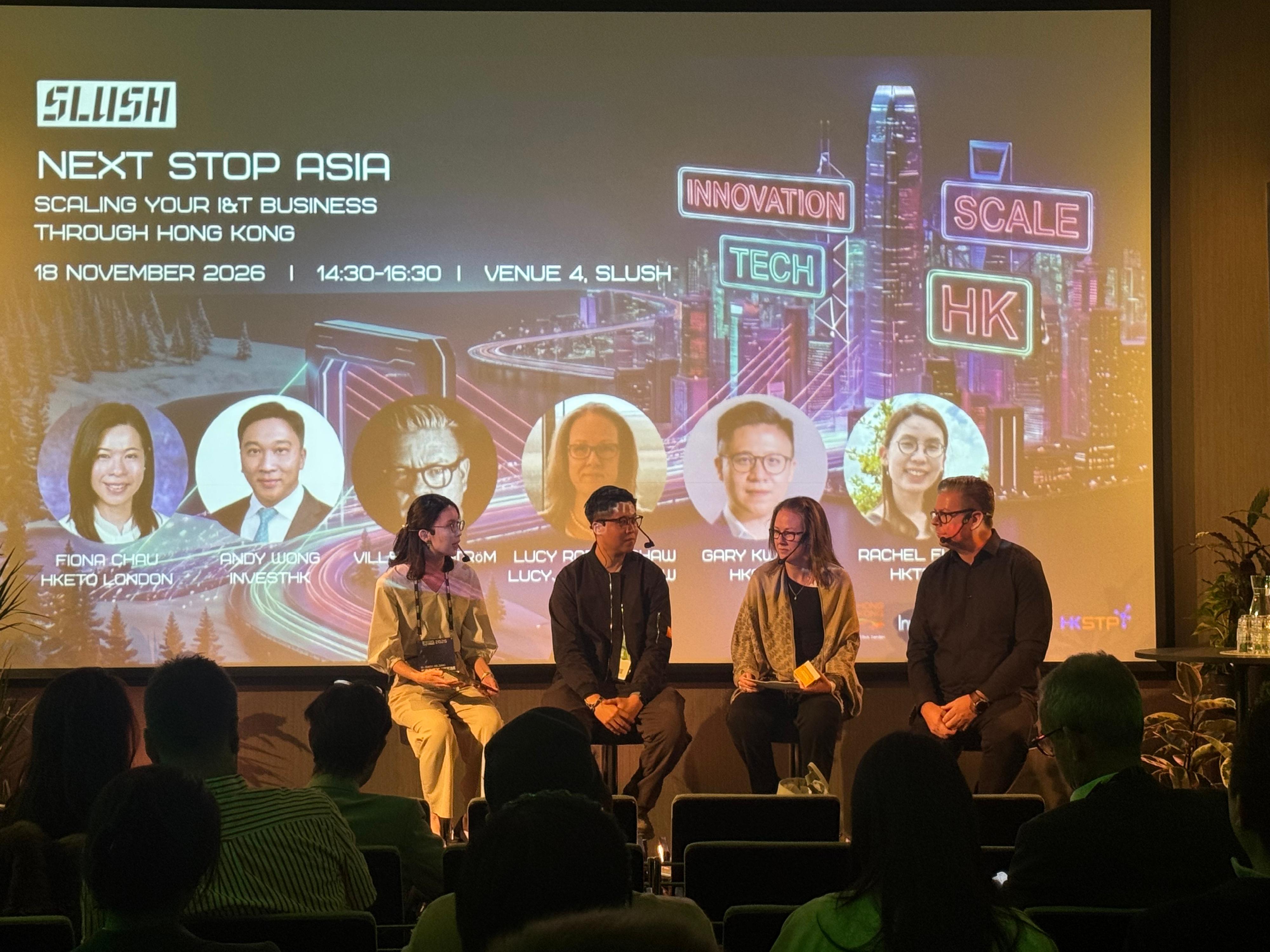
     ​The Hong Kong Economic and Trade Office in London (London ETO), in collaboration with Invest Hong Kong (InvestHK) and the Hong Kong Trade Development Council (HKTDC) under the Economic and Trade Express platform, as well as the Hong Kong Science and Technology Parks Corporation (HKSTP), organised a seminar themed "Next Stop Asia: Scaling your I&T Business through Hong Kong" at Slush 2026 in Helsinki, Finland, on November 18 (Helsinki time). The seminar showcased Hong Kong's innovation and technology (I&T) development and the opportunities it offers to Nordic start-ups seeking to expand into Asian markets.
     
     Speaking at the seminar, the Director-General of the London ETO, Miss Fiona Chau, highlighted Hong Kong's role as a launch pad for Nordic businesses seeking to expand into Asia. She said that Hong Kong connects international talent, technology and capital with opportunities in the Chinese Mainland, particularly the Guangdong-Hong Kong-Macao Greater Bay Area (GBA) and the wider Asian market.
     
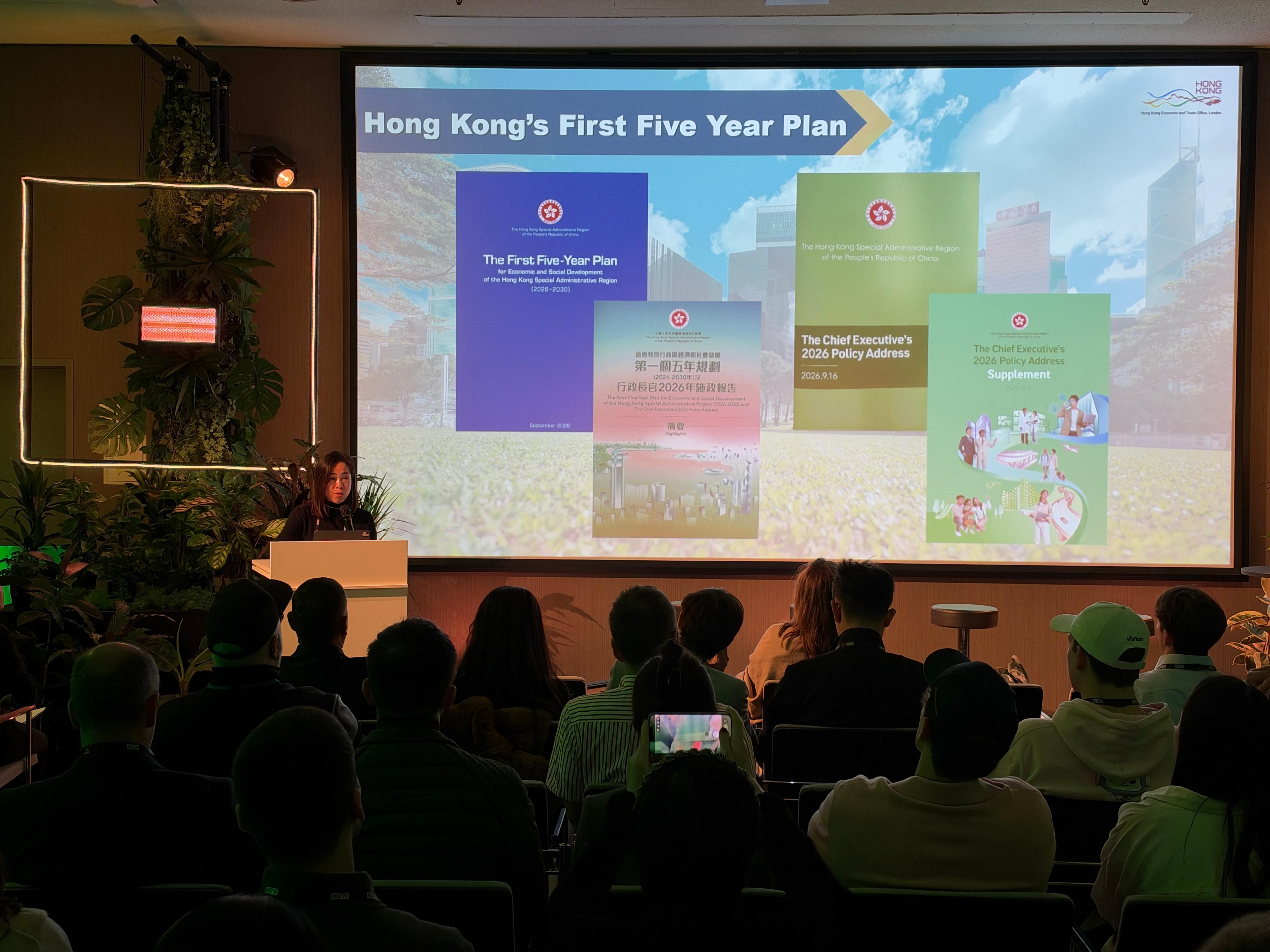
     Miss Chau outlined Hong Kong's vision of developing into an international I&T centre under the First Five-Year Plan for Economic and Social Development of the Hong Kong Special Administrative Region (2026-2030). She highlighted the development of three major I&T parks and five key research and development institutions, supported by substantial investment, to strengthen Hong Kong's I&T ecosystem and accelerate the translation of research and innovation into commercial opportunities.
     
     She also introduced the Northern Metropolis (NM) as a major development project that will create new opportunities for innovation development and cross-boundary collaboration. She highlighted the complementary roles of the Hong Kong Park of the Hetao Shenzhen-Hong Kong Science and Technology Innovation Co-operation Zone – the Hong Kong-Shenzhen Innovation and Technology Park (HSITP) and San Tin Technopole in the NM in supporting research, commercialisation and industrial development. She also outlined the distinctive cross-boundary collaboration model of "one river, two banks; one zone, two parks" adopted by the HSITP and its neighbouring Shenzhen Park. This model offers Nordic enterprises valuable opportunities to establish a presence in Hong Kong, leverage its unique advantages under "one country, two systems", collaborate with research institutions and I&T partners in both Hong Kong and Shenzhen, and tap into the GBA's technology and manufacturing capabilities.
     
     The Head of Innovation and Technology and Life and Health Sciences of InvestHK, Mr Andy Wong, also delivered a presentation at the seminar titled "Hong Kong as a Gateway to Unlock Business Opportunities in China and Wider Asia (from a Tech Venture Perspective)". Moreover, representatives of the HKTDC, the HKSTP and two Nordic-based companies shared their insights on the latest developments in Hong Kong's I&T sector, the opportunities available to overseas companies and the sector's future prospects during a fireside chat. Drawing on their experiences and expertise, the speakers also discussed practical considerations for Nordic start-ups looking to enter the Hong Kong market, identify suitable partners and further expand into the wider Asian market.
     
     The London ETO will continue to work closely with InvestHK, the HKTDC and the HKSTP to promote Hong Kong's I&T development and foster collaboration between I&T companies in Hong Kong and the Nordic region.
     
     Slush is an annual global start-up event held in Helsinki, bringing together start-up founders, investors and other members of the technology and entrepreneurial ecosystem from around the world. The event provides a platform for networking, sharing insights and connecting start-ups with potential investors and business partners.

Photo  Photo  Photo  

London ETO promotes I&T opportunities under Hong Kong’s First Five-Year Plan at Slush 2026 in Finland (with photos)

     ​The Hong Kong Economic and Trade Office in London (London ETO), in collaboration with Invest Hong Kong (InvestHK) and the Hong Kong Trade Development Council (HKTDC) under the Economic and Trade Express platform, as well as the Hong Kong Science and Technology Parks Corporation (HKSTP), organised a seminar themed “Next Stop Asia: Scaling your I&T Business through Hong Kong” at Slush 2026 in Helsinki, Finland, on November 18 (Helsinki time). The seminar showcased Hong Kong’s innovation and technology (I&T) development and the opportunities it offers to Nordic start-ups seeking to expand into Asian markets.
     
     Speaking at the seminar, the Director-General of the London ETO, Miss Fiona Chau, highlighted Hong Kong’s role as a launch pad for Nordic businesses seeking to expand into Asia. She said that Hong Kong connects international talent, technology and capital with opportunities in the Chinese Mainland, particularly the Guangdong-Hong Kong-Macao Greater Bay Area (GBA) and the wider Asian market.
     
     Miss Chau outlined Hong Kong’s vision of developing into an international I&T centre under the First Five-Year Plan for Economic and Social Development of the Hong Kong Special Administrative Region (2026-2030). She highlighted the development of three major I&T parks and five key research and development institutions, supported by substantial investment, to strengthen Hong Kong’s I&T ecosystem and accelerate the translation of research and innovation into commercial opportunities.
     
     She also introduced the Northern Metropolis (NM) as a major development project that will create new opportunities for innovation development and cross-boundary collaboration. She highlighted the complementary roles of the Hong Kong Park of the Hetao Shenzhen-Hong Kong Science and Technology Innovation Co-operation Zone – the Hong Kong-Shenzhen Innovation and Technology Park (HSITP) and San Tin Technopole in the NM in supporting research, commercialisation and industrial development. She also outlined the distinctive cross-boundary collaboration model of “one river, two banks; one zone, two parks” adopted by the HSITP and its neighbouring Shenzhen Park. This model offers Nordic enterprises valuable opportunities to establish a presence in Hong Kong, leverage its unique advantages under “one country, two systems”, collaborate with research institutions and I&T partners in both Hong Kong and Shenzhen, and tap into the GBA’s technology and manufacturing capabilities.
     
     The Head of Innovation and Technology and Life and Health Sciences of InvestHK, Mr Andy Wong, also delivered a presentation at the seminar titled “Hong Kong as a Gateway to Unlock Business Opportunities in China and Wider Asia (from a Tech Venture Perspective)”. Moreover, representatives of the HKTDC, the HKSTP and two Nordic-based companies shared their insights on the latest developments in Hong Kong’s I&T sector, the opportunities available to overseas companies and the sector’s future prospects during a fireside chat. Drawing on their experiences and expertise, the speakers also discussed practical considerations for Nordic start-ups looking to enter the Hong Kong market, identify suitable partners and further expand into the wider Asian market.
     
     The London ETO will continue to work closely with InvestHK, the HKTDC and the HKSTP to promote Hong Kong’s I&T development and foster collaboration between I&T companies in Hong Kong and the Nordic region.
     
     Slush is an annual global start-up event held in Helsinki, bringing together start-up founders, investors and other members of the technology and entrepreneurial ecosystem from around the world. The event provides a platform for networking, sharing insights and connecting start-ups with potential investors and business partners.

Photo  Photo  Photo