Author Archives: GovWorldMag

Drama helps reaffirm life for cancer patients

A drama written, directed and performed by people with cancer will take the stage of the China Millennium Monument Theatre in Beijing on Friday to serve as encouragement and inspiration for cancer patients to live a better life.

Friday is the 17th International Lung Cancer Day.

The drama, Oh, Don’t Be Afraid, a coproduction of Shanghai Cancer Recovery Club and Jiefang Daily, tells the story of a late-stage cancer patient who helps a young lung cancer patient regain the courage to live-through acting.

Jiefang Daily is the newspaper of the Shanghai Committee of the Communist Party of China.

Based on real-life experiences, the drama is directed and written by Dai Rong, a lung cancer patient. It also includes seven cancer patients among its 12 cast members.

“The drama itself acts as a kind of psychological therapy, using the power of the arts to heal both the audience and the actors,” said Dai, a director at the Shanghai Dramatic Arts Center, who was diagnosed with lung cancer along with multiple bone metastases five years ago.

Feeling hopeless after her diagnosis, Dai sought support from the Shanghai Cancer Recovery Club, one of the country’s first grassroots organizations for cancer patients. In its 28-year history, the club has helped 200,000 people come to terms with their illness and fight it.

From the club, Dai learned about drama therapy, which has since redefined her life purpose. She started to direct films, dramas and television programs again. She is also the organizer of a drama-healing workshop to help more patients, where drama therapy is utilized as a kind of therapeutic intervention.

“Years ago, I wondered what it means to be a director, but now I’ve got the answer,” Dai said. “It is to help cancer patients like me delve into truths about themselves, release their negative emotions and be optimistic toward life.”

As Dai’s first therapeutic production, Oh, Don’t Be Afraid is also thought to be the first of its kind in the country. Since its early October debut in Shanghai, Dai’s hometown, it has received extensive acclaim from both the actors and audiences.

Lu Lanzhen, an eight-year breast cancer patient starring in the drama, said: “I feel warmth and release from the bottom of my heart whenever I am in the play. We are sharing our own stories with the audience and hope to encourage more patients.”

Zheng Ying, director of the cancer prevention department at Fudan University’s Shanghai Cancer Center, said drama therapy is presented as a rehabilitation option for cancer patients, many of whom have better prognoses thanks to improved diagnostics and treatment methods.

According to the World Health Organization, lung cancer remains the biggest cause of cancer-related deaths in China. The country reports 800,000 new cases of lung cancer each year. Experts predict the number will be close to 1 million by 2025.

read more
Why I am very positive about the UK economy post Brexit

As there is a concerted attempt to misrepresent my views on the prospects for the UK economy let me repeat why I am very positive about the UK post Brexit, as I have always said.

I see the UK as a great destination for inward investors and for domestic investors wishing to set up businesses, create jobs, build factories and new properties. Only a month ago I was  being criticised for daring to say we needed more realistic forecasts which would be more optimistic ones. My critics ignored the fact that I had disagreed with the Treasury and Bank of England view that the Brexit vote would plunge the UK into recession last winter and had been proved right by events.

It is those who cannot accept the resuit of the referendum who are being gloomy about UK prospects and constantly talking about businesses thinking of moving out. They have been wrong about commercial property and about the expansion plans of overseas investors in the UK

Brexit is full of opportunity for businesses already in the UK, for new businesses that can be set up in the UK, and for businesses thinking of investing from overseas. The UK has a large  balance of payments deficit which we can cut by making and growing more things for ourselves. The UK is very competitive at the current rate of exchange. Freed of the constraints of the EU agriculture and fishing policies we can start to reduce the huge deficit in food that we have built up with the EU over the years. The Common Fishing Policy has restricted the amount that can be landed by British vessels in UK ports. We could do better  by our fish and our fishermen with a UK fishing and conservation policy. Past quota policies damaged parts of our farming industry. A UK policy needs to include the promotion of more growing of our own food.

The swing lower  in the pound against the Euro both before and after the vote makes UK manufactured products like cars that much more competitive compared to EU imports, which should help our domestic industry. The UK is establishing  itself as a great centre for knowledge based industries in general, and for technology based companies in particular.

read more

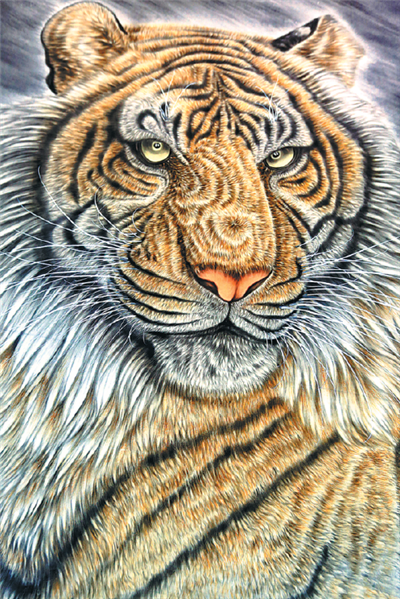
Village rises thanks to tiger power

When he learned to paint as a teenager, Xiao Yanqing, 52, a farmer in Henan province, could never have imagined it would lift him out of poverty.

Portraiture is a popular format for tiger paintings by farmers in Wanggongzhuang village. China Daily

Portraiture is a popular format for tiger paintings by farmers in Wanggongzhuang village. China Daily

Residents in Xiao’s native Wanggongzhuang village used to draw and sell new year paintings. The business dates back to the early 20th century, when a retired Imperial Palace craftsman brought the skill to the village.

In the 1980s, Xiao practiced in his spare time after farm work and traveled to cities to sell his pieces, which sold so cheaply he could barely make ends meet.

But 1998, the Year of the Tiger, proved a turning point in his life when a client ordered a tiger painting. “I used to paint flowers and birds, but not once had I painted a tiger,” Xiao said.

With no real tigers around, he borrowed a tiger painting from a neighbor to copy. His painting sold at a good price, and he realized he was onto something that could benefit his whole village.

“Chinese people love tigers. They hang tiger paintings in their homes because they believe the power of these animals can scare away evil spirits,” he said.

So he began to travel, not to sell paintings, but to zoos in northeastern China to observe tigers and dedicated himself to painting them.

It was a great success. In 1999, he was the first in the village to buy a color TV, and a year later a computer.

Using the internet, Xiao managed to sell his paintings abroad, first to Singapore, then to Japan, Europe and the United States.

He surprised the clerks of the local bank when he brought in US dollars to change for renminbi. “I guess they thought I was a criminal,” he said smiling.

Xiao’s success prompted friends to follow him, and more villagers joined later. Tiger painting is now a trademark of Wanggongzhuang. Over 60 percent of its 1,366 villagers are now in the business.

The village sells thousands of tiger paintings every year, with 40 percent going to overseas markets including Japan and Bangladesh. The total yearly revenue is 100 million yuan ($15 million).

Wang Jiansheng, in his 30s, has done a lot of jobs, from construction worker to butcher. None of them allowed him to buy a house. But he earns 300,000 yuan a year by painting-enough to run his own workshop. He plans to buy a big apartment in the Henan capital, Zhengzhou, and open a gallery there.

read more