Author Archives: GovWorldMag

New garden towns and the Oxford to Cambridge corridor

The government has stated its wish to find locations for new garden towns, and to expand ambitions for the Oxford to Cambridge growth corridor.

The UK’s original garden settlements grew from the provision of housing for a workforce. Josiah Wedgwood built better employee housing near  his new factory at Etruria in the eighteenth century. Later developments  like Port Sunlight and Bournville continued the tradition of creating a village community for a workforce, with better quality housing with gardens, green spaces and community facilities.

The garden towns movement began with Letchworth and Welwyn. It extended its influence over larger and more recent new towns like Milton Keynes. The idea was to preserve a more rural setting for housing and to use good architecture and design to create a better  environment. The developments contrasted with the more crowded housing of the Industrial Revolution in the large industrial cities where gardens were cramped or non existent and space more restricted for each family.

These success stories of UK architecture and planning show that it is possible to build in ways that reflect the wishes of many to live in green surroundings and to harness the best of design.

Modern developers often build properties that draw on traditional styles of house with characteristics from former eras. There are contemporary variants of Elizabethan half timbered, of Georgian classical and terrace, and of Victorian villa and terrace.

It will be interesting to see where the government  might find support for new garden towns and to see  what designs the advocates will propose. Milton Keynes is in my view a success story, with a very green environment to offset the grid pattern of main roads and service roads which place the town firmly in the age of the car.

Our traditional settlements that have grown more slowly over the years benefit from a rich diversity in styles as each era added or replaced some parts of the urban landscape. They usually retain an ancient road pattern which creates jams and bottlenecks as people try to get to school, work and the shops using their cars.  The new towns offer a chance of  design that accommodates the instinct for personal mobility that people share.

read more

Naadam fair injects new life into pastoral areas

Stepping up to the starting line and aiming his bow, local Mongolian hersman Nasunbator is preparing for an archery contest slated for January 13, 2018, one of the events during a winter Naadam fair in West Ujimqin Banner of Xilingol League, in northern China’s Inner Mongolia Autonomous Region.
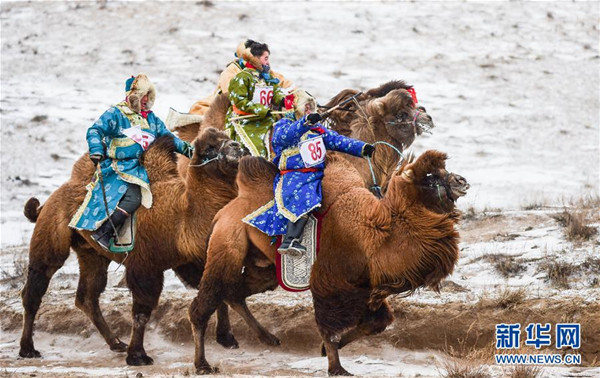
Men ride camels in traditional Mongolian costumes at the Naadam festival held in Xi Ujimqin Banner, a banner under the administration of Xilin Gol League, Inner Mongolia autonomous region, Jan 9, 2017. [Photo/Xinhua]

Men ride camels in traditional Mongolian costumes at the Naadam festival held in Xi Ujimqin Banner, a banner under the administration of Xilin Gol League, Inner Mongolia autonomous region, Jan 9, 2017. [Photo/Xinhua] 

“The one-month fair, organized by the local govornment will enrich our life in the cold and seemingly boring pastoral area,” Nasunbator said.

The fair, lasting from January 1 to February 8 next year, will feature ethnic Mongolian traditional sporting events including 5-kilometer and 10-kilometer horse racing, indoor archery competitions with shooting distances of 15 meters and 30 meters, as well as a Mongolian wrestling or “Bokh” contest for 256 wrestlers.

Skiing, skating, snowfield soccer, table tennis and square dancing competitions will be held as well during the fair, according to the local sports bureau.

“Most residents used to stay indoors and seldom did sports in the bitterly cold winter,” said Buranmandura, a civil servant who works for the Banner, adding that the various sports items during the fair will help them lead a healthier life.

The Naadam fair is a traditional display of strength, horsemanship and marksmanship among Mongolians. Nowadays, more sports items have been added to the ancient carvinal so as to attract a larger number of participants.

Despite low temperatures that average below -18 degrees celsius in January, many local residents and visitors from other provinces or regions have applied to attend the events, said local sports officials.

read more