image_pdfimage_print

Author Archives: GovWorldMag

Government must now act to stop the growing pressure on low and middle income families – Abrahams

Debbie Abrahams MP, Labour’s Shadow Work and Pensions Secretary, commenting on today’s Labour Market Statistics, said:

“We welcome the overall increase in employment, but are concerned that wide regional differences in the numbers of people in work remain.  

“It is also worrying to see that rising living costs are quickly catching up with wage growth. If this trend continues, the Government’s abysmal record on living standards will get even worse. 

“With wages set to be lower in 2021 than before the Tories came to power, they must now act to stop the growing pressure on low and middle income families. 

“That’s why Labour is urging the Government to reverse cuts to in-work support that could see some working families worse off by £2,600 a year.”

read more
Blackness Road area – roadworks clarification

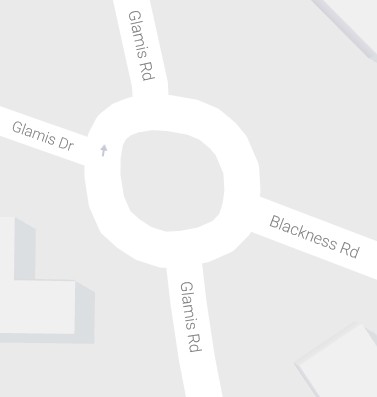
Residents will have noted that the temporary traffic lights on Blackness Road at the Glamis Road/Glamis Drive roundabout (see right) have disappeared.     However, this is unfortunately not because the works by Scotland Gas Networks (SGN) are completed.

I have been updated by Scotland Gas Networks’ Team Manager as follows :

“Unfortunately our work at the Glamis Road roundabout is well behind schedule due to the ground conditions we are encountering.   However, as Scottish Water (SW) is programmed to start in Blackness Road shortly which would conflict with our work, we are lifting the traffic management at the roundabout before they start and will return to complete our work here after SW have finished.  

In the meantime we will be continuing on Glamis Road itself as this won’t disrupt traffic, and will also be returning to Perth Road to complete the service works and mains abandonment which we had to abort previously.

Scottish Water is starting Blackness Road 20th February for approximately 2 weeks so we’ll be back at the roundabout probably mid March for about 2 weeks.”

The Scottish Water work is further east on Blackness Road.   The City Council has further updated me as follows : 

“The SW work will start 20 February at Glenagnes Road junction.    The second week they will move south to Rosefield Street for the second week.

Once SW is complete on their section of Blackness Road, SGN will return to Blackness Road Glamis with their original set up to complete works there. 

As SGN intimated, it will utilise the two weeks of 20/27 February, when SW are in Blackness Road, to complete the remaining services connections left behind in Perth Road at Arnhall Drive area.”
read more

China to build marine nuclear power station


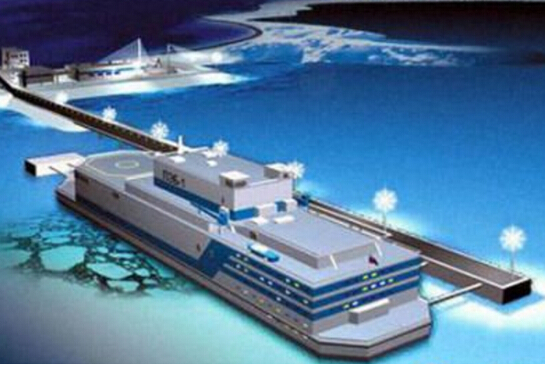
A design sketch of a floating nuclear power platform. [Photo: sina.com]

China plans to accelerate the development of afloating nuclear power platform in the 13th Five-Year Plan (2016-2020) period, according to Wang Yiren, vice director of State Administration of Science, Technology and Industry for National Defense.

Wang told Science and Technology Daily that Chinese authorities have already included the building of a marine nuclear power station into the government’s 13th Five-Year Plan, in an effort to promote ocean oil and gas exploitation and other offshore projects.

Wang said that to become a strong maritime power, exploitation of ocean resources is very significant. However, as the main power source for China’s current offshore operation, diesel generators are both inefficient and harmful to the ocean environment; developing a maritime nuclear power station may solve such problems.

After a range of research and evidence, experts on atomic energy decided to modify the related building schemes based on proven technologies. Wang informed that the small reactors used on land would be applied at sea after necessary improvements have been made.

Currently, China has carried out standard research and begun to tackle key technical problems of building afloating nuclear power platform, including overall design, safety techniques, key equipment tests, and maintenance technology.

The country is doing its own research on the project, as well as seeking cooperation with Russia to hasten the process, Wang said.

read more

Cheaper energy

The news of problems with Toshiba’s nuclear power generation investment plans will prompt some new thinking here in the UK. Some in the press are suggesting that in order to carry forward a programme of additional nuclear stations beyond Hinkley, the UK government will now itself have to venture into being a minority investor in these new plants. Private sector companies are finding it a stretch to handle the very high up front investment costs of a new nuclear station. They also have to worry about the long term nature of their commitments, and the eventual costs of decommissioning the facilities when they are worn out.

It is true, as the government argues, that nuclear has merits compared to wind power. It is much more reliable, and the plants can be run permanently without the same amount of back up power than interruptible renewable sources require. Whilst a nuclear plant is dear, you do not need an equivalent amount of stand by capacity, as you do for wind. The idea has been to supply unsubsidised power from nuclear plants. That means guaranteeing them a high and constant price for the power they will generate, given the high fixed costs involved. Some see guaranteed prices as just another variant of subsidy.

The enthusiasm for UK nuclear is based around the decarbonisation plans of Labour and the Coalition governments, in harmony with the EU requirements. The new government, leaving the EU, can rethink  our energy needs and vary the policy. The overriding objectives should be to provide a sufficient supply of affordable power. We need that both to pursue the new Industrial strategy,. and to tackle fuel poverty. Building a new nuclear industry here may make sense, but only if it can be done in a way which delivers sufficient power at affordable prices. It may be the case that a new fleet of gas powered stations would b e a better way of ensuring plentiful good value energy.

What is sure is that you don’t have a meaningful policy to fire up many industries we have lost or where there has been decline unless they have access to cheap power.

read more