Author Archives: GovWorldMag

Jeremy Corbyn statement following London bridge attack

Jeremy Corbyn, Leader of the Labour Party, said:

“We are all shocked and horrified by the brutal attacks in London. My thoughts are with the families and friends of those who have died and the many who have been injured. Today, we will all grieve for their loss.

“I would like to thank the police and emergency services for their bravery and professionalism in acting to save lives and deal with these appalling acts of terrorism, as well as NHS staff and members of the public who sought to protect others.

“The Labour party will be suspending national campaigning until this evening, after consultations with other parties, as a mark of respect for those who have died and suffered injury.

“Those who wish to harm our people, divide our communities and attack our democracy will not succeed. We will stand together to defend our common values of solidarity, humanity and justice, and will not allow terrorists to derail our democratic process.”

Ends

read more

Green Party responds to London terror attack

4 June 2017

The Green Party’s thoughts are with the families and friends of the victims of last night’s terror attack in central London, as well as with others affected. Our thanks go to the emergency services who responded with professionalism and enormous bravery.

Green Party co-leader Caroline Lucas said:

“My heart goes out to all those affected and caught up in these horrific and despicable attacks, and my thoughts are with the victims and their families.   Deep thanks to our emergency services who have responded again with enormous bravery, and to the many members of the public displaying courage and compassion in the midst of terrible scenes.”

Green Party co-leader Jonathan Bartley said: 

“I am sickened that terrorists have again attempted to divide us in such a cruel and crude fashion. They will not succeed. As in Manchester, and in the aftermath of the Westminster attacks, people will come together in the coming days and demonstrate that our way of life is precious and will not be surrendered to those determined to spread fear.” 

The Green Party will shortly be suspending national campaigning until this evening. Local campaigning will continue.

Tweet

Back to main news page

Let’s block ads! (Why?)

read more

Lost temple discovered after 1,000 years in Chengdu

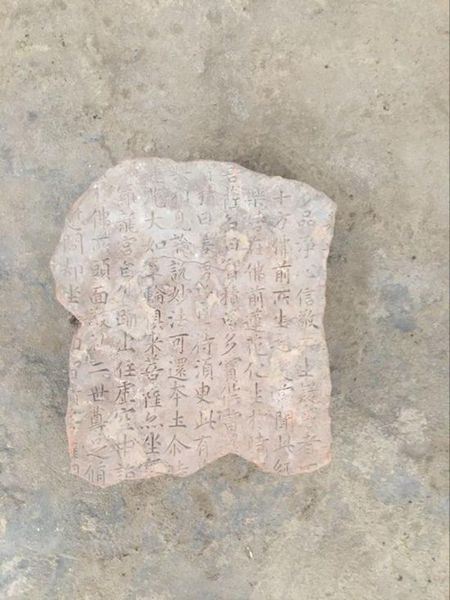
Archaeologists unearthed more than 1,000 tablets inscribed with Buddhist scriptures and over 500 pieces of stone sculpture as well as glazed tiles with inscriptions at the site of the lost temple. [Photo/Western China Metropolis Daily]

 Archaeologists have spent months excavating a lost temple that disappeared for nearly a millennium in downtown Chengdu, capital of southwest China’s Sichuan Province.

The Fugan Temple was a famous temple that lasted from the Eastern Jin Dynasty (317-420) to the Southern Song Dynasty (1127-1279).

Daoxuan, a famous Tang Dynasty (618-907) monk, once wrote that an official rite to pray for rain to end a persistent drought was held in front of the temple, and it rained as if the prayers had been heard in heaven.

The story was the record of how the temple got its name, Fugan, which means “perceive the blessing.”

Famous Tang Dynasty poet Liu Yuxi left a poem to commemorate the temple’s renovation, describing its heavenly appearance. The poem further noted the temple’s important role at that time.

However, the building was worn down during the later period of the Tang and Song dynasties, with all traces of the temple disappearing during wars.

Archaeologists unearthed more than 1,000 tablets inscribed with Buddhist scriptures and over 500 pieces of stone sculpture as well as glazed tiles with inscriptions.

“We have only excavated a part of the temple’s area, but already have a glimpse of its past glory,” said Yi Li, who led the excavation project.

He said they have found the temple’s foundation, ruins of surrounding buildings, wells, roads and ditches.

During the excavation, archaeologists found some 80 ancient tombs scattered near the temple, dating back to Shang and Zhou dynasties (1600-256 BC). In the temple’s surroundings, they have unearthed large amounts of household tools and utensils and building materials dating back to various periods from the Song to Ming dynasties.

Chengdu became an economic and cultural center in western China during the Sui and Tang dynasties. The temple’s discovery could greatly contribute to the study of the spread of Buddhism in China during that time, said Wang Yi, director of the Chengdu Cultural Relic Research Institute.

read more