Author Archives: GovWorldMag

Tom Watson MP comment on the BBC annual report

Tom Watson MP, Labour’s Shadow Secretary of State for Digital, Culture, Media and Sport, commenting on the BBC annual report, said:

“The BBC is one of the world’s greatest broadcasters and we shouldn’t be surprised that its top stars – who millions of people tune in to watch and listen to every week – are well paid.

“Labour recognises the BBC’s dilemma: the need to give licence payers value for money while operating in a competitive commercial environment against other broadcasters who do not have to disclose what they pay.

“It’s wrong that only a third of the BBC’s highest paid stars are women, and we welcome Lord Hall’s commitment to close the gender pay gap by 2020. It would be good to see a similar commitment, and similar levels of transparency, from other media organisations – especially those who are criticising the BBC today.”

read more

Non-local cars banned from Beijing’s Second Ring Road

Traffic jam at Beijing’s Second Ring Road. [File Photo]

From Aug. 14, vehicles not registered in Beijing will be prohibited from driving on 23 routes and the Second Ring Road, a highway encircling the center of the capital.

Drivers violating the restriction will be fined 100 yuan (US$14.80).

Since Nov. 27, 2015, non-local vehicles have been banned from 14 routes and the Second Ring Road from 6 a.m. to 10 p.m.

To further alleviate traffic congestion, the Beijing Traffic Management Bureau has made the restriction even stricter by increasing the number of restricted routes and extending the period from 16 hours to 24 hours.

read more

Telecom fraudsters sentenced in student death case

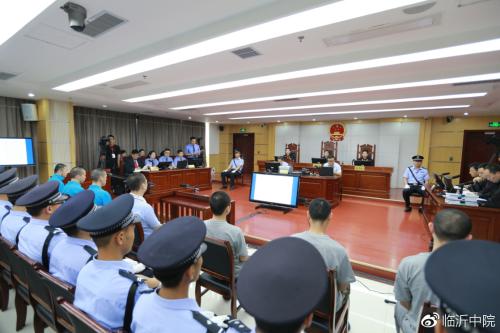
The principal criminal, Chen Wenhui, was sentenced to life in prison on charges of fraud and illegally obtaining personal information at the Linyi Intermediate People’s Court. [Photo/Weibo.com] 

Seven people involved in a high-profile telecom fraud case that led to the death of a university candidate were sentenced to prison at a court in Shandong Province on Wednesday.

The principal criminal, Chen Wenhui, was sentenced to life in prison on charges of fraud and illegally obtaining personal information at the Linyi Intermediate People’s Court. The other six criminals were sentenced to prison between three to 15 years.

The seven people cheated people out of money by posing as officers of educational, financial and real estate institutions in telephone calls made between November 2015 and August 2016.

One of the victims, Xu Yuyu, an 18-year-old student from Linyi, was called on Aug 19. She had applied for financial aid from a local educational authority two days before she received the phone call.

During the call, Zheng Xiancong, one of the criminals, told Xu that he was an educational authority officer and would provide her with about 2,600 yuan (US$385) in student aid. Zheng asked her to contact the local financial authority to find out how to receive the aid.

Xu was given a number to call that connected her to Chen. Chen said he asked Xu to transfer 9,900 yuan in tuition fees into a bank account, adding that the student aid would appear in her student account.

After discovering the money was stolen, Xu and her father reported the theft to local police on the same evening. On her way back home, she died of cardiac arrest. Forensic experts said Xu’s death was linked to the great anxiety caused by the telecom fraud.

Chen Wenhui said he obtained more than 10,000 pieces of personal information, including that of Xu, through QQ, an instant messaging tool.

read more

How the single market got in the way of our art market

The UK art market is one of the big three in the world, coming second after New York and a little ahead of Hong Kong/Shanghai. 98% of the world’s expensive paintings are sold through one of these three markets.These 3 account for 81% of total world art market turnover between them.

Only 3% of the UK’s art exports go to the rest of the EU. Imports from there account for 16% of the total. The EU has imposed two extra costs on the London market not charged to clients of New York or China. One is a VAT on imports. The other is the living artists levy on a re sale.

In typical EU fashion they have invented rules and taxes that make an EU based market less attractive. London has lost some market share to New York and China as a result. It has not helped continental centres. The UK has 21% of the global overall market, and 62% of the European market.

Once we have left the EU the UK could cut the costs imposed. The VAT has cost us some business, but collects very little tax as a result.

It would be good to hear more from other media about the opportunities for us to do better out of the EU in sectors we are good at or have a natural advantage in. I have talked about fishing before, and agriculture is another obvious one. The Art market is an excellent example of something we are good at, something which generates well paid jobs with a high level of training and interest. Out of the EU we can help it grow faster.

read more