image_pdfimage_print

Author Archives: hksar gov

Public housing tenant and applicants convicted by courts for making false statements

     A spokesman for the Housing Department (HD) today (June 16) reminded all tenants of public rental housing (PRH) estates and PRH applicants to truthfully declare their income and assets, as well as their genuine marital status. Parties concerned in three recent cases were ordered by the courts to serve suspended sentences.

     In the first case, a PRH tenant did not declare his ownership of an urban taxi licence on a 2019 Income and Asset Declaration Form. Subsequent investigation revealed that the average market premium of an urban taxi licence was $5,590,000 in April 2019, which was beyond the prevailing asset limit for three-person family of $2,310,000, i.e. 100 times of the income limit. The tenant was prosecuted by the HD for neglecting to furnish information specified in the Income and Asset Declaration Form, contrary to Section 27(a) of the Housing Ordinance. The defendant was previously convicted by the presiding magistrate at Shatin Magistrates’ Courts, who considered that a fine as punishment would not reflect the gravity of the offence. After considering the report of the probation officer by the Court, the defendant was sentenced of 14 days’ imprisonment (suspended for 12 months) yesterday (June 15).

     In the second case, a PRH applicant declared on a declaration form during a vetting interview in 2019 that his net asset value of deposits was $8,084.99. Subsequent investigation, however, revealed that he actually had a net asset value of deposits of $572,827.34, which exceeded the PRH total net asset limit of $454,000 for a three-person family in 2019-20, so the family was not eligible to apply for PRH. Eventually, the applicant was prosecuted for making a false statement knowingly, contrary to Section 26(1)(c) of the Housing Ordinance. The defendant was convicted and sentenced of one month’s imprisonment (suspended for 12 months) by the presiding magistrate at Kowloon City Magistrates’ Courts yesterday as he considered that a fine as punishment would not reflect the gravity of the offence. 

     In the third case, a PRH applicant and his ex-wife declared their marital status as married during a vetting interview in 2018 and an intake interview in 2019. A PRH flat at So Uk Estate was allocated to them. Subsequent investigation indicated that they were divorced in 2017 and would not be eligible for being offered the PRH flat. Both defendants were prosecuted under Section 26(1)(c) of the Housing Ordinance. They were convicted by the presiding magistrate at Kowloon City Magistrates’ Courts yesterday. Considering that a fine as punishment would not reflect the gravity of the offence, both defendants were sentenced to one month’s imprisonment (suspended for 12 months).   
     
     The spokesman said that households living in PRH should complete their income and asset declaration forms accurately, as doing so provides the foundation for the assessment of rent and their eligibility for continuing residence. Before making the declarations, households should read the content and completion guidelines of the income and asset declaration form carefully and compute their income and assets in accordance with the methods specified. Otherwise, they may be prosecuted for making a false statement knowingly, contrary to Section 26(1)(a) of the Housing Ordinance (if convicted, the maximum penalty is a $50,000 fine and imprisonment for six months), or be prosecuted for neglecting to furnish information as specified in a declaration form, contrary to Section 27(a) of the Housing Ordinance (if convicted, the maximum penalty is a $25,000 fine and imprisonment for three months). Notwithstanding the above, the HD will take action to recover the undercharged rent incurred due to the inaccurate information or even recover their PRH units.

     In addition, the spokesman reminded all PRH applicants that if they are convicted by the court for making a false statement knowingly during a PRH application, contrary to Section 26(1)(c) of the Housing Ordinance, the maximum penalty is a fine of $50,000 and imprisonment for six months, while the PRH application will also be cancelled. read more

First successful prosecution case against counterfeit vaccines

     A male company director of a medical centre was sentenced to four months’ imprisonment and the centre was fined $20,000 by Kwun Tong Magistrates’ Courts on June 5 for violating the Trade Descriptions Ordinance (TDO) for possession of vaccines bearing a forged trademark for sale or for any purpose. This is the first such case effected by Hong Kong Customs as well as the first successful prosecution involving counterfeit vaccines.

     Customs today (June 16) welcomed the sentences, saying that the custodial sentences imposed a considerable deterrent effect and delivered a clear warning to medical centres about using counterfeit medical products. It also reflected the seriousness of the relevant offences.

     Acting on information alleging the use of counterfeit human papillomavirus (HPV) vaccines, Customs and the Department of Health conducted a joint enforcement action in July last year and seized a batch of 76 boxes of counterfeit vaccines at a medical centre in Kwun Tong.

     Customs reminds traders, especially medical centres, to be cautious and prudent in the merchandising of vaccines since the possession of counterfeit goods for any trade or business is a serious crime and offenders are liable to criminal sanctions. Customs also reminds consumers to select reputable medical centres with care and verify with the trademark owners or their authorised agents if the authenticity of a vaccine is in doubt.

     Under the TDO, any person who sells or possesses for sale any goods with a forged trademark commits an offence. The maximum penalty upon conviction is a fine of $500,000 and imprisonment for five years.

     Members of the public may report any suspected counterfeiting activities to Customs’ 24-hour hotline 2545 6182 or its dedicated crime-reporting email account (crimereport@customs.gov.hk). read more

“Striving and Transforming – The History of Hong Kong Industry” exhibition presents splendour of Hong Kong industry over past century (with photos)

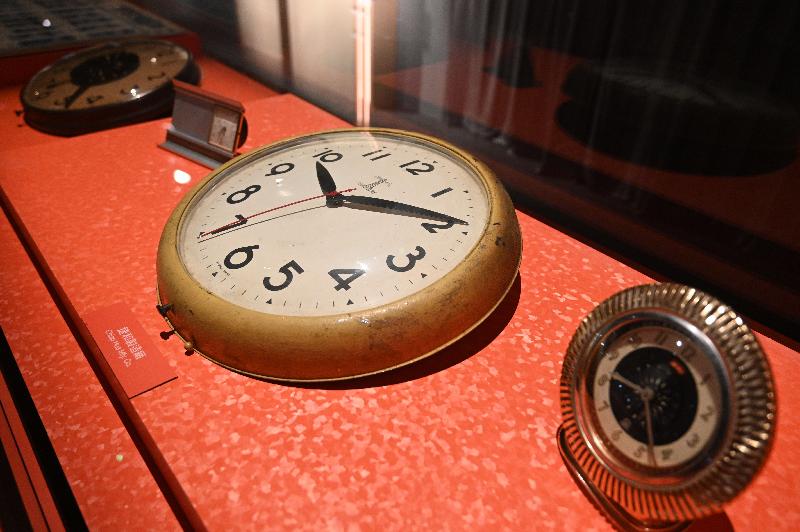
     The Hong Kong Museum of History will launch the exhibition “Striving and Transforming – The History of Hong Kong Industry” tomorrow (June 17). Featuring some 1,200 exhibits of classic Hong Kong-made products, the exhibition reviews the history of Hong Kong industry over the past century, shows how industrialists strived for success, and pays tribute to the working class for their contributions to the booming of industry.
 
     As early as the 19th century, while there were family workshops, a number of foreign merchants also developed industries in Hong Kong. Hong Kong’s industry germinated in the early 20th century as Chinese industrialists started taking part, triggering diversification, greater use of machinery and increases in production capacity. This was reflected by the production of firecrackers, electric torches, pressure lanterns, footwear and knitwear, which were popular in overseas markets.
 
     After World War II, Hong Kong was transformed from an entrepôt to an export-oriented industrial economy, with its export volume leading the world. Hong Kong industry celebrated its heyday in the 1970s. Worldwide bestselling products like transistor radios, plastic goods, toys, garments, timepieces, vacuum flasks and cameras represented how “Made in Hong Kong” became an internationally recognised brand. In recent years, Hong Kong industries have undergone another structural change, but Hong Kong has remained a base for decision making, product design and promotion, and is also exploring new possibilities in the high-technology and creative industries.
 
     Co-organised by the Hong Kong Museum of History and the Federation of Hong Kong Industries, the exhibition will be held at the Special Exhibition Gallery of the Hong Kong Museum of History and will run until August 24. For details of the exhibition, please visit the website at hk.history.museum/en_US/web/mh/exhibition/current.html, or call 2724 9042 for enquiries.
 
     In view of the COVID-19 epidemic, the Hong Kong Museum of History will be partially open. Special arrangements and precautionary measures will be implemented to help ensure public safety. Visits will be arranged in sessions to limit visitor flow. Visitors to the museum will need to use hand sanitiser and will be subject to temperature checks before admission. They are also advised to wear their own masks. For details, please visit hk.history.museum/en_US/web/mh/plan-your-visit/admission.html.
 
     The Hong Kong Museum of History is located at 100 Chatham Road South, Tsim Sha Tsui. 
 

Photo  Photo  Photo  Photo  Photo  Photo  
read more

May’s monthly gravidtrap index for Aedes albopictus rises

     The Food and Environmental Hygiene Department (FEHD) today (June 16) announced that the monthly gravidtrap index for Aedes albopictus (MGI) in May rose to 10 per cent from 4.7 per cent in April, indicating that mosquito infestation was slightly more extensive in the areas surveyed, while the monthly density index for Aedes albopictus (MDI) rose to 1.4 in May from 1.2 in April, which represented that an average of 1.4 Aedes albopictus adults were found in the Aedes-positive gravidtraps, indicating that the number of adult mosquitoes was not high. Among the 57 survey areas last month, the area gravidtrap index (AGI) in four areas exceeded the alert level of 20 per cent. They were Ma Wan (27.1 per cent), Sai Kung Town (21.3 per cent), Lai King (21 per cent) and Sha Tin East (20.2 per cent). The FEHD has collaborated with relevant government departments to strengthen mosquito prevention and control work in the above-mentioned areas immediately. The FEHD reminded the public to carry out effective prevention and control measures against mosquitoes as the hot and rainy weather of summer is favourable for massive mosquito breeding within a short period of time. Relevant government departments have enhanced co-operation and commenced the All-out Anti-mosquito Operations in April to conduct fogging operations specifically at high-risk areas to eradicate adult mosquitoes.
      
     As for the port areas, the monthly port gravidtrap index also rose to 2.3 per cent in May from 0.4 per cent in April, while the monthly port density index also rose to 1.3 in May from 1.1 in April.
     
     The FEHD is very concerned about mosquito infestation and has conducted anti-mosquito operations at all respective locations. An inter-departmental anti-mosquito response mechanism has also been activated in the four districts where the AGI reached the alert level for co-ordinating relevant departments and stakeholders to carry out effective mosquito prevention and control measures. Relevant departments have also individually notified the groups under the survey areas concerned that had voluntarily subscribed to the gravidtrap rapid alert system when the AGI reached the alert level of 20 per cent. Subscribers have been invited to post specially designed alert notices in the common parts of their premises to remind occupants and staff to carry out anti-mosquito measures promptly.
      
     A spokesman for the FEHD said, “The major anti-mosquito measures of the All-out Anti-mosquito Operations that commenced in April this year include carrying out fogging in the scrubby areas within a 100-metre radius around residences weekly to kill adult mosquitoes; carrying out inspections, removing stagnant water, applying insecticide and disposing of abandoned water containers weekly to prevent mosquito breeding; and trimming of grass to discourage resting of adult mosquitoes on the site. The FEHD and relevant government departments will continue the above mosquito prevention and control work in areas under their purview, and will strengthen publicity and education campaigns in the coming months. In addition, the FEHD collaborates with relevant government departments every year to conduct the three-phase Anti-mosquito Campaign. The second phase of the Anti-mosquito Campaign started on April 20 and will last until June 19. During the period, the district offices of the FEHD have targeted areas which have drawn particular concern, such as locations in close proximity to human residences, schools, construction sites, public housing estates, hospitals, illegal cultivation sites, waterfront public and private cargo handling areas, cross-boundary checkpoints, typhoon shelters and cross-boundary ferry terminals, to remove accumulated water and carry out mosquito prevention and control work. The FEHD will, after the second phase of the campaign, conduct territory-wide thematic mosquito prevention and control special operations so as to enhance the effectiveness of the campaign.”
      
     Since April this year, the FEHD has put in place newly designed gravidtraps as a replacement for the ovitraps previously used to directly count the number of adult mosquitoes to enumerate the gravidtrap index and the new density index. The function of the new gravidtrap index is similar to that of the ovitrap index previously used in reflecting the extensiveness of distribution of Aedes albopictus in the survey area. The new density index indicates the average number of adult Aedes albopictus collected in each Aedes-positive gravidtrap in the survey area in order to better quantify the activity level of Aedes albopictus.
      
     The AGI and the area density index (ADI) indicate the extensiveness of distribution and the density of Aedine mosquitoes respectively in that particular survey area, while the MGI and the MDI are enumerated by pooling together all AGIs and ADIs of the same month, which reflects the general situation of Aedes albopictus in all survey areas.
      
     The gravidtrap index for Aedes albopictus is divided into four levels, reflecting the infestation level of Aedes albopictus. Level 1 (less than 5 per cent) indicates that infestation of the mosquito is not extensive in the area surveyed. Level 2 (5 per cent to less than 20 per cent) indicates that infestation of the mosquito is slightly more extensive in the area surveyed. Level 3 (20 per cent to less than 40 per cent) indicates that infestation of the mosquito exceeds one-fifth of the area surveyed. Level 4 (40 per cent or above) indicates that almost half of the area surveyed is infested with the mosquito. Specific preventive and control measures will be initiated accordingly.
      
     The FEHD will collect the data of the density index this year to evaluate the effectiveness of mosquito control work. After sufficient data has been collected, the FEHD will establish a reference level for the corresponding prevention and control measures for the density index.
      
     Moreover, in order to enhance dengue vector surveillance, the FEHD will increase the number of survey areas from 57 to 62 from June this year. The five additional survey areas are Wong Tai Sin West, Tseung Kwan O East, Ngau Liu and Muk Min Shan, Ki Lun Shan and Cheung Chau North.
      
     The spokesman said, “Aedes albopictus is a kind of mosquito that can transmit dengue fever (DF) as well as Zika virus infection. DF is commonly found in tropical and subtropical regions of the world, and has become endemic in many countries in Southeast Asia. The World Health Organization also issued warnings that the number of DF cases recorded in Asia last year was higher than before. As Hong Kong has recorded this year’s first local DF case in April and the dengue activity in neighbouring areas has remained high, and Hong Kong’s hot and rainy summer is conducive to the proliferation of mosquitoes, the community must stay vigilant and work with the Government to carry out effective mosquito control measures.”
      
     The spokesman added that as Aedes albopictus breeds in small water bodies, members of the public should carry out effective mosquito prevention and control measures including inspecting their homes and surroundings to remove potential breeding grounds, changing the water in vases and scrubbing the inner surfaces, removing the water in saucers under potted plants at least once a week, properly disposing of containers such as soft drink cans and lunch boxes, and drilling large holes in unused tyres. He also advised public and estate management bodies to keep drains free of blockage and level all defective ground surfaces to prevent accumulation of water. They should also scrub all drains and surface sewers with an alkaline detergent at least once a week to remove any mosquito eggs.
      
     In addition, rural areas and the vicinity of shrubby areas are natural habitats for mosquitoes, other insects and animals. Members of the public living in rural areas may install mosquito screens on windows and doors if necessary. Those staying in the natural environment should take appropriate personal protective measures against mosquitoes, such as avoiding staying in the vicinity of shrubby areas for a long time, wearing light-coloured long-sleeved clothes and trousers and applying DEET-containing insect repellent. Members of the public are reminded to make reports to relevant government departments via 1823 if mosquito problems are detected.
      
     The spokesman reiterated that effective mosquito control requires the sustained effort of all parties concerned. The community must work together with the Government to carry out effective mosquito control measures.
      
     The gravidtrap and density indices for Aedes albopictus in different areas and information on mosquito prevention and control measures are available on the department’s website at www.fehd.gov.hk.      read more