image_pdfimage_print

Author Archives: hksar gov

EPD successfully intercepts five cases of illegal import of hazardous waste by sea (with photos)

     Four importers, namely Vannex International Limited, Lutianyuan Trading Limited, Ming Will Disposal & Collect Limited and Ying Fung Plastic Co, were involved in five cases of illegal import of hazardous waste from Canada, Japan and Vietnam. The four importers were convicted and fined a total of $80,000 at Fanling Magistrates’ Courts today (June 30) and on June 23 for contravening the Waste Disposal Ordinance (WDO).

     An Environmental Protection Department (EPD) spokesman said, from September to December last year, with the assistance of the Customs and Excise Department (C&ED), enforcement officers of the EPD successfully intercepted around 90 tonnes of municipal waste and around 39 tonnes of waste toner cartridges, which are classified as hazardous waste, illegally entering Hong Kong during the inspections of eight sea containers at the Kwai Chung Container Terminals.

     The EPD immediately returned all the intercepted municipal waste and hazardous waste to the places of origin and notified the local enforcement authorities concerned about the return shipments. The EPD also instituted prosecutions against the four importers under the WDO.

     The EPD spokesman added that to further strengthen the interception of waste of various types entering Hong Kong illegally through different channels, in recent years the EPD has been reinforcing its exchanges of intelligence and collaborations with the C&ED and nearby countries as well as regions to carry out analyses and random inspections of suspected container shipments of waste illegally importing into or exporting from Hong Kong based on a risk-assessment approach, with a view to enhancing the enforcement effectiveness. Last year, the EPD successfully intercepted a total of 99 cases of illegal import and export of waste container shipments, an increase of 46 cases, or over 85 per cent, when compared to those of 2018. The EPD will continue to rigorously combat the illegal import and export activities of hazardous waste and bring offenders to justice to prevent Hong Kong from becoming a distribution hub for illegally imported and exported waste.

     The spokesman reminded importers and exporters of the waste recycling trade not to illegally import (including import into or transshipment through Hong Kong) or export hazardous waste. According to the WDO, it is an offence for anyone to import or export hazardous waste without obtaining a valid permit beforehand. First-time offenders are liable to a maximum fine of $200,000 and six months’ imprisonment. For subsequent offences, offenders are liable to a fine of $500,000 and two years’ imprisonment.
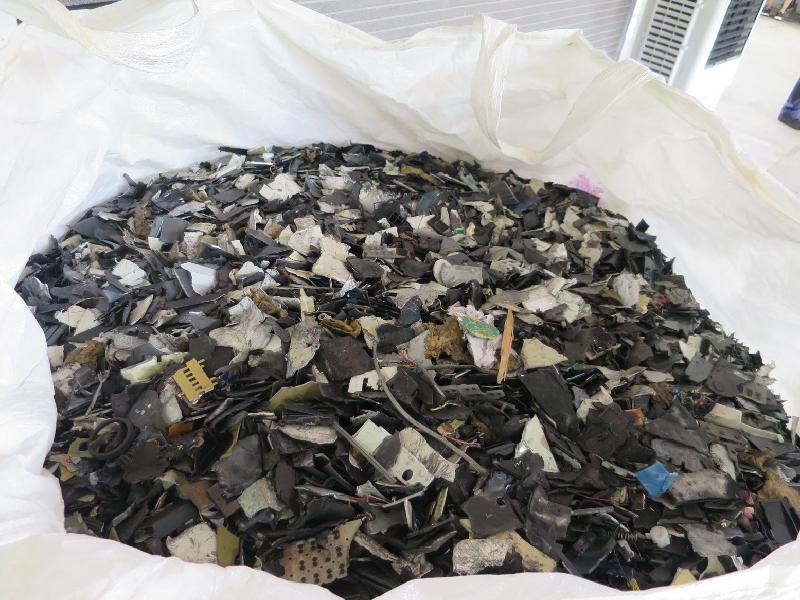
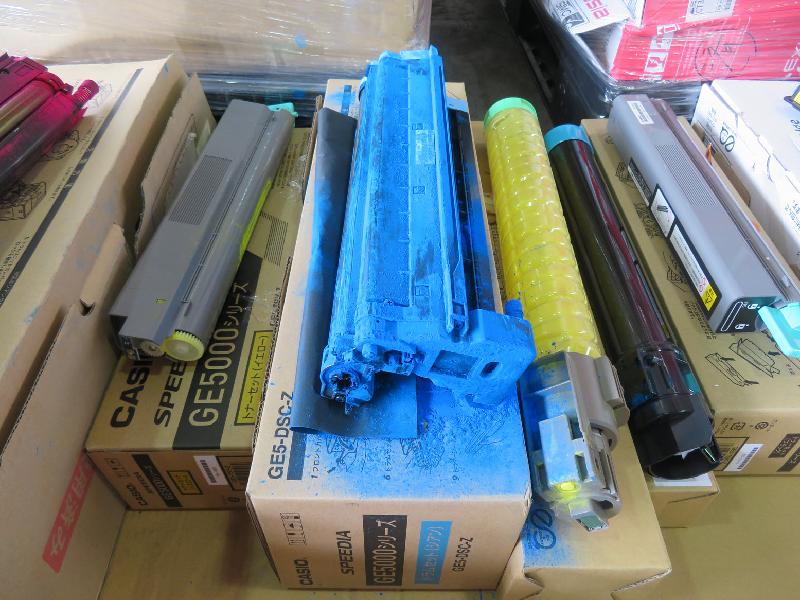
Photo  Photo  
read more

Tuen Mun Hospital responds to case of Legionnaires’ disease

The following is issued on behalf of the Hospital Authority:

     In response to media enquiries regarding a Legionella infection case, the spokesperson for Tuen Mun Hospital (TMH) gave the following reply today (June 30):
 
     Since there was one more patient who had stayed in a surgical ward at TMH confirmed to have Legionnaires’ Disease (LD), the Centre for Health Protection (CHP) visited the ward again and collected water samples from the hospital today. The source of infection for the patient is still undergoing investigation. The 70-year-old male patient had been discharged earlier and re-admitted to TMH today. He is now in stable condition. Medical surveillance will be performed on the patients who have been staying in the ward concerned for the same period of time.
     
     The hospital has already implemented a series of precautionary and infection control improvement measures, including:

(1) Installing bacterial filters on basin faucets and shower heads;
(2) Suspending the use of related basin faucets; and
(3) Following communications with the CHP, the hospital has implemented clinical surveillance for all patients in the ward.  

     The case has been reported to the Hospital Authority Head Office according to established guidelines. In addition to the above precautionary and improvement measures, the hospital has reminded healthcare staff to be vigilant and continue to closely monitor the situation on the ward. The hospital will co-operate with the CHP in the investigation of the source of infection. read more

CE welcomes passage of The Law of the People’s Republic of China on Safeguarding National Security in the Hong Kong Special Administrative Region by NPCSC

     In response to the passage of The Law of the People’s Republic of China on Safeguarding National Security in the Hong Kong Special Administrative Region (the National Security Law) by the Standing Committee of the National People’s Congress (NPCSC) today (June 30), the Chief Executive, Mrs Carrie Lam, made the following statement:
 
     Safeguarding national security is the constitutional duty of the Hong Kong Special Administrative Region (HKSAR). The HKSAR Government welcomes the passage of the National Security Law by the NPCSC today. This national law has been listed in Annex III of the Basic Law in accordance with Article 18 of the Basic Law after consulting the NPCSC’s Committee for the Basic Law of the HKSAR and the HKSAR Government.  
 
     The HKSAR is an inalienable part of the People’s Republic of China and a local administrative region which enjoys a high degree of autonomy and comes directly under the Central People’s Government. Safeguarding national sovereignty, security and development interests is the constitutional duty of the HKSAR and concerns every Hong Kong citizen. In view of the increasingly pronounced national security risks faced by the HKSAR, the enactment of a national security law at the state level is both necessary and urgent in order to plug the loophole in national security in Hong Kong. The legislation is an important step to improve the “One Country, Two Systems” institutional system as well as restore stability in Hong Kong society as soon as possible.
 
     “The Decision on establishing and improving the legal system and enforcement mechanisms for the HKSAR to safeguard national security” passed by the National People’s Congress earlier clearly stipulated that the National Security Law listed in Annex III of the Basic Law will be applied by way of promulgation in the HKSAR. The National Security Law will come into effect later today. The HKSAR Government will complete the necessary procedure for publication by gazette as soon as possible to enable the implementation of the National Security Law in Hong Kong in tandem.
 
     The National Security Law seeks to practically and effectively prevent, curb and punish four types of crimes seriously endangering national security, namely acts of secession, subversion of state power, terrorist activities, and collusion with foreign or external forces to endanger national security. It only targets an extremely small minority of offenders while the life and property as well as various legitimate basic rights and freedoms enjoyed by the overwhelming majority of citizens will be protected.
 
     The HKSAR Government will, in accordance with the requirement of the National Security Law, establish the Committee for Safeguarding National Security to be chaired by the Chief Executive as soon as possible. Dedicated units in the Hong Kong Police Force and the Department of Justice will be responsible for implementing the relevant legal provisions in the National Security Law.
  
     I express my heartfelt thanks to the NPCSC for gauging the views of the HKSAR Government and various sectors of the community in Hong Kong as well as taking on board Hong Kong’s practical situation during the law drafting process. I am also encouraged by the overwhelming support of the members of the public. I am confident that after the implementation of the National Security Law, the social unrest which has troubled Hong Kong people for nearly a year will be eased and stability will be restored, thereby enabling Hong Kong to start anew, focus on economic development and improve people’s livelihood. read more

Update on investigation into case of Legionnaires’ disease in hospital

     The Centre for Health Protection (CHP) of the Department of Health today (June 30) reported an update on its investigation into a case of Legionnaires’ disease (LD) in Tuen Mun Hospital (TMH) announced on June 26. 

     The CHP identified one additional patient related to the case. The male patient, aged 70 with underlying illness, was admitted to TMH on June 9 due to medical conditions and stayed in the same ward as the Legionella case announced on June 26. 

     The patient developed shortness of breath on June 11. He received treatment and remained in stable condition, and was discharged on June 29. His sputum specimen tested positive for Legionella species upon laboratory testing.
 
     “Epidemiological investigations with TMH are ongoing to identify potential sources of infection, high-risk exposure and clusters, if any. Relevant water samples and environmental swabs have been collected from potential sources for laboratory testing,” a spokesman for the CHP said.
 
     Tracing of contacts including staff and in-patients in ward is ongoing and those identified have been put under medical surveillance. The CHP has provided health advice against LD to staff and in-patients, including those with weakened immunity who should use sterile or boiled water for drinking, tooth brushing and mouth rinsing. Investigation is ongoing.

     Legionellae are found in various environmental settings and grow well in warm water (20 to 45 degrees Celsius). They can be found in aqueous environments such as water tanks, hot and cold water systems, cooling towers, whirlpools and spas, water fountains and home apparatus which support breathing. People may become infected when they breathe in contaminated droplets (aerosols) and mist generated by artificial water systems, or when handling garden soil, compost and potting mixes.
  
     Immunocompromised persons should: 
  
• Use sterile or boiled water for drinking, tooth brushing and mouth rinsing;
• Avoid using humidifiers, or other mist- or aerosol-generating devices. A shower may also generate small aerosols; and
• If using humidifiers, or other mist- or aerosol-generating devices, fill the water tank with only sterile or cooled freshly boiled water, and not water directly from the tap. Also, clean and maintain humidifiers/devices regularly according to manufacturers’ instructions. Never leave stagnant water in a humidifier/device. Empty the water tank, wipe all surfaces dry, and change the water daily.
  
     The public should observe the health advice below: 
  
• Observe personal hygiene;
• Do not smoke and avoid alcohol consumption;
• Strainers in water taps and shower heads should be inspected, cleaned, descaled and disinfected regularly or at a frequency recommended by the manufacturer;
• If a fresh-water plumbing system is properly maintained, it is not necessary to install domestic water filters. Use of water filters is not encouraged as clogging occurs easily, which can promote growth of micro-organisms. In case water filters are used, the pore size should be 0.2 micrometres (µm) and the filter needs to be changed periodically according to the manufacturer’s recommendations;
• Drain and clean water tanks of buildings at least quarterly;
• Drain or purge for at least one minute infrequently used water outlets (e.g. water taps, shower heads and hot water outlets) and stagnant points of the pipework weekly or before use;
• Seek and follow doctors’ professional advice regarding the use and maintenance of home respiratory devices and use only sterile water (not distilled or tap water) to clean and fill the reservoir. Clean and maintain the device regularly according to the manufacturer’s instructions. After cleaning/disinfection, rinse the device with sterile water, cooled freshly boiled water or water filtered with 0.2 µm filters. Never leave stagnant water in the device. Empty the water tank, keep all surfaces dry, and change the water daily; and
• When handling garden soil, compost and potting mixes:
1. Wear gloves and a face mask;
2. Water gardens and compost gently using low pressure;
3. Open composted potting mixes slowly and make sure the opening is directed away from the face;
4. Wet the soil to reduce dust when potting plants; and
5. Avoid working in poorly ventilated places such as enclosed greenhouses.

     The public may visit the CHP’s LD page, the Code of Practice for Prevention of LD and the Housekeeping Guidelines for Cold and Hot Water Systems for Building Management of the Prevention of LD Committee, and the CHP’s risk-based strategy for prevention and control of LD.    read more

Monetary Statistics for May 2020

The following is issued on behalf of the Hong Kong Monetary Authority:
 
        According to statistics published today (June 30) by the Hong Kong Monetary Authority, total deposits with authorized institutions decreased by 0.3 per cent in May 2020. Among the total, Hong Kong dollar deposits edged up by 0.1 per cent while overall foreign currency deposits declined by 0.6 per cent. Renminbi deposits in Hong Kong increased by 6.2 per cent to RMB694.9 billion at the end of May. The total remittance of renminbi for cross-border trade settlement amounted to RMB521.5 billion in May, compared with RMB540.2 billion in April.
 
     It should be noted that changes in deposits are affected by a wide range of factors, such as interest rate movements, fund-raising activities and investors’ allocation of funds. Fluctuations in monthly deposit changes are therefore normal. There was a rebound in total deposits according to the latest data up to the first three weeks of June.
      
        Total loans and advances decreased by 0.3 per cent in May. Among the total, loans for use in Hong Kong (including trade finance) and loans for use outside Hong Kong dropped by 0.2 per cent and 0.5 per cent respectively from a month ago. The Hong Kong dollar loan-to-deposit ratio decreased to 88.4 per cent at the end of May from 88.7 per cent at the end of April, as Hong Kong dollar deposits increased while Hong Kong dollar loans decreased.
 
        Hong Kong dollar M2 and M3 both edged up by 0.1 per cent in May, and increased by 0.2 per cent and 0.1 per cent respectively compared to a year ago. The seasonally-adjusted Hong Kong dollar M1 rose by 3.0 per cent in May, and grew by 3.5 per cent compared to a year ago, reflecting in part investment-related activities. Total M2 and M3 both declined by 0.4 per cent in May, but picked up by 2.4 per cent and 2.3 per cent respectively from a year earlier.
 
        As monthly monetary statistics are subject to volatilities due to a wide range of transient factors, such as seasonal and IPO-related funding demand as well as business and investment-related activities, caution is required when interpreting the statistics. read more