image_pdfimage_print

Author Archives: hksar gov

Regional flag day today

     Three charities have been issued Public Subscription Permits to hold flag sales on Hong Kong Island, in Kowloon and in the New Territories separately from 7am to 12.30pm today (July 4). The Social Welfare Department (SWD) has been informed by one of the charities that the regional flag-selling activity scheduled to be held by it has been cancelled, a spokesman for the SWD said.
 
     Information on the regional flag-selling activities today is as follows:
 

Region Name of organisation and contact information Colour of collection bag Colour of flag
Hong Kong Island Hong Kong Association For Cleft Lip and Palate
Contact Person: Mrs Chu
Contact Number: 2794 1915
Yellow Beige
New Territories The Society for Truth and Light
Contact Person: Miss Tang
Contact Number: 2768 4204
Orange Green
 
     Contact information for the organisation that has cancelled a regional flag-selling activity is as follows:
 
Region Name of organisation Contact person Contact number
Kowloon Hong Kong Young Women’s Christian Association Miss Cheung 3476 1311
 
     Details of the charitable fund-raising activities, including any updated information, covered by the issued Public Subscription Permit have been published on the GovHK website (www.gov.hk/en/theme/fundraising/search/). Permits for flag days containing information on contact methods of the flag-selling organisations and the approved flag-selling activities have also been uploaded to the SWD’s website (www.swd.gov.hk/en/index/site_pubsvc/page_controlofc/sub_flagdays/) for reference. For enquiries, please call the SWD’s hotline at 2343 2255, or the designated hotline of the 1823 Call Centre at 3142 2678.
 
     If any flag day activity is suspected to be fraudulent, people should not make any donation and should immediately report the matter to the Police, the spokesman added. read more

Electoral Affairs Commission responds to media enquiries

The following is issued on behalf of the Electoral Affairs Commission:

     In response to media enquiries today (July 3) on the polling and counting procedures for the 2020 Legislative Council General Election, a spokesman for the Electoral Affairs Commission (EAC) gives the following reply:

     After thorough consideration of the representations received during the public consultation period, the EAC issued on June 18 the Guidelines on Election-related Activities in respect of the Legislative Council Election, which apply to the 2020 Legislative Council General Election to be held this year and Legislative Council by-elections afterwards. For polling and counting, the Registration and Electoral Office (REO) will adopt the following arrangements: 

(1) Polling arrangements on the polling day

     While maintaining the principle of fairness, the EAC is of the view that the polling arrangements should have regard to electors who have difficulties in standing for a long time in the queue to collect ballot papers due to their physical conditions (e.g. the elderly, pregnant women and persons with disability and mobility difficulties). In light of this, the following caring and elector-streaming initiatives will be adopted in the upcoming 2020 Legislative Council General Election.

     Presiding Officers, as far as practicable, will arrange for the elector concerned to sit inside the polling station and wait for collecting his/her ballot paper(s) with the elector’s position in the queue properly marked. When it comes to the elector’s turn, the polling staff will direct him/her to collect the ballot paper(s) at the relevant issuing desk. Depending on the sizes of polling stations, the REO will prepare a certain amount of chairs for all polling stations across the territory.

     On the other hand, each ballot paper issuing desk is responsible for serving electors with a designated group of alphabetical prefix in the HKID number. Electors who queue up at the same issuing desk are roughly of the same age group. When electors are queuing up outside the polling station for entry and there is any ballot paper issuing desk not serving any elector, the polling staff will hold a signboard outside the polling station to direct those electors with the corresponding alphabetical prefix of the HKID number served by that issuing desk to enter the polling station forthwith to collect their ballot papers. This arrangement does not only speed up the streaming of electors to their issuing desks so as to reduce the overall waiting time but also tackle the problem in relation to repeated queuing to obstruct other electors entering polling stations.

     “Complaints were received about some people queuing up repeatedly outside polling stations on the polling day of last year’s District Council Election so as to lengthen the queuing time of other electors or electors of certain age groups. Queuing up repeatedly, which will only lengthen the waiting time of all electors, is absolutely a wrongdoing. It is a criminal offence to obstruct others voting by deception. According to the sections 6 and 14 of the Elections (Corrupt and Illegal Conduct) Ordinance (Cap. 554), a person, who engages in corrupt conduct at an election if the person gets another person to obstruct or prevent a third person from voting at the election by a deception, commits a criminal offence subjecting to a maximum fine of $500,000 and imprisonment for seven years. The polling staff will notify law enforcement agencies if someone is suspected to have queued up repeatedly to obstruct others voting,” the spokesman said.

     “During peak voting periods, Presiding Officers will flexibly adjust the designated group of alphabetical prefixes in the HKID number served by issuing desks, and additional issuing desks will be set up if reasonably practicable, in order to speed up the handling of electors in the queue. The abovementioned measures will be implemented at all polling stations. The REO will provide the polling staff with sufficient training and detailed working guidelines.”

     In addition, when identifying polling stations, the REO has endeavoured to look for bigger venues and asked the venue management to make available more space as far as possible, with a view to providing a better environment for electors to queue up and minimising the need for queuing up on steep roads and stairs.

(2) Prevent tendered votes and observe vote counting

     According to the law, when issuing a ballot paper to an elector, the polling staff will draw a line in the copy of the register of electors across the name and the identity document number of the elector. It is to demonstrate that the elector has applied for a ballot paper in order to prevent tendered votes. With a view to enhancing the transparency of issuing ballot papers, the polling staff will draw the line under the observation of the elector concerned, while at the same time cover up the entries of other electors in the copy of the register to ensure the personal data of other electors are protected. 

     If the space of polling stations is large enough, the REO will allow more election agents and polling agents appointed by candidates (or the candidate himself/herself) entering polling stations to observe the issuing of ballot papers. The spokesman added, “The electoral staff recruited for each election come from different bureaux and departments. They often do not know each other, and may even meet for the first time during the setup of polling station. For this reason, they can also play a role of mutual monitoring at the polling and counting stations.”

(3) Recording arrangement 

     Besides, in this year’s Legislative Council General Election, recording facilities will be installed in each counting station and the central counting station (including the counting zone) to record the actual situation of the counting stations. The arrangement aims to maintain a safe environment for members of the public and staff inside the counting stations as well as for record purposes. 

     As for the suggestion to install closed-circuit television to record the actual situation of the polling stations, the spokesman reiterated that one of the important principles of the electoral system is the anonymity and confidentiality of the vote. The electoral system has been trusted by the public for a long time, therefore any important changes must have sufficient reasons to avoid weakening the public’s confidence in the electoral system.

(4) Electronic poll registers

     Funds were granted to the REO in 2018 for the implementation of electronic poll registers in the 2021 Election Committee Subsector Elections. As the plan involves various procedures, including the tendering, amending relevant legislations, system set up with repeated validation and testing. Hence, it is not feasible to implement the plan one year in advance in the Legislative Council General Election to be held this September in terms of time, legislative procedures and technical aspect. 

     The spokesman pointed out that the application of electronic poll registers involves personal data of more than four million electors, stringent security measures should be in place to ensure the network and data security. Professional audits and certifications from an independent third party should also be obtained, otherwise it will be difficult to earn public confidence.

     The spokesman added that elections are important constitutional arrangements, and no one should interfere or influence elections with violence. The EAC is not a law enforcement agency and has no right to enforce the law. The maintenance of law and order is the responsibility of the police. If any candidate believes he/she is targeted and the fairness of the election is affected, he/she can make an election petition to query the result of the election, which will be determined by the court. The preparations for the 2020 Legislative Council General Election are in full swing. The EAC appeals to members of the public to cherish the Legislative Council General Election as a very important platform and to carry on the long-standing good election culture in Hong Kong so that the election can be conducted smoothly in a fair and orderly manner. The EAC will continue to decide on public election matters in accordance with actual and objective considerations and related legislations. It will continue to devote full efforts, acting in accordance with an open, honest and fair principle to make reasonably practicable arrangements for public elections. read more

HKSARG strongly opposes passage of the Hong Kong Autonomy Act by US Congress

     The Hong Kong Special Administrative Region (HKSAR) Government today (July 3) expressed strong opposition to the passage of the “Hong Kong Autonomy Act” (The Act) by the United States (US) Congress. 
 
     A government spokesman said, “Once again, we urge the US Congress to immediately stop interfering in HKSAR’s internal matters. The Act and the so-called ‘sanctions’ are totally unacceptable. They will not deter us but will only harm the relations and common interests between Hong Kong and the US.
 
     “The passage of successive laws targeting the HKSAR, an inalienable part of the People’s Republic of China (PRC), by the US legislature under the pretext of human rights, democracy and autonomy is a blatant breach of obligations and respect between nations.  On national security legislation which is invariably the jurisdiction of the central government of any country, the US legislature has clearly displayed double standards which is deeply regretted.”    
 
         The government spokesman said that for those who were still ignorant about the HKSAR’s constitutional order, they should be reminded that the Constitution of the PRC and the Basic Law of the HKSAR of the PRC (the Basic Law) form the constitutional basis of the HKSAR.  According to Article 1 of the Basic Law, the HKSAR is an inalienable part of the PRC. Article 12 of the Basic Law stipulates that the HKSAR shall be a local administrative region of the PRC, which shall enjoy a high degree of autonomy and come directly under the Central People’s Government. The implementation of the ‘One Country, Two Systems’ principle in the HKSAR is entirely the internal affairs of the PRC.  No other state or legislature has the right to intervene, directly or indirectly, in those internal affairs.
 
      “Since the return to the Motherland, the HKSAR has been implementing  the ‘One Country, Two Systems’ principle, ‘Hong Kong people administering Hong Kong’ and a high degree of autonomy in strict accordance with the Basic Law. The Central Government has given the ‘One Country, Two Systems’ principle unswerving support and acted in strict accordance with the Constitution and the Basic Law. 
   
     “Some Members of the US Congress claimed that the passage of the Act was in response to the enactment of the National Security Law in Hong Kong. This is totally misguided. National security is a matter that falls under the purview of the Central Authorities and the National Security Law enacted on June 30 2020 by the National People’s Congress Standing Committee is a national law which by virtue of relevant provisions in Article 18 of the Basic Law shall be applied in the HKSAR.
 
         In view of the increasingly pronounced national security risks faced by the HKSAR, especially since the escalating violence and social chaos last June, close to three million Hong Kong people took part in a signature campaign over eight days to show their support for the enactment of national security legislation by the Central Authorities, which was considered timely, reasonable and rational.  
 
      “The National Security Law seeks to prevent, suppress and impose punishment for four types of acts and activities that seriously endanger national security. It targets an extremely small minority of people without adversely affecting the basic rights and freedoms legitimately enjoyed by Hong Kong people.  It is an important step to improve the ‘One Country, Two Systems’ institutional system and represents an essential and timely decision for restoring stability in Hong Kong.  The law will not affect the high degree of autonomy, judicial independence and the rule of law in Hong Kong.

       “We reiterate that any ‘sanctions’ imposed under the Act will not create an obligation for financial institutions under Hong Kong law.  We urge the US side to act responsibly by refraining from taking measures that may potentially affect the normal operations of financial institutions and the vast number of customers they serve.  Counter-measures may also be adopted by the Central Government as well as the HKSAR Government as and when needed.” read more

CSD launches first mindfulness-based psychological treatment programme for male persons in custody (with photos)

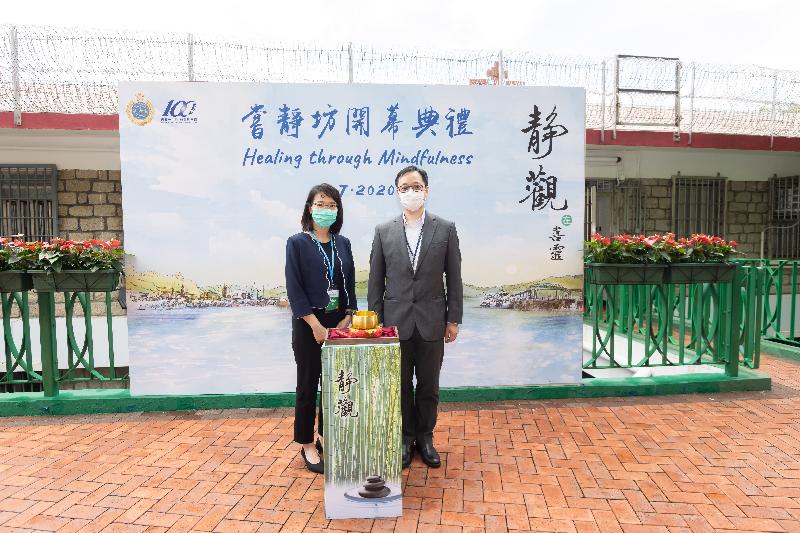
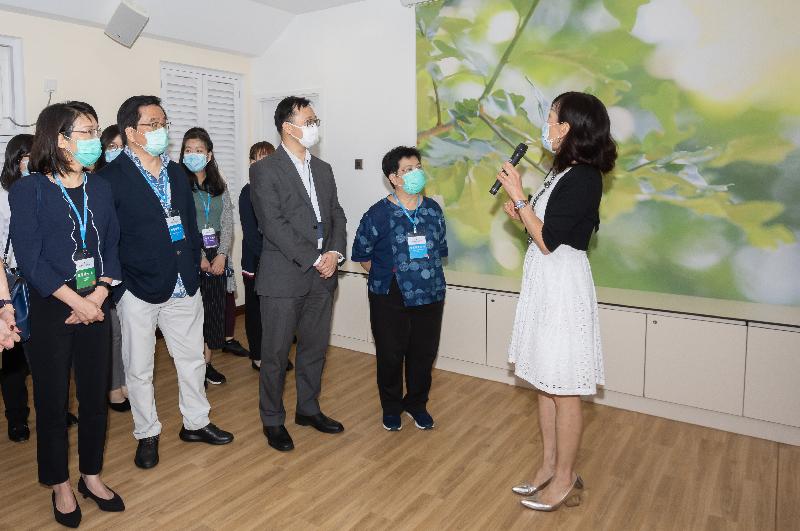
     The Correctional Services Department (CSD) officially launched a new initiative called “Mindfulness Place”, the first mindfulness-based psychological treatment programme for male persons in custody (PICs), at Hei Ling Chau Drug Addiction Treatment Centre (HLTC) today (July 3). The Commissioner for Narcotics, Ms Ivy Law, officiated the opening ceremony. Drawing upon the latest empirical research findings and evidence-based practices from overseas, the CSD has incorporated elements of mindfulness into its psychological treatment, named the Drug Abuse Rehabilitation Programme, to enhance its drug treatment and rehabilitation efforts. 
      
     Ms Law said the CSD is taking an innovative approach to include mindfulness in its psychological-based service. The treatment programme takes care of both the psychological development of persons in custody and the strengthening of their determination to accept treatment for drug abuse, which is a forward-looking approach.
      
     The Assistant Commissioner (Rehabilitation) of the CSD, Mr Wan Ming-ki, said, “The opening ceremony today with the theme ‘Healing Through Mindfulness’ signifies the beginning of a new era of psychological treatment and rehabilitation for drug abusers. We look forward to the continued development of this new service for the betterment of rehabilitation for drug abusers.”
      
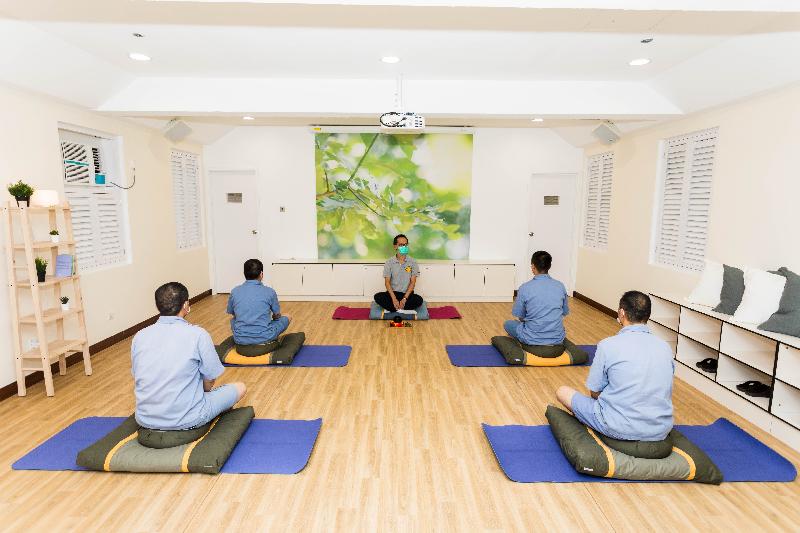
     Based on the success of its first attempt to bring mindfulness into drug addiction treatment for female drug abusers in Nei Kwu Correctional Institution by creating the “Mindfulness Corner” in 2017, the CSD is pleased to extend this mindfulness initiative with a renewed and comprehensive programme structure to the male PICs in HLTC to enable better recoveries and rehabilitation. The duration of the new programme ranges from 12 to 14 weeks, with separate programme components to specifically address areas such as motivation, craving, negative emotions and life-style changes, with weekly guided mindfulness practices to develop good habits and consolidate therapeutic gains. Participating PICs will reside in the same dormitory to facilitate mutual support in mindfulness practices.
      
     The CSD’s Senior Clinical Psychologist, Ms Eva Kwong, said, “Drug abusers in HLTC are a unique group of clients with special treatment needs. Not only are they presented with criminality issues and drug use problems, many of them have a chronic drug use history and have repeatedly failed to quit drugs. They have greater treatment needs, lack self-confidence and are distressed from multiple psychological and family problems. The practice of mindfulness in drug addiction treatment can facilitate PICs in the early identification of high risk factors such as negative emotions and cravings, and enable them to deal with these risk factors more effectively to prevent relapses and improve their resilience to lead a drug-free life.”

     Ms Kwong added, “Mindfulness involves deliberately paying attention to things we normally would not even notice, and becoming aware of every drug abuser’s in-the-moment experience as it arises, non-judgmentally, with kindness and compassion. Drug abusers often avoid problems and negative emotions by taking drugs. Through practicing different mindfulness exercises, including mindful breathing, mindful stretching and body scan, PICs can learn to improve their concentration, awareness and acceptance of internal experiences, allowing them to calmly make wise decisions and therefore stay away from their drug-using lifestyle.
      
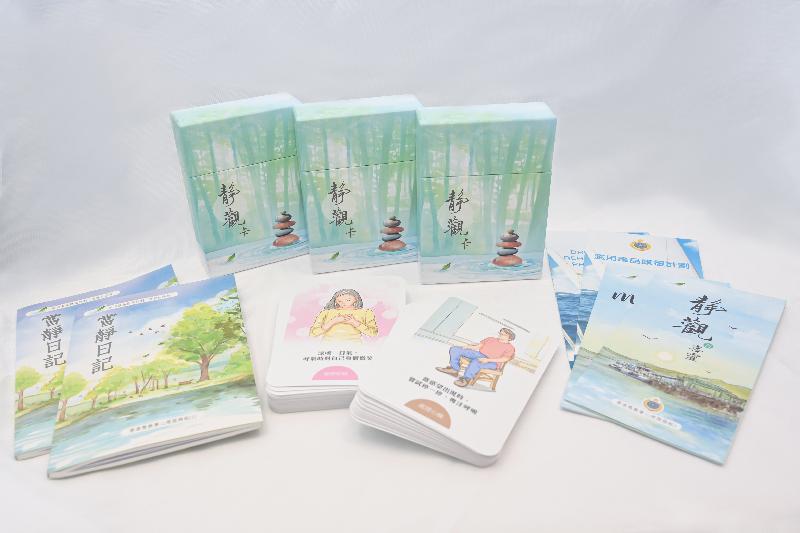
     “To facilitate PICs to practice mindfulness, the departmental clinical psychologist team developed their first set of mindfulness cards and a mindfulness journal, which are gender-free treatment materials tailor-made for the local culture in the correctional context to facilitate the easy application and practice of a mindfulness lifestyle beyond the therapeutic room. The use of drawings and writings encourages PICs to freely record their thoughts and feelings regarding daily mindfulness practices, which can further enhance their self-understanding.”

Photo  Photo  Photo  Photo  
read more