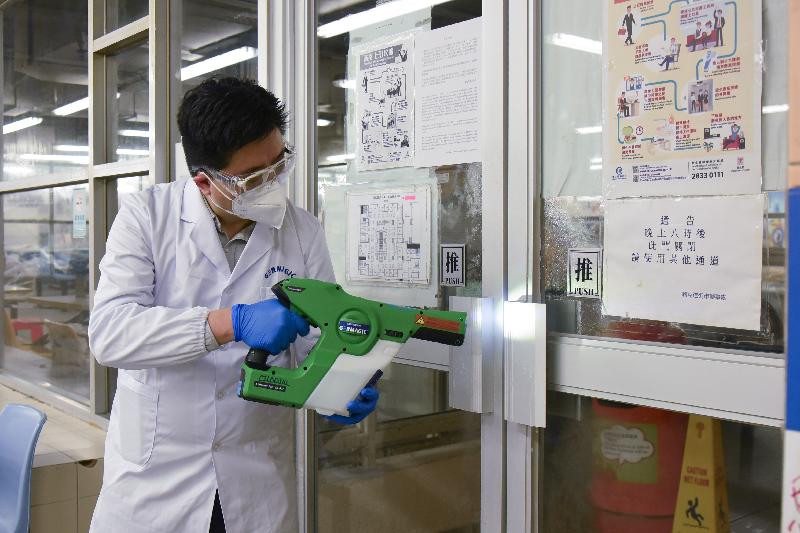
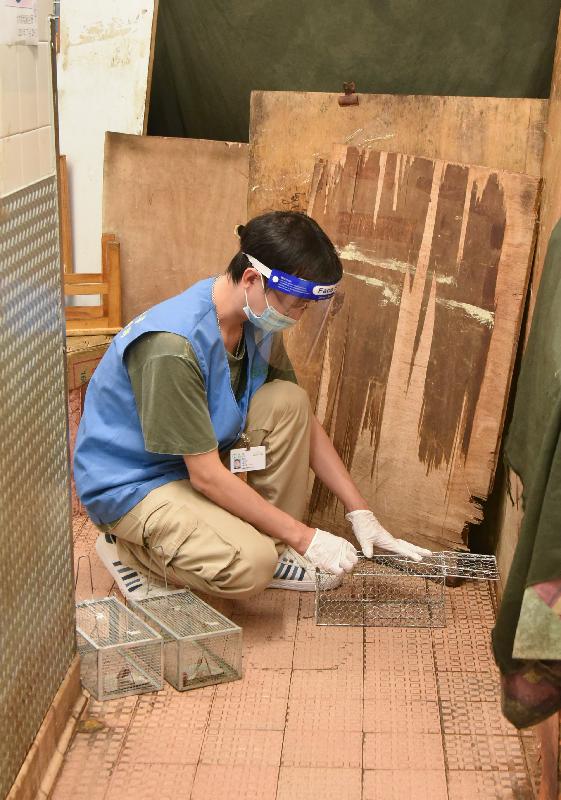
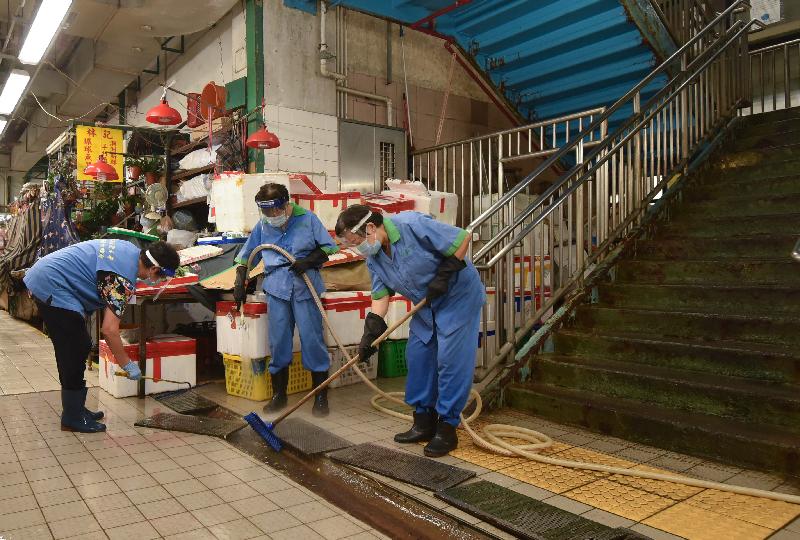
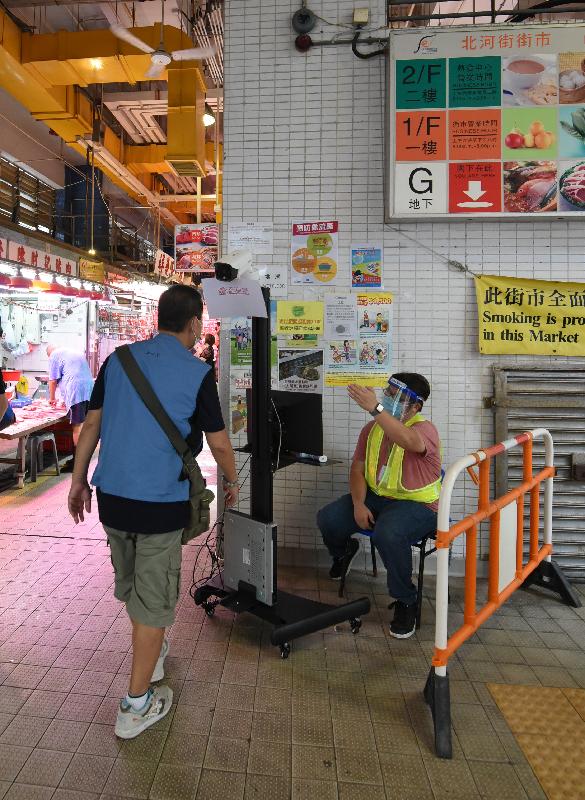
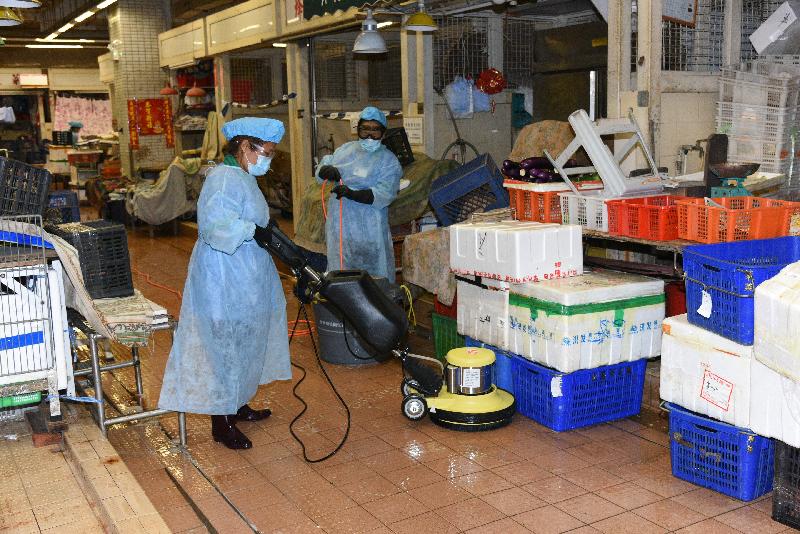
​The Food and Environmental Hygiene Department (FEHD) said today (August 22) that the FEHD has adopted multiple measures to enhance anti-epidemic work in its markets, including stepping up cleaning and disinfection work, and will pursue targeted anti-rodent operations and proactively encourage market stall tenants to complement such efforts, so as to maintain the cleanliness and environmental hygiene of markets (including stall areas and communal areas). In addition, the FEHD will invite stakeholders like private market operators to participate in joint operations, in order to make concerted efforts to step up the cleaning and disinfection and anti-rodent work in their markets and the surrounding public places.
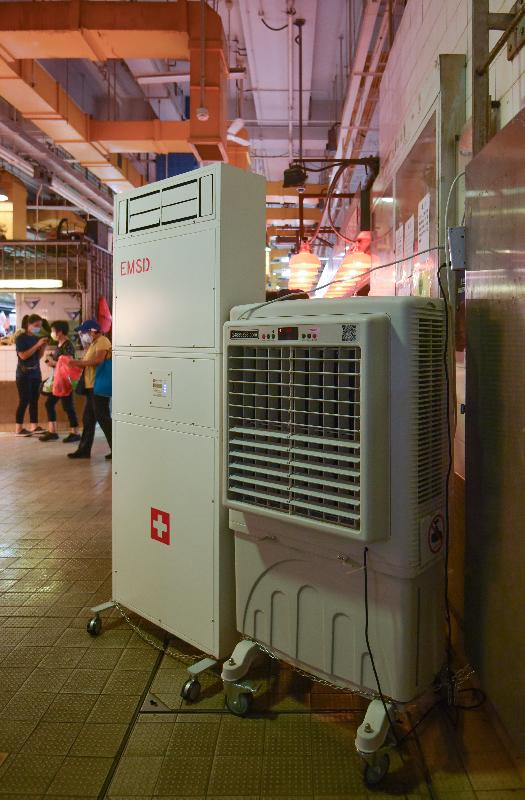
In view of the severe epidemic situation, the FEHD has progressively arranged for around 60 of its markets to close an hour earlier for additional deep cleaning and disinfection since mid-July as a precautionary measure. With the full support of the Electrical and Mechanical Services Department (EMSD), the FEHD has installed body temperature checking system in 36 markets with a high patronage rate and has arranged for checking of body temperature of market patrons by FEHD staff using hand-held or standing-type thermometers in some markets. The FEHD and the EMSD have made concerted efforts to improve the air ventilation in some markets and has installed standalone air coolers at some markets with regard to circumstances on the ground. In addition, the FEHD, in collaboration with the EMSD, has launched a trial scheme since late July to place two moveable air purifiers equipped with high-efficiency particulate (HEPA) air filters at Pei Ho Street Market.
To enhance the effectiveness of epidemic prevention, the FEHD has progressively installed automatic dispensers in toilets in its markets, and sensor-type toilet seat sanitisers in their toilet cubicles. Anti-microbial coating will also be applied to the communal areas and facilities of markets with a high patronage rate in phases starting from next week.
In addition, the FEHD has also enhanced anti-rodent measures in public markets, and has conducted a three-month intensive anti-rodent operation in some markets progressively, during which market staff will thoroughly clear the refuse and clean the passageways and drains in the markets every night after the markets are closed so as to eliminate the food sources of rodents. Plentiful traps are also placed in market areas extensively in the small hours in order to strengthen rodent control. The FEHD will proactively encourage market stall tenants to complete such efforts, including clearing of their disused articles and put their goods (especially food items) in proper storage, so that the cleanliness and environmental hygiene of stall areas and communal areas could be maintained.
To further strengthen the anti-rodent work in markets and other places, District Environmental Hygiene Offices of the FEHD will approach relevant stakeholders progressively, inviting them to initiate joint anti-rodent operations. Apart from covering markets under the FEHD, private market operators will also be invited by the FEHD to participate, in order to assure the public that the market continues to be a good place for buying daily necessities and food items. Other government departments will also be invited by the FEHD to conduct joint operations at venues under their purview and the surrounding public places, so as to achieve synergy effect in strengthening the work on environmental hygiene. In addition to the cleaning and anti-rodent work, the Pest Control Advisory Section will also provide professional advice on rodent control.
The FEHD initiated a relevant operation at its Tai Shing Street Market on August 21, and in collaboration with LINK mounted a joint operation at LINK’s Sau Mau Ping Market and the neighbouring areas on August 22. Apart from deep cleaning and placing traps to strengthen rodent control in markets, there is also proactive discussion with market stall tenants on the arrangements for handling pig carcasses upon their arrival at the markets. The FEHD will progressively launch relevant operations in markets of other districts.
The FEHD issued advisory letters on August 14 to operators and permit holders of meat delivery vans of Sheung Shui Slaughterhouse and Tsuen Wan Slaughterhouse, reminding them to adopt appropriate measures to ensure that the food animal carcasses and offal are properly protected from pest contamination during their delivery to shops.
According to the Food Business Regulation (Cap 132X), any person engaged in the transportation of food animal carcasses and offal shall adopt appropriate measures to protect the food from risk of contamination or deterioration. Offenders are liable to prosecution and a maximum fine of $10,000 and imprisonment for three months. The FEHD will step up inspection and prosecutions will be instituted against relevant food business operators for violation of the regulation. The food business licences of repeated offenders would be cancelled by the FEHD.
If tenants or agents of FEHD market stalls are convicted for four times within 12 months for breaching any provision under the Ordinance or its subsidiary legislation, the FEHD may terminate its tenancy agreement. In addition, according to the FEHD’s current policy of “warning letters”, if any tenant has been issued a cumulative total of three warning letters for breaching any of the terms and conditions of the tenancy agreement within six months, the FEHD will terminate its tenancy agreement. If the offence committed is considered of a serious nature by the FEHD (despite being convicted only once), or the breach of the terms and conditions of the tenancy agreement is considered of a serious nature, the FEHD will also consider immediate termination of the tenancy agreement.
The FEHD also issued letters on August 17 to licensed fresh provision shops selling fresh meat and public market stall tenants selling meat, reminding them to abide by the relevant requirements.
From August 13 to 21, the FEHD has conducted 16 blitz operations against fresh provision shop licensees/persons-in-charge and public market stall tenants selling meat. Of these, the prosecution procedures have been initiated for 9 cases.
The spokesman said that the FEHD attaches importance to the hygienic condition of public markets. In addition to the regular cleaning work in the daytime, market service contractors also conduct thorough cleaning in all markets after the markets are closed every day. During the epidemic, the FEHD has already stepped up cleaning and disinfection of communal areas and facilities in the markets, including toilets, escalators, elevators and stair handrails, with diluted household bleach regularly every day. Disinfectant hand sanitisers are also placed at market areas for public use.
The FEHD will arrange for the following 12 public markets on Hong Kong Island, in Kowloon and the New Territories to be closed an hour earlier at 7pm for deep cleaning and disinfection in the coming few days as a precautionary measure:
August 23 (Sunday)
Wan Chai Market
Haiphong Road Temporary Market
Pei Ho Street Market
Kwu Tung Market Shopping Centre
August 24 (Monday)
Centre Street Market
Sai Ying Pun Market
Fa Yuen Street Market
Sha Tau Kok Market
August 25 (Tuesday)
Po On Road Market
Ngau Chi Wan Market
Lam Tei Market
Kam Tin Market
During the period, the FEHD staff will thoroughly clean and disinfect communal areas and facilities in the markets, and call for co-operation of market tenants to conduct cleaning and disinfection at their respective stalls, with a view to improving the overall hygiene condition of the markets and eliminating the food sources and hiding places of rodents. In addition, the FEHD will carry out deep cleaning work on the periphery of the markets and nearby streets. The cleaning and disinfection work is expected to last about four hours.
The FEHD will closely monitor the situation of its markets and continue to enhance cleaning and disinfection work as well as anti-rodent measures when necessary so as to maintain environmental hygiene and safeguard the health and safety of tenants and the public.
read more