image_pdfimage_print

Author Archives: hksar gov

CS visits community testing centre at Queen Elizabeth Stadium (with photos/video)

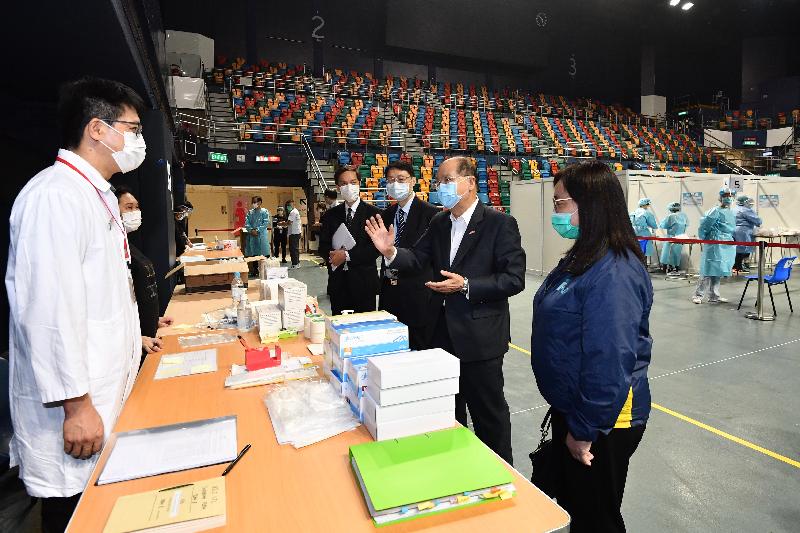
     To cut the transmission chain of COVID-19 in the community and to curtail the epidemic situation, the Government launched the Universal Community Testing Programme (UCTP) yesterday (September 1) to provide a one-off free testing service for the public at 141 community testing centres. The Chief Secretary for Administration, Mr Matthew Cheung Kin-chung, accompanied by the Director of General Grades of the Civil Service Bureau, Mr Hermes Chan, visited the community testing centre at Queen Elizabeth Stadium today (September 2) to inspect the operation of the centre and to give encouragement to the staff members.
 
     Mr Cheung was first briefed by Mr Chan about the arrangements at the testing centre such as manpower allocation and the design and workflow of the centre. Mr Cheung said he was pleased to learn that appropriate arrangements have been made on the design and workflow of the centre in accordance with infection control and social distancing measures, and that all staff members and members of the public who took the tests have followed the necessary procedures, ensuring that the entire testing process is safe, quick and convenient.
 
     Mr Cheung said that he was pleased to know that all community testing centres have been operating smoothly as a whole since the launch of the programme yesterday. He thanked the healthcare personnel who are responsible for collecting specimens at the testing centres across the territory, as well as government employees undertaking administrative support for their efforts, which facilitated the smooth operation of the programme and contributed to the prevention and control of the epidemic.
 
     Mr Cheung said, “After reviewing the first day operation of the UCTP, the Government decided to increase the test quota for the public to make appointments. I appeal to members of the public to actively participate in the UCTP and sign up for the tests to protect oneself and others. The more people that participate in the programme, the higher the chances of identifying asymptomatic COVID-19 patients in the community for early isolation and early treatment. It will help break the invisible transmission chain in the community and contain the spread of the third wave of the epidemic so that social and economic activities can resume gradually and people’s daily lives can resume as normal.”
 
     For details of the UCTP, please visit the dedicated website at www.communitytest.gov.hk.
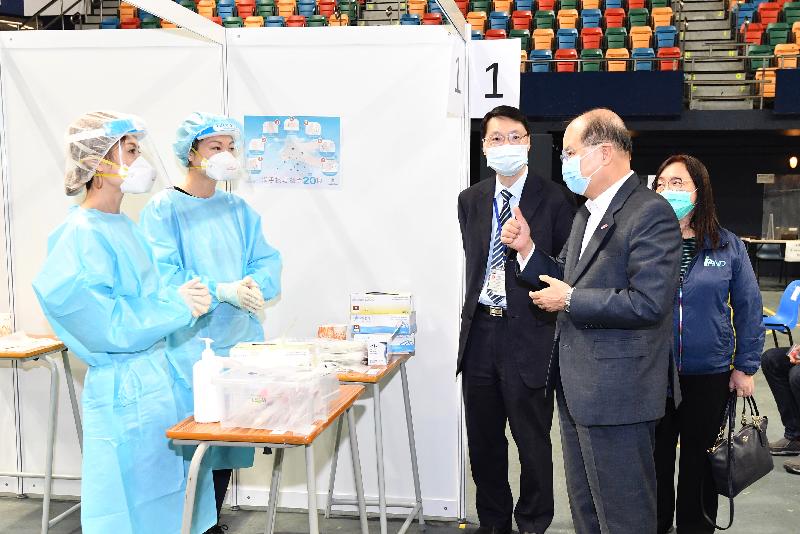
Photo  Photo  
read more

CHP investigates eight additional confirmed cases of COVID-19

     The Centre for Health Protection (CHP) of the Department of Health has announced that as of 0.00am, September 2, the CHP was investigating eight additional confirmed cases of coronavirus disease 2019 (COVID-19), taking the number of cases to 4 831 in Hong Kong so far (comprising 4 830 confirmed cases and one probable case).

     The CHP’s epidemiological investigations and relevant contact tracing on the confirmed cases are ongoing. For case details and contact tracing information, please see the Annex or the list of buildings with confirmed cases of COVID-19 in the past 14 days and the latest local situation of COVID-19 available on the website “COVID-19 Thematic Website” (www.coronavirus.gov.hk).

     In view of the severe epidemic situation, the CHP called on members of the public to avoid going out, having social contact and dining out. They should put on a surgical mask and maintain stringent hand hygiene when they need to go out. As a number of recent cases involve elderly people, the CHP strongly urged the elderly to stay home as far as possible and avoid going out. They should consider asking their family and friends to help with everyday tasks such as shopping for basic necessities.

     A spokesman for the CHP said, “Given that the situation of COVID-19 infection remains severe and that there is a continuous increase in the number of cases reported around the world, members of the public are strongly urged to avoid all non-essential travel outside Hong Kong.
 
     “The CHP also strongly urges the public to maintain at all times strict personal and environmental hygiene, which is key to personal protection against infection and prevention of the spread of the disease in the community. On a personal level, members of the public should wear a surgical mask when having respiratory symptoms, taking public transport or staying in crowded places. They should also perform hand hygiene frequently, especially before touching the mouth, nose or eyes.

     “As for household environmental hygiene, members of the public are advised to maintain drainage pipes properly, regularly pour water into drain outlets (U-traps) and cover all floor drain outlets when they are not in use. After using the toilet, they should put the toilet lid down before flushing to avoid spreading germs.”

     Moreover, the Government has launched the website “COVID-19 Thematic Website” (www.coronavirus.gov.hk) for announcing the latest updates on various news on COVID-19 infection and health advice to help the public understand the latest updates. Members of the public may also gain access to information via the COVID-19 WhatsApp Helpline launched by the Office of the Government Chief Information Officer. Simply by saving 9617 1823 in their phone contacts or clicking the link wa.me/85296171823?text=hi, they will be able to obtain information on COVID-19 as well as the “StayHomeSafe” mobile app and wristband via WhatsApp.

     To prevent pneumonia and respiratory tract infections, members of the public should always maintain good personal and environmental hygiene. They are advised to:

• Wear a surgical mask when taking public transport or staying in crowded places. It is important to wear a mask properly, including performing hand hygiene before wearing and after removing a mask;
• Perform hand hygiene frequently, especially before touching the mouth, nose or eyes, after touching public installations such as handrails or doorknobs, or when hands are contaminated by respiratory secretions after coughing or sneezing;
• Maintain drainage pipes properly and regularly (about once a week) pour about half a litre of water into each drain outlet (U-trap) to ensure environmental hygiene;
• Cover all floor drain outlets when they are not in use;
• After using the toilet, put the toilet lid down before flushing to avoid spreading germs;
• Wash hands with liquid soap and water, and rub for at least 20 seconds. Then rinse with water and dry with a disposable paper towel. If hand washing facilities are not available, or when hands are not visibly soiled, performing hand hygiene with 70 to 80 per cent alcohol-based handrub is an effective alternative;
• Cover your mouth and nose with tissue paper when sneezing or coughing. Dispose of soiled tissues into a lidded rubbish bin, then wash hands thoroughly; and
• When having respiratory symptoms, wear a surgical mask, refrain from work or attending class at school, avoid going to crowded places and seek medical advice promptly. read more

GLD’s response on procurement of masks with suspected false indication of origin

     A spokesperson for the Government Logistics Department (GLD) indicated today (September 2) that it has referred a case involving a batch of masks with suspected false indication of origin to the Hong Kong Customs and Excise Department for follow-up, and would make its best efforts to assist the enforcement department in its investigation.
 
     The GLD procured the concerned masks through direct engagement from a local supplier in March this year. According to the procurement contract, the supplier was required to provide a total of 32 million masks, of which the origin was Japan and the product specifications were in compliance with the American Society for Testing and Materials (ASTM) F2100 Level 2 standard. The offered price of the masks was in line with the prevailing market price. The supplier has already delivered the 32 million masks in batches to the GLD and received $97.75 million for the goods. All the concerned masks are still in the GLD’s stock and have not yet been distributed to government departments for use.
 
     Before awarding the procurement contract for the concerned masks, the GLD had received various documents from the supplier, including product specification testing reports, production information and letters from manufacturers as proof of compliance with relevant standards and place of origin. In June and July, the supplier submitted product specification testing reports again to demonstrate the quality of its delivered masks. The GLD also confirmed with the issuing body of the testing reports that the testing reports were genuine. The GLD did not find any quality problems when conducting random inspections of the goods in accordance with the established procedures.
 
     The GLD subsequently learned that the 32 million masks delivered under the contract did not fulfil the requirements of the procurement contract, i.e. not all of the masks received were from Japan. It immediately withheld payment of the remaining amount due to the supplier, rescinded its procurement contract with the supplier and will seek to recover all losses and compensation from the supplier.
 
     As the GLD has already referred the case to the relevant enforcement department for follow-up, it was not appropriate to disclose further information about the supplier.
 
     The spokesperson for the GLD indicated that under general circumstances, the GLD will procure masks through tendering/quotation procedures. Documents required to be submitted by tenderers as specified in tendering/quotation documents include, but are not limited to:

(1) undertaking/letter of intent of the manufacturer;
(2) product sample(s); and/or
(3) relevant report(s) by independent accredited laboratories.

     The GLD will evaluate information provided by tenderers. If the documents submitted by suppliers are in doubt, the GLD will request confirmation from manufacturers and/or independent accredited laboratories. Where necessary, the GLD will also pass the samples received to the Government Laboratory or other independent accredited laboratories for testing. Only after the offered products are assessed to be in compliance with the specifications required will the GLD consider awarding a contract to a particular supplier.

     As the COVID-19 pandemic developed swiftly at the beginning of this year, the global demand for masks increased sharply whereas supply shortage was acute. The GLD had to procure masks worldwide by adopting different means and channels in order to acquire the required items as soon as possible and to meet the imminent needs of the Government. Hence, procurements made at that time were mainly conducted through direct engagement. If the information provided by a supplier showed that its product met the required specifications or standards and the price was in line with the prevailing market price, the GLD would procure such product directly. As there was a huge world demand for masks at that time while the supply was tight, if the GLD requested suppliers to provide the latest independent testing reports, samples or other assurance documents of the goods offered, the suppliers would likely sell their goods to other buyers. Therefore during that period, before direct procurement contracts for masks were awarded, the GLD could only make assessments based on the product information provided by suppliers.
 
     The GLD will strengthen random inspections in terms of number/aspects related to masks procured through direct engagement or tendering. Where necessary and before acknowledging the acceptance of any goods, the GLD will pass the masks received to the Government Laboratory or other independent accredited laboratories for testing, or will request suppliers to submit reports by independent accredited laboratories or a letter of affirmation by manufacturers to confirm that the masks were indeed manufactured by them in order to ensure that the delivered masks meet the necessary requirements. read more