Author Archives: hksar gov

DH urges public to recognise stroke symptoms using “FAST” mnemonic and adopt healthy lifestyles in support of World Stroke Day

     In support of World Stroke Day, the Department of Health (DH) today (October 29) urged the public to familiarise themselves with the symptoms of stroke, and keep the “FAST” mnemonic in mind. If they notice such symptoms in themselves or others, they should seek immediate medical attention to increase the chances of survival and a full recovery.
 
     The “FAST” mnemonic identifies the three warning signs of stroke:

  • face drooping: asymmetrical facial expressions;
  • arm weakness: limb weakness on one side of the body;
  • speech difficulties: difficulties in communicating with others; and
  • time: call for immediate medical assistance to save lives.
 
     “According to the World Health Organization, the lifetime risk of stroke has increased by 50 per cent over the past 20 years. It is estimated that one in four adults will experience a stroke in their lifetime. Over 100 million people worldwide have suffered a stroke. Last year, stroke was the fourth most common cause of death in Hong Kong. A total of 2 786 registered deaths (provisional figure) were recorded, 5.3 per cent of which were individuals aged 49 or below. The theme for World Stroke Day 2026 is ‘Every Minute Counts’, emphasising the importance of seeking prompt medical attention after a stroke,” said the Controller of the Centre for Health Protection of the DH, Dr Edwin Tsui.
 
     Although the incidence of stroke increases significantly with age, it is not limited to the elderly. Globally, more than 60 per cent of stroke cases involve people under 70, and 16 per cent involve people under 50.
 
     “Most stroke cases can be attributed to modifiable risk factors, including high blood pressure, smoking, excessive low-density lipoprotein cholesterol, a diet high in sodium, high fasting blood glucose, being overweight, physical inactivity and alcohol consumption. However, the DH’s Population Health Survey 2020-22 revealed that a considerable number of people are unaware that they are facing these health risk factors. Among those aged between 15 and 84 with hypertension, diabetes and hypercholesterolaemia, 41 per cent, 36 per cent and 70 per cent of the patients respectively were not aware of their conditions until they underwent the health examination provided under the survey,” said Dr Tsui.
 
     As announced in the Chief Executive’s 2025 Policy Address, the Hospital Authority will establish, in phases, Stroke Centres and Integrated Cardiovascular Diseases Centres in accordance with national accreditation standards to improve treatment effectiveness. In particular, the Stroke Centres at Tuen Mun Hospital and Queen Mary Hospital obtained national accreditation in 2025. Separately, the Chinese Medicine Hospital of Hong Kong has launched the Post-stroke Care Programme to provide patients with treatments led by Chinese medicine practitioners with support from Western doctors.
 
     Since most risk factors for stroke can be mitigated by leading a healthy lifestyle, members of the public, regardless of age, are encouraged to adopt a healthy lifestyle to eliminate these risk factors. They are also advised to participate in the Primary Healthcare Co-care Network (Co-care Network) to achieve “early prevention, early detection and early treatment” comprehensively, and prevent non-communicable diseases, including stroke.
 
     “The Government has long been adopting a life-course health promotion strategy to promote health, including encouraging the public to adopt a healthy lifestyle encompassing healthy eating, refraining from smoking and alcohol consumption, being physically active and maintaining a healthy body weight, to guard against non-communicable diseases including stroke. In March 2026, the DH announced the Action Plan on Weight Management (Action Plan) to provide appropriate support at every key stage of life, from prenatal nutrition, habit formation during school years, and health management for working adults to maintaining physical function in the elderly. The Action Plan also aims to strengthen the role of primary healthcare as the ‘gatekeeper’, promoting collaboration between Chinese and Western medicine, and integrating health data through the eHealth platform to support citizens in managing their health, allowing traditional wisdom and modern evidence-based medicine to complement each other in safeguarding the health of citizens,” added Dr Tsui.
 
     Furthermore, the 10 000 Steps a Day Walking Challenge, launched by the DH in 2022, has been regularised starting from this March. Walking is a simple physical activity that can be easily incorporated into daily life. Engaging in a sufficient amount of walking is highly beneficial to health. It not only helps maintain an optimum body weight, improves cardiopulmonary function, and strengthens muscles and bones, but also helps reduce risks associated with non-communicable diseases, including stroke. Those who have yet to join can participate in the 10 000 Steps a Day Walking Challenge via the e+Life platform of the eHealth mobile app, and explore thematic walking routes with family and friends.
 
     Separately, the Co-care Network, announced by the Government in March this year, is guided by the principle of “whole-person health”. It introduces life-course-spanning preventive measures alongside a structured framework for regular screening and management of high-risk diseases. Members of the public may visit the dedicated website for details.
 
     The DH will continue to promote healthy living among the public and collaborate with community partners to foster healthy living environments. For more information, please visit the Change for Health website of the DH. read more
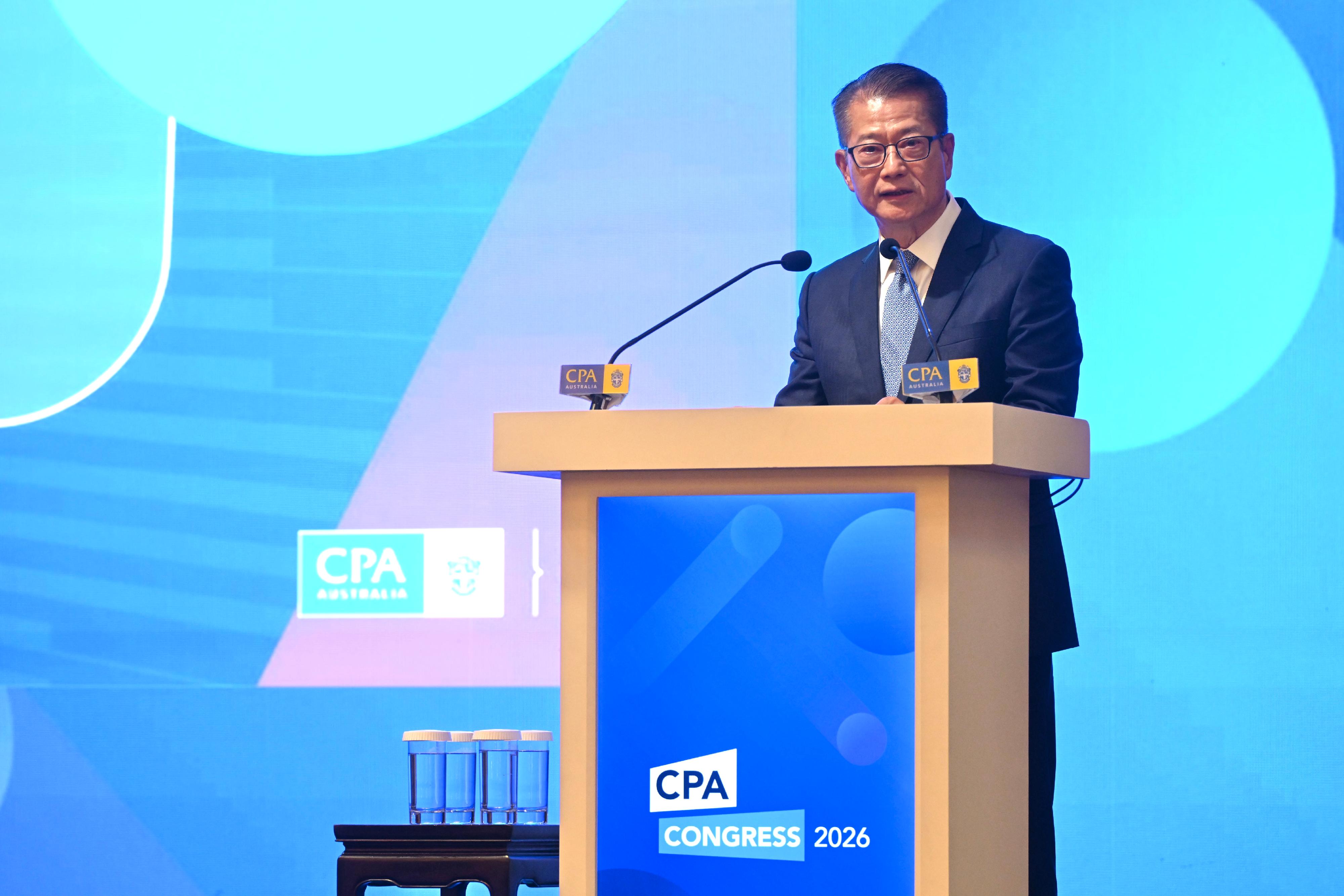
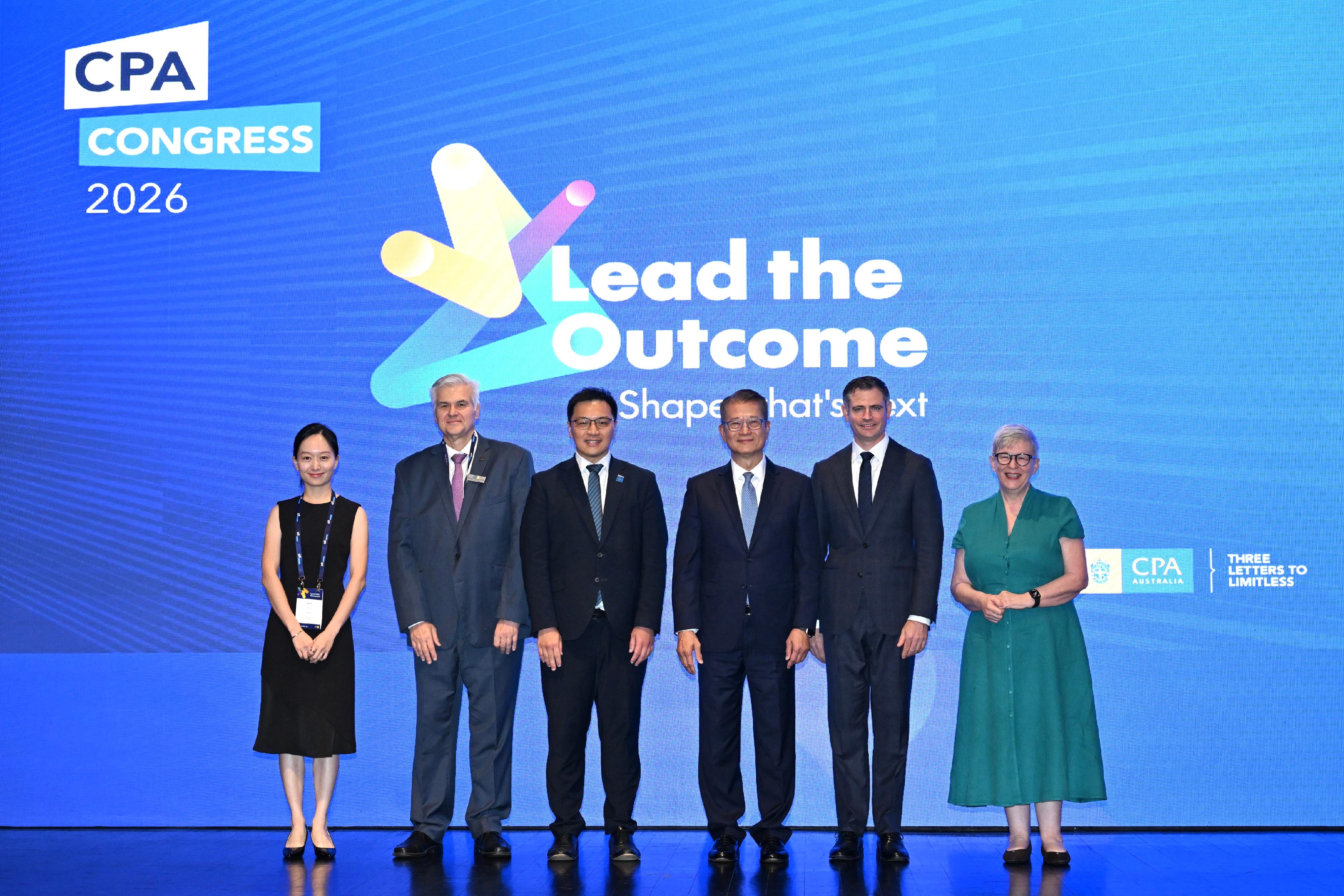
Speech by FS at CPA Congress 2026 (English only) (with photos/video)

     Following is the speech by the Financial Secretary, Mr Paul Chan, at the CPA Congress 2026 today (October 29):

CG Gareth Williams (Consul-General of Australia to Hong Kong and Macao), Dr Asheley Jones (Chief Learning and Innovation Officer of CPA Australia), Cyrus (Divisional President of CPA Australia Mr Cyrus Cheung), distinguished guests, ladies and gentlemen,

     Good morning. I am pleased to join you at the CPA Australia Congress Hong Kong 2026. A very warm welcome to you all, particularly those visiting from afar.
 
     As an accountant myself, I am delighted that the theme today is “Lead the Outcome”. It is good to see accountants being invited into the conversation before decisions are made – and not just afterwards to explain what happened.
      
     This Congress offers time to step back, exchange ideas and consider where the profession can make a greater difference.
      
     Businesses today face no shortage of advice. Diversification. Embrace technology, especially AI. Prepare for the green transition. But the harder questions are: where and what should we invest in, which risks should we take, and when should we move?
      
     That is where accounting professionals come in. You test assumptions, weigh the choices and help businesses turn promising ideas into workable plans. I am sure today’s discussions will offer fresh insights to support that work.
      
     For Hong Kong, we are equally determined to turn opportunities into lasting outcomes.
      
     Last month, we released our very first Five-Year Plan, setting out our development direction and goals through 2030. It provides a clearer framework for policymaking, public sector investment and private sector strategy formulation. Businesses cannot predict every turn in the global economy. But they can understand our strategies and priorities, so they can plan and invest with confidence.
      
     This morning, let me highlight just two connected priorities in our Five-Year Plan: finance, and innovation and technology.
      
     Hong Kong brings together capital, innovators, enterprises and professional expertise. We want to put these strengths to fuller use, thereby developing new growth engines, supporting new industries, helping businesses transform and expand, as well as financing the green transition. This is the thinking behind our “Finance+” approach.

     The question is not simply how much capital we attract, but what that capital makes possible.
      
     Our close connection with the Mainland is central to this role. Its strong research and outcome translation capabilities, extensive supply chain and advanced manufacturing networks as well as vast market help take technologies from the laboratory to the market at scale. Yet, advances in artificial intelligence, semiconductors and green technologies are also opening up new investment opportunities.
      
     Hong Kong connects these strengths and opportunities with international capital and global markets. We help Mainland enterprises navigate international requirements and expand overseas, while offering global investors a trusted and familiar platform to participate in the Mainland’s growth.
      
     The momentum is encouraging. In the first nine months of this year, IPOs (initial public offerings) in Hong Kong raised some HK$388 billion, more than double the amount a year earlier. International investors from the US (United States), Europe, Southeast Asia and the Middle East are major players here, while capital from the Mainland continues to flow in.
      
     Our reach is also broadening, with enterprises from Southeast Asia, Central Asia and the Middle East exploring opportunities to list equities or issue bonds here. Australian companies are, of course, warmly welcome to consider a dual listing.
      
     Beyond connecting more markets, we support building a greener economy. Here in Hong Kong, we are expanding our sustainable finance taxonomy and aligning sustainability disclosures with international standards. These efforts help investors look beyond the label and have the confidence to commit to green and transition investment. By the way, in terms of green and sustainable finance debts arranged in Hong Kong, we top Asia. Last year, the total amount was about US$77 billion. 
      
     Our second priority is innovation and technology.
      
     In the Northern Metropolis, the task goes well beyond land and buildings.
      
     We are bringing education, research, talent, enterprises and industry together to create a new engine of growth. By shortening the time to take discoveries to market and supporting them with patient capital, we give start-ups and young companies room to grow and scale.
      
      Life and health technology offers a clear example of this potential. In the Hetao co-operation zone (Hetao Shenzhen-Hong Kong Science and Technology Innovation Co-operation Zone), Hong Kong and Mainland authorities are strengthening co-operation in clinical research and drug regulation, while facilitating cross-boundary flows of data and biological samples.
      
     These efforts are attracting international pharmaceutical companies to conduct research and clinical trials here, as well as set up their advanced manufacturing facilities here, so that the products developed can reach the Mainland and broader international markets at the same time.
      
     But scientific potential does not become commercial success on its own. It needs sound planning, sustained financing, effective risk management and a clear path to scale. This is where accounting professionals come into play.
      
     Every founder wants to change the world. But it helps to have someone who can challenge their assumptions, help formulate business plans, secure funding, monitor risks, and communicate their products and value propositions. And your role grows as companies expand.

     For those of you who are in the audit and assurance services, maintaining integrity and quality remains a critical priority. For accountants in business, you are the frontline gatekeeper and adviser to the Board.
      
     Our shared responsibility is to sustain the trust and confidence in our businesses and capital markets as well as Hong Kong’s status as an international financial and business centre.
      
     It goes without saying that continuous learning is important. I see three qualities becoming increasingly valuable for fellow accountants: technological competence grounded in business understanding; integrity and sound judgement; and an international outlook with the ability to collaborate across markets, disciplines and cultures.
      
     Ladies and gentlemen, professional bodies play an important role in helping members prepare for the transition and upcoming opportunities. We appreciate the work of CPA Australia. Through training, exchanges and co-operation across its global network, it helps members develop new skills, broaden their perspectives and bring international experience into local practice.
      
     Working together, we can make Hong Kong a place where businesses find the expertise to turn innovation into opportunity, and the confidence to grow beyond borders.
      
     I wish you a fruitful congress, and the best of health and business. Thank you very much.

Photo  Photo  
read more

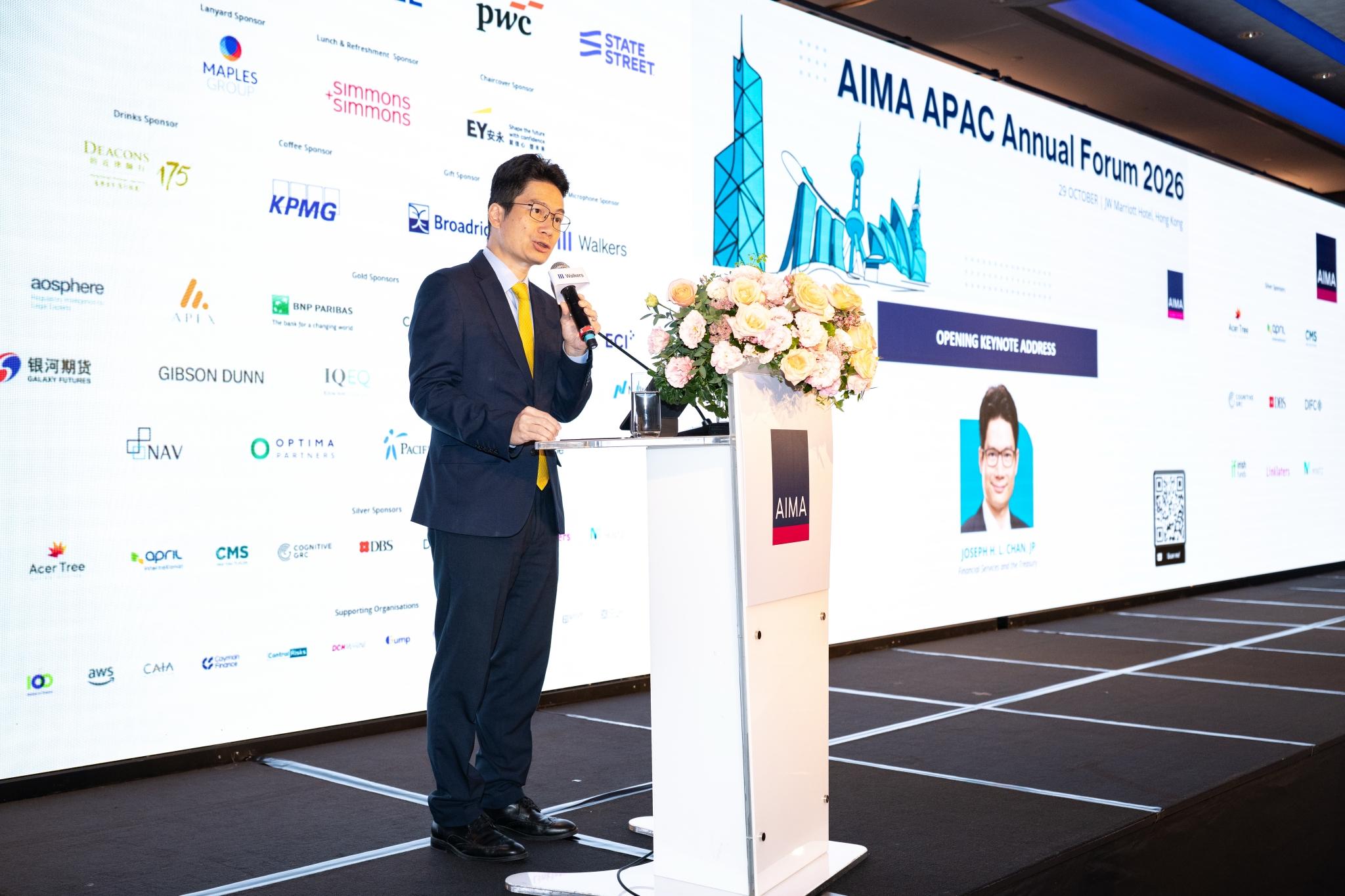
Speech by Acting SFST at AIMA APAC Annual Forum 2026 (English only) (with photo)

     Following is the speech by the Acting Secretary for Financial Services and the Treasury, Mr Joseph Chan, at the Alternative Investment Management Association (AIMA) Asia-Pacific (APAC) Annual Forum 2026 today (October 29):

Jack (Chief Executive Officer of the AIMA, Mr Jack Inglis), Mike (Managing Director and Co-head of APAC, AIMA, Mr Michael Bugel), Kher-sheng (Managing Director and Co-head of APAC, AIMA, Mr Lee Kher-sheng), distinguished guests, industry leaders, ladies and gentlemen,

     Good morning. It is my great pleasure to join you all today at the AIMA APAC Annual Forum 2026. Let me first extend my sincere gratitude to AIMA for organising this remarkable forum, and extend a very warm welcome to all the policymakers, regulatory leaders, alternative investment management thought leaders, and members of the AIMA community who have gathered here from across the region. As we navigate a complex and rapidly changing global landscape, today’s forum provides a vital platform to address the key regulatory, policy, and operational focus areas anticipated for Asia-Pacific managers.

     Under the unique “one country, two systems” principle, Hong Kong is the only city in the world that converges both the China advantage and the global advantage. Under “one country”, we enjoy preferential access to the Chinese Mainland market, including the Stock Connect, Bond Connect, Wealth Management Connect and the mutual recognition of funds. Under “two systems”, Hong Kong’s core competitiveness includes the free flow of capital, our common law system, a simple and low tax regime, and a regulatory regime fully compatible with those of major international markets.

     These distinctive advantages position Hong Kong as the “super connector” and “super value-adder” between China and the international markets, and between the East and the West. Today, Hong Kong stands as a premier global platform across key asset classes. We proudly rank third in the world and first in Asia under the Global Financial Centres Index.

     This solid foundation translates directly into extraordinary market dynamism and resilience. According to the latest annual survey by the Securities and Futures Commission (SFC), total assets under management (AUM) of Hong Kong’s asset and wealth management business reached a record high of HK$42.2 trillion, or approximately US$5.4 trillion, at the end of 2025, registering a 20 per cent year-on-year increase. The net fund inflows coming into Hong Kong last year surged by 193 per cent year-on-year to reach HK$2.1 trillion, or US$265 billion. These figures vividly demonstrate Hong Kong’s undisputed status as Asia’s premier asset and wealth management hub for international investors.

     Furthermore, the AUM of Hong Kong’s private equity (PE) funds amounted to US$250 billion as of June 2026, ranking second in Asia by scale, only trailing the Chinese Mainland market in the region. We welcome alternative asset funds to list in Hong Kong to promote further growth of our market. The SFC issued a circular in February 2025 to clarify the regulatory requirements for authorising alternative asset funds (e.g. funds investing in PE, private credit, infrastructure equity or debt, etc), thereby encouraging these funds, preferably sizeable ones with regular income streams, to list in Hong Kong. In May 2025, the Mandatory Provident Fund Schemes Authority clarified that MPF (Mandatory Provident Fund) funds may invest in approved listed private equity funds.

     With vibrant private equity and venture capital activities in the city, the development of our Limited Partnership Fund (LPF) regime of Hong Kong has reached a significant milestone. Since its launch in August 2020, the LPF regime has been met with strong market enthusiasm, with accelerating growth in recent years. The number of LPFs registered in Hong Kong surpassed the 2 000 mark August this year, and reached almost 2 100 at the end of September. The regime has successfully facilitated the channelling of capital to Hong Kong’s private equity and venture capital market, generating demand for financial and related professional services, such as legal, accounting and custodian sectors.

     We have also cemented our position as the world’s largest cross-boundary wealth management centre, and Asia’s largest hedge fund hub. Projections indicate that from 2025 to 2030, cross-boundary wealth managed in Hong Kong will grow by an average of 9 per cent annually, keeping us firmly at the leading position globally. 

     We do not take our success for granted, and we understand that there is no room for complacency. We recognise that maintaining our competitive edge requires continuous dialogue and close partnership with the industry, and for this, I must extend my heartfelt thanks to AIMA and our many industry partners for your invaluable guidance and constructive feedback over the years.

     In direct response to industry feedback, we have taken decisive legislative action to sharpen our edge. In June 2026, we introduced the Bill into the Legislative Council (LegCo) to further enhance the preferential tax regimes for funds, single family offices, and carried interest. This bill introduces several key enhancements. It expands the scope of funds eligible under the tax exemption regime to include pension funds, endowment funds, and specific funds-of-one. It also increases the types of qualifying investments eligible for tax concessions for funds and single family offices, covering emission derivatives and allowances, insurance-linked securities, loans and private credit investments, digital assets, precious metals, and specified commodities. It also further enhances the tax concession arrangements for carried interest. These enhancements are designed with a clear objective: to attract an even greater concentration of global funds, alternative investment managers, and family offices to establish and expand their long-term presence in Hong Kong. I am pleased to share that this bill is currently undergoing scrutiny by the Legislative Council’s Bills Committee, with the clause-by-clause examination already completed. The Government targets to resume the second reading debate on the Bill by end of this year. Subject to passage by the LegCo, these enhanced, competitive tax concession measures will take effect starting from the year of assessment 2025/26.

     Last month, the Chief Executive announced the First Five-Year Plan for Economic and Social Development of the Hong Kong Special Administrative Region, which stated that, we are committed to promoting the development of our fund market by diversifying the range of asset classes under management and product offerings, including diversified asset management instruments such as alternative asset funds and real estate investment trusts (REITs), thereby deepening and broadening our overall asset and wealth management capabilities.

     Indeed, we will introduce a bill this year to enable the privatisation or restructuring of real estate investment trusts, followed by another bill in the first half of 2027 to provide a stamp-duty waiver for the transfer of non-residential properties into REITs seeking a listing. Concurrently, the SFC is streamlining its procedures to attract high-quality overseas REITs for dual listing in our market, and will revise relevant codes next month to actively promote product innovation in fund products and broaden investor choices. We are also continuing our proactive efforts to seek the early inclusion of REITs under mutual-market access schemes.

     Ladies and gentlemen, our commitment to the asset management industry is steadfast and long term. We will continue to walk hand in hand with the industry, listening to your insights, refining our regulatory and tax framework, and sharpening our competitive edge as a world-leading international asset and wealth management centre.

     I wish today’s AIMA APAC Annual Forum 2026 resounding success, and I wish all of our overseas and local guests a most rewarding and inspiring conference. Thank you.

Photo  
read more

HKMA’s Response to US Fed’s Interest Rate Decision

The following is issued on behalf of the Hong Kong Monetary Authority:

     The Federal Open Market Committee of the United States Federal Reserve (the Fed) announced earlier today (October 29, Hong Kong time) its decision to keep the target range for the federal funds rate unchanged at 3.75-4 per cent. 
      
     The policy decision is in line with market expectations. The statement released after the meeting indicated that economic activity was expanding at a strong pace and the labour market was stable, but inflation has remained elevated. This reflects that the Committee is watchful over the outlook on inflation, though it may need more time to observe how the data evolves.
      
     Hong Kong’s monetary and financial markets have continued to operate in an orderly manner. As the noticeable HKD-USD interest rate differential persists, carry trade activities may cause the Hong Kong dollar to gradually ease. That said, the outlook for the Hong Kong dollar and interbank rates can vary due to various factors, such as the market’s risk appetite for carry trades, and the supply-demand conditions for Hong Kong dollars which are in turn influenced by capital market activities and other seasonal factors. 
      
     US interest rate adjustments are subject to considerable uncertainty, and will depend on developments in inflation, labour market, and other economic data, and may influence the interest rate environment in Hong Kong. The public should carefully manage interest rate risks when making decisions about property purchase, investment or borrowing. The HKMA will continue to closely monitor market developments and maintain monetary and financial stability. read more