Author Archives: hksar gov

CHP updates on clusters of students participating in exchange tour who developed gastroenteritis symptoms

     The Centre for Health Protection (CHP) of the Department of Health today (March 11) continued its investigations into the cluster of gastroenteritis symptoms among students who participated in an exchange tour to Shaoguan in Guangdong Province, and found that teachers and students from two other schools who participated in exchange tours to the same locations in Shaoguan in early March also developed gastroenteritis symptoms. The CHP has provided health advice to the affected schools on the transmission, prevention and infection control measures related to acute gastroenteritis (AGE).

     During the investigation into the cluster announced yesterday, the CHP found that teachers and students who participated in two other exchange tours to the same locations in Shaoguan on March 3 to 4 and March 6 to 7 also developed gastroenteritis symptoms. Including the cluster announced yesterday, a total of 52 teachers and students developed AGE symptoms from March 3 to 10. Sixteen of them sought medical attention and none required hospitalisation.

     The CHP is investigating the source of this AGE outbreak from different perspectives. The CHP’s epidemiological investigations revealed that the teachers and students of the three exchange tours had dined in the same restaurants. The CHP could not rule out the possibility that some of the cases were infected by consuming contaminated food and has notified the Guangdong authority of the relevant restaurants. Separately, a case vomited during the visit and more teachers and students subsequently fell ill after returning to Hong Kong. In this context, some of the cases may have been infected through person-to-person transmission or a contaminated environment.

     The CHP will continue to follow up on the incidents and conduct epidemiological investigations, including collecting stool specimens from the cases for laboratory testing and advising the schools concerned on infection control measures. The CHP has also alerted the Education Bureau to the situation.

     Viral gastroenteritis is more commonly seen in cooler months and can be caused by a variety of viruses, most commonly norovirus and rotavirus. The main symptoms of viral gastroenteritis are diarrhoea and vomiting. Other symptoms include headache, fever, and abdominal cramps. In general, the symptoms begin one to two days following infection with a virus that causes gastroenteritis. Depending on the type of viruses causing the illness, however, the symptoms may last for one to 10 days.

     Alcohol-based handrub should not substitute hand hygiene with liquid soap and water, as alcohol does not effectively kill some viruses frequently causing AGE, for example, norovirus. To prevent foodborne diseases, members of the public are advised to observe good personal, food and environmental hygiene. When eating out, the following points should be observed:
 

  • Ensure proper personal hygiene;
  • Wash hands thoroughly before handling food and eating, after using the toilet or after changing diapers;
  • Wear gloves when disposing of vomitus or faecal matter, and wash hands afterwards;
  • Clean and disinfect contaminated areas or items promptly and thoroughly with diluted household bleach (by adding one part of bleach containing 5.25 per cent sodium hypochlorite to 49 parts of water). Wash hands thoroughly afterwards;
  • Maintain good indoor ventilation;
  • Pay attention to food hygiene;
  • Use separate utensils to handle raw and cooked food;
  • Avoid food that is not thoroughly cooked;
  • Drink boiled water; and
  • Do not patronise unlicensed food premises or food stalls.

     The public may visit the CHP’s website for more information and preventive advice on viral gastroenteritis. read more
DH welcomes WHO Regional Director for Western Pacific and showcases contributions of Hong Kong, China to global public health, Chinese Medicine development and tobacco control (with photos)

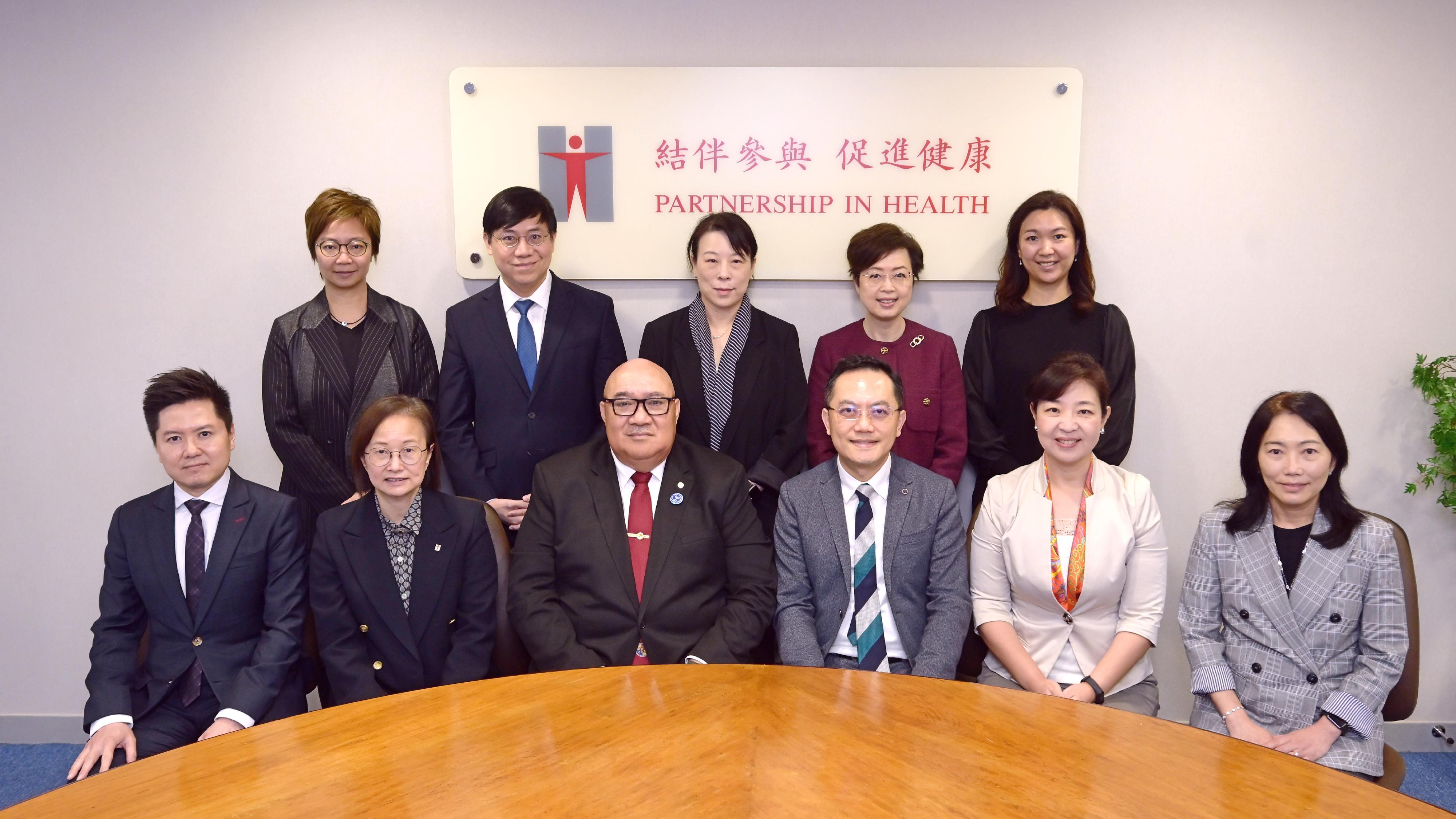
     The World Health Organization (WHO) Regional Director for the Western Pacific, Dr Saia Ma’u Piukala, visited the Department of Health (DH) today (March 11) to gain insights into its pioneering efforts in advancing global public health, prevention and control of infectious diseases, traditional Chinese Medicine development and effective implementation of tobacco control strategies.

     This visit marks Dr Saia Ma’u Piukala’s first trip to Hong Kong since his appointment by the WHO last year. During the meeting, the Director of Health, Dr Ronald Lam, gave an overview of the DH’s extensive services, covering disease prevention and control, health regulation, health promotion, dental, rehabilitation and specialised health services. The Controller of Regulatory Affairs of the DH, Dr Amy Chiu, highlighted Hong Kong’s commitment and proactive tobacco control strategies, especially the imposition of a ban on alternative smoking products, which can effectively prevent their use in the territory. The Controller of the Centre for Health Protection of the DH, Dr Edwin Tsui, also outlined the response measures implemented during the COVID-19 pandemic and shared experiences on prevention and control as well as future plans. The DH also engaged in discussions with Dr Saia Ma’u Piukala to enhance collaborative efforts in the prevention and control of various infectious diseases, including influenza, AIDS, and viral hepatitis.

     Dr Saia Ma’u Piukala applauded the measures and commended Hong Kong for the DH’s active participation and contributions to the prevention and control of various diseases and global health governance.
      
     “We are looking forward to stronger collaboration with the DH. Together, for the sake of the young generation and the world, we hold the power to make a difference,” said Dr Saia Ma’u Piukala.
      
     Dr Saia Ma’u Piukala was then accompanied by the Head of the Tobacco and Alcohol Control Office (TACO), Dr Fung Ying, to a statutory no smoking area in Admiralty to inspect the enforcement work of the staff of TACO of the DH. He was also briefed on the tobacco control policy and the way forward to control smoking in Hong Kong.
      
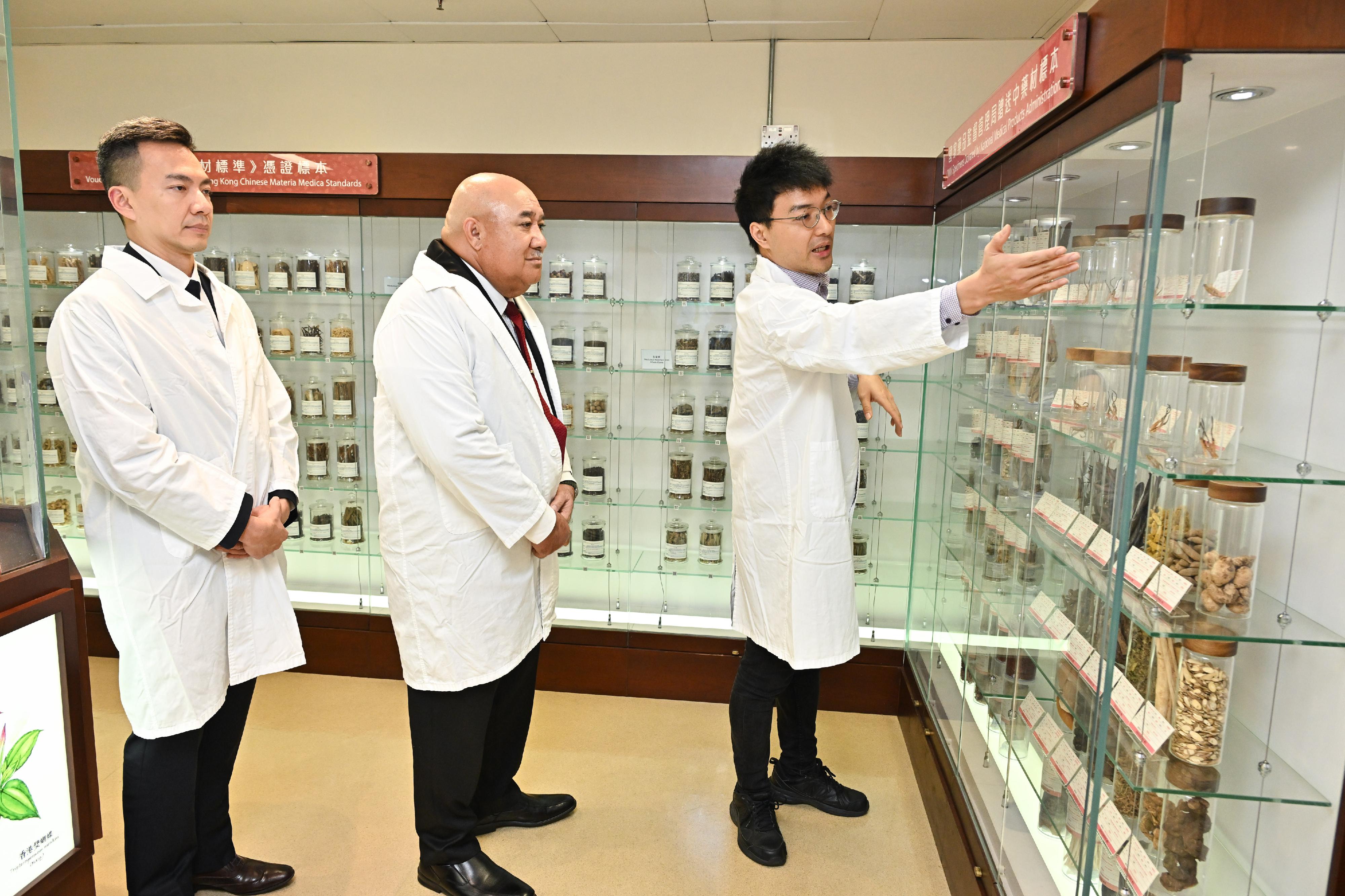
     In the afternoon, Dr Saia Ma’u Piukala went to the Government Chinese Medicines Testing Institute (GCMTI) of the DH and was briefed by the Assistant Director (Chinese Medicine), Dr Edmund Fong, on the work of the GCMTI as well as the DH’s efforts in promoting the development of the Chinese medicine locally and internationally, including the development of standards for Chinese herbal medicines, and new identification and testing skills and methods for Chinese medicines to add momentum to the modernisation and standardisation of Chinese medicine.
      
     DH staff then accompanied Dr Saia Ma’u Piukala to visit the Harlech walking trail on the Peak to appreciate the wild medicinal plants there, including pavettahongkongensis bremek, cibotiumbarometz (L) J Sm, and ficus hirta vahl, which are recorded in a publication called “Hong Kong Characteristic Medicinal Plants” published by the DH.
      
     “The DH is committed to advancing global health initiatives and overcoming public health challenges in collaboration with the WHO. Our designation as the WHO Collaborating Centre for Traditional Medicine and the WHO Collaborating Centre for Smoking Cessation and Treatment of Tobacco Dependence demonstrates our dedication to enhancing human health and well-being. Furthermore, the WHO has designated the Public Health Laboratory Services Branch of the Centre for Health Protection of the DH as reference laboratories for various communicable diseases, making significant contributions to fighting epidemics worldwide. We will continue to strengthen our work with the WHO and other WPRO member states, and embrace our role as a ‘super-connector’ bridging Mainland and global health partners,” said Dr Lam.
      
     Dr Saia Ma’u Piukala met with the Secretary for Health, Professor Lo Chung-mau, yesterday (March 10). During their stay in Hong Kong, the DH also arranged for the WHO delegation to meet with other representatives of the public health sector.

Photo  Photo  
read more

Hong Kong Customs detects suspected gold bullion-smuggling case by air worth about $46 million (with photo)

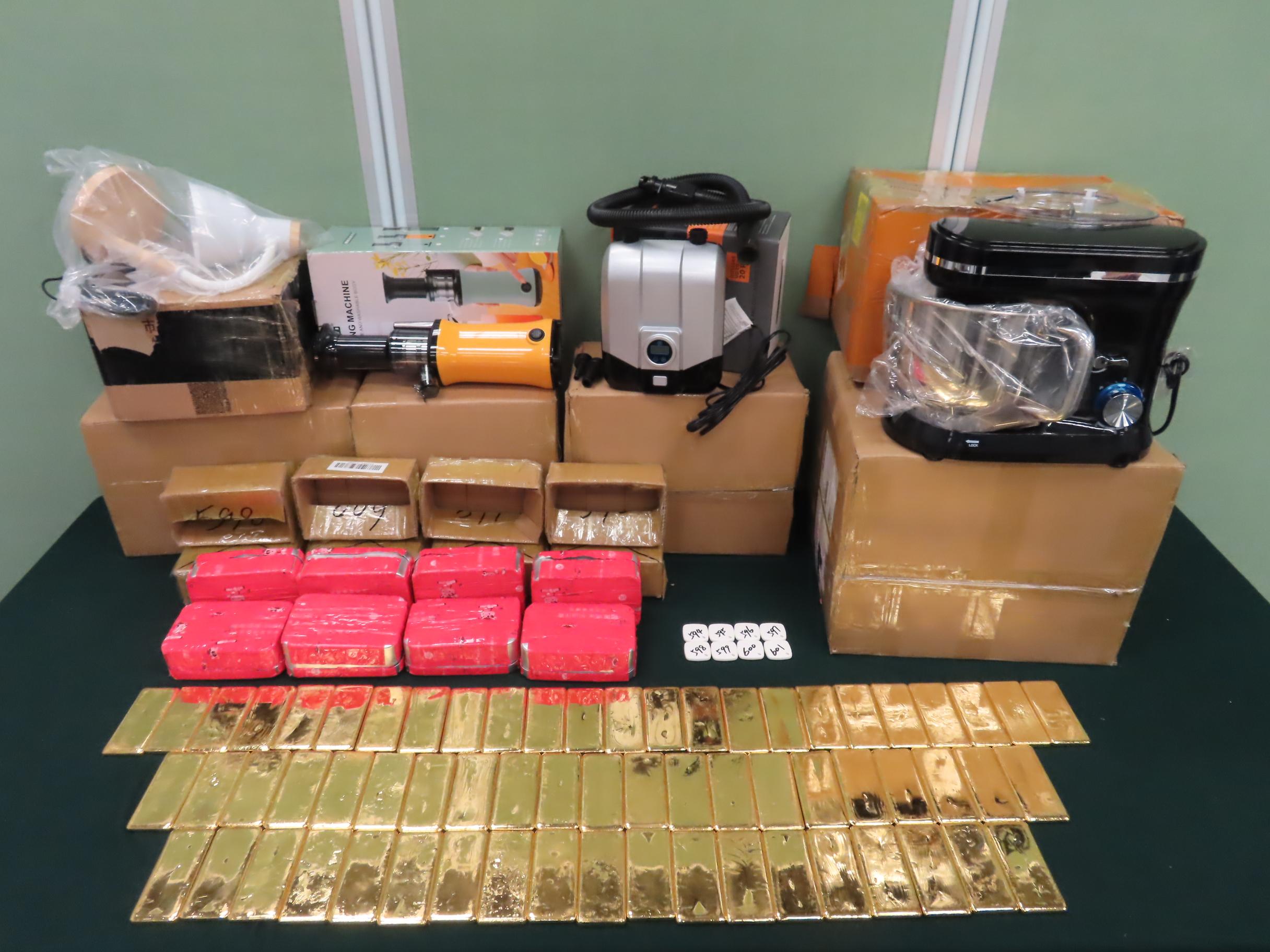
     Hong Kong Customs on March 5 detected a suspected air freight gold bullion-smuggling case, and seized about 64 kilograms of suspected gold bullion with an estimated market value of about $46 million at Hong Kong International Airport (HKIA). This is the largest gold bullion-smuggling case detected by Hong Kong Customs on record in terms of the seizure volume and market value.  

     Based on risk assessment, Customs on that day examined an outbound air cargo consignment, declared as carrying toys, lamps and hats departing for Japan, at the Customs Cargo Examination Compound at HKIA. Upon inspection, Customs officers found the batch of suspected smuggled gold bullion in four cardboard boxes therein.

     An investigation is ongoing. The likelihood of arrests is not ruled out.

     Customs will continue to take stringent enforcement actions against all kinds of smuggling activities through risk assessment and intelligence analysis.

     Smuggling is a serious offence. Under the Import and Export Ordinance, any person found guilty of importing or exporting unmanifested cargo is liable to a maximum fine of $2 million and imprisonment for seven years.
     â€‹
     Members of the public may report any suspected smuggling activities to Customs’ 24-hour hotline 182 8080 or its dedicated crime-reporting email account (crimereport@customs.gov.hk) or online form (eform.cefs.gov.hk/form/ced002).

Photo  
read more