Author Archives: hksar gov

DH responds to media enquiries on air-conditioning interruption in private hospital

     In response to media enquiries regarding the air-conditioning interruption that occurred at St. Teresa’s Hospital in July 2024 for about an hour, the Department of Health (DH) today (May 14) gave the following response:

Regulatory regime
——————–

     The DH regulates licensed private hospitals in accordance with the Private Healthcare Facilities Ordinance (Cap. 633) (the Ordinance). The Code of Practice for Private Hospitals (the CoP) issued by the Director of Health in accordance with the Ordinance sets forth licensing and operating standards for private hospitals, including the relevant requirements for hospital facilities and equipment.

     The CoP stipulates that hospital installations and equipment must be kept in good operational order and requires hospitals to have contingency plans for emergencies (such as fire and the cessation of water or electricity supply). It also sets out that healthcare engineering systems (including electrical installations, specialised ventilation systems and medical gas supplies) must be properly maintained to meet the service need and ensure patient safety. Reportable events for private hospitals are also set out in the CoP.

     The DH regularly reviews and updates regulatory standards for private healthcare facilities, together with the experts of the Advisory Committee for Regulatory Standards for Private Healthcare Facilities in accordance with the established mechanism of the Advisory Committee. The DH will also continue to review the CoP in accordance with the mechanism in order to protect the interest of the public.

Investigation work
———————

     Regarding the incident at St. Teresa’s Hospital, the DH was notified by a doctor on September 2, 2024, about an air-conditioning interruption in the operating theatres on the second floor of the hospital concerned in the evening of July 31, 2024, which lasted approximately one hour.

     Although air-conditioning interruption is not a reportable event of private hospitals, the DH considered that the incident might have potential patient safety concerns and therefore promptly initiated an investigation on the same day (September 2, 2024) the notification was received. The DH sent staff to conduct an inspection at the hospital concerned, checked relevant documents, evaluated the effectiveness of its contingency measures, assessed the environmental condition of the operating theatres during the interruption and followed up on the remedial actions.

     According to the investigation, the incident involved a malfunction of the air-conditioning system used to regulate the room temperature which lasted for about one hour. During which, 10 surgeries were performed in various operating theatres. The hospital explained that dehumidifiers were immediately deployed in the operating theatres where higher risk surgeries were being performed, including the one where the doctor was performing an operation. According to the hospital and the nurses on site, the severity of condensation in the operating theatre did not result in water dripping onto the surgical site of patients. The ventilation system used for infection control in the operating theatres (including air filtration equipment, hourly air change rate and a positive pressure environment) was operating normally. Apart from immediately responding to the incident, the hospital has also worked with its contractor to identify the cause of the incident and take measures to prevent recurrence of similar incidents.

     In addition, the hospital conducted prompt follow-up by conducting air sampling of the operating theatres and surveillance on conditions of patients who underwent surgeries during the affected period for infection, with no abnormality detected. Based on the available evidence gathered, the DH considered that there was insufficient evidence to show that the hospital has breached the requirements of the Ordinance or the CoP.
 
Complaint handling
———————

     The Ordinance also provides for a complaints handling mechanism against private healthcare facilities, which includes the establishment of the statutory Committee on Complaints Against Private Healthcare Facilities (Complaints Committee), with the DH serving as the Secretariat, to handle complaints lodged by patients against licensed private healthcare facilities (including private hospitals).

     There were media enquiries on whether the DH had received any complaints from patients. According to the DH’s existing records, the DH received a call on September 12, 2024, from a member of the public who enquired about the complaint procedure against private healthcare facilities, and mentioned the air-conditioning system of St. Teresa’s Hospital was not functioning properly when underwent surgeries. The Secretariat explained to the enquirer the function of the Complaints Committee and statutory procedures of lodging a complaint promptly. The Secretariat on the following day (September 13, 2024) sent information on the complaint procedures with complaint form and statutory declaration form to the email address provided by the person as requested. The enquirer confirmed receipt of the concerned information and forms by email but since then, the Complaints Committee has not received any complaint from the concerned enquirer in relation to this incident.

     The DH has completed investigation based on all available information, but will continue to closely monitor licensed private healthcare facilities. If there is new and concrete evidence, the DH will take appropriate actions as necessary to safeguard patient safety. read more

Remarks by CE at media session in Kuwait City (with photo/video)

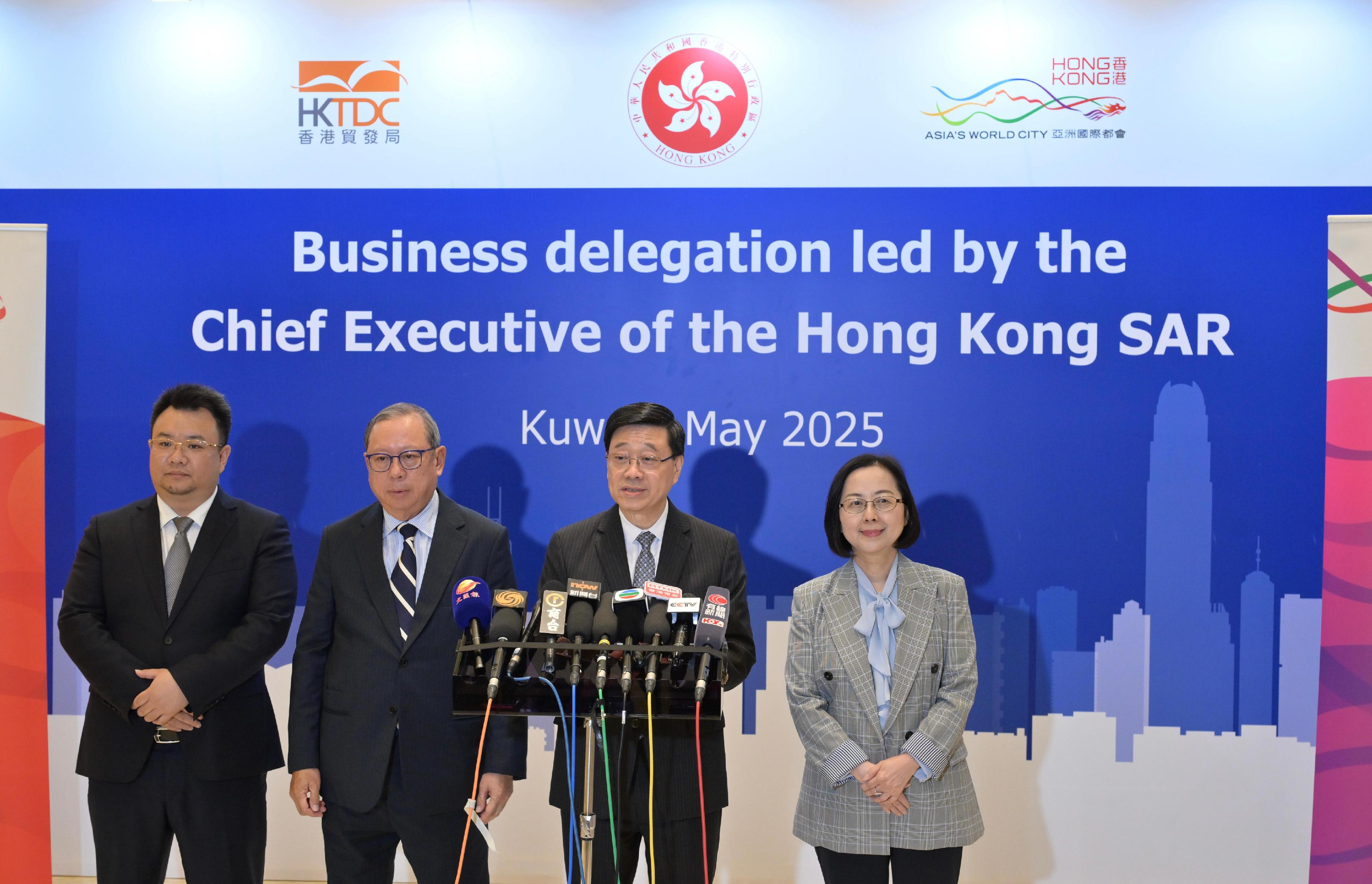
     The Chief Executive, Mr John Lee, concluded the visit of the business delegation comprising representatives from Hong Kong and Mainland enterprises to Middle East together with the Chairman of the Hong Kong Trade Development Council, Dr Peter Lam; the Chairman of the Hong Kong General Chamber of Commerce, Ms Agnes Chan; and the Chairman of the Dongchao Information Technology (Shanghai) Company Limited, Mr Wang Chaoyou, in Kuwait City, Kuwait, today (May 14, Kuwait City time). Following are the remarks by Mr Lee:

Chief Executive: Today marks the final day of our visit to Kuwait. I would like to extend my gratitude to the Kuwaiti Government for its high-level hospitality and meticulous arrangements. I am particularly grateful to the Kuwaiti Government for arranging the government team to stay at Bayan Palace. We are particularly grateful to the Acting Prime Minister for hosting the whole delegation for lunch at the Palace, leaving an unforgettable memory amongst all members of the delegation.

     Yesterday, I met with His Highness the Amir of Kuwait, followed by the meeting with His Highness the Crown Prince. And then I also met the Acting Prime Minister, who hosted a roundtable discussion attended by senior Kuwaiti officials. We share a common commitment to deepening bilateral co-operation in trade, investment and cultural exchanges.

     During our visit to Kuwait, we signed and reached 24 Memoranda of Understanding (MOUs) and co-operation agreements, spanning across trade, investment, financial services, technology, legal co-operation, customs facilitation, aviation, tertiary education, etc.

     Today is the last day of our Middle East visit. I would like to do a sum-up of my four-day visit to Kuwait and Qatar. The delegation comprised Hong Kong and Mainland business leaders. We achieved three key objectives:

     1. To strengthen government-to-government relations;
     2. To find new areas of collaboration;
     3. To make friends, and extend our network.

     The visit is successful, particularly in six areas.

     First, we strengthened relations between the Hong Kong Special Administrative Region (HKSAR) Government and the governments of Qatar and Kuwait, establishing collaborative consensus.

     Second, the visit resulted in a total of 59 MOUs and agreements, 35 in Qatar and 24 in Kuwait, spanning across diverse areas and laying a robust groundwork for multifaceted co-operation.

     Third, we deepened mutual understanding and strengthened commercial and trading networks. Delegation members have expanded their network and connections, promoting the strengths and opportunities of Hong Kong and the Mainland to partners in Qatar and Kuwait.

     Fourth, we showcased Hong Kong’s unique role under “one country, two systems” as a “super connector” and “super value-adder”, bridging global opportunities. I invited, for the first time, over 20 Mainland enterprise representatives to join the delegation, reflecting the synergy between Hong Kong and the Mainland. We together aim to provide end-to-end supply chain solutions for the Middle East and beyond.

     Fifth, we bolstered ties with Gulf Cooperation Council (GCC) member states. We created broader opportunities. Plus the two countries I have visited during my last Middle East visit, we have now visited four of the six GCC member states, representing two-thirds of the bloc and 90 per cent of its population The HKSAR Government is now actively exploring a free trade agreement with the GCC to further access this vital market.

     Sixth, we advanced people-to-people exchanges. Two days ago, I announced Qatar’s new 30-day visa-free arrangement for HKSAR passport holders. I am pleased now to further announce that the UAE (United Arab Emirates) will grant Hong Kong 30-day visa-free access starting May 15, while Oman will on the same date extend its visa-free period from 10 days to 14 days.

     In meetings with leaders and officials, I appreciated their forward-looking vision and understanding of Hong Kong’s unparalleled advantages under “one country, two systems” as a bridge between the Mainland and the world. Middle East countries are seeking diversification of risks and looking for opportunities in China and the HKSAR in order to join the tide of the global economic shift towards the East. In this, Hong Kong has boundless opportunities.
     
Reporter: I just have a couple of questions for you, please. Can you talk to us about the relationship between Kuwait and Hong Kong in particular, and Kuwait and China in general? The second question is about the Memoranda of Understanding that you have signed yesterday and today. How can you describe them? And how do they benefit the relations between Kuwait and Hong Kong?

Chief Executive: We have a very strong foundation of understanding and co-operation with Kuwait. Kuwait is the first country to sign two agreements together with Hong Kong. One is the agreement on investment protection and promotion, and another agreement is about the avoidance of double taxation. That speaks for the strong link, which has been established long ago between Hong Kong and Kuwait. We have been inspired by the Kuwait Vision 2035, which covers many areas in full alignment with what Hong Kong is doing and focusing on. The Kuwait Vision 2035 covers areas to transform Kuwait into financial centre, trading centre, infrastructure-building, human capital development, healthcare, sustainability, and also building Kuwait into a country of influence in this region and globally.

     Hong Kong has a vision very similar to Kuwait in this regard. Hong Kong is a financial centre, and is a shipping and trading centre, and we are developing Hong Kong into an I&T (innovation and technology) hub. We are quite proud of our education, because despite Hong Kong being just a city of 1 100 square kilometres, we have five universities that are within the top 100 globally, and we are quite strong in R&D (research and development), particularly a lot of our universities’ research has been graded outstanding. What we are working hard is raising Hong Kong’s profile in all this regard. Sustainability is also one of our focuses, both in what we do environmentally and also financially. We are doing a lot of green finance, and we emphasise strongly (ESG) compliance. That is where we are going, and we think there are a lot of things, because our visions just align so much together – a lot to do – and that is between Hong Kong and Kuwait. I am very thankful and grateful to His Highness, Amir of Kuwait, to meet me, and I am grateful to the Prime Minister also, to host a lunch in the palace for the whole team. Throughout all the meetings and discussions, we have very common understanding that we should co-operate more in different areas.

     Coming to the relation between China and Kuwait, China is Kuwait’s, I think, largest trade partner, and the diplomatic relations between China and Kuwait started long, long time ago, and the partnership is close and ever-rising. When I honourably saw His Highness, Amir of Kuwait, I felt his friendship, genuineness, and sincerity of building good relations between Kuwait and China. I am honoured to be able to be part of that success story. My whole team feels proud to be in that part of success story.

     Coming to the MOUs we have signed with Kuwait, both the governments and different parties, 24 agreements and MOUs, they cover a wide range of areas. Despite the very good foundation we already have, we are now formally telling people of the two places where are the main directions of co-operation both governments agree on. That helps in aligning direction, energy, focuses and also our time, because time is precious. So all of them now, these are the areas we can co-operate on and work hard on as well. That will bring returns in much shorter time, in much bigger scale. Already, I have heard some delegations forming to come to Hong Kong, so as to further continue the link. I am very positive with the overall results, and I will be seeing a lot of activities, not just between government-and-government exchange, but also business-to-business, individuals-to-individuals. And that is why I am also very thrilled to announce a lot of convenience that we have created for visa, for going through the boundary, both goods and people.
     
(Please also refer to the Chinese portion of the remarks.)

Photo  
read more

Health Bureau responds to enquiries regarding ban on flavoured conventional smoking products

     In response to media enquiries regarding the rationale behind the Health Bureau’s proposal to ban flavoured conventional smoking products under the new phase of tobacco control measures, the Health Bureau gave the following response today (May 14):

     Tobacco companies have been adding various flavourings, such as menthol, fruit and confectionary flavourings, into conventional smoking products to disguise the harshness of tobacco smoke, making it easier for non-smokers to initiate and maintain smoking habit. Research showed that banning flavoured conventional cigarettes can reduce the chances of young people using tobacco.

     The Health Bureau has already clearly stated in the Consultation Document on Tobacco Control Strategies in 2023 and subsequent relevant Legislative Council documents that around 50 countries and regions worldwide, including 27 European Union member states, Canada and the United Kingdom, have banned the sale of flavoured cigarettes. China’s Taiwan region also announced last year the prohibition of the use of specified flavour additives in tobacco products.

     The Health Bureau reiterates that banning flavoured conventional smoking products is not unique to Hong Kong, nor is it “over the top”. Contrarily, Hong Kong needs to align itself with international tobacco control policies through this legislative work. read more

CE: Middle East visit yields fruitful results and elevates Hong Kong’s relations with Qatar and Kuwait to new level (with photos/videos)

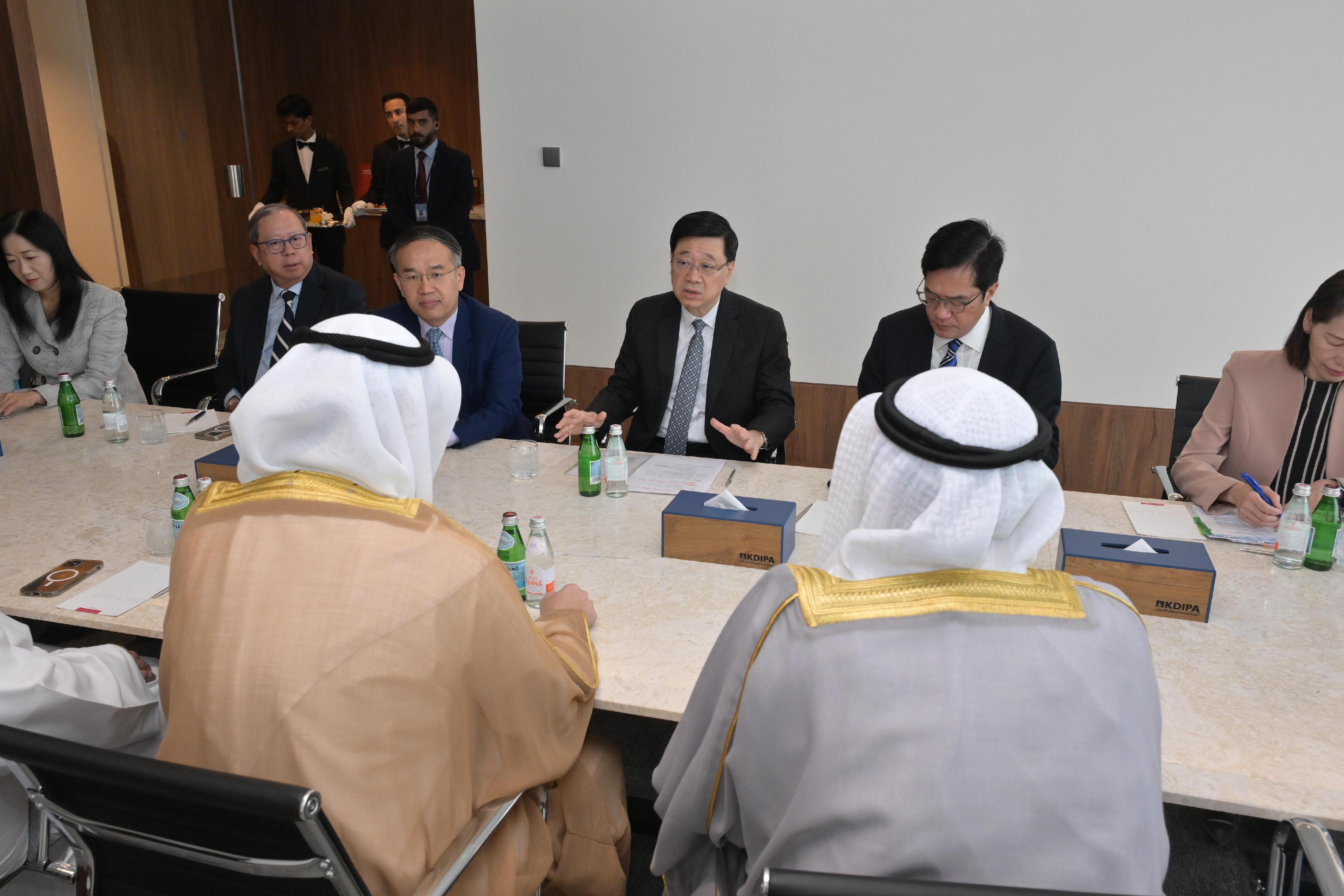
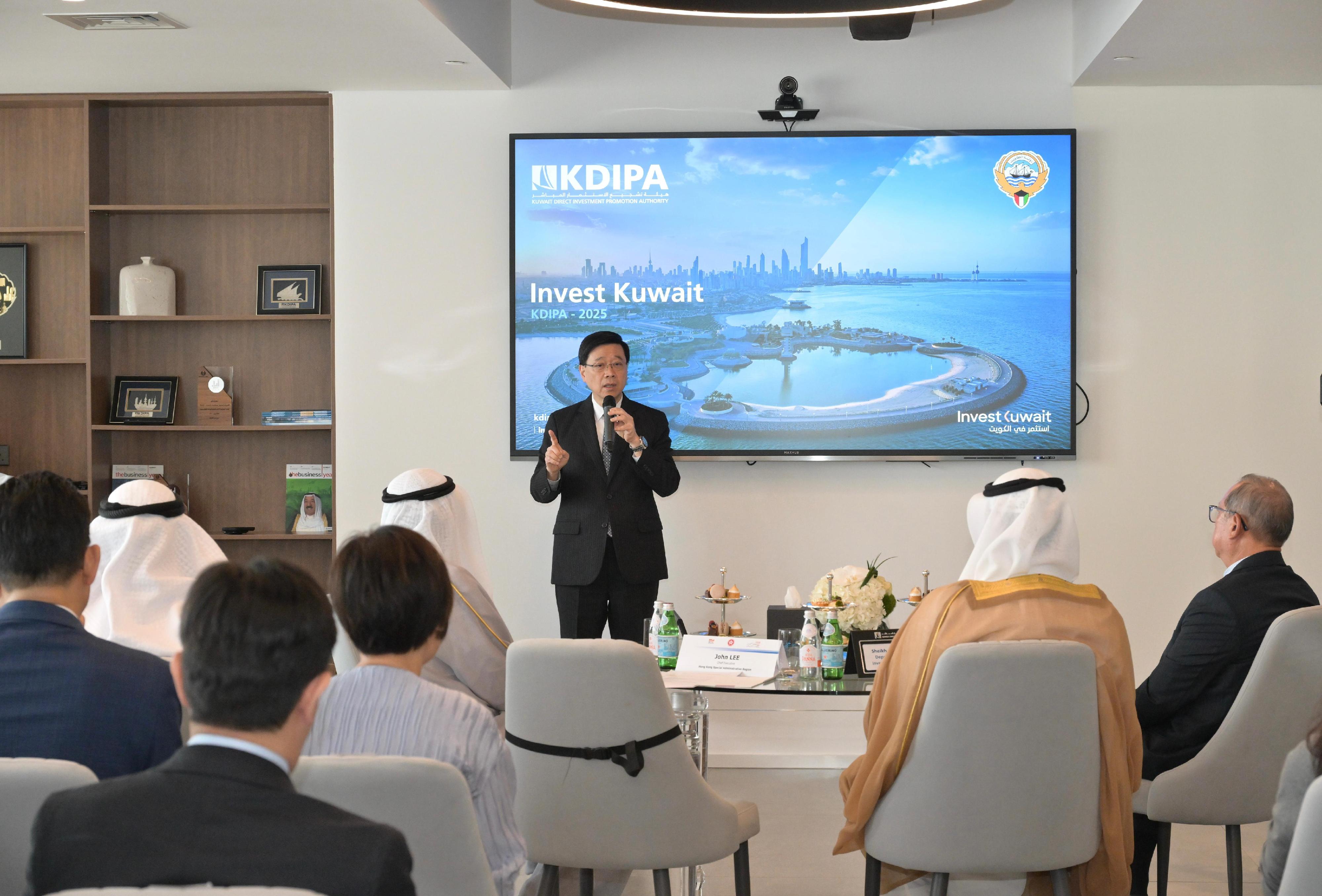
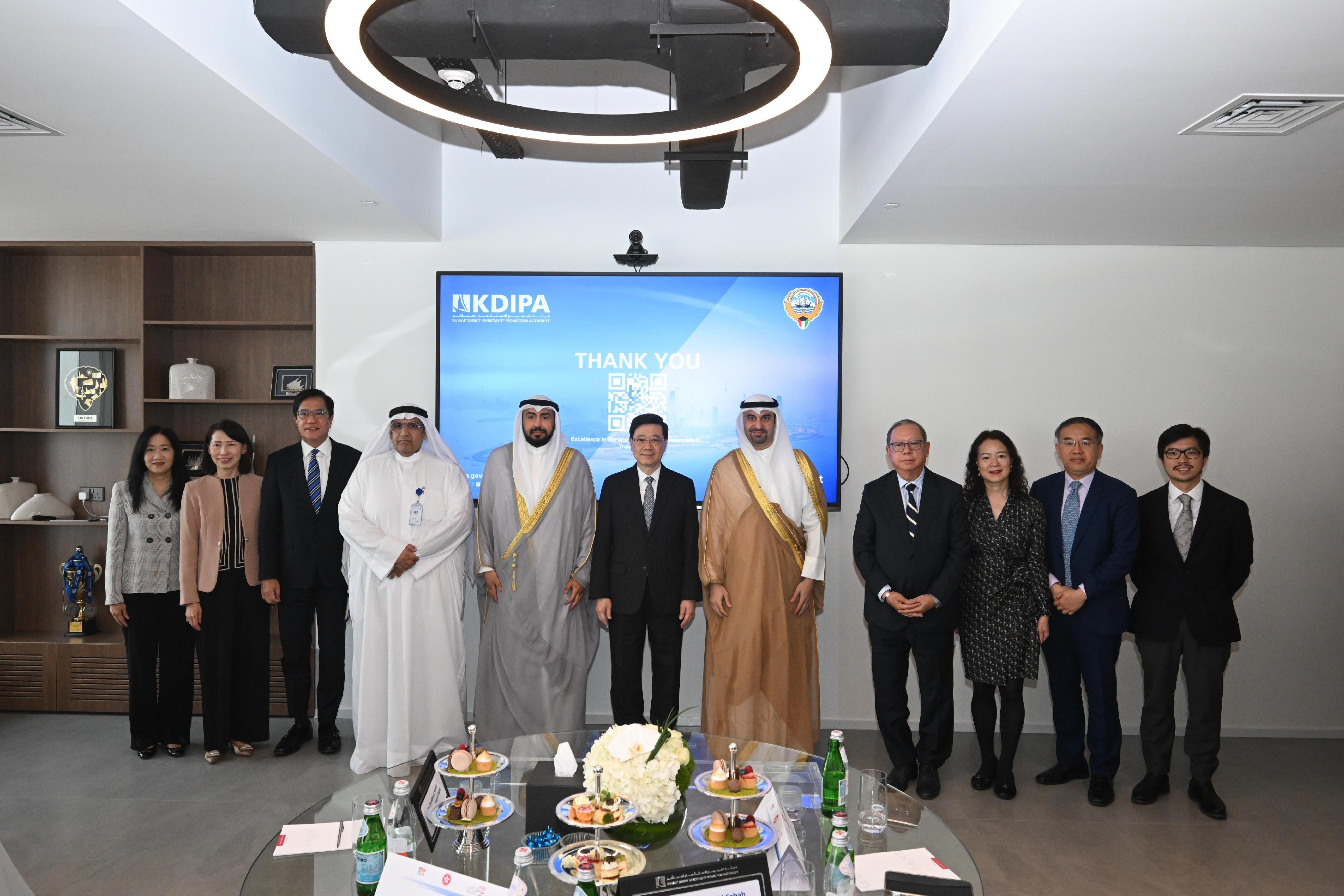
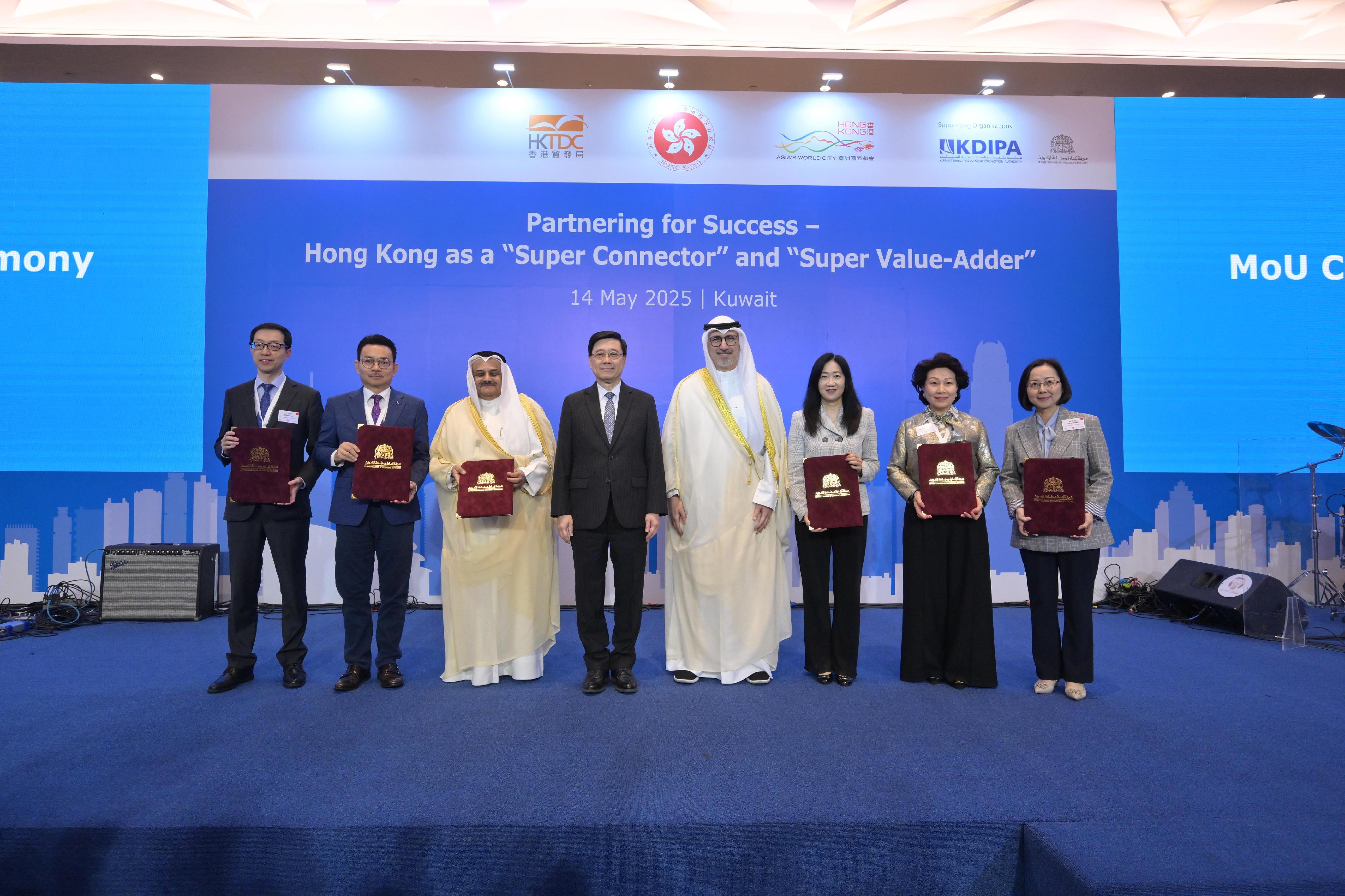
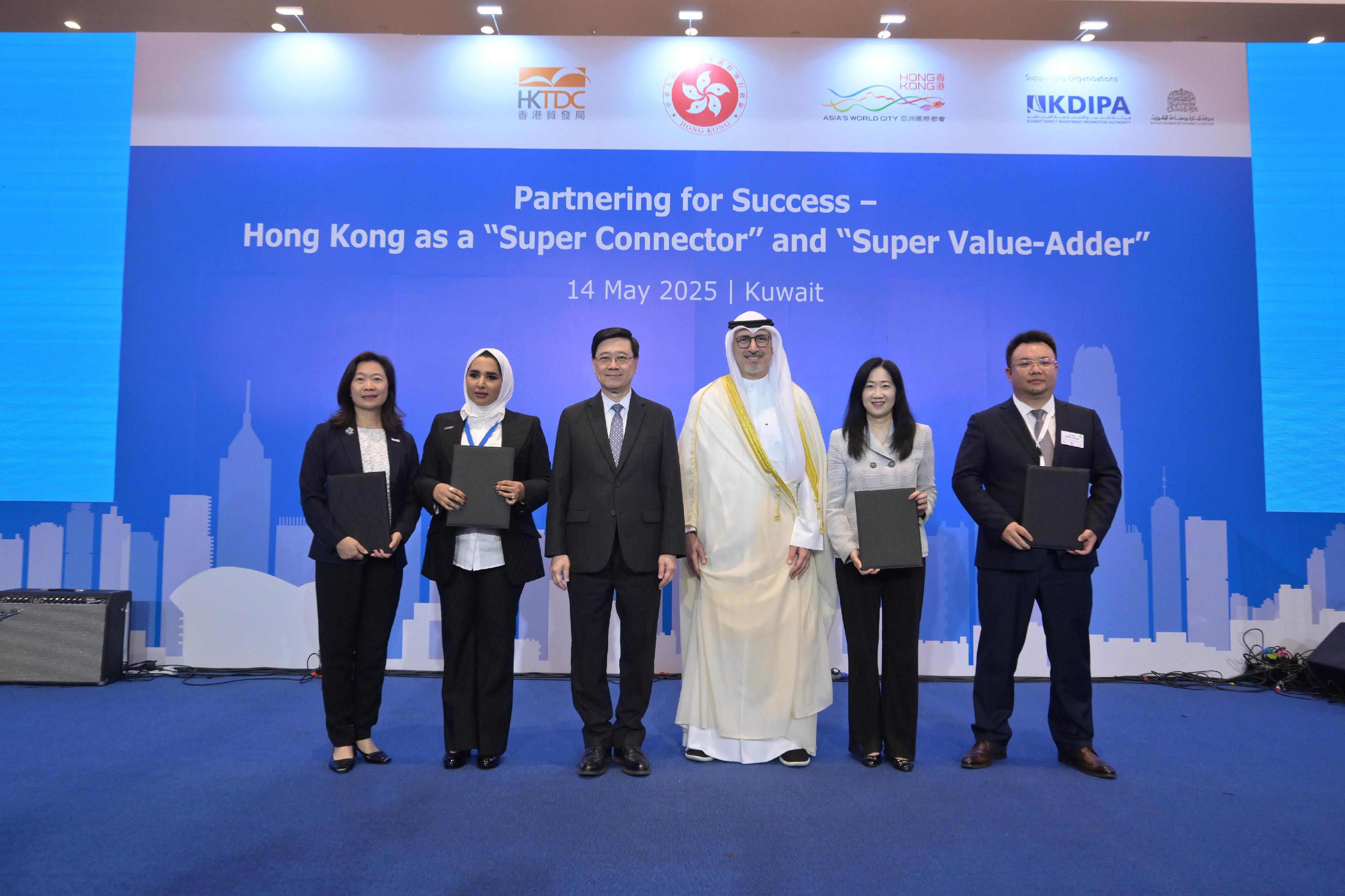
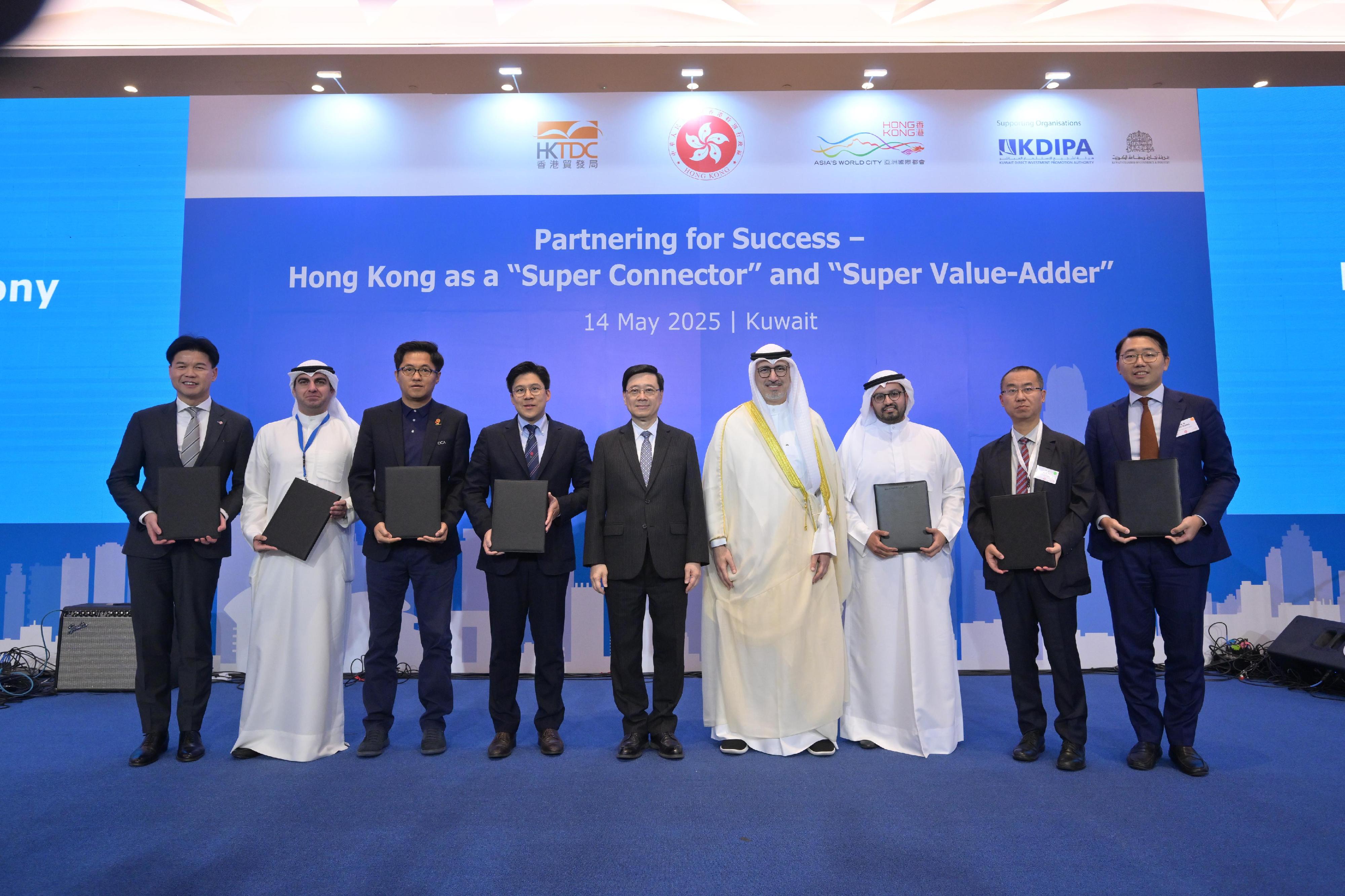
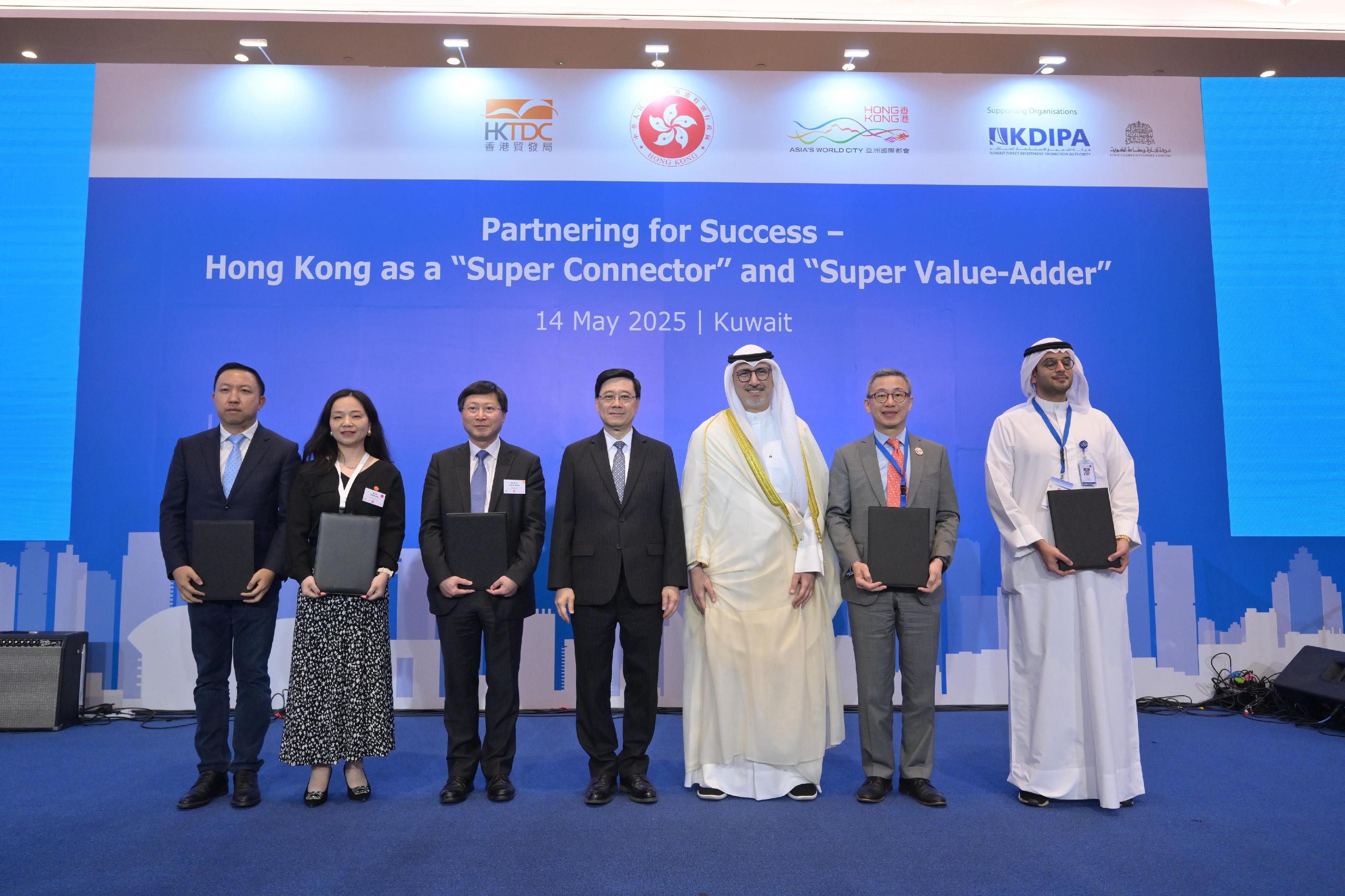
     â€‹The Chief Executive, Mr John Lee, today (May 14) led a business delegation comprising representatives from Hong Kong and Mainland enterprises to continue its visit programme to Kuwait. He met with representatives of the Kuwait Direct Investment Promotion Authority (KDIPA) and exchanged views with local political and business leaders. He witnessed the achievement of multiple outcomes of co-operation between government departments, enterprises and organisations of Hong Kong, the Mainland and Kuwait, including the signing of Memoranda of Understanding (MOUs). He also visited a local enterprise.
      
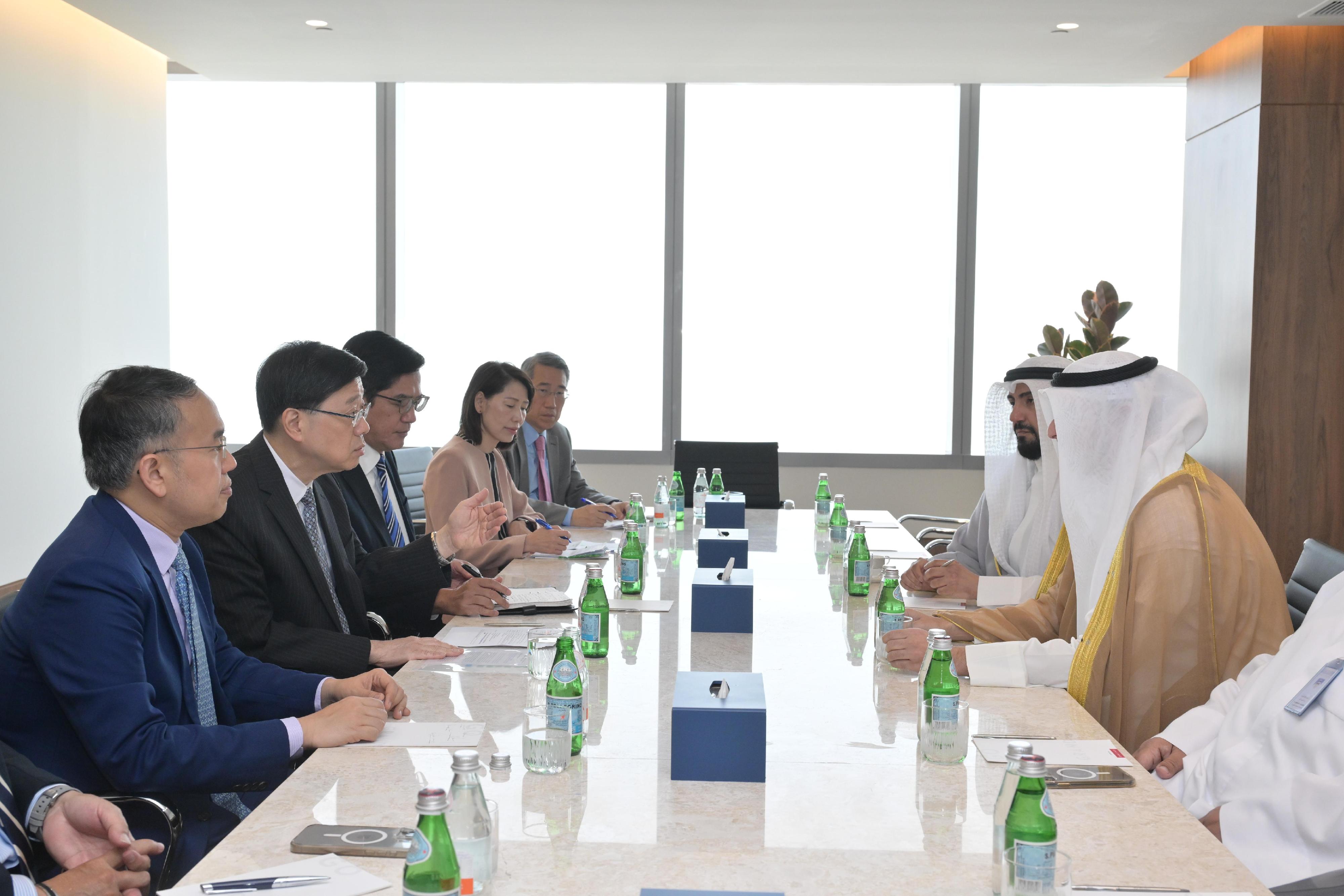
     In the morning, Mr Lee met with the Director General of the KDIPA, Dr Meshaal Jaber Al-Ahmad Al-Sabah, to learn about Kuwait’s strategies and achievements in attracting business and investment. Mr Lee noted that last year, Kuwait was Hong Kong’s sixth-largest trading partner in the Middle East, and both places have significant room for development in trade and business between the two places. Hong Kong will continue to serve as a bridge to assist enterprises in going global and attracting external investment, welcoming Kuwaiti enterprises to leverage Hong Kong’s world-class financing support and professional services to explore international markets.
      
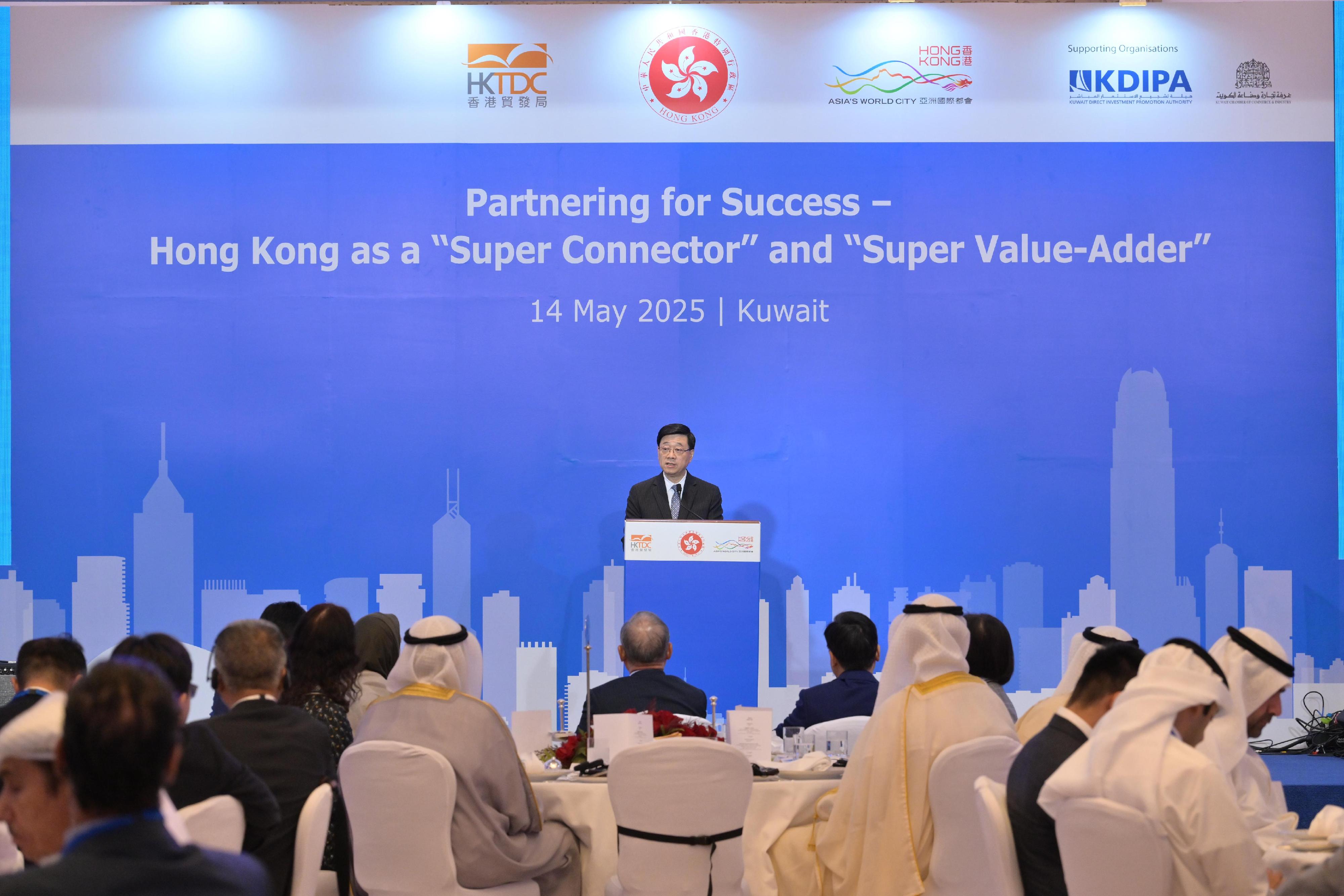
     Mr Lee later attended a business luncheon cohosted by the Hong Kong Economic and Trade Office in Dubai and the Hong Kong Trade Development Council, where he delivered a speech to near 300 local business leaders promoting Hong Kong’s business advantages and development opportunities. He highlighted that the merchandise trade between Hong Kong and the Cooperation Council for the Arab States of the Gulf (GCC) reached nearly US$20 billion last year, an increase of over 53 per cent in the past four years, while Hong Kong’s merchandise trade with Kuwait last year amounted to US$200 million, up more than 20 per cent from the previous year. Hong Kong is an international financial centre and the world’s largest offshore Renminbi business hub. Hong Kong and Mainland enterprises can complement each other’s strengths. Hong Kong will give full play to its role as a “super connector” and “super value-adder” to deepen international exchanges and co-operation. Mr Lee added that he believes the ties and co-operation between Hong Kong and Kuwait will continue to flourish.
      
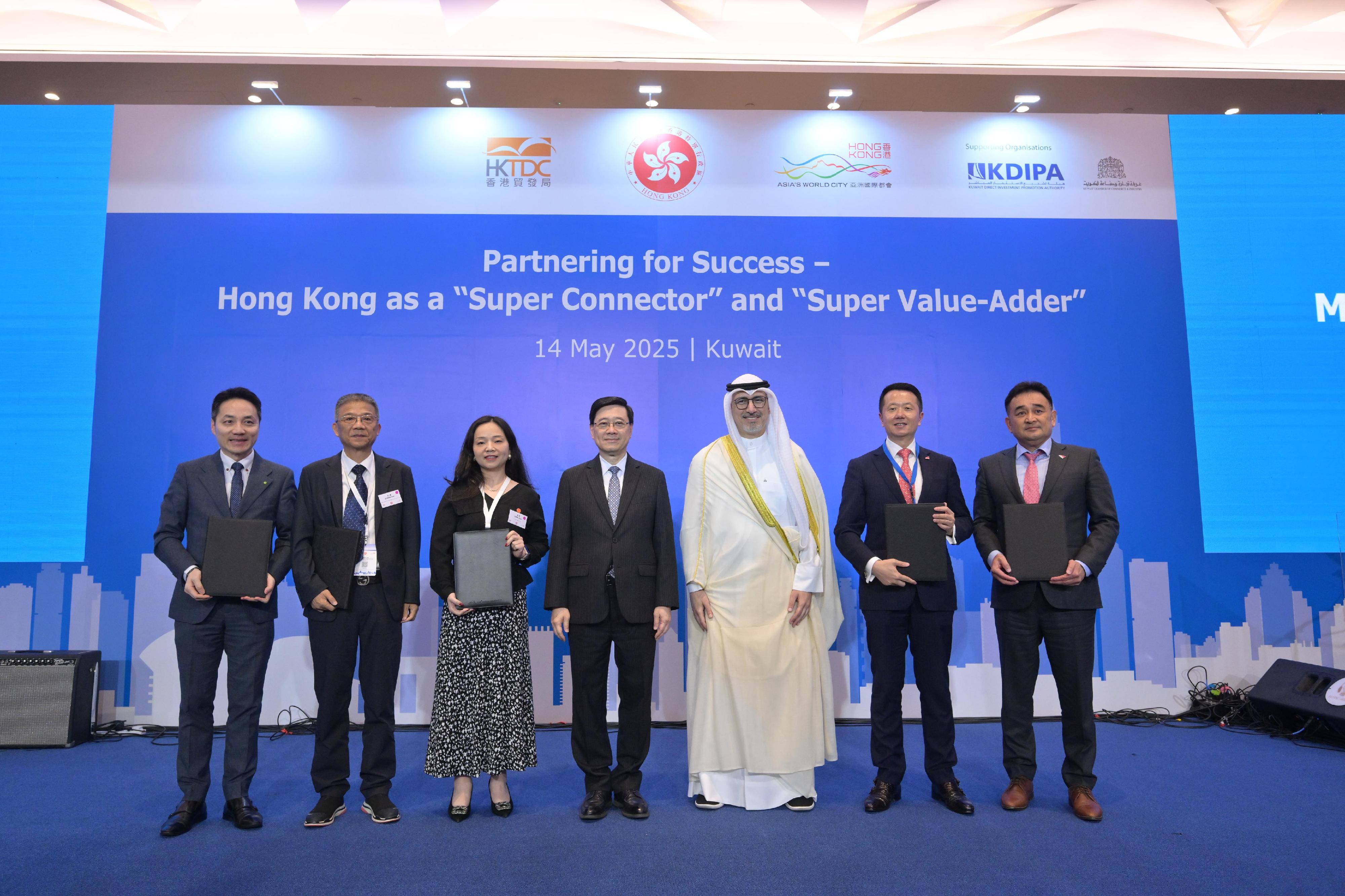
     At the luncheon, government departments, enterprises, and organisations from Hong Kong, the Mainland, and Kuwait exchanged and announced 24 MOUs and co-operation agreements, covering areas such as economy and trade, investment, financial services, technology, legal co-operation, cargo clearance and flow, aviation, and post-secondary education.
      
     In the afternoon, Mr Lee and the delegation visited Zain Group, a major mobile telecommunications company, to learn about its business in innovative technologies and digital communications, and exchanged views with company representatives on topics such as drones, AI, and smart city development. Mr Lee remarked that Hong Kong is actively developing into an international innovation and technology centre, and he welcomes the company to invest and pursue co-operation opportunities in Hong Kong.
      
     In the evening, Mr Lee will host a dinner for members of the business delegation comprising representatives from Hong Kong and Mainland enterprises to thank them for their active participation in the programme of the past four days and for working together to explore co-operation opportunities for Hong Kong and the Mainland in the Middle East.
      
     Concluding the visit, Mr Lee said that the business delegation comprising representatives from Hong Kong and Mainland enterprises, which he led to visit Qatar and Kuwait, has yielded fruitful results. He mentioned that the Middle East visit successfully made achievements in six areas, namely:
     

  1. further strengthening the relationship between the Hong Kong Special Administrative Region (HKSAR) Government and the governments of Qatar and Kuwait, and building consensus for collaboration;
  2. reaching a total of 59 MOUs and agreements, laying a diversified foundation;
  3. leveraging Hong Kong’s strengths under the “one country, two systems” principle in connecting the Mainland and the world, deepening international exchanges and co-operation, and demonstrating the synergistic power of the complementary advantages between Hong Kong and the Mainland;
  4. further building relations with the GCC countries to explore greater business opportunities;
  5. deepening mutual understanding and strengthening commercial and trading networks; and
  6. further enhancing cultural exchanges with the GCC countries.
 
     Mr Lee said that Hong Kong has the distinctive advantages of enjoying strong support of the motherland and being closely connected to the world, noting that the Middle East countries are actively diversifying risks and seeking investment opportunities in China and the HKSAR, which aligns with the global economic shift towards the East. The opportunities in Hong Kong are limitless. This Middle East visit has elevated Hong Kong’s relations with Qatar and Kuwait to a new level, bringing more business opportunities to Hong Kong.
      
     Mr Lee will return to Hong Kong tomorrow (May 15).
Photo  Photo  Photo  Photo  Photo  Photo  Photo  Photo  Photo  Photo  Photo  
read more