image_pdfimage_print

Author Archives: hksar gov

Hong Kong Customs seizes suspected dangerous drugs worth about $6.1 million (with photo)

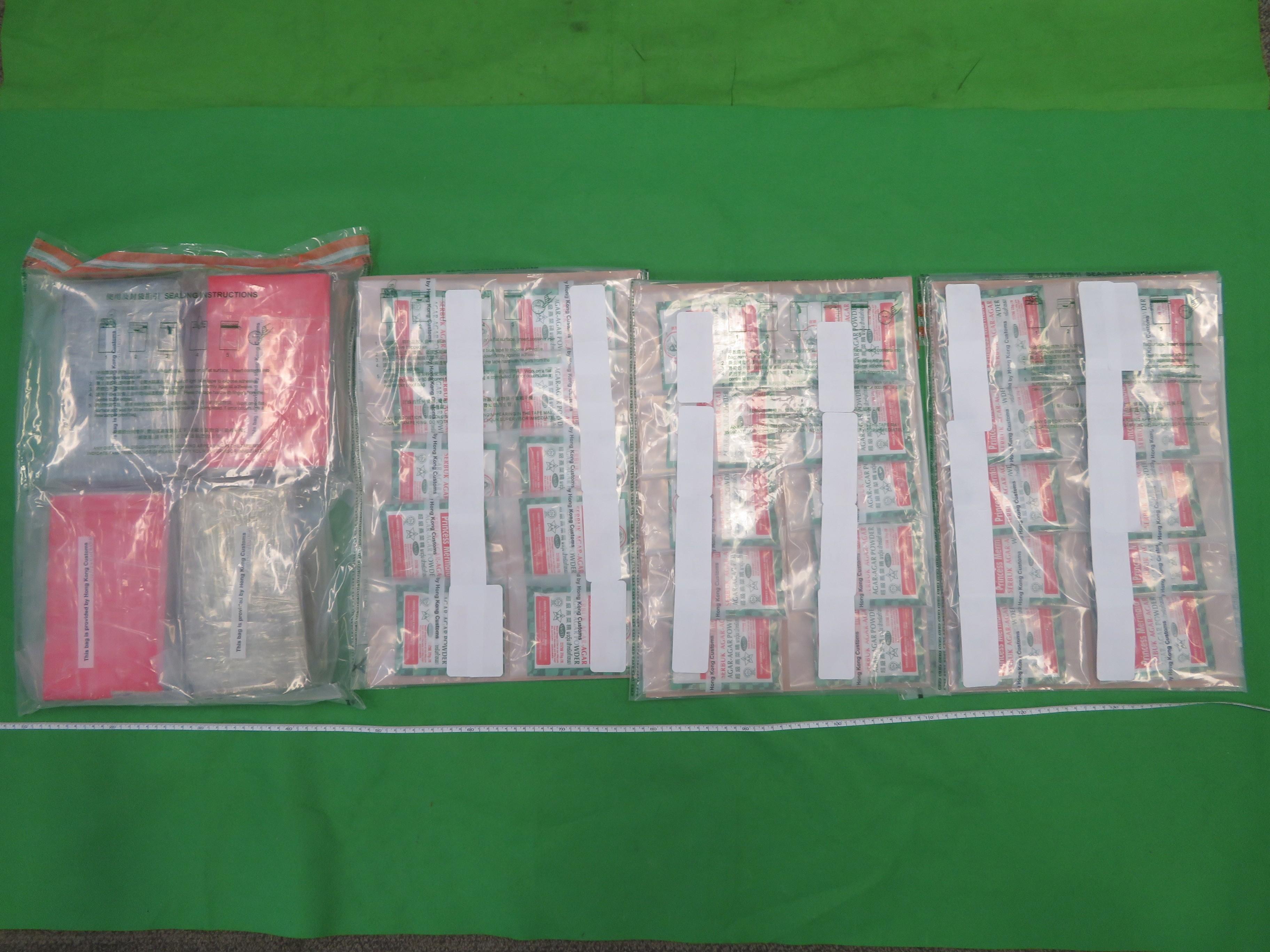
     Hong Kong Customs yesterday (September 28) seized about 6 kilograms of suspected cocaine with a total estimated market value of about $6.1 million in Causeway Bay. A man suspected to be connected with the case was arrested.
      
     During an anti-narcotics operation conducted in the vicinity of Causeway Bay yesterday afternoon, Customs officers intercepted a 41-year-old man and found about 5kg of suspected cocaine inside a plastic bag carried by him. He was then arrested. Customs officers later escorted the arrested man to his rented hotel room nearby for a search, and further seized in total about 1kg of suspected cocaine which was camouflaged as 30 packets of agar-agar powder.
      
     Upon investigation, the arrested man was charged with two counts of trafficking in a dangerous drug. He will appear at the Tuen Mun Magistrates’ Courts tomorrow (September 30). 
      
     Under the Dangerous Drugs Ordinance, trafficking in a dangerous drug is a serious offence. The maximum penalty upon conviction is a fine of $5 million and life imprisonment.
      
     Members of the public may report any suspected drug trafficking activities to Customs’ 24-hour hotline 2545 6182 or its dedicated crime-reporting email account (crimereport@customs.gov.hk) or online form (eform.cefs.gov.hk/form/ced002/).
 

Photo  
read more

Inspection of aquatic products imported from Japan

     In response to the Japanese Government’s plan to discharge nuclear-contaminated water at the Fukushima Nuclear Power Station, the Director of Food and Environmental Hygiene issued a Food Safety Order which prohibits all aquatic products, sea salt and seaweeds originating from the 10 metropolis/prefectures, namely Tokyo, Fukushima, Ibaraki, Miyagi, Chiba, Gunma, Tochigi, Niigata, Nagano and Saitama, from being imported into and supplied in Hong Kong.
 
     For other Japanese aquatic products, sea salt, and seaweeds that are not prohibited from being imported into Hong Kong, the Centre for Food Safety (CFS) of the Food and Environmental Hygiene Department will conduct comprehensive radiological tests to verify that the radiation levels of these products do not exceed the guideline levels before they are allowed to be supplied in the market.
 
     As the discharge of nuclear-contaminated water is unprecedented and will continue for 30 years or more, the Government will closely monitor and step up the testing arrangements. Should anomalies be detected, the Government does not preclude further tightening the scope of the import ban.
 
     From noon on September 28 to noon today (September 29), the CFS conducted tests on the radiological level of 183 food samples imported from Japan, which were of the “aquatic and related products, seaweeds and sea salt” category. No sample was found to have exceeded the safety limit. Details can be found on the CFS’s thematic website titled “Control Measures on Foods Imported from Japan” (www.cfs.gov.hk/english/programme/programme_rafs/programme_rafs_fc_01_30_Nuclear_Event_and_Food_Safety.html).
 
     In parallel, the Agriculture, Fisheries and Conservation Department (AFCD) has also tested 50 samples of local catch for radiological tests. All the samples passed the tests. Details can be found on the AFCD’s website (www.afcd.gov.hk/english/fisheries/Radiological_testing/Radiological_Test.html).
 
     The Hong Kong Observatory (HKO) has also enhanced the environmental monitoring of the local waters. No anomaly has been detected so far. For details, please refer to the HKO’s website
(www.hko.gov.hk/en/radiation/monitoring/seawater.html).
 
     From August 24 to noon today, the CFS and the AFCD have conducted tests on the radiological level of 6 015 samples of food imported from Japan (including 3 686 samples of aquatic and related products, seaweeds and sea salt) and 1 804 samples of local catch respectively. All the samples passed the tests. read more

Increase in Minimum Allowable Wage and food allowance for foreign domestic helpers

     The Government announced today (September 29) that the Minimum Allowable Wage (MAW) for foreign domestic helpers (FDHs) in Hong Kong will be increased by 3 per cent, from $4,730 to $4,870 per month.

     In addition, under the Standard Employment Contract for hiring FDHs, employers are required to provide FDHs with food free of charge. At present, the vast majority of employers provide free food to FDHs. Employers may, however, choose to pay a food allowance in lieu. The food allowance will be increased by $40 from not less than $1,196 to not less than $1,236 per month.

     The new levels of the MAW and food allowance will apply to all FDH contracts signed on or after tomorrow (September 30).

     A Government spokesman said, “The Government reviews the MAW for FDHs regularly. In accordance with the established practice, we have carefully considered Hong Kong’s general economic and labour market conditions over the past year, as well as Hong Kong’s near-term economic outlook in this year’s review. Taking into account the above, the affordability of employers and the livelihood of FDHs, the Government has decided to adjust the MAW. The Government has also reviewed the food allowance in lieu of free food, and decided to increase the allowance level.”

     FDH contracts signed today or before today at the existing MAW of $4,730 per month and with food allowance of not less than $1,196 per month will still be processed by the Immigration Department (ImmD), provided that the applications reach the ImmD on or before October 27 (Friday). This arrangement will give employers sufficient time to send the signed contracts to the ImmD for completion of the necessary application procedures. read more

Hong Kong Customs detects six smuggling cases exploiting ocean-going vessels and river trade vessels (with photos)

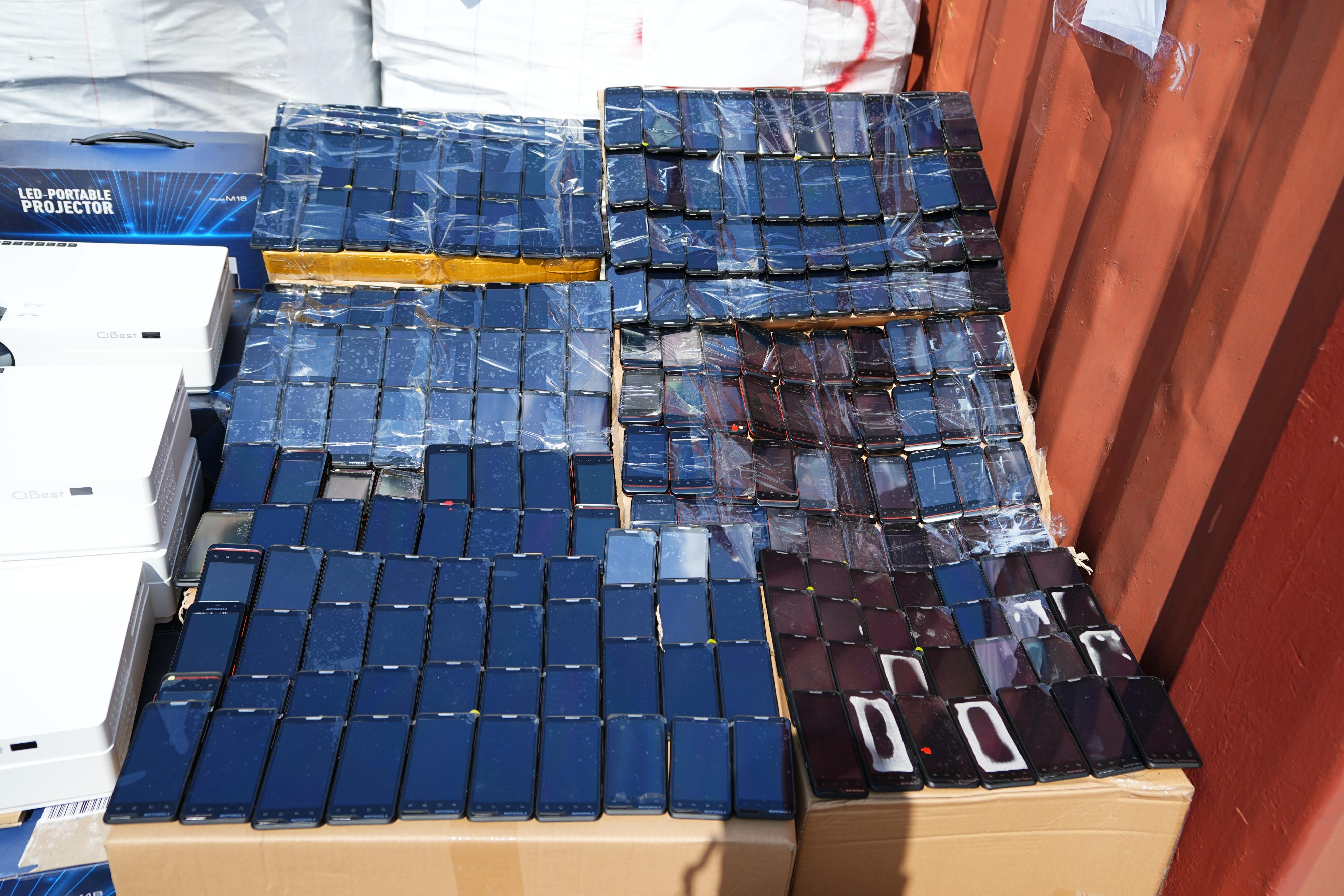
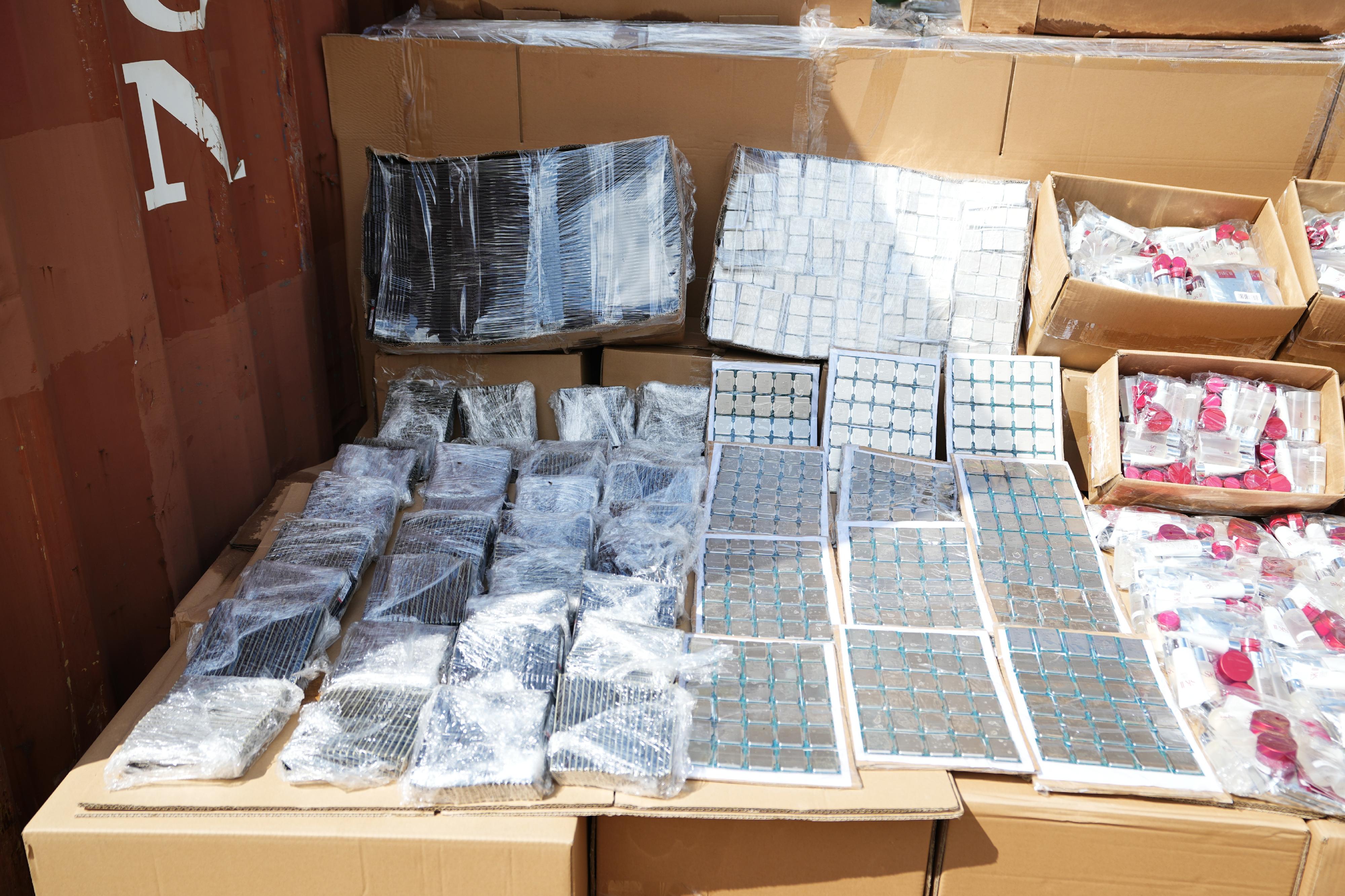
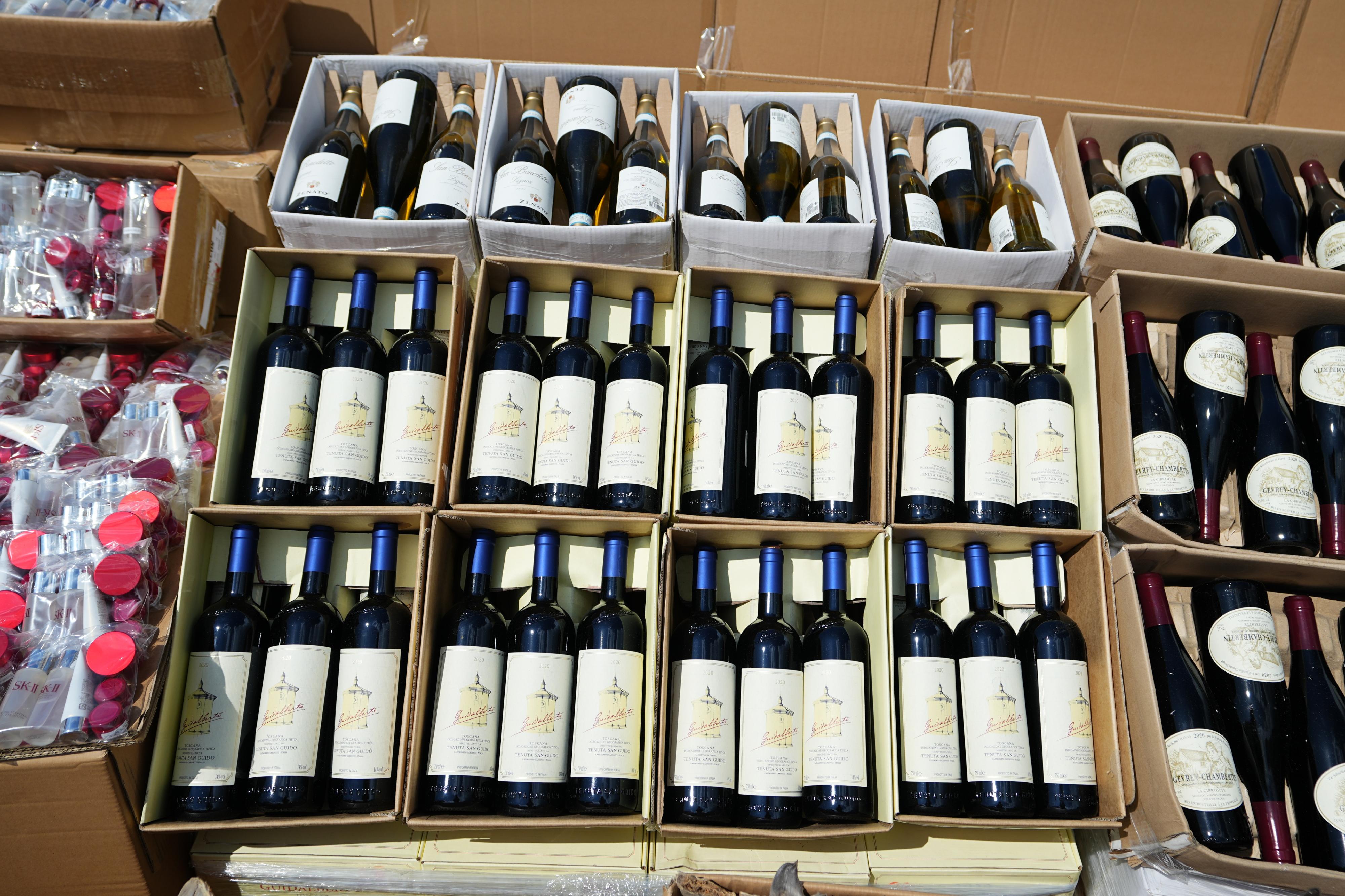
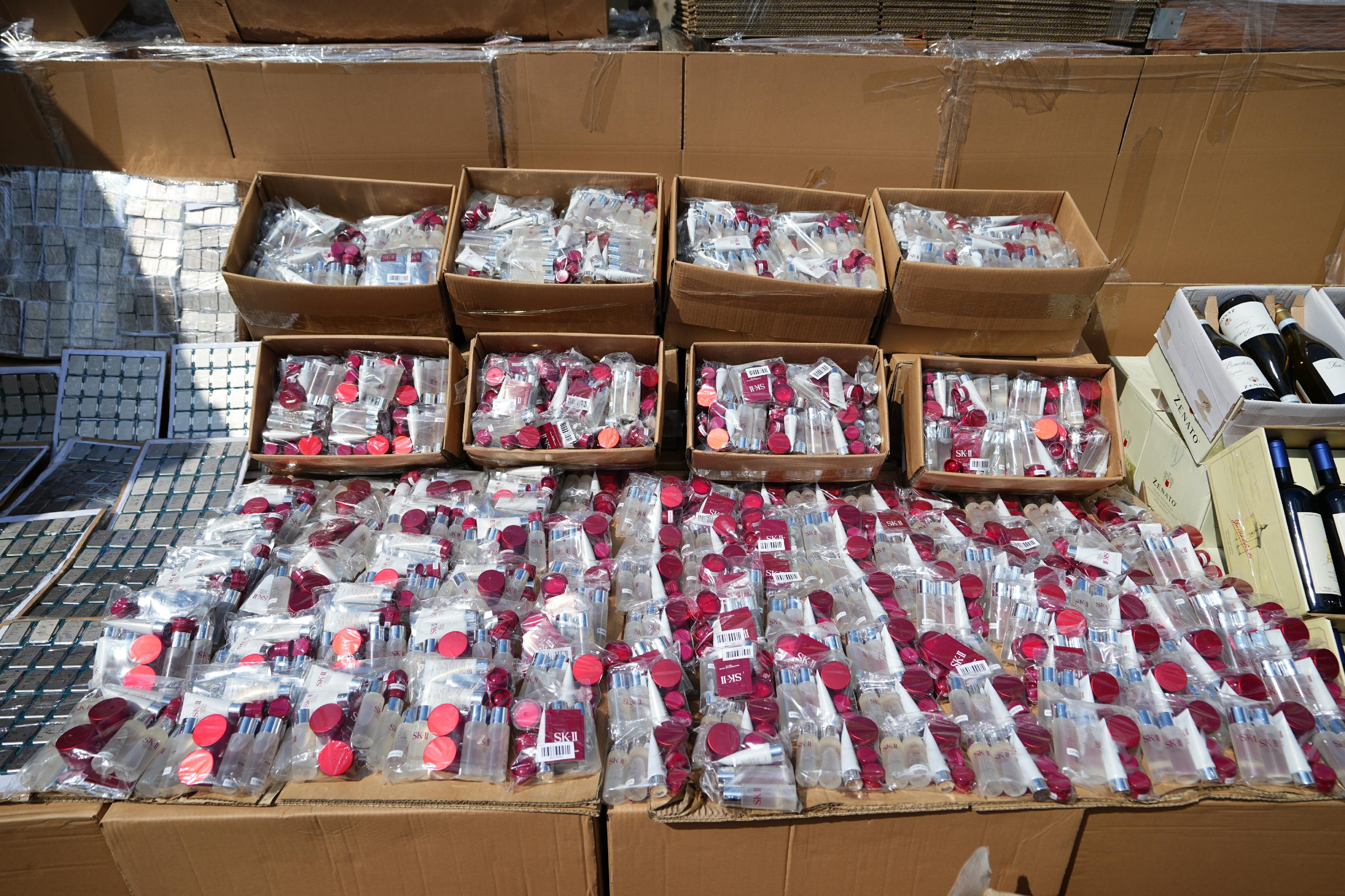
     Hong Kong Customs mounted a special operation codenamed “Wave Breaker” from August to September and detected four suspected smuggling cases involving ocean-going vessels and two suspected smuggling cases involving river trade vessels. A large batch of suspected smuggled goods with a total estimated market value of about $100 million was seized. 

     Through intelligence analysis and risk assessment, Customs suspected that criminals were using ocean-going vessels and river trade vessels to smuggle goods and thus formulated strategies to combat related activities. During the operation period, three ocean-going vessels scheduled to depart from Hong Kong to Malaysia, one ocean-going vessel scheduled to depart from Hong Kong to Shanghai, as well as two river trade vessels bound for Nansha and Macao respectively, were selected for inspection. Upon examinations, Customs officers onboard the six vessels found large batches of suspected smuggled goods, including over 500 000 electronic products, about 2 000 bottles of table wines, about 240 pallets of electronic wastes, about seven tonnes of suspected scheduled shark fins, and about three tonnes of frozen meat.

     In the operation, Customs officers arrested three men, aged between 40 and 54 years old, suspected to be connected with the cases.
      
     Investigations of the six cases are ongoing. The three arrested persons have been released on bail pending further investigation and the likelihood of further arrests is not ruled out.

     Being a government department primarily responsible for tackling smuggling activities, Customs has all along been combating various smuggling activities proactively at the forefront. Customs will keep up its enforcement action and continue to fiercely combat sea smuggling activities through proactive risk management and intelligence-based enforcement strategies, along with mounting targeted anti-smuggling operations at suitable times to land a solid blow against relevant activities.

     Smuggling is a serious offence. Under the Import and Export Ordinance, any person found guilty of importing or exporting unmanifested cargo is liable to a maximum fine of $2 million and imprisonment for seven years. 

     Under the Protection of Endangered Species of Animals and Plants Ordinance, any person found guilty of importing or exporting an endangered species without a licence is liable to a maximum fine of $10 million and imprisonment for 10 years.
     â€‹
     Under the Waste Disposal Ordinance, it is an offence for anyone to import or export hazardous waste without obtaining a valid permit beforehand. First-time offenders are liable to a maximum fine of $200,000 and six months’ imprisonment. For subsequent offences, offenders are liable to a maximum fine of $500,000 and two years’ imprisonment.

     Members of the public may report any suspected smuggling activities to Customs’ 24-hour hotline 2545 6182 or its dedicated crime-reporting email account (crimereport@customs.gov.hk) or online form (eform.cefs.gov.hk/form/ced002).

Photo  Photo  Photo  Photo  Photo  Photo  Photo  Photo  
read more