image_pdfimage_print

Author Archives: hksar gov

Temporary traffic and transport arrangements at Castle Peak Road – Kwai Chung from this Saturday night to Sunday morning to facilitate footbridge works

     The Transport Department (TD) today (October 26) reminded the public that the following temporary traffic and transport arrangements will be implemented at Castle Peak Road – Kwai Chung from this Saturday night (October 28) to Sunday morning (October 29) to facilitate footbridge works:

(1) Road closures

– From 8pm on October 28 to 1.30am on October 29 and from 5.31am to 8am on October 29, the section of Castle Peak Road –  Kwai Chung (northbound) between Yip Shing Street and Shek Pai Street will be temporarily closed to all vehicular traffic, while the section of Castle Peak Road – Kwai Chung (southbound) between Yip Shing Street and Shek Pai Street will be converted to two-lane two-way traffic; and
– From 1.31am to 5.30am on October 29, the whole section of Castle Peak Road – Kwai Chung between Yip Shing Street and Shek Pai Street will be temporarily closed to all vehicular traffic.

(2) Traffic diversions

     During the closure of the whole section of Castle Peak Road – Kwai Chung between Yip Shing Street and Shek Pai Street, the following traffic diversions will be implemented:

– Vehicles travelling on Castle Peak Road – Kwai Chung (northbound) heading for Kwai Chung (North), Tsuen Wan or Sha Tin will be diverted to travel via Castle Peak Road – Kwai Chung (northbound), U-turn outside Greenknoll Court, Castle Peak Road – Kwai Chung (southbound), Butterfly Valley Road (southbound), Lai Chi Kok Road (eastbound), Tai Nan West Street (northbound), Cheung Sha Wan Road (westbound), Kwai Chung Road (westbound) and Kwai Chung Road (northbound);
– Vehicles travelling on Castle Peak Road – Kwai Chung (southbound) heading for Greenknoll Court will be diverted to travel via Shek Pai Street (eastbound), Wei Kek Street (northbound), Tai Loong Street (westbound), Tai Loong Street (northbound), Wo Yi Hop Road (eastbound), Wo Yi Hop Road (northbound), Cheung Wing Road (southbound), Kwai Chung Road (southbound), Kwai Chung Road (eastbound), Cheung Sha Wan Road (eastbound), Castle Peak Road (westbound) and Castle Peak Road – Kwai Chung (northbound); and
– Vehicles travelling on Castle Peak Road – Kwai Chung (southbound) heading for Kowloon will be diverted to travel via Shek Pai Street (eastbound), Wei Kek Street (northbound), Tai Loong Street (westbound), Tai Loong Street (northbound), Wo Yi Hop Road (eastbound), Wo Yi Hop Road (northbound), Cheung Wing Road (southbound) and Kwai Chung Road (southbound).

(3) Bus route diversions

     KMB route No. N237 departing from the Mei Foo Bus Terminus, from the second departure (i.e. 1.30am) to the last departure (i.e. 5am) on October 29, will be diverted via Castle Peak Road – Kwai Chung (northbound), U-turn outside Greenknoll Court, Castle Peak Road – Kwai Chung (southbound), Butterfly Valley Road (southbound), Lai Chi Kok Road (eastbound), Tai Nan West Street (northbound), Cheung Sha Wan Road (westbound), Kwai Chung Road (westbound), Kwai Chung Road (northbound), Castle Peak Road – Kwai Chung (westbound), Kwok Shui Road (eastbound) and Castle Peak Road – Kwai Chung (southbound), and resume to its original routing.

     The bus company will display notices to advise passengers on the special arrangements. Appropriate traffic signs will also be erected on-site to guide motorists. The TD anticipates that the travelling time at the road sections concerned will be slightly lengthened due to the diversion arrangements. Motorists should exercise tolerance and patience.

     â€‹Members of the public are advised to plan their journeys in advance and allow sufficient traveling time to cater for unexpected delay, and stay alert to the latest traffic news through the media or the TD’s mobile application “HKeMobility” or website (www.td.gov.hk). read more

Second Guangdong-Hong Kong-Macao Greater Bay Area (Guangdong) Statistical Forum successfully held in Shenzhen (with photos)

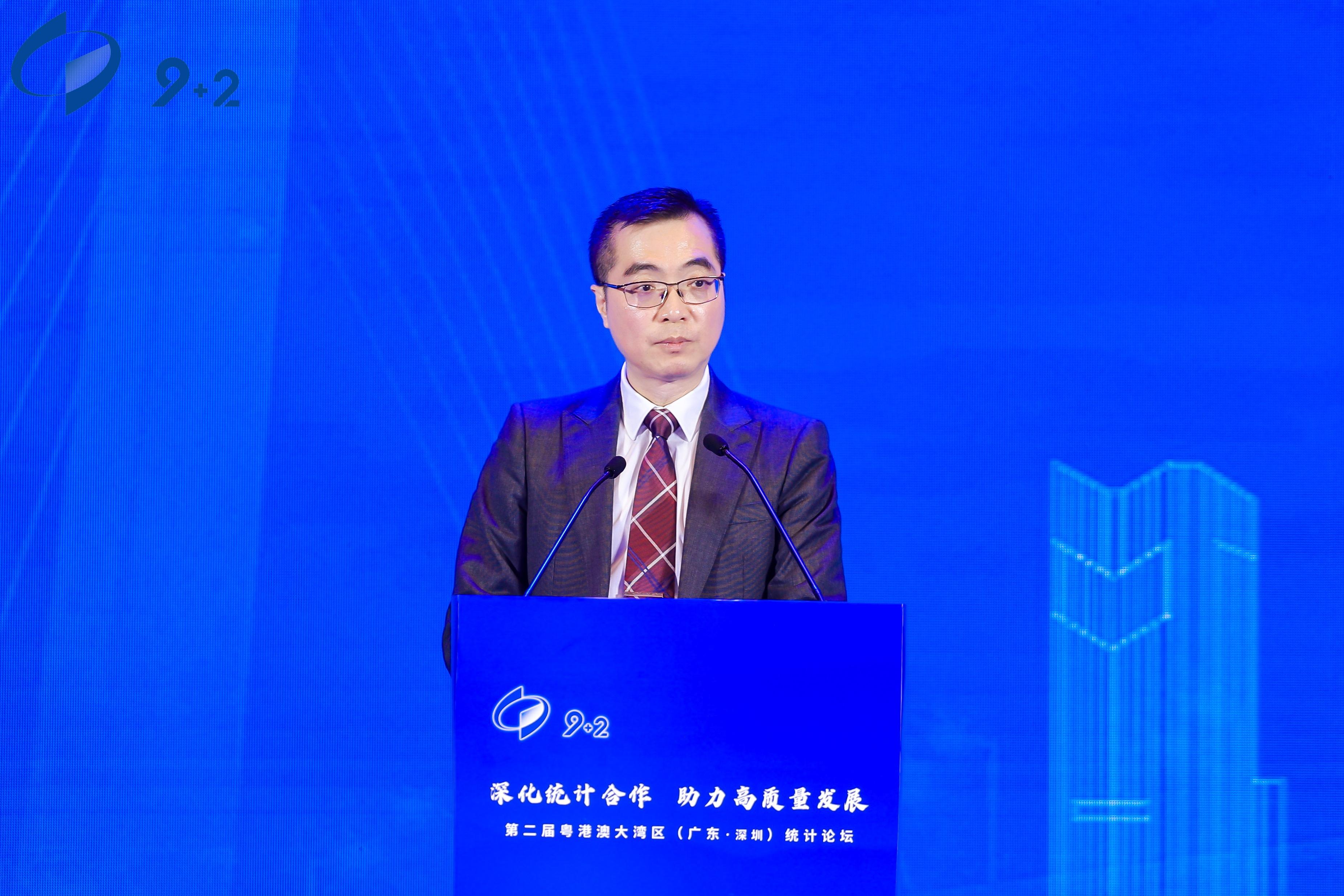
     The Second Guangdong-Hong Kong-Macao Greater Bay Area (Guangdong) Statistical Forum was held on October 24 and 25 in Qianhai, Shenzhen. Under the guidance of the National Bureau of Statistics, the forum was hosted by the Guangdong Provincial Bureau of Statistics and co-organised by the Census and Statistics Department (C&SD) of the Hong Kong Special Administrative Region and other government statistical agencies from the “9+2” cities in the Guangdong-Hong Kong-Macao Greater Bay Area (GBA). The Commissioner for Census and Statistics, Mr Leo Yu, led a delegation to participate in this meaningful event.
 
     In addition to the attendance of leaders from the National Bureau of Statistics and the Guangdong Provincial Bureau of Statistics, the forum brought together statistical experts from various fields, including representatives from the government statistical agencies of the “9+2” cities in the GBA, as well as those from higher education institutions and research institutes on the Mainland. Themed “Deepening statistical co-operation to promote high-quality development”, the forum offered an opportunity to foster statistical exchanges and co-operation in the GBA by providing a platform for statistical professionals from the “9+2” cities to leverage the collective wisdom and insights to explore more collaborative paths, and to jointly drive innovation in statistical work, with a view to elevating the level of statistical work amid the rapid development of the times.
 
     Speaking at the opening ceremony of the forum, Mr Yu remarked, “Perhaps you have heard the saying ‘data is the new oil’, which means that data, like oil, will become valuable after proper refining. Therefore, we also have to actively strengthen our statistical infrastructure, adopt modern techniques and methods for data collection, processing, analysis, and dissemination, in order to properly refine the data. This does not only enhance the value of data, but also reduces the workload of junior colleagues and improves work effectiveness. In this connection, it helps release more manpower for further research and innovation, expand the scope and improve the quality of our services, enabling our statistical work to advance faster, farther, and more proactively.”
 
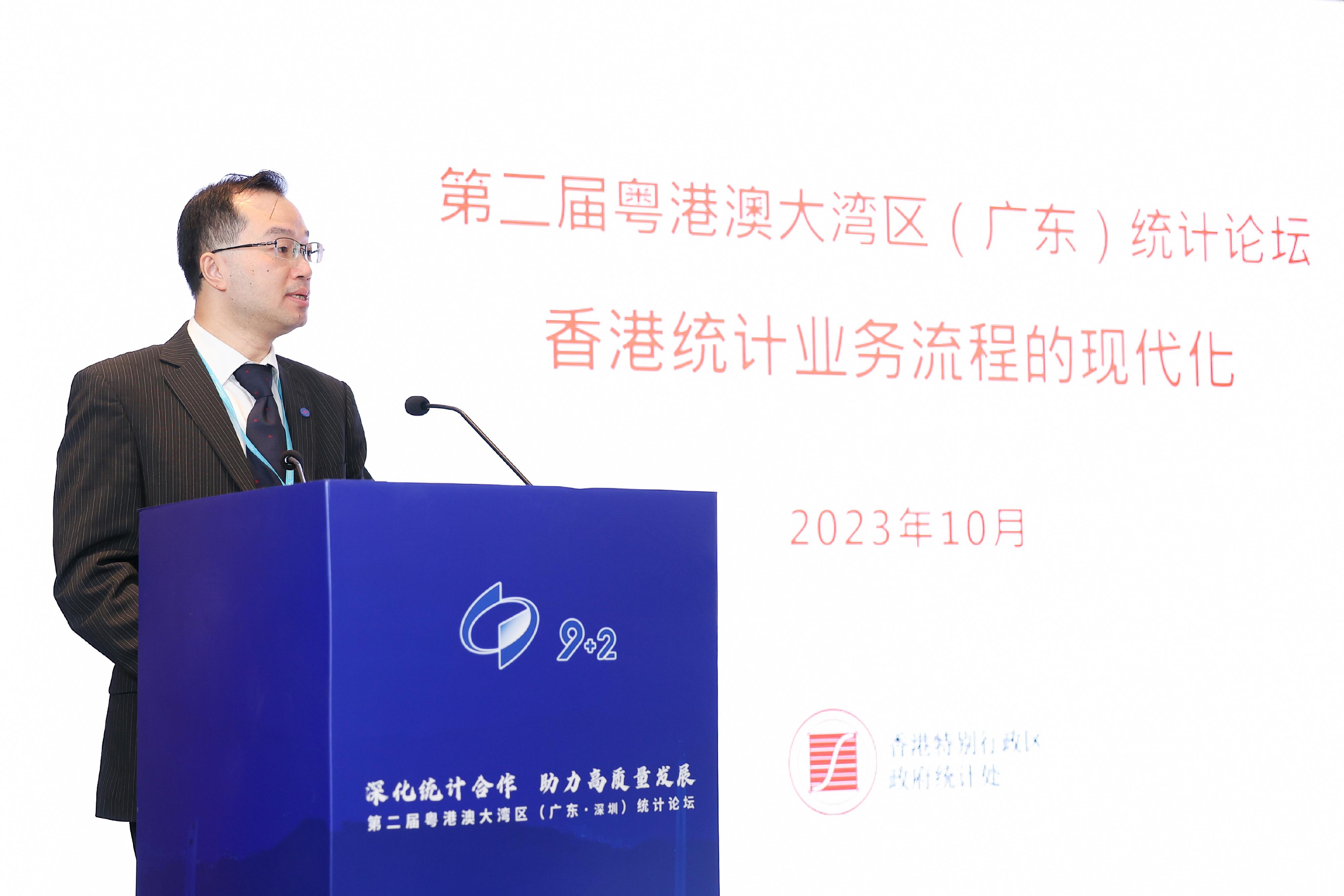
     Senior statistician of the C&SD Mr Tsang Tat-shing also delivered a presentation entitled “Modernisation of Statistical Business Processes in Hong Kong” at one of the sessions of the forum. Colleagues who participated in the forum unanimously expressed that it was a very valuable experience for them to exchange knowledge and learn from statistical professionals from the Mainland cities. It enabled them to acquire insights into the ongoing advancement of statistical techniques on the Mainland, and served as a reminder for them to actively explore and embrace changes in the dynamic era of big data, in order to seize opportunities and tackle challenges in the future.
 
     The forum was held in Shenzhen and was attended by representatives of statistical organisations from Beijing, Guangdong Province, Hong Kong, Macao, etc, through online and in-person participation. Relevant officials from the statistical systems of the cities in the GBA, as well as experts and scholars from national think tanks and renowned universities also shared their views on the statistical measurement of digital economy, statistical monitoring of high-quality development, research on data science and big data statistical applications, statistical reform and innovation, etc.
 

Photo  Photo  
read more

HKSAR Government’s response to 2023 World Justice Project Rule of Law Index

     In response to media enquiries on 2023 World Justice Project Rule of Law Index (Index), a Hong Kong Special Administrative Region (HKSAR) Government spokesman made the following reply today (October 25):

     Hong Kong continues to rank the 6th in East Asia and the Pacific, and attains the 23rd out of 142 countries and jurisdictions covered in the Index. Hong Kong remains high in the overall ranking, ahead of some European and American countries which often unreasonably criticise the rule of law and human rights situation of Hong Kong.

     In respect of “Order and Security”, Hong Kong’s score is higher than last year and continues to attain the 6th in its global ranking. It is sufficient proof of the important role of the Hong Kong National Security Law (NSL) in maintaining the order and security of Hong Kong. The NSL has provided the necessary conditions for ensuring the long-term prosperity and stability of Hong Kong, and enables Hong Kong residents to enjoy their rights and freedoms in a safe and peaceful environment. This is conducive to the rule of law, the protection of human rights, the successful implementation of the “one country, two systems” principle, and the long-term interests of both the country and the “two systems”.

     In respect of “Absence of Corruption”, Hong Kong’s score remains unchanged, ranking the 9th globally. This demonstrates that the city’s anti-corruption efforts have been widely recognised. The Government will continue to promote the exchange of anti-corruption experience among experts and scholars from Hong Kong, the Mainland and overseas, thereby strengthening Hong Kong’s international status in integrity building.

     In respect of “Fundamental Rights”, Hong Kong’s score is also higher than last year and ranked three places higher globally. In relation to “Regulatory Enforcement” and “Criminal Justice”, whilst Hong Kong’s scores remain the same as last year, its global rankings climb one and two places respectively. Hong Kong’s scores slightly drop in relation to “Constraints on Government Powers”, “Open Government” and “Civil Justice”.

     As a matter of fact, Hong Kong’s overall score (0.73) is the same as the countries ranked globally from the 20th to the 22nd. Regarding the minor drop in scores in some aspects and the slight adjustment in the global ranking, the HKSAR Government will continue to enhance the international community’s proper understanding of the rule of law situation in Hong Kong, thereby telling the good stories of Hong Kong.

     The HKSAR steadfastly safeguards national sovereignty, security and development interests, and fully and faithfully lives up to the top priority of the principle of “one country, two systems”. The HKSAR Government will resolutely, fully and faithfully implement the NSL and further strengthen the HKSAR’s legal framework and enforcement mechanisms for safeguarding national security to prevent, suppress and punish in accordance with the law acts and activities that endanger national security. At the same time, it will safeguard the rights and freedoms enjoyed by Hong Kong residents in accordance with the law with a view to ensuring the steadfast and successful implementation of “one country, two systems”. read more

Policy Address to bring out full potential of the community

     The Chief Executive, Mr John Lee, in the Policy Address today (October 25) set out a range of measures to promote a caring, inclusive, healthy and high-quality society.
 
     Initiatives announced in the Policy Address focused on enhancing education and healthcare as well as creating a childbearing environment and supporting the disadvantaged in society.
 
International Hub for Post-Secondary Education
 
     Young people are Hong Kong’s future. The Government will capitalise on Hong Kong’s strength in education to help young people to develop and shape their future, and build Hong Kong into an international hub for post‑secondary education.
 
     To achieve this goal, the Government outlined a number of initiatives, including:
 

  • doubling the admission quota of non-local students at Government-funded post-secondary institutions to 40 per cent, starting from the 2024/25 academic year;
  • injecting $1 billion into the Government Scholarship Fund to attract more outstanding local and non-local students to pursue studies in Hong Kong;
  • providing about 13 500 additional hostel places by 2027 to cater to student needs; and
  • taking forward the development of post-secondary education in the Northern Metropolis to develop the Northern Metropolis University Town. There, post-secondary institutions will be encouraged to strengthen co-operation with renowned Mainland and overseas institutions, and share resources and enhance collaboration with the industry sector.
 
      The Government will press ahead with the establishment of universities of applied sciences (UASs). Working with the Hong Kong Council for Accreditation of Academic and Vocational Qualifications, it will prescribe the standards to be qualified as UASs to raise the status of vocational and professional education and training to attain qualifications at university degree level. This will provide an alternative path to success for young people who aspire to pursue a career in the technical professions.
 
Health and medical innovation hub
 
     Leveraging on the city’s healthcare strengths, the Government set out plans for a health and medical innovation hub to enhance services and attract more local, Mainland and overseas pharmaceutical and medical device enterprises to conduct research and development (R&D) and clinical trials in Hong Kong.
 
      A preparatory office will be set up next year to study the potential restructuring and strengthening of the current regulatory and approval regimes for medicine, medical devices and medical technology. The office will also put forward proposals and steps for the establishment of the Hong Kong Centre for Medical Products Regulation (CMPR) as a step towards the transition to the “primary evaluation” approach in approving applications for registration of pharmaceutical products, and explore the upgrading of the CMPR as a standalone statutory body in the long run. This will help accelerate the launching of new drugs and medical devices to the market, and foster the development of R&D and testing of medical products and related industries.
 
     The Government will establish the Greater Bay Area (GBA) International Clinical Trial Institute in the Hetao Shenzhen-Hong Kong Science and Technology Innovation Co-operation Zone next year to provide a one-stop clinical trial support platform for medical research institutions. 
 
     A new “1+” mechanism will also be set up by the end of the year to expedite the approval of new drugs and promote R&D on drug and clinical trials in Hong Kong.
 
     To promote the development of Chinese medicine in Hong Kong, the Government will launch the Digitalised Chinese Medicines Information Platform in early 2024 for Chinese medicine identification and educational purposes. A Chinese Medicine Development Blueprint will also be published in 2025.
 
     Following the COVID-19 pandemic, the Government will enhance local capacity to combat communicable diseases through surveillance, early warning, prevention and control, as well as international co-operation in scientific research in areas such as vaccines. The Hong Kong Jockey Club will provide funding of $3 billion to support related efforts.
 
Youth Development
 
     To nurture the next generation with affection for our country and our city, a global perspective and positive thinking, the Government would continue to implement and enhance some 160 measures set out in the Youth Development Blueprint published last year, and organise the Youth Development Summit in mid-2024 as the opening and highlight of the next Youth Festival.
 
     In addition to carrying forward various Mainland and overseas youth exchange and internship programmes, the Government will establish the Alliance of Hong Kong Youth Innovation and Entrepreneurial Bases in the GBA before year’s end.
 
Promote fertility
 
     Noting Hong Kong’s persistently low birth rate, the Policy Address unveiled a range of initiatives to promote fertility and create a childbearing environment. The initiatives include:
 
  • providing a one-off Newborn Baby Bonus of $20,000. This measure will last for three years;
  • raising the deduction ceiling of home loan interest or domestic rent for eligible taxpayers from the current $100,000 to $120,000, starting from the year of assessment 2024/25;
  • introducing the “Families with Newborns Flat Selection Priority Scheme” to raise the chances for families with newborns to purchase subsidised sale flats (SSFs), and reserving an additional 10 per cent of SSFs for this purpose from 2024; and
  • introducing the “Families with Newborns Allocation Priority Scheme”, under which family applicants with newborns will wait one year less in their queue time for public rental housing flats.  
 
     The Policy Address also set out a range of measures to support prospective parents who require assisted reproductive technology in conceiving a child, including increasing the public service quota of assisted reproductive services for in-vitro fertilisation and providing tax deduction for assisted reproductive services.
 
     Childbearing support for working families will be strengthened in the following areas:
 
  • increase the Child Care Centre Parent Subsidy from a maximum of $600 to $1,000 per month starting from April 2024;
  • the number of service places under the Neighbourhood Support Child Care Project will be doubled to about 2 000 starting from the fourth quarter of 2024;
  • increase the number of service places under the After School Care Programme for Pre-primary Children from about 670 to nearly 1 200 over the next three years starting from 2024; and
  • increase the number of Aided Standalone Child Care Centre service places by about 900 over the next three years starting from 2024.
 
Caring and Inclusive Community
 
     The Government announced the expansion of various elderly care services. These include extending the Residential Care Services Scheme in Guangdong to cover specific residential care homes for the elderly who wish to retire in the Mainland cities of the GBA, and extending the coverage of the Residential Care Service Voucher Scheme for the Elderly to include nursing home places.
 
     An additional $1 billion will also be injected into the Innovation and Technology Fund for Application in Elderly and Rehabilitation Care to enhance the subsidies for eligible elderly and rehabilitation service units to procure, rent and trial technology products.
 
     Additional support will be on hand for carers through mobilising Care Teams. They will help identify and refer carers for the elderly and persons with disabilities in need of respite and assistance.
 
     To support special school leavers and their carers, designated teams will be set up to proactively contact them and provide training on caring and interaction skills, arrange post-school care plans and line them up with community support services.
 
     Ethnic minorities are also in line for support in education, employment, welfare and healthcare.
 
     The Government will set up two additional support service centres in 2024, taking the total number to 10. Each of these centres will be invited to set up a Ethnic Minority Care Team to reach out to ethnic minority households on their needs. The Government will continue to support non-Chinese speaking students to learn Chinese.
 
     Government departments will step up recruitment and outreaching efforts to invite applications from ethnic minorities.  read more