MD announcement
Attention duty announcers, radio and TV stations: Please broadcast the following as soon as possible and repeat it at suitable intervals: The Marine Department today (March 28) reminded masters, coxswains and persons… read more


Attention duty announcers, radio and TV stations: Please broadcast the following as soon as possible and repeat it at suitable intervals: The Marine Department today (March 28) reminded masters, coxswains and persons… read more
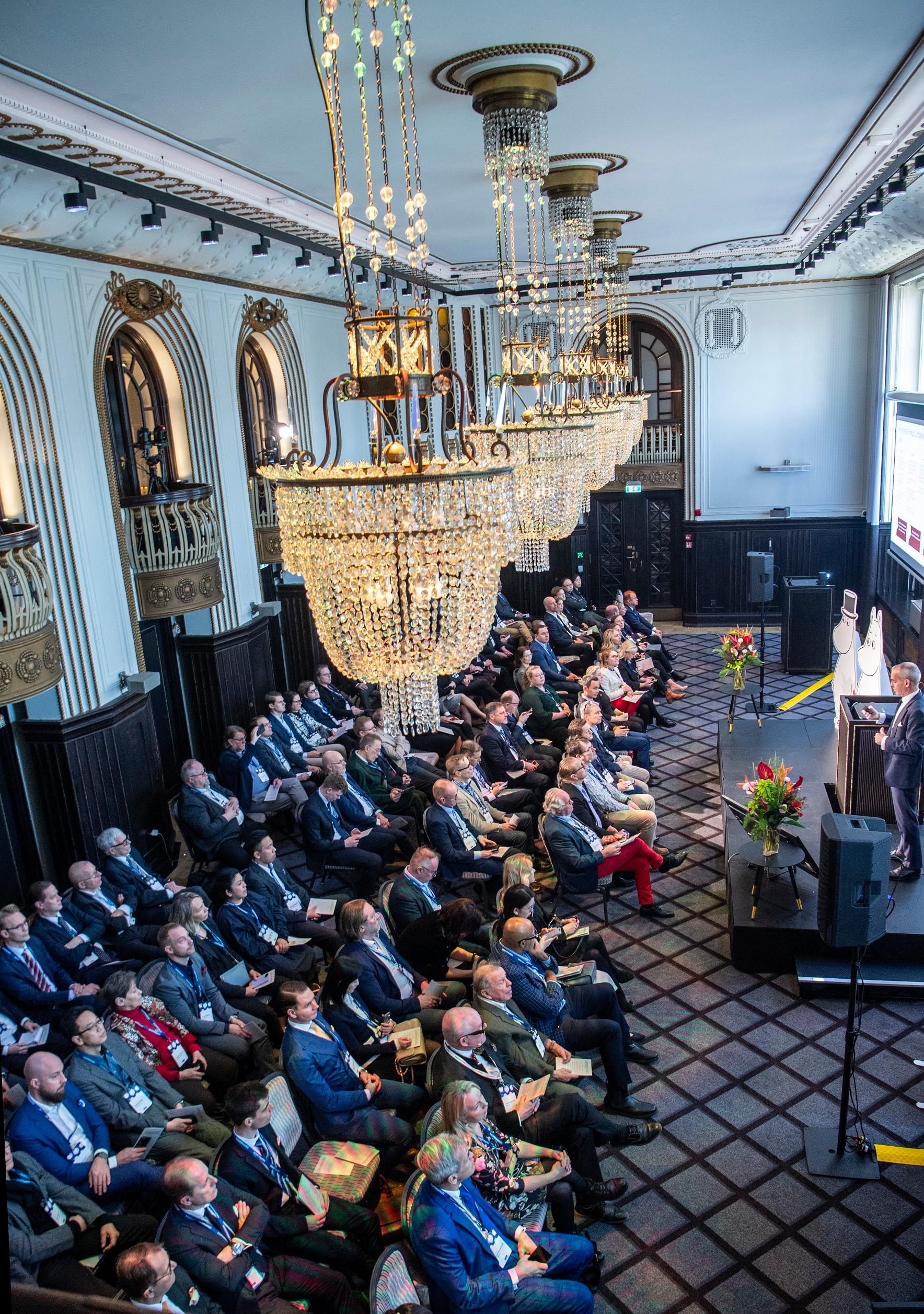
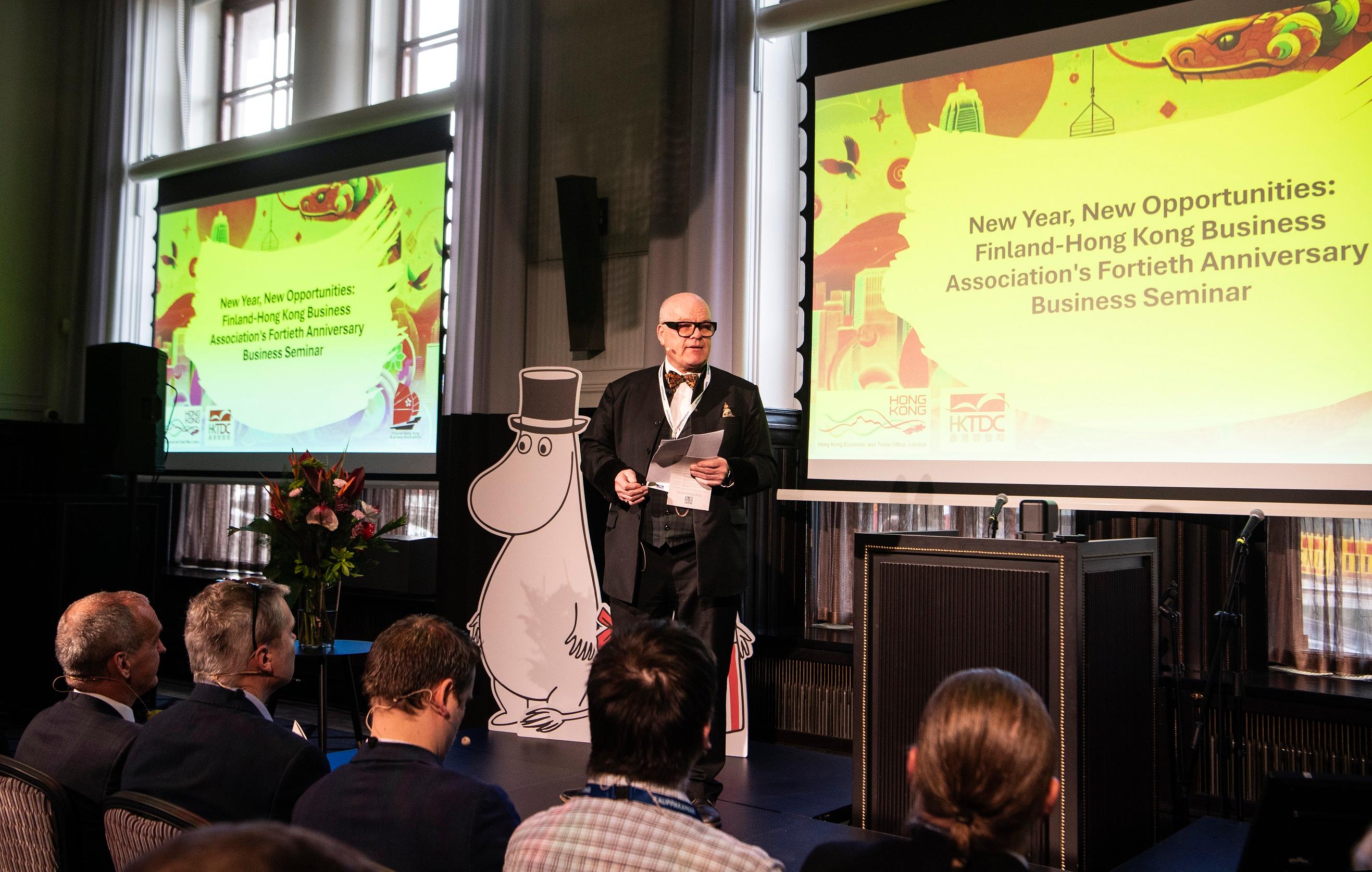
The Hong Kong Economic and Trade Office, London (London ETO) and the Finland-Hong Kong Business Association cohosted a Year of the Snake reception in Helsinki, Finland, on March 26 (Helsinki time).
The Director-General of the London ETO, Miss Fiona Chau, reaffirmed the office’s commitment to enhancing its Nordic partners’ understanding of Hong Kong’s unique role as a dynamic hub for business, culture, and innovation. As the final stop of all Chinese New Year receptions for the Year of the Snake in the Nordic region, the reception served as a platform to strengthen business ties and reinforce Hong Kong’s position as a global gateway for trade and finance.
Miss Chau further highlighted Hong Kong’s institutional advantages under the “one country, two systems” principle, noting that the city remains a “super connector” between China and the rest of the world. She remarked that Hong Kong is an unparalleled destination for businesses and investors, citing that in 2024, the city hosted a record 9 960 non-local companies, representing a 10 per cent year-on-year increase.
Looking ahead, Miss Chau stressed that the London ETO will continue deepening its engagement with Finnish businesses and organisations, strengthening partnerships across business, investment, and cultural exchange to unlock new opportunities.
The reception was well attended by over 100 guests, including representatives from the Ministry for Foreign Affairs of Finland, as well as from the local business, academic and cultural sectors.

The Government of the Hong Kong Special Administrative Region (HKSAR) strongly disapproved of and must resolutely refute the untruthful remarks, slanders and smears against various aspects of the HKSAR in the so-called six-monthly report on Hong Kong: July to December 2024 of the United Kingdom (UK) today (March 27).
A spokesman for the HKSAR Government said, “The HKSAR Government strongly condemns and rejects the UK’s attempt through a so-called six-monthly report to make misleading and irresponsible remarks about Hong Kong matters, wantonly put politics above the rule of law and attempt to interfere in Hong Kong’s law-based governance by despicable political manoeuvres. The HKSAR is an inalienable part of the People’s Republic of China, and as a local administrative region that enjoys a high degree of autonomy under the principle of ‘one country, two systems’, comes directly under the jurisdiction of the Central People’s Government. The core essence of the Sino-British Joint Declaration is about China’s resumption of the exercise of sovereignty over Hong Kong. It did not authorise the UK to interfere in Hong Kong’s affairs after its return to the motherland. The UK has no sovereignty, jurisdiction or right of supervision over Hong Kong after its return to the motherland. The HKSAR Government strongly urges the UK again to discern facts from fallacies, respect the international law and basic norms governing international relations, and immediately stop interfering in Hong Kong matters, which are purely China’s internal affairs.”
Laws safeguarding national security
The HKSAR Government spokesman said, “The HKSAR Government strongly opposes the absurd and false contents in the UK’s so-called six-monthly report with regard to the laws safeguarding national security in the HKSAR. While the ‘black-clad violence’ and the Hong Kong version of ‘colour revolution’ back in 2019 have severely damaged the social stability of Hong Kong, with the promulgation and implementation of the Hong Kong National Security Law (HKNSL), its effect in stopping violence and curbing disorder as well as quickly restoring social stability in the Hong Kong community was immediate. With the concerted efforts of the HKSAR Government, the Legislative Council and all sectors of the community, the HKSAR fulfilled its constitutional duty by enacting the Safeguarding National Security Ordinance (SNSO) last year to improve the legal system and enforcement mechanisms for safeguarding national security, enabling Hong Kong’s transition from chaos to order and its advancement from stability to prosperity.” However, the UK Government vilified the HKSAR law enforcement, prosecutorial and judicial authorities’ performance of their duties in accordance with the law as an ‘erosion of rights and freedoms’, and continued to unscrupulously distort the facts to criticise, which just shows its bullying act are utterly ugly and despicable.
“In accordance with international law and international practice based on the Charter of the United Nations, it is each and every sovereign state’s inherent right to enact laws safeguarding national security, and it is also an international practice. With at least 14 pieces of laws safeguarding national security in the UK, those remarks by the UK are not only totally distorting and confounding right and wrong, but they also entirely disregard the constitutional duty and practical needs of the HKSAR to legislate, and the positive effects brought by the enactment of the relevant national security legislation on economic development and protection of human rights.”
“In fact, the implementation of the HKNSL in the past four years or so has enabled the livelihood and economic activities of the Hong Kong community at large to swiftly resume to normal and the business environment to be restored and improved continuously. In the Economic Freedom of the World 2024 Annual Report, Hong Kong ranks as the world’s freest economies among 165 economies. In the World Competitiveness Yearbook 2024, Hong Kong’s ranking improved by two places to fifth globally. Hong Kong ranked among the top three international financial centres and the top four initial public offering markets in the world. It is evident that international funds and investments are confident in Hong Kong’s development.
“The offences endangering national security stipulated by HKNSL and SNSO target acts endangering national security with precision, and define the elements and penalties of the offences with clarity. The HKSAR law enforcement agencies have been taking law enforcement actions based on evidence and strictly in accordance with the law in respect of the acts of the persons or entities concerned, which have nothing to do with their political stance, background or occupation. Any suggestion that certain individuals or organisations should be immune from legal consequences for their illegal acts is no different from advocating a special privilege to break the law, and this totally runs contrary to the spirit of the rule of law.”
“Those absconders hiding in the UK and other western countries are wanted and subject to arrest warrants issued by the court, not because they ‘exercised freedom of expression’, but because they continue to blatantly engage in activities endangering national security, inciting secession and requesting foreign countries to impose ‘sanctions’ or blockade and engage in other hostile activities against the People’s Republic of China and the HKSAR. More so, they continue to collude with external forces to be covered for their evil deeds. It is therefore necessary to take all lawful measures, including the measures specified under section 89 of the SNSO, to strongly combat the acts of abscondment. Time had been given for the absonders to return to Hong Kong for law enforcement and legal proceedings before the measures were taken. However, these absconders did not cherish the opportunity and did not return to Hong Kong to surrender themselves. The specified measures aim at addressing, combating, deterring and preventing acts of abscondment, and procuring the return of absconded persons to Hong Kong to face law enforcement and judicial proceedings. In fact, all specified measures including the cancellation of HKSAR passports and eligibility for application align with human rights requirements; and quite a number of countries including the UK would also impose such measures on wanted criminals. It is indeed a demonstration of hypocrisy with double standards by the UK with ulterior motives that, after the HKSAR Government has announced the relevant measures, attack the HKSAR in safeguarding national security dutifully, faithfully and in accordance with the law.”
“All cases are handled strictly on the basis of evidence and in accordance with the law. All defendants will receive fair trial strictly in accordance with laws applicable to Hong Kong (including the HKNSL) and as protected by the Basic Law and the Hong Kong Bill of Rights. It is extremely inappropriate for the UK to make unwarranted comments on criminal trials which are ongoing in the HKSAR courts. It is also a complete disregard to the spirit of the rule of law.
“As for prisoners sentenced to imprisonment by the court in accordance with the law, they would not have a right to remission. Non-referral of a prisoner having committed offence endangering national security case to the Post-release Supervision Board is a preventive measure and serves as an adjunct to the rehabilitation of the prisoner. The non-referral does not of itself increase the sentence and should not be regarded as punishment. The court also agreed that the Commissioner of Correctional Services, in performing a function conferred by the Prisons Ordinance and the Post-release Supervision of Prisoners Ordinance, has a duty to safeguard national security and must regard national security as the most important factor and give appropriate consideration to it accordingly. The Correctional Services Department has been handling relevant cases in accordance with the law and established mechanisms. In deciding whether the early release of individual prisoners would be contrary to the interests of national security, the Commissioner will carry out his relevant duties in strict accordance with the laws and deal with every case fairly and impartially.
“As repeatedly stressed by the HKSAR Government, the laws safeguarding national security in the HKSAR are precisely for safeguarding national sovereignty, unity and territorial integrity; and ensuring the full and faithful implementation of the principle of ‘one country, two systems’ under which the people of Hong Kong administer Hong Kong with a high degree of autonomy. It will also better safeguard the fundamental rights and freedoms of the residents of the HKSAR and other people in the city, including those doing business in Hong Kong. The UK must immediately act reasonably and sensibly, and stop making continuous malicious attacks on the laws safeguarding national security in the HKSAR.”
Improved electoral system
The HKSAR Government spokesman pointed out, “The improved electoral system of the HKSAR puts in place legal safeguards to ensure the full implementation of ‘patriots administering Hong Kong’. Keeping political power in the hands of patriots is a political rule commonly adopted around the world. No one in any country or region in the world will ever allow political power to fall into the hands of forces or individuals who do not love, or even sell out or betray, their own country. In Hong Kong, regardless of one’s background, whoever meets the requirements and criteria of patriots can participate in elections in accordance with the law and serve the Hong Kong public by entering into the governance structure of the HKSAR after getting successfully elected.”
Safeguarding due administration of justice and rule of law
The HKSAR Government spokesman pointed out, “The HKSAR Government safeguards independent judicial power and fully supports the Judiciary in exercising its judicial power independently, safeguarding the due administration of justice and the rule of law. Articles 2, 19 and 85 of the Basic Law specifically provide that the HKSAR enjoys independent judicial power, including that of final adjudication, and the courts of the HKSAR shall exercise judicial power independently, free from any interference. Article 92 of the Basic Law also clearly stipulates that judges and other members of the judiciary of the HKSAR shall be chosen on the basis of their judicial and professional qualities. All judges and judicial officers are appointed by the Chief Executive on the recommendation of an independent commission composed of local judges, persons from the legal profession and eminent persons from other sectors. All judges and judicial officers so appointed will continue to abide by the Judicial Oath and administer justice in full accordance with the law, without fear or favour, self-interest or deceit. Establishing the mechanism for safeguarding national security in the HKSAR will not undermine the independent judicial power. Our judicial system continues to be protected by the Basic Law. When adjudicating cases concerning offence endangering national security, as in any other cases, judges remain independent and impartial in performing their judicial duties, free from any interference.
“The Department of Justice, by virtue of Article 63 of the Basic Law, controls criminal prosecutions, makes independent prosecutorial decisions in accordance with the law, free from any interference. Prosecutions would be instituted by the Department of Justice only if there is sufficient admissible evidence to support a reasonable prospect of conviction, and if it is in the public interest to do so.”
“The Judiciary exercises judicial power independently in accordance with the law, and everyone charged with a criminal offence has the right to a fair hearing. The courts decide cases strictly in accordance with the evidence and all applicable laws. Cases will never be handled any differently owing to the profession, political beliefs or background of the persons involved. The prosecution has the burden to prove beyond reasonable doubt the commission of an offence before a defendant may be convicted by the court.
The HKSAR Government spokesman stressed, “The rule of law in Hong Kong is strong and robust, and withstands the test of time. Hong Kong’s common law system has been built and maintained over the years by the joint efforts of the judiciary and legal profession, including judges at all levels of courts, and it will not be changed because of the departure of individual overseas non-permanent judges. When Lord Collins of Mapesbury quitted as non-permanent judges of the Court of Final Appeal of the HKSAR, he had stated that he continued to ‘have the fullest confidence in the Court and the total independence of its members’. The Right Honourable Madam Justice Beverley McLachlin also reiterated her ‘confidence in the members of the Court, their independence, and their determination to uphold the rule of law’.”
Safeguarding rights and freedoms
The HKSAR Government spokesman said, “The HKSAR Government steadfastly safeguards the rights and freedoms enjoyed by Hong Kong people as protected under the law. Since Hong Kong’s return to the motherland, human rights in the city have always been robustly guaranteed constitutionally by both the Constitution and the Basic Law. The National Security Law and the Safeguarding National Security Ordinance also clearly stipulate that human rights shall be respected and protected in safeguarding national security in the HKSAR, and that the rights and freedoms, including the freedoms of speech, of the press, of publication, of association, of assembly, of procession and of demonstration, that Hong Kong residents enjoy under the Basic Law and the provisions of the International Covenant on Civil and Political Rights (ICCPR) and the International Covenant on Economic, Social and Cultural Rights as applied to Hong Kong, shall be protected in accordance with the law. Nonetheless, just as the case with other places in the world, such rights and freedoms are not absolute. The ICCPR also expressly states that some of them may be subject to restrictions as prescribed by law that are necessary for protection of national security, public safety, public order or the rights and freedoms of others, etc.”
“In fact, since the implementation of the Hong Kong National Security Law and the Safeguarding National Security Ordinance, the media landscape in Hong Kong has remained vibrant. Like all other places in the world, freedom of the press and speech are not absolute. The media, like everyone else, have an obligation to abide by all the laws. The media continue to enjoy the freedom to comment on and criticise government policies without any restriction, as long as this is not in violation of the law. The most crucial point, which is also recognised in the judgments of the courts of the United Kingdom, is that journalists must act in good faith and on accurate factual basis and provide reliable and precise information in accordance with the tenets of ‘responsible journalism’ in order to enjoy the protection of their rights to freedom of speech and press freedom.”
Enhancing national education
The HKSAR Government spokesman pointed out, “Schools are places for students to learn and grow. It is the obligation of schools to provide a safe and orderly school environment and atmosphere, and to maintain a campus free from political interference or illegal activities, for safeguarding students’ well-being. National education has been an important part of the curriculum for primary and secondary schools as well as kindergartens, for deepening our students’ understanding of the country’s development, the history and culture, the Constitution and the Basic Law, as well as national security, thereby building up cultural confidence to foster a sense of national identity, and cultivating them into an able and virtuous new generation with a sense of responsibility, visions and love for the country and the city. Teachers are also important role models of their students, playing a vital role in passing on knowledge and nurturing students’ character. The HKSAR Government has the responsibility to ensure the professional conduct of teachers. Implementation of national education, including national security education, is the legitimate duty of education authorities all over the world. Different places attach great importance to implementing national security education and developing their students’ sense of national identity, including knowledge of their respective constitution, their own history, culture, geography, etc.”
“Academic freedom is an important social value treasured in Hong Kong and the cornerstone of our higher education sector. Since the implementation of the National Security Law, academics or post-secondary education institutions in Hong Kong continue to conduct normal exchange activities with their foreign or external counterparts. Meanwhile, post-secondary institutions in Hong Kong have taken a series of measures to incorporate national security education into students’ learning in fulfilment of their statutory duty. These institutions enjoy autonomy on curriculum design, and the HKSAR Government encourages the institutions to provide students with diversified learning opportunities on national security education.” read more
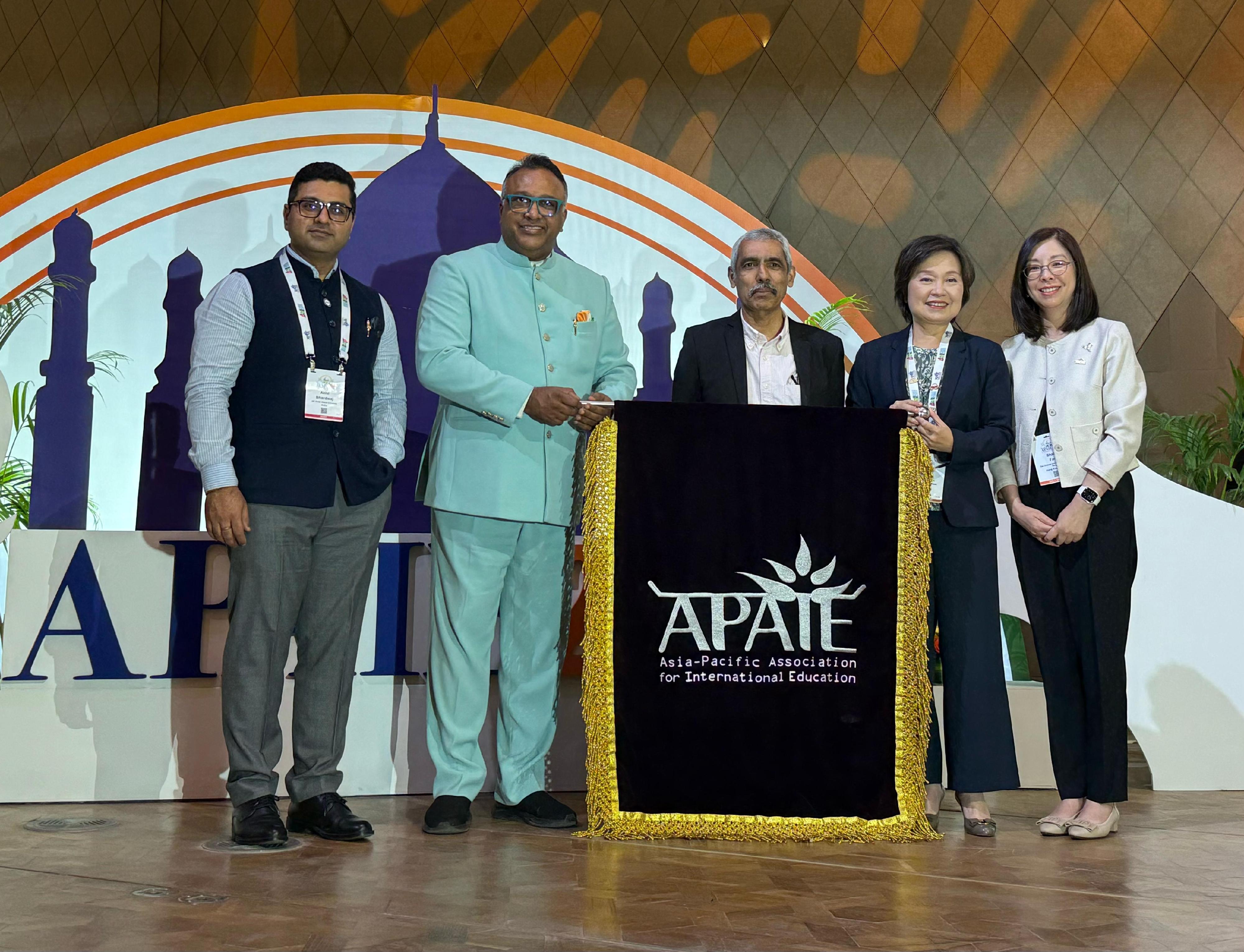
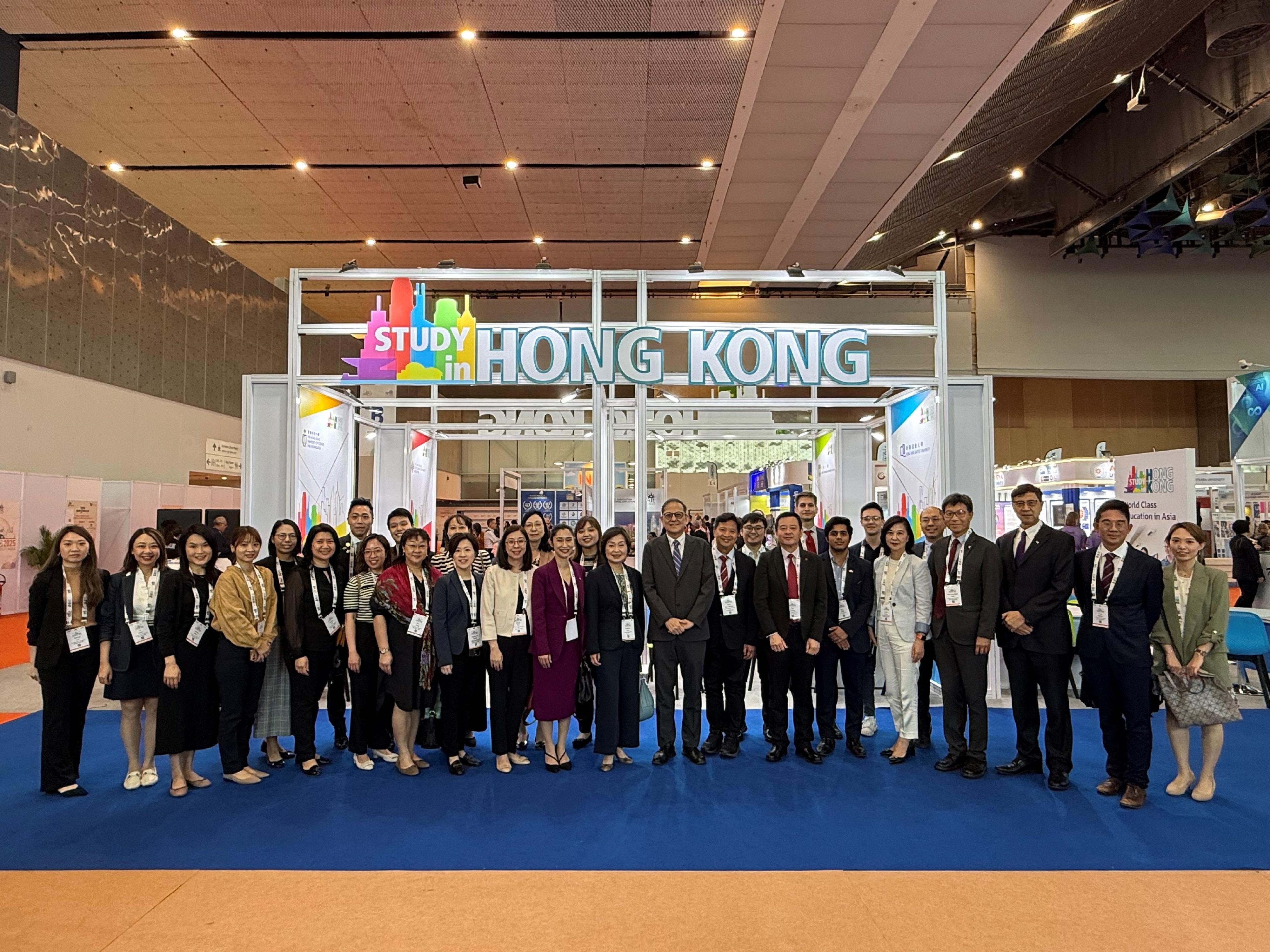
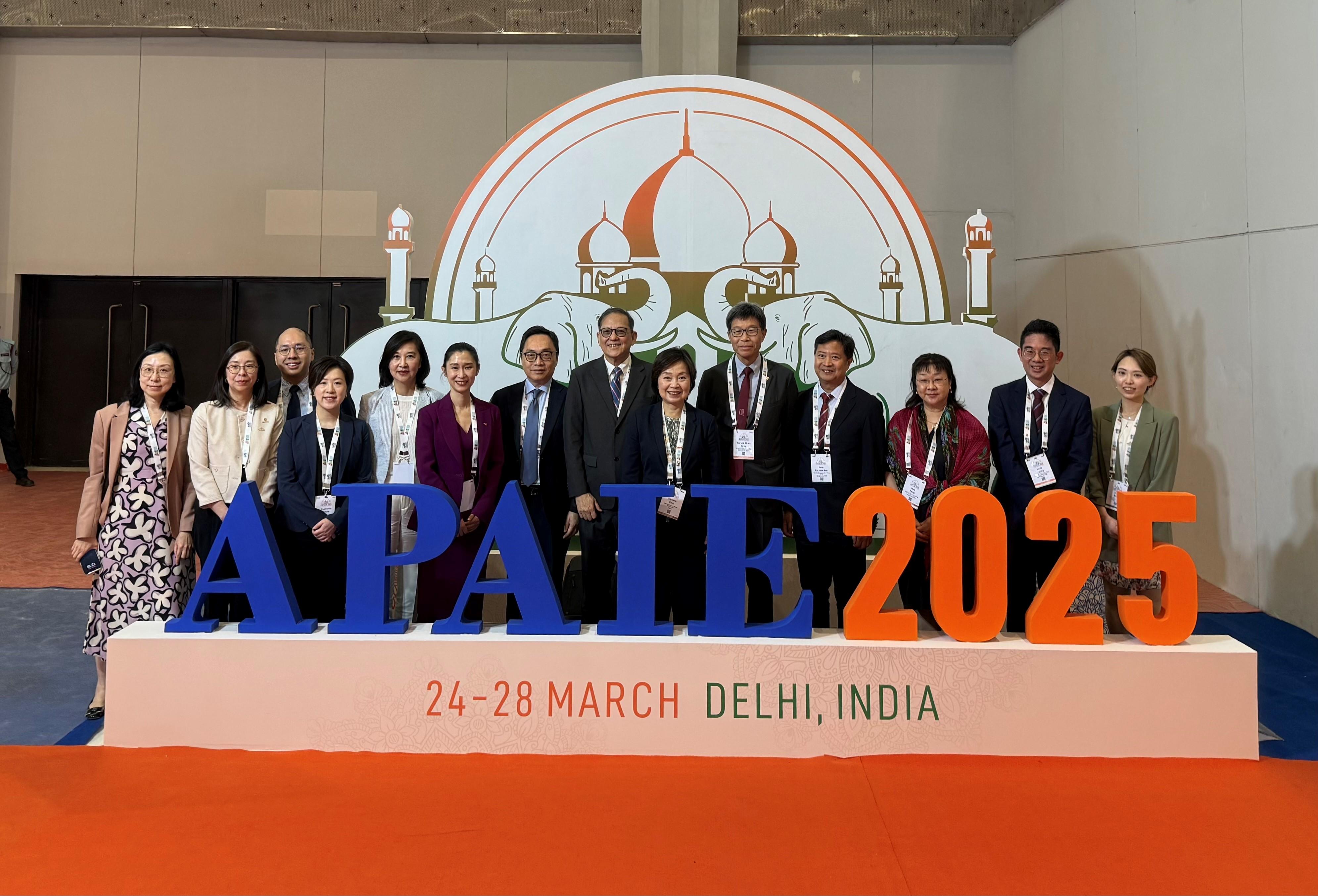
The Secretary for Education, Dr Choi Yuk-lin, attended the Asia-Pacific Association for International Education (APAIE) 2025 Conference and Exhibition in Delhi, India, on March 27 (Delhi time) and received the APAIE flag from the President of the APAIE, Professor Venky Shankararaman, officially announcing that the next APAIE Conference and Exhibition will be held in Hong Kong.
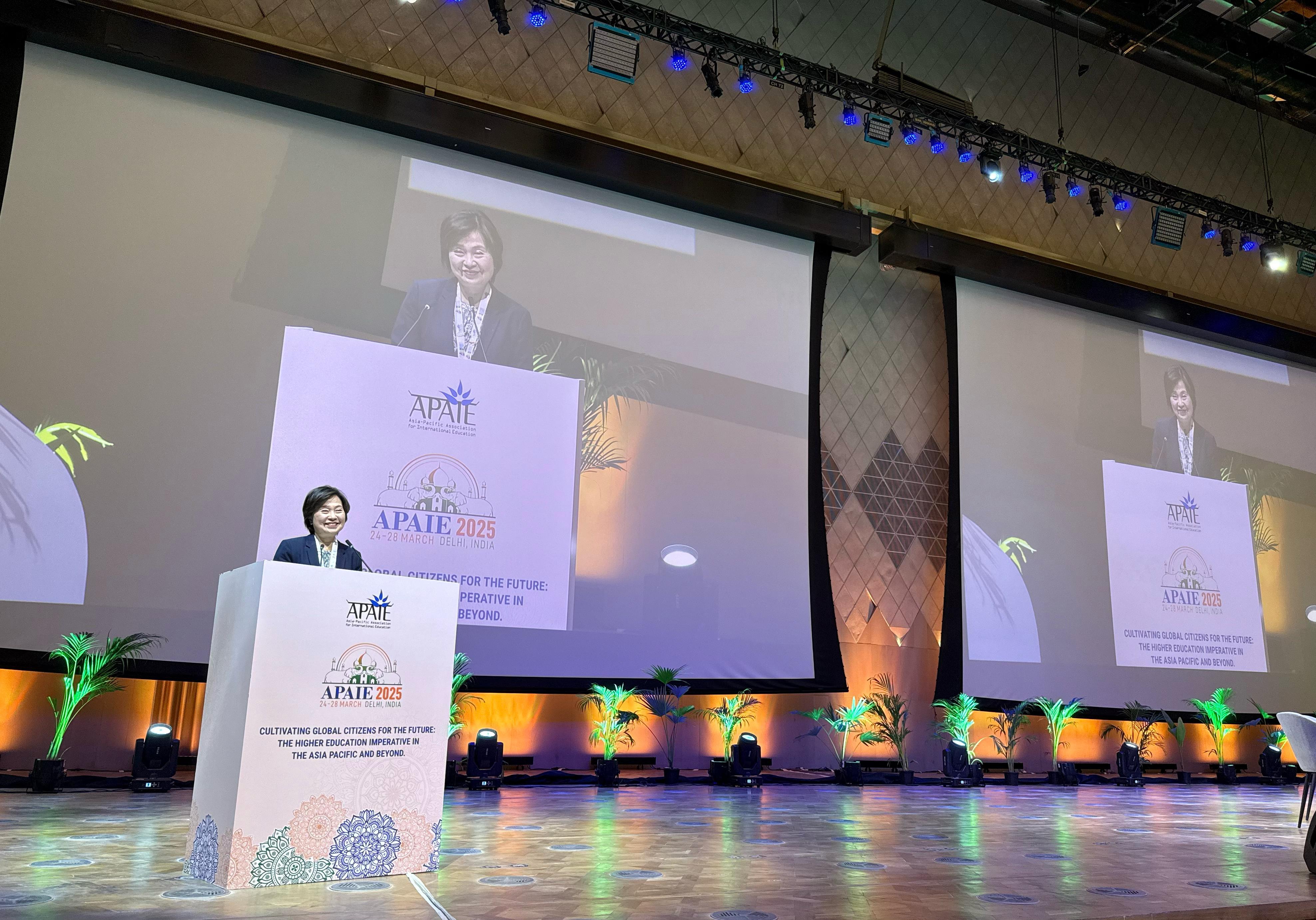
In her speech at the closing ceremony of the Conference, Dr Choi said that Hong Kong, as Asia’s world city, offers a unique confluence of global connectivity, world-class infrastructure and rich cultural experiences for all APAIE Conference participants. Dr Choi also noted that the Guangdong-Hong Kong-Macao Greater Bay Area (GBA) forms a world-class innovation hub, providing vast opportunities for academic collaborations. She sincerely invited overseas partners to attend the APAIE Conference next year in Hong Kong to build connections in teaching and research collaboration with representatives from the city and around the globe.
The APAIE Conference and Exhibition is the largest education conference in Asia-Pacific region. The conference in 2026 will be held from February 23 to 27 by the Chinese University of Hong Kong with support from the other University Grants Committee (UGC)-funded universities. The conference will gather leaders and representatives from the higher education sector worldwide in Hong Kong and offer local post-secondary institutions an opportunity to further enhance co-operation and exchanges with their counterparts around the world. Coinciding with the 2025 ranking of the world’s most international universities published by the Times Higher Education last week, in which four UGC-funded universities claimed all top four spots, the holding of the next APAIE Conference and Exhibition in Hong Kong highlights the city’s image as an international hub for post-secondary education.
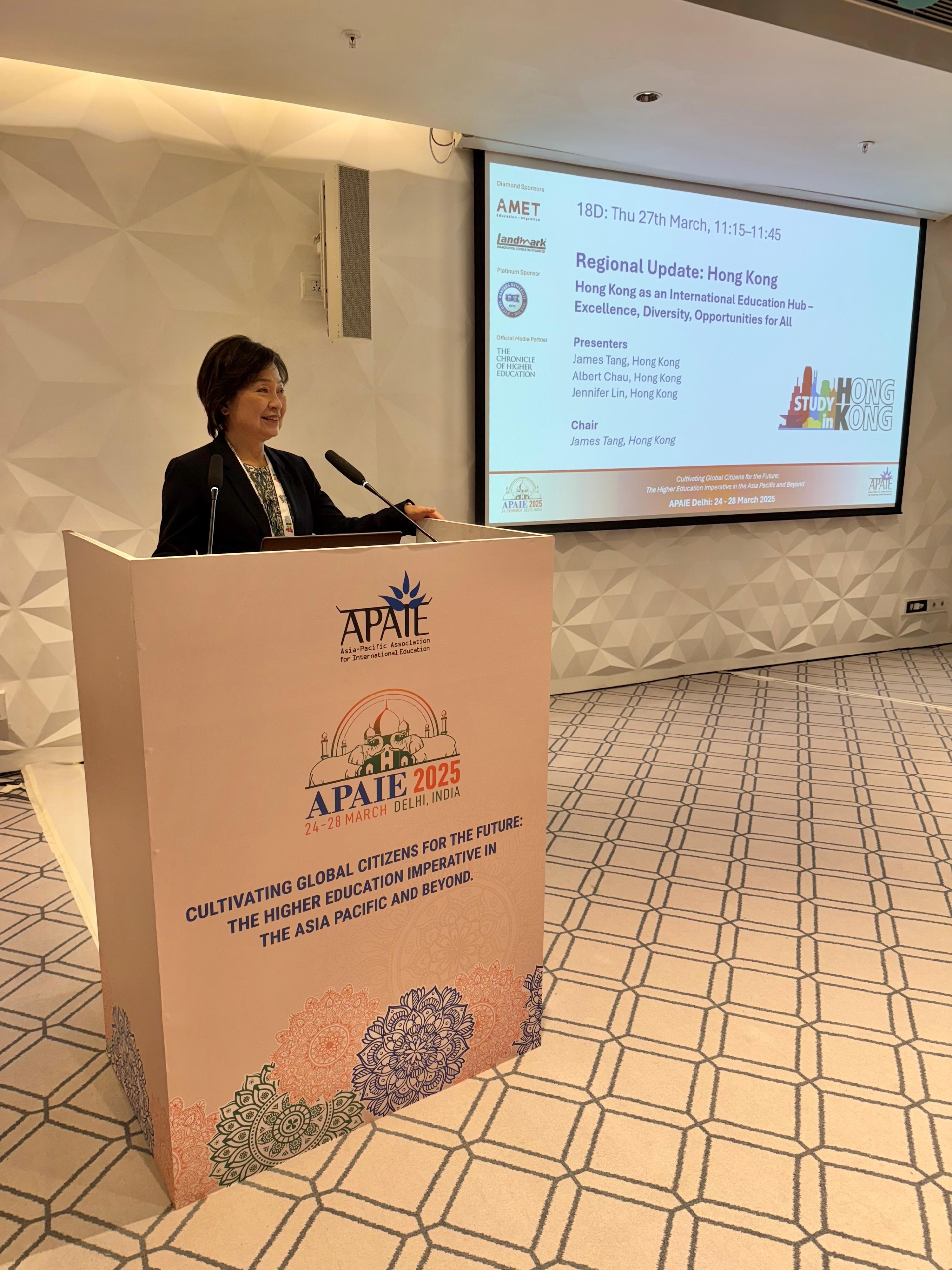
At the Conference this year, Dr Choi also delivered a speech under the theme “Study in Hong Kong”. She said that Hong Kong is renowned for its vibrancy, high quality of life and safety, making it an exceptional study destination. With Hong Kong’s aspirations to become an international hub for post-secondary education, as well as its pursuit of excellence in teaching and research, five publicly funded universities of Hong Kong rank among the world’s top 100.
The Secretary-General of the UGC, Professor James Tang, also spoke at a seminar of the Conference to elaborate on Hong Kong’s edges in higher education, among which, around one in every four students and around 70 per cent of academic staff of UGC-funded universities come from outside Hong Kong. The institutions have also signed over 2 600 student exchange agreements with their counterparts worldwide, underscoring their achievement in enhancing diversity in higher education and strengthening collaboration with institutions from other places.
Dr Choi visited the Hong Kong Pavilion, which was set up by the Heads of Universities Committee Standing Committee on Internationalisation and funded by the UGC, to learn about the proactive work of the UGC-funded universities in expanding their international network as well as their promotion for recruiting students from more places to undertake further studies and exchanges in Hong Kong. In addition, she toured various booths at the Exhibition and exchanged views with representatives from different countries and regions on the development and promotion of post-secondary education.
On March 28 (Delhi time), Dr Choi will pay a courtesy call on the Chinese Ambassador to India, Mr Xu Feihong, to introduce Hong Kong’s latest education policy. She will then conclude the visit and return to Hong Kong.
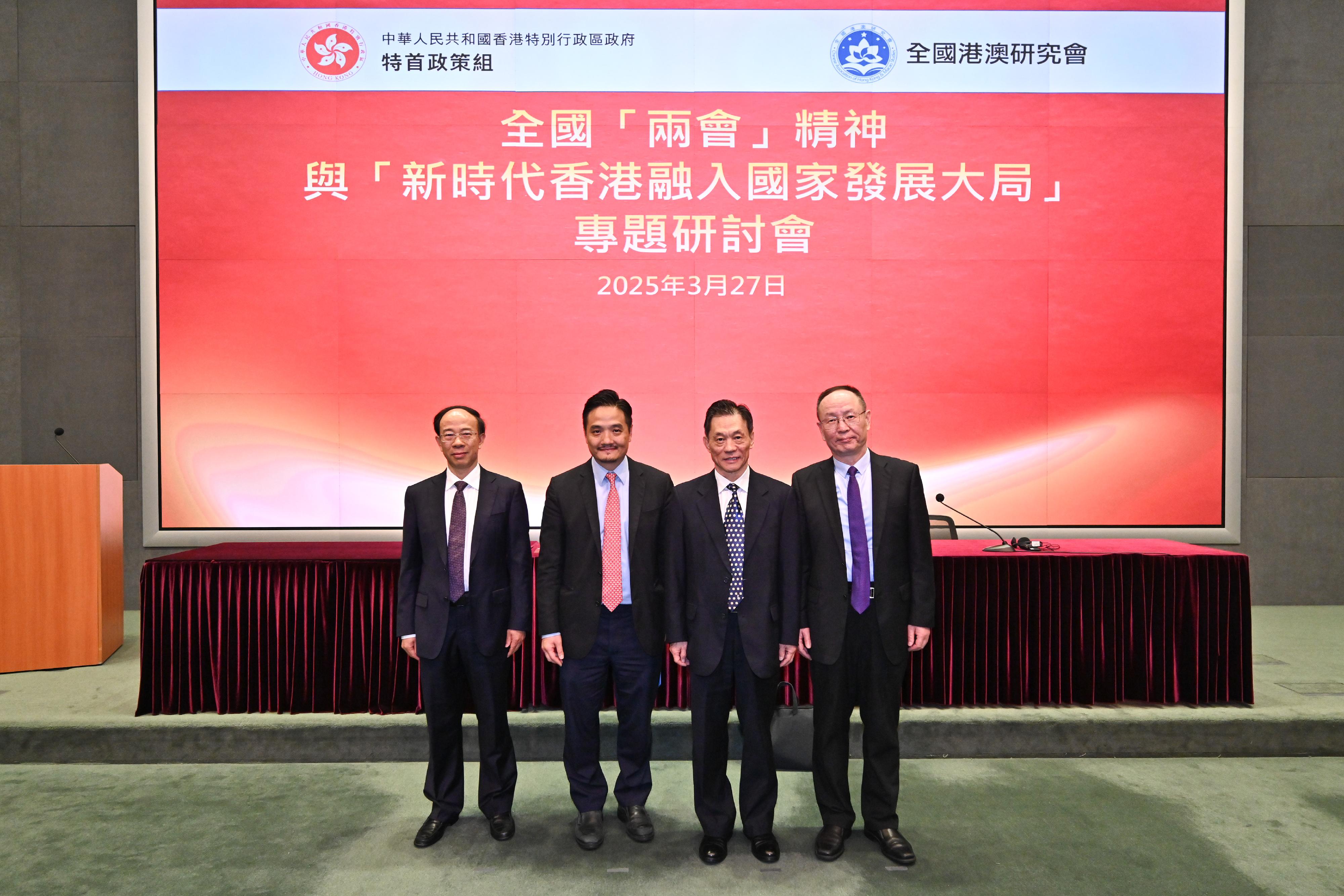
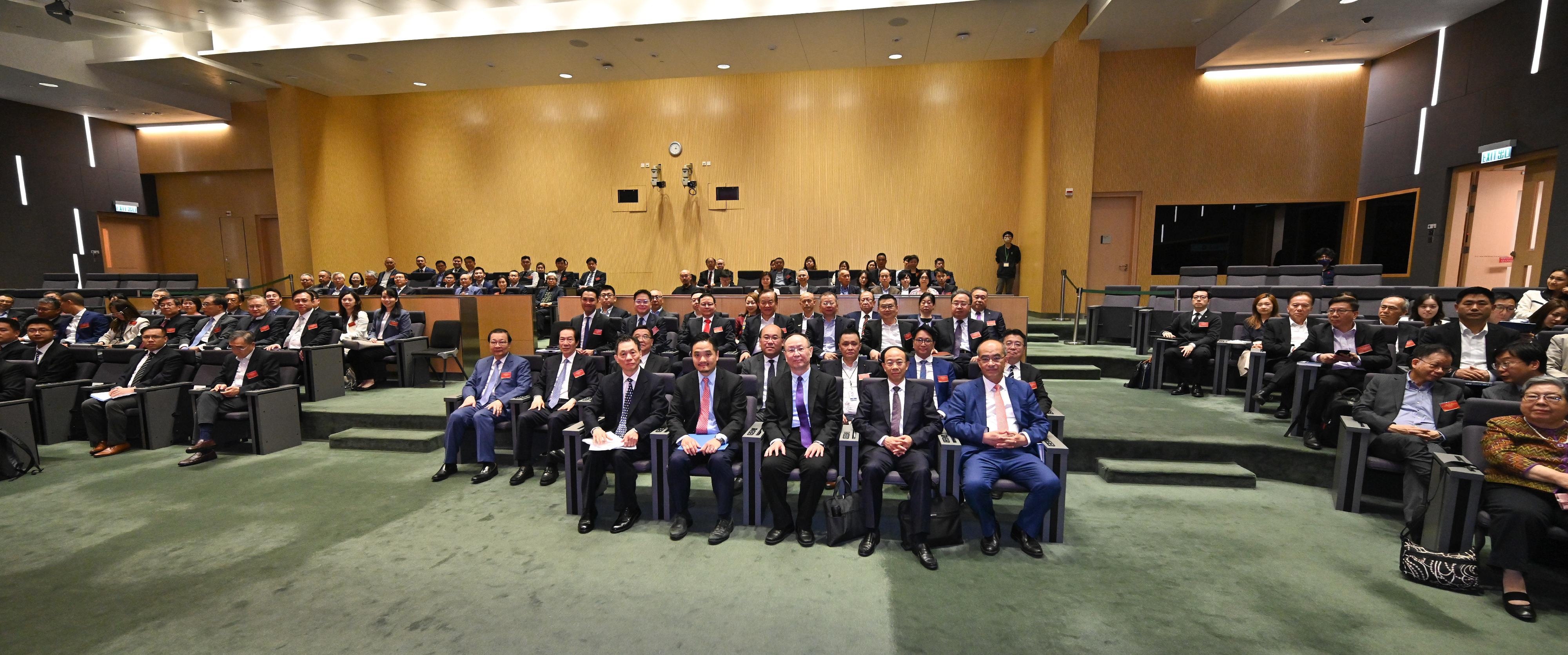
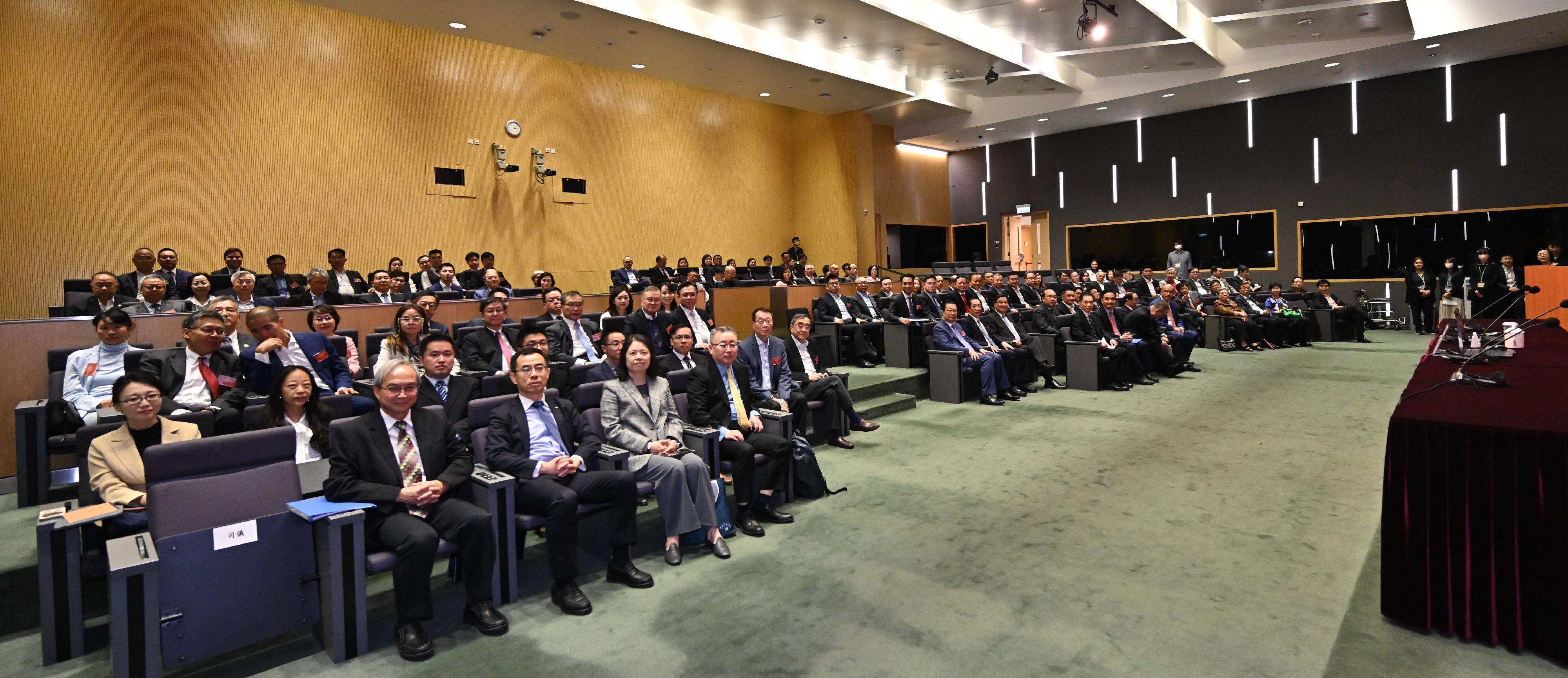
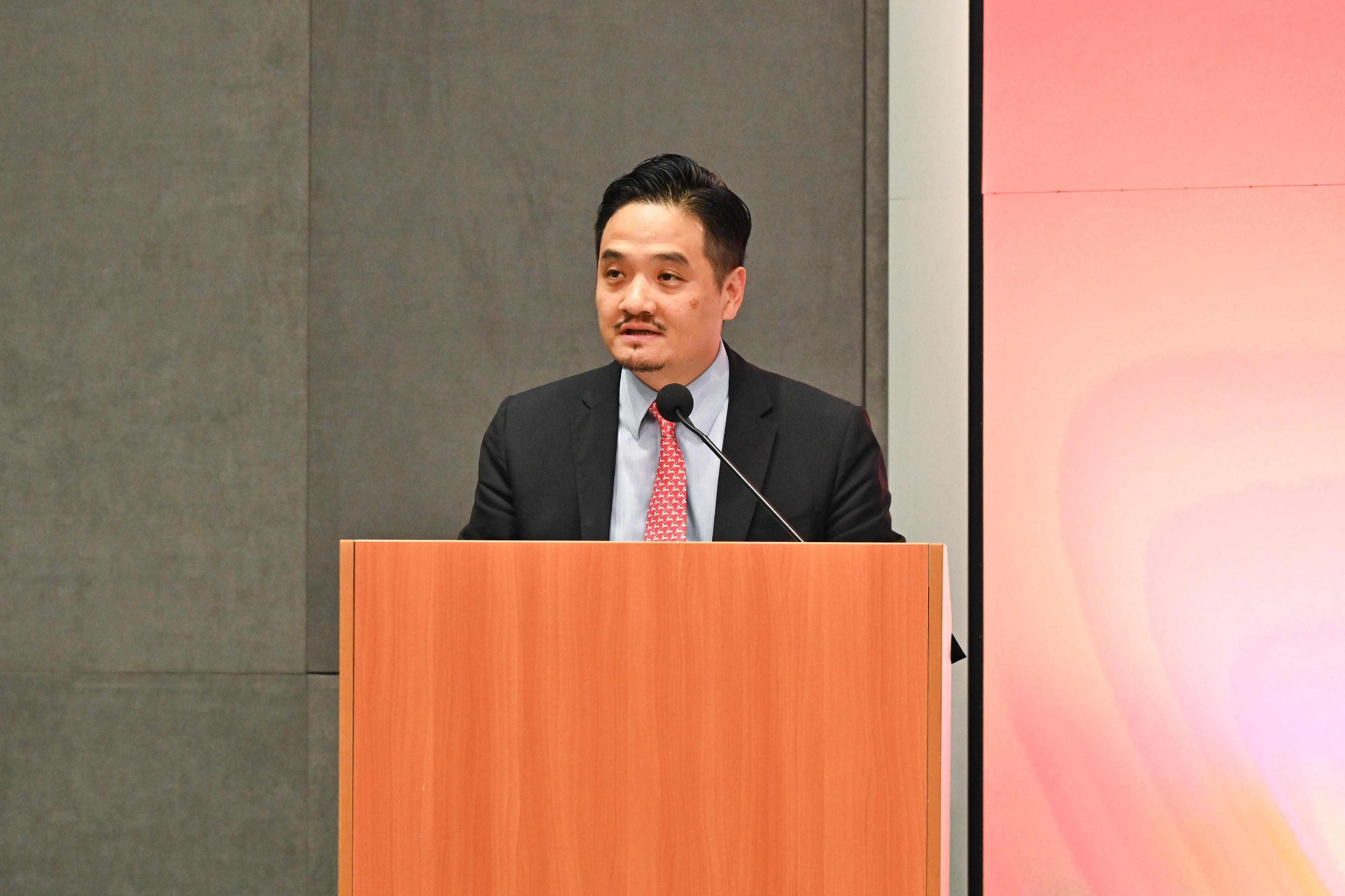
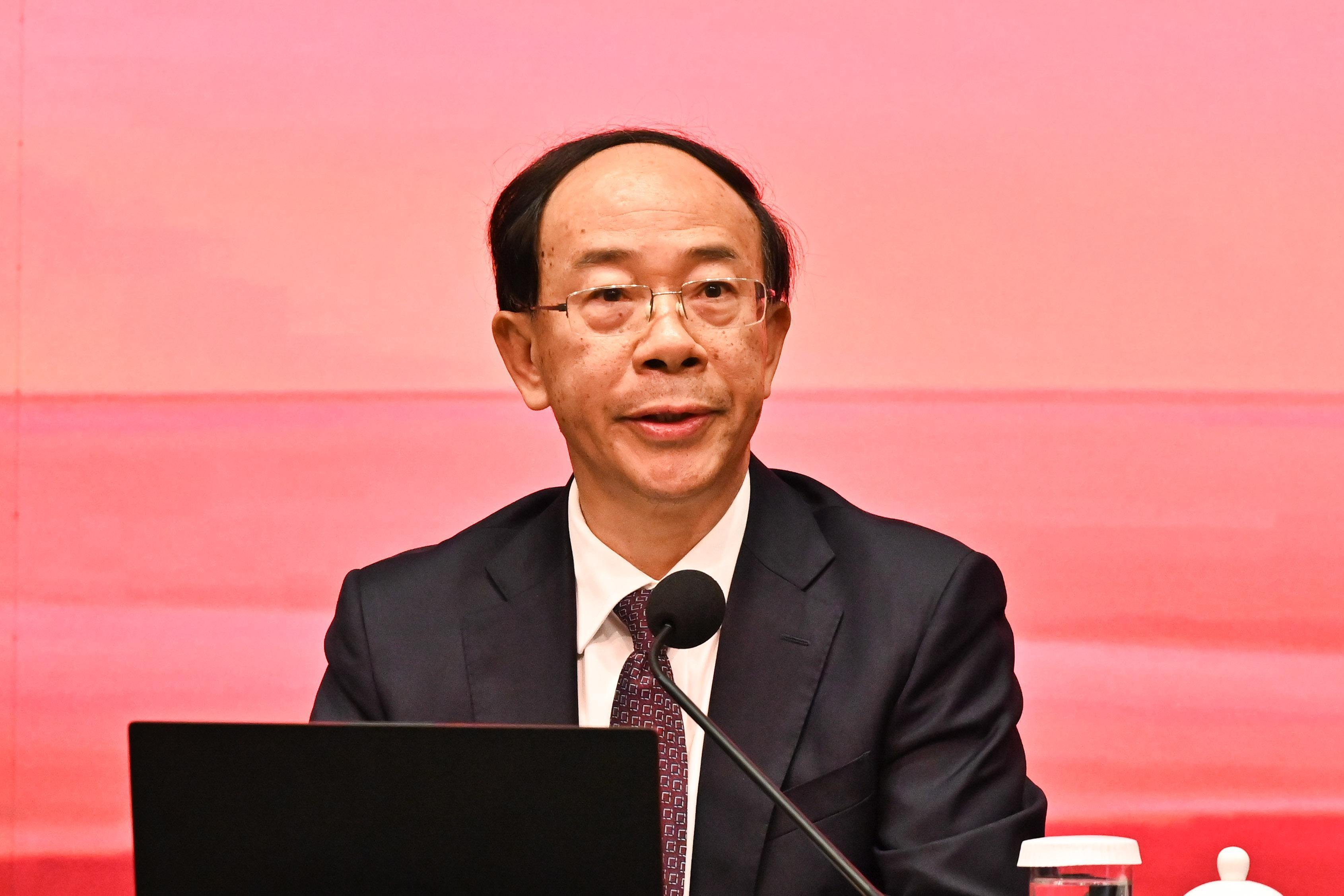
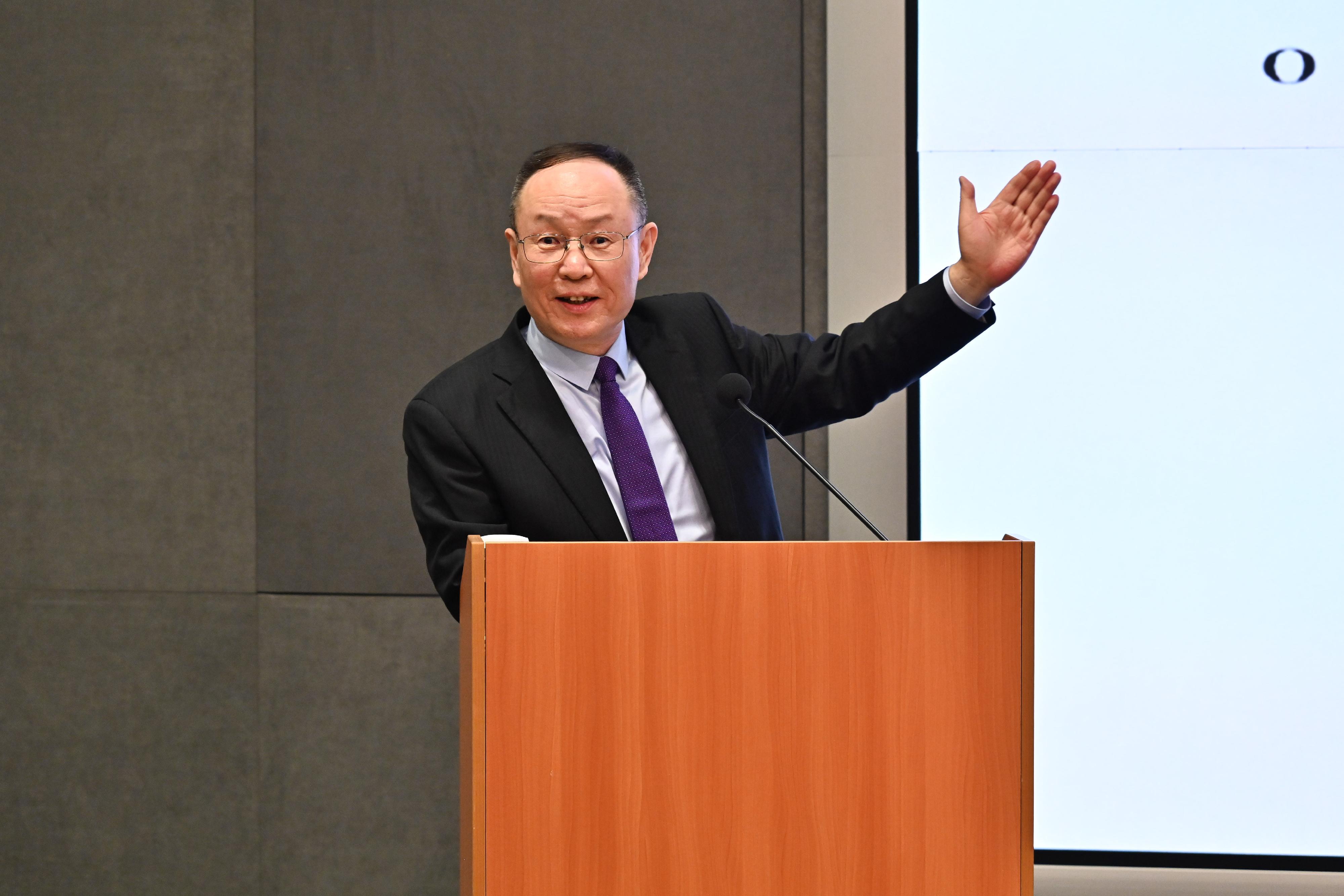
The third session of the 14th National People’s Congress and the third session of the 14th National Committee of the Chinese People’s Political Consultative Conference (CPPCC) (“two sessions”) were successfully held in March this year. The Chief Executive’s Policy Unit (CEPU) and the Chinese Association of Hong Kong and Macao Studies (CAHKMS) today (March 27) co-organised a seminar titled “The Spirit of ‘Two Sessions’ and Hong Kong’s Integration into National Development in the New Era”. The event facilitated in-depth exchanges and interactive discussions on the key takeaways of this year’s “two sessions” and their implications for Hong Kong’s future development.
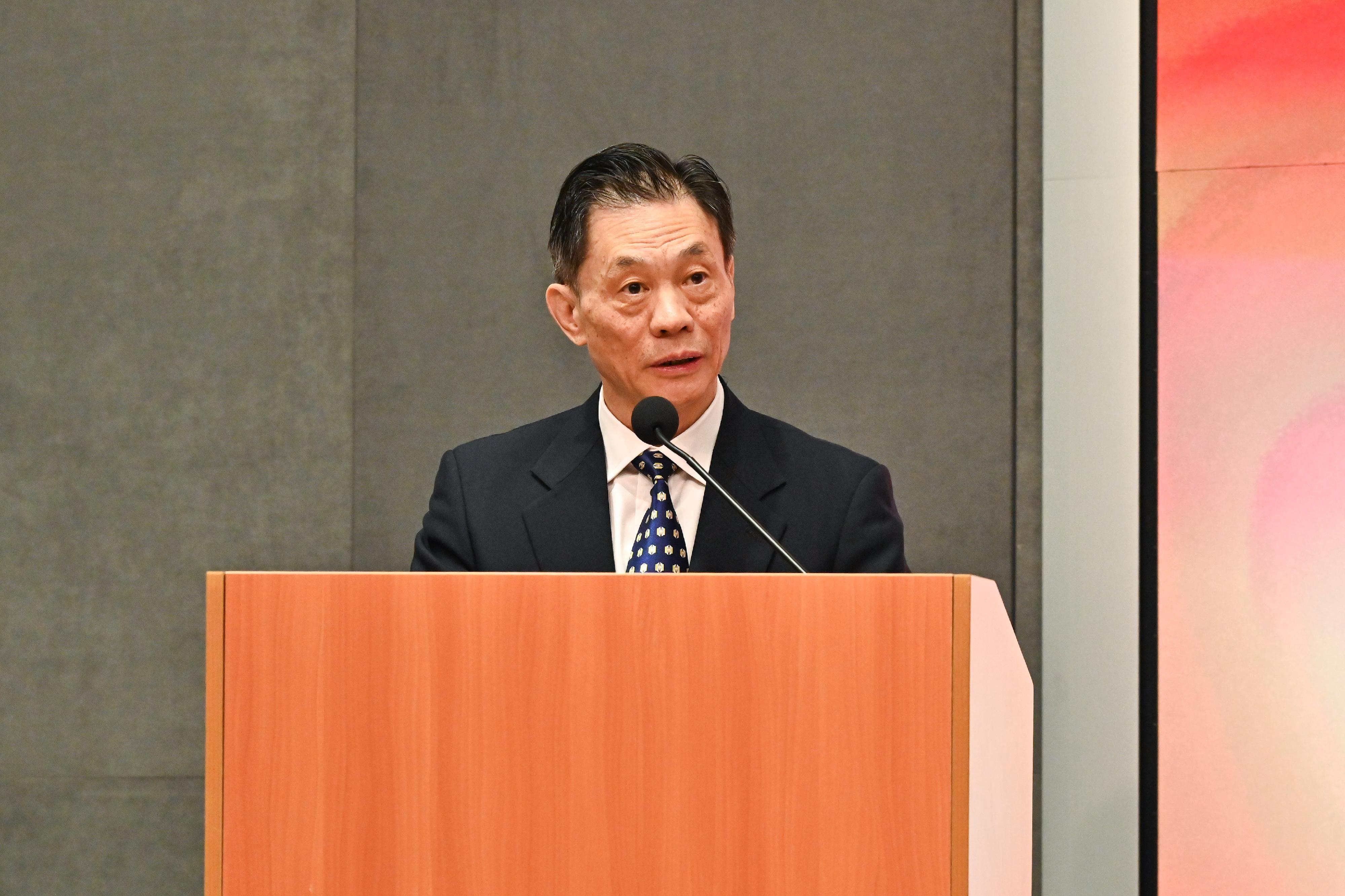
The President of the CAHKMS, Dr Deng Zhonghua, delivered the opening address, while Vice Chairman of the China Center for International Economic Exchanges Dr Wang Yiming and Deputy Director of the CPPCC Economic Affairs Committee Dr Yin Yanlin served as keynote speakers. The Head of the CEPU, Dr Stephen Wong, gave the closing remarks. Nearly 120 representatives from various sectors attended the seminar, including members of local think tanks, research institutes of universities, professional organisations, chambers of commerce, CEPU Expert Group, as well as vice presidents, council members and advisors of the CAHKMS. During the Q&A session, participants actively engaged with the speakers, and they had in-depth and lively exchanges and discussions.
Dr Wong said, “I am very grateful to the CAHKMS, especially President Deng Zhonghua, for facilitating this collaboration between the CEPU and the Association, allowing us to collectively study the spirit of the ‘two sessions’ from a research and think-tank perspective. I also extend my sincere gratitude to Dr Wang Yiming and Dr Yin Yanlin for their insightful presentations on macroeconomics and industrial development respectively.”
“This year marks the conclusion of the national 14th Five-Year Plan and the commencement of preparation for the 15th Five-Year Plan. The CEPU will continue to strengthen our research efforts, incorporating the spirit of the ‘two sessions’ into our work to support the Hong Kong Special Administrative Region (HKSAR) Government in leveraging the institutional advantages of ‘one country, two systems’, enhancing Hong Kong’s role as a bridge connecting domestic and global markets, and uniting society to further deepen reforms comprehensively,” he added.
Established in December 2022, the CEPU serves as an in-house research unit of the HKSAR Government, tasked with enhancing the Government’s capabilities in research and advocacy on long-term and strategic issues, thereby providing the Chief Executive with multifaceted perspectives and basis for research. The CAHKMS, established in December 2013, is a national civil academic organisation under the administration of the Hong Kong and Macao Work Office of the Communist Party of China Central Committee. It aims to organise and co-ordinate research on the theory and practice of “one country, two systems”, strengthen academic exchanges and co-operation among Hong Kong, Macao, and the Mainland in relevant fields, and perform the functions as a civil think tank.