Missing man in Yau Ma Tei located
A man who went missing in Yau Ma Tei has been located. Law Ah-cheung, aged 70, went missing after he was last seen at an elderly home on Man Ying Street on March 28 afternoon. Staff of the caring hom… read more


A man who went missing in Yau Ma Tei has been located. Law Ah-cheung, aged 70, went missing after he was last seen at an elderly home on Man Ying Street on March 28 afternoon. Staff of the caring hom… read more
The Centre for Health Protection (CHP) of the Department of Health (DH) today (April 1) reminded the public, particularly the elderly and people with chronic illnesses, to adopt appropriate measures to protect their health in view of the cold weather.
Cold weather can easily trigger or exacerbate diseases, especially among the elderly and persons suffering from heart disease, respiratory illnesses or other chronic illnesses.
Elderly people have less insulating fat beneath their skin to keep them warm, and their body temperature control mechanisms may be weaker. Their bodies may not be able to respond appropriately to cold weather.
Some senior persons may have decreased mobility, which can impair their ability to generate and conserve body heat. Chronic illnesses, such as hypertension, diabetes and endocrine disorders, may undermine the health of elderly people and lower their metabolic rate, subsequently causing their bodies to generate less heat. Persons with chronic illnesses, such as chronic respiratory illnesses or heart disease, are vulnerable to disease aggravation due to cold weather.
The CHP reminded the public, in particular the elderly and persons with chronic illnesses, to adopt the following preventive measures:
Attention duty announcers, radio and TV stations: Please broadcast the following special announcement immediately, and repeat it at frequent intervals when the Cold Weather Warning is in force: &nbs… read more
The Government of the Hong Kong Special Administrative Region (HKSAR) today (April 1) strongly condemns the United States (US) for including six Central Authorities and HKSAR officials in a so-called “sanctions” list in an attempt to intimidate the relevant officials safeguarding national security. It, once again, clearly exposed the US’ barbarity under its hegemony, which is exactly the same as its recent tactics in bullying and coercing various countries and regions. The HKSAR despises such so-called “sanctions” and is not intimidated by such despicable behaviour. The HKSAR officials will continue to resolutely discharge the duty of safeguarding national security. The HKSAR Government will make every effort to protect the legitimate rights and interests of all personnel.
A spokesman for the HKSAR Government pointed out, “The specified absconders mentioned in the US statement are wanted and have arrest warrants issued by the court against them not because they ‘exercised their freedom of speech’, but because they have been at large in the US, the United Kingdom (UK) and Australia, etc. and continue to blatantly engage in activities endangering national security, including inciting secession and requesting foreign countries to impose ‘sanctions’ or blockade and engage in other hostile activities against the People’s Republic of China and the HKSAR. The US, however, gives cover for them who have committed these evil deeds. It is therefore necessary for the HKSAR to take all lawful measures in accordance with the law, including measures specified under section 89 of the Safeguarding National Security Ordinance, to strongly combat such acts. The specified measures aim at addressing, combating, deterring and preventing acts of abscondment by suspects, and procuring the return of the absconded persons to Hong Kong to face judicial proceedings. All specified measures align with human rights requirements; and quite a number of countries including the US, the UK and Canada would also impose such measures on wanted criminals. The US deliberately smeared and spread irresponsible remarks on the measures and actions taken by the HKSAR Government in accordance with the law in an attempt to mislead the public. The HKSAR Government strongly disapproves of such acts.”
The spokesman also pointed out, “The fact is that the US has been ignoring the non-interference principle under international law, interfering with other countries’ internal affairs, grooming agents, instigating ‘colour revolutions’, creating social unrest and multiple humanitarian disasters through economic and military coercion, causing suffering to people in many countries. With the Central Authorities having enacted the Hong Kong National Security Law and the HKSAR having completed the legislative exercise to implement Article 23 of the Basic Law, Hong Kong has strengthened the legal regime in safeguarding national security and prevented the US from succeeding. The false accusation thereafter against the HKSAR personnel safeguarding national security dutifully, faithfully and in accordance with the law and, on top of that, the imposition of the so-called ‘sanctions’ in the guise of defending human rights and democracy indeed constitute a demonstration of shameless hypocrisy with double standards on the part of the US.
“The HKSAR Government has the responsibility to pursue, in accordance with the law, those who are suspected to have committed offences endangering national security and absconded overseas. The HKSAR law enforcement agencies have been taking law enforcement actions based on evidence and strictly in accordance with the law in respect of the acts of the persons or entities concerned, which have nothing to do with their political stance, background or occupation. The Department of Justice of the HKSAR is in charge of criminal prosecutions under Article 63 of the Basic Law, with all its prosecutorial decisions made on an objective analysis of all admissible evidence and applicable laws.” read more
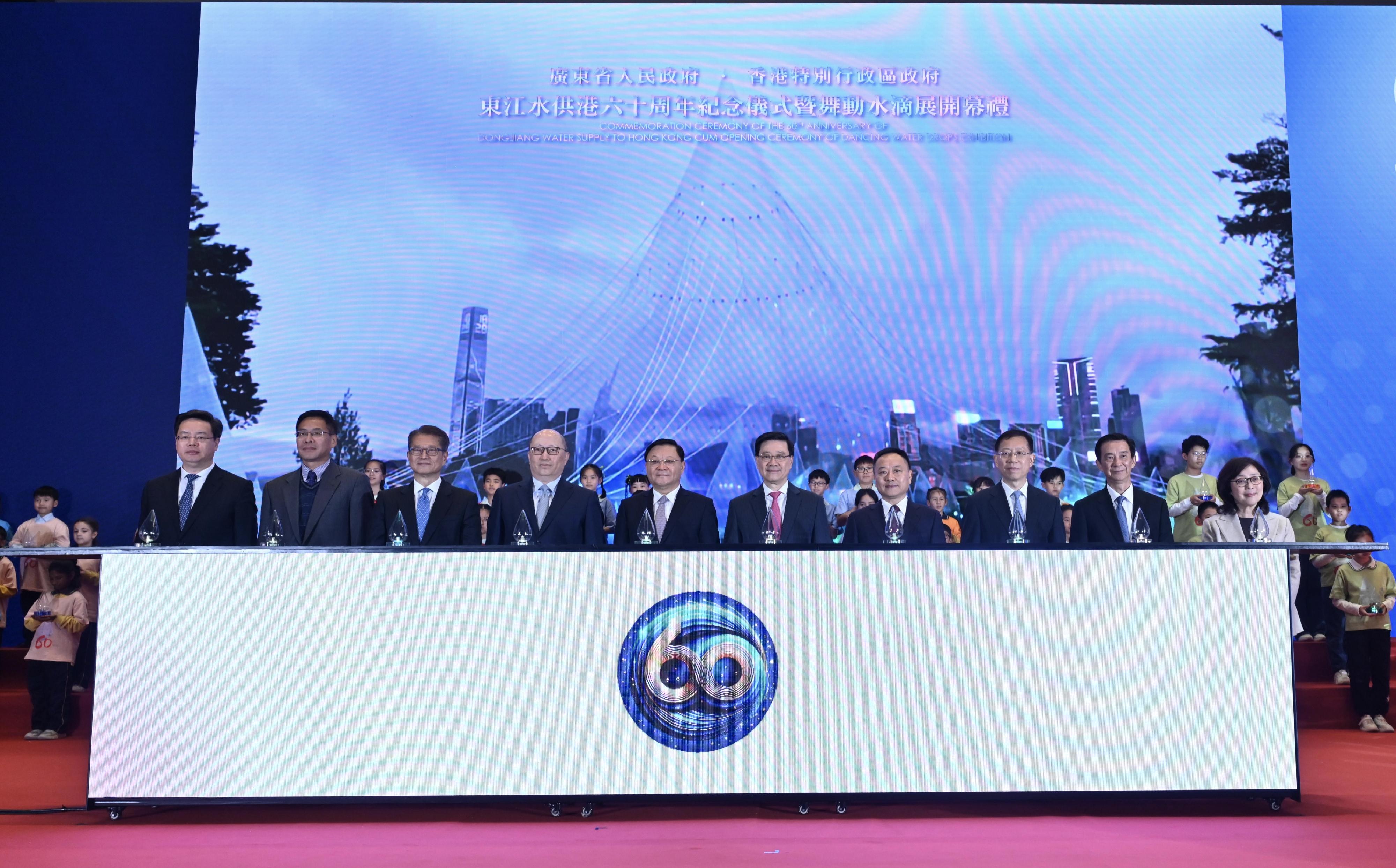
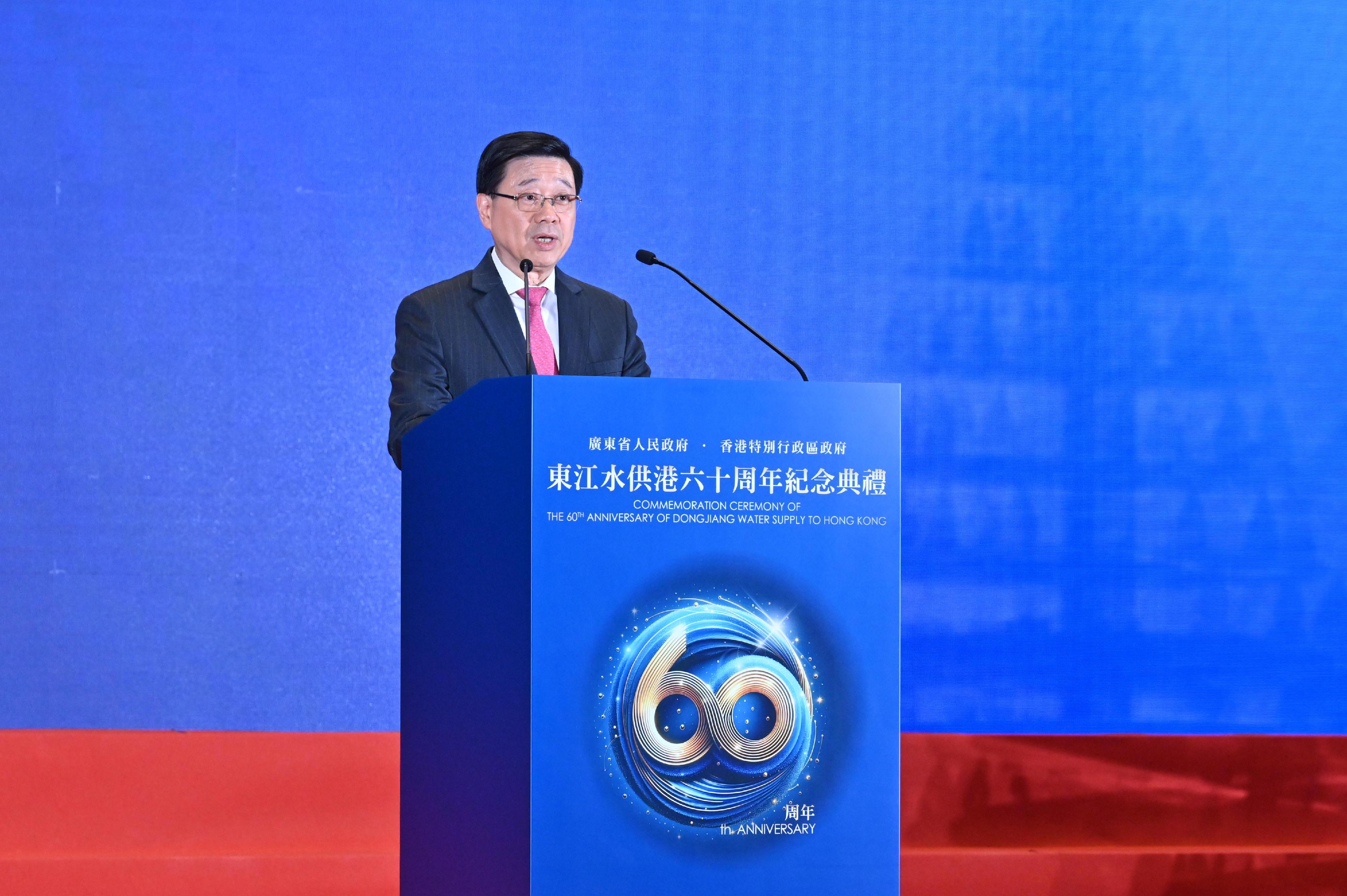
The governments of Guangdong and Hong Kong today (March 31) held the Commemoration Ceremony of the 60th Anniversary of Dongjiang Water Supply to Hong Kong and the Launching Ceremony of Dancing Water Drops Exhibition at the Central Government Offices, Tamar, to celebrate this remarkable and important occasion.
The Chief Executive, Mr John Lee; the Governor of Guangdong Province, Mr Wang Weizhong; the Minister of Water Resources, Mr Li Guoying; the Director of the Liaison Office of the Central People’s Government (LOCPG) in the Hong Kong Special Administrative Region (HKSAR), Mr Zheng Yanxiong; Member of the Office Leadership of the Hong Kong and Macao Work Office of the Communist Party of China Central Committee, Mr Xiang Bin; the Financial Secretary, Mr Paul Chan; Deputy Director of the LOCPG in the HKSAR Mr Qi Bin; Vice-Governor of Guangdong Province Mr Zhang Shaokang; the Secretary for Development, Ms Bernadette Linn; and the Mayor of the Shenzhen Municipal Government, Mr Qin Weizhong, officiated at the ceremony.
Speaking at the ceremony, Mr Lee said that the country has been providing Hong Kong with reliable and stable supply of Dongjiang water over the past 60 years. Currently accounting for about 70 to 80 per cent of the fresh water consumption in Hong Kong, Dongjiang water supports the sustainable economic development of Hong Kong, and nourishes the citizens, allowing them to live and work in a better place. Dongjiang water supply to Hong Kong is not only a water engineering project, but also an epitome of the strong blood ties between the country and Hong Kong. He said that Hong Kong citizens will cherish the country’s care and express their gratitude by making greater contributions to the great rejuvenation of the Chinese nation.
Mr Wang said that, over the past 60 years, Guangdong has been resolutely implementing the strategic decisions of the Communist Party of China Central Committee, and has made it a priority to ensure the safety of water supply to Hong Kong, guaranteeing stable supply of high-quality Dongjiang water to Hong Kong. Standing at a new starting point, Guangdong will always stay true to the aspirations of General Secretary Xi Jinping, and will fully, faithfully and resolutely implement the principle of “one country, two systems”, and effectively manage the Dongjiang-Shenzhen Water Supply Scheme. This will ensure that Hong Kong citizens continue to have access to safe and high-quality water, providing strong support for the long-term prosperity and stability of Hong Kong.
Mr Li said that, over the past 60 years, the Ministry of Water Resources has resolutely implemented General Secretary Xi Jinping’s water regulating approach of “Prioritising water conservation, Balancing spatial distribution, Taking systematic approaches, Promoting government-market synergy”. Under the sincere care of the Central Authorities, the quantity and quality of water supply to Hong Kong and emergency support capabilities have been continuously enhanced. The Ministry of Water Resources will strengthen co-operation on water resources with the HKSAR Government on all fronts, and will continue to enhance the water safety security system in the Greater Bay Area while ensuring stable, safe and quality water supply to Hong Kong.
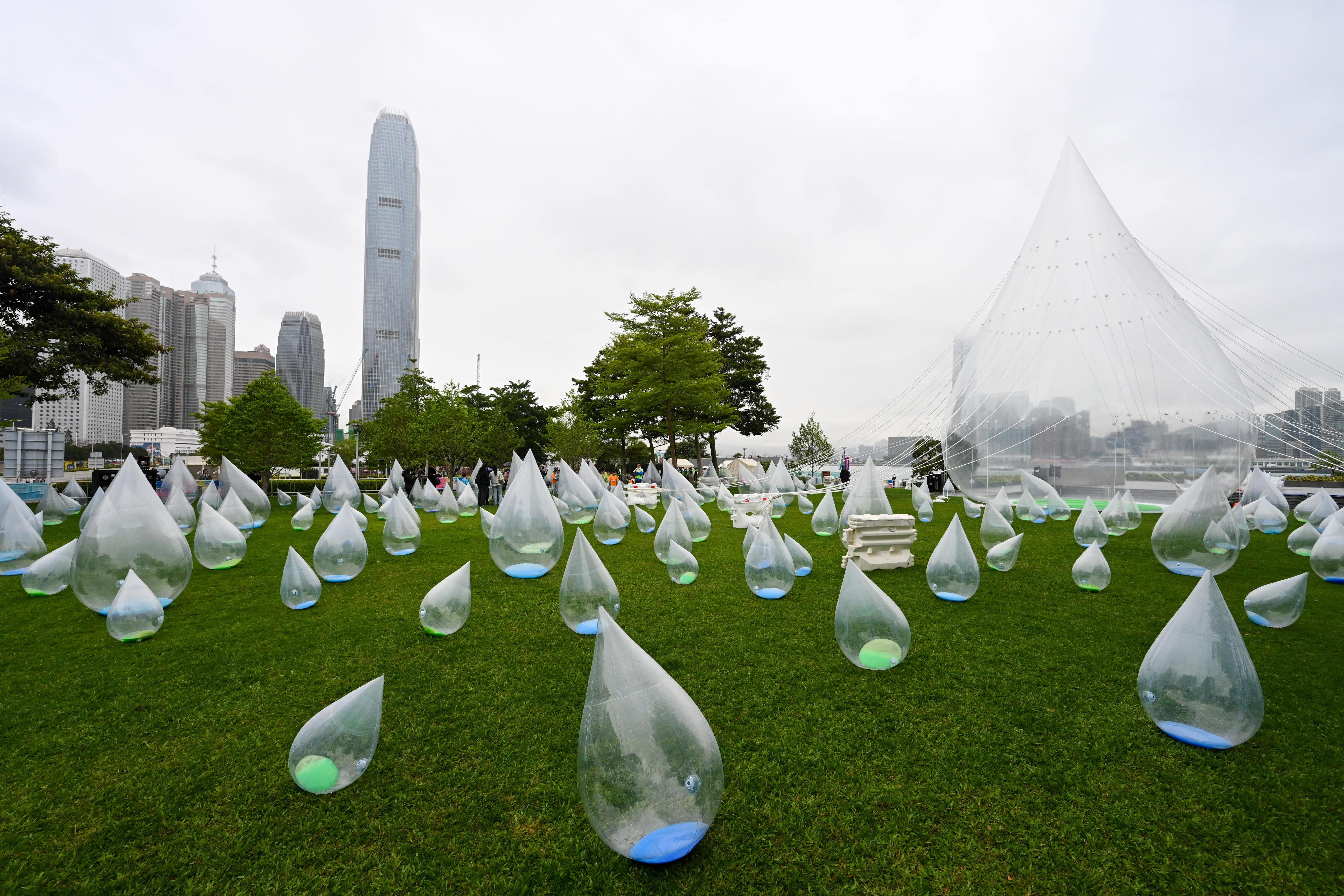
A lighting ceremony for the Dancing Water Drops Exhibition was also held at the event. The large-scale art installations exhibition was specially created by internationally acclaimed artist Simon Ma in celebration of the 60th anniversary of Dongjiang water supply to Hong Kong. The display of water drop-shaped installations of various sizes symbolises the vitality that Dongjiang water brings to Hong Kong and social inclusion. The setting and number of water drop-shaped installations will vary at different stages of the exhibition period from April to June. Installations for the first stage include an 18.8-metre-tall water drop-shaped installation and over 100 small never-fall water drop-shaped installations, which will be on display from tomorrow (April 1). The highlight of the exhibition is a 28.8-metre-tall giant water drop-shaped art installation. It is by far the largest of its kind among similar exhibitions and will be on display for the first time in May. The exhibition will be held from tomorrow to June 13 at Tamar Park and the Central and Western District Promenade (Central Section).
In addition to the Dancing Water Drops Exhibition, a series of activities in celebration of the 60th anniversary of Dongjiang water supply to Hong Kong have been held under the theme “Dongjiang River – An Inseparable Bond, Our Blessed Origin” since September last year. These activities included a roving exhibition, thematic talks and Mainland study tours. Upcoming celebration activities will be the International Water Pioneers Summit, which will be held tomorrow, and a study tour on national water engineering projects, culture and technology, which will be held within this year.