image_pdfimage_print

Author Archives: hksar gov

LCQ15: Training of artificial intelligence talents

     Following is a question by the Hon Rock Chen and a written reply by the Secretary for Education, Dr Choi Yuk-lin, in the Legislative Council today (May 14):

Question:

     In September last year, the State President delivered an important speech at the National Conference on Education, following which the 2024-2035 master plan on building China into a leading country in education (the master plan) was issued, setting out a roadmap for the national education development in the next 10 years. The master plan clearly proposed to establish a mechanism for co-ordinating and promoting the integration of education, technology and talent by leveraging the support of education to technology and talent. The master plan also set out the close collaboration with the development of the innovation and technology (I&T) hub in the Guangdong-Hong Kong-Macao Greater Bay Area (GBA) and the building of a high-calibre talent hub and platforms for talent attraction and retention, thereby enhancing the overall effectiveness of the innovation system. In this connection, will the Government inform this Council:

(1) against the background of the master plan’s proposals to establish a mechanism for co-ordinating and promoting the integration of education, technology and talent as well as to closely collaborate with the development of I&T hub in the GBA, how the Government will further deepen the collaboration among the “government, industry, academic and research” sectors to promote the transformation of research and development outcomes of tertiary institutions into a driving force for innovation in the industry, with a view to enhancing Hong Kong’s competitiveness in the GBA’s I&T ecosystem;

(2) as there are views that universities of applied sciences (UAS) play an important role in Hong Kong in complementing the master plan’s proposal to leverage the support of education to technology and talent, how the Government will further define the self-positioning of UAS and assist UAS in leveraging their unique advantages, so as to nurture more applied technology talents who suit the needs of the industries in the GBA;

(3) how the Government plans to assist tertiary institutions and scientific research institutions in increasing their expenditure on research and development (R&D) and intensifying the efforts in nurturing talents in the field of artificial intelligence (AI), so that Hong Kong can contribute to the development of the I&T hub in the GBA in the aspect of AI technology’s R&D and application; and

(4) whether it has studied how the Government should further strengthen STEAM (i.e. Science, Technology, Engineering, the Arts and Mathematics) education in primary and secondary schools (particularly focusing on AI), including teaching basic AI knowledge, methods of data processing and interdisciplinary knowledge, so as to enhance students’ skills in AI, critical thinking and capacity for innovation, thereby meeting the demand for education, technology and talent arising from the GBA development?

Reply:

President,

     Solid promotion of education and technological development can provide and replenish talents and manpower for various trades and industries, boost socio-economic development, and render firm support for building an international hub for high-calibre talents. The 2024-2035 master plan on building China into a leading country in education, issued earlier by the nation, clearly proposes establishing an integrated co-ordinating mechanism for education, technology and talents, and strengthen the supporting role of education for science and talents. To this end, the Government has set up the Committee on Education, Technology and Talents, which is led by the Chief Secretary for Administration, to co-ordinate and drive the integrated development of education, technology and talents, expand connections, formulate policies to attract and cultivate talents, foster the development of technologies, and also promote Hong Kong as an international hub for high-calibre talents.

     The replies of the Education Bureau (EDB) and the Innovation, Technology and Industry Bureau to the Hon Rock Chen’s questions are as follows:

(1) With an aim to enhance the innovation and technology (I&T) ecosystem and Hong Kong’s competitiveness on the I&T front in the Guangdong-Hong Kong-Macao Greater Bay Area (GBA), the Government has been promoting collaboration among the Government, industry, academic and research sectors through various measures, and adopting a multi-pronged approach to support commercialisation of research and development (R&D) outcomes of tertiary institutions. For example, the $10 billion Research, Academic and Industry Sectors One-plus Scheme under the Innovation and Technology Fund (ITF) funds, on a matching basis, research teams from universities with good potential to become successful start-ups to transform and commercialise their R&D outcomes, while industry sponsorship is a mandatory requirement. Furthermore, the ITF will continue to provide annual funding to the Technology Transfer Office of each of the eight University Grants Committee (UGC)-funded universities, thereby supporting the development of innovative ideas and R&D outcomes into new products or services. The R&D centres set up by the Government have also been taking forward industry-driven applied R&D work that suits market needs and transferring technologies to the industries through contract researches, licensing arrangements, etc to commercialise their R&D outcomes. Meanwhile, the Government has facilitated the establishment of the Hong Kong New Industrialisation Development Alliance. The Alliance serves as a platform for collaboration among the Government, industry, academia, research and investment sectors, with a view to promoting new industrialisation and co-operation among enterprises and organisations.

(2) To provide an alternative pathway to success for young people who aspire to pursue careers in professional skills sectors, the Government has been promoting the establishment of universities of applied sciences (UAS), and, in February 2024, promulgated the criteria for qualifying as UAS along with the relevant mechanisms. UAS provide vocational and professional education and training (VPET) programmes with an applied focus blending theory and practice, including applied degree programmes, and closely collaborate with professional skills sectors, incorporating substantial internship and work-based learning opportunities in other degree programmes to nurture students’ applied skills, demonstrating a clear division of labour with traditional academic research universities. The EDB announced in March and November 2024 respectively that Hong Kong Metropolitan University and Saint Francis University had been confirmed as the first two UAS in Hong Kong after undergoing stringent procedures and reviews.

     The Government proactively supports UAS to collaborate with industries and other stakeholders in accordance with the VPET development strategy of fostering industry-institution collaboration and diversified development to respond to the keen manpower needs of different sectors and nurture more professional talent with applied skills. In this connection, the Government has allocated $100 million to support UAS and VPET institutions to establish the Alliance of UAS (the Alliance) in November 2024. The Alliance has been actively engaging supporting organisations and stakeholders and has drawn up the future work plan and strategic direction, which include fostering collaboration and joint promotion efforts among member institutions and over 80 supporting organisations from different sectors, organising international conferences, and strengthening exchanges and co-operation with Mainland and overseas UAS. Amongst others, the Alliance has planned to visit VPET institutions in the GBA within the year to strengthen exchanges and co-operation. The EDB will continue to work closely with the Alliance to support its work.

(3) Strengthening the nurturing of local I&T talents and fostering the deep integration of technology and industry are key factors in advancing the development of the artificial intelligence (AI) industry. Taking the opportunity of the triennial planning exercise for the UGC-funded universities, the Government set out strategic directions to guide the universities to align their planning with our nation’s and Hong Kong’s strategic development and policy priorities, including nurturing talents for growth, transformation and future challenges.

     With the advent of AI, innovative and breakthrough technology in the new era, the universities are encouraged to introduce appropriate teaching frameworks and new programmes to meet ever-changing societal needs and enhance support for academic staff and students. A number of UGC-funded universities have offered AI-related undergraduate programmes in the 2025-28 triennium in response to the strategic directions, for example, Bachelor of Science (Honours) in Artificial Intelligence and Educational Technology and Bachelor of Education (Honours) (Primary) – Mathematics of the Education University of Hong Kong, Bachelor of Engineering in Artificial Intelligence of the Hong Kong University of Science and Technology, and Bachelor of Arts and Bachelor of Engineering in Artificial Intelligence and Data Science of the University of Hong Kong.

     In addition, the Government has been developing the AI ecosystem on different fronts through various measures such as provision of infrastructure and computing power, promoting R&D and talent cultivation. The first-phase facility of Cyberport’s Artificial Intelligence Supercomputing Centre (AISC) commenced operation to meet the strong local demand and enhance Hong Kong’s R&D capabilities in various technological research and application fields. With a view to encouraging the industry to optimise the AISC’s computing resources, the Government launched the Artificial Intelligence Subsidy Scheme to subsidise local institutions, R&D centres and enterprises, etc to leverage the AISC’s computing power to achieve scientific breakthroughs and launch promotional and educational activities. As of April 2025, Cyberport has organised 35 promotional activities (including information seminars at local institutions), attracting over 6 500 participants. The Government is also nurturing local talents and gathering top-notch researchers from all around the world, through the AIR@InnoHK research cluster and its R&D laboratories focusing on AI and robotic technologies. To further promote the R&D and applications of AI in Hong Kong, the 2025-26 Budget announced the establishment of the Hong Kong Artificial Intelligence Research and Development Institute (AIRDI), which will spearhead and support Hong Kong’s innovative R&D and industry applications of AI, facilitating upstream R&D, midstream and downstream transformation of R&D outcomes, and expanding application scenarios. We expect the AIRDI will help pool talents in AI-related fields, promote R&D and extensive application of AI, and facilitate exchanges on AI between Hong Kong and the Mainland (including the GBA) as well as overseas countries and regions.

     The Finance Committee of the Legislative Council approved on May 9 a funding of $3 billion for the implementation of the Frontier Technology Research Support Scheme, with a view to attracting international top-notch talents in frontier technology areas such as AI to conduct research in Hong Kong, thereby expanding Hong Kong’s research capacity. The eligible applicant institutions for the Scheme are local universities funded by the UGC, and funding will be provided to the institutions concerned on a matching basis to encourage them to invest in research, promote cross-sector collaboration and enhance manpower training.

(4) To align with the national strategy of building a leading country in education, keeping pace with global development trends, and nurturing talents for the advancement of I&T in Hong Kong, the EDB has been stepping up to promote STEAM (Science, Technology, Engineering, the Arts and Mathematics) education in primary and secondary schools, further promoting the digitalisation of education. Through a range of diversified strategies, including ongoing curriculum renewal, strengthening teacher training, providing resource support to schools, and enhancing collaboration with stakeholders, the EDB seeks to integrate digital technology into learning and teaching, enhance students’ creativity and problem-solving skills, and lay a solid foundation of talent for the future development of the country and society. Additionally, the EDB established the Steering Committee on Strategic Development of Digital Education in early 2025, making reference to the latest developments on the Mainland and relevant policies and experiences from other countries, to propose recommendations on the goals, strategies and future directions for the implementation of digital education in Hong Kong.

     Regarding curriculum renewal, the EDB launched the “Module on Artificial Intelligence for Junior Secondary Level” in the 2023/24 school year that covers topics such as AI basics and AI ethics. The EDB also launched the “Enriched Module on Coding Education for Upper Primary Level” to enhance computational thinking and creative thinking. At present, almost all publicly-funded primary and secondary schools have implemented enriched coding education and AI education at the upper primary and the junior secondary levels respectively. On the other hand, the newly introduced Primary Science and the updated Junior Secondary Science will be implemented starting from the 2025/26 and 2027/28 school years respectively. Both curricula emphasise inquiry-based learning and cross-disciplinary learning, with a view to cultivating students’ capabilities in innovation.

     As for teacher training, the EDB focuses on empowering teachers by helping them equipping with AI-related knowledge and teaching strategies. The EDB continuously organises training programmes on the aforementioned AI and coding education modules, covering fundamental AI theories, applied technologies, pedagogical practices, data security, and the use of generative AI in education. These training sessions are conducted in both online and face-to-face modes to broaden participation and coverage among teachers. Furthermore, the EDB promotes the application of AI in learning and teaching through an “AI+Subject” approach and provides relevant teacher training. Examples include the launch of the “AI for Science Education” programme in Junior Secondary Science, the integration of digital technologies (including AI elements) into mathematical modelling activities in Mathematics, and the incorporation of AI into learning and teaching activities in Visual Arts. These efforts aim to enhance teachers’ confidence and competence in utilising AI to assist teaching.

     The EDB also provides various resource support to schools. The EDB updated the “Information Literacy for Hong Kong Students” Learning Framework to strengthen data security and AI ethics education, and collaborated with the Hong Kong Police Force and the Journalism Education Foundation to launch teaching resources on cyber security and media and information literacy, to help students to develop critical thinking skills when using I&T. Moreover, the Quality Education Fund has allocated $500 million for the implementation of the e-Learning Ancillary Facilities Programme, supporting 22 projects related to AI, big data and education technology. These projects cover various subjects and deploy innovative technologies to enhance learning and teaching effectiveness. As at end-March 2025, around 400 schools and 31 000 students have participated in this programme. It is expected that the deliverables of the projects will be successively released starting from mid-2025 for subscriptions and use by all local schools.

     The EDB actively promotes collaboration and exchange by deepening partnerships with local, Mainland, and international stakeholders. The EDB works closely with tertiary institutions and I&T-related organisations to conduct various projects and activities, enabling school leaders and teachers to stay abreast of the latest developments in science and I&T. Examples include the “Exchange cum Training Programme for Hong Kong STEAM Education Leaders”, co-organised with the Teacher Education Centre under the United Nations Educational, Scientific and Cultural Organization, and the “Professional Development Programme on Innovation and Technology”, co-organised with Cyberport. In collaboration with Hong Kong Education City, the EDB is organising the “Digital Education Week” from June 30 to July 7 this year. Key events include the “Learning & Teaching Expo”, and the International Summit on the Use of AI in Learning and Teaching Languages and Other Subjects & Post-Summit Workshop Series jointly hosted with the Standing Committee on Language Education and Research and the Hong Kong Polytechnic University. The events will invite experts to share insights on I&T education (including the use of AI in teaching) to promote the integration of AI in education.

     The EDB will actively align with the competencies and skills required by national and global trends. In close collaboration with stakeholders from various sectors, the EDB aims to strengthen basic education in primary and secondary schools. To dovetail the integrated development of “education, science and technology, and talent” advocated by our country, the EDB is committed to nurturing the next generation of innovators in science and technology. read more
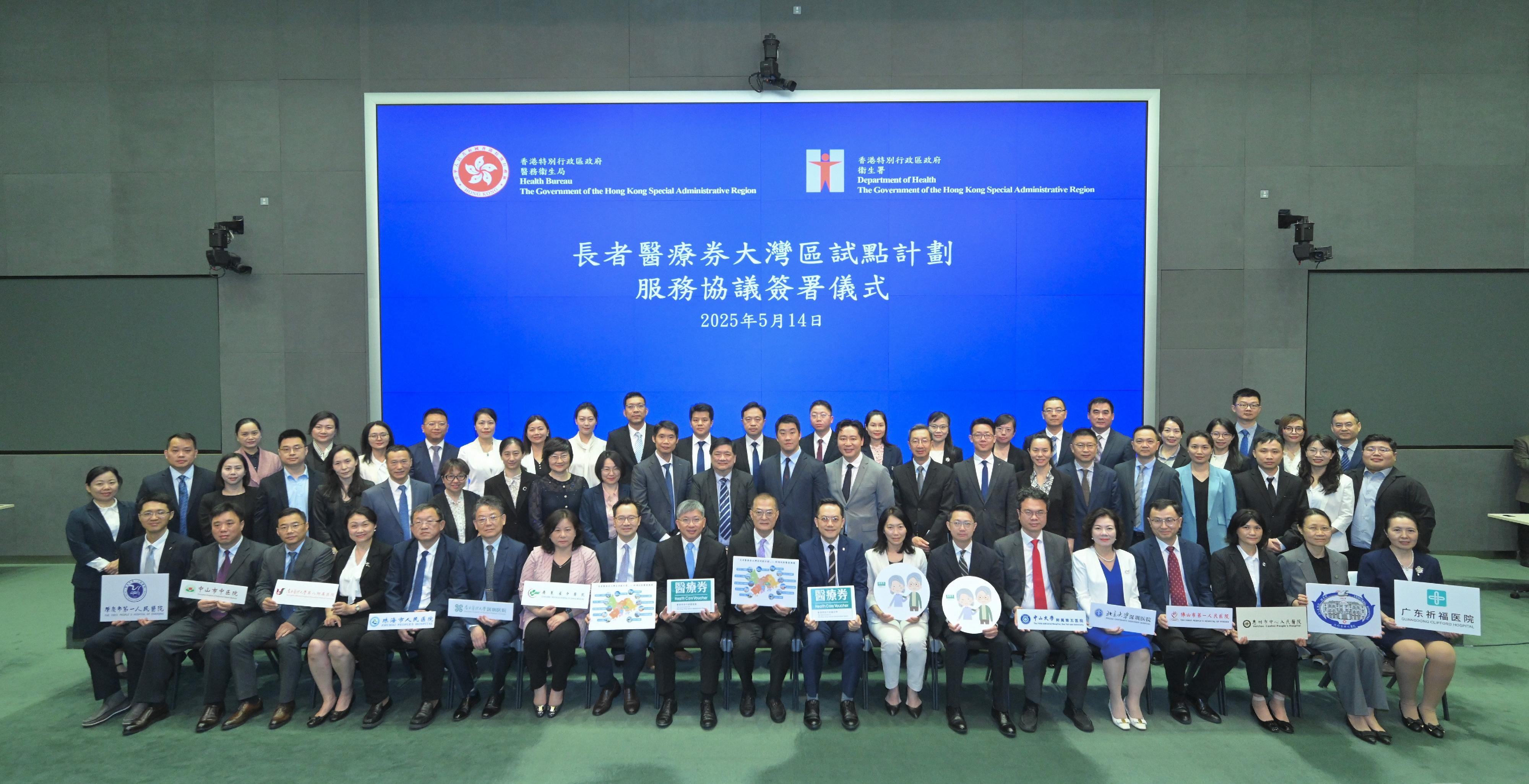
DH signs service agreements with medical institutions newly included in Elderly Health Care Voucher Greater Bay Area Pilot Scheme (with photos)

     The Department of Health (DH) today (May 14) signed service agreements with 12 Mainland medical institutions newly included in the Elderly Health Care Voucher Greater Bay Area Pilot Scheme. It serves as a curtain raiser for the commencement of services at these medical institutions within this year, as announced in the Chief Executive’s 2024 Policy Address on the extension of the Pilot Scheme to cover nine Mainland cities in the Guangdong-Hong Kong-Macao Greater Bay Area (GBA).

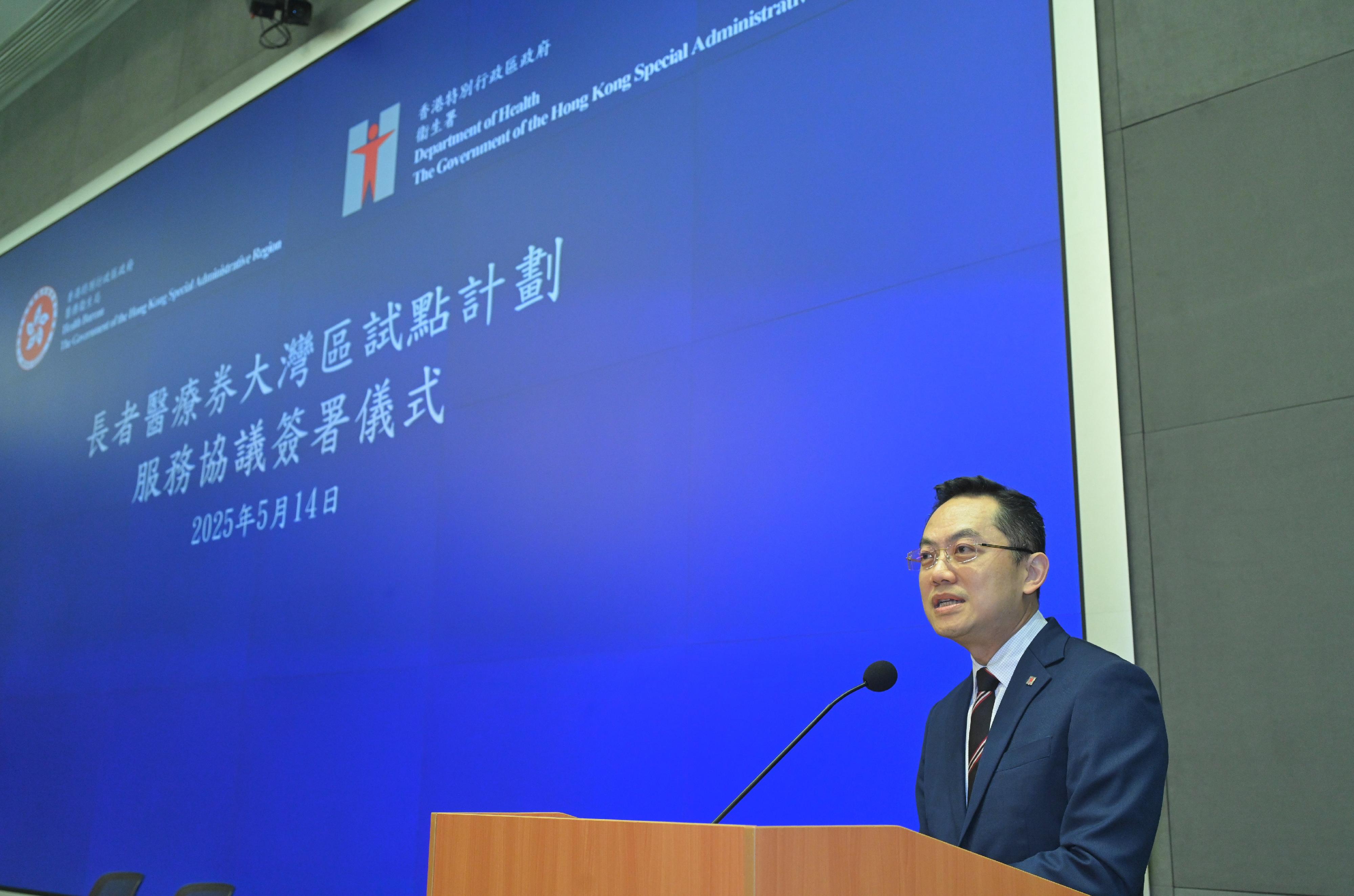
     The signing ceremony was held at the Central Government Offices. Addressing the ceremony, the Director of Health, Dr Ronald Lam, said, “On behalf of the HKSAR Government, I would like to express my gratitude to the Health Commission of Guangdong Province and the health authorities of relevant cities for their continuous support and assistance to the HKSAR Government in further extending the Pilot Scheme to cover all nine Mainland cities in the GBA. It will not only provide greater convenience and flexibility to the eligible Hong Kong elderly persons to safeguard and address their medical needs for a happy and healthy ageing life, but also further promote medical co-operation in the GBA to jointly build a ‘Healthy Bay Area’.”

     â€‹The 12 medical institutions newly included in the Pilot Scheme are:
 

GBA city Name of medical institution
Guangzhou Guangdong Provincial Hospital of Chinese Medicine
Guangdong Clifford Hospital
Shenzhen
(including the Qianhai Shenzhen-Hong Kong Modern Service Industry Co-operation Zone)
Shenzhen Hospital of Southern Medical University
Peking University Shenzhen Hospital
Zhuhai The Fifth Affiliated Hospital, Sun Yat-sen University
Zhuhai People’s Hospital
Foshan The First People’s Hospital of Foshan
The Eighth Affiliated Hospital of Southern Medical University
(Previously: Shunde Hospital of Southern Medical University)
Huizhou Huizhou Central People’s Hospital
Zhongshan Zhongshan Hospital of Traditional Chinese Medicine
Jiangmen Jiangmen Central Hospital
Zhaoqing The First People’s Hospital of Zhaoqing
 
     With the expansion of the number of pilot medical institutions from the current seven to 19 in total, together with the two existing service points operated by the University of Hong Kong-Shenzhen Hospital, eligible Hong Kong elderly persons will be able to use the Elderly Health Care Voucher (EHCV) for outpatient healthcare services at a total of 21 service points in the GBA.

     “The DH will continue to actively collaborate with the newly included pilot medical institutions to finalise the follow-up arrangements in accordance with the service agreements, such as personnel training, financial arrangements and system configuration. We will strive for the newly included pilot medical institutions to launch the relevant arrangements gradually by the fourth quarter of this year, so as to enable eligible Hong Kong elderly persons to use EHCVs at more service points as soon as possible, and to make better use of the primary healthcare services to improve their health and gain a greater sense of happiness. Co-operation on medical and health issues is an important component of the development of the GBA and is vital to promoting the well-being of the people in the region,” said Dr Lam.

     Launched by the Government in 2009, the Elderly Health Care Voucher Scheme (EHVS) currently subsidises eligible Hong Kong elderly persons aged 65 and above with an annual voucher amount of $2,000 (with the accumulation limit set at $8,000) for them to choose in their own community private primary healthcare services that best suit their health needs. The Government launched the Pilot Scheme last year to extend the coverage of EHCVs to suitable medical institutions in the GBA. As of September of the same year, the coverage of EHCVs has been extended to seven integrated medical/dental institutions located in Guangzhou, Zhongshan, Dongguan and Shenzhen.
      
     Upon the launch of the Pilot Scheme last year, as of end-March 2025, about 13 350 eligible elderly persons have used EHCVs to pay for the fees of outpatient healthcare services received at medical institutions under the Pilot Scheme, involving 24 645 voucher claim transactions and a total claimed amount at approximately $32.16 million. 
      
     In addition, the “Cross-boundary Health Record” and “Personal Folder” functions of the eHealth mobile application will also be applicable to the medical institutions under the Pilot Scheme, with a view to offering convenience for Hong Kong citizens to self-carry their electronic health records for cross-boundary uses.

     Members of the public may refer to the EHVS website (www.hcv.gov.hk) or call the hotline (2838 2311) for more information on the EHVS.
Photo  Photo  
read more

Analytical Accounts of Exchange Fund

The following is issued on behalf of the Hong Kong Monetary Authority:

     The Hong Kong Monetary Authority (HKMA) released today (May 14) the key analytical accounts of the Exchange Fund at the end of April 2025.

     Foreign assets, representing the external assets of the Exchange Fund, decreased during the month by HK$30.6 billion to HK$3,385.3 billion.

     The Monetary Base, comprising Certificates of Indebtedness, Government‑issued currency notes and coins in circulation, the balance of the banking system and Exchange Fund Bills and Notes issued, amounted to HK$1,982.8 billion.

     Claims on the private sector in Hong Kong amounted to HK$358.0 billion.

     Foreign liabilities amounted to HK$28.5 billion.

     The analytical accounts of the Exchange Fund are released in accordance with the International Monetary Fund’s Special Data Dissemination Standard (SDDS) and are referred to as the Analytical Accounts of the Central Bank under SDDS (Annex).

*********************************************************

     At present, four press releases relating to the Exchange Fund’s data are issued by the HKMA each month. Three of these releases are issued to disseminate monetary data in accordance with the International Monetary Fund’s SDDS. The fourth press release, on the Exchange Fund’s Abridged Balance Sheet and Currency Board Account, is made in accordance with the HKMA’s policy of maintaining a high level of transparency. For the month of May 2025, the scheduled dates for issuing the press releases are as follows:
 

May 8
(Issued)
SDDS International Reserves
(Hong Kong’s Latest Foreign Currency Reserve Assets Figures)
May 14 SDDS Analytical Accounts of the Central Bank
(Analytical Accounts of the Exchange Fund)
May 30 SDDS Template on International Reserves and
Foreign Currency Liquidity
May 30 Exchange Fund Abridged Balance Sheet and
Currency Board Account
read more

Applications for over 16 000 new niches at Wo Hop Shek, Cape Collinson-San Ha and Shek Mun Columbariums to open from May 19

     The Food and Environmental Hygiene Department (FEHD) announced today (May 14) that more than 16 000 new extendable niches at Wo Hop Shek Columbarium in Fanling, Cape Collinson-San Ha Columbarium in Eastern District and Shek Mun Columbarium in Sha Tin will be open for applications from May 19 to June 18.

     An FEHD spokesman said, “Under the new round of niche allocation exercise, the FEHD will allocate a total of 16 150 extendable niches, including 4 000 standard niches and 50 large niches at Wo Hop Shek Columbarium Phase VI, 6 000 standard niches and 50 large niches at Cape Collinson-San Ha Columbarium, as well as 6 000 standard niches and 50 large niches at Shek Mun Columbarium. The initial ash interment period for the allocated public niches is 20 years and can be extended at 10-year intervals thereafter. Upon expiry of the interment period, the persons concerned may continue to use the allocated niche provided that he/she extends the interment period and pays the prevailing prescribed fee.”

     Taking into account the views of residents in the vicinity, Shek Mun Columbarium and Garden of Remembrance will be a smoke-free columbarium project, i.e. the columbarium will not provide any facilities for burning joss sticks and offerings.  Burning of joss sticks and incense offerings will be banned completely within the columbarium area, including all floors and common areas. 

     Applicants should only file one application form to apply for either a large or standard niche for the same deceased person. When applying for a large niche, applicants have to fill in the particulars of at least three deceased people. For a standard niche, applicants must fill in at least one deceased person’s particulars.

     The spokesman said, “The FEHD will allocate niches by open drawing of lots and computer random balloting, which is expected to be held in the third quarter of this year, with the exact date to be announced later. After the drawing of lots and computer random balloting, the FEHD will inform applicants of the results of their applications and provide serial numbers of the designated niches allocated to successful applicants. The niches will not be chosen by applicants themselves.”

     Starting from May 19, members of the public can apply online or download the application form from the FEHD website (www.fehd.gov.hk) or the Platform for Cemeteries and Crematoria Services (app.fehd.gov.hk/ccsp). They can also obtain the application form in person from the Hong Kong or Kowloon Cemeteries and Crematoria Office, District Environmental Hygiene Offices of the FEHD, or Home Affairs Enquiry Centres of the Home Affairs Department, or by fax via hotline 2841 9111.  

     The spokesman advises applicants to submit their applications online to avoid any postal delay. Upon submission, applicants will promptly receive an acknowledgement receipt with a case number, thus facilitating the follow-up of the application in the future. If the applicant is the same person who has applied for cremation service for the deceased, it is more convenient to submit the application online by exempting the need to attach copies of the required documents and having the application online granted automatically. Successful applicants can pay the prescribed fees to complete the required niche allocation formalities through the “Single Portal with Token for Online Services and Payment” on the Platform for Cemeteries and Crematoria Services, without visiting the Public Niche Allocation Office in person. If not submitting their application online, applicants shall submit the completed application form together with copies of the required documents by fax (2333 1716), by email (apply_newniche@fehd.gov.hk), by post or in person to the Hong Kong or Kowloon Cemeteries and Crematoria Offices within the application period.

     The School of Life Event Series – Talk on After-death Arrangements will be held at 10.30am on May 24 (Saturday) at Yuen Chau Kok Community Hall (No. 35 Ngan Shing Street, Sha Tin, New Territories) to provide the public with more information on the coming public niche allocation, green burial facilities/services and regulation of private columbaria. The talk is free of charge and no prior registration is required. 

     For details of the arrangements of the niche allocation exercise and the information seminar, please visit the FEHD website (www.fehd.gov.hk). read more

LCQ9: Construction or redevelopment of small houses

     â€‹Following is a question by the Hon Chan Yuet-ming and a written reply by the Secretary for Development, Ms Bernadette Linn, in the Legislative Council today (May 14):
 
Question:
 
     Some residents of the New Territories have reflected that the pace of processing applications for the construction or redevelopment of small houses in the North District of the New Territories is slower compared to other districts. In this connection, will the Government inform this Council:
 
(1) given that in its reply to a question raised by a Member of this Council on the Estimates of Expenditure 2025-2026, the Government indicated that, as at the end of last year, there were as many as 3 686 small house applications under processing in the North District, with only 95 applications being approved last year, and that the Islands District and the Sai Kung District also faced a similar situation of a low number of approved applications and a high proportion of backlogged cases, whether the Government has put in place targeted improvement measures to enhance the efficiency of processing applications for the construction or redevelopment of small houses in these three districts; if so, of the details; if not, the reasons for that;
 
(2) given that according to government information, only around 100 staff members of the Lands Department are currently involved in processing of the small house applications, and that the respective numbers of small house applications and small house redevelopment applications under processing as at the end of last year were 10 513 and 1 664, how the Government will redeploy its manpower to expedite the processing of these backlogged cases; and
 
(3) given that the Government is implementing an arrangement that allows applications for a Certificate of Compliance (i.e. a Certificate of Compliance or “No Objection to Occupy”) by self-certification of compliance for New Territories Exempted Houses, and that this arrangement has been first implemented as a pilot scheme by the District Lands Office, Yuen Long, whether the Government will consider extending this pilot scheme to villages under all rural committees in the Northern Metropolis; if so, of the details; if not, the reasons for that?
 
Reply:
 
President,
 
     The New Territories Small House Policy has been implemented since December 1972 to allow an indigenous villager to apply for permission to, for once in his lifetime, erect a small house on a suitable site within his own village (Note 1). According to the performance pledge, the Lands Department (LandsD) will process (Note 2) not less than 2 300 small house applications per year. For redevelopment applications, as archaic leases and houses are generally involved, the cases are more complicated and considerable time may be spent on checking the records. LandsD in general completes the processing of around 600 redevelopment applications per year.
      
     The reply to various parts of the question raised by the Hon Chan is as follows:
 
(1) and (2) To streamline the processing of small house and redevelopment applications and speed up the approval process, LandsD enhanced the processing procedures in October 2021 and January 2023, including:
 
(i) To commence the procedures under various aspects in parallel, such as verification of land ownership and lot boundaries, and consultation with the relevant departments;
(ii) To simplify the procedures for handling objections;
(iii) To conduct face-to-face meetings with applicants for direct discussion;
(iv) To delegate the approval of relatively straightforward cases to officers under the District Lands Officer, and only non-straightforward cases will be submitted to the District Lands Officer or District Lands Office (DLO) Conference for approval;
(v) To enhance the supervision by LandsD on DLOs, including regular follow-up on the progress of processing applications.
 
     The implementation of the above procedures has achieved results in terms of expediting the processing of small house and redevelopment applications. The average number of small house applications processed by LandsD each year increased to more than 2 500 cases in the years from 2022 to 2024, surpassing the department’s performance pledge of 2 300 cases, while the number of redevelopment applications completed by LandsD per year also increased from around 480 in 2022 to around 650 in 2024.
      
     While it is mentioned in the question that the proportion of small house applications approved in 2024 as compared to the cases pending completion of processing in certain districts (including the North District, the Islands District, and the Sai Kung District) is relatively lower, we believe this is mainly due to the fact that applications involve relatively complex geographical features (such as remote locations or proximity to slopes, which require more rigorous technical assessments) and a larger amount of applications received in these respective districts.
 
     In fact, a total of about 360 small house applications were received on average per year from 2022 to 2024 in the North District, the Islands District and the Sai Kung District, with an average of over 800 cases (Note 3) processed each year; the number of applications pending completion of processing also decreased from a total of over 6 100 at the end of 2021 to about 5 270 by the end of March 2025, representing an overall decrease of approximately 14 per cent. As for redevelopment applications, a total of about 100 and 150 applications were received and processed respectively on average per year from 2022 to 2024 in the three districts. The number of applications pending completion of processing decreased from a total of over 840 at the end of 2021 to about 710 by the end of March 2025, representing an overall decrease of approximately 16 per cent.
      
     At present, around 100 staff of LandsD, mainly deployed to the eight DLOs in the New Territories, are involved in processing small house and redevelopment applications. As these staff are also responsible for other land administration duties within the DLOs, the above figure is provided for general reference only. LandsD will continue to review and enhance the procedures for processing small house and redevelopment applications (including the introduction of the self-certification of compliance scheme mentioned below) to expedite the approval. In addition, LandsD will strengthen the role of its headquarters in monitoring the processing and approval of applications in various districts and more flexibly allocate resources across districts to accelerate the processing of applications.
 
(3) After a DLO approves an application to build a small house, the applicant has to apply to LandsD for and obtain the Certificates of Exemption in accordance with the Building Ordinance (Application to the New Territories) Ordinance (Cap. 121) before commencing the construction works. After the works are completed, the applicant has to submit a construction completion report to the DLO. The DLO will issue a Certificate of Compliance (CoC) if, having conducted on-site checking, it is satisfied that the applicant has complied with all the relevant conditions, requirements and obligations.
 
     To expedite the development of small houses, LandsD implemented a self-certification scheme of CoCs on a pilot basis in January this year, which allows lot owners to appoint registered professionals at their own expense to prepare and submit a self-certification of compliance, thereby optimising the use of resources in the industry and expediting the approval process. LandsD will conduct detailed inspection checks on randomly selected cases. At the same time, LandsD will also streamline and expedite the approval process for applications submitted under the scheme, with the target of completing the processing of cases within 10 weeks upon receipt of all required documents, and within 14 weeks for cases subject to random checking.
 
     To ensure the orderly implementation of the self-certification scheme, a pilot scheme was first implemented at the DLO, Yuen Long. In view of the very positive response from Heung Yee Kuk and various stakeholders, and their wish for LandsD to extend the scheme to other DLOs as soon as possible, after taking into account factors such as the processing status of applications for CoCs by various DLOs, demand and manpower resources, LandsD plans to extend the coverage of the scheme to the DLO, North in the third quarter of this year. Details will be announced in due course. With the operational experience gained from the pilot scheme, LandsD will then decide whether and how to regularise the arrangement.
 
Note 1: The small house shall neither contain more than three storeys nor exceed a height of 8.23 metres (27 feet); and the roofed-over area shall not exceed 65.03 square metres (700 square feet).
 
Note 2: The number of small house applications processed by LandsD annually according to its performance pledge covers the applications which LandsD approves, rejects or classifies as non-straightforward cases for further processing in a particular year.
 
Note 3: As the processing of applications received during a year may not be completed within the same year, the applications processed in a particular year and its number may not correspond with the applications received in the same year and its number. read more