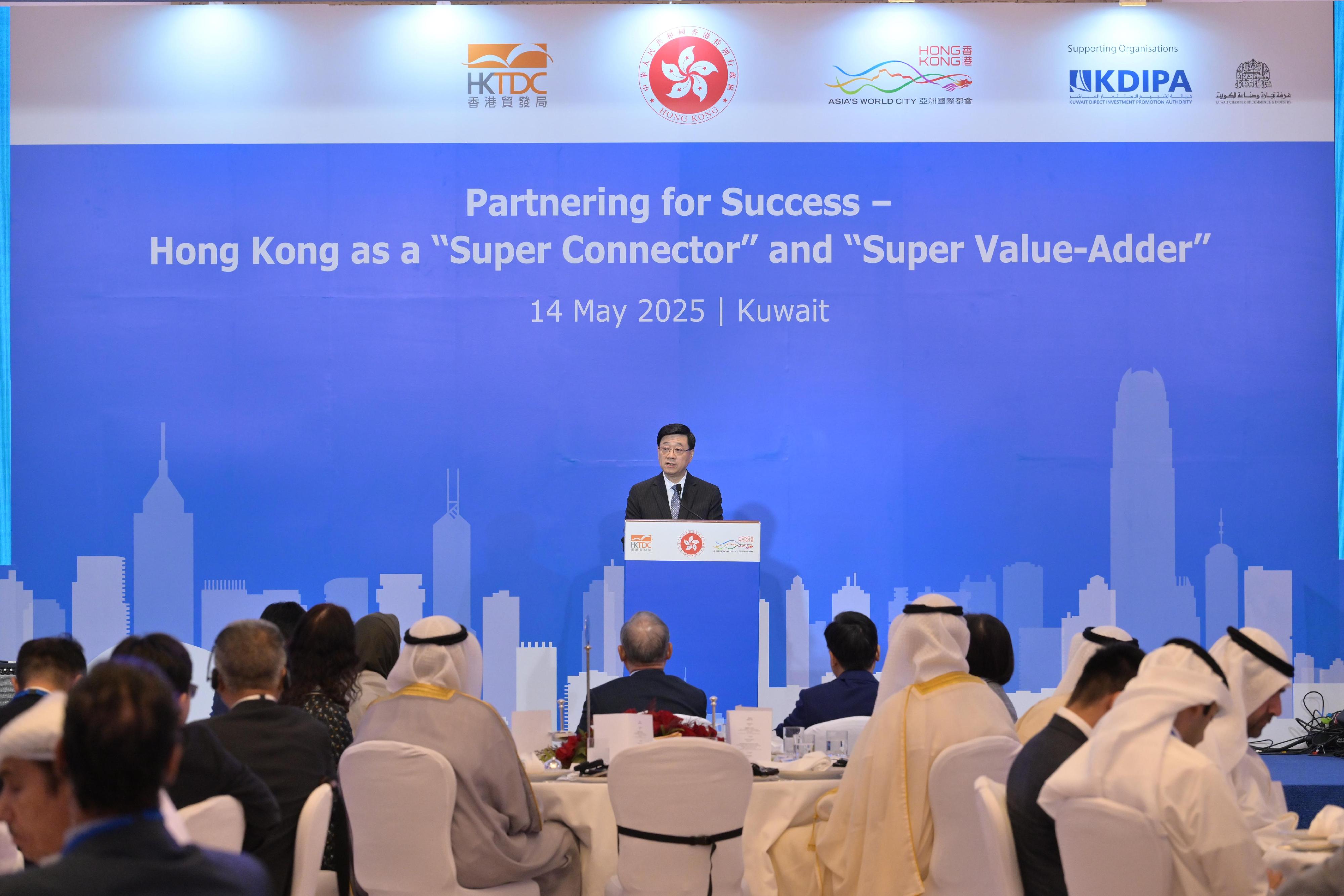
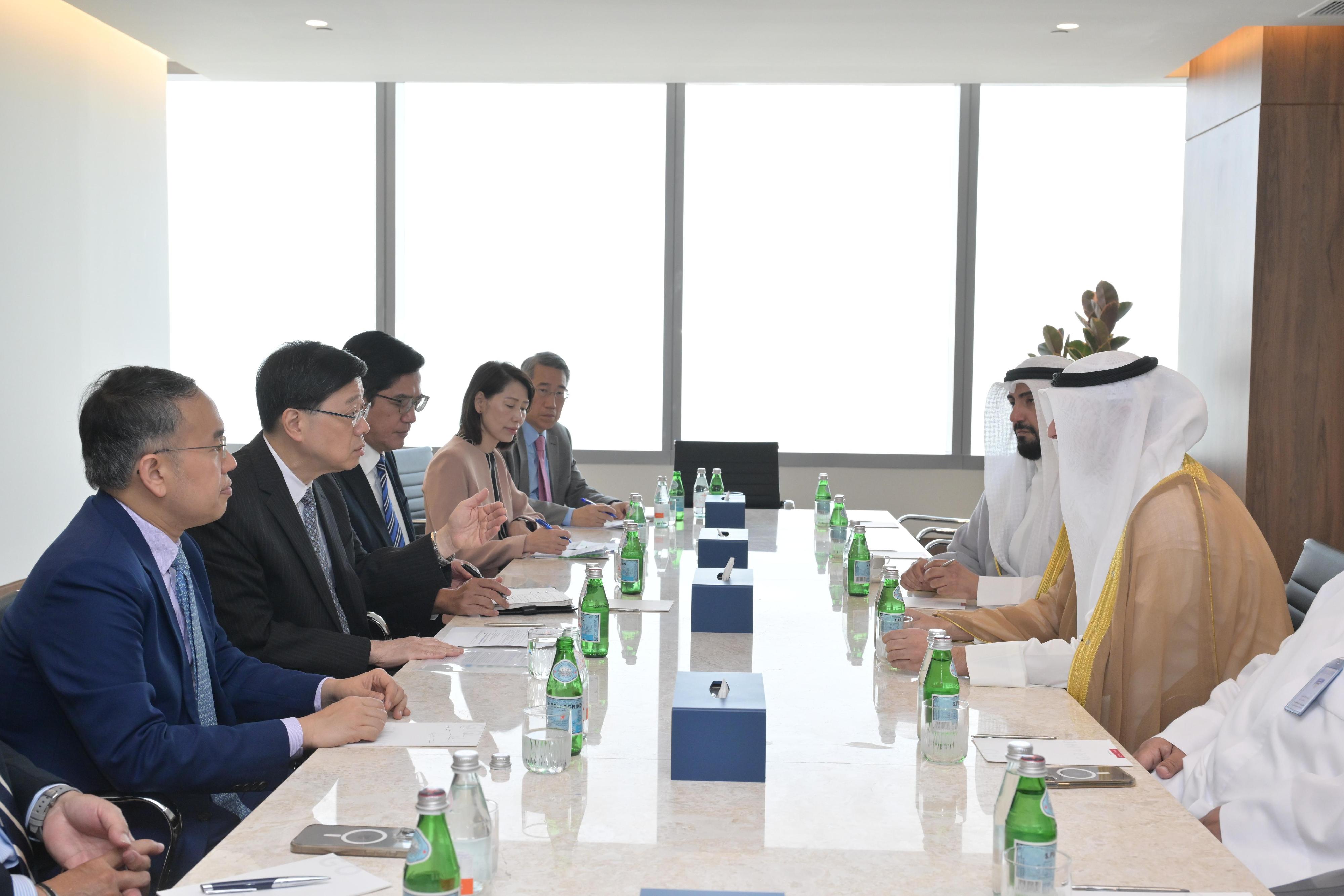
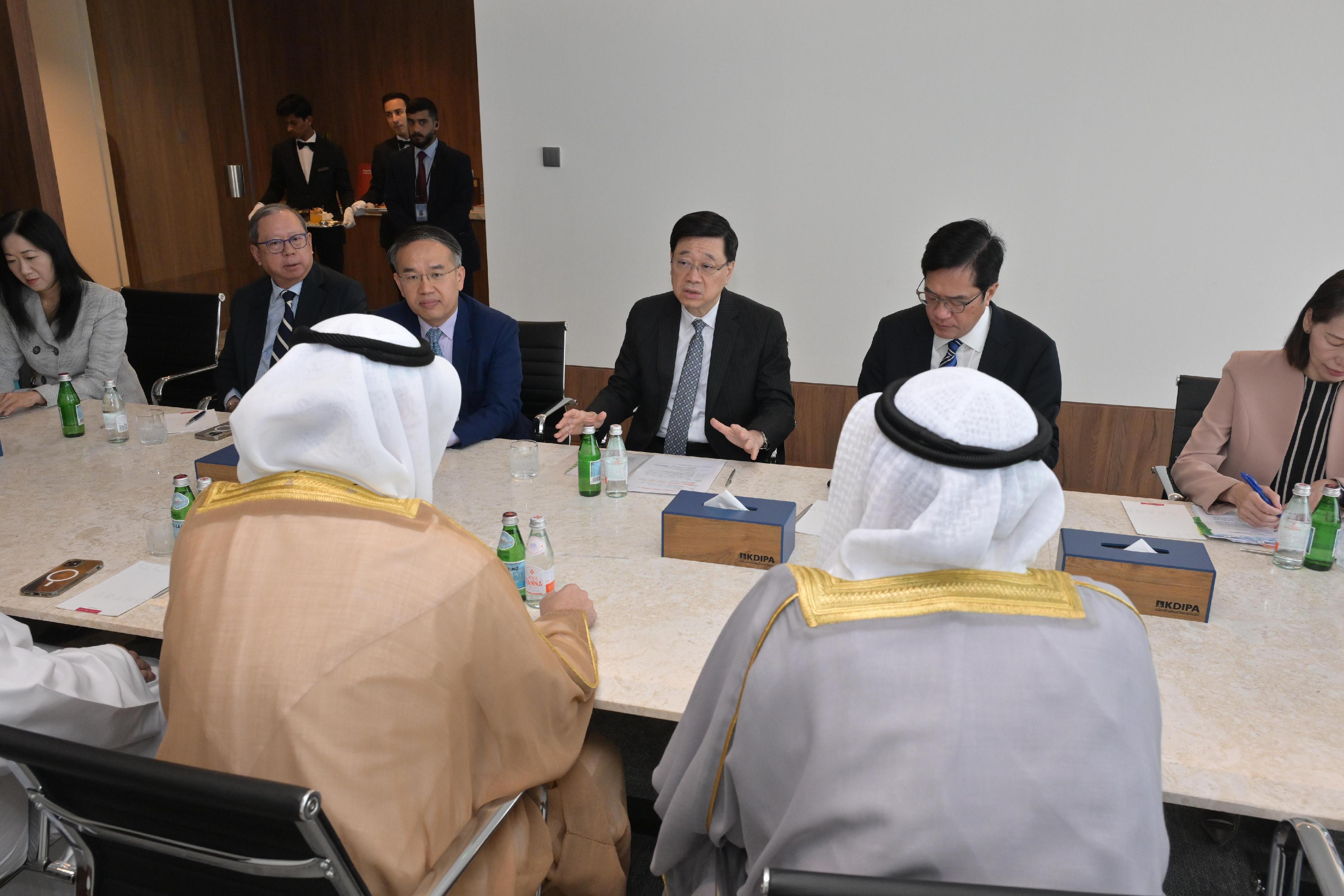
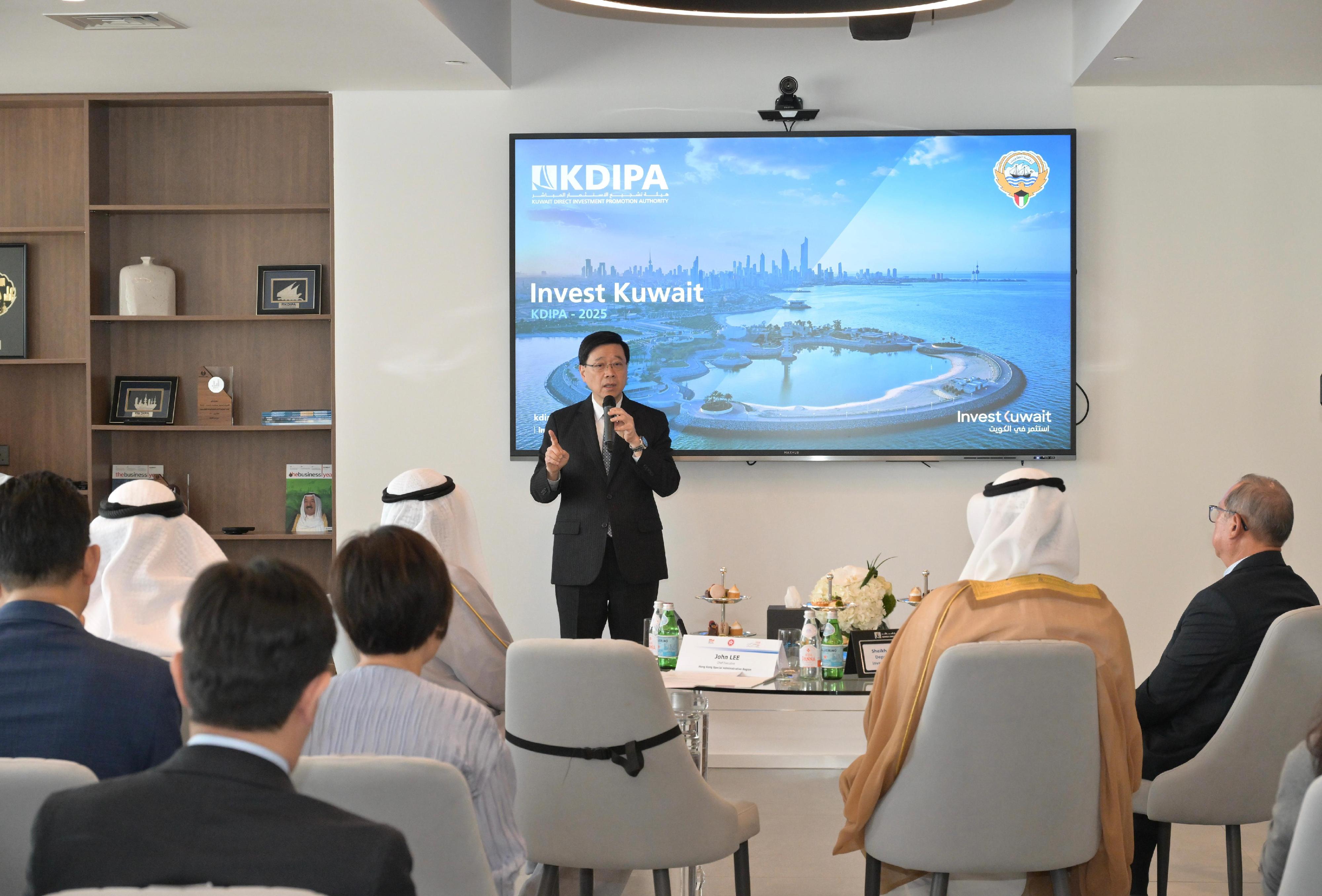
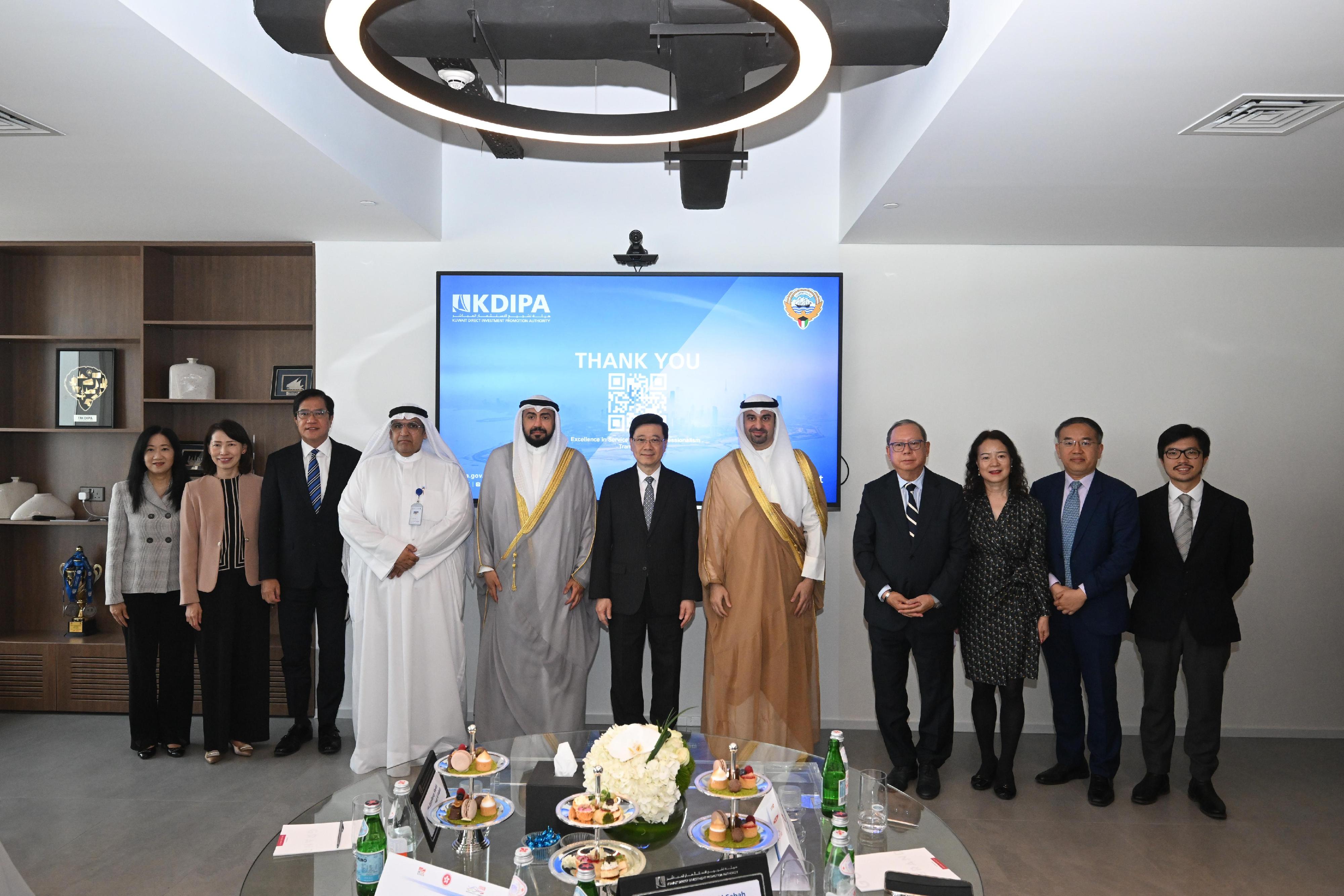
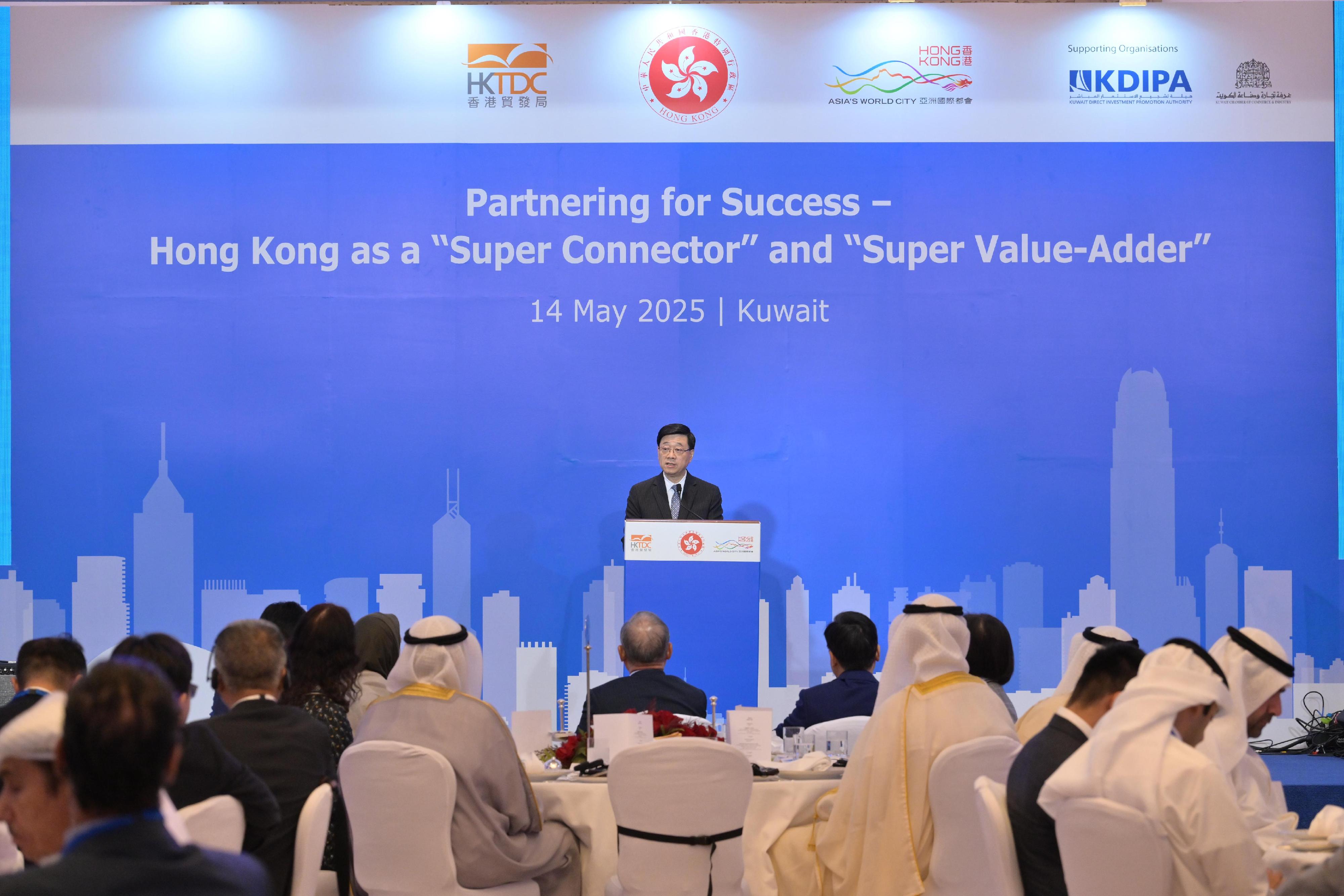
Following is the speech by the Chief Executive, Mr John Lee, at the Partnering for Success – Hong Kong as a “Super Connector” and “Super Value-adder” High-level Business Luncheon in Kuwait today (May 14):
Your Excellency Khalifa Abdullah Dhahi Al-Ajeel Al-Askar (Minister of Commerce and Industry of Kuwait), Excellency Ambassador Zhang Jianwei (Ambassador Extraordinary and Plenipotentiary of the People’s Republic of China to the State of Kuwait), Excellency Mr Rabah Al-Rabah (Director General of Kuwait Chamber of Commerce and Industry), distinguished guests, ladies and gentlemen,
As-salamu alaykum. Good afternoon. It is a great pleasure to be with you today in Kuwait, home to one of the world’s largest oil reserves, and a country as committed to talent development as it is to economic diversification.
This is our second day in your resplendent capital, Kuwait City, where past, present and future – in design, culture, lifestyle and so much more – come together like no other city in the world.
Yesterday, I was honoured to have met with His Highness Sheikh Meshal Al-Ahmad Al-Jaber Al-Sabah, the Amir of Kuwait; His Highness Sheikh Sabah Al-Khaled Al-Hamad Al-Mubarak Al-Sabah, the Crown Prince of Kuwait; His Excellency Sheikh Fahad Yousuf Saud Al-Sabah, Acting Prime Minister of Kuwait, and other senior government officials. I thanked them sincerely for the time, interest and hospitality they have shown us, from the moment we arrived in Kuwait. Kuwait has generously arranged for our government delegates to stay at Bayan Palace, a majestic landmark in Kuwait City. I reaffirmed to them the commitment, and sincerity, of Hong Kong and Mainland China in strengthening relations with Kuwait.
Yes, I am delighted to be here. So too, are the business and professional leaders with me, a delegation counting some 30 Hong Kong business and institutional heads, together with high-profile representatives of over 20 Chinese Mainland companies from seven provinces and municipalities across the country.
The delegation brings with them wide-ranging expertise, and invaluable experience, from both Hong Kong and Mainland China, in green development, and innovation and technology, including advanced manufacturing, artificial intelligence, new energy and materials, health and smart city evolution. They also offer Hong Kong’s wealth of experience in finance, infrastructure, transport and logistics, as well as global business operations and deal-making.
We are here to better understand the opportunities of Kuwaiti business and investment. To explore how Hong Kong, Mainland China and Kuwait, working together, can create long-term mutual opportunities.
We’re also here to explore closer ties with the Gulf Cooperation Council (Cooperation Council for the Arab States of the Gulf, GCC), which, as all of you know, includes Kuwait. Kuwait currently holds the presidency of the GCC, wielding significant influence in the region’s development.
Our ties run deep and far. China, our country, and Kuwait established diplomatic ties in 1971 – making Kuwait the first GCC country to do so. Last year, trade between China and Kuwait reached well over US$16 billion.
Kuwait, I’m pleased to note, was the first country in the Middle East to sign a Belt and Road co-operation document with China. From of the Central Bank of Kuwait’s headquarters building and housing projects, to telecommunications and smart city developments, Chinese enterprises have participated in numerous infrastructure and business projects here.
Hong Kong treasures its trade ties with Kuwait, too. Last year, our bilateral merchandise trade totalled US$200 million, up more than 21 per cent over the year before.
Hong Kong’s trade with the GCC last year reached nearly US$20 billion, up 53 per cent over the past four years. And that robust growth is underpinned by our mutual will to advance trade ties.
Thanks to our internationally recognised professional services sector, Hong Kong is a pivotal player in the Belt and Road Initiative. In 2023, we included a Middle East Forum, for the first time, at our annual Belt and Road Summit. And we continue to feature Middle East speakers and guests at the Summit.
Hong Kong’s Belt and Road Summit will take place in September this year. As earlier the Chairman of the Trade Development Council (Hong Kong Trade Development Council) said, it’s our 10th anniversary Summit, and I invite you all to join us, to take part in a world of Belt and Road opportunities – in business, investment and more.
And the Asian Financial Forum, Hong Kong’s flagship event bringing together prominent leaders in finance and business sectors, hosted its first GCC Chapter this January.
Yes, the ties between Hong Kong and the Middle East continue to grow and diversify.
They include the launching of the Middle East’s first two exchange-traded funds tracking Hong Kong stocks. Hong Kong is partnering with a Middle East sovereign wealth fund, too. Together, we are committed to jointly establishing a US$1 billion fund, investing in companies connected to Hong Kong and the Guangdong-Hong Kong-Macao Greater Bay Area.
The Greater Bay Area, let me add, is a cluster city development that brings together Hong Kong, Macao and nine southern cities in China. The fast-integrating regional economic powerhouse presents a collective GDP (Gross Domestic Product) that closely rivals the world’s 10th largest economy.
Hong Kong has much to offer Kuwait. Asia’s financial hub and one of the world’s three biggest financial centres, Hong Kong is also the world’s largest offshore Renminbi business centre. Coupled with our Islamic finance experience, Hong Kong is a trusted partner in your project financing – today and long down the road.
Free trade is among our great competitive advantages, fuelling our success for the past two centuries. Hong Kong is a free port, and we will continue to be a free port. Like our country, we are a vocal advocate of a multilateral, rules-based global economy, in spite of mounting protectionism and geopolitical tensions.
And that, ladies and gentlemen, is a testament to our “one country, two systems” governing principle at work.
Under the principle, the Hong Kong Special Administrative Region has its own legal, legislative and judicial systems. Our legal system is a common law system, similar to that in many major financial hubs around the globe. We maintain our own currency, with no capital or foreign exchange controls. Information, capital, goods and people flow freely in Hong Kong.
The principle of “one country, two systems” also gives Hong Kong unparalleled access to our country’s markets and wide-ranging opportunities. It allows us, as well, to pursue our longstanding ties with the world at large, the Middle East very much included.
As today’s luncheon title, Partnering for Success: Hong Kong as a “super connector” and “super value-adder” emphasises, we do more than connecting companies and people. We also add value to their businesses, their services and their future.
With companies and investors from Mainland China, and all over the world, looking for a financial haven in this time of global economic uncertainty, Hong Kong is flourishing, and keen to work with you, our partners.
An international financial newspaper, spotlighting the Hong Kong Exchange and its record quarterly profits, recently noted that Hong Kong has, and I quote, “benefited from a spate of initial public offerings and rising interest from Mainland Chinese and global investors in Hong Kong-listed shares, especially of technological-related companies, driven by optimism over China’s progress in artificial intelligence”.
That speaks of Hong Kong’s “one country, two systems” advantages working for you – linking a world of investors to the secure and rapidly growing Chinese market.
It helps, and greatly, that Hong Kong’s economy is inextricably tied to our common law system and a judiciary that exercises its powers independently, a legal regime that resembles many of the world’s leading financial hubs. They give international companies and investors – Kuwait certainly included – all the confidence and the certainty they need to do business, in Hong Kong and throughout China. Kuwait certainly included.
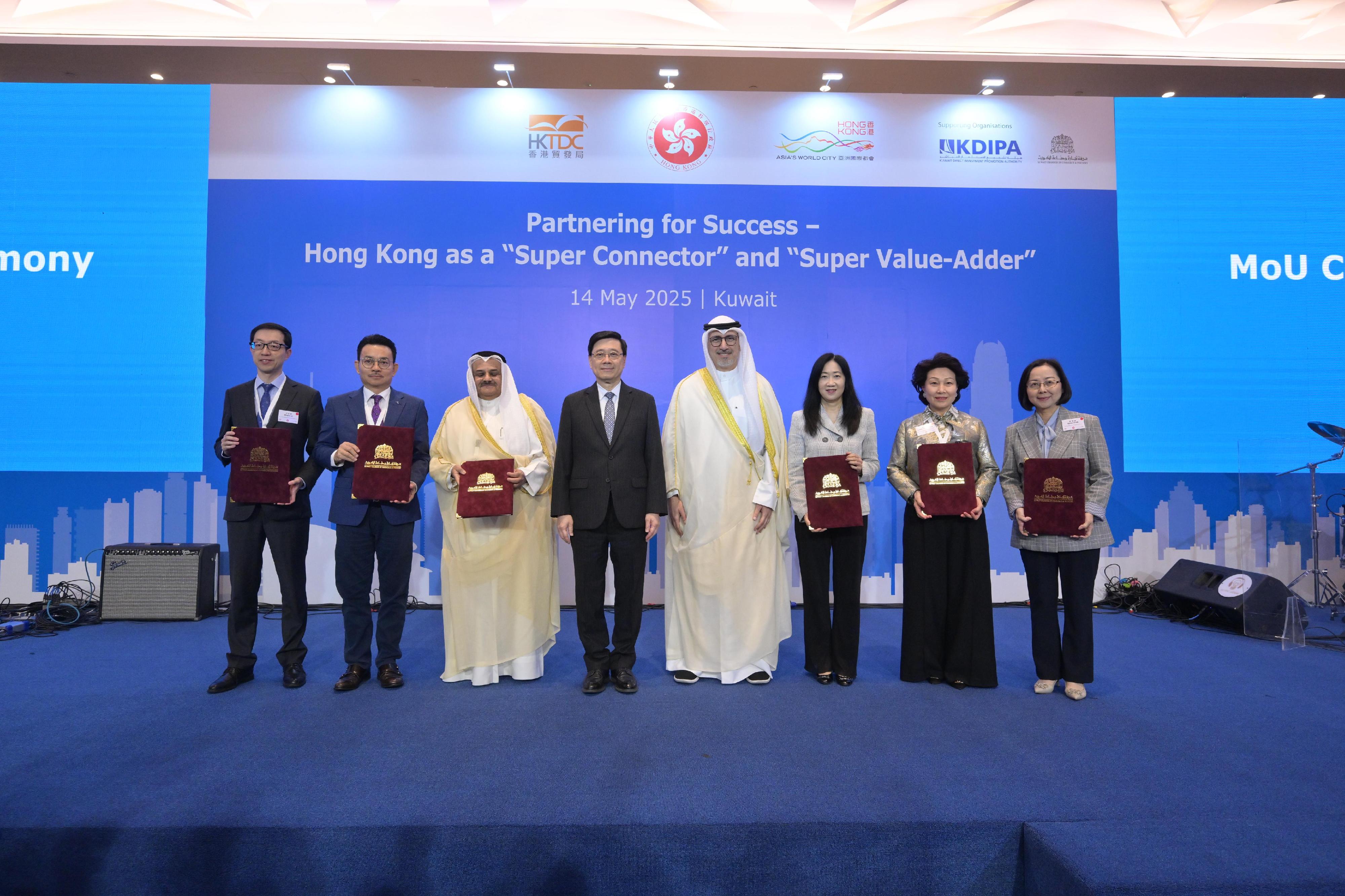
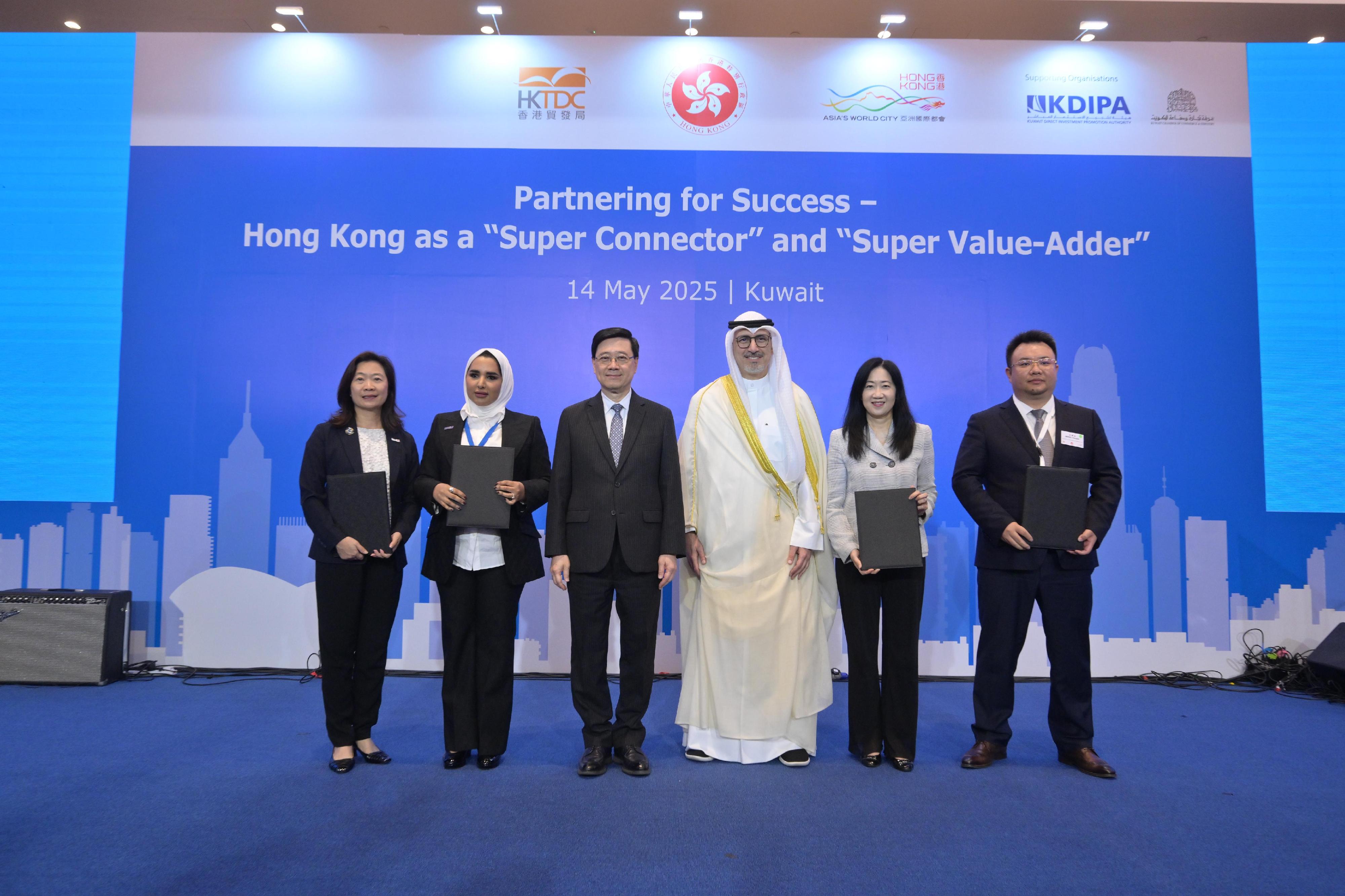
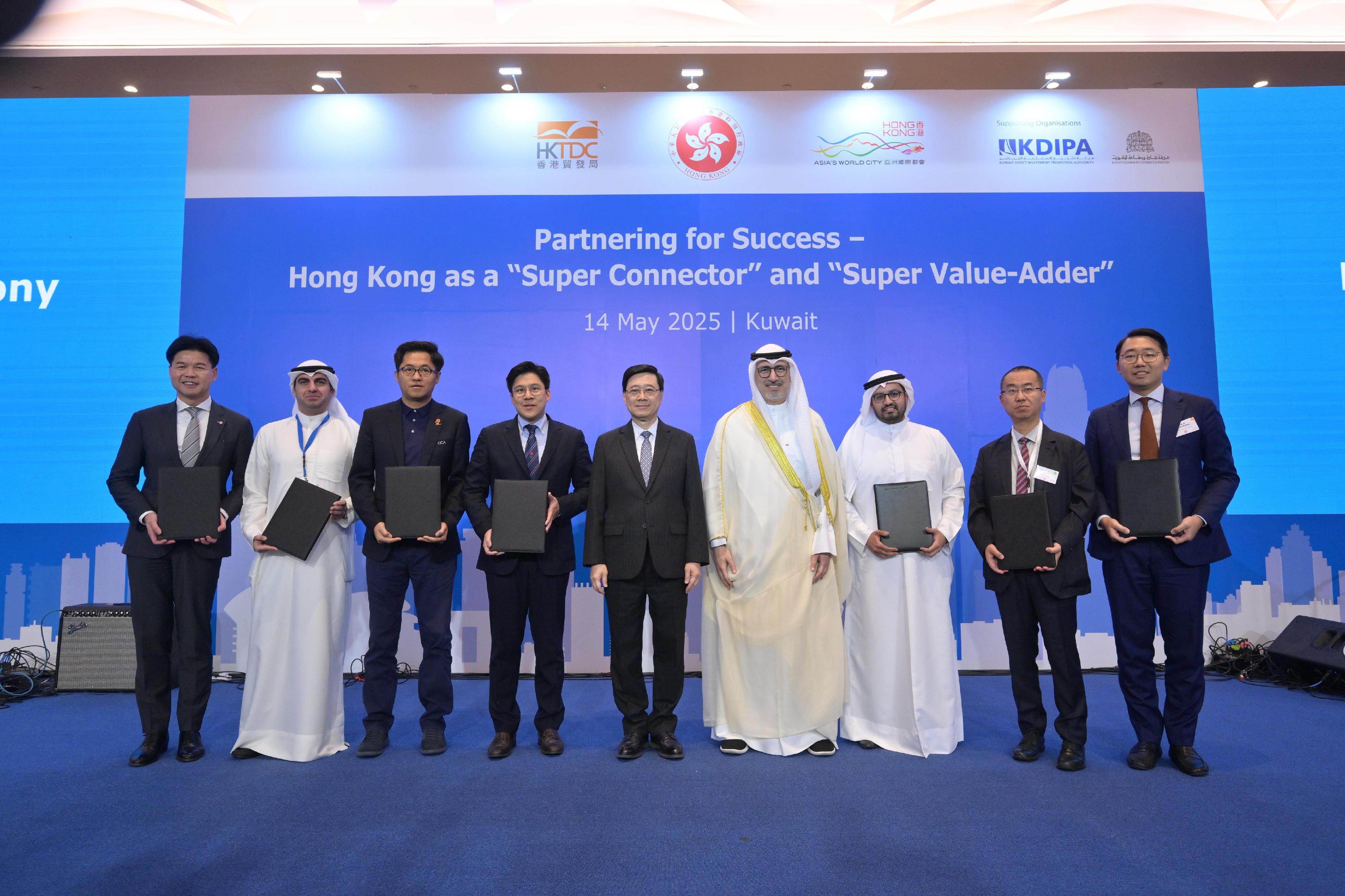
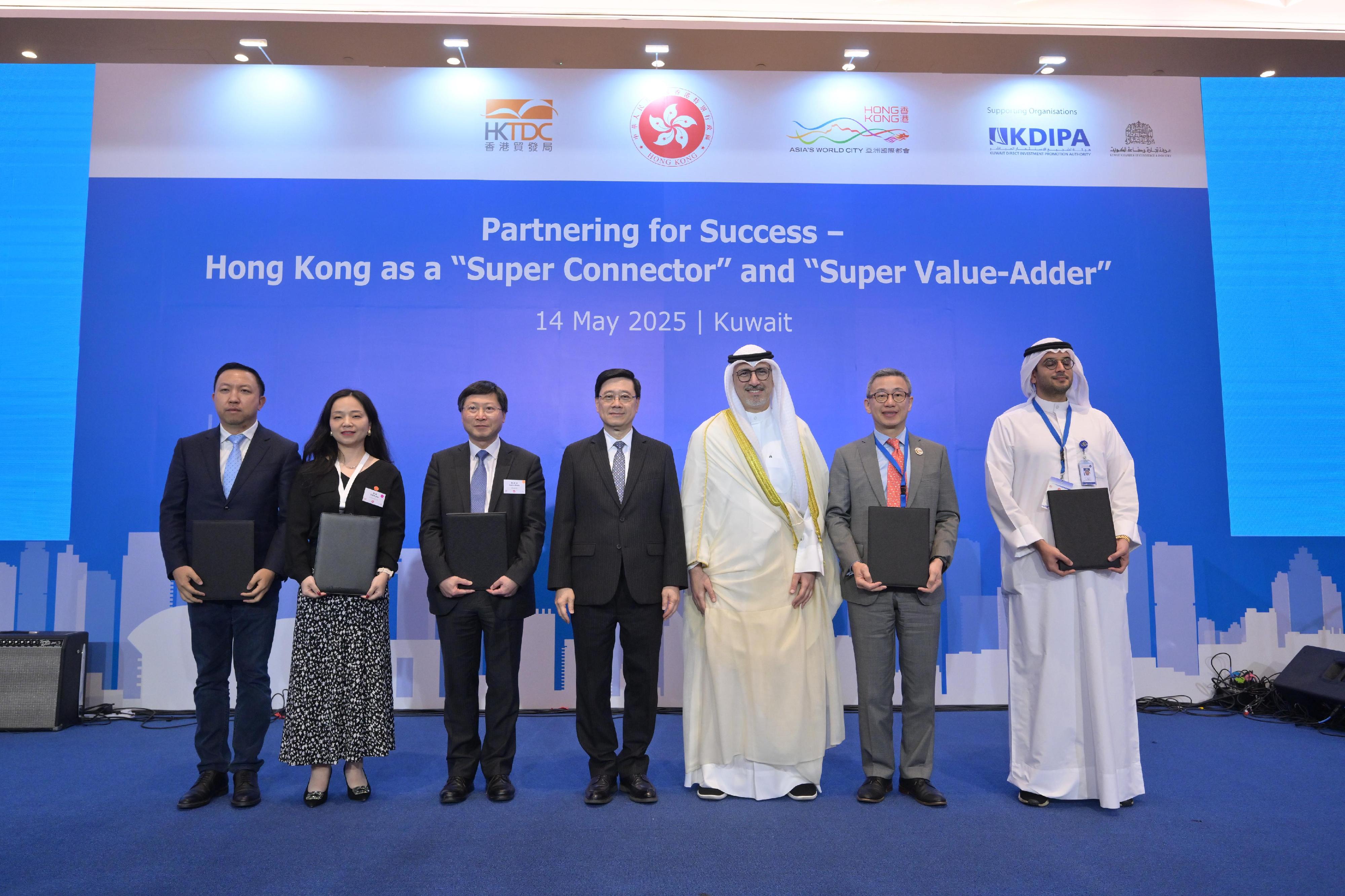
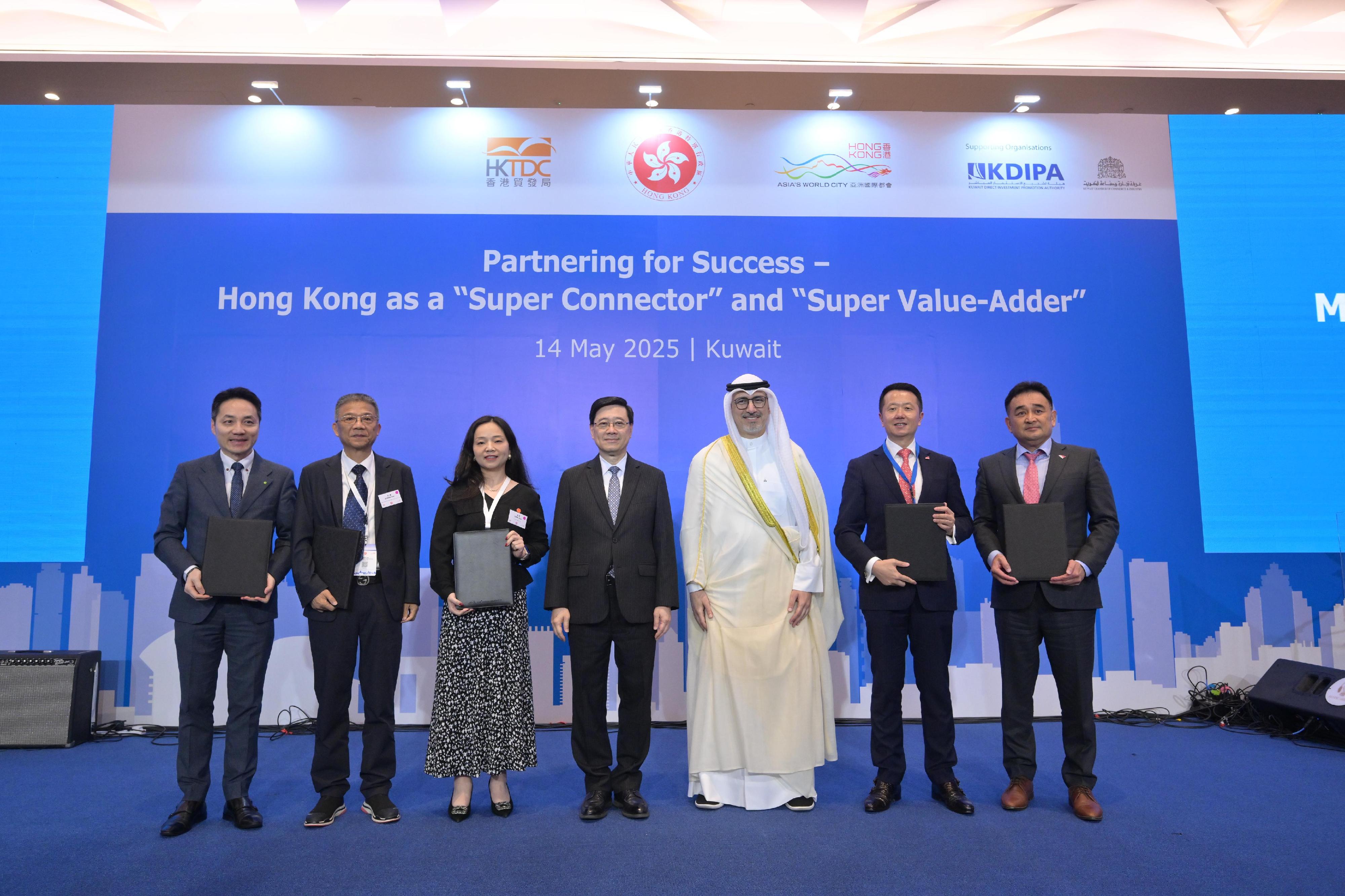
Ladies and gentlemen, I’m pleased to note that during our visit, Hong Kong and Kuwait have reached consensus on 24 concrete deliverables, through MOUs and related agreements. A ceremony will take place in just a moment.
The agreements cover a broad range of collaboration, from trade and the economy, to investment promotion, financial services, aviation and the maritime industries, post-secondary education, the legal profession, sports and more.
And our customs authorities will commence negotiations on the mutual recognition of respective Authorized Economic Operator Programmes. This will create smoother, more convenient international links for our respective companies, making it much easier to do business together.
Our Airport Authority Hong Kong will soon sign a new MOU with Kuwait Airways, aimed at enhancing air connectivity between the two regions, fostering operational excellence, supporting sustainability, and advancing talent development in the aviation sector.
They will lay a solid foundation for long-term collaboration between our two economies and our two peoples.
That just touches on our growing co-operation. Indeed, we are now looking into opening a second Hong Kong Economic and Trade Office in the GCC region, to manage our many ongoing Middle East projects and prospects in the offering.
One key area is boosting merchandise trade between our economies. Hong Kong, I’m pleased to say, has signed Comprehensive Double Taxation Agreements (IPPA) with five of the six GCC states. We have also entered into Investment Promotion and Protection Agreements with three of the states, with Kuwait being the first. We have also substantially concluded negotiations on an IPPA with Qatar, our previous stop on this trip, and commenced negotiations with another state.
Indeed, our burgeoning trade and investment co-operation, I believe, could well add momentum to the possibility of a free trade agreement between Hong Kong and the GCC. I look forward to our continuing discussions with the Council.
Beyond business and investment connectivity, there is boundless promise, too, in co-operating in sectors such as arts and culture.
Yesterday, we had the pleasure of visiting the dazzling Sheikh Abdullah Al Salem Cultural Centre, one of the world’s largest museum complexes. Seeing, firsthand, Kuwait’s compelling commitment to arts, culture and science. I must add that Kuwait is this year’s Arab Culture Capital, presenting nearly 100 activities as part of the country’s cultural celebration.
Like Kuwait, Hong Kong believes in the primacy of arts and culture. Meanwhile, Hong Kong’s West Kowloon Cultural District is rising as one of the world’s largest cultural developments. And we are committed to becoming the world’s East-meets-West centre for international cultural exchange. That very much includes Kuwait and the Middle East in general.
My thanks to our Hong Kong Economic and Trade Office in the Middle East and the Hong Kong Trade Development Council for organising today’s welcome gathering. And to the Kuwait Direct Investment Promotion Authority and the Kuwait Chamber of Commerce and Industry for kindly supporting us on this memorable occasion.
Ladies and gentlemen, I know you will enjoy today’s luncheon. Including, let me add, a musical performance by TroVessional, a Hong Kong group dedicated to Cantonese and Chinese ethnic music, brought to engaging life with classic Chinese instruments.
Enjoy it and thank you!