Author Archives: hksar gov

Speech by FS at HKEX 25th Anniversary Celebrations (English only)(with photos/video)

     â€‹Following is the speech by the Financial Secretary, Mr Paul Chan, at the HKEX 25th Anniversary Celebrations today (June 20):
 
Deputy Director Yin Zonghua (Deputy Director of the Liaison Office of the Central People’s Government in the Hong Kong Special Administrative Region (HKSAR)), Deputy Commissioner Li Yongsheng (Deputy Commissioner of the Office of the Commissioner of the Ministry of Foreign Affairs of the People’s Republic of China in the HKSAR), Carlson (Chairman of the Hong Kong Exchanges and Clearing Limited (HKEX), Mr Carlson Tong), Bonnie (Chief Executive Officer of the HKEX, Ms Bonnie Chan), Kelvin (Chairman of the Securities and Futures Commission (SFC), Dr Kelvin Wong), ladies and gentlemen,
 
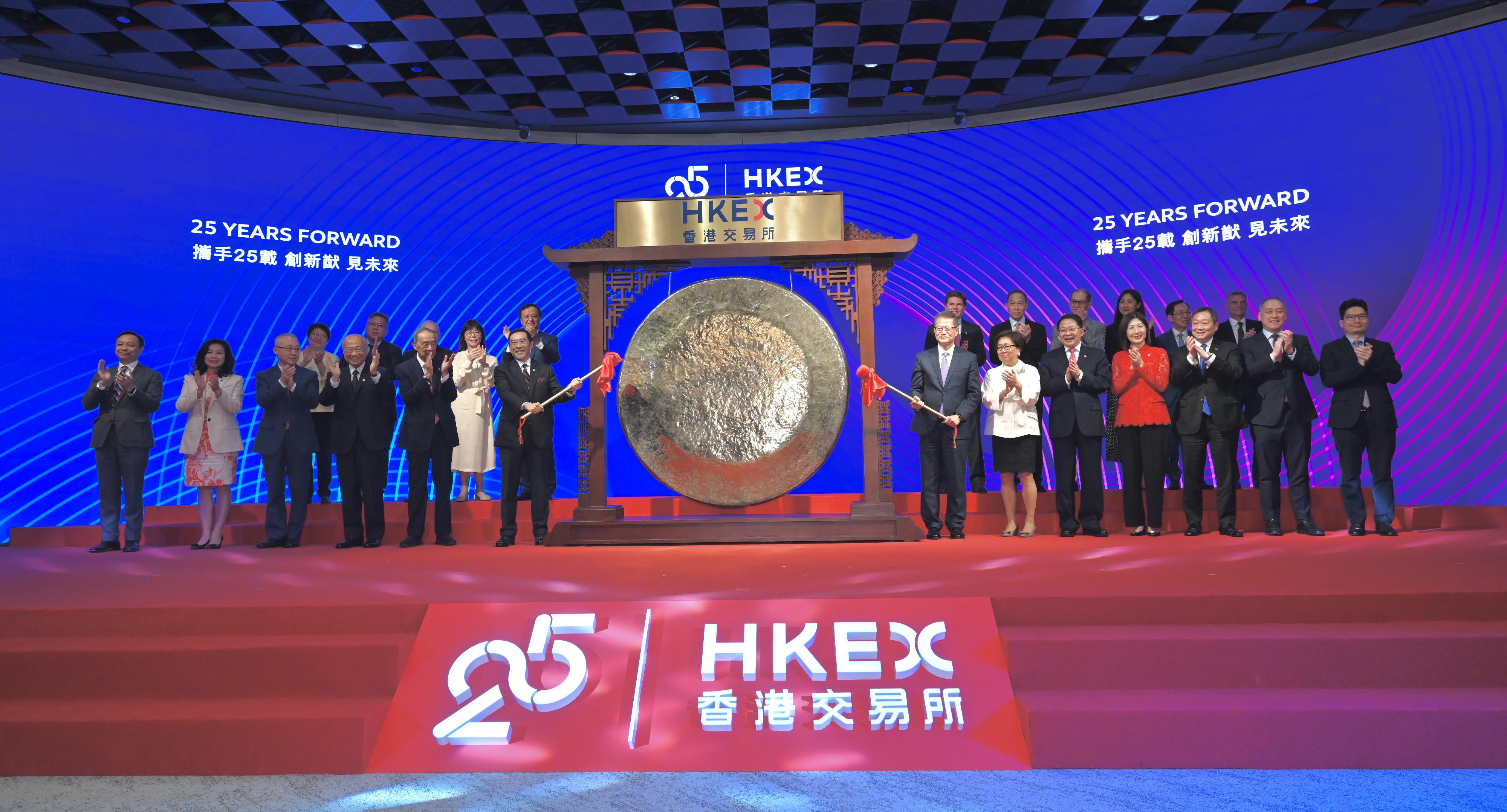
     Good evening. I’m delighted to be here on this special anniversary occasion. Delighted, too, that I get to strike the gong, in just a few minutes, with Carlson.
      
     First and foremost, my warmest congratulations to HKEX on its 25th anniversary. The transformation of HKEX reflects the extraordinary rise of our country and Hong Kong, over the past quarter of a century, underlining our pivotal role in supporting the opening-up of the Mainland’s financial markets.
      
     It’s a testament, too, to the bold and progressive reforms that have reshaped our listing regime. The HKEX itself is part of that reform, where the demutualisation of its predecessors and the listing of HKEX had opened up vast new horizons for growth and development. Since then, landmark initiatives such as the Connect Schemes, as well as the introduction of Chapter 18A and 18C, continue to unlock value and create fresh opportunities for market participants. 
      
     As we celebrate these and many other achievements, it is also important to look ahead. With a solid foundation built over the past 25 years, what’s next?
      
     Let us bear in mind that HKEX is far more than just another listed company. It is a cornerstone of our financial system, a trusted partner of the Government and regulators, and a key participant in safeguarding Hong Kong’s financial security and enhancing market competitiveness. In this connection, allow me to share a few observations important to the continuing success of HKEX and our financial sector.
      
     First, internationalisation. Hong Kong has long been the premier listing venue for Mainland companies. Today, nearly 60 per cent of our 2 600 listed companies are from the Mainland. They account for over 80 per cent of total market capitalisation.
      
     Amid growing geopolitical challenges, Hong Kong has become a safe harbour for international investors seeking to diversify their portfolios. With stronger market liquidity and an increasingly global investor base, HKEX can also emerge as a preferred listing platform for companies from ASEAN, the Middle East and other regions — especially those that find it challenging to access capital markets in the US or Europe.
      
     I am pleased to note that HKEX has already taken critical steps in this direction, including recognising more overseas exchanges to enable dual-primary and secondary listings. These efforts can only enhance the diversity, depth and resilience of our market.
      
     Second, embracing innovation. HKEX consistently demonstrates leadership in expanding product offerings. The development of our exchange-traded products’ market is a prime example. Since the launch of the Tracker Fund in 1999, our ETP market has grown significantly — covering a wide range of asset classes, including equities, bonds, derivatives and, most recently, digital assets. ETPs now account for over 15 per cent of total stock market turnover.
      
     The opportunities in digital assets are vast. From tokenisation and smart contracts to the trading of real-world assets — it’s a new frontier for global finance, and Hong Kong must be at the forefront.
      
     Equally promising is the development of innovative financial products to support the green transition, including carbon trading and other climate-focused instruments.
      
     Third, enhancing market infrastructure and transaction efficiency. 
      
     That includes shortening the settlement cycle. While markets in the US and Europe have already adopted or are moving to the T+1 settlement cycle, much of Asia is still assessing the path forward. HKEX, I’m pleased to say, should be technically ready for T+1 settlement by year’s end. I look to Hong Kong to become a first mover in the region.
      
     And if Hong Kong is to maintain its status as a world-class financial centre, we must also continue to reduce transaction costs and enhance market efficiency.
      
     Ladies and gentlemen, at this time of profound change and new challenges in global financial markets, Hong Kong must act decisively to capture the emerging opportunities.
      
     With its strong foundation, strategic vision, global connectivity and staunch government support, HKEX is doing just that. And I am confident it will continue to lead and help our markets scale new heights.
      
     Once again, congratulations HKEX on your landmark 25th listing anniversary. I wish you continuing success in the years to come. Hong Kong, and this speaker, is banking on it.
      
     Thank you.
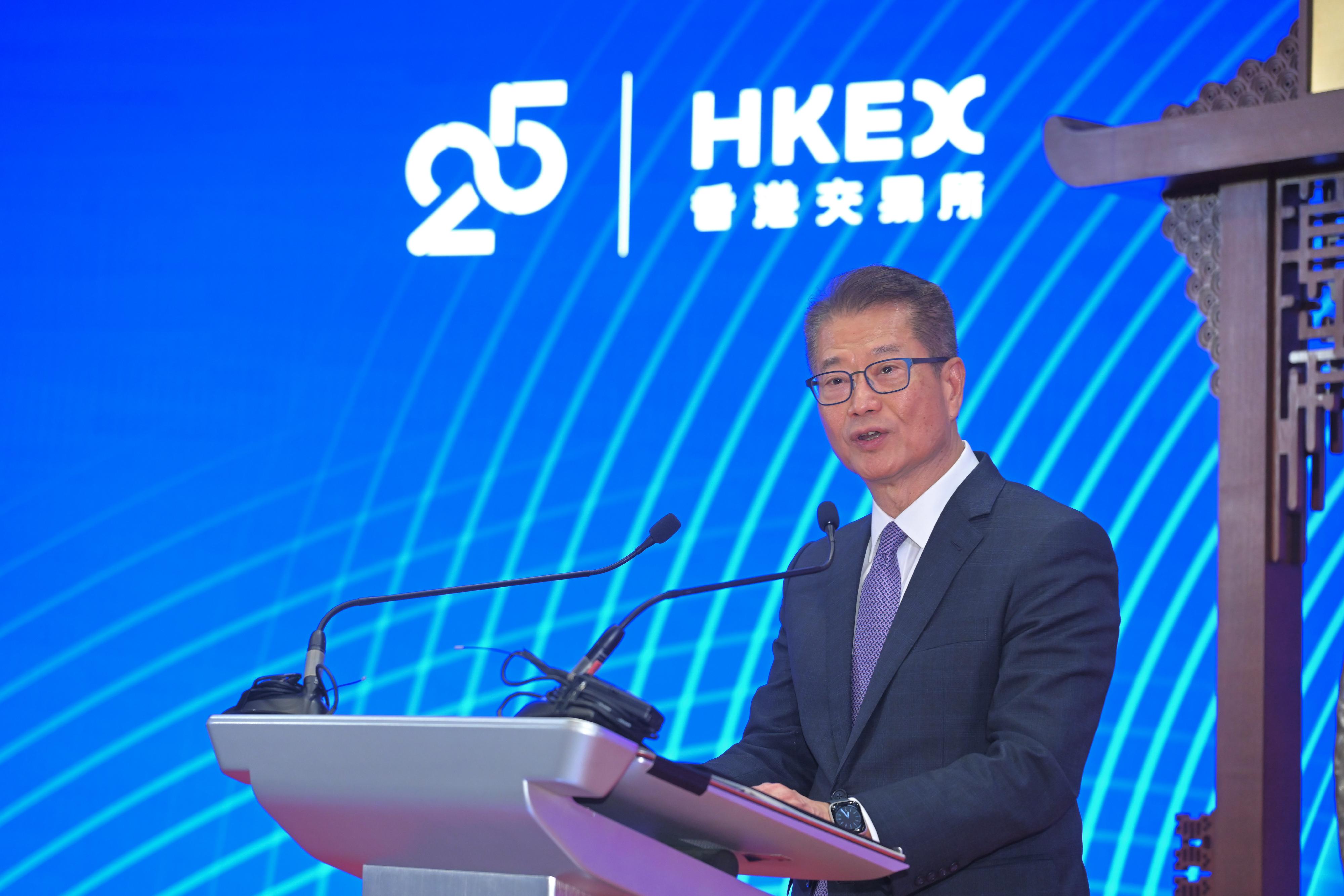
Photo  Photo  
read more

CHP investigates local measles infection case

     The Centre for Health Protection (CHP) of the Department of Health (DH) is today (June 20) investigating a local case of measles infection and reminded the public that vaccination is the most effective way to prevent measles.
           
     The case involves a 28-year-old female. She sought treatment from a private doctor on June 11 for fever, cough, runny nose and red eyes. She developed a skin rash on June 13 and attended the Accident and Emergency Department of Kwong Wah Hospital twice, once on the same day and again on the following day. She was admitted for treatment on June 14. Her blood sample tested positive for antibodies of measles virus upon laboratory testing. She remains hospitalised and is in stable condition.
           
     An epidemiological investigation revealed that the patient was uncertain whether she had received a measles vaccination. She had no travel history during the incubation period. Her six household contacts are currently asymptomatic. During the communicable period, the patient had visited the Kowloon City Baptist Church Kindergarten, located at 206 Argyle Street in Kowloon City. The CHP is conducting medical surveillance on approximately 170 staff members and students of the kindergarten concerned.

     As measles is highly infectious, the CHP will set up an enquiry hotline (2125 2372) for contact tracing of the case. The CHP appeals to those who visited the Kowloon City Baptist Church Kindergarten between 11.30am and 12.30pm on June 9 or 10 to call the hotline. Officers of the CHP will assess their conditions and offer health advice. The hotline will operate from 9am to 1pm tomorrow (June 21) and June 22, and from 9am to 5pm between June 23 and 27.
           
     The investigations are ongoing.

     “The incubation period of measles (i.e. the time from infection to onset of illness) is seven to 21 days. Symptoms include fever, skin rash, cough, runny nose and red eyes. When such symptoms appear, people should wear surgical masks, stay home from work or school, avoid crowded places and contact with unvaccinated people, especially those with weak immune systems, pregnant women and children under 1 year old. Those who suspect they are infected should consult their doctors as soon as possible and inform healthcare workers of their history of exposure to measles,” the Controller of the CHP, Dr Edwin Tsui, said.

     “Under the Hong Kong Childhood Immunisation Programme, the overall immunisation coverage in Hong Kong has been maintained at a very high level through the immunisation services provided by the DH’s Maternal and Child Health Centres and School Immunisation Teams. As evidenced by the findings on vaccination coverage of primary school students and the territory-wide immunisation surveys conducted regularly by the DH, the two-dose measles vaccination coverage has remained consistently high, well above 95 per cent, and the local seroprevalence rates of measles virus antibodies reflect that most people in Hong Kong are immune to measles. However, Hong Kong, as a city with a high volume of international travel, still faces the potential risk of importation of the measles virus and its further spread in the local community. Hence, a small number of people who have not completed a measles vaccination (such as non-local-born people including new immigrants, foreign domestic helpers, overseas employees and people coming to Hong Kong for further studies) are still at risk of being infected and spreading measles to other people who do not have immunity against measles, such as children under 1 year old who have not yet received the first dose of the measles vaccine,” he added.

     People born before 1967 could be considered to have acquired immunity to measles through natural infection, as measles was endemic in many parts of the world and in Hong Kong at that time. People born in or after 1967 who have not yet completed the two doses of measles vaccination or whose measles vaccination history is unknown, should consult their family doctors as soon as possible to complete the vaccination and ensure adequate protection against measles.
           
     The number of measles cases in some overseas countries remains at a high level this year. The outbreaks in North America (including the United States and Canada), Europe and neighbouring areas (including Vietnam, Cambodia and the Philippines) are ongoing due to the relatively low vaccination rate. Furthermore, an increasing number of measles cases have also been recorded in Japan and Australia this year. For those who plan to travel to measles-endemic areas, they should check their vaccination records and medical history as early as possible. If they have not been diagnosed with measles through laboratory tests and have never received two doses of measles vaccine or are not sure if they have received a measles vaccine, they should consult a doctor at least two weeks prior to their trip for vaccination.
          â€‹
     Besides being vaccinated against measles, members of the public should take the following measures to prevent infection:
           

  • Maintain good personal and environmental hygiene;
  • Maintain good indoor ventilation;
  • Keep hands clean and wash hands properly;
  • Wash hands when they are dirtied by respiratory secretions, such as after sneezing;
  • Cover the nose and mouth while sneezing or coughing and dispose of nasal and mouth discharge properly;
  • Clean used toys and furniture properly; and
  • Persons with measles should be kept out of school till four days from the appearance of a rash to prevent the spread of the infection to non-immune persons in school.
  
     For more information on measles, the public may visit the CHP’s measles thematic page. Members of the public who are going to travel can visit the website of the DH’s Travel Health Service for news of measles outbreaks outside Hong Kong. read more

CHP investigates confirmed Mpox case

     The Centre for Health Protection (CHP) of the Department of Health (DH) said today (June 20) that it is investigating a confirmed Mpox (also known as Monkeypox) case, and urged the public to be vigilant and avoid close physical contact with persons suspected of contracting Mpox. Meanwhile, high-risk target groups are advised to receive Mpox vaccinations.

     The case involves a 28-year-old male. He developed a skin ulcer and a sore throat on June 16 and attended the Yau Ma Tei Male Social Hygiene Clinic of the DH on June 18. He is being isolated at Princess Margaret Hospital and is in stable condition.

     An initial investigation revealed that he had a history of high-risk exposure in Hong Kong during the incubation period, but no epidemiological linkages have been established between this case and other confirmed cases previously recorded in Hong Kong. The CHP is continuing its epidemiological investigations of the case and will report it to the World Health Organization (WHO).

     The WHO held a special meeting on Mpox early this month and confirmed that Mpox remains a Public Health Emergency of International Concern. The WHO continued to appeal to member states to enhance surveillance and prevention and control measures for Mpox in order to reduce the spread of Mpox. Hong Kong has put in place the Preparedness and Response Plan for Mpox (the Plan) since June 2022 and activated the alert response level under the Plan after the first confirmed case of Mpox in September of the same year. The CHP has implemented a series of measures (including enhanced surveillance, contact tracing, public education and vaccination) which have been effective in preventing local outbreaks of Mpox in the past three years.

     Since 2022, a total of 77 Mpox cases (63 local and 14 imported) have been recorded in Hong Kong, of which nine cases were recorded this year. All the patients were male. Epidemiological investigations revealed that most cases had history of high-risk sexual behaviours, including having sex with strangers or without wearing condoms when having sex. Hong Kong has not yet detected any new Mpox strain (Clade Ib) cases. 

     The CHP reminded high-risk target groups to receive Mpox vaccinations in order to lower the risk of infection or the possibility of having more severe symptoms after infection. In addition, persons who experience Mpox symptoms (including rashes, fever, chills, swollen lymph nodes, exhaustion, muscle pain, and severe headaches) or suspect themselves of being infected are advised to seek medical attention and receive treatment at once. They should not engage in activities with others that may expose others to their skin rash or body fluids. Members of the public should maintain good personal and hand hygiene to prevent virus transmission or infection through contact. They should also avoid close physical contact with persons or animals suspected of being infected.

     The CHP has set up an Mpox telephone hotline (2125 2373), which operates from Monday to Friday from 9am to 5pm, excluding public holidays. Those who suspect or are concerned that they may have had high-risk contact with confirmed cases, particularly men who have sex with men or those who have sexual practices with strangers, can use the hotline to make enquiries and receive relevant health advice.

     Furthermore, the DH provides vaccination services to high-risk groups of Mpox. The following high-risk target groups are eligible for Mpox vaccinations on a voluntary basis:
 

  1. individuals with high-risk sexual practices, e.g. having multiple sexual partners, sex workers, or having a history of sexually transmitted infection within the past 12 months;
  2. healthcare workers responsible for caring for patients with confirmed Mpox;
  3. laboratory personnel working with zoonotic pox viruses; and
  4. animal care personnel with high risk of exposure in case of Mpox occurrences in animals in Hong Kong.

     High-risk target groups can receive Mpox walk-in vaccinations at any of the DH’s Social Hygiene Service Clinics (SocHS) (namely Chai Wan SocHS, Wan Chai Male SocHS, Wan Chai Female SocHS, Yau Ma Tei Male SocHS, Yau Ma Tei Female SocHS, Yung Fung Shee SocHS, Fanling SocHS and Tuen Mun SocHS) and the DH’s Yau Ma Tei Integrated Treatment Centre.

     Meanwhile, the DH’s Kowloon Bay Integrated Treatment Centre and the Hospital Authority’s Special Medical Clinics at Queen Elizabeth Hospital and Princess Margaret Hospital also provide Mpox vaccination services for their clients.

     For more details, please visit the CHP’s page on Mpox and Mpox Vaccination Programme. read more