Author Archives: hksar gov

LCQ10: Mental health of Generation Y

     Following is a question by the Hon Jonathan Stuart Lamport and a written reply by the Secretary for Health, Professor Lo Chung-mau, in the Legislative Council today (November 4):

Question:

     It is reported that a survey has shown that Hong Kong’s overall happiness index for this year has dropped slightly compared with last year, with Generation Y (Gen Y) (generally referring to persons born in the 1980s and 1990s) being the least happy group, and the Gen Y respondents generally indicated that they felt lost in life and were worried about the current economic and social situation. In this connection, will the Government inform this Council:

(1) given that the aforesaid survey has reportedly pointed out that over 40 per cent of the surveyed members of the public self-rated as having moderate to severe depressive symptoms, whether the authorities have plans to, under the existing mechanism, conduct a dedicated survey targeting the Gen Y group who are in the career-building stage while simultaneously facing economic and life pressures, so as to accurately grasp their psychological pain points and assistance needs;

(2) in response to the anxiety of Gen Y in the workplace and in life, whether the authorities will explore with the business sector the rollout of pragmatic collaborative measures, such as providing targeted subsidies or tax incentives to the business sector, to encourage and support enterprises in promoting mental health-friendly workplaces, thereby maintaining the stability and quality of Hong Kong’s labour force; and

(3) in respect of Gen Y’s anxiety about the current economic and social situation, whether the authorities will formulate a more comprehensive cross-departmental long-term strategy to fully support the employment as well as physical and mental health development of Gen Y through a multi-pronged approach covering the employment development, emotional support, family-friendly measures and community networks of the group?

Reply:

President,

     Supporting young people in managing their financial, employment and living conditions, thereby reducing anxiety and improving mental health, is a complex and multifaceted issue. Taking forward such supportive works in the community requires a shared commitment and collaborative efforts across different sectors.

     In consultation with the Home and Youth Affairs Bureau (HYAB), the Labour and Welfare Bureau (LWB) and the Department of Health (DH), a reply to the various parts of the question raised by the Hon Jonathan Stuart Lamport is as follows:

(1) and (3) Relevant government bureaux and departments, non-governmental organisations (NGOs) and community partners have consistently worked together, adopting a multi-pronged approach to provide comprehensive support for Generation Y’s employment as well as physical and mental well-being across areas such as employment, emotional support, family-friendly policies and community networks, whilst taking into account various policy considerations. Examples include the following:

     The Government is committed to promoting the diversified development of young people and organising different activities for them to realise their potentials, with a view to fostering a healthy environment conducive to their growth. The HYAB published in 2022 the first edition of the Youth Development Blueprint (Blueprint) which outlines the principles, objectives and actions of the Government in pursuing youth development. The HYAB has organised and subsidised different types of youth development activities, covering internship and exchange, entrepreneurship, life planning, Youth Ambassadors Programme, youth engagement, adventure activities, youth uniformed groups and volunteer services, etc, for young people to better equip themselves, develop their strengths and enhance their competitiveness.

     In line with the direction of the Blueprint, to foster positive thinking among young people and enhance their physical and mental well-being, team spirit, and resilience, the HYAB and Youth Development Commission jointly launched the HYAB Funding Scheme for Youth Positive Thinking Activities under the Youth Development Fund to subsidise eligible NGOs to organise projects that are conducive to nurturing positive thinking amongst young people, thereby promoting awareness of their physical and mental well-being, nurturing positive thinking among them, cultivating their positive values, and enabling them to become a new generation possessing a sense of responsibility and having an aspiration and willingness to contribute to the development of our country and of Hong Kong.

     With regard to employment development, the Labour Department (LD) has all along adopted a multi-pronged approach and formulated appropriate measures to provide wide-ranging training and employment support for young people. The LD operates job centres across the territory to provide comprehensive employment services for job seekers of different ages and backgrounds. Job seekers can meet with employment officers at the job centres to receive personalised employment advisory services. Based on job seekers’ needs and preferences, employment officers recommend suitable employment programmes or training/retraining courses to them, so as to enhance their employability and expand their employment opportunities.

     On mental health support, the Government’s strategy is to identify and intervene in potential cases at an early stage through cross-sectoral collaboration, thereby minimising the likelihood of them developing into more complex social, family, and health issues. Any cases where mental health problems require medical intervention, are already serious; treatment or rehabilitation is more difficult, and the social and personal costs are higher.

     In terms of emotional support and community networks, the “18111 – Mental Health Support Hotline” (Hotline) was launched in December 2023. Operating 24 hours a day, the Hotline provides one-stop emotional and mental health support to individuals from all backgrounds and of all ages who are experiencing mental distress due to various reasons (such as interpersonal relationship, stress coping and adjustment issues) and provides appropriate service information or referrals based on the callers’ individual needs. As of September this year, the Hotline has handled over 350 000 calls.

     To enhance public participation in and understanding of mental health with a view to encouraging members of the public to seek help and intervention at an early stage, the Advisory Committee on Mental Health and the DH launched the “Shall We Talk” mental health promotion and public education programme. Since July 2020, “Shall We Talk” has launched a one-stop dedicated website (shallwetalk.hk), various media pages and social media platforms which provide mental health information and resources to the general public on topics such as mental well-being, common mental health problems, seeking help, community support, activities and health education materials. “Shall We Talk” also provides mental health related resources to schools and workplace.

     The Social Welfare Department (SWD) has set up 25 Integrated Community Centres for Mental Wellness (ICCMWs) across the territory to provide one-stop, district-based community mental health support services ranging from early prevention to crisis management for persons in mental recovery, persons with mental health needs, their families and carers, and local residents. Services include case counselling, group activities, public education, and exhibitions.

     Since 2019, the SWD has provided resources to NGOs to operate five mobile vans to promote mental health in all districts across Hong Kong through mobile exhibitions, mini-talks, activities and on-site screenings or assessments, with a view to achieving the objectives of early prevention, early identification and early intervention.

     At the community and family level, through diversified promotional activities, the Government is committed to encouraging employers to implement family-friendly employment practices to help employees balance work and family needs. The HYAB has all along been supporting the work of the Family Council (Council) to promote to the general public a culture of loving families. The HYAB and the Council launched the five-year Funding Scheme on the Promotion of Family Education (Scheme) in October 2024. With an annual provision of $8 million, the Scheme subsidises non-profit-making community projects in promoting family education to meet the needs of different families. The Scheme covers various family-related themes, such as education for new parents, parent-child education, maintaining family relationships, inheritance of good family values and traditional virtues, assisting parents to guide their children and adolescents towards positive, proactive, and self-reliant values from an early age, thus supporting Generation Y to meet their caregiving needs in the family. On the other hand, the Council has been encouraging the wider adoption of more diversified and flexible family-friendly employment practices (FFEPs) in the community. Since 2023-24, the Council has launched promotional videos titled “Family-friendly Workplace” introducing various FFEPs adopted by local companies with sharing by employers and employees. The FFEPs presented in the videos include work-from-home arrangements, flexible work hours, parental leave, and family leave. The Council has also collaborated with the Radio Television Hong Kong to produce radio programmes to promulgate different FFEPs. 

(2) The DH, the LD and the Occupational Safety and Health Council (OSHC) have collaborated to implement the Mental Health Workplace Charter (Charter). Through a series of activities and practical support measures, the Charter actively encourages employers to adopt measures in the workplace to promote mental well-being, and to encourage active listening and communication, thereby fostering a mental health-friendly working environment. To leverage cross-departmental and cross-sectoral synergies, starting from the 2024/25 school year, schools that have signed the Education Bureau’s 4Rs Mental Health Charter will concurrently sign the Charter, to cultivate a mentally health-friendly workplace for the staff. In 2026-27, the annual promotional theme is “Communication in the Workplace”. The Government will step up the promotion of the Charter to attract broader participation from organisations and optimise employee training content, such as incorporating a more diverse range of mental health-related courses. As at the end of September this year, over 3 400 organisations have signed the Charter. The DH, the LD, and the OSHC will continue to collaborate to enhance both online and offline publicity, actively promoting the Charter across various industries through diversified channels to further raise public awareness and industry engagement.

     The SWD launched the Pilot Programme on Training for Mental Health Promotion Ambassador (Programme) in October this year, with the aim of recruiting 5 000 ambassadors of diverse ages and backgrounds, including members of Generation Y. The ICCMWs liaise with social welfare units and district organisations in the community – including commercial organisations, secondary schools, tertiary institutions and religious groups – to implement the Programme collaboratively. The trained ambassadors can leverage their personal networks to disseminate positive mental health knowledge through family, workplace and community networks; foster a culture of mutual care and support among neighbours; strive to reduce the stigma associated with mental health from the public; and enhance mental health-friendly workplaces and communities. We encourage wider participation in the Programme to call for a concerted effort in promoting healthy lifestyles, fostering resilience and building a caring and supportive community network. read more
LCQ8: Operation and future development of PMQ

     Following is a question by the Hon Kenneth Fok and a written reply by the Secretary for Culture, Sports and Tourism, Miss Rosanna Law, in the Legislative Council today (November 4):
 
Question:
 
     Since commencing operation in 2014 as a non-profit-making social enterprise, PMQ has shouldered the dual functions of promoting the conservation of historic buildings and the development of cultural and creative industries. However, some tenants have reflected that the low visitor flow at PMQ in recent years has resulted in relatively high unit turnover and vacancy rates. As the operation contract, which has a maximum term of 15 years, is due to expire in 2029, the community has expressed concerns about its operational effectiveness and long-term development upon contract expiry, as well as the need to better align with the positioning of Hong Kong as an East-meets-West centre for international cultural exchange as set out in the National 15th Five-Year Plan, and the objective of increasing the value added of the arts, culture and creative industries put forward in the First Five-Year Plan for Economic and Social Development of the Hong Kong Special Administrative Region (2026-2030). In this connection, will the Government inform this Council:
 
(1) of the financial and operational situation of PMQ in the past five years, including (i) the average occupancy rate and tenancy termination rate each year; (ii) the mix of tenants in the site and the proportion of the floor area actually put to use (e.g. the proportion of design and creative industries, food and beverage, retail and other categories); (iii) the total attendance each year; and (iv) the estimated proportion of local and non-local visitors (set out in tabular form);
 
(2) whether the authorities have introduced specific measures and incentives to assist and facilitate the operator of PMQ in attracting more competitive tenants and local original brands with potential to move in, so as to raise the occupancy rate and the overall operational effectiveness of the site; if so, of the details; if not, the reasons for that;
 
(3) as there are views that although PMQ operates on a self-financing basis in principle, quite a number of tenants have concurrently received government subsidies through various means (e.g. the CreateSmart Initiative); whether the authorities or the operator have collected relevant data or evaluated such situations; if so, of the relevant information for the past five years; if not, whether the authorities will expeditiously commence the relevant work;
 
(4) whether the authorities or the operator have actively promoted collaboration between PMQ and other historical and cultural tourism landmarks in the vicinity (e.g. Tai Kwun and the Central Market), so as to better leverage the synergy between historic buildings and cultural and creative industries, thereby enhancing the visitor flow and attractiveness of PMQ; and
 
(5) whether the authorities will, prior to the expiry of the operation contract, conduct a comprehensive review of PMQ’s previous operational experience, tenancy terms, as well as its future development and positioning, etc, and make proper planning for the transitional arrangements for the tenants; if so, of the relevant timetable; if not, the reasons for that?
 
Reply:
 
President,
 
     Situated at Aberdeen Street, Central, PMQ is the Former Police Married Quarters on Hollywood Road. PMQ is a project combining heritage conservation and supporting the creative industries. In March 2010, the Development Bureau (DEVB) and the Commerce and Economic Development Bureau publicly invited interested non-profit-making organisations to submit proposals. In November 2010, the proposal submitted by the Musketeers Education and Culture Charitable Foundation Limited (Musketeers Foundation) in collaboration with the Hong Kong Design Centre, the Hong Kong Polytechnic University, and the Hong Kong Design Institute under the Vocational Training Council, was selected. For this purpose, the Musketeers Foundation established PMQ Management Company Limited (Management Company), which has the charitable status under section 88 of the Inland Revenue Ordinance (Cap. 112) to operate on a non-profit self-financing basis, bearing the responsibility for the management, operation and maintenance of the PMQ site and premises, as well as tenancy matters and use of venue in relation to the studios, food and beverages facilities, and for the design and creative industries and toys and STEM (Science, Technology, Engineering and Mathematics) education.
      
     The DEVB and the Culture, Sports and Tourism Bureau (CSTB) are the Government bureaux responsible for monitoring PMQ. The DEVB represents the Government as the landlord, while the CSTB handles matters relating to the policy area of the design and creative industries. The Management Company is required to submit annual reports and financial reports to the Government for reviewing the operation of PMQ.
      
     In consultation with the DEVB, my reply to the questions raised by the Hon Kenneth Fok is as follows:
 
(1) According to the information provided by the Management Company, the average occupancy rates and the tenant mix and the respective proportions of actual floor area used at PMQ in the past five years are set out in the table below:
 

     Financial Year       Average       Occupancy rate
     (per cent)
     Design and Creative Industries   (per cent)      Food and   Beverage
     (per cent)
     Toys and STEM Education
     (per cent)
     2021/22       87.7           90           10           –
     2022/23        88           91            9           –
     2023/24        83           88           10           2
     2024/25        96           84           10           6
     2025/26        98           85            9           6

     According to the information provided by the Management Company, the total numbers of visitors and the estimated proportions of local and non-local visitors to PMQ in the past five years are set out in the table below:
 
     Financial Year      Total Number of                  Visitors      Local Visitors             (per cent)      Non-local Visitors
           (per cent)
     2021/22      2 004 816             99                  1
     2022/23      1 894 650             99                  1
     2023/24      1 996 074             75                 25
     2024/25      2 286 824             70                 30
     2025/26      2 445 998             60                 40

(2) The Management Company has been operating and managing PMQ on a self-financing basis. It organises various types of creative and other public-facing activities to drive visitor footfall and attract prospective tenants. These include the deTour, a design festival co-curated by designers and artists, held since 2014; the PMQ Seed, which cultivates design thinking among young people; the PMQ Coffee Agenda, a coffee lifestyle market; festive celebrations; heritage guided tours; and open days. Furthermore, on tenant selection, PMQ considers a host of factors, including the applicants’ design standard and creative content, commercial viability, and willingness to participate in and contribute to the PMQ community (including organising activities, opening its studio to the public), in bringing in tenants that are commercially appealing and able to drive visitor traffic.
 
(3) The primary source of income of PMQ comes from the donation from the Musketeers Foundation and the rental income to support the daily operation. PMQ has also applied to the CreateSmart Initiative under the Cultural and Creative Industries Development Agency of the CSTB for funding for projects promoting the development of local creative industries (including deTour and the PMQ Seed as mentioned in (2)). In the past five years (2021/22 to 2025/26), a total of 21 projects lodged by PMQ were approved, amount to a total funding of about $150 million.
 
(4) The Government is committed to promoting the integration of PMQ with the Former Central Police Station Compound (i.e. Tai Kwun), the Central Market and nearby attractions, to maximise their synergy. The Antiquities and Monuments Office (AMO) has established the Central and Western District Heritage Trail, which covers the aforementioned historical buildings. The AMO regularly organises free guided tours for visitors to explore the heritage landmarks along the route and understand the district’s development and evolution. In addition to the AMO, the Commissioner for Heritage’s Office of the DEVB and the Urban Renewal Authority also organise activities from time to time to promote the historical buildings and heritage resources of Central and Western District, including PMQ and distinctive landmarks nearby. In terms of promotion and marketing, the Hong Kong Tourism Board has integrated PMQ and its surrounding landmarks into the four themed in-depth experiential routes of “Old Town Central”, inviting the public and tourists to stroll through and explore the districts’ unique historical and cultural heritage. This further deepens the synergy between attractions within the area, expanding the economic and tourism benefits of the cultural and creative industries.
 
(5) The new tenancy agreement of PMQ will expire by the end of 2028. The Government will in due course conduct a review of matters such as the operational performance, financial sustainability, key performance indicators of PMQ, for consideration of its future development and positioning. read more

LCQ4: Labour importation for aviation industry and protection for local employees

     Following is a question by the Hon Tang Ka-piu and a reply by the Secretary for Transport and Logistics, Ms Mable Chan, in the Legislative Council today (November 4):

Question:

     It has been reported that following the Government’s launch of the Labour Importation Scheme for the Transport Sector – Aviation Industry (the Scheme) in July 2023, the overall income of some local frontline airport employees has fallen, affecting their livelihood. In this connection, will the Government inform this Council:
 
(1) whether it knows the median monthly basic wages, the average number of overtime hours and the average amounts of overtime allowance of local employees in the 10 frontline job types covered by the Scheme over the past three years; of the changes in these figures compared with those before the implementation of the Scheme;
 
(2) whether it knows the actual amount disbursed and the number of employees benefiting each month since the Airport Authority Hong Kong (AAHK) introduced the measure of transport subsidies for local frontline airport employees in May 2024, and the current balance of the funds for the transport subsidies; whether AAHK will study raising the transport subsidy ceiling to $500 per month to ease the burden of transport expenses on airport employees; and
 
(3) whether the Government will reconsider the proposal to introduce arrangements for the priority allocation of public housing units in Tung Chung to local employees working at the airport who meet the eligibility criteria for public housing applications; if so, of the details; if not, the reasons for that?

Reply:

President,

     To relieve the acute manpower shortage in the aviation industry and support the continual development of Hong Kong’s aviation industry, the Government launched the Labour Importation Scheme for the Transport Sector – Aviation Industry (the Scheme) in July 2023 to allow licensees, franchisees or holders of operating permits issued by the Airport Authority Hong Kong (AAHK) to suitably apply for labour importation to fill vacancies for frontline non-supervisory jobs under 10 designated job types at the airport, with a quota ceiling of 6 300. On the premise of safeguarding local workers, employers must prove that they have made efforts in recruiting local workers but are still insufficient to meet the manpower needs for business expansion before applying for imported workers under the Scheme. Furthermore, the wages offered for positions under local recruitment must be no less than the latest median wage for the applied position, and the ratio of full-time local employees to imported workers (including those imported under other labour importation schemes) must meet the requirement of 2:1.
 
     Having consulted the Housing Bureau, my reply to the question raised is as follows:

(1) The Government and the AAHK have been closely monitoring the manpower situation at the airport and have encouraged the airport community to prioritise the recruitment of local employees, while making local employees the core workforce. The monthly median wage levels for the 10 designated job types under the Scheme (including the 2023 median wage levels and the figures adjusted in November 2025 following a review) are detailed in the Annex. Overall, the wages of employees of relevant job types increased by around 3.4 per cent to 3.8 per cent during the period. We will continue to review the median wages of the relevant job types and make adjustments as appropriate to ensure that the figures reflect the latest situation.
 
     With the gradual recovery of air traffic and the progressive commissioning of various new airport facilities, the demand for manpower at the airport continues to increase. During the pandemic, the overall workforce at the airport once dropped to approximately 53 000. In the early stages of recovery, manpower supply was tight and some frontline staff might have had to work overtime for longer hours. Through active local recruitment efforts by the AAHK and the airport community, the overall airport workforce has increased by more than 40 per cent to around 75 000 in the first quarter of 2026, of which local employees account for more than 90 per cent. As the manpower supply gradually improves, the airport’s overall staffing needs and working hours have also gradually stabilised.

     According to the AAHK, local employees of the 10 designated job types under the Scheme have generally worked around 20 to 40 hours of overtime per month in recent months. The compensation arrangements for overtime work are determined by individual employers based on their business, operational and labour market conditions.

     Since the inception of the Scheme, the AAHK has maintained regular and close communication with labour unions, holding meetings approximately every six months. Frontline work at the airport has certain unique characteristics. The actual manpower requirements and overtime arrangements vary, depending on factors such as flight operations, air traffic volume and other actual operational needs. Therefore, overtime hours and related allowances may fluctuate during different periods due to the aforementioned reasons, and it is not appropriate to make direct comparisons based solely on overtime hours or allowance levels in individual periods.

     The AAHK will continue to maintain communication with employers, industry partners and labour unions to understand the manpower needs and salary market conditions for relevant job types, thereby providing appropriate follow-up and support in accordance with the overall development and operation of the airport.

(2) The MTR Corporation Limited and various franchised bus companies have all along been providing fare concession schemes for airport staff, allowing them to travel on the Airport Express and designated franchised bus routes at discounted fares.

     In addition, at the Government’s initiative, the AAHK co-ordinates funding contributed by both the employers of imported workers and the AAHK for each imported worker to provide transport subsidies for local frontline airport staff since May 2024. Eligible recipients must be local frontline airport employees employed by eligible companies and engaged in the 10 designated job types under the Scheme. The public transport subsidy for each eligible employee is capped at $400 per month, with a minimum of $100 per month. Currently the scheme benefits over 8 300 eligible employees each month, with an average monthly disbursement of approximately $1.3 million. The existing balance is expected to be sufficient to sustain the subsidies for at least the next few years.

     The AAHK will continue to maintain communication with relevant stakeholders on the implementation of the transport subsidy, and will conduct reviews as appropriate.

(3) The objective of the Hong Kong Housing Authority is to provide public rental housing (PRH) to those who cannot afford private rental accommodation. Reserving a portion of newly completed PRH flats for special priority allocation to a single specific industry (such as airport staff) would be unfair to other applicants waiting for PRH allocation.

     The majority of airport staff currently reside in the New Territories and Islands District (including Yuen Long, Tuen Mun, Tung Chung). Since the commissioning of the Tuen Mun-Chek Lap Kok Link in 2020, transportation to and from the airport has become much more convenient, attracting more talent from different districts to the aviation industry.

     Meanwhile, with the ongoing Tung Chung New Town Extension Project, over 180 000 new residents are expected to gradually move into the Tung Chung area. The AAHK will continue to actively organise recruitment events in the area, and collaborate with airport community business partners and non-governmental organisations to provide more after-school activity support for children of airport staff living in Tung Chung, helping airport workers to focus on their work with peace of mind. read more

Hongkong Post to issue “Commemorating the 160th Anniversary of the Birth of Dr Sun Yat-sen” commemorative stamps (with photos)

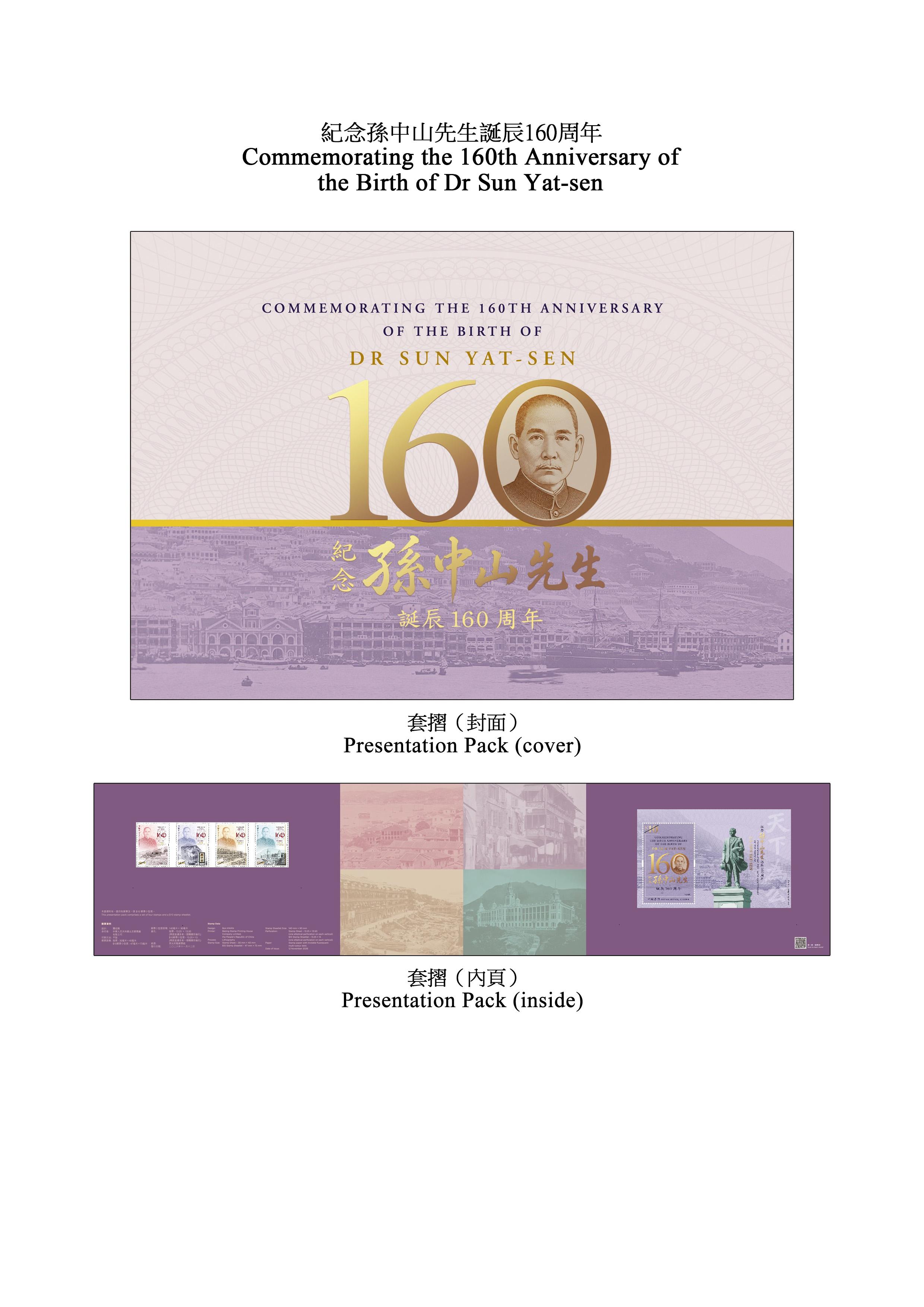
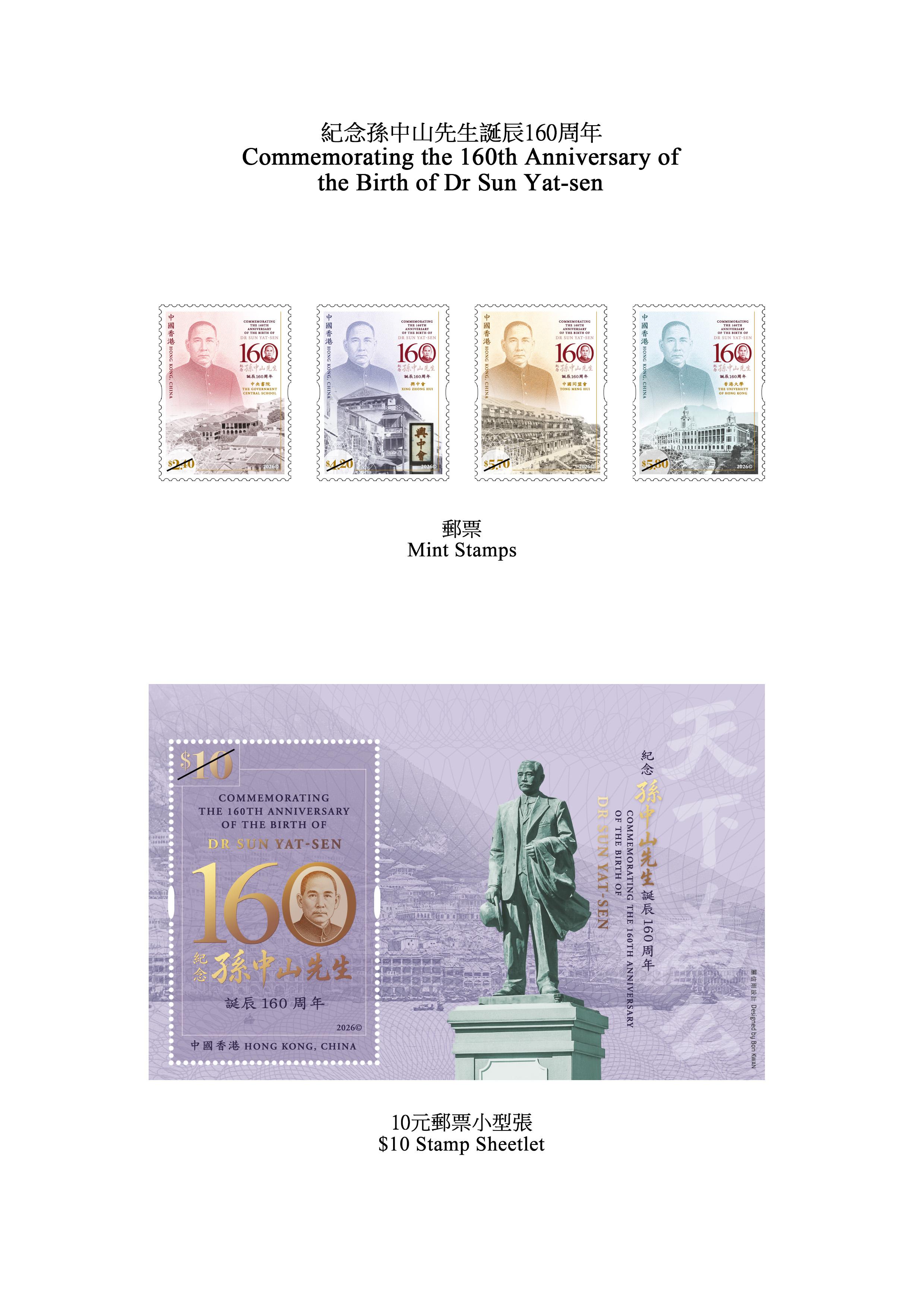
     Hongkong Post announced today (November 4) that a set of commemorative stamps and associated philatelic products on the theme of “Commemorating the 160th Anniversary of the Birth of Dr Sun Yat-sen” will be released for sale on November 12 (Thursday).
 
     November 12, 2026, marks the 160th anniversary of the birth of the great national hero and patriot, Dr Sun Yat-sen. Hongkong Post will issue a set of four stamps and a stamp sheetlet on the theme of “Commemorating the 160th Anniversary of the Birth of Dr Sun Yat-sen” to honour this great forerunner of China’s democratic revolution. The design of the stamps and stamp sheetlet centre around the relationship between Dr Sun and Hong Kong, focusing on his studies, revolutionary activities and public speaking in the city to showcase the historical moments of his great and remarkable revolutionary career.

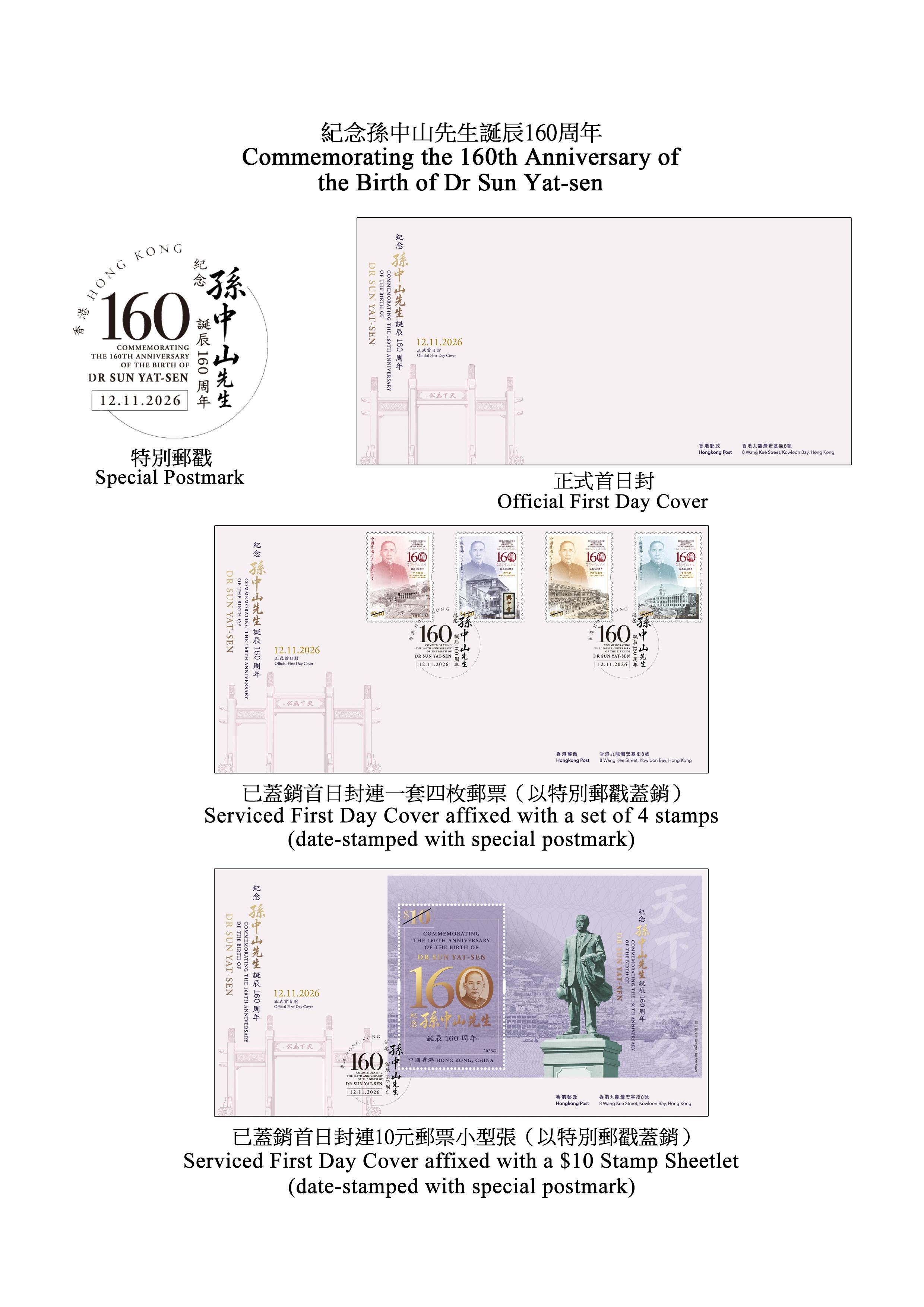
     Official first day covers for “Commemorating the 160th Anniversary of the Birth of Dr Sun Yat-sen” will be on sale at all post offices and on Hongkong Post’s online shopping platform ShopThruPost (shopthrupost.hongkongpost.hk) from tomorrow (November 5). This set of commemorative stamps and associated philatelic products will be on sale at all post offices and on ShopThruPost from November 12, while serviced first day covers affixed with the commemorative stamps will be available at philatelic offices only.
 
     A hand-back date-stamping service will be provided on November 12 at all post offices for official first day covers/souvenir covers/privately made covers bearing the first day of issue indication and a local address.
 
     Information on this set of commemorative stamps and associated philatelic products is available on the Hongkong Post Stamps website (stamps.hongkongpost.hk).

Photo  Photo  Photo  
read more

LCQ14: Operation of new Huanggang Port

     Following is a question by the Hon Erik Yim and a written reply by the Secretary for Security, Mr Tang Ping-keung, in the Legislative Council today (November 4):
 
Question:
 
     The commissioning of the new Huanggang Port (the new Port) is a practical step for Hong Kong to take to proactively align itself with the national development strategy and participate more deeply in the development of the Greater Bay Area, which will facilitate a more efficient flow of people, goods, capital and information between Hong Kong and Shenzhen, thereby further promoting the in-depth integration of the Greater Bay Area. In this connection, will the Government inform this Council:
 
(1) as it has been reported that during the first few weeks of operation of the new Port, some travellers experienced minor clearance delays when using automated channels and “face scan” clearance, of the specific hardware-related measures subsequently taken by the authorities in response;
 
(2) some members of the public have relayed that as tour coaches of tour groups are unable to drive directly to the new Port, travellers are required to interchange for franchised buses or cross-boundary buses, whether the authorities have assessed the impact of such arrangements on the tourism industry, and studied ways to optimise transport connections for tour group travellers;
 
(3) given that the new Port (Hong Kong Port Area) is a closed area where no pick-up/drop-off area for private cars is provided, nor is a pick-up/drop-off area for ride-hailing vehicles other than those of “taxi fleets” provided, whether land within the new Port area has been reserved for the future provision of a pick-up/drop-off area for ride-hailing vehicles, and of the reasons why the authorities did not include such facilities during the initial planning stage; and
 
(4) whether the authorities will expedite the planning and construction work for connecting the MTR Northern Link Spur Line to the new Huanggang Port, with a view to enhancing the Port’s railway connectivity; if so, of the specific measures?
 
Reply:
 
President,
 
     The National 15th Five-Year Plan proposes consolidating and enhancing the role of the Guangdong-Hong Kong-Macao Greater Bay Area as a powerhouse for high-quality development, as well as strengthening regional infrastructure connectivity. Meanwhile, First Five-Year Plan for Economic and Social Development of the Hong Kong Special Administrative Region (2026-2030), announced by the Government of the Hong Kong Special Administrative Region (HKSAR) in September this year, explicitly sets out to leverage the strengths of the redeveloped Huanggang Port.
      
     As a key project of the HKSAR Government in proactively aligning with national development strategies and actively integrating into and serving the overall national development, the redeveloped Huanggang Port officially opened at 6.30am on October 12, 2026. Implementing the co-location arrangement, the port is the first land boundary control point between Hong Kong and Shenzhen adopting the “collaborative inspection and joint clearance” mode, providing 24-hour clearance services for passengers and passenger vehicles. The official opening of the Huanggang Port signifies a major milestone achieved by Hong Kong and Shenzhen in enhancing the layout of boundary control points, improving clearance efficiency, and facilitating the cross-boundary flow of people. Since the new port opened nearly a month ago, its overall operation has been generally smooth and it has been well received by members of the public and visitors.
 
     In consultation with the Transport and Logistics Bureau, the reply to various parts of the question raised by the Hon Erik Yim is as follows:
 
(1) The Huanggang Port is equipped with a total of 134 “collaborative inspection” automated channels and 68 traditional manual counters. When using the “collaborative inspection” automated channels for clearance, passengers only need to queue up once, present their travel documents once and have their identities verified once to complete the immigration clearance procedures of both places, substantially enhancing the clearance experience and efficiency.  Since the opening of the port, the average daily total passenger traffic on weekdays has exceeded 86 000, representing more than a double increase as compared with that of the Lok Ma Chau Control Point in the past; whereas the average daily total passenger traffic during weekends and holidays has even reached nearly 140 000.
 
     Despite the substantial increase in passenger traffic, the overall operation of the port has remained smooth and orderly, with clearance efficiency meeting expectations. Passengers using the “collaborative inspection” automated channels wait for no more than five minutes for most of the time. During peak hours, the Immigration Department (ImmD) opens all automated channels and traditional counters ahead of time to manage the passenger flow, keeping the average waiting time for passengers to less than 15 minutes.
      
     Since the opening of the port, the ImmD has been closely monitoring the new automated clearance system and gate hardware in collaboration with the Shenzhen authorities, and all systems and equipment have been operating smoothly and effectively. Each “collaborative inspection” automated channel is equipped with three gates. Taking outbound passengers departing from Hong Kong for the Mainland as an example, passengers enter the automated channel after having their travel documents read or undergoing facial recognition (face scan) at the first gate; they then undergo fingerprint and facial verification before the second gate, and upon passing through the second gate, their Hong Kong departure clearance is completed; subsequently, before the third gate (which falls within the jurisdiction of the Mainland immigration inspection authorities), after the Mainland authorities conduct identity verification and complete the arrival inspection, passengers may pass through the third gate to complete the arrival procedures for entering the Mainland.
 
     Summing up the operational experience in the initial stage of the port’s opening, the overall clearance situation has been generally smooth. Nevertheless, we note that individual passengers were not fully familiar with the relevant requirements and procedures of the new clearance mode, including not having completed enrolment with the Hong Kong side and the registration for the Mainland e-Channel in advance. As a result, they required assistance and explanation from on-site staff when using the “collaborative inspection” automated channels for the first time. In view of the above situation, the ImmD immediately took the following response measures to make passenger clearance smoother –

(a) to assist eligible persons in completing the enrolment procedures with the Hong Kong side before using the “collaborative inspection” automated channels for the first time, the ImmD has set up an additional e-Channel enrolment office outside the departure hall on the fifth floor of the Huanggang Port Building, and has deployed sufficient staff on-site to provide immediate assistance to passengers with their enrolment so as to shorten the overall clearance time;
 
(b) the ImmD has stepped up publicity through various channels, including releasing promotional videos on official social media platforms, to encourage eligible Hong Kong residents to complete enrolment in advance through the “HK e-Channel” mobile application before travelling, with a special reminder for parents or legal guardians that they must complete enrolment for their children aged between seven and 17 in advance; and
 
(c) additional staff have been deployed on-site to guide and assist passengers in using the “collaborative inspection” automated channels, and passenger diversion has been strengthened at the departure hall and the entrances to the automated channels to direct passengers who are ineligible or have not completed enrolment to traditional counters for departure procedures, with a view to enhancing clearance efficiency.
 
     The ImmD will continue to maintain close liaison with the Shenzhen authorities, closely monitor the operation of the port, and flexibly deploy manpower and optimise on-site supporting facilities in the light of passenger flow to ensure efficient and smooth clearance.
 
(2) & (3) In planning the public transport services for the Huanggang Port, one of the Government’s major considerations was to make good use of the existing transport infrastructure as well as the public transport networks and resources (including the San Tin Public Transport Interchange (PTI)).
 
     At present, four franchised bus routes (three daytime and one overnight) and four green minibus (GMB) routes (three daytime and one overnight) connect the Huanggang Port with the San Tin PTI. Tour groups can use the bus shuttle service between the Huanggang Port and the San Tin PTI, with a journey time of about five minutes. The Transport Department (TD) has re-spatialised the San Tin PTI so that passengers can wait in an air-conditioned waiting area. The closest pick-up and drop-off zone to the waiting area have also been allocated for local non-franchised bus or coaches.
      
     The TD has maintained close contact with the Travel Industry Authority and the Travel Industry Council of Hong Kong to disseminate relevant information to travel agencies and travelers, thereby assisting them in planning their itineraries in advance and selecting suitable shuttle services between the Huanggang Port and the San Tin PTI. Through the tourism industry, the TD also monitors the daily number of tour groups using the Huanggang Port, co-ordinates service arrangements with franchised bus operators in a timely manner, and has requested operators to enhance the deployment of buses with luggage racks, with a view to enhancing the experience for travellers.
 
     Just like the original Lok Ma Chau Control Point and other land boundary control points, the Hong Kong Port Area (HKPA) of the redeveloped Huanggang Port is administered as a closed area. Only cross-boundary vehicles holding valid Closed Road Permits and designated public transport service vehicles (including franchised buses, GMBs, urban and New Territories taxis, and fleet taxis) are permitted to enter the HKPA. This is also the most effective way to make use of the limited space within the HKPA. No pick-up and drop-off areas are provided for private cars (including ride-hailing vehicles to be issued with permits in future) within the HKPA.
      
     With the official opening of the Huanggang Port, the TD will continue to closely monitor the operation of relevant public transport services as well as the travel patterns and demand of cross-boundary passengers, so as to respond promptly to actual circumstances and ensure that public transport services can meet the cross-boundary travel demand of passengers.
      
(4) During the planning stage of the Huanggang Port, provision was already made for the passenger arrival and departure halls connecting to the Northern Link (NOL) Spur Line. The NOL Spur Line will connect directly to the Huanggang Port in future and, together with the co-location arrangement, will link up the metro networks of Hong Kong and Shenzhen. In February this year, the Government promulgated the Hong Kong Railway Standards, and concurrently established the dedicated Railway Checking Unit to enhance the efficiency of the approval process for new railway projects. Coupled with taking forward the NOL Spur Line concurrently in combination with the Main Line through an innovative mindset to generate synergies, the programme of the NOL Spur Line has been substantially advanced by two years to achieve simultaneous commissioning with the NOL Main Line by 2034 or earlier. The Government will continue to leverage innovative technologies with the MTR Corporation Limited to enhance the speed and efficiency of project delivery, striving for the early completion and commissioning of the NOL project. read more