image_pdfimage_print

Author Archives: hksar gov

Two suspected puffer fish poisoning cases under CHP investigation

     The Centre for Health Protection (CHP) of the Department of Health is today (February 21) investigating two suspected puffer fish poisoning cases affecting a total of four persons, and hence reminded members of the public not to consume puffer fish.
    
     The first case involved three males aged 55 to 59, who developed limb and lip numbness and vomiting about two to four hours after consuming cooked puffer fish, which was caught in local waters and given by a friend, at a friend’s home for dinner yesterday (February 20).
 
     All patients sought medical attention in the small hours today. Two of them attended the accident and emergency department (AED) of Tuen Mun Hospital, while one attended the AED of Pok Oi Hospital. All required hospitalisation and one has been discharged after treatment.
    
     The second case involved a 59-year-old female, who developed limb and perioral numbness, vomiting and weakness about one hour after consuming cooked puffer fish for dinner yesterday. She attended the AED of Pok Oi Hospital and was admitted for management.
 
     All patients have been in a stable condition. Investigations by the CHP are continuing.
 
     A spokesman for the CHP said that consumption of puffer fish is the main cause of food poisoning from tetrodotoxin. Tetrodotoxin is a potent water-soluble neurotoxin that can affect the central nervous system.
 
     “Organs such as the liver, gonads and skin of puffer fish have high concentrations of tetrodotoxin. Being heat-stable, the toxin does not decompose upon cooking, boiling, drying or freezing. Tetrodotoxin intoxication can cause problems in respiration or circulation and is potentially fatal. There is no known antidote or antitoxin. Members of the public are advised to avoid purchasing and preparing puffer fish or unknown fish for consumption to prevent tetrodotoxin-related food poisoning,” the spokesman said. read more

SCED visits Tai Po District (with photos)

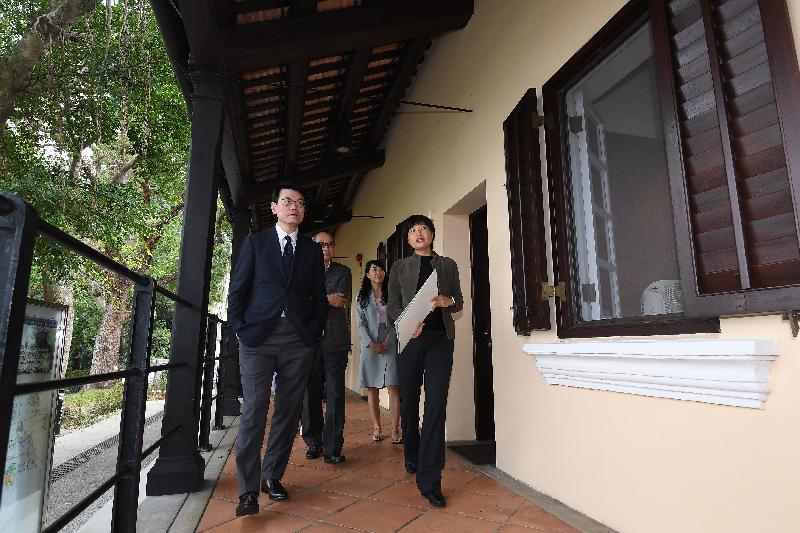
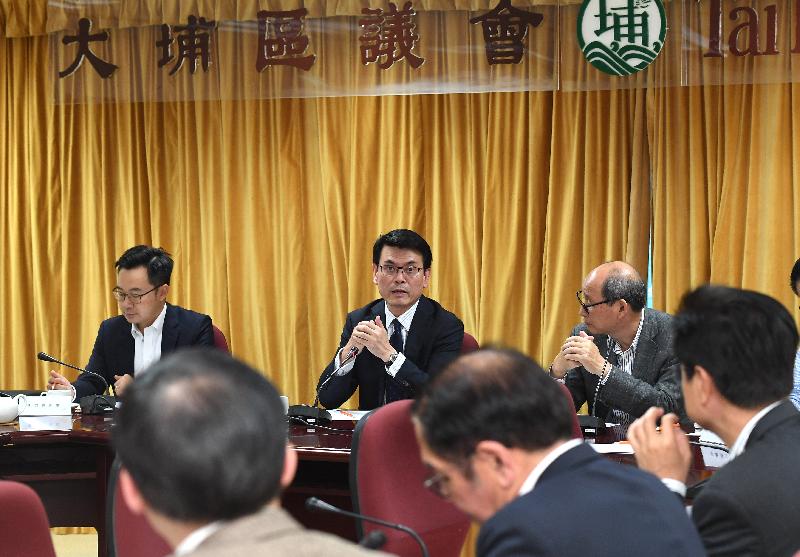
     The Secretary for Commerce and Economic Development, Mr Edward Yau, visited Tai Po District today (February 21) where he toured the Green Hub, a revitalised historic building under the “Revitalising Historic Buildings Through Partnership Scheme” (Revitalisation Scheme), and the market in Fu Shin Street. He also met with members of the Tai Po District Council (TPDC) to get a better understanding of the district’s latest developments.

     Mr Yau first visited the Green Hub, where he was briefed on its operation, environmental education programmes and highlights of the building’s revitalisation and conservation. Built in 1899, the Green Hub was formerly the Old Tai Po Police Station, a Grade 1 historic building and the first police station and Police Headquarters in the New Territories. The building was converted into the Green Hub by the Kadoorie Farm and Botanic Garden under the Revitalisation Scheme to promote sustainable living. During the visit, representatives of the Green Hub’s education programmes briefed Mr Yau on their promotional work on environmental protection in the community.

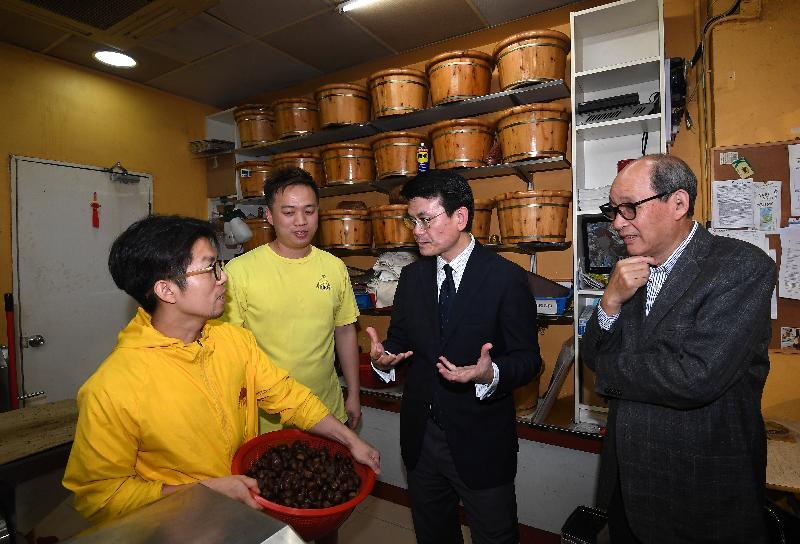
     Mr Yau then proceeded to tour Fu Shin Street, where he visited some shops in the market and talked with shop owners and members of the public on developments and issues of concern in the district.

     Before concluding his district visit, Mr Yau met with TPDC members to exchange views on district matters such as telecommunications and district tourism.

     Mr Yau said the Government has decided to proceed with switching off analogue television services at the end of November, 2020. Hong Kong will enter into an era of full digital TV broadcasting on December 1, 2020. The Government will step up its promotion at different stages to enhance public awareness for their early preparation.

Photo  Photo  Photo  Photo  
read more

Illegal worker jailed

     An illegal Vietnamese worker was jailed at Shatin Magistrates’ Courts today (February 21).
 
     During an anti-illegal worker operation mounted on February 19, Immigration Department (ImmD) investigators raided a restaurant in Prince Edward. A female Vietnamese illegal worker, aged 50, was arrested. When intercepted she was washing dishes. Upon identity checking, she was found to be an illegal immigrant. An employer suspected of employing the illegal worker was also arrested and the investigation is ongoing.
 
     The illegal worker was charged at Shatin Magistrates’ Courts today with taking employment after landing in Hong Kong unlawfully and remaining in Hong Kong without the authority of the Director of Immigration or while being a person in respect of whom a removal order or deportation order was in force. She pleaded guilty to the charge and was sentenced to 15 months’ imprisonment.
 
     The ImmD spokesman warned that, as stipulated in section 38AA of the Immigration Ordinance, illegal immigrants or people who are the subject of a removal order or a deportation order are prohibited from taking any employment, whether paid or unpaid, or establishing or joining in any business. Offenders are liable upon conviction to a maximum fine of $50,000 and up to three years’ imprisonment. The Court of Appeal has issued a guideline ruling that a sentence of 15 months’ imprisonment should be applied in such cases.

     The spokesman reiterated that it is a serious offence to employ people who are not lawfully employable. The maximum penalty is imprisonment for three years and a fine of $350,000. The High Court has laid down sentencing guidelines that the employer of an illegal worker should be given an immediate custodial sentence. According to the court sentencing, employers must take all practicable steps to determine whether a person is lawfully employable prior to employment. Apart from inspecting a prospective employee’s identity card, the employer has the explicit duty to make enquiries regarding the person and ensure that the answers would not cast any reasonable doubt concerning the lawful employability of the person. The court will not accept failure to do so as a defence in proceedings. It is also an offence if an employer fails to inspect the job seeker’s valid travel document if the job seeker does not have a Hong Kong permanent identity card. The maximum penalty for failing to inspect such a document is imprisonment for one year and a fine of $150,000.

     Under the existing mechanism, the ImmD will, as a standard procedure, conduct initial screening of vulnerable persons, including illegal workers, illegal immigrants, sex workers and foreign domestic helpers, who are arrested during any operation with a view to ascertaining whether they are trafficking in persons (TIP) victims. When any TIP indicator is revealed in the initial screening, the officers will conduct a full debriefing and identification by using a standardised checklist to ascertain the presence of TIP elements, such as threat and coercion in the recruitment phase, and the nature of exploitation. Identified TIP victims will be provided with various forms of support and assistance, including urgent interference, medical services, counselling, shelter, temporary accommodation and other supporting services. The ImmD calls on TIP victims to report crimes to the relevant departments. read more

Suspected MERS cases reported

     The Centre for Health Protection (CHP) of the Department of Health today (February 21) reported two suspected cases of Middle East Respiratory Syndrome (MERS), and again urged the public to pay special attention to safety during travel, taking due consideration of the health risks in the places they visit. The cases are detailed below:
 

Sex Female Female
Age 60 23
Affected area involved Dubai, United Arab Emirates Dubai, United Arab Emirates
High-risk exposure Camel ride Nil
Hospital Princess Margaret Hospital United Christian Hospital
Condition Stable Stable
MERS-Coronavirus preliminary test result Negative Negative

     “Travellers to the Middle East should avoid going to farms, barns or markets with camels; avoid contact with sick persons and animals, especially camels, birds or poultry; and avoid unnecessary visits to healthcare facilities. We strongly advise travel agents organising tours to the Middle East to abstain from arranging camel rides and activities involving direct contact with camels, which are known risk factors for acquiring MERS Coronavirus (MERS-CoV),” a spokesman for the CHP said.

     Locally, the CHP’s surveillance with public and private hospitals, with practising doctors and at boundary control points is firmly in place. Inbound travellers and members of the public who recently visited the Middle East and developed relevant symptoms within 14 days will be classified as suspected MERS cases. They will be taken to public hospitals for isolation and management until their specimens test negative for MERS-CoV.

     Travellers to affected areas should maintain vigilance, adopt appropriate health precautions and take heed of personal, food and environmental hygiene. The public may visit the MERS pages of the CHP and its Travel Health Service, MERS statistics in affected areas, the CHP’s Facebook Page and YouTube Channel, and the World Health Organization’s latest news for more information and health advice. Tour leaders and tour guides operating overseas tours are advised to refer to the CHP’s health advice on MERSread more