image_pdfimage_print

Author Archives: hksar gov

Immigration Department and Mainland authorities smash cross-boundary human smuggling syndicate (with photo)

     Following months of intelligence analysis and in-depth investigation, the Immigration Department (ImmD), working with the Guangdong Provincial Public Security Department and the Division of Exit-entry Administration of the Shenzhen Municipal Public Security Bureau (SZPSB), smashed a human smuggling syndicate in a joint operation conducted in Guangdong Province and Hong Kong on March 27.
 
     Through continuous intelligence collection and exchange, the above-mentioned authorities detected an active cross-boundary human smuggling syndicate that specialised in arranging for Vietnamese nationals to seek illegal entry into Hong Kong via the land border. 
      
     When the syndicate was planning to smuggle illegal immigrants from Shenzhen into Hong Kong by boat on March 27, SZPSB officers took immediate action and arrested five core syndicate members, all of them Mainland residents, and two Vietnamese illegal immigrants who were about to sneak into Hong Kong. Meanwhile, acting on intelligence, ImmD officers raided 15 target locations in the territory including restaurants, food factories, residential buildings, a barbecue site and nail polish shop. A total of 17 illegal workers and seven employers were arrested. The illegal workers comprised 12 men and five women, aged 22 to 58. Among them, one man and three women were holders of recognisance forms, which prohibit them from taking any employment. Also, three of the arrestees were suspected of using and being in possession of forged Hong Kong identity cards. Three men and four women, aged 34 to 58, were suspected of employing the illegal workers.
      
     “Any person who contravenes a condition of stay in force in respect of him shall be guilty of an offence. Also, visitors are not allowed to take employment in Hong Kong, whether paid or unpaid, without the permission of the Director of Immigration. Offenders are liable to prosecution and upon conviction face a maximum fine of $50,000 and up to two years’ imprisonment. Aiders and abettors are also liable to prosecution and penalties,” an ImmD spokesman said.
 
     The spokesman warned that, as stipulated in section 38AA of the Immigration Ordinance, illegal immigrants or people who are the subject of a removal order or a deportation order are prohibited from taking any employment, whether paid or unpaid, or establishing or joining in any business. Offenders are liable upon conviction to a maximum fine of $50,000 and up to three years’ imprisonment. The Court of Appeal has issued a guideline ruling that a sentence of 15 months’ imprisonment should be applied in such cases. A person using or possessing a forged Hong Kong identity card also commits an offence. Offenders are liable to prosecution and upon conviction to a maximum fine of $100,000 and imprisonment for 10 years.
      
     The spokesman reiterated that it is a serious offence to employ people who are not lawfully employable. The maximum penalty is imprisonment for three years and a fine of $350,000. The High Court has laid down sentencing guidelines that the employer of an illegal worker should be given an immediate custodial sentence. According to the court sentencing, employers must take all practicable steps to determine whether a person is lawfully employable prior to employment. Apart from inspecting a prospective employee’s identity card, the employer has the explicit duty to make enquiries regarding the person and ensure that the answers would not cast any reasonable doubt concerning the lawful employability of the person. The court will not accept failure to do so as a defence in proceedings. It is also an offence if an employer fails to inspect the job seeker’s valid travel document if the job seeker does not have a Hong Kong permanent identity card. The maximum penalty for failing to inspect such a document is imprisonment for one year and a fine of $150,000.
 
     Under the laws of Hong Kong, it is an offence for any person to seek illegal entry into Hong Kong and remain without the authority of the Director of Immigration. Offenders are liable to prosecution and upon conviction to a maximum fine of $25,000 and imprisonment for three years. Those aiding and abetting in such crimes are liable to the same penalty. Moreover, it is an offence to arrange and assist the passage to Hong Kong of a person who is an unauthorised entrant. Offenders are liable to prosecution and upon conviction to a maximum fine of $5 million and imprisonment for 14 years.
 
     Under the existing mechanism, the ImmD will, as a standard procedure, conduct initial screening of vulnerable persons, including illegal workers, illegal immigrants, sex workers and foreign domestic helpers, who are arrested during any operation with a view to ascertaining whether they are trafficking in persons (TIP) victims. When any TIP indicator is revealed in the initial screening, the officers will conduct a full debriefing and identification by using a standardised checklist to ascertain the presence of TIP elements, such as threat and coercion in the recruitment phase and the nature of exploitation. Identified TIP victims will be provided with various forms of support and assistance, including urgent interference, medical services, counselling, shelter, temporary accommodation and other supporting services. The ImmD calls on TIP victims to report crimes to the relevant departments.
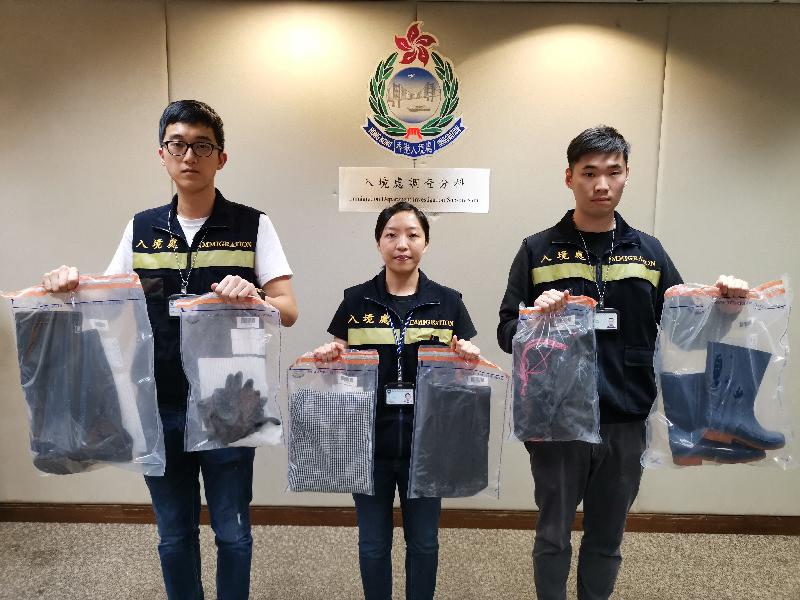
Photo  
read more

Voluntary Health Insurance Scheme to be fully implemented next Monday

     The Voluntary Health Insurance Scheme (VHIS) will be fully implemented on April 1 for consumers to “Choose with Confidence”. From that day onwards, consumers may choose to purchase Certified Plans as offered by the participating insurance companies. 
 
     At the launch ceremony of the VHIS, the Secretary for Food and Health, Professor Sophia Chan, said that the VHIS will provide individual indemnity hospital insurance. To tie in with the publicity slogan “Choose with Confidence”, all Certified Plans under the VHIS must meet the benefit standard prescribed by the scheme, including standardised policy terms and conditions, benefit coverage and benefit amounts. The benchmarking of the VHIS requirements should help consumers choose insurance plans suitable for themselves and their family members with confidence.
 
     The scheme is a policy initiative to be implemented by the Food and Health Bureau to regulate indemnity hospital insurance plans offered to individuals, with voluntary participation by insurance companies and consumers.
 
     Certified Plans under the VHIS have a number of standard features for increasing consumers’ confidence in purchasing hospital insurance, thereby facilitating their use of private healthcare services when needed. The features of Certified Plans include:
 
(a) guaranteed renewal up to the age of 100 regardless of change in the health conditions of the insured persons (without reunderwriting);
(b) no limit on “lifetime benefit”;
(c) coverage extended to cover unknown pre-existing conditions and day case surgical procedures (including endoscopy), etc;
(d) tax deduction for taxpayers who purchase Certified Plans for themselves and/or specified relatives and pay the premium on or after April 1, 2019; and
(e) transparency on the premiums of Certified Plans. The premium schedules are accessible on the VHIS website. 

     The VHIS Office will continue work on the registration of participating insurers, vetting of individual indemnity hospital insurance plans for certification of compliance status, enforcement of scheme regulations, etc. To facilitate smarter consumer choice, information on the products and premiums of Certified Plans is available on the VHIS website (www.vhis.gov.hk) and the websites of the insurance companies concerned.
 
     Before making a decision to purchase a Certified Plan or migrate from an existing policy to a Certified Plan, consumers should consider their needs and budget, and compare products and premiums. Consumers should also study the terms and conditions carefully, and understand their rights and responsibilities. read more

Grave sweepers urged to take preventive measures against vector-borne diseases during Ching Ming Festival

     â€‹The Centre for Health Protection (CHP) of the Department of Health today (March 29) reminded the public to take measures to avoid stings or bites by mosquitoes, mites and ticks, and accumulation of stagnant water during the coming Ching Ming Festival. 

     There are many mosquito-borne diseases, including dengue fever (DF), chikungunya fever, Japanese encephalitis (JE), malaria, yellow fever and Zika virus infection. These diseases are endemic in many overseas countries. In recent years, local cases of DF and JE have been recorded in Hong Kong. 

     A spokesman for the CHP said, “Regarding DF, a record high of 29 local cases were confirmed last year. The public are reminded that eliminating breeding sites for mosquitoes and avoiding mosquito bites are key to preventing DF. With possibly more outdoor exposure while visiting cemeteries and columbaria, grave sweepers should wear loose, light-coloured and long-sleeved tops and trousers and use DEET-containing insect repellent on exposed parts of the body and clothing. Remove stagnant water in incense burners and used containers and clear rubbish before leaving to prevent mosquito breeding. Anti-mosquito measures are essential in guarding against mosquito-borne diseases such as DF and JE.”

     In addition, members of the public who intend to travel during Ching Ming Festival holidays should stay alert to the DF situation and that of other mosquito-borne diseases in their destinations and carry out anti-mosquito measures as necessary.

  Regarding the latest DF situation in Hong Kong, as of yesterday (March 28), the CHP had recorded a total of 31 confirmed cases in 2019, all of which were imported cases.  The cases were mainly imported from Indonesia (seven), Malaysia (seven) and Thailand (six).

     DF remains endemic in some areas in Asia and beyond. In Guangdong, there were 52 cases in the first two months of this year. The latest figures for 2019 revealed that 12 545 cases had been recorded in Thailand, 2 195 in Singapore (since December 31, 2018) and 61 in Japan. In the Americas, the latest figures indicated that 185 934 and 8 090 cases were filed in Brazil and Mexico respectively in 2019.

     The public should take heed of the following advice on mosquito control:
 

  • Thoroughly check all gully traps, roof gutters, surface channels and drains to prevent blockage;
  • Scrub and clean drains and surface channels with an alkaline detergent compound at least once a week to remove any deposited mosquito eggs;
  • Properly dispose of refuse, such as soft drink cans, empty bottles and boxes, in covered litter containers;
  • Completely change the water of flowers and plants at least once a week. The use of saucers should be avoided if possible;
  • Level irregular ground surfaces before the rainy season;
  • Avoid staying in shrubby areas; and
  • Take personal protective measures such as wearing loose, light-coloured, long-sleeved tops and trousers and apply insect repellent containing DEET to clothing or exposed parts of the body when doing outdoor activities.
    
     To reduce the risk of infections spread by mosquitoes, apart from general measures, travellers returning from areas affected by DF and Zika virus infection should apply insect repellent for 14 days or at least 21 days respectively upon arrival in Hong Kong. If feeling unwell, seek medical advice promptly and provide travel details to the doctor. DEET-containing insect repellents are effective and the public should take heed of the tips below:
 
  • Read carefully the label instructions first;
  • Apply right before entering an area with risk of mosquito bites;
  • Apply on exposed skin and clothing;
  • Use DEET of up to 30 per cent for pregnant women and up to 10 per cent for children*;
  • Apply sunscreen first, then insect repellent; and
  • Re-apply only when needed and follow the instructions.
 ã€€*For children who travel to countries or areas where mosquito-borne diseases are endemic or epidemic and where exposure is likely, those aged 2 months or above can use DEET-containing insect repellents with a concentration of DEET up to 30 per cent.
 
     When members of the public go to scrubby areas, they are advised to take additional preventive measures against vector-borne diseases:
 
  • Wear shoes that cover the entire foot; avoid wearing sandals or open shoes;
  • Tuck trousers into socks or boots to prevent arthropods from reaching the skin;
  • Stay on footpaths and avoid walking through vegetation. Do not brush along the vegetation at the sides of footpaths;
  • Avoid resting on vegetation, or at humid and dark places;
  • Do not hang clothing on vegetation;
  • Do not feed wild or stray animals;
  • After the visit, inspect body parts and clothing for attached ticks; and
  • If an attached tick is found on the body, gently remove it by grasping its head with tweezers or fine-tipped forceps close to the skin, then disinfect the bite area and wash hands with soap and water.
    
     The public may refer to the CHP’s pages on vector-borne diseases and tips for using insect repellents for details. read more