image_pdfimage_print

Author Archives: hksar gov

FS concludes US visit in San Francisco (with photos)

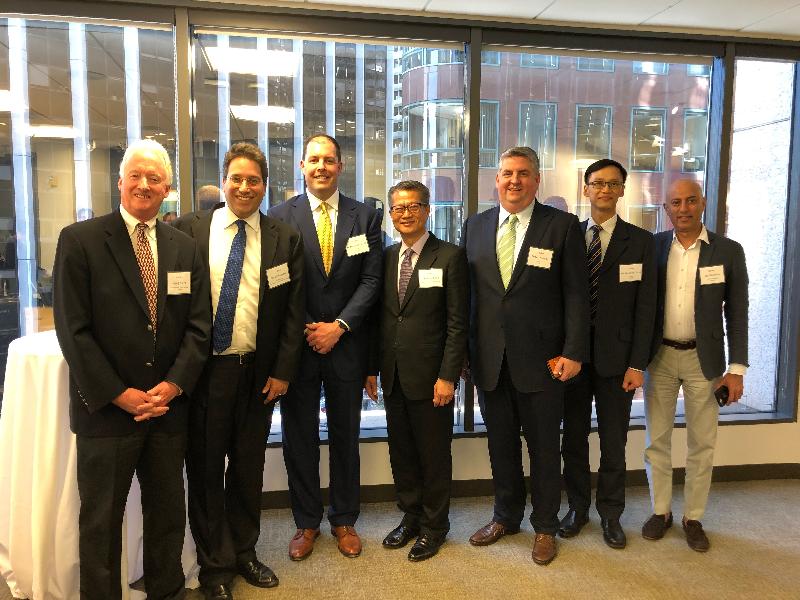
     The Financial Secretary, Mr Paul Chan, today (April 11, US West Coast time) conducted the last day of his US visit itinerary in San Francisco.
      
     He met with representatives of innovation and technology (I&T) enterprises as well as a related organisation to explore how to spur Hong Kong’s economic development through further promoting I&T.
       
     Starting the day, Mr Chan met with Google representatives and discussed the ways to promote artificial intelligence (AI), deep learning, smart city initiatives and their research and development (R&D). He shared the view that in addition to hardware, talents is the key to I&T development. Given the keen global competition for technology talents, he said that the Hong Kong SAR Government spares no effort in building a thriving I&T ecosystem, enriching the I&T talent pool and contributing to the development of an international I&T hub in the Guangdong-Hong Kong-Macao Greater Bay Area.
      
     He added that the Hong Kong SAR Government rolled out the Technology Talent Admission Scheme to expedite the admission of such talents to participate in R&D in Hong Kong. Participating enterprises are required to provide employment opportunities to and nurture local I&T talents by employing local employees  and interns concurrently while bringing talents into the city. Besides, a talent list setting out the professions needed most for Hong Kong’s economic development, including I&T experts and data scientists, is also promulgated and immigration facilitation is provided to eligible persons to attract them to come to Hong Kong.
      
     Mr Chan also had lunch with representatives of the Bay Area Council, an organisation dedicated to promoting San Francisco Bay Area development and maintaining its competitiveness.
      
     Mr Chan listened to their experiences, and underlined the vast opportunities in the development of the Guangdong-Hong Kong-Macao Greater Bay Area and Hong Kong’s key role in the development of an international I&T hub in the Greater Bay Area.
      
     He urged the organisation to set up a presence in Hong Kong to foster closer ties between the two bay areas. 
      
     Later, he exchanged views on I&T training with the founder and the senior management of an online learning platform. Having arranged thousands of online learning courses, it is now partnering with the Hong Kong Productivity Council in providing courses on I&T areas, such as AI, to small and medium-sized enterprises in Hong Kong.
      
     Mr Chan also gave a brief update on Hong Kong’s latest developments to the persons-in-charge of a global American law firm, which has over 1 000 lawyers and runs business in assisting enterprises to go for listing. He gave an overview of Hong Kong’s advantage in being a preferred listing platform for emerging and innovative enterprises and said he was pleased to learn that the firm would launch an office in Hong Kong.
      
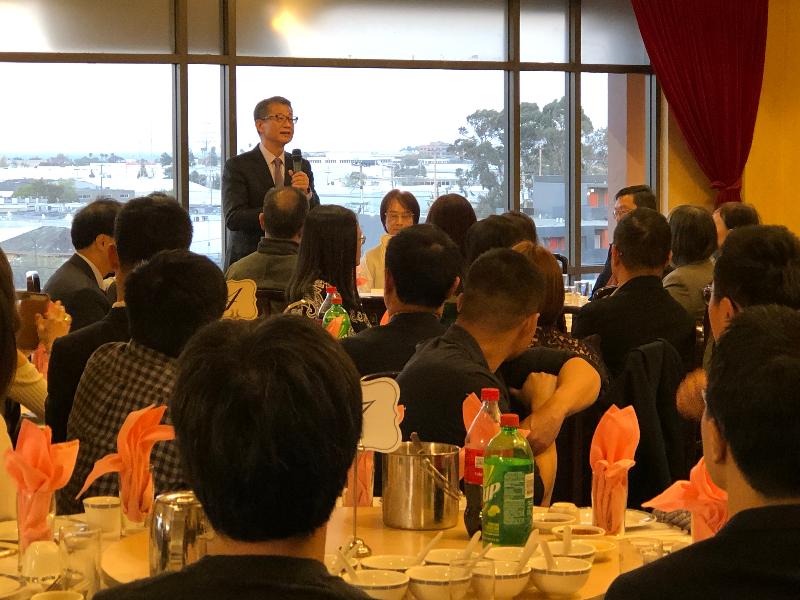
     Before concluding his visit to the US, Mr Chan had dinner with over 100 Hong Kong people living in San Francisco to brief them on the latest developments of Hong Kong and learn about their everyday lives.
      
     Mr Chan will leave San Francisco early tomorrow morning (April 12, US West Coast time) and return to Hong Kong in the morning on April 13.
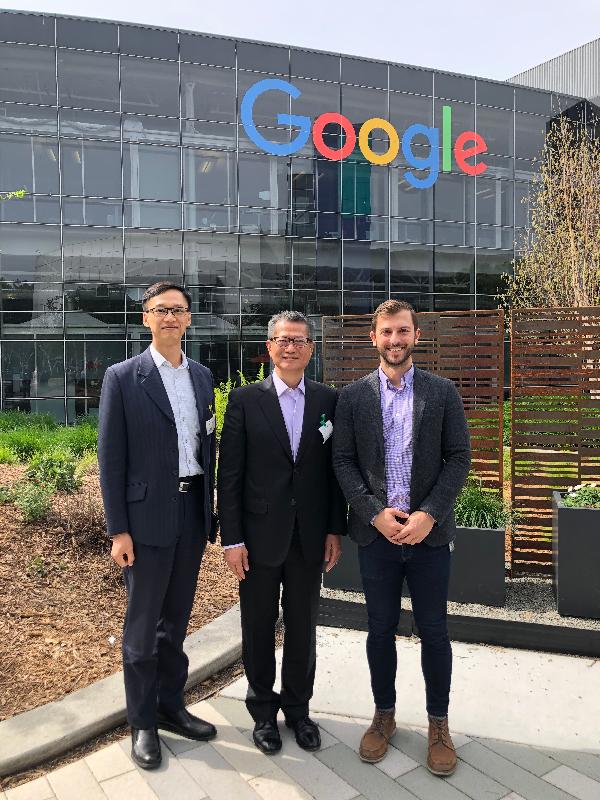
    

Photo  Photo  Photo  Photo  Photo  
read more

Public urged to stay vigilant against infectious diseases in Easter and rainy season

     The Centre for Health Protection (CHP) of the Department of Health today (April 12) reminded members of the public who intend to travel during Easter holidays to stay alert to the situation of infectious diseases in their destinations, and with the approach of the rainy season, they are urged to adopt necessary precautions to guard against mosquito-borne diseases whether locally or abroad.
 
     “Members of the public should adopt anti-mosquito measures and remove stagnant water and clear rubbish to prevent mosquito breeding in and around your home with the approach of the rainy season,” a spokesman for the CHP said.
 
     There are many mosquito-borne diseases, including dengue fever (DF), Japanese encephalitis (JE), malaria, yellow fever and Zika virus infection (ZVI). To prevent mosquito-borne diseases, travellers should wear loose, light-coloured, long-sleeved tops and trousers and apply insect repellent containing DEET to clothing or exposed parts of the body. Travellers returning from areas affected by DF and ZVI should apply insect repellent for 14 days or at least 21 days respectively upon arrival in Hong Kong.
 
  Regarding the latest DF situation in Hong Kong, from April 4 to 11, the CHP recorded four imported DF cases. The patients had been to Cambodia (one case), Indonesia (one case), Malaysia (one case) and Sri Lanka (one case) during the incubation period.
 
     As of April 11, the CHP had recorded a total of 39 confirmed cases in 2019, all of which were imported cases. The cases were mainly imported from Indonesia (eight cases), Malaysia (eight cases) and Thailand (six cases).

     DF remains endemic in some areas in Asia and beyond. The latest figures for 2019 revealed that 14 774 cases had been recorded in Thailand, 48 634 in the Philippines, 31 901 in Malaysia (which was 2.5 times the number of cases reported in the same period in 2018), 2 423 in Singapore (since December 30, 2018), 44 404 in Vietnam (which was 3.6 times the number of cases reported in the same period in 2018) and 71 in Japan. In the Americas, the latest figures indicated that 9 585 cases were filed in Mexico in 2019.
 
  For ZVI, no local cases have been recorded by the CHP to date. Due to the high volume of international travel, there is always a risk of importation of ZVI to Hong Kong. As the mosquito Aedes albopictus is commonly found locally, there is also the risk of local spread if ZVI is imported into Hong Kong.
 
     Meanwhile, members of the public should also pay attention to cases of Middle East Respiratory Syndrome (MERS) abroad. The spokesman pointed out that as countries in the Middle East, particularly the Kingdom of Saudi Arabia, continue to report MERS cases from time to time, travellers should refrain from going to farms, barns or markets with camels and avoid contact with sick persons and animals, especially camels, birds or poultry. Most of the cases reported in the Middle East had history of exposure to camels, consumption of camel milk or contact with other MERS patients.
 
     Scientific evidence showed that camels are reservoirs for MERS Coronavirus (MERS-CoV). Camels infected with MERS-CoV may not show any signs of infection. Infected animals may shed MERS-CoV through nasal and eye discharge, faeces, and potentially in their milk and urine. The virus may also be found in the raw organs and meat of infected animals. Therefore, the best protection is to practise good hygiene and avoid direct contact with all of these.
 
     “From time to time, suspected MERS cases reported to the CHP for investigation involved patients with history of contact with camels in the Middle East. The CHP strongly advises travel agents organising tours to the Middle East to abstain from arranging camel rides and activities involving direct contact with camels, which are known risk factors for acquiring MERS-CoV,” the spokesman said.
 
     If returning travellers develop any symptoms, they should seek medical advice immediately and report their travel history to the healthcare professionals. Moreover, members of the general public should always take the following measures to prevent respiratory and other infections:
 

  • Wash hands with liquid soap and water properly whenever possibly contaminated;
  • When hands are not visibly soiled, clean them with 70-80 per cent alcohol-based handrub as an effective alternative;
  • Cover nose and mouth while sneezing or coughing and wash hands thoroughly afterwards;
  • Dispose of soiled tissue paper properly in a lidded rubbish bin;
  • Put on a surgical mask when develop respiratory symptoms;
  • Maintain good indoor ventilation; and
  • Avoid going to crowded or poorly ventilated public places; high-risk individuals may consider putting on surgical masks in such places.
 
     The public may also visit the CHP’s pages on DFZVI and MERS for more information.  read more