Fatal traffic accident in Sha Tin
Police are investigating a fatal traffic accident in Sha Tin last night (April 22) in which a 40-year-old man died. At about 8.40pm, a taxi driven by a 58-year-old man was travelling along … read more


Police are investigating a fatal traffic accident in Sha Tin last night (April 22) in which a 40-year-old man died. At about 8.40pm, a taxi driven by a 58-year-old man was travelling along … read more
The following is issued on behalf of the Legislative Council Secretariat:
The Legislative Council (LegCo) Panel on Economic Development, Panel on Commerce and Industry, Panel on Financial Affairs, and Panel on Information Technology and Broadcasting continued the joint-Panel duty visit in Shanghai yesterday (April 22).
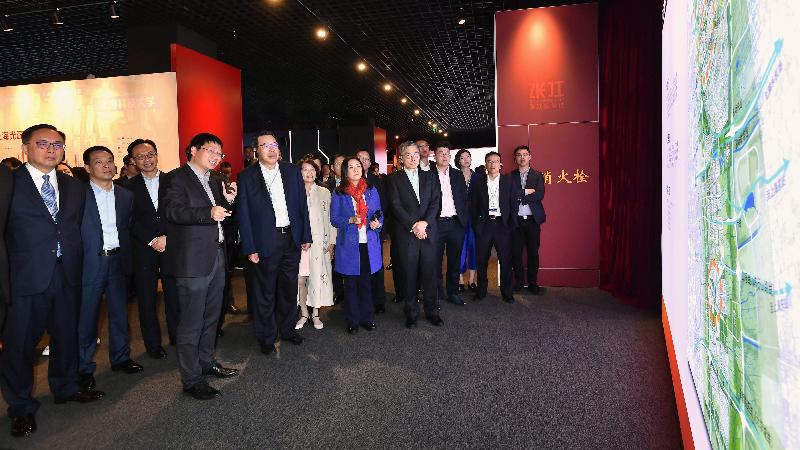
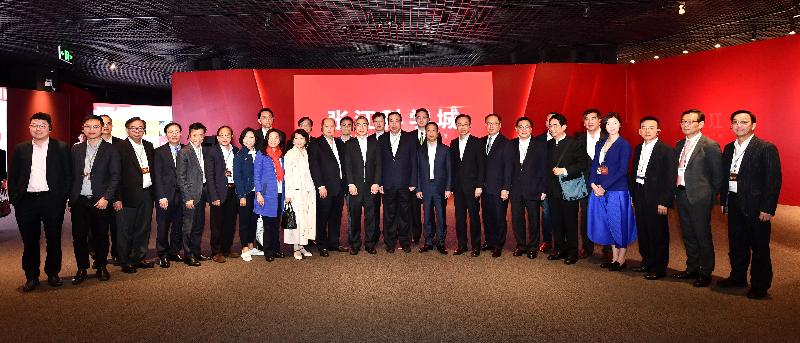
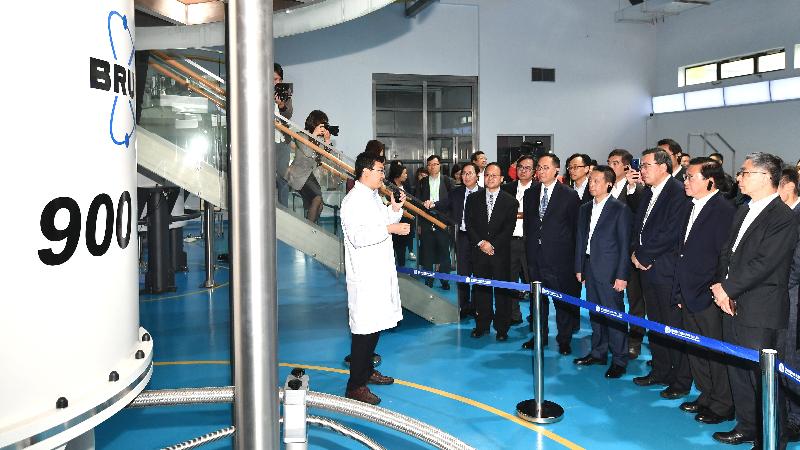
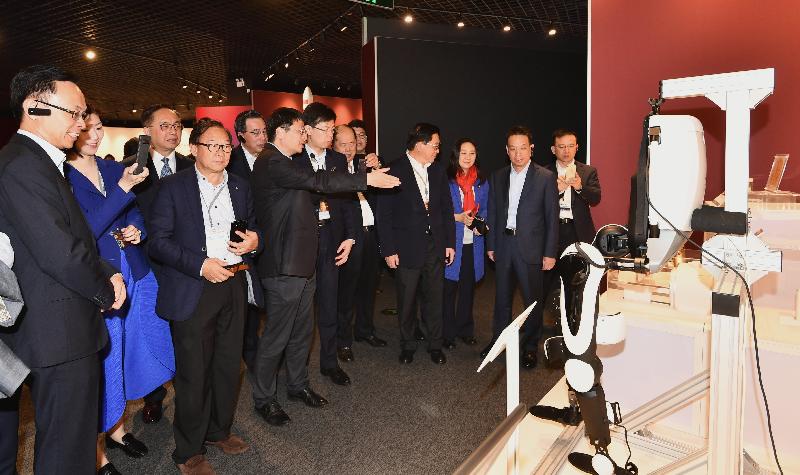
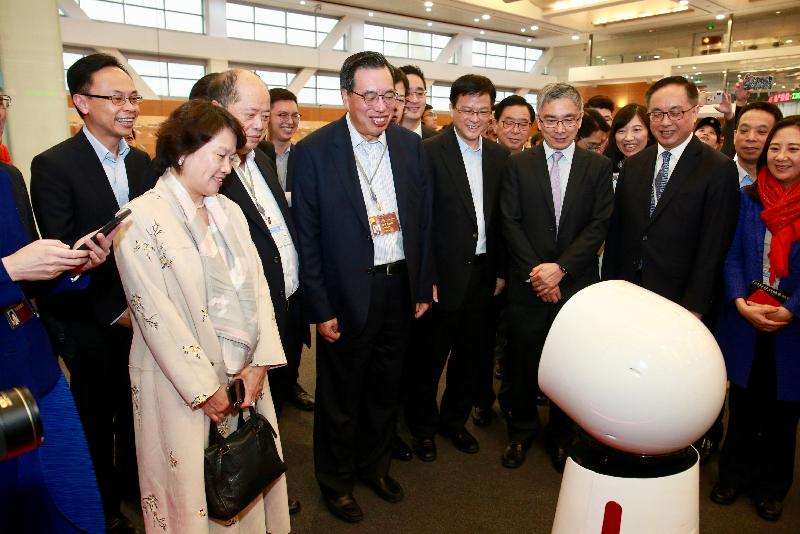
In the morning, the delegation visited the Zhangjiang Science City. Covering an area of 94 square kilometers, Zhangjiang Science City is known as the “China’s Silicon Valley” and the innovation and technology hub for the national-level scientific centers. Members toured the exhibition hall of Zhangjiang Science City to gain a better understanding of the achievements in frontier technologies in the fields of photonics, aviation and aerospace technology, integrated circuits as well as life science. Members also observed a demonstration of the three-dimensional interactive installation. The delegation then visited the National Center for Protein Science (Shanghai) and its nuclear magnetic resonance facility to learn about the technology and its application.
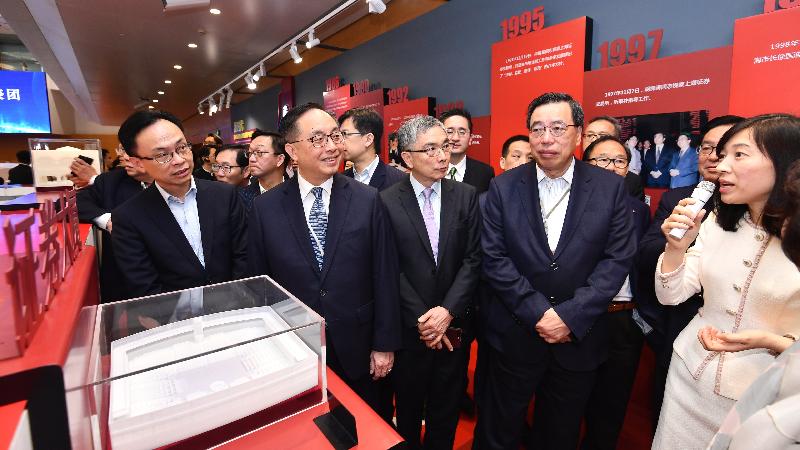
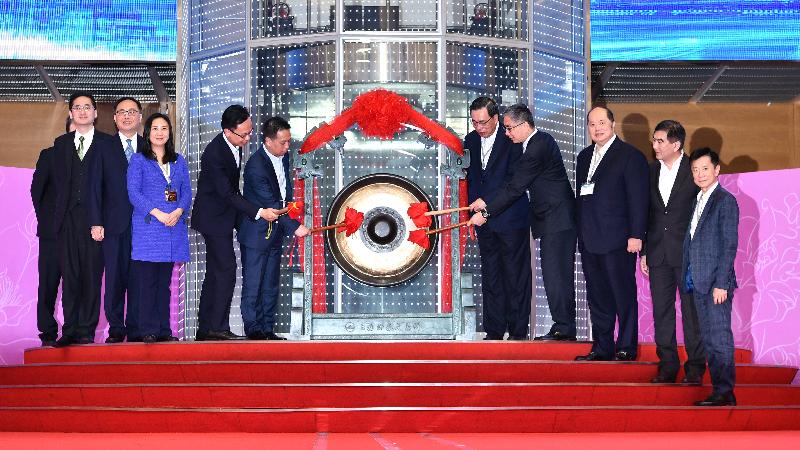
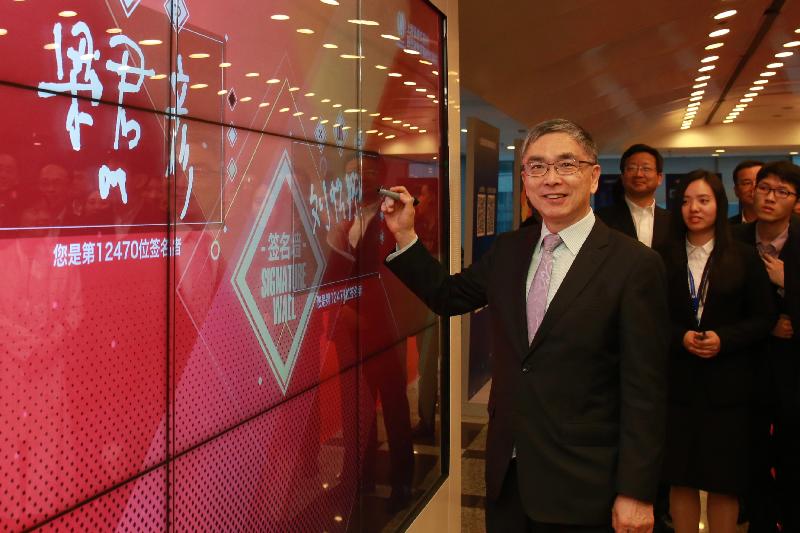
The delegation later visited the Shanghai Stock Exchange (SSE) and toured its history exhibition, “Approaches to SSE”, to learn more about the development of SSE. Members also received a briefing from the Chairman of SSE, Mr Huang Hongyuan, on the development of financial services in Shanghai, including the latest progress of the Science and Technology Innovation Board and the China Depository Receipt.
The delegation attended a luncheon meeting at noon to meet with more than 50 representatives from groups of Hong Kong people living in Shanghai to learn about their work and everyday lives in the city.
In the afternoon, the delegation visited the Changyang Campus, an innovation and start-up hub revitalised from a textile machinery factory in 2014. During the visit, Members were briefed on measures to revitalise and preserve heritage in Shanghai as well as the supporting measures offered by the Shanghai Municipal Government for the start-ups. Members also visited a company in the Changyang Campus, “Liu Li Shuo” to get to know its operation. “Liu Li Shuo” is a company specialising in using artificial intelligence for learning English language.
After that, the delegation visited the exhibition hall of the West Bund Xuhui Waterfront to learn the provision and plan for cultural facilities in Shanghai. Members boarded the electric vehicles to see for themselves the development of the West Bund. The Shanghai West Bund signed a cooperation agreement with the West Kowloon Cultural District Authority of Hong Kong in August 2018 on enhancing cultural and art exchange between the two places.
In the evening, the delegation met with the Mayor of Shanghai, Mr Ying Yong. They exchanged views on issues of mutual concern, including policy areas of finance, tourism, innovation and technology as well as medicine development. During the meeting, Mr Ying said that he welcomed LegCo Members from different political affiliations visiting Shanghai to strengthen exchanges and communications. The LegCo President and the delegation leader, Mr Andrew Leung, also invited Mr Ying to pay a visit to LegCo.
Members attended a dinner arranged by the Shanghai Municipal Government. After the dinner, Members took a ferry ride on Huangpu River to understand the development of tourism and culture in Shanghai.
The delegation will attend a seminar on “The latest development of regional integration of the Yangtze River Delta” today (April 23) morning and depart for Hangzhou at noon by high-speed train to continue the visit. Members will meet with officials of the Zhejiang Provincial Government and visit the Hangzhou Public Service Center as well as tourist and cultural attractions.
Led by Mr Andrew Leung, a total of 22 Members participated in the joint-Panel duty visit. Deputy delegation leaders are the Chairman of Panel on Commerce and Industry, Mr Yiu Si-wing; the Chairman of Panel on Financial Affairs, Mr Christopher Cheung; the Chairman of Panel on Information Technology and Broadcasting, Dr Elizabeth Quat; and the Chairman of Panel on Economic Development, Mr Chung Kwok-pan. The delegation visits Shanghai and Hangzhou in the Yangtze River Delta Region from April 21 to 24. The Secretary for Constitutional and Mainland Affairs, Mr Patrick Nip; the Secretary for Innovation and Technology, Mr Nicholas W Yang; the Secretary for Financial Services and the Treasury, Mr James Lau; and the Under Secretary for Commerce and Economic Development, Dr Bernard Chan, also participated in the duty visit. read more
The Secretary for Constitutional and Mainland Affairs, Mr Patrick Nip; the Secretary for Innovation and Technology, Mr Nicholas W Yang; and the Secretary for Financial Services and the Treasury, Mr James Lau, continued the first leg of the Legislative Council (LegCo) joint-Panel duty visit to the Yangtze River Delta Region in Shanghai today (April 22), visiting the city’s innovation and technology bases and financial institution as well as meeting with officials of the Shanghai Municipality.
The three Directors of Bureaux and LegCo members visited Zhangjiang Science Park in Pudong New Area this morning to learn about the development of the integrated national science and technology centre and its various innovation and technology projects. The delegation also toured the National Center for Protein Science Shanghai, an important national-level scientific research facility in the Science Park.
They then paid a visit to the Shanghai Stock Exchange to get updates on the development of the newly-launched Science and Technology Innovation Board and Chinese Depository Receipt.
The delegation met with Hong Kong people living, working and studying in Shanghai in the afternoon to get a better understanding of their life in the city. They also visited Chang Yang Valley, an innovation and start-up hub revitalised from a textile factory, and toured the West Bund Xuhui Waterfront, a cultural landmark project in Shanghai, to keep abreast of Shanghai’s planning on cultural conservation.
In the evening, the delegation met with the Mayor of Shanghai, Mr Ying Yong, to exchange views on issues relating to co-operation between Hong Kong and Shanghai. They also took a boat trip along Huangpu River to get first-hand knowledge of the development along the riverbank and to enhance their understanding on Shanghai’s tourism industry.
The delegation will depart for Hangzhou tomorrow (April 23) after completion of the Shanghai leg in the morning. While in Hangzhou, they will visit its latest developments on the innovation and technology, tourism and cultural fronts.
The Centre for Health Protection of the Department of Health (DH) said today (April 22) that no additional case of measles infection has been recorded as at 4pm today.
Regarding measles control measures implemented at Hong Kong International Airport (HKIA), a total of four persons received measles vaccination at the airport vaccination station as at 6pm today, bringing the cumulative number of vaccinations given to 8 254.
From tomorrow to next Sunday (April 23 to 28), the vaccination quota for the measles vaccination station at the airport remains at 500 doses daily. Vaccination for eligible airport staff will be provided to the following target groups who:
(1) Were born in or after 1967, and have not received two doses of measles vaccination, and have not been infected with measles before, and with evidence of living with infants under 1 year old or living with pregnant women; or
(2) Have laboratory evidence of testing not positive against measles antibody (IgG)
Details of evidence are as follows:
(a) Supporting documents for living with infants under 1 year old: for example, birth certificate, discharge summary or vaccination card of the infant
(b) Supporting documents for living with pregnant women: for example, positive pregnancy tests or antenatal follow-up cards of the pregnant women
(c) Supporting documents for laboratory evidence: for example, blood results from the DH’s measles serology test or any laboratory within the past 12 months
The venue and operation hours of the airport vaccination station are as follows:
| Venue: | Multi-function Room, HKIA Tower (Level 5, Terminal 2) |
| Hours: | April 23 to 28 10am to 1pm 2pm to 6pm |
| Venue: | South side before the Immigration Hall at Level 3 of Terminal 2 (non-restricted area) |
| Hours: | April 23 to 25 9am to 1pm |
The Centre for Health Protection (CHP) of the Department of Health is today (April 22) investigating a case of invasive meningococcal infection, a communicable disease transmitted by direct contact with droplets from carriers or infected persons.
The case involves an 89-year-old woman with underlying illnesses, who had presented with fever, chills and vomiting since April 19. She was admitted to Kwong Wah Hospital for treatment on the same day. Her clinical diagnosis was meningococcaemia. The patient is now in a stable condition.
Her blood specimen tested positive for Neisseria meningitidis upon laboratory testing.
Initial enquiries revealed that the patient had no travel history during the incubation period. Her home contact remains asymptomatic so far. The CHP’s investigation is continuing.
“Meningococcal infection is caused by a bacterium known as meningococcus. It is mainly transmitted by direct contact through respiratory secretions, including droplets from the nose and throat, from infected persons. The incubation period varies from two to 10 days, and is commonly three or four days,” a spokesman for the CHP said.
The clinical picture may vary. Severe illness may result when the bacteria invade the bloodstream (meningococcaemia) or the membranes that envelop the brain and spinal cord (meningococcal meningitis).
Meningococcaemia is characterised by sudden onset of fever, intense headache, purpura, shock and even death in severe cases. Meningococcal meningitis is characterised by high fever, severe headache and stiff neck followed by drowsiness, vomiting, fear of bright light, or a rash. It can cause brain damage or even death. The brain damage may lead to intellectual impairment, mental retardation, hearing loss and electrolyte imbalance. Invasive meningococcal infections can be complicated by arthritis, inflammation of the heart muscle, inflammation of the posterior chamber of the eye or chest infection.
Meningococcal infection is a serious illness. Patients should be treated promptly with antibiotics.
To prevent meningococcal infection, members of the public are advised to take heed of the following measures:
• Wash hands with liquid soap and water properly, especially when they are dirtied by respiratory secretions, e.g. after sneezing, and clean hands with alcohol-based handrub when they are not visibly soiled;
• Cover the nose and mouth while sneezing or coughing, hold the spit with a tissue, dispose of nasal and mouth discharges in a lidded rubbish bin, and wash hands immediately;
• Avoid crowded places;
• Avoid close contact with patients who have fever or severe headache;
• Travellers to high-risk areas may consult doctors for meningococcal vaccination; and
• Travellers returning from high-risk areas should seek medical advice if they become ill and should discuss their recent travel history with their doctor.
The public may visit the CHP’s website for more information on meningococcal infection. read more