image_pdfimage_print

Author Archives: hksar gov

CHP investigates cases of human infection of rat Hepatitis E virus

     The Centre for Health Protection (CHP) of the Department of Health is today (May 14) investigating three cases of human infection of rat Hepatitis E virus (HEV) and urged members of the public to be vigilant against hepatitis E infection and to strictly observe good personal, food and environmental hygiene.
 
     The first two cases involves an 81-year-old and a 67-year-old man with underlying illnesses respectively. Both had presented with liver function derangement. They have been in a stable condition all along and no hospitalisation is required.
 
     The third case involves a 74-year-old man with underlying illnesses, who had presented with liver function derangement. He was admitted to Tuen Mun Hospital for management due to underlying illnesses on April 28 and had passed away on May 4.
 
     The blood samples of the three patients were tested positive for rat HEV upon laboratory testing.
 
     The CHP’s epidemiological investigations revealed that the three patients resided in Kowloon City, Southern District and Tuen Mun respectively. They could neither recall having direct contact with rodents or their excreta, nor had noticed rodents in their residence. The 67-year-old patient had travelled to Taiwan and Korea during the incubation period (IP) while the other two patients had no travel history during the IP.
 
     “Based on the available epidemiological information, the source and the route of infection could not be determined. The CHP’s investigation is on-going,” a spokesman for the CHP said.
 
     “The CHP has already informed the Pest Control Advisory Section of the Food and Environmental Hygiene Department about the cases to carry out rodent control measures and survey as appropriate,” the spokesman added.
 
     The exact mode of transmission of rat HEV to humans is unknown at the moment. The usual HEV causing human infection is transmitted mainly through the faecal-oral route, for example, due to faecal contamination of drinking water. Besides, foodborne transmission can result from ingestion of undercooked meat or meat products produced from infected animals (HEV has been detected in pig livers). Other rare transmission routes identified include transfusion of infected blood products, organ transplant and vertical transmission from a pregnant woman to her foetus.
 
     To prevent hepatitis E infection, members of the public should maintain good personal and food hygiene. They should adopt the 5 Keys to Food Safety in handling food, i.e. Choose (Choose safe raw materials); Clean (Keep hands and utensils clean); Separate (Separate raw and cooked food); Cook (Cook thoroughly); and Safe Temperature (Keep food at safe temperature) to prevent foodborne diseases.
 

  • Drink only boiled water from the mains or bottled drinks from reliable sources.
  • Avoid drinks with ice of unknown origin.
  • Purchase fresh food from hygienic and reliable sources. Do not patronise illegal hawkers.
  • Clean and wash food thoroughly. Cook food, especially seafood (e.g. shellfish), pork and pig offal, thoroughly before consumption. Avoid raw food or undercooked food.
  • Slice raw meat and offal into thin strips to allow thorough cooking, especially during hotpot or congee cooking.
  • For sliced pig liver, depending on thickness and quantity, boil at 100°C or stir-fry in hot skillet/wok for at least three to five minutes.
  • Heating to an internal temperature of 90°C for 90 seconds is required for cooking of molluscan shellfish. If possible, remove the shells before cooking as they impede heat penetration. Otherwise, boil at 100°C until their shells open; boil for additional three to five minutes afterwards. Discard any shellfish that do not open during cooking.
  • For meat and offal, make sure that juices are clear, not red, blood is not visible when you cut the cooked meat and offal.
  • When having hotpot, use separate chopsticks and utensils for handling raw and cooked foods to prevent cross-contamination.
 
     Generally speaking, rodents (such as rats) can transmit multiple diseases to humans directly and indirectly. The public are advised to adopt the following measures:
 
  • Eliminate sources of food and nesting places for rodents in living environment. Store food in covered containers and handle pet food properly to avoid it becoming food for rodents;
  • Store all refuse and food remnants in dustbins with well-fitted cover. Dustbins must be emptied at least once a day;
  • Keep premises, especially refuse rooms and stairways clean. Avoid accumulation of articles;
  • Inspect all flowerbeds and pavements for rodent infestation regularly; and
  • Avoid high risk activities below to reduce rodent contact:
        – Avoid rodent contact and places dirtied with rodent excreta;
        – Avoid handling rodents with bare hands;
        – Wash hands with liquid soap and water immediately after handling animals, and disinfect contaminated areas; and
        – If wound appears, clean broken skin immediately and cover it properly with waterproof adhesive dressings.
  read more
Fresh beef sample found to contain sulphur dioxide

     The Centre for Food Safety (CFS) of the Food and Environmental Hygiene Department announced today (May 14) that a fresh beef sample was found to contain sulphur dioxide, a preservative which is not permitted to be used in fresh meat. The CFS is following up on the case.
 
     A spokesman for the CFS said, “The CFS took the above-mentioned fresh beef sample from a stall in Tung Yick Market, Yuen Long for testing under its routine Food Surveillance Programme. The test result showed that the sample contained sulphur dioxide at a level of 726 parts per million.”
 
     According to the Preservatives in Food Regulation (Cap 132BD), it is an offence to add sulphur dioxide to fresh or chilled meat. The maximum penalty is a $50,000 fine and six months’ imprisonment.
 
     The CFS will inform the vendor concerned of the abovementioned irregularity.
 
      Sulphur dioxide is a commonly used preservative in a variety of foods including dried fruits, pickled vegetables and meat products such as sausages and grilled burgers, but under the Regulation it is not permitted in fresh or chilled meat. Nonetheless, individual meat traders may illegally use sulphur dioxide to make meat look fresher. This preservative is of low toxicity. As it is water soluble, most of it can be removed through washing and cooking. However, susceptible individuals who are allergic to this preservative may experience breathing difficulties, headache and nausea.
 
     The spokesman reminded the food trade to comply with the law and not to sell fresh or chilled meat adulterated with sulphur dioxide. Members of the public should purchase meat from reliable market stalls or fresh provision shops. They should avoid buying or consuming meat which is unnaturally red and maintain a balanced diet to avoid malnutrition or excessive exposure to chemicals from a small range of food items.
 
     The CFS will continue to follow up on the case and take appropriate action. Investigation is ongoing. read more

Hong Kong Laureate Forum launching ceremony held today (with photos)

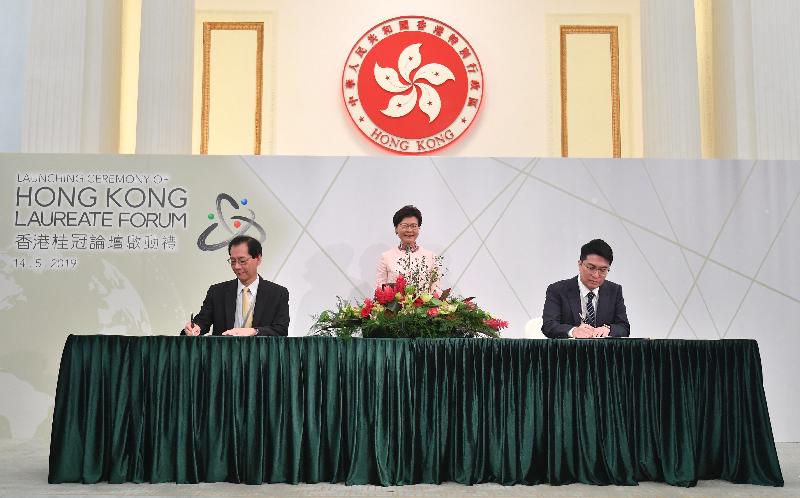
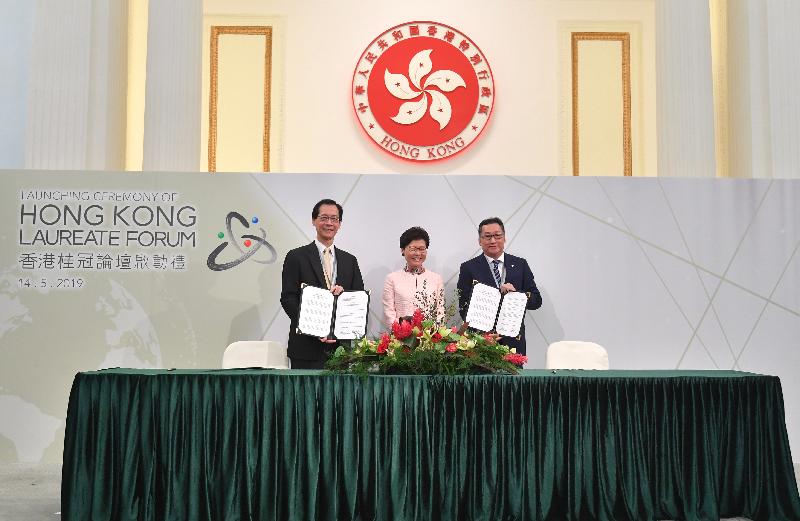
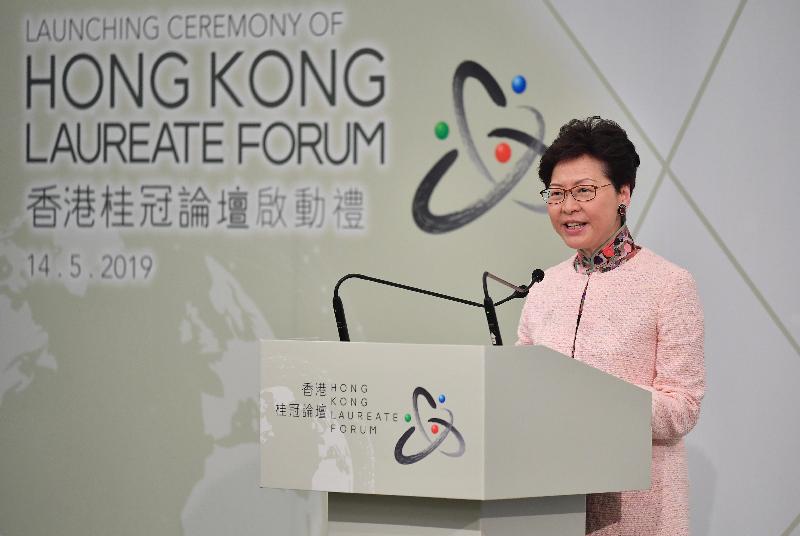
     The Council of the Hong Kong Laureate Forum (the Council) held a ceremony today (May 14) at Government House Ballroom to celebrate the launch of the Hong Kong Laureate Forum. The Chief Executive, Mrs Carrie Lam, attended the ceremony as the Guest of Honour.
 
     The Forum aspires to be a world-class academic exchange event to connect the current and next generations of scientific leaders, and to promote understanding and interests among the young generation in Hong Kong and around the world in science and technology. The inaugural Forum will be held in November 2021 in Hong Kong and applications to attend the Forum are expected to start in 2020.
 
     The Forum aims to inspire young scientists from around the world through participation in a week-long programme comprising world-class seminars, dialogues, workshops and more. The Forum will also provide ample opportunities for exchanges between Shaw laureates and young scientists.
 
     In his welcoming remarks, the Chairman of the Council, Professor Timothy W Tong, said that the Council was determined to make the Forum an international platform to foster cross-cultural scientific dialogue that will contribute to furthering the understanding of science and enriching humanity.
 
     Mrs Lam said innovation and technology has topped her Government’s policy agenda since she took office on July 1, 2017.
 
     “If Hong Kong is to realise the compelling promise of innovation and technology, we must ensure a sustainable flow of talent by providing and promoting science and technology education in our schools at every level, from primary and secondary through to our post-secondary institutions and technical colleges,” said Mrs Lam.
 
     Mrs Lam pointed out that the Hong Kong Laureate Forum could build an interest and enthusiasm for science among the younger generation by creating opportunities for direct exchange and inspiring dialogue with some of the brightest minds in science.
 
     At the launch ceremony, Professor Tong signed a sponsorship agreement with the Director of Lee Shau Kee Foundation, Mr Martin Lee. The Lee Shau Kee Foundation is the Forum’s principal sponsor, and has pledged full sponsorship to the Forum for five years, starting in 2019. Professor Tong also signed a memorandum of understanding with the Shaw Prize Foundation Chairman, Mr Raymond Chan, to foster collaboration and exchanges among laureates of the Shaw Prize and young scientists from Hong Kong and all over the world. The two signing ceremonies were witnessed by the Chief Executive.
 
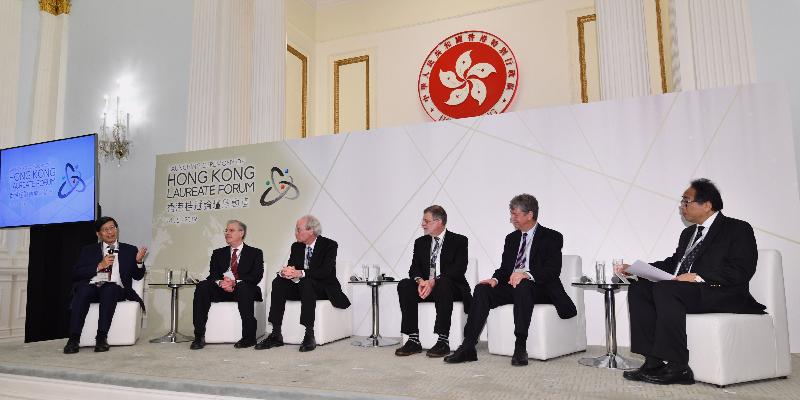
     Four Shaw laureates, namely Professor Steven A Balbus, Professor John F Hawley, Professor E Peter Greenberg, and Professor Simon D M White attended the ceremony to pledge their support, as well as sharing their scientific experience and insights at a panel discussion.
 
     Over 150 guests including the Commissioner of the Ministry of Foreign Affairs of the People’s Republic of China in the Hong Kong Special Administrative Region, members of the Executive Council and Legislative Council, council chairmen and presidents of universities, academics, scientists, senior members of research institutions, consuls general and nearly 60 young scientists, attended the ceremony.
 
     While the Forum was conceived by the Hong Kong Special Administrative Region Government, it will be organised by the Council formed by distinguished personalities and academics of Hong Kong. The Council is a non-profit making organisation. Its membership is as follows:
 
Chairman
———– 
Professor Timothy W Tong
 
Members
———- 
Mr Raymond Chan (representing the Shaw Prize Foundation)
Dr Moses Cheng
Mrs Rita Fan
Mr Henry Fan
Dr Victor Fung
Dr Colin Lam (representing the Lee Shau Kee Foundation)
Mr Martin Lee (representing the Lee Shau Kee Foundation)
Mr Carlson Tong
Professor Tsui Lap-chee
Mr Joseph Yam
Professor Kenneth Young
 
     The Council has invited Dr Kan Tai-keung, an acclaimed local designer, to design the Forum logo. The three spheres of the logo symbolise the diversity and broad horizon of science, while the three arcs represent the forces of science while also resembling the shape of a laurel wreath, symbolising eminent Hong Kong scientists in discussion with young scientists, thereby creating an continuous drive to pursue science. 
 
     For details about the Forum, please visit its website at (hklaureateforum.org/en/). The Chief Executive’s blog of April 22 also gives an account of the launch of the Hong Kong Laureate Forum.

Photo  Photo  Photo  Photo  Photo  
read more