Tag Archives: China

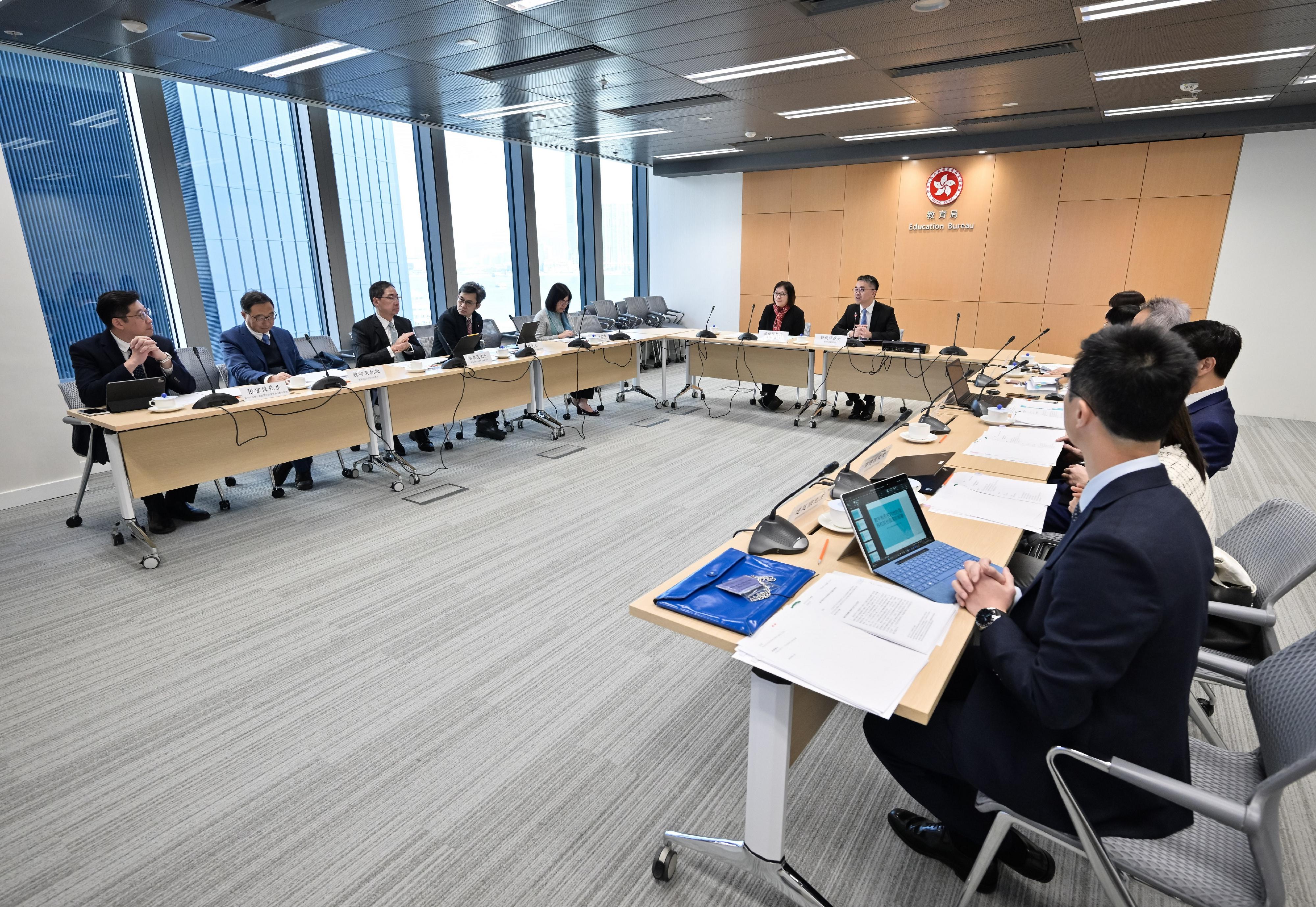
Steering Committee on Strategic Development of Digital Education holds first meeting (with photos)

     The Chief Executive announced the formation of the Steering Committee on Strategic Development of Digital Education in the 2024 Policy Address. The Committee held its first meeting today (January 17) to gather collective wisdom and insights on promoting digital transformation of school education in Hong Kong.
 
     The Chairperson of the Committee and Under Secretary for Education, Dr Sze Chun-fai, said, “With reference to the latest developments of digital education on the Mainland and relevant policies and experiences from other countries, the members deliberated and provided advice on the goals and strategies, as well as the future development direction for implementing digital education in Hong Kong at today’s meeting. The Education Bureau will also hold engagement sessions with stakeholders starting this January, inviting representatives from the school sector, the EdTech industry, etc, to share their views on the development of digital education in Hong Kong.
 
     “In formulating the policy direction for digital education, the Committee makes reference to relevant guidance documents from the Ministry of Education to fully utilise digitalisation for empowering basic education. This includes enabling flexible teaching anytime anywhere, sharing high-quality resources, optimising curriculum content and teaching processes, optimising students’ learning approaches, and conducting teaching evaluation precisely, to improve learning and teaching effectiveness for contributing to high-quality development in Hong Kong and our country, and accelerate the construction of our country as a leading country in education. I look forward to collaborating closely with all Committee members and listening to their strategic insights on the development of digital education to make our work more impactful.”
 
     After discussion by the Committee, the Government will commence work in the following four areas:

1. To enhance students’ digital literacy and skills so that they can use digital technologies effectively and ethically, becoming responsible citizens and lifelong learners; 

2. To strengthen professional training in digital education for teachers and encourage schools to use innovative technologies, particularly artificial intelligence, to assist teaching, encourage teaching innovation and enhance learning and teaching effectiveness; 
 
3. To optimise digital education ancillary infrastructure and create an intelligent learning environment, including smart education platforms, to ensure equal opportunities for all students to use digital technologies for learning, promote personalised learning, and facilitate resource sharing; and 

4. To strengthen ties between local, Mainland or international innovation and technology institutions, tertiary institutions, and relevant sectors to enhance synergy and promote high-quality development of digital education. 

     The establishment of the Committee aims to provide advice on the goals and strategies of the implementation of digital education development, review the implementation progress and effectiveness of related measures, and facilitate academic and cross-sector collaboration for advancing the development of digital education in Hong Kong. The Committee comprises representatives from relevant government bureaux, advisory organisations, and institutions.
 
     The terms of reference and membership of the Committee are outlined in the Annex.
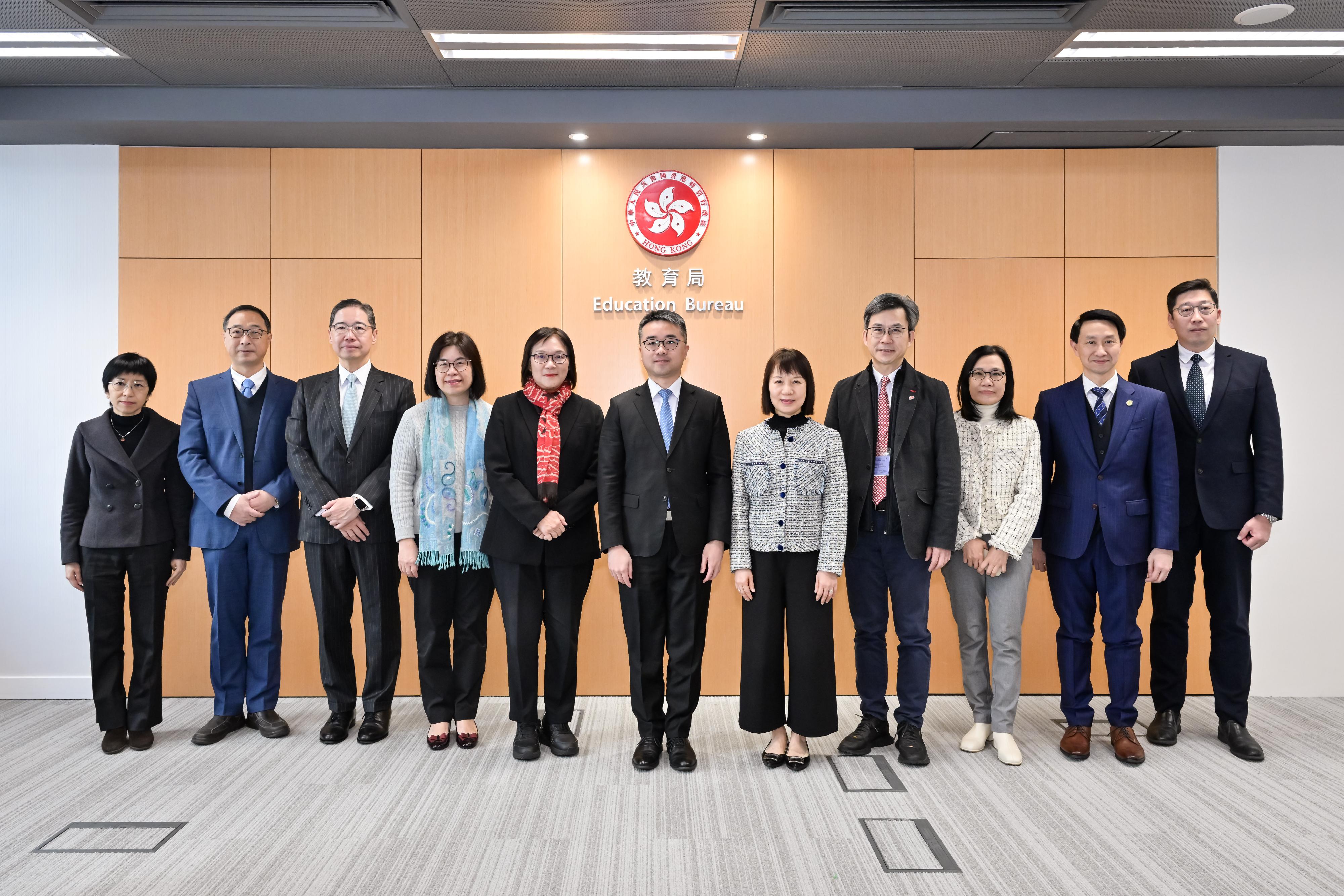
Photo  Photo  
read more

Business expectations for the first quarter of 2025

     The Census and Statistics Department (C&SD) released today (January 17) the results of the Quarterly Business Tendency Survey for the first quarter (Q1) of 2025.
 
Business situation
 
     For all surveyed sectors taken together, the proportion of respondents expecting their business situation to be better (9%) in Q1 2025 over the preceding quarter is lower than that expecting it to be worse (19%). 
 
     When compared with the results of the Q4 2024 survey round, the proportion of respondents expecting a better business situation in Q1 2025 is 9%, lower than the corresponding proportion of 13% in Q4 2024. At the same time, the proportion of respondents expecting a worse business situation had increased from 16% in Q4 2024 to 19% in Q1 2025.
 
     Analysed by sector, respondents in most of the surveyed sectors expect their business situation to decrease on balance in Q1 2025 as compared with Q4 2024. In particular, significantly more respondents in the accommodation and food services; retail; and transportation, storage and courier services sectors expect their business situation to be worse in Q1 2025 as compared with Q4 2024.
 
     The results of the survey should be interpreted with care. In this type of survey on expectations, the views collected in the survey are affected by the events in the community occurring around the time of enumeration, and it is difficult to establish precisely the extent to which respondents’ perception of the future accords with the underlying trends. The enumeration period for this survey round was from December 3, 2024 to January 7, 2025. 
 
Volume of business/output
 
     Respondents in most of the surveyed sectors expect their volume of business/output to decrease on balance in Q1 2025 as compared with Q4 2024. In particular, more respondents in the retail; transportation, storage and courier services; and accommodation and food services sectors expect their volume of sales/business to decrease in Q1 2025 over Q4 2024.
 
Employment
 
     Respondents in all of the surveyed sectors expect their employment to decrease on balance or remain broadly unchanged in Q1 2025 as compared with Q4 2024. In particular, more respondents in the construction sector expect their employment to decrease, as compared to those expecting it to increase.
 
Selling price/service charge
 
     Respondents in all of the surveyed sectors expect their selling prices/service charges to decrease on balance or remain broadly unchanged in Q1 2025 as compared with Q4 2024. In particular, more respondents in the construction and accommodation and food services sectors expect their tender prices/charges for services rendered/prices of food provided to go down in Q1 2025 over Q4 2024.
 
Commentary
 
     A Government spokesman said that business sentiment and hiring appetite among large enterprises weakened in the first quarter, amid increased uncertainties in the external environment.
 
     Looking forward, the spokesman said that global economic uncertainties would continue to pose pressures on the business environment. Yet, the various measures introduced by the Central Government to boost the Mainland economy and benefit Hong Kong, together with the SAR Government’s various initiatives to boost market sentiment and create new impetus for economic development, should bode well for business sentiment. The Government will monitor the situation closely.
 
Further information
 
     The survey gathers views on short-term business performance from the senior management of about 570 prominent establishments in various sectors in Hong Kong with a view to providing a quick reference, with minimum time lag, for predicting the short-term future economic performance of the local economy.
 
     The survey covers 10 major sectors in Hong Kong, namely manufacturing; construction; import/export trade and wholesale; retail; accommodation and food services (mainly covering services rendered by hotels and restaurants); transportation, storage and courier services; information and communications; financing and insurance; real estate; and professional and business services sectors.
 
     Views collected in the survey refer only to those of respondents on their own establishments rather than those on the respective sectors they are engaged in, and are limited to the expected direction of quarter-to-quarter change (e.g. “up”, “same” or “down”) but not the magnitude of change. In collecting views on the quarter-to-quarter changes, if the variable in question is subject to seasonal variations, respondents are asked to provide the expected changes after excluding the normal seasonal variations.
 
     Survey results are generally presented as “net balance”, i.e. the difference between the percentage of respondents choosing “up” and that choosing “down”. The percentage distribution of respondents among various response categories (e.g. “up”, “same” and “down”) reflects how varied their business expectations are. The “net balance”, with its appropriate sign, indicates the direction of expected change in the variable concerned. A positive sign indicates a likely upward trend while a negative sign indicates a likely downward trend. However, the magnitude of the “net balance” reflects only the prevalence of optimism or pessimism, but not the magnitude of expected change, since information relating to such magnitude is not collected in the survey.
 
     Furthermore, owing to sample size constraint, care should be taken in interpreting survey results involving a small percentage (e.g. less than 10%) of respondents in individual sectors.
 
     Chart 1 shows the views on expected changes in business situation for the period Q1 2024 to Q1 2025.
 
     Table 1 shows the net balances of views on expectations in respect of different variables for Q1 2025.
 
     The survey results are published in greater detail in the “Report on Quarterly Business Tendency Survey, Q1 2025”. Users can browse and download the publication at the website of the C&SD (www.censtatd.gov.hk/en/EIndexbySubject.html?pcode=B1110008&scode=300).
       
     Users who have enquiries about the survey results may contact the Business Expectation Statistics Section of the C&SD (Tel: 3903 7263; email: business-prospects@censtatd.gov.hk). read more

Update on dengue fever

     The Centre for Health Protection (CHP) of the Department of Health today (January 17) reported the latest number of dengue fever (DF) cases, and urged the public to maintain strict environmental hygiene, mosquito control and persona… read more

Composite Interest Rate: End of December 2024

The following is issued on behalf of the Hong Kong Monetary Authority:

     The Hong Kong Monetary Authority (HKMA) announced today (January 17) the composite interest rate at the end of December 2024 (Note 1).
      
     The composite interest rate, which is a measure of the average cost of funds of banks, increased by 4 basis points to 2.24 per cent at the end of December 2024, from 2.20 per cent at the end of November 2024 (see Chart 1 in the Annex). The increase in composite interest rate mainly reflected the increase in the weighted funding cost for deposits during the month (see Chart 2 in the Annex) (Note 2).
      
     The historical data of the composite interest rate from the end of the fourth quarter of 2003 to the end of December 2024 are available in the Monthly Statistical Bulletin on the HKMA website (www.hkma.gov.hk).

Note 1: The composite interest rate is a weighted average interest rate of all Hong Kong dollar interest-rate-sensitive liabilities, which include deposits from customers, amounts due to banks, negotiable certificates of deposit and other debt instruments, and all other liabilities that do not involve any formal payment of interest but the values of which are sensitive to interest rate movements (such as Hong Kong dollar non-interest bearing demand deposits) on the books of banks. Data from retail banks, which account for about 90 per cent of the total customers’ deposits in the banking sector, are used in the calculation. It should be noted that the composite interest rate represents only average interest expenses. There are various other costs involved in the making of a loan, such as operating costs (e.g. staff and rental expenses), credit cost and hedging cost, which are not covered by the composite interest rate.

Note 2: Since June 2019, the composite interest rate and weighted deposit rate have been calculated based on the new local “Interest rate risk in the banking book” (IRRBB) framework. As such, these figures are not strictly comparable with those of previous months. read more

19 landlords of subdivided units under regulated tenancies convicted of contravening relevant statutory requirements

     Nineteen landlords of subdivided units (SDUs), who contravened Part IVA of the Landlord and Tenant (Consolidation) Ordinance (Cap. 7) (the Ordinance), pleaded guilty and were fined a total of $104,800 on January 10 and today (January 17) at the Eastern Magistrates’ Courts. Since the Ordinance came into force, the Rating and Valuation Department (RVD) has successfully prosecuted 527 cases involving a total of 451 SDU landlords, with fines ranging from $400 to $34,800, amounting to a total of $1,265,010.
 
     The offences of the landlords fined on January 10 and today include (1) failing to submit a Notice of Tenancy (Form AR2) to the Commissioner of Rating and Valuation within 60 days after the term of the regulated tenancy commenced; and (2) requesting the tenant to pay money other than the types permitted under the Ordinance (i.e. requiring the tenant to pay an amount of rent for the second-term tenancy exceeding the maximum amount of rent permitted under the Ordinance). One of the landlords committed 24 offences under (1) and (2) and was fined $26,400.

     The RVD earlier discovered that the landlords failed to comply with the relevant requirements under the Ordinance. Upon an in-depth investigation and evidence collection, the RVD prosecuted against the landlords.
 
     A spokesman for the RVD reiterated that SDU landlords must comply with the relevant requirements under the Ordinance, including prohibiting landlords from doing any act calculated to interfere with the peace or comfort of members of the tenant’s household, with the intention of causing the tenant to give up occupation of the SDU; or requiring the tenant to pay an amount of rent for the second-term tenancy exceeding the maximum amount of rent permitted under the Ordinance, and also reminded SDU tenants of their rights under the Ordinance, including a four-year (i.e. two years plus two years) security of tenure. He also stressed that the RVD will continue to take resolute enforcement action against any contraventions of the Ordinance. Apart from following up on reported cases, the RVD has been adopting a multipronged approach to proactively identify, investigate and follow up on cases concerning landlords who are suspected of contravening the Ordinance. In particular, the RVD has been requiring landlords of regulated tenancies to provide information and reference documents of their tenancies for checking whether the landlords concerned have complied with the requirements of the Ordinance. If a landlord, without reasonable excuse, refuses to provide the relevant information or neglects the RVD’s request, the landlord commits an offence and is liable to a maximum fine at level 3 ($10,000) and to imprisonment for three months. Depending on the actual circumstances, and having regard to the information and evidence collected, the RVD will take appropriate actions on individual cases, including instigating prosecution against suspected contraventions of the Ordinance.
 
     To help curb illegal acts as soon as possible, members of the public should report to the RVD promptly any suspected cases of contravening the relevant requirements. Reporting can be made through the telephone hotline (2150 8303), by email (enquiries@rvd.gov.hk), by fax (2116 4920), by post (15/F, Cheung Sha Wan Government Offices, 303 Cheung Sha Wan Road, Kowloon), or in person (visiting the Tenancy Services Section office of the RVD at Room 3816-22, 38/F, Immigration Tower, 7 Gloucester Road, Wan Chai, Hong Kong, and please call 2150 8303 to make an appointment). Furthermore, the RVD has provided a form (Form AR4) (www.rvd.gov.hk/doc/en/forms/ar4.pdf) on its website to facilitate SDU tenants’ reporting to the RVD.
 
     The RVD reminds that pursuant to the Ordinance, a regulated cycle of regulated tenancies is to comprise two consecutive regulated tenancies (i.e. the first-term tenancy and second-term tenancy) for an SDU, and the term of each regulated tenancy is two years. A tenant of a first-term tenancy for an SDU is entitled to be granted a second-term tenancy of the regulated cycle, thus enjoying a total of four years of security of tenure. Since the first batch of regulated tenancies has already approached their second-term tenancies, the RVD has started a new round of publicity and education work in order to assist SDU landlords and tenants to understand the important matters pertaining to the second-term tenancy, and procedures that need to be followed about two months prior to the commencement of the purported second-term tenancy. In addition, the RVD has started issuing letters enclosing relevant information to the landlords and tenants concerned of regulated tenancies in batches, according to the expiry time of their first-term tenancies, to remind them about their respective obligations and rights under the Ordinance. These landlords and tenants may also visit the dedicated page for the second-term tenancy on the RVD’s website (www.rvd.gov.hk/en/tenancy_matters/second_term_tenancy.html) for the relevant information, including a concise guide, brochures, tutorial videos and frequently asked questions. SDU landlords and tenants are also advised to familiarise themselves with the relevant statutory requirements and maintain close communication regarding the second-term tenancy for handling the matters properly and in a timely manner according to the Ordinance.
 
     For enquiries related to regulated tenancies, please call the telephone hotline (2150 8303) or visit the RVD’s webpage (www.rvd.gov.hk/en/our_services/part_iva.html) for the relevant information. read more