Tag Archives: China

image_pdfimage_print

Chun Yeung Estate integrates with artistic atmosphere in Fo Tan (with photos)

The following is issued on behalf of the Hong Kong Housing Authority:
 
     Fo Tan has traditionally been an industrial area, but a number of local artists have been setting up studios in the district since 2000. This has created a vibrant art scene there and gradually turned part of Fo Tan into a community with a unique character.
 
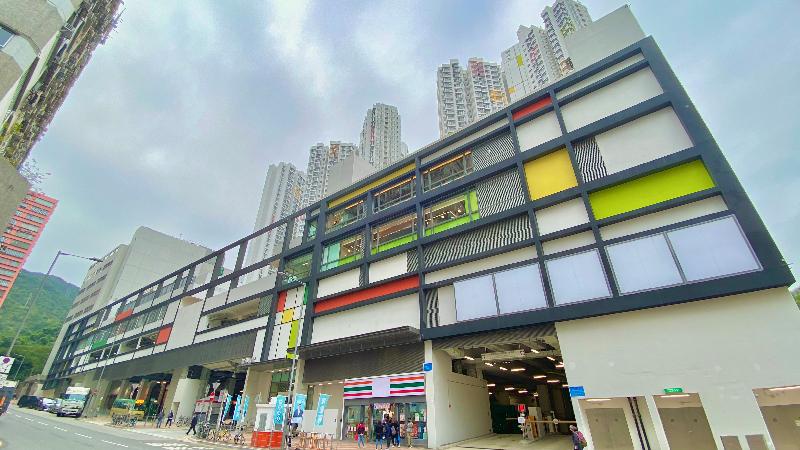
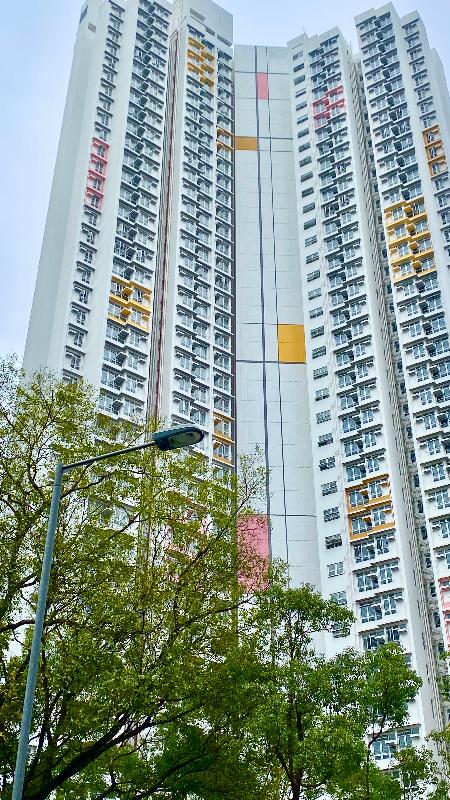
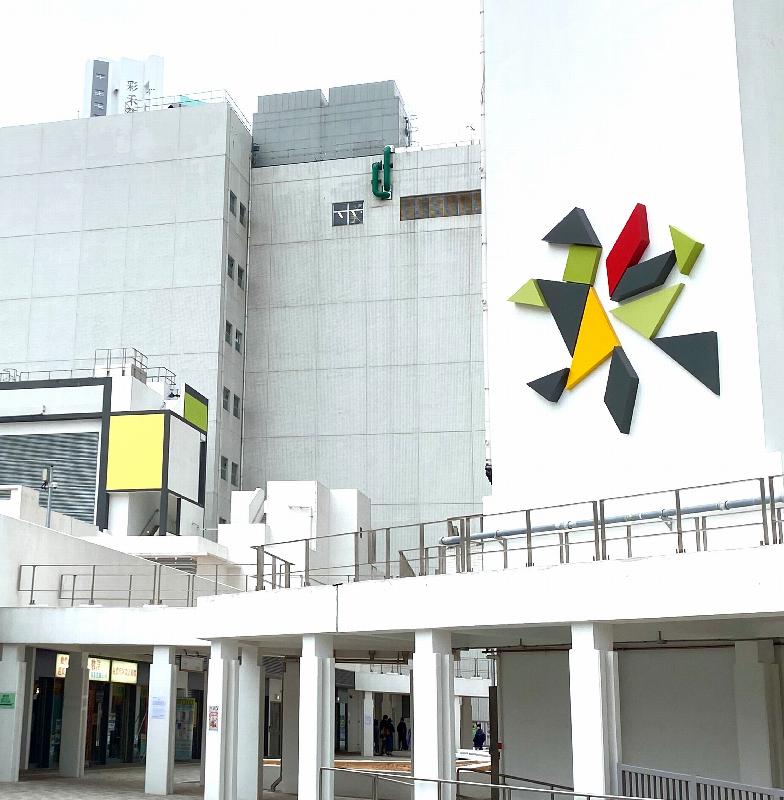
     To echo this unique character of Fo Tan, the Housing Department’s architectural project team adopted the language of Piet Mondrian, a well-known artist of the 20th century, as the main theme for the building facades and design details of Chun Yeung Estate during its design stage. 
 
     “Piet Mondrian’s art influenced not only the field of painting but also industrial product design and architecture. His artworks embellish straight lines and right angles with some vivid colour rectangles, showing vibrancy in tranquil and harmonious settings,” Chief Architect of the Housing Department Mr Dominic Wong said today (December 27).
 
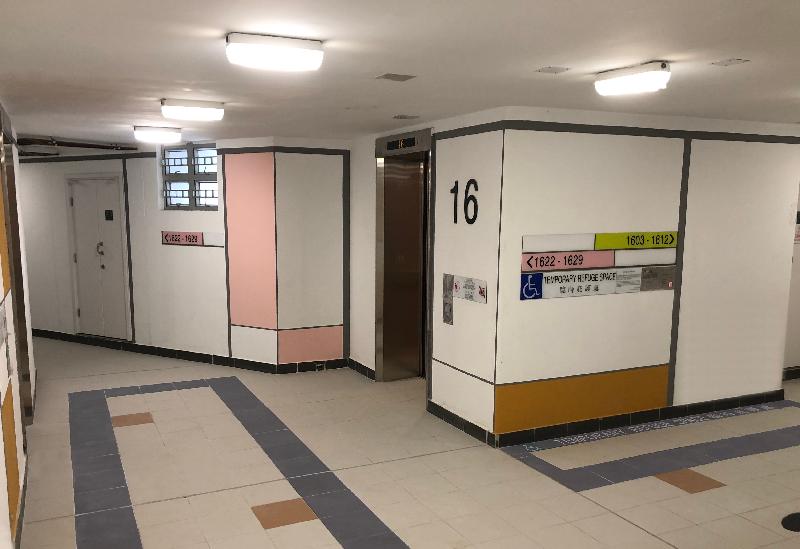
     “We applied Piet Mondrian’s art style to the facades of domestic blocks and shopping malls, as well as public facilities including ground floor lobbies and lift lobbies on each floor. Drawing well-balanced grid lines infilled with geometric patches of vibrant colours on walls has brought a unique outlook to the estate and fluid flows of new energy to the community,” Mr Wong said.
 
     Besides working to fit the project in with the artistic atmosphere in Fo Tan, the architectural project team considered and overcame geographical factors in the overall disposition and design.
 
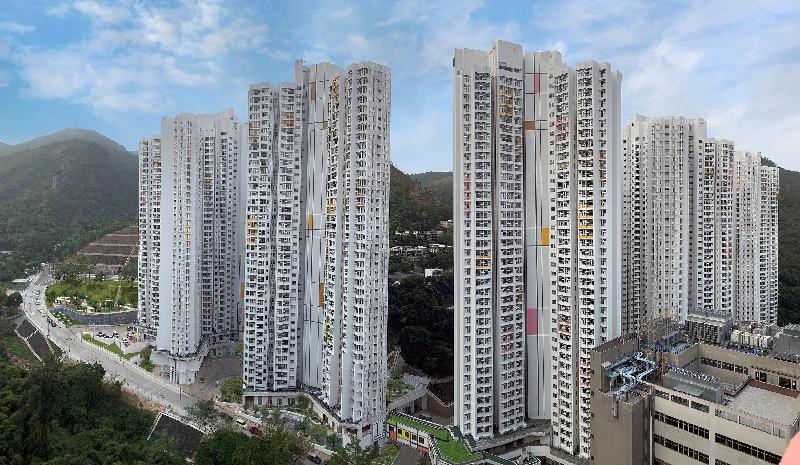
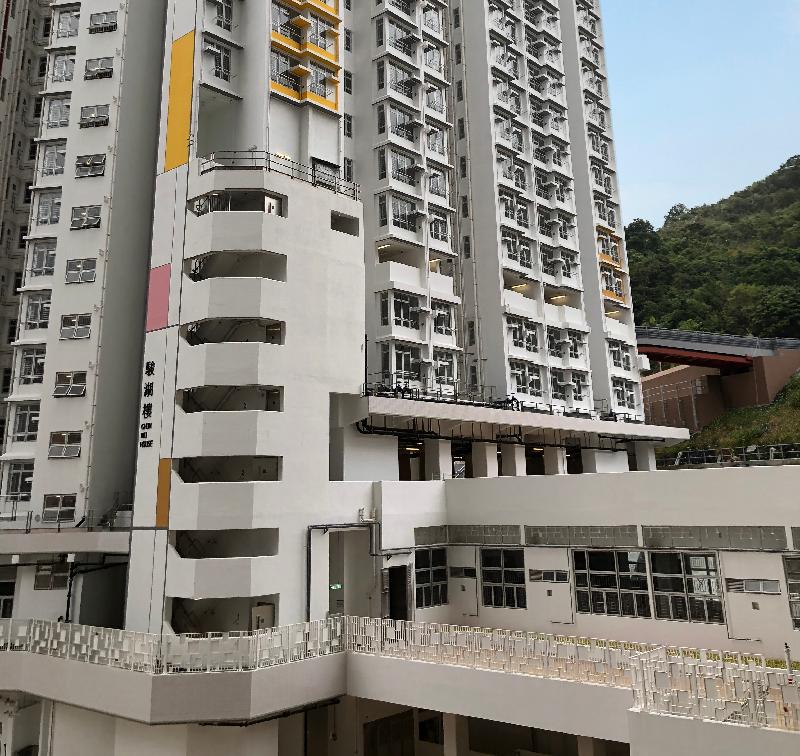
     Built against a hill, Chun Yeung Estate provides a series of covered pedestrian networks linking all the domestic blocks, the shopping centre and other amenities, which creates a liveable and barrier-free environment for more than 13,000 residents. This fulfils the mission of the Hong Kong Housing Authority (HA) to provide liveable housing to people in need.
 
     “To optimise the potential of the hillside site for sustainable housing development, the buildings and facilities are strategically built on several platforms to address the level differences,” Mr Wong said.
 
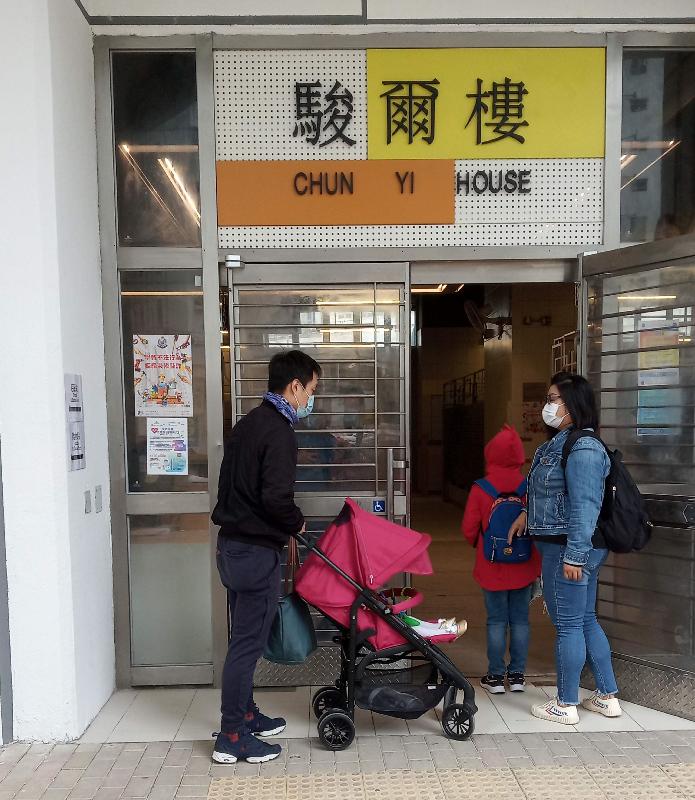
     Chun Yeung Estate provides about 4,800 public rental housing units in five domestic blocks (namely Chun Yat House, Chun Yi House, Chun San House, Chun Sze House and Chun Wu House) and a five-storey shopping centre. The estate accommodates retail, restaurants, a residential care home for the elderly, a day care centre for the elderly, a special child care centre, an elderly education training centre, a small group home, a kindergarten, a wet market, car parks and a Public Transport Lay-by (PTL).
 
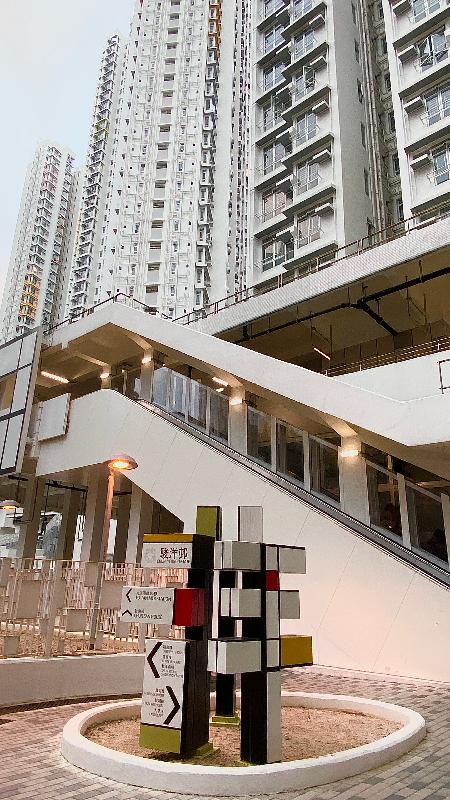
     “Aiming to provide barrier-free access to connect domestic blocks with major estate facilities, such as the shopping centre, the PTL, welfare facilities and landscaped gardens, we created a covered pedestrian network to shelter the residents from sunlight and rain, and to connect the shopping centre and the covered PTL at the lowest platform to the domestic blocks at various upper platforms of the hillside,” Mr Wong said.
 
     The covered pedestrian network comprises a walkway system, lifts and escalators, footbridges and a pedestrian corridor in one of the domestic blocks.
 
     “To cater for the need of the residents to enter the estate from Kwei Tei San Tsuen Road, the other side of the estate at the top platform, a pedestrian corridor that routes through the sixth floor of Chun Wu House links up the estate with Kwei Tei San Tsuen Road via a footbridge. At the other end of the pedestrian corridor is a lift lobby for taking pedestrians down to the ground floor of Chun Wu House. To facilitate pedestrian circulation, the area surrounding the pedestrian corridor on the sixth floor is an open space with leisure facilities but with no residential flats nearby.”
 
     Given the delightful natural environment, the building block disposition of Chun Yeung Estate is strategically planned, taking into account the microclimate studies, environmental assessments and natural terrain of the site. Sufficient building separation is allowed to serve as visual and ventilation corridors for enjoyment of the natural landscape and maintaining effective wind penetration in the locality. The five-storey shopping centre is situated along Kwei Tei Street, and acts as a shield for the domestic blocks against the traffic noise.
 
     Special furniture, such as sculptural seating and feature signage, is strategically placed at areas along the main pedestrian routes to reflect a more artistic approach.
 
     In addition, Chun Yeung Estate provides a large variety of recreational facilities, including a basketball court, a badminton court, children’s play areas, elderly fitness equipment and table tennis facilities for residents’ enjoyment. It also maximises greenery through preservation of dozens of existing trees, and providing landscaped gardens, roof greening and vertical greening at various platforms. The use of renewable energy provides a pleasant and sustainable living environment for the residents.
 
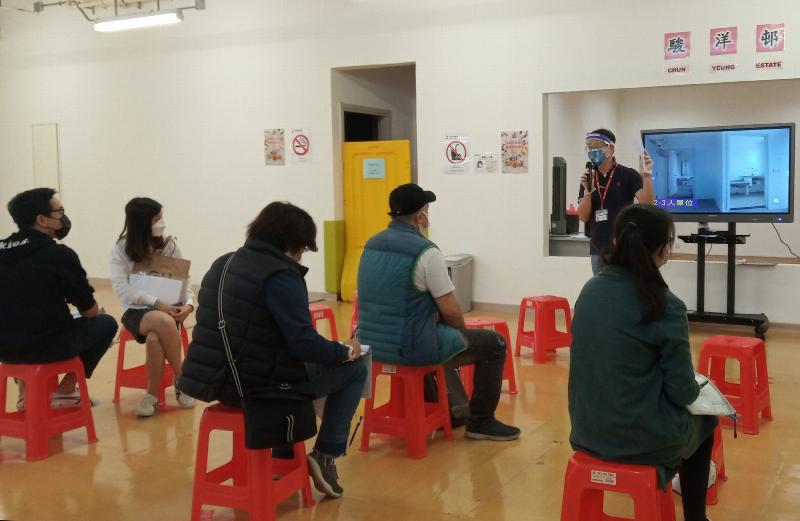
     The Government earlier used Chun Yeung Estate as a quarantine centre and returned the estate to the HA in two phases after thorough disinfection. The HA then conducted relevant reinstatement works and acceptance testing for the whole estate. The first batch of residents gradually moved into Chun Sze House and Chun Wu House from the end of August. As for the remaining three blocks, namely Chun San House, Chun Yat House and Chun Yi House, the intake has gradually commenced from mid-December. Once most of the residents have moved into the estate, even more vitality and vivacity will be found in the community of Fo Tan.

Photo  Photo  Photo  Photo  Photo  Photo  Photo  Photo  Photo  
read more

Health risk category for Air Quality Health Index may reach Serious Level

     The Environmental Protection Department (EPD) has recorded higher than normal pollution levels this afternoon (December 27). According to the EPD’s forecast, it is expected that the Air Quality Health Index (AQHI) at some general and roadside air quality monitoring stations may reach the “Serious” level later today.

     Hong Kong is under the influence of high background pollution airstream and the weather is fine with light winds which is unfavourable for pollutant dispersion. The sunshine enhances photochemical smog activity and the rapid formation of ozone and fine particulates in the Pearl River Delta region. The high level of ozone has promoted the formation of nitrogen dioxide in parts of the urban areas and at the roadside.

     According to the Hong Kong Observatory, the weather in the next few days will maintain mainly fine with light to moderate easterly to northeasterly wind.  It is expected that air pollution will remain at a high level until the advent of stronger wind.

     With a health risk category in the “Very High” range or above, children, the elderly and persons with existing heart or respiratory illnesses are advised to reduce physical exertion and outdoor activities to a minimum or avoid such activities. The general public is advised to reduce, or reduce to a minimum, outdoor physical exertion, and to reduce time staying outdoors, especially in areas with heavy traffic. As health effects of air pollutants may vary for individuals, persons who are in doubt or experience discomfort should seek advice from health-care professionals. The public may visit the Centre for Health Protection’s website (www.chp.gov.hk/en/content/9/460/3557.html) for more information on health effects of air pollution and relevant health advice.

     The Education Bureau (EDB) urges all schools to visit the EDB’s website for appropriate measures to safeguard students’ health and take note of changes in the index. The relevant hyperlink is as follows: www.edb.gov.hk/en/sch-admin/admin/about-activities/sch-activities-guidelines/index.html.

     When the AQHI is at the “Very High” level, employers of outdoor workers performing heavy manual work are advised to assess the risk of outdoor work and take appropriate preventive measures to protect the health of their employees, such as reducing outdoor physical exertion and the time of their stay outdoors, especially in areas with heavy traffic. At the “Serious” level, employers of all outdoor workers are advised to assess the risk of outdoor work and take appropriate preventive measures to protect the health of their employees.
      
     Members of the public can check the current AQHI readings at the EPD’s website (www.aqhi.gov.hk/en.html) or by calling the hotline 2827 8541.    read more

Three property owners fined over $130,000 in total for persistently not complying with removal orders

     Three property owners who persistently failed to comply with the removal orders issued under the Buildings Ordinance (Cap. 123) (BO) have recently been convicted and fined over $60,000 and $70,000 at the Kwun Tong Magistrates’ Courts and the Eastern Magistrates’ Courts respectively.  

     The first case involved the unauthorised enclosure walls for the cantilevered slab balcony of a domestic unit in a composite building at Chatham Road South, Kowloon. As the unauthorised building works (UBWs) were carried out without prior approval and consent from the Buildings Department (BD), a removal order was served on the owners under section 24(1) of the BO.
      
     Failing to comply with the removal order, the two co-owners of the property were prosecuted by the BD in 2017 and were fined about $10,000 in total upon conviction. However, both owners persisted in not complying with the removal order and the BD instigated prosecution against them for the second time. Both owners were convicted again and heavily fined $63,840 in total at the Kwun Tong Magistrates’ Courts on December 22.
      
     Another case involved the unauthorised timber partition and timber door for the unauthorised openings on the enclosure walls at the ground and upper ground floor respectively of the escape staircase of a domestic building at Queen’s Road West, Hong Kong. As the UBWs were carried out without prior approval and consent from the BD, a removal order was served on the owner under section 24(1) of the BO.
      
     The owner was prosecuted in 2018 and 2019 by the BD after failing to comply with the removal order and was fined about $11,000 and $24,000 respectively upon conviction at the Eastern Magistrates’ Courts. However, the owner persisted in not complying with the removal order. He was prosecuted for the third time this year and was convicted and fined $71,500 on November 26.
      
     “UBWs may adversely affect the structural and fire safety of a building, leading to serious consequences. Owners must comply with the removal orders without further delay. The BD will continue to take enforcement action against owners who have failed to comply with the removal orders (including instigation of prosecution) so as to achieve a deterrent effect,” a spokesman for the BD said today (December 27).
      
     Pursuant to section 40(1BA) of the BO, any person who, without reasonable excuse, fails to comply with the removal order served on him or her under section 24(1) of the BO commits an offence and is liable on conviction to a fine of $200,000 and to imprisonment for one year, as well as a further fine of $20,000 for each day that the offence has continued. read more