Tag Archives: China

image_pdfimage_print

LCQ1: On-street parking spaces

     â€‹Following is a question by Dr the Hon Hoey Simon Lee and a reply by the Secretary for Transport and Logistics, Ms Mable Chan, in the Legislative Council today (June 11):

Question:

     Many members of the public have relayed that under the circumstances of a lack of parking spaces, some businesses are occupying on-street parking spaces in various districts on a long-term basis or blocking them with objects in order to use such parking spaces for commercial activities. There are views that such practices defeat the original purpose of installing parking meters to prevent prolonged parking and occupation of road space by vehicles, violate the principle of fair use of public resources, and adversely affect motorists’ convenience when going out. In this connection, will the Government inform this Council:

(1) of the measures taken by the Government in the past three years to combat the illegal long-term occupation of on-street parking spaces, and the relevant enforcement situation;

(2) as there are views pointing out that the long-term occupation of on-street parking spaces or their blockage with objects by businesses has existed in various districts for many years, what specific measures the Government has in place to step up efforts in combatting such practices; and

(3) as it is learnt that at present, some Mainland cities have implemented number plate recognition systems by installing sensors to identify vehicles in parking spaces to assist with enforcement, whether the authorities will consider introducing similar systems or other innovative technological devices at on-street parking spaces to assist law enforcement agencies in combatting the illegal occupation of on-street parking spaces, including long-term occupation, blockage with objects and holding of commercial activities?

Reply:

President,

     It is the Government’s policy to centre on public transport, and the Government encourages the public to make good use of the public transport services as far as possible, so as to avoid aggravating the burden on road traffic resulting from excessive private cars (PCs). In response to the parking demand for both PCs and commercial vehicles, over the past years, the Government has been actively pursuing a host of short-term and medium-to-long-term measures, to increase the supply of parking spaces where circumstances permit. Over the past three years, the number of metered parking spaces (metered spaces) has increased by more than 2 300. Having consulted the Transport Department (TD) and the Hong Kong Police Force (HKPF), a consolidated reply in response to the questions raised by Dr the Hon Hoey Simon Lee is as follows:

(1) and (2) The Government has all along been combatting the illegal occupation of metered spaces, deterring fare evasion and other forms of illegal use, to enhance turnover and ensure these spaces meet short-term parking needs. The HKPF conducts inspections and takes enforcement actions against unpaid parking, and maintains close co-ordination with relevant departments, such as the TD, at the district level for ongoing monitoring. Since 2021, the new-generation parking meter system, equipped with sensors, can detect real-time occupancy and enable the TD to identify unpaid metered spaces through its backend computer system. The TD shares this information with the HKPF via a dedicated application to facilitate enforcement. In terms of actual operation, the meter operator engaged by the TD provides information of unpaid but occupied metered spaces detected by the meters’ sensors to the HKPF for follow-up, and dispatches personnel to regularly patrol parking meters in various districts. If any unlawful occupation of metered spaces is observed, the contractor will report the situation to relevant departments (for example, the HKPF, the Lands Department and the Food and Environmental Hygiene Department) for enforcement. Currently, the contractor conducts daily inspections, and refers an average of about 120 000 cases per year to the HKPF for non-payment of parking fees, and the number of referrals concerning parking spaces occupied by non-vehicle items to the HKPF and other relevant departments has risen over the past three years to over 200 cases. The TD also refers public complaints to the appropriate authorities for action. Additionally, the HKPF continues its public awareness and education efforts. Between 2021 and 2024, the number of metered spaces increased by over 10 per cent, while revenue from metered parking fees rose by more than 40 per cent, suggesting improved compliance with paid parking regulations.

     Regarding enforcement against other forms of illegal occupation, section 4A of the Summary Offences Ordinance stipulates that anyone who leaves objects in a public place – such as pallets/shop goods to reserve spaces – without reasonable excuse, causing obstruction, inconvenience, or danger to others or vehicles, is liable to a Level 4 fine ($25,000) or three months’ imprisonment.

(3) As mentioned above, the new generation parking meter system is equipped with sensors to detect the usage status of parking spaces in real time. The purpose of collecting information is to provide motorists with locations of vacant on-street parking spaces in real time, and does not have the function of identifying number plate numbers.

     Having said that, this information could assist the HKPF and the TD in identifying cases where metered spaces are occupied without payment, enabling targeted enforcement actions by the HKPF. The departments will continue to draw on experiences from other places and advancements in relevant technologies, actively exploring the adoption of new technologies to enhance the management and operational efficiency of metered spaces. The TD plans to conduct a two-month pilot scheme in the fourth quarter of 2025, adopting artificial intelligence sensors in targeted areas with greater demand for metered spaces and higher rates of illegal occupation of parking spaces. Depending on the success of the trial, we will expand the coverage of the scheme. Regarding number plate recognition systems, the TD remains open-minded and will assess their reliability alongside the cost-effectiveness of upgrading the meter system’s hardware and software holistically to determine their suitability for application in Hong Kong.

     Thank you, President. read more
LCQ20: Developing panda tourism

     â€‹Following is a question by the Hon Chan Yung and a written reply by the Secretary for Culture, Sports and Tourism, Miss Rosanna Law, in the Legislative Council today (June 11):
 
Question:
 
     There are views that the official public debut of Hong Kong’s first pair of locally born giant panda twins, elder sister Jia Jia and little brother De De, has sparked a new wave of “panda fever” in the city, which is currently home to six giant pandas, and the authorities should seize this opportunity to develop the panda tourism industrial chain, promote the growth of the panda tourism and related industries in Hong Kong. In this connection, will the Government inform this Council:
 
(1) since Hong Kong became home to six giant pandas, whether the authorities have compiled statistics on the direct economic benefits they have brought to Ocean Park; if so, of the details; if not, the reasons for that;
 
(2) whether the authorities have compiled statistics on the direct and indirect economic benefits brought to Hong Kong as a whole by the six giant pandas respectively (including the sales of panda merchandise and revenue growth across various trades and industries); if so, of the details; if not, the reasons for that; and
 
(3) whether the Government has further plans for the future to promote the healthy and sustainable development of the panda tourism and related industries in Hong Kong, e.g. Ocean Park’s subsequent plans to optimize facilities and services, as well as budget arrangements, or plans to develop the panda tourism industrial chain in collaboration with various trades and industries; if so, of the details; if not, the reasons for that?
 
Reply:
 
President,
 
     The reply to the questions raised by the Hon Chan Yung is as follows:

     The giant pandas An An and Ke Ke made their debut on December 8, 2024 at the Hong Kong Jockey Club Sichuan Treasures at Ocean Park, followed by the debut of the pigeon pair of giant panda twin cubs Jia Jia and De De on February 16, 2025 at the “Giant Panda Adventure” of the park. They have been well received by both locals and visitors, and Ocean Park’s attendance has since then increased by around 19 per cent over the same period last year. Together with giant pandas Ying Ying and Le Le, the Hong Kong giant panda family has brought additional revenue to Ocean Park by way of admission tickets, merchandise, etc. The Ocean Park Corporation’s overall financial performance for its Financial Year (FY) 2024-25, including the revenues on admission, food and beverages as well as merchandise in the same FY, will be reported in its 2024-25 Annual Report.

     The Culture, Sports and Tourism Bureau (CSTB), jointly with the Hong Kong Tourism Board (HKTB) and Ocean Park, has collaborated with various parties in Hong Kong to organise a series of promotional activities themed “Come and Enjoy a Pandastic Hong Kong” since September 2024. The Hong Kong giant panda family has been serving as Hong Kong’s tourism ambassadors to promote “tourism is everywhere” travel experience in Hong Kong, attracting visitors from around the world to Hong Kong and driving tourism development. As a result of CSTB’s active promotion, different policy bureaux/departments, the tourism industry and related sectors have launched a number of promotional and marketing campaigns with the theme of giant pandas.

     The above promotional events and initiatives have successfully sparked the craze for giant pandas across the city, creating favourable conditions for various trades and industries and encouraging them to explore and seize the business opportunities, as well as attracting more visitors to Hong Kong. A number of large shopping malls in various districts have displayed giant panda decorations and installations; the catering sector has introduced various giant panda design products; the retail sector has rolled out a variety of crossover products featuring giant pandas; and the MTR Corporation Ltd has collaborated with Ocean Park to offer tourism products bundling High Speed Rail and Airport Express tickets with Ocean Park admission tickets, etc.

     Ocean Park has also actively partnered with various brands to launch giant panda-themed promotions and merchandise, such as giant panda design jewellery, accessories, stationery, household products, Chinese snacks, wood carving items, mobile accessories, red wine, “fai chuns”, red envelopes, cars. Currently, the number of giant panda-themed merchandise under Ocean Park’s catalogue has exceeded 500, which is fourfold of the number before the giant panda cubs were born. Many items of the merchandise are well received and the sales performance is satisfactory.

     Moreover, Ocean Park has launched “A Treasured Moment with the Giant Panda Twins” programme since February 18, 2025 to allow visitors to meet the giant panda cubs in the morning before the park opens, with a daily quota of 40 participants. The prgromme has so far attracted more than 3 000 enrolments. At the same time, Ocean Park is organising various giant panda workshops, such as “Giant Panda Discovery”, “Giant Panda Poo Paper Workshop” and “Wowotou Studio”, which allow the participants to learn about the physical features and habits of the giant pandas through hands-on experience and observation, as well as acquire knowledge of the conservation of giant pandas, thereby bringing a unique giant panda experience to both locals and visitors. It is anticipated that the above activities and promotions will continue to drive up Ocean Park’s attendance and revenues from ticketing and merchandise, etc.

     On promoting the further development of panda tourism, the CSTB will continue to work with the HKTB, Ocean Park and various sectors of the community to better seize the opportunities presented by the Hong Kong giant panda family and exercise creativity to launch more giant panda-related promotional activities and merchandise. The CSTB and the HKTB have also rendered full support for large-scale, giant panda-themed events hosted by other organisations. Those events organised in the past few months have garnered positive responses from locals and visitors. During the recent Dragon Boat Festival, the HKTB hosted the Dragon Boat Carnival featuring “Panda Friends@Ocean Park Hong Kong” festive photo spots. The Hong Kong giant panda family in festive costumes made their debut at the Avenue of Stars in Tsim Sha Tsui, allowing visitors to take photos with the giant panda family against the iconic backdrop of the Victoria Harbour. A pop-up store was also set up on site offering a great variety of giant panda-themed and festive merchandise. Both initiatives were well-received by the locals and visitors.

     The CSTB will continue to encourage Ocean Park to capitalise on its advantage of being home to the largest number of giant pandas outside the Mainland by launching more Hong Kong-themed giant panda-related promotional activities, merchandise, cultural and creative products, comics and animation products, video games, tourism products, etc., including designs using the giant pandas intellectual property (IP) which were created according to the physical features of the six giant pandas residing in Hong Kong. In addition to the extensive use of the relevant IP in Ocean Park’s social media contents and merchandise, Ocean Park will continue to make use of the relevant IP to launch giant panda-themed festive events, immersive experience activities, light shows, thematic performances, amusement facilities, etc.

     The 15th of this month is Father’s Day, which is also the first Father’s Day for Le Le as a father and hence of special significance. Additionally, the 26th and the 28th of this month are the first birthdays of Ke Ke and An An respectively after their arrival in Hong Kong while August 15 is the one-year-old birthday of Jia Jia and De De. The CSTB together with the HKTB and Ocean Park will launch a new wave of giant panda promotions to keep creating favourable conditions and business opportunities for Ocean Park and different sectors.

     As for the facilities for giant pandas, to provide the giant pandas with a habitat closely resembling the natural environment, Ocean Park completed the first phase of enhancement works in Hong Kong Jockey Club Sichuan Treasures before the arrival of An An and Ke Ke in September 2024, including addition of climbing frames, plants, etc., with sponsorships totalling about $9 million solicited from a number of private organisations. Furthermore, a funding of $121 million was received from the Hong Kong Jockey Club Charities Trust in September 2024 to take forward upgrading works for the Hong Kong Jockey Club Sichuan Treasures and the “Giant Panda Adventure”. The existing ecological facilities will be enhanced to provide the giant pandas with a high-quality, safe and age-appropriate living environment that closely resembles the natural habitat. The upgrading works is expected to commence in the fourth quarter of 2025 and to complete in the second quarter of 2027. read more

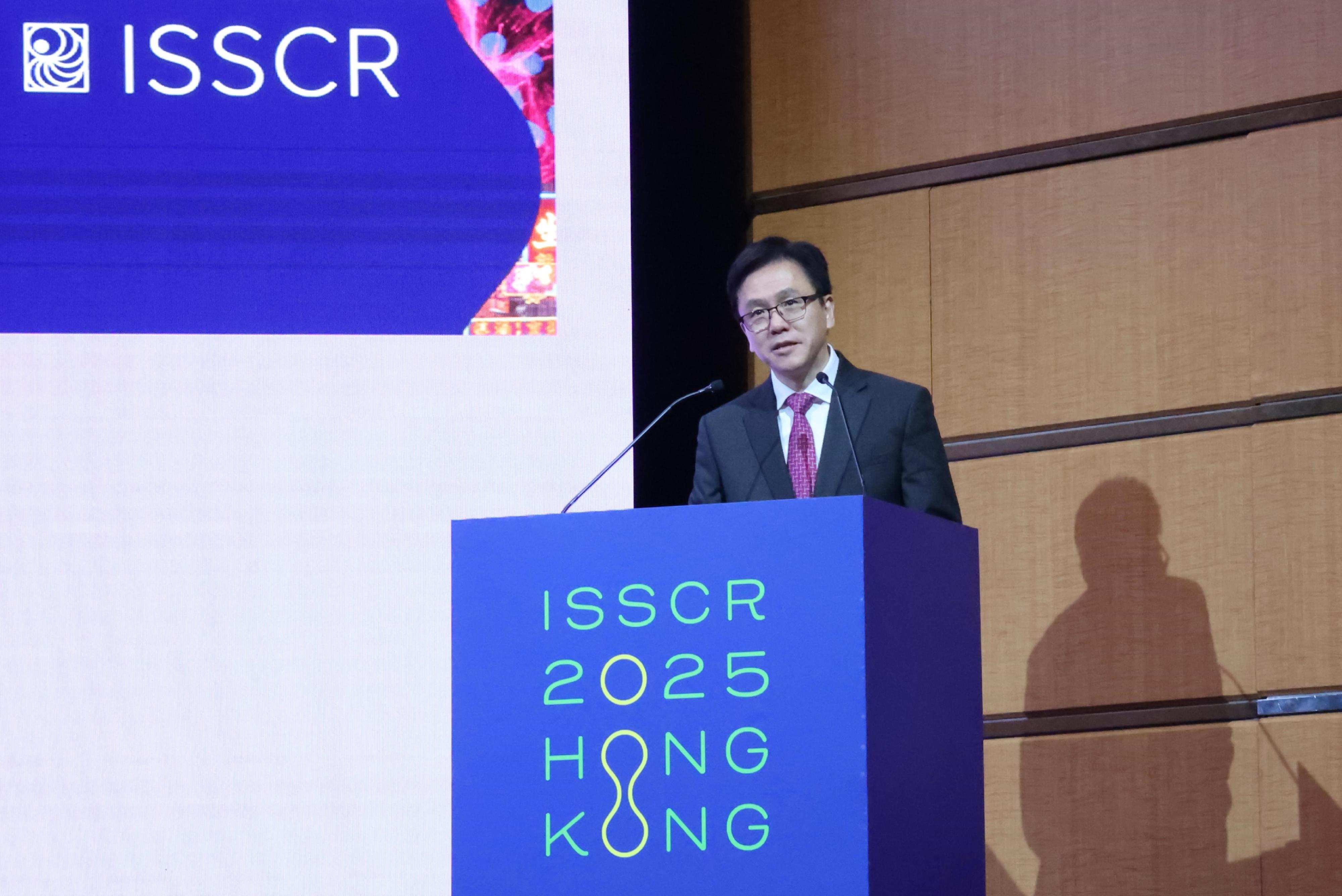
Speech by SITI at International Society for Stem Cell Research 2025 Annual Meeting (English only) (with photo)

     Following is the speech by the Secretary for Innovation, Technology and Industry, Professor Sun Dong, at the International Society for Stem Cell Research (ISSCR) 2025 Annual Meeting today (June 11):

Professor Greco (President of the ISSCR, Professor Valentina Greco), Mr Alm (Chief Executive Officer of the ISSCR, Mr Keith Alm), Professor Kathryn Cheah (2025 Annual Meeting Program Committee Co-Chair of the ISSCR), Professor Rocky Tuan (Lee Quo Wei and Lee Yick Hoi Lun Professor of Tissue Engineering and Regenerative Medicine of the Chinese University of Hong Kong), Professor Nancy Ip (President of the Hong Kong University of Science and Technology), distinguished guests, ladies and gentlemen, 

     Good morning. It gives me great honour to stand before you today as we kick off the ISSCR 2025 Annual Meeting here in Hong Kong, a city where East meets West, tradition meets innovation, and today, science meets the future.

     I still remember the pivotal moment in September 2022 when Kathryn, Nancy and Rocky approached me with a bold vision, that is, to bring this prestigious conference to Hong Kong. Without hesitation, I said, “Let’s make it happen!” And here we are, thanks to the relentless effort of the Bid Committee, the unwavering support of our three co-sponsoring universities, and of course the confidence that the ISSCR placed in us.

     I would like to thank the ISSCR for choosing Hong Kong as the host city for this very important meeting. Your decision speaks volumes. It is not just about our city’s thriving biomedical ecosystem, but about its growing role as a global hub for scientific collaboration.

     Hong Kong is more than a skyline. It is a skyline of possibilities. We are moving full steam ahead to develop Hong Kong into an international innovation and technology centre and a leading hub for life and health sciences. Hong Kong has a solid foundation in biomedical research with a good number of world-acclaimed award-winning scientists, well-accredited research outputs, an excellent clinical research track record and the state-of-art research infrastructure.

     Our flagship R&D (research and development) initiative, InnoHK, exemplifies this commitment – bringing together over 30 world-renowned universities and research institutes from 12 economies, and setting up a total of 30 top-tier research labs. Sixteen of them are life science and health-related with many involving stem cell research in various dimensions, which are pushing boundaries every day.

     Stem cell research is not just a field, it is a frontier. It holds the promise of rewriting medicine, healing the incurable, and unlocking the deepest mysteries of human biology. Over the next four days, this gathering will allow ideas to be shared, partnerships to be forged and inspiration to be ignited. The discoveries made here will not only make an impact in Hong Kong, but will also ripple across the globe.

     As we stand at the forefront of stem cell research, a field that bridges the impossible and the inevitable, may I leave you with the words of Marie Curie, a pioneer who reshaped science: “Nothing in life is to be feared; it is only to be understood. Now is the time to understand more, so that we may fear less.”

     Ladies and gentlemen, let this conference be a testament to that understanding. Together, we are not just studying stem cells, but unlocking the future of medicine. May I wish the ISSCR 2025 Annual Meeting a resounding success, and everyone a wonderful stay in Hong Kong. Thank you.

Photo  
read more

LCQ15: Development of pet-related industries

     Following is a question by the Hon Rock Chen and a written reply by the Secretary for Environment and Ecology, Mr Tse Chin-wan, in the Legislative Council today (June 11):
 
Question:
 
     It has been reported that the number of households keeping pets has increased in recent years, with pet-related industries developing rapidly. However, there are views pointing out that Hong Kong still has room for improvement in veterinary medical care and pet-friendly public facilities, as well as in data management and policies regarding the pet industry. In this connection, will the Government inform this Council:
 
(1) as it is learnt that a number of private shopping centres have introduced pet-inclusive facilities, such as pet accesses and pet rest areas, to attract spending from pet owners and thereby further unleash the potential of the pet economy, whether the Hong Kong Housing Authority will consider drawing on the relevant experience to implement pet-friendly measures in the shopping centres of the public housing estates under its purview; if so, of the details; if not, the reasons for that;
 
(2) as it has been reported that public or charity-run veterinary organisations have been established one after another in Taiwan, such as in Taoyuan City and New Taipei City, to provide basic veterinary medical services at transparent charges, which not only enhance pet health protection but also boost the pet economy, whether the HKSAR Government has conducted studies or policy planning regarding the establishment of public or semi-public veterinary medical facilities; if so, of the details; if not, the reasons for that; and
 
(3) as there are views that maintaining pet-related data can help understand the risks of pet epidemics and diseases, as well as the market structure and potential of the pet industry, whether the Government will establish a territory-wide pet data management platform to systematically collect relevant data, including the number of pets, breed distribution, keeping and vaccination records, and pet disease trends, so as to provide a scientific basis for the formulation of policies on pet-friendliness and developing the pet economy policies; if so, of the details; if not, the reasons for that?
 
Reply:
 
President,
 
     Having consulted the Housing Bureau, the reply to the question from the Hon Rock Chen is as follows:
 
(1) As pet keeping has become increasingly common in Hong Kong, there has been more attention in society to bringing animals to enter different premises and use public facilities. In general, the Government needs to take into account different factors when considering whether to further relax existing arrangements, including the nature of individual facilities, whether ancillary facilities are in place and the degree of social acceptance, in order to achieve the policy objective of facilitating people and animals to co-exist harmoniously.
 
     The shopping centres under the Hong Kong Housing Authority (HA) are mainly “neighbourhood shopping centres” located in public housing estates/courts. These shopping centres provide local residents with shopping convenience, with the aim of catering for their basic needs in daily life. All along, guide dogs accompanying the visually impaired have been allowed to enter the HA’s shopping centres. The HA has further implemented some pet-friendly policies, such as allowing pets to enter shopping centres if they are placed in pet carrier bags or pet strollers and that no hygiene and environmental nuisance will be caused. The HA will keep in view the development and needs of the community for pet-friendly spaces and facilities, and design “neighbourhood shopping centres” that are in line with the actual situation.
      
     On the other hand, the Domain located in Yau Tong is a large-scale regional shopping centre under the HA. Coupled with spacious indoor space, outdoor activity areas, wide passageways and multiple entrances at different locations, it is more equipped with the requisites for development into a pet-friendly mall than typical “neighbourhood shopping centres” located in housing estates. The HA will review whether it is appropriate to further provide pet-friendly measures in the Domain, such as installing relevant human-pet friendly facilities to appeal to pet owners for boosting consumption and visitor flow.
 
(2) The Agriculture, Fisheries and Conservation Department (AFCD) has been carrying out publicity and public education to remind the public to consider carefully before deciding to keep pets, to assess whether one could fulfil the duties of pet ownership in meeting the pets’ basic needs in diet, environment, daily care, healthcare, etc.
 
     On veterinary services, the Veterinary Surgeons Board of Hong Kong (VSB) established under the Veterinary Surgeons Registration Ordinance (Cap. 529), is currently responsible for the regulation, registration and disciplinary control of veterinary surgeons, so as to ensure a high standard of veterinary services in Hong Kong. The VSB learns about the overall veterinary services through data gathered in the regulation of the veterinary profession. The number of registered veterinary surgeons (RVS) has been consistently on the rise since 2015, from 823 in 2015 to 1 364 in April this year, representing an increase of 65 per cent. RVS comprises many specialties, such as small animal internal medicine and surgery, dermatology, cardiology, neurology and veterinary pathology, and therefore animal owners should be able to find appropriate veterinary services for their pets. To meet unexpected medical expenses, members of the public may also purchase pet insurance products available in the market as appropriate.
      
     Apart from private veterinarians, the City University of Hong Kong and some animal welfare organisations (such as the Hong Kong Society for the Prevention of Cruelty to Animals) also provide veterinary services and hence the Government currently has no plan to separately establish public medical facilities for pets.
 
(3) To safeguard public health and prevent the spread of animal diseases, the AFCD monitors and regulates animal activities in accordance with the law, and assesses the risk of pet animal diseases. The AFCD regulates the import of live animals through a permit system under the Public Health (Animals and Birds) Regulations (Cap. 139A) and the Rabies Regulation (Cap. 421A), so as to prevent the introduction of animal diseases into Hong Kong. Furthermore, the AFCD regulates the local animal activities through various licences, for example, regulating the animal trading and dog breeding activities through the Animal Trader Licence and Dog Breeder Licence respectively under the Public Health (Animals and Birds) (Trading and Breeding) Regulations (Cap. 139B), and to require dog keepers to have their dogs vaccinated against rabies, implanted with a microchip, and to apply for a dog licence under the Rabies Regulation, for the prevention of rabies.
 
     The Government last conducted a Thematic Household Survey on pet ownership among households across Hong Kong in 2018. The AFCD and the Census and Statistics Department will conduct another survey later this year to gather the latest data on trends and preferences in pet ownership of Hong Kong families. These findings will assist the trade to learn about the latest trend of pet ownership, for their provision of products and services according to market demand. read more

LCQ13: Disposal of yard waste

     Following is a question by the Hon Andrew Lam and a written reply by the Secretary for Environment and Ecology, Mr Tse Chin-wan, in the Legislative Council today (June 11):
 
Question:
 
     The Environmental Protection Department (EPD) set up Y·PARK, a yard waste recycling centre, in 2021, with the purpose of converting recycled yard waste into useful materials to reduce disposal at landfills and associated carbon emissions. Y·PARK has a target handling capacity of about 11 000 tonnes in the first year, which would gradually increase to an annual average of around 22 000 tonnes. However, information from the Government shows that Y·PARK’s throughput last year was 6 876 tonnes. Besides, earlier on some trucks were reportedly driven from Y·PARK carrying yard waste to landfills in the New Territories West for disposal, and the EPD subsequently explained that the yard waste in question was not acceptable as it contained a large amount of impurities. In this connection, will the Government inform this Council:
 
(1) of Y·PARK’s criteria for the recovery of yard waste, whether it has studied the reasons for the gradual decline in the amount of yard waste handled by Y·PARK in recent years, including whether this is affected by Y·PARK’s recovery criteria or the fact that yard waste producers recycle their own waste;
 
(2) as it is learnt that Y·PARK’s major sources of yard waste are (i) ‍construction works and (ii) clearance work arising from regular vegetation maintenance, whether there is a statistical breakdown of the amount of yard waste respectively from (i) and (ii) handled by Y·PARK from 2021 to date; of the amount of yard waste that was sent to but not accepted at Y·PARK over the past three years, and whether it has looked into how such yard waste was subsequently disposed of (such as conversion into biochar and being sent to landfills);
 
(3) given that according to a paper submitted by the Government to the Subcommittee to Study Policy Issues Relating to Municipal Solid Waste Charging, Recovery and Recycling of this Council in January 2023, a pilot biochar plant in EcoPark, which will further convert recyclable products of Y·PARK into biochar, has an estimated capability of converting about 6 000 tonnes of local woody waste into some 1 200 tonnes of biochar annually, of the amounts of waste handled and biochar produced since the plant came into operation, and whether such amounts could meet the targets; if not, when they are expected to meet the targets; and
 
(4) given that according to the report on Monitoring of Solid Waste in Hong Kong, the amounts of yard waste recovered and disposed in Hong Kong in 2023 were 10 400 tonnes and some 83 000 tonnes respectively, while the amount of yard waste handled by Y·PARK in the same year was 8 609 tonnes, whether it has assessed if there is room for improvement in Y·PARK’s handling capacity; whether the Government has further strategies in place to enhance the recovery rate of yard waste?
 
Reply:
 
President,

     After the onslaught of Super Typhoon Mangkhut, the Environmental Protection Department (EPD) set up a temporary yard waste recycling centre, Y·PARK, in 2021 to collect and process yard waste generated from regular vegetation maintenance and public construction works on one hand, and to assist in treating large quantities of yard waste generated after emergency incidents such as super typhoons on the other. The service fees paid by the EPD to the contractor are not based on the amount of yard waste received, but on the quantity of recyclable products produced by the contractor, which reflects Y·PARK’s performance more accurately.
 
     The reply to the question raised by the Hon Andrew Lam is as follows:
 
(1)To ensure the smooth operation of Y·PARK and the quality of the recyclable products, Y·PARK has established appropriate standards for yard waste recycling, including not accepting infected or infested wood, yard waste which is difficult to process such as tree stumps, pure twigs, leaves, grass clippings, or yard waste containing large amount of impurities. If yard waste is mixed with large amount of impurities, the chipping operations may be severely affected. For instance, Y·PARK’s wood chipper experienced mechanical failures due to metal rods hidden in the wood. Time and manpower were required to remove the rods, replace parts and repair the equipment. Such incidents could even halt the production line. Meanwhile, the quality of the recyclable products produced may be affected by impurities. For instance, plastics mixed into the recyclable products would limit their use in gardening. In this regard, the contractor of Y·PARK maintains communication with yard waste producers to explain how to properly separate waste at source to reduce instances where Y·PARK has to reject yard waste. 

     One of the Y·PARK’s functions is to assist in handling the large amount of yard waste generated in a short period of time after super typhoons. Therefore, when Y·PARK was set up in 2021, we required the contractor to have sufficient handling capacity as buffer of up to 30 tonnes per day (i.e. about 11 000 tonnes per year) in the first year and to gradually increase to 60 tonnes per day (i.e. about 22 000 tonnes per year) subsequently. Yet the actual amount of yard waste received at Y·PARK is subject to various factors such as the number and intensity of typhoons during the typhoon season each year, the operations and progress of government and private site formation projects, and the quality of the yard waste.
 
(2) Since its commencement of operation in 2021 up to April this year, Y·PARK has received a total of approximately 31 540 tonnes of yard waste, of which more than 50 per cent from construction works and about 40 per cent from routine vegetation maintenance. The EPD does not have the quantity of rejected yard waste and information on its final disposal means.
 
(3) The first Pilot Biochar Production Plant (PBPP) in Hong Kong established by the EPD was originally scheduled to commence production in November 2023, with an estimated handling capacity of processing about 6 000 tonnes of local wood materials and producing about 1 200 tonnes of biochar annually. The PBPP commenced its testing in May 2023, during which many technical issues were overcome and various operational conditions (including processing temperatures, duration, and different types of wood-based raw materials) were adjusted and tested, in order to identify the optimal operating conditions and ensure high-quality biochar can be produced with less energy consumption. The PBPP finally commenced production in October 2024. From the start of the PBPP’s testing stage to the end of April 2025, the PBPP has processed over 1 200 tonnes of local wood materials from yard waste, converting them into more than 270 tonnes of biochar. The purposes of setting up the PBPP are to explore the technical feasibility of converting local wood materials from yard waste into biochar, as well as to study the quality of the biochar produced and its practical applications in the local market. As such, the actual processing quantity of the PBPP is adjusted based on testing needs and is also affected by the supply of wood materials and local market demand for biochar applications. With the PBPP entering production stage for only about six months, the EPD will consolidate operational experiences with a view to gradually increasing its processing quantity upon establishing technical requirements and market applications.
 
(4) In order to further enhance the yard waste processing quantity of Y·PARK, the EPD are adopting a multi-pronged approach to increase the yard waste recycling rate. Measures include: (i) the EPD will continue to liaise with relevant government departments and other yard waste producers, encouraging them to adhere to the principles of reduce, reuse, and recycle, and treat and reuse yard waste on-site as far as possible, while yard waste that cannot be treated or reused on-site could be delivered to Y·PARK or other suitable recycling facilities for treatment; (ii) to encourage the Y·PARK contractor to recycle collected yard waste as far as possible to increase its recycling rate. The current contract stipulates that the service fees paid by the EPD to the contractor are based on the quantity of recyclable products produced, providing a financial incentive to the contractor; and (iii) in the long run, the Government reserves land in the New Territories North New Town to establish a larger-scale yard waste recycling facility to enhance yard waste handling capacity. read more