Tag Archives: China

image_pdfimage_print

LCQ17: Services provided to young people and working youth

     Following is a question by the Hon Luk Chung-hung and a written reply by the Secretary for Home Affairs, Mr Caspar Tsui, in the Legislative Council today (January 20):
 
Question:
 
     Regarding the services provided to young people and the working youth, will the Government inform this Council:
 
(1) of the number of non-governmental organisations which provided social services with young people and the working youth as targets in each of the past three years, and set out by name of organisation (i) the type of organisation to which they belonged, (ii) the amount of subsidy by public funding received each year (if applicable), (iii) the number of relevant employees, and (iv) the number of service recipients (with a breakdown by age group);
 
(2) whether the Home Affairs Bureau, the Labour and Welfare Bureau and the Education Bureau commissioned in the past three years any organisations to implement new service projects with young people and the working youth as targets; if so, set out by name of project (i) the number of organisations, (ii) the name of organisations, (iii) the amount of subsidy by public funding received each year, and (iv) the number of service recipients each year (with a breakdown by age group); and
 
(3) given that the disturbances arising from the opposition to the proposed legislative amendments and the epidemic have dealt a heavy blow to society and the economy, seriously affecting the development and upward mobility of young people and the working youth, whether the aforesaid bureaux have plans to launch targeted service projects to help them face up to adversity and equip themselves so as to better meet the challenges ahead?

Reply:
 
President,
 
     Having consulted the Labour and Welfare Bureau and the Education Bureau (EDB), our consolidated reply to the question raised by the Hon Luk Chung-hung is as follows:
 
(1) and (2) Over the past three financial years, 47 welfare organisations were subvented by the Social Welfare Department (SWD) to provide youth services. The average annual amount of total subvention allocated to these organisations was about $2,029 million, with around 425 900 children and young people aged six to 24 receiving such services. In addition, over the past three financial years, 31 welfare organisations were allocated funding from the Child Development Fund to operate projects, which last three years each, throughout the territory. More than 8 000 children and young people aged 10 to 19 have benefitted from joining the projects, and the average annual funding provision was about $47.3 million. SWD does not have information on the organisations’ number of employees providing relevant services. For new services, SWD subvents five welfare organisations in operating five Cyber Youth Support Teams which were set up in December 2018. In 2019-20, the amount of subvention allocated for the service was around $23.9 million, and the number of young people aged six to 24 receiving the service was 7 977.  
 
     Similarly, during the past three financial years, the Labour Department (LD) commissioned 26 organisations to provide case management and employment support services for young people. The average amount of service fee per year is about $12.9 million. Some 13 500 young people aged 15 to 29 were served each year on average. LD does not have information on the organisations’ number of employees providing relevant services.
 
     Besides, the Home Affairs Bureau (HAB) introduced the Funding Scheme for Youth Life Planning Activities (FSYLPA) since 2014 to subsidise non-governmental organisations (NGOs) in providing time-limited service projects on youth life planning. In the most recent funding cycle from 2019/20 to 2021/22 school years, a total of 24 non-profit-making NGOs have been granted subvention to roll out relevant services. A total amount of funding at around $115 million has been allocated, and an estimated number of around 318 000 people (including secondary school students, fresh graduates and school leavers, teachers and parents) will receive the services. HAB does not keep statistics on the number of staff providing the relevant services employed by the NGOs concerned.
 
     As regards EDB, the Bureau allocated $350,000 in 2020-21 financial year to commission a social service organisation to launch a pilot scheme in 10 selected secondary schools which provides consultancy services on vocational and professional education and training for school teachers. The subject pilot scheme has been rolled out in the 2020/21 school year. It is estimated that about 2 200 senior secondary school students from the participating schools will be benefitted. There will be 12 staff in the organisation concerned responsible for providing the services.  
 
(3) The social unrest, unstable epidemic situation and prolonged class suspension over the past year have affected the lives and learning patterns of young people. Some of them feel confused about their future. In view of these situations, we should care more about young people’s well-being, enable them to enjoy more diversified development opportunities and assist them in equipping themselves, achieving upward mobility and realising their aspirations.
     
     SWD has been in communication with the subvented NGOs to meet the young people’s welfare needs. Starting from September of the 2019/20 school year, SWD has implemented the “two social workers for each secondary school” measure in more than 460 secondary schools throughout the territory, with supervisory manpower strengthened correspondingly. During suspension of face-to-face classes for schools due to the pandemic as required, school social workers continue to maintain close liaison with students and school personnel. Apart from maintaining contacts with students through telephone calls and online means, school social workers also provide timely counselling to students through interviews or visits in case of need or in urgent situation. To enhance contact with young people who are in need of emotional support, SWD has introduced cross-district overnight outreach services operated by an NGO to provide online platform support and counselling services and clinical psychological services, etc. for needy students and young people. In addition, SWD provides clinical psychological services for the young people in need via NGOs, and has conducted training workshops for school social workers, teachers and principals to enhance their skills in handling students’ emotion. SWD has also provided psycho-education through radio broadcasting so as to strength parent-child relationship, and has worked with social workers in enhancing parent-child communication. SWD has uploaded to its webpage the 2020 Psycho-education information Hub for Combatting the Novel Coronavirus, and has published the Psycho-education Resource Package on Combatting the Novel Coronavirus, with a view to providing psychological support information for members of the public including young people. During the pandemic, subvented NGOs, through the provision of additional resources from SWD, have strengthened cyber outreach and counselling for providing appropriate services and making service referrals for young people in need.
 
     In respect of schools, in accordance with the development of the social incidents and the epidemic, EDB has been keeping in close contact with schools and has issued letters and guidelines to schools from time to time, reminding them to keep a close eye on students’ behaviour and strengthen the communication with parents. Schools have been requested to enhance guidance and discipline as well as support for students so as to help them release their negative emotions, strengthen their resilience and nurture their positive values and attitude. Professionals of different disciplines in a school (including guidance personnel, school social workers and school-based educational psychologists) will provide students with appropriate support. Through the whole-school discipline and guidance approach, related professionals collaborate with teachers to provide remedial, preventive and developmental counselling programs for students as necessary. Besides, EDB has been holding more workshops, thematic seminars and training courses for schools, and has also organised activities in collaboration with related non-governmental organisations to promote a positive and caring culture. For example, “Caring School in Adversity” was set as the theme of the grand prizes of the “Caring School Award Scheme” in 2020. Over 430 kindergartens, primary, secondary and special schools participated in the Scheme. In addition, EDB has been continuously promoting different student guidance projects, such as the “Understanding Adolescent Project” and the “Enhanced Smart Teen Project”, for primary and secondary students respectively, aiming at enhancing their resilience in facing adversity and future challenges.
 
     As for universities, not only has the pandemic affected universities’ modes of teaching and learning, and student support services, it has also caused stress and anxiety among university students as they face disruption to their studies and job search. The University Grants Committee (UGC) thus made a one-off special allocation of $50 million in November 2020 to encourage innovation among universities in developing a more diverse range of student support services through various delivery means. The eight UGC-funded universities will make use of the funding to take forward 75 initiatives in the 2020/21 and 2021/22 academic years through expanding existing services and launching new ones that cover the areas of psychological counselling, mental well-being, career planning and development, and physical fitness and healthy lifestyle, thereby supporting students to tide over difficult times during the pandemic.
 
     Besides, HAB together with the Youth Development Commission have launched various measures to sponsor NGOs in providing relevant services for young people. Although most of the exchange, internship and physical training activities could not be held due to the outbreak of COVID-19, we have allocated additional resources to NGOs funded under FSYLPA to enable them to make use of technology to organise activities that would enhance young people’s well-being and stress management, as well as provide life planning support and training to students during the epidemic. The enhancement measures have met with positive response from the NGOs concerned. A total of more than 620 e-learning activities have been organised so far. Moreover, we have further enhanced FSYLPA by introducing the Individual Study and Career Support Service for Secondary School Students and Leavers under the scheme. Under the support service, the 24 currently funded NGOs were provided with one-off additional funding for a period of one year to provide comprehensive, in-depth and sustainable counselling services particularly for young people who have yet to have a clear progression or employment path. 
 
     In addition to creating a decent environment for growing up in Hong Kong, the Government has also been actively promoting opportunities for career development and entrepreneurship for Hong Kong young people in Hong Kong as well as the Guangdong-Hong Kong-Macao Greater Bay Area (GBA). The Government launched the Greater Bay Area Youth Employment Scheme in January 2021 to encourage enterprises with business in both Hong Kong and the Mainland cities of GBA to employ local university graduates and station them to work in the Mainland cities of the GBA. The scheme provides 2 000 places, around 700 of which are designated for innovation and technology posts. Hong Kong residents who are legally employable in Hong Kong and hold bachelor’s degrees or above awarded by institutions in or outside Hong Kong from 2019 to 2021 may participate in the scheme. Participating enterprises have to employ the target graduates in Hong Kong according to Hong Kong laws, offer them a monthly salary of not less than HK$18,000, and station them in the Mainland cities of the GBA to work and receive on-the-job training. The Government will pay the enterprises a monthly allowance of HK$10,000 for each qualified graduate employed for up to 18 months.
 
     Besides, the Government has introduced, under the Youth Development Fund, the Funding Scheme for Youth Entrepreneurship in the Guangdong-Hong Kong-Macao Greater Bay Area and the Funding Scheme for Experiential Programmes at Innovation and Entrepreneurial Bases in the Guangdong-Hong Kong-Macao Greater Bay Area, with a view to encouraging Hong Kong young people to make optimal use of the innovative and entrepreneurial (I&E) bases in GBA and helping them develop their businesses in both Hong Kong and Mainland GBA cities. The Chief Executive has announced in her 2020 Policy Address that funding under the current-round of the Funding Scheme for Youth Entrepreneurship in the GBA would be raised, so that funded NGOs would have more resources to support and strengthen youth start-ups. After increasing the funding amount, it is estimated that over $100 million will be granted by the aforesaid funding scheme to over 10 NGOs to implement youth entrepreneurship projects, under which subsidies will be provided for more than 200 youth start-ups (involving over 800 young people) who intend to start or have already started their businesses in Hong Kong and/or Mainland GBA cities, while start-up support and incubation services will be rendered to about 4 000 young people. As for the Funding Scheme for Experiential Programmes at Innovation and Entrepreneurial Bases in the GBA, it is estimated that about $5 million will be granted to over 10 NGOs to organise short-term experiential programmes at I&E bases in Mainland GBA cities, benefiting nearly 700 young people. read more
LCQ11: The New Territories cycle track network

     Following is a question by the Hon Kenneth Lau and a written reply by the Secretary for Transport and Housing, Mr Frank Chan Fan, in the Legislative Council today (January 20):

Question:

     The Government is developing a cycle track network in the New Territories with a total length of about 82 kilometres, comprising the Tuen Mun to Ma On Shan backbone section (Tuen Ma Cycle Track) which was linked up last year, and the Tuen Mun to Tsuen Wan backbone section (Tuen Tsuen Cycle Track) which is under construction. Some members of the public have complained that cyclists have to dismount at a number of sections along the Tuen Ma Cycle Track and some of the sections are even at the junctions with roads, leading to the dangerous situation of bicycles and vehicles competing for road space. Besides, as there are too many bollards installed at the junctions of the Tuen Ma Cycle Track and the various pedestrian crossings and the bollard spacing is too small, accidents are prone to occur. In this connection, will the Government inform this Council:

(1) of the number of complaints about the ancillary facilities of the New Territories cycle track network received by the Government in each of the past three years, with a breakdown by type of facilities; what follow-up actions that the Government has taken (including whether it has carried out improvement works);

(2) of the number of traffic accidents which occurred in the New Territories cycle track network and the resultant casualties in each of the past three years, with a breakdown by type of accidents; what follow-up actions that the Government has taken (including whether it has carried out improvement works); and

(3) whether the cycle track section of the Tuen Tsuen Cycle Track from Tsing Tsuen Bridge to Bayview Garden in Tsuen Wan can be completed within this year on schedule, and of the latest implementation timetable of the cycle track section from Bayview Garden to Tuen Mun?

Reply:

President,

     It is the Government’s policy to, where road safety considerations and circumstances permit, foster a “bicycle-friendly environment” by constructing cycle tracks and related facilities in new development areas and new towns, and improving existing facilities for the public to use bicycles for recreational or short-distance commuting purposes, thereby reducing the use of mechanised transport. Besides, the Government has been making effort in implementing the cycle track network in the New Territories to connect New Territories East with New Territories West for leisure and recreation purposes.

     In consultation with relevant bureaux and departments, my reply to the various parts of the question is as follows:

(1) and (2) According to the records of the Transport Department (TD), the numbers of complaints about the ancillary facilities of cycle tracks in the New Territories in the past three years are set out at Annex 1; and the numbers of traffic accidents involving bicycles which occurred in cycle tracks in the New Territories and the resultant casualties in the past three years are set out at Annex 2. As the Government observes a significant increase in the number of cycling accidents last year, the Government will continue its commitment to improve the ancillary facilities for existing cycle tracks, closely monitor the situation, as well as promote and raise the safety awareness of citizens with a view to enhancing cycling safety.

     On the planning and design of cycle tracks, the Government makes reference to relevant guidelines and duly considers the factors of curvature, gradient, width, sightline and continuity, etc. to minimise the need for cyclists to dismount while crossing road junctions and vehicular accesses, and provides appropriate traffic signs, road markings and facilities for ensuring cycling safety. Moreover, the Government has been replacing metal speed reducing bollards with plastic ones at appropriate locations of cycle tracks throughout the territory to minimise accidental injuries to cyclists, and providing new bicycle parking areas at appropriate places.

     On the promotion of cycling safety, the TD has been working with the Road Safety Council and the Hong Kong Police Force (the Police) to raise the safety awareness of cyclists through diversified publicity and education activities. In view of the increase in cycling accidents last year, the Police held a cycling safety press conference in collaboration with the TD, the Auxiliary Medical Service (AMS) and the Cycling Association of Hong Kong, China at the end of last year. In the press conference, the findings of a focus study conducted by the Police on cycling accidents involving fatalities and serious injuries in the first three quarters of last year, the data on cycling traffic accidents and the first aid services provided by the AMS on cycle tracks were released to the public. Besides, the public were reminded not to overstretch themselves, and that they should take sufficient safety measures when riding bicycles and to maintain “attentive, patient and law-abiding” attitude at all time. The Police will also step up law enforcement against cycling violations.

(3) Under the cycle track network in the New Territories, the backbone section between Tsuen Wan and Tuen Mun is being implemented in stages. The section between Tsing Tsuen Bridge and Bayview Garden in Tsuen Wan will be completed in the middle of this year, providing an around two-kilometre-long cycle track along the waterfront for public enjoyment. As for the section between Bayview Garden and Ting Kau, detailed design is underway and suitable design options to address the local views and site constraints are being formulated for further consultation with the public, tentatively by the end of this year.

     As for the section between Tuen Mun and So Kwun Wat and the section between So Kwun Wat and Ting Kau, the former is now under detailed design, and the public consultation and statutory gazettal process is scheduled to proceed in this year. Upon completion of the statutory process, funding application from the Legislative Council will follow to enable early commencement of construction works. The latter section has, however, encountered very challenging site constraints and strong local objections. The Civil Engineering and Development Department is endeavouring to explore feasible and cost effective alignment options, and to gain support from the relevant stakeholders. read more

Public urged to donate blood (with photo)

The following is issued on behalf of the Hospital Authority:

     The Hong Kong Red Cross Blood Transfusion Service (BTS) today (January 20) appealed to members of the public to donate blood, as blood collection continues to be at a record low for both donor centres and mobile service amid the cold weather and the epidemic. The blood inventories have been depleted to a low level and have to be duly replenished to maintain a stable blood supply for clinical transfusion to patients. 

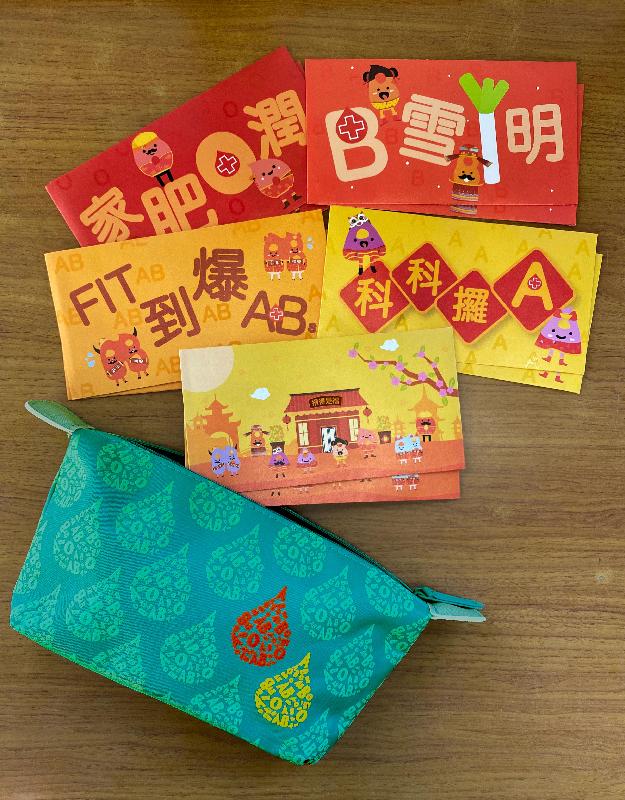
     As a token of thanks, from now until February 11, all blood donors who donate successfully at donor centres and the blood donation vehicle will receive a red packet pouch set. The set, which contains 10 red packets with blood types as the theme and one red packet pouch, is available on a first-come, first-served basis, while stocks last.
 
     To prevent crowds from gathering and long waiting times at the donor centres, donors are advised to make appointments by calling the BTS’ donor centres or via the “HK Blood” mobile app. For details, please visit www.ha.org.hk/rcbts.
 
     The “HK Blood” mobile app can be downloaded via the following link to locate the nearest donor centres across the city and make blood donation bookings: www5.ha.org.hk/rcbts/mobile-app.

Photo  
read more

LCQ3: “HKeMobility” mobile application

     Following is a question by the Hon Chan Han-pan and a written reply by the Secretary for Transport and Housing, Mr Frank Chan Fan, in the Legislative Council today (January 20):
 
Question:
 
     The Transport Department (TD) launched in July 2018 the “HKeMobility” mobile application (app) to allow members of the public to search for real-time traffic and transport information anytime to facilitate their route planning. Regarding the app, will the Government inform this Council:
 
(1) of the up-to-date number of downloads and daily user count of the app, and whether such figures meet the targets set when the app was launched;

(2) given that quite a number of members of the public wish to obtain, via the app, the real-time arrival information of franchised buses and green minibuses to facilitate their route planning, of the measures put in place by the Government to spur all relevant public transport operators to provide the app with such information;
 
(3) of the number of public car parks operated by the private sector the real-time parking vacancy information of which is currently available on the app; whether, in order to facilitate drivers’ search for car parking spaces, the Government will consider spurring, by way of enacting legislation or other measures, the operators of such car parks to supply such information to the app;
 
(4) of the (i) up-to-date development cost and (ii) annual operating expenditure of the app; and
 
(5) whether the TD will step up the promotion of the app and enhance the app’s functions?

Reply:
 
President,
 
     The Transport Department (TD) launched in July 2018 the “HKeMobility” mobile application, integrating three previous mobile applications, namely “HKeRouting”, “Hong Kong eTransport” and “eTraffic News”, to provide a one-stop platform for the public to conveniently search for information including routes of different transportation modes, journey time, transport fares, etc. for their planning of the most suitable travel arrangements (including walking, driving, taking public transport, etc.).
 
     Having consulted the TD, the Government’s reply to the various parts of the Hon Chan Han-pan’s question is as follows:
 
(1), (4) and (5) The TD developed the “HKeMobility” mobile application at an expenditure of approximately $600,000. The operating expenditure incurred after its launch (including maintenance, system hosting services, enhancement of functions, etc.) is set out below:
 

Financial Year Operating Expenditure
2018-19 $1,400,000 (Note)
2019-20 $3,320,000
2020-21 $3,250,000 (Estimate)
Note: Excluding the expenditure for integrating three previous mobile applications.
 
     As at end December 2020, “HKeMobility” recorded cumulative downloads of about 2.25 million, with an average daily hit rate of about 40 000. The TD has not pre-set targets for the download and hit rates.
 
     The TD will continue to disseminate more real-time traffic information via “HKeMobility” and continue to promote “HKeMobility” through various channels to provide greater convenience to the public.
 
(2) The Government has all along encouraged public transport service operators to open up data. Since August 2019, real-time arrival information and data of the New World First Bus Services Limited, the Citybus Limited, the New Lantao Bus Company (1973) Limited and four Mass Transit Railway (MTR) Lines (namely the Airport Express, Tung Chung Line, Tseung Kwan O Line and West Rail Line) have been disseminated to the public for free via “HKeMobility” and the Public Sector Information Portal (data.gov.hk).
 
     Currently, the MTR Corporation Limited is exploring to extend the opening up of real-time arrival information to more MTR Lines, and is formulating details of implementation. The Kowloon Motor Bus Company (1933) Limited and the Long Win Bus Company Limited have also responded positively, and are ready to make available the raw data of real-time arrival information to the Government. The TD is carrying out the preparatory work for disseminating the said data via “HKeMobility” and the Public Sector Information Portal (data.gov.hk) tentatively by mid-2021.
 
     With regard to minibuses, the TD has conducted a test-launch of the real-time arrival information system on Hong Kong Island green minibus (GMB) route numbers 69, 69A and 69X since December 31, 2020. To facilitate passengers’ trip planning, relevant real-time arrival information is now available at “HKeMobility” and the Public Sector Information Portal (data.gov.hk). Subject to the system performance, the TD plans to disseminate the real-time arrival information of about 70 GMB routes in March 2021, followed by that of the remaining 500 or so GMB routes by phases, with a view to achieving full implementation in 2022.
 
(3) The TD has been encouraging operators of non-government car parks to release real-time parking vacancy information to the public via “HKeMobility” and the Public Sector Information Portal (data.gov.hk), so as to facilitate motorists in finding parking spaces and reduce traffic congestion caused by vehicles circulating on roads in search of such.
 
     The number of car parks releasing parking vacancy information via “HKeMobility” has increased from about 220 in July 2018 to about 420 as at end December 2020, of which about 350 are non-government car parks.
 
     Further, in response to the TD’s suggestion, the Lands Department has incorporated since mid-2018 provisions into new short-term tenancy agreements of fee-paying public car parks, requiring operators to provide the TD with relevant real-time parking vacancy information. The Government will also incorporate provisions into new land leases as appropriate, requiring developers to provide the TD with real-time parking vacancy information after completion of relevant new development projects. read more