Tag Archives: China

image_pdfimage_print

Red tides sighted

     Six red tides have been sighted over the past week, an inter-departmental red tide working group reported today (January 29).
 
     A member of the public and staff of the Marine Department spotted the first and second red tide on January 23 at Long Harbour and Rambler Channel near Hoi Hing Road respectively. On January 26, members of the public spotted the third and fifth red tide at Lo Tik Wan, Lamma Island and Wu Kai Sha respectively, while staff of Environmental Protection Department spotted the fourth red tide at Cheung Chau Tung Wan Beach. The sixth red tide was spotted by mariculturist on January 28 at Shuen Wan Typhoon Shelter.
  
     Apart from the first and fourth red tides, which still persist, the other four red tides dissipated. No fish deaths associated with the six red tides have been reported as at today.
 
     A spokesman for the working group said, “The second to the fifth red tides were formed by Noctiluca scintillans, which is commonly found in Hong Kong waters and non-toxic. The first and sixth red tide were formed by Phaeocystis globosa and non-toxic Akashiwo sanguinea respectively, which are commonly found in Hong Kong waters as well. According to overseas literature, Phaeocystis globosa can produce foam that may cause harmful effects to fish.”
 
     The Agriculture, Fisheries and Conservation Department (AFCD) urged mariculturists at Tap Mun, Kau Lau Wan, Sham Wan, Wong Wan, Ap Chau, Kat O, O Pui Tong, Sai Lau Kong, Sha Tau Kok, Ma Wan, Lo Tik Wan, Sok Kwu Wan, Cheung Sha Wan, Yim Tin Tsai, Yim Tin Tsai (East), Yung Shue Au and Lo Fu Wat fish culture zones to monitor the situation closely and increase aeration where necessary.
 
     Red tide is a natural phenomenon. The AFCD’s proactive phytoplankton monitoring programme will continue to monitor red tide occurrences to minimise the impact on the mariculture industry and the public. read more

FEHD and C&ED raid fresh provision shops suspected of selling chilled meat as fresh meat (with photo)

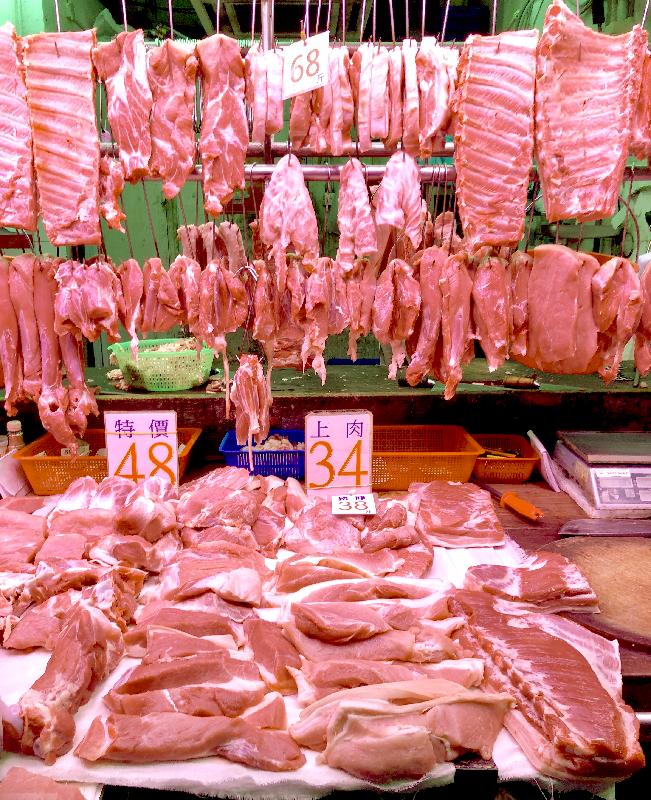
     In a joint blitz operation today (January 29), the Food and Environmental Hygiene Department (FEHD) and Hong Kong Customs and Excise Department (C&ED) raided fresh provision shops (FPSs) at Chun Yeung Street, North Point, suspected of selling of chilled meat as fresh meat.

     During the operation, FEHD officers marked and sealed about 520 kilograms of suspected chilled pork in two FPSs for further investigation. The investigation against the licensees of four FPSs for suspected violation of the Food Business Regulation is still ongoing. Prosecution action will be taken out if sufficient evidence is collected. In addition, FEHD officers have issued verbal warnings to five licensed FPSs for non-compliance of the relevant licensing conditions.

     A spokesman for the FEHD said, “Anyone selling chilled meat without permission commits an offence and is liable to a maximum fine of $50,000 and six months’ imprisonment on conviction. The department will continue to closely monitor the sale of fresh meat at retail level and take stringent enforcement action to safeguard food safety and public health. Moreover, if FPSs are found in breach of licensing condition for sale of chilled meat as fresh meat, the department will consider cancellation of the relevant FPS’s licence.”

Photo  
read more

Hong Kong Customs seizes suspected heroin from air parcels (with photo)

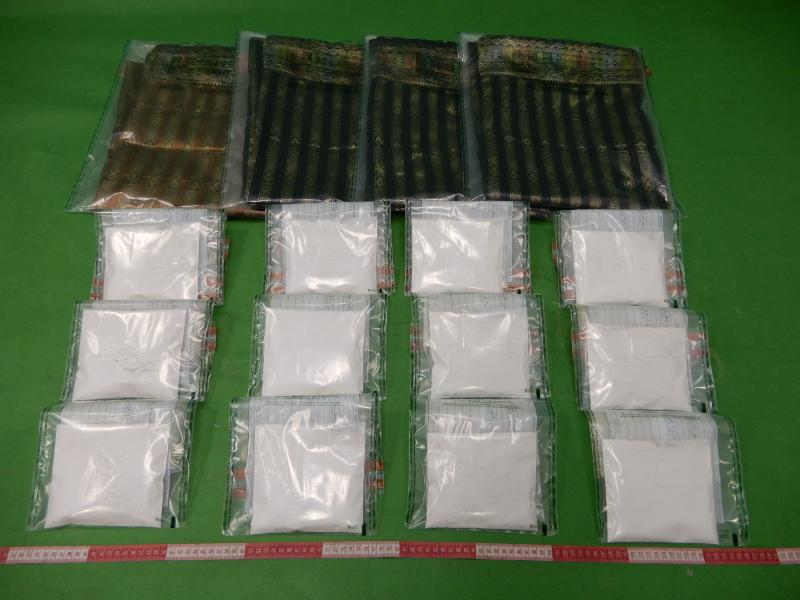
     Hong Kong Customs seized about 1.4 kilograms of suspected heroin with an estimated market value of about $1.7 million at Hong Kong International Airport on January 25. Two women were subsequently arrested yesterday (January 28) in Tai Wai and Sha Tin.

     Customs officers inspected two air parcels, both declared as clothes, arrived from Thailand on January 25 and the suspected heroin was found in four pieces of cloth.

     Follow-up investigation led to the arrest of two women, aged 16 and 17 respectively.

     The 16-year-old female has been charged with one count of trafficking in a dangerous drug and will appear at the Fanling Magistrates’ Courts tomorrow (January 30), while the 17-year-old has been released on bail pending investigation.

     Customs appeals to parents to keep an eye on their children’s friends to prevent children from taking part in drug trafficking activities under peer influence.

     Customs also reminds members of the public to stay alert and not to participate in drug trafficking activities for monetary returns. They must not accept hiring or delegation from another party to carry controlled items in and out of Hong Kong. They are also reminded not to carry unknown items for other people, nor to release their personal data or home address to others for receiving parcels or goods.

     Under the Dangerous Drugs Ordinance, trafficking in a dangerous drug is a serious offence. The maximum penalty upon conviction is a fine of $5 million and life imprisonment.

     Members of the public may report any suspected drug trafficking activities to Customs’ 24-hour hotline 2545 6182 or its dedicated crime-reporting email account (crimereport@customs.gov.hk).

Photo  
read more

Man sentenced for violating Prevention and Control of Disease Regulation

     A 59-year-old man was sentenced to immediate imprisonment for 14 days by the Kwun Tong Magistrates’ Courts today (January 29) for violating the Prevention and Control of Disease Regulation (Cap. 599A) (the Regulation).
 
     The man was diagnosed with COVID-19 and was being hospitalised at the Tseung Kwan O Hospital on August 1, 2020. He was instructed by hospital staff to stay in Accident and Emergency Department and wait for admission. However, he ignored the instructions given by hospital staff and left the hospital. He was subsequently intercepted by a police officer and charged with contravening sections 32(1)(a)(i) and 32(3) of the Regulation and was sentenced by the Kwun Tong Magistrates’ Courts today to immediate imprisonment for 14 days.
 
      Pursuant to section 32 of the Regulation, a person shall not, knowing that he is a contact or is infected with a specified infectious disease, expose other persons to the risk of infection by the person’s presence or conduct in any public conveyance or any street, public place, place of entertainment or assembly, club or hotel or by carrying on any trade, business or occupation.  Offenders face a maximum fine of $5,000 and imprisonment for six months. 
 
      A spokesman for the Department of Health said that cooperation by the public is the key to stop the spread of the disease in the community. Such irresponsible act increases the risk of exposing other persons to infection. The government severely condemns such acts and appeals to the public to adhere to the relevant regulations. The spokesman reiterated that resolute actions will be taken against anyone who breach them. read more

HKSAR Government follows up on China’s countermeasures against British Government’s handling of issues related to British National (Overseas) passport

     The Government of the Hong Kong Special Administrative Region (HKSAR) announced today (January 29) the non-recognition of the British National (Overseas) (BN(O)) passport as a valid travel document and proof of identity. With effect from January 31, BN(O) passports cannot be used for immigration clearance and will not be recognised as any form of proof of identity in Hong Kong.
      
     The spokesperson of the Ministry of Foreign Affairs said earlier today that the United Kingdom (UK) paid no respect to the fact that Hong Kong has returned to China for 24 years and insisted on introducing a so-called “bespoke” policy for Hong Kong residents who hold the BN(O) status to reside and obtain citizenship in the UK. The act of the UK Government disregards China’s solemn position and openly violates the British pledge.  The UK has further expanded the scope of application of its so-called “bespoke” policy in an attempt to turn a large number of Hong Kong people into “second-class British citizens”. The UK has completely altered the nature of the BN(O) passport. The so-called BN(O) passport mentioned by the UK now is no longer the BN(O) passport as originally understood by China and the UK. This move of the UK has seriously infringed on China’s sovereignty and blatantly interfered in Hong Kong affairs and China’s internal affairs. It has also severely violated international law and the norms governing international relations. China expresses strong indignation at and firm opposition to that. The spokesperson announced that with effect from January 31, China will no longer recognise the so-called BN(O) passport as a valid travel document and proof of identity and reserve the right to take further actions.
      
     The HKSAR Government spokesperson said, “The Chinese and British Governments reached a consensus long ago on how to deal with the issue of Hong Kong residents holding BN(O) passports and exchanged memoranda on the understanding in 1984. In its memorandum, the UK clearly pledged not to confer the right of abode in the UK on holders of the BN(O) passport who are Chinese nationals in Hong Kong. The current move of the British side has substantively changed the nature of BN(O) passport, and is a fundamental violation of its pledge in its memorandum. As the UK breaches its commitment in the first place, it is legitimate for our Country to take countermeasures in response. The non-recognition of BN(O) passport as a valid travel document is in no conflict with the Chinese Government’s commitment in its memorandum, as well as the explanations of questions concerning the implementation in the HKSAR of the Nationality Law of the People’s Republic of China given by the Standing Committee of the National People’s Congress. The Central Government’s adoption of the stance and policy in response to the UK’s breach of commitment is a matter of foreign affairs and squarely within its prerogative. The HKSAR Government will fully follow up on the necessary measures for implementing the relevant policy.”
      
     Following the announcement of the Ministry of Foreign Affairs today on the non-recognition of the BN(O) passport as a valid travel document and proof of identity from January 31 onwards, the HKSAR Government will take the following measures with effect from January 31:
     

  1. BN(O) passport cannot be used for immigration clearance in Hong Kong.  The Hong Kong residents concerned may continue to use their HKSAR Passports or Hong Kong Permanent Identity Cards for entering or departing Hong Kong;
  2. BN(O) passport cannot be used as any form of proof of identity in Hong Kong.  The Hong Kong residents concerned may continue to use their Hong Kong Permanent Identity Cards as proof of identity;
  3. When passengers board flights for Hong Kong, airlines concerned must require Hong Kong residents concerned to present their HKSAR Passports or Hong Kong Permanent Identity Cards as proof;
  4. Hong Kong permanent residents who are not of Chinese nationality and do not hold other valid travel document may apply to the Immigration Department for Document of Identity for Visa Purposes for international travel.
 
     Since July 1, 1997, the HKSAR Government has been issuing HKSAR Passports to Hong Kong permanent residents who are of Chinese nationality under the authorisation by the Central Government. As at December 2020, the Immigration Department issued nearly 5.8 million HKSAR Passports which were still within their validity period. At present, holders of HKSAR Passport enjoy visa-free access to 167 countries and territories. The HKSAR Government will continue to lobby more countries or territories for granting visa-free access to holders of the HKSAR Passport for the travelling convenience of Hong Kong residents.
      
     As for the possibly very few Hong Kong permanent residents who are not of Chinese nationality and who may only hold BN(O) passport but not any other valid travel document, they may apply to the Immigration Department for Document of Identity for Visa Purposes for international travel. After submission of application forms and fees, the Immigration Department will complete the processing of applications in five working days in general. Details on application for Document of Identity for Visa Purposes are available on the webpage of the Immigration Department at www.immd.gov.hk/eng/service/travel_document/Application_for_HKSAR_Document_of_Identity_for_Visa_Purposes.html.
      
     The spokesman solemnly pointed out, “This move of the British Government clearly uses the BN(O) passport or status which some people in Hong Kong still hold for political maneuver on the pretext of providing a new route for relevant persons to reside and obtain citizenship in the UK. The hypocrisy of the British Government is also revealed by its lack of intent to confer the right of abode in the UK on people in Hong Kong as reflected in various amendments in its laws or policies long before Hong Kong’s return to China. Since the introduction of the BN(O) passport, its holders have all along been subject to immigration control and limit of stay when travelling to the UK, and they are not allowed to work or study in the UK. Hong Kong residents who hold the BN(O) passport or status should discern the political intention of the British Government clearly.”
      
     “Apart from serving its political agenda, the move of the British side will also bring huge economic interests to the country. While the UK may be in dire need of talents and capital, it should not have made use of the BN(O) passport as a ‘political cover-up’.” read more