Tag Archives: China

image_pdfimage_print

CHP investigates 25 additional confirmed cases of COVID-19

     The Centre for Health Protection (CHP) of the Department of Health (DH) announced that as of 0.00am, February 2, the CHP was investigating 25 additional confirmed cases of coronavirus disease 2019 (COVID-19), taking the number of cases to 10 512 in Hong Kong so far (comprising 10 511 confirmed cases and one probable case).
 
     Among the newly reported cases announced, one is an imported case.
 
     A total of 822 cases have been recorded in the past 14 days (January 19 to February 1), including 774 local cases of which 305 are from unknown sources.
 
     The CHP’s epidemiological investigations and relevant contact tracing on the confirmed cases are ongoing. For case details and contact tracing information, please see the Annex or the list of buildings with confirmed cases of COVID-19 in the past 14 days and the latest local situation of COVID-19 available on the website “COVID-19 Thematic Website” (www.coronavirus.gov.hk).
 
     Meanwhile, the CHP reminded those who had visited specified venues under the Prevention and Control of Disease (Compulsory Testing for Certain Persons) Regulation (Cap. 599J) to receive COVID-19 nucleic acid testing according to the compulsory testing notice. The public are also urged to seek medical attention early if symptoms develop.
 
     Regarding the severe epidemic situation, the CHP called on members of the public to avoid going out, having social contact and dining out. They should put on a surgical mask and maintain stringent hand hygiene when they need to go out. The CHP strongly urged the elderly to stay home as far as possible and avoid going out. They should consider asking their family and friends to help with everyday tasks such as shopping for basic necessities.
 
     The spokesman said, “Given that the situation of COVID-19 infection remains severe and that there is a continuous increase in the number of cases reported around the world, members of the public are strongly urged to avoid all non-essential travel outside Hong Kong.
 
     “The CHP also strongly urges the public to maintain at all times strict personal and environmental hygiene, which is key to personal protection against infection and prevention of the spread of the disease in the community. On a personal level, members of the public should wear a surgical mask when having respiratory symptoms, taking public transport or staying in crowded places. They should also perform hand hygiene frequently, especially before touching the mouth, nose or eyes.
 
     “As for household environmental hygiene, members of the public are advised to maintain drainage pipes properly, regularly pour water into drain outlets (U-traps) and cover all floor drain outlets when they are not in use. After using the toilet, they should put the toilet lid down before flushing to avoid spreading germs.”
 
     Moreover, the Government has launched the website “COVID-19 Thematic Website” (www.coronavirus.gov.hk) for announcing the latest updates on various news on COVID-19 infection and health advice to help the public understand the latest updates. Members of the public may also gain access to information via the COVID-19 WhatsApp Helpline launched by the Office of the Government Chief Information Officer. Simply by saving 9617 1823 in their phone contacts or clicking the link wa.me/85296171823?text=hi, they will be able to obtain information on COVID-19 as well as the “StayHomeSafe” mobile app and wristband via WhatsApp.
 
     To prevent pneumonia and respiratory tract infections, members of the public should always maintain good personal and environmental hygiene. They are advised to:
 
• Wear a surgical mask when taking public transport or staying in crowded places. It is important to wear a mask properly, including performing hand hygiene before wearing and after removing a mask;
• Perform hand hygiene frequently, especially before touching the mouth, nose or eyes, after touching public installations such as handrails or doorknobs, or when hands are contaminated by respiratory secretions after coughing or sneezing;
• Maintain drainage pipes properly and regularly (about once a week) pour about half a litre of water into each drain outlet (U-trap) to ensure environmental hygiene;
• Cover all floor drain outlets when they are not in use;
• After using the toilet, put the toilet lid down before flushing to avoid spreading germs;
• Wash hands with liquid soap and water, and rub for at least 20 seconds. Then rinse with water and dry with a disposable paper towel. If hand washing facilities are not available, or when hands are not visibly soiled, performing hand hygiene with 70 to 80 per cent alcohol-based handrub is an effective alternative;
• Cover your mouth and nose with tissue paper when sneezing or coughing. Dispose of soiled tissues into a lidded rubbish bin, then wash hands thoroughly; and
• When having respiratory symptoms, wear a surgical mask, refrain from work or attending class at school, avoid going to crowded places and seek medical advice promptly.
  read more
Woman sentenced for breaching compulsory quarantine order

     A 31-year-old woman was sentenced to immediate imprisonment for 14 days by the Kowloon City Magistrates’ Courts today (February 2) for violating the Compulsory Quarantine of Persons Arriving at Hong Kong from Foreign Places Regulation (Cap. 599E) (the Regulation).

     The woman was issued a compulsory quarantine order when she entered Hong Kong on March 29, 2020, stating that she must conduct quarantine at a hotel for 14 days. The Police subsequently intercepted her in Wong Tai Sin on April 3, 2020, upon receipt of a report. Investigations revealed that she did not enter the place of quarantine after her entry into Hong Kong. She was charged with contravening sections 8(4) and 8(5) of the Regulation and was sentenced by the Kowloon City Magistrates’ Courts today to immediate imprisonment for 14 days. 
 
     Pursuant to the Regulation, starting from December 25, 2020, all persons arriving at Hong Kong (either via the airport or land boundary control points) who have stayed in places outside China on the day of arrival at Hong Kong or during the 21 days before that day have to undergo compulsory quarantine for 21 days in designated quarantine hotels. Moreover, pursuant to the Compulsory Quarantine of Certain Persons Arriving at Hong Kong Regulation (Cap. 599C), starting from February 8, 2020, all persons who have stayed in the Mainland, Macao or Taiwan in the 14 days preceding arrival in Hong Kong, regardless of their nationality or travel documents, will also be subject to compulsory quarantine for 14 days. Breaching a quarantine order is a criminal offence and offenders are subject to a maximum fine of $25,000 and imprisonment for six months.
 
     A spokesman for the Department of Health said the sentence sends a clear message to the community that breaching a compulsory quarantine order is a criminal offence that the Government will not tolerate, and solemnly reminded the public to comply with the Regulation. As of today, a total of 107 persons have been convicted by the courts for breaching compulsory quarantine orders and have received sentences including immediate imprisonment for up to 14 weeks or a fine of up to $15,000. The spokesman reiterated that resolute actions will be taken against anyone who has breached the relevant regulations. read more

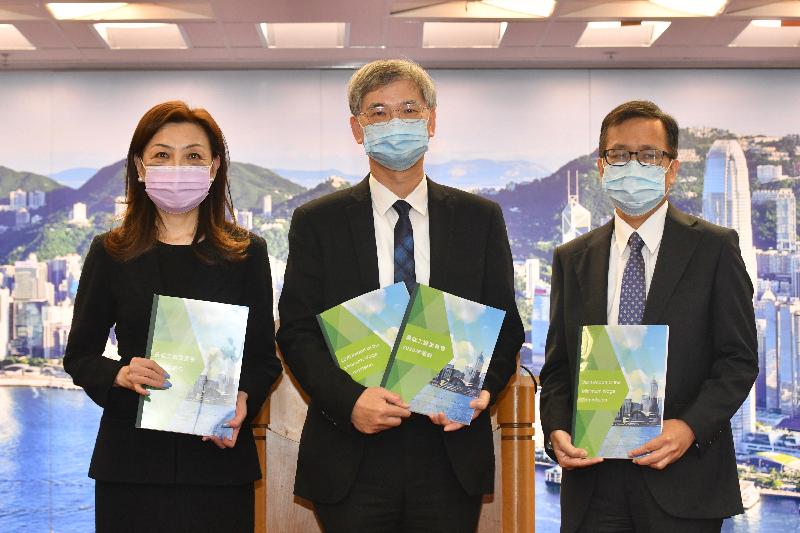
Transcript of remarks by SLW on SMW rate (with photo/video)

     Following is the transcript of remarks by the Secretary for Labour and Welfare, Dr Law Chi-kwong, accompanied by the Chairperson of the Minimum Wage Commission, Ms Priscilla Wong, and the Government Economist, Mr Andrew Au, on maintaining the prevailing Statutory Minimum Wage (SMW) rate this afternoon (February 2):

Reporter: Two simple questions. Some unionists have been saying that a wage freeze would practically be a wage cut, because if you take into account the inflation, there would be a wage cut. It would not be fair to the workers. What do you make of their comment? Secondly, because we are in an extraordinary situation now with COVID-19, and if the COVID-19 situation eases next year and the economy recovers, will the authorities consider moving forward the biennial review from the year-end 2022 to maybe next year?

Secretary for Labour and Welfare: During the whole process of the work of the Commission, there is a difference of views among the representatives of employers and those representing the labour side. Definitely, the range of expectation ranges from a reduction in the SMW rate to substantially increasing it. The Commission considered all the views and struck the balance. So, this recommendation to the Government and the acceptance of this recommendation by the Government basically reflect a fine balance between the different views.

     As to the conditions of the economy, the Government Economist will supplement later on the whole issue about inflation, the recovery of economy and the implication on wages. My only comment is that at this point of time, it is very difficult to tell. By late October next year, the Commission will submit another report to the Government. I think it would be timely to look at the situation by that time.

Reporter: First, about the figures. May I ask about how many people in Hong Kong are actually earning the minimum wage? Then, you mentioned there is a majority of members actually agreed with the decision. Would you please reveal how many per cent of the members actually agreed with the decision? We saw that the minimum wage in other places, like Taiwan and Canada, has actually been raised as well. Why can’t Hong Kong follow suit? Why did the Government choose to pick the worst, the most unfavourable option for the workers, instead of listening to the business sector which could accept the level to be raised to $38?

Secretary for Labour and Welfare: As for the questions related to the current state of the coverage of the SMW, I will leave it to the Government Economist to answer the technical part later on, but somehow the number or percentage has actually dropped recently. As what I just said earlier in the opening, part of the reason is because 99.9 per cent of those non-skilled employees under government service contracts are now earning more than the SMW rate. That contributed to the reduction of people actually working under the SMW rate. For the questions related to the views of the members, I would leave it to the Chairperson of the Commission to answer those questions.

     In fact, your earlier question also asked about the US situation and you mentioned Taiwan or perhaps Korea recently. I would say the decision is primarily political. In the Hong Kong regime, it is very different. We base on a very elaborate process of discussions through the Commission with the community, with employers and employees. Our aim is trying to obtain a consensus, if not a total consensus. This time, we have a majority consensus. I think that is very important for both industrial relationship in Hong Kong in general and how to strike a balance between the difference of demands from the employer side and the employee side.

     I think that is very important in a number of issues in Hong Kong. You also know that we have the Labour Advisory Board, which is very important for us to improve our support or protection of labour and at the same time we have to strike a balance between the views of employers and employees in Hong Kong. So, this is a very different regime and we treasure this regime indeed. It is very important for the stability of the community in terms of trying to obtain as far as possible a consensus. It is important.

(Please also refer to the Chinese portion of the transcript.)

Photo  
read more