Effective Exchange Rate Index
The effective exchange rate index for the Hong Kong dollar on Wednesday, February 3, 2021 is 100.8 (same as yesterday’s index). read more


The effective exchange rate index for the Hong Kong dollar on Wednesday, February 3, 2021 is 100.8 (same as yesterday’s index). read more
Following is a question by the Hon Jeffrey Lam and a reply by the Secretary for Development, Mr Michael Wong, in the Legislative Council today (February 3):
Question:
At present, the implementation programmes for public facilities depend on the priority of individual projects in the Government’s public works programme. The relevant factors for consideration include the population of the districts concerned, provision of and demand for existing facilities, as well as the policies of and allocation of resources to individual bureau and government department, etc. Owing to the aforesaid circumstances, the provision of public facilities in new development areas often lags behind population growth. As a result, those residents who are the first to move into these areas become “trailblazers”. In this connection, will the Government inform this Council:
(1) whether it will change the current situation where it can only catch up after falling behind in the provision of public facilities, and construct public facilities as early as possible when taking forward the development of new development areas; if not, what difficulties and obstacles are involved;
(2) whether it will adopt a “public facility first” approach in the development of the Lok Ma Chau Loop; how it ensures that the development of the Loop and that of the surrounding sites will complement each other and produce a synergy effect; and
(3) whether it has explored ways to improve the consultation efforts relating to land use planning, such as strengthening consultation with owners of the surrounding lands, and including persons waiting to move into the residential buildings under construction nearby and students of the schools nearby as consultation targets with a view to earning the support of stakeholders for land use planning, thereby shortening the time taken from planning to completion of public facilities?
Reply:
President,
After consulting the relevant bureaux, my reply to the various parts of the question raised by the Hon Jeffrey Lam is as follows:
(1) In planning for a New Development Area (NDA), the fundamental concept is to build a balanced community with all the necessary facilities as far as possible, and this includes the provision of various infrastructure and community facilities to meet the needs of population growth. In this light, in the early stage of planning public facilities for a community, we will reserve sufficient land for developing such facilities with reference to the Hong Kong Planning Standards and Guidelines and on the basis of the population size and structure projections. In parallel, close contact will be maintained with departments responsible for individual public facilities in the course of implementation of the infrastructure projects concerned in phases, so as to ensure the relevant preparation work is taken forward and the necessary funding approval is sought in a timely manner.
To develop an NDA or a new town, it usually takes 10 to 20 years from planning and building to full completion. Although the relevant bureaux and departments are committed to implementing the projects on schedule, their actual progress may be subject to a variety of factors such as the complexity of individual projects, resource allocation, and changes in service requirements. While we will adhere to the mechanism mentioned above, attempts will also be made where practicable to expedite the implementation of community facilities projects with different approaches with a view to the early completion of the community facilities in the NDA.
In the course of project delivery, we will make use of different mechanisms with flexibility. For instance, in the planning of the Kai Tak Development Area, a Metro Park will be built to the north of the former runway, while the central part will mainly be zoned for residential use, and the waterfront area on both sides of the former runway will be zoned Open Space for development of a waterfront promenade for shared use by pedestrians and cyclists. Taking into consideration the public expectation of being able to enjoy the waterfront area as soon as possible, part of the waterfront promenade on the former runway will be developed in the form of private open space development, with its design and construction undertaken by the developer of the former runway site. Upon completion, the promenade will be handed over to the Government for management and open for public use. On another front, the Civil Engineering and Development Department has incorporated the works of a site of public open space into the contract for the road works in the vicinity. This arrangement has advanced the completion of the waterfront promenade by a few years.
Also, the Chief Executive announced in the 2020 Policy Address that about 5 per cent of the gross floor area in suitable future projects of the Hong Kong Housing Authority and the Hong Kong Housing Society should be set aside, as far as practicable, for welfare purposes. Under this initiative, upon completion of a public housing project, the construction of the related welfare premises will also be completed. Besides, where appropriate, private developers will be required under the Land Sale Programme to assist in constructing public facilities, such as welfare facilities and public transport interchanges, so that such facilities can commence operation early, tying in with the population intake as far as practicable.
(2) The Government is pressing ahead with the development of the Hong Kong-Shenzhen Innovation and Technology Park (HSITP) at the Lok Ma Chau Loop (the Loop). The HSITP will be developed in two phases. The first phase involves the development of the western part of the Loop. The Government will provide the supporting infrastructure and public facilities for the HSITP as early as possible, not only to support the first phase development of the HSITP, but also to cater for the needs of the second phase development at a later stage. The site formation and infrastructure works currently in progress include land decontamination and site formation for the entire Loop, the construction of a western connection road to connect Fanling/San Tin Highway, a direct road link to connect to the MTR Lok Ma Chau Station, a public transport interchange within the western part of the Loop, most of the roads and cycle tracks within the Loop, 7 hectares (ha) of recreational facilities, about 13 ha of ecological area, as well as a fresh water service reservoir and water supply system, sewage treatment works and a sewerage system, which will be sufficient to support the development of the entire HSITP. The sewage treatment works covered by the Government’s public works programme are expected to complete in the second half of 2026. To tie in with the gradual completion of the first batch of buildings of the HSITP in end-2024, the first batch of the HSITP development also includes temporary sewage treatment works. In addition, the western electricity substation and a fire station and ambulance depot are scheduled to be completed at the same time when the first batch of buildings in the HSITP are completed.
The development near the Loop is mainly the San Tin/Lok Ma Chau Development Node, which is currently under study. In addition, if co-location arrangements are to be implemented at the new Huanggang Port in Shenzhen, over 20 ha of land near the Loop in the Lok Ma Chau Control Point of Hong Kong can be released for other uses. In planning the future development of this land area, we will carefully consider how to tie in the development with the HSITP in the Loop to achieve synergy.
(3) There are established statutory consultation procedures and time frames regarding the making of statutory town plans. Under the Town Planning Ordinance, in the process of plan-making, the Town Planning Board (TPB) will exhibit the relevant plans or amendments for two months for public representations. After the expiry of the exhibition period, the representations received will be published for public comments. If the TPB decides to amend the plans having regard to the representations, the amendment will be published for three weeks for further public representations. The TPB will conduct hearings of the related issues and then make decisions. The TPB is required to submit the plans and relevant amendments, together with the representations, comments and further representations, to the Chief Executive in Council for approval within nine months after the expiry of the plan exhibition period.
Apart from the above statutory requirements, we will also commence public consultation at the beginning stage of a planning study in order to incorporate public comments into our planning proposals as early as possible. The relevant channels of consultation include public forums, community workshops, focus group discussions and written submissions, and the participants include villagers and farmers of the areas concerned, brownfield operators, landowners, nearby residents, professional organisations, green groups, the development sector and members of the public. We consider that this mode of consultation, which is a combination of statutory and administrative measures, is an appropriate method as it can enhance public engagement on the one hand, and uphold development efficiency on the other.
Thank you, President. read more
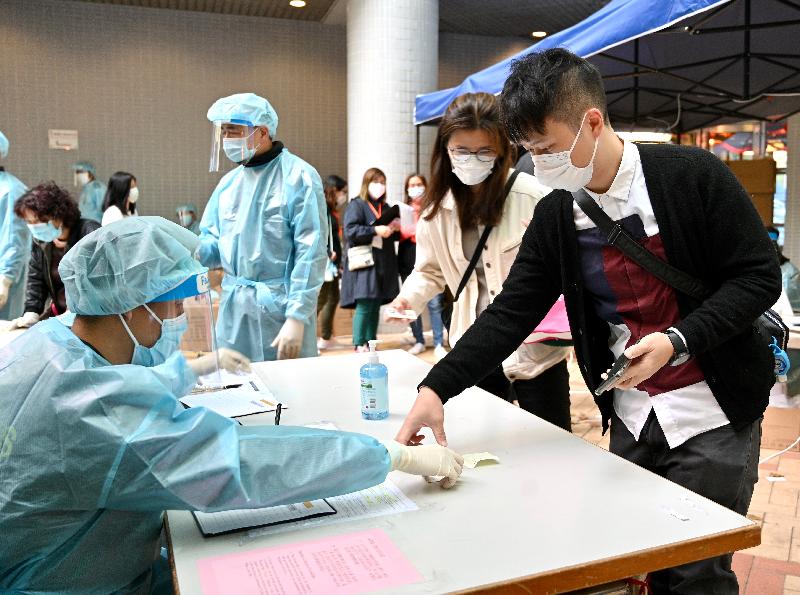
The Government yesterday (February 2) exercised the power under the Prevention and Control of Disease (Compulsory Testing for Certain Persons) Regulation (Cap. 599J) to make a “restriction-testing declaration” (declaration) effective from 7pm yesterday, by which people (hereafter referred to as “persons subject to compulsory testing”) within the specified “restricted area” in Tin Shui Wai (i.e. Heng Lok House, Tin Heng Estate, 83 Tin Shui Road, Tin Shui Wai, New Territories) were required to stay in their premises and undergo compulsory testing. Persons subject to compulsory testing were required to stay in their premises until all such persons identified in the area had undergone testing and the test results were mostly ascertained. Moreover, the Government issued a compulsory testing notice yesterday, requiring persons who had been present at Heng Lok House, Tin Heng Estate, Tin Shui Wai, for more than two hours from January 20 to February 2, 2021, even if they were not present in the “restricted area” at the time when the declaration took effect, to undergo compulsory testing before February 4. The Government announced the completion of the compulsory testing exercise at around 7am today (February 3) and carried out enforcement actions in the “restricted area” afterwards to verify that all people in the “restricted area” had undergone compulsory testing. The Government announced that the enforcement operation ended at about 10.20am today.
In this exercise, the Home Affairs Department (HAD), the Yuen Long District Office, the North District Office, the Hong Kong Police Force, the Hong Kong Customs, the Architectural Services Department, the Housing Department, and the Auxiliary Medical Service mobilised around 313 staff to arrange for implementation of the declaration and enforcement actions for breaches of the compulsory testing notice issued earlier.
The Government provided simple food for persons subject to compulsory testing, including instant noodles, canned food, cup noodles, and soy milk, etc, so as to facilitate the dinner arrangement of some persons subject to compulsory testing. One box of masks, anti-epidemic goods packs and hand sanitisers, etc, were also provided to persons subject to compulsory testing to help them fight against the virus.
The HAD also set up a hotline for people restricted by the declaration to make enquiries and seek assistance.
The Government thanks persons subject to compulsory testing for their support and understanding. With everyone’s co-operation and efforts, coupled with the tireless efforts of the testing contractors, residents have been informed about their testing results by SMS notification. After finishing the compulsory testing exercise at about 7am today, the Government took enforcement actions in the “restricted area” immediately to verify that all people in the “restricted area” have undergone testing according to the requirements of the declaration and the compulsory testing notice. Persons who could present an SMS notification containing a negative testing result or wore a wristband as proof of having undergone the compulsory testing could leave the “restricted area” through the designated exit after providing personal information to a prescribed officer. The enforcement operation completed at about 10.20am. None of them was found not to have undergone compulsory testing. Taking into account the above situation, the Secretary for Food and Health revoked the “restriction-testing declaration” in accordance with Cap. 599J (see attachment).
The Government hopes the some 13 households who have not answered the door to contact the Government for arrangement of testing as soon as possible after they read the notices put up by the Government, in the hope to eliminate the possible risk of a further spread of the virus in the community.
The Government understands that residents in the district are worried and anxious because of the increase in confirmed cases in recent days. The Government hopes this temporary inconvenience will completely cut the local transmission chains in the district and ease residents’ worries and fear, so that they will regain confidence in resuming social and business activities in the area, and return to a normal life.
The Government thanks all participating Government staff and the testing agencies for their hard work. The Government also thanks the persons subject to compulsory testing again for their support and understanding, and their full co-operation during this period in undergoing testing and waiting for the result at home.
The Government as a whole is united in fighting against the virus despite all the difficulties, and provided testing for all the residents in the district within a short period of time in the hope of achieving zero cases in the district.
The Government will seriously follow up on the compliance situation of the compulsory testing notices and the “restriction-testing declaration” by persons subject to compulsory testing. Any person who fails to comply with the compulsory testing notices commits an offence and may be liable to a fixed penalty of $5,000. The person will also be issued with a compulsory testing order, requiring him/her to undergo testing within a specified time frame. Failure to comply with the order or the “restriction-testing declaration” is an offence and the offender may be liable to a fine of level 4 ($25,000) and imprisonment for six months.
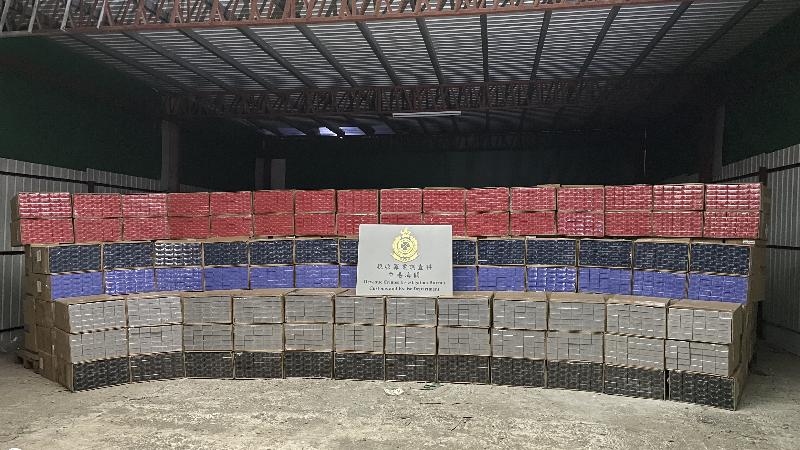
​Hong Kong Customs yesterday (February 2) seized about 3.6 million suspected illicit cigarettes with an estimated market value of about $10 million and a duty potential of about $6.9 million in Yuen Long.
During an anti-illicit cigarette operation conducted yesterday evening in San Sang Tsuen, Yuen Long, Customs officers seized the batch of suspected illicit cigarettes from a metal hut and a private car. A 41-year-old man suspected to be in connection with the case was arrested and the private car has been detained. Customs believes that a suspected illicit cigarette storehouse has been raided during the operation.
Investigation is ongoing. Customs will continue to trace the source and the flow of the illicit cigarettes. The likelihood of further arrests is not ruled out.
Customs will continue to enhance enforcement against illicit cigarette activities on all fronts through intelligence analysis. The department will also step up enforcement before the coming Lunar New Year holiday.
Under the Dutiable Commodities Ordinance, anyone involved in dealing with, possession of, selling or buying illicit cigarettes commits an offence. The maximum penalty upon conviction is a fine of $1 million and imprisonment for two years.
Members of the public may report any suspected illicit cigarette activities to Customs’ 24-hour hotline 2545 6182 or its dedicated crime-reporting email account (crimereport@customs.gov.hk).
Following is a question by the Hon Yiu Si-wing and a written reply by the Secretary for Commerce and Economic Development, Mr Edward Yau, in the Legislative Council today (February 3):
Question:
Earlier on, the Government decided to demolish a disused underground cistern at Bishop Hill in Sham Shui Po. When the demolition works were in progress in December last year, some residents discovered that the cistern had distinctive architectural features. Subsequently, the Water Supplies Department halted the works, and confirmed that the cistern had been completed as early as in 1904. The incident has aroused wide public concerns. Some members of the public are worried that damages will be caused to buildings with historical value due to the insufficient sensitivity of and incomprehensive co-ordination among the relevant government departments, rendering the loss of highly attractive tourism resources in Hong Kong. In this connection, will the Government inform this Council:
(1) of the respective numbers of monuments for which the Government carried out protection, restoration and maintenance works in each of the past three years, and the details of the works concerned;
(2) given that the Development Blueprint for Hong Kong’s Tourism Industry, published by the Government in 2017, set a five-year implementation goal of facilitating the development of local historical and heritage, cultural and creative tourism, of the expenditure incurred by the Government on facilitating historical and heritage tourism in each year since 2017;
(3) whether it has regularly reviewed the attractiveness of the various monuments to local and overseas tourists, and made timely adjustments to the relevant publicity efforts and promotional strategies; if so, of the details; if not, the reasons for that; and
(4) of the further measures in place to develop and enrich historical and heritage tourism, with a view to giving tourists a more unforgettable travel experience?
Reply:
President:
In response to the questions raised by the Hon Yiu Si-wing, in consultation with the Development Bureau (DEVB), my reply is as follows:
(1) In addition to assisting in the maintenance of declared monuments through the Antiquities and Monuments Office (AMO), the Government also provides assistance in the form of grants to the owners of privately-owned graded historical buildings and tenants, which are non-profit-making organisations, of government-owned declared monuments and graded historical buildings for them to carry out minor maintenance works so that the condition of these historical buildings will not deteriorate due to disrepair.
In the past three years, a total of 71 (21 in 2018, 25 in 2019 and 25 in 2020) repair and restoration projects of historic buildings (including declared monuments) were completed through the Financial Assistance for Maintenance Scheme on Built Heritage or through the AMO. The scopes of these projects broadly include repairs to roofs, structures, walls, windows and doors/gates.
(2) & (3) The Commerce and Economic Development Bureau published the Development Blueprint for Hong Kong’s Tourism Industry in 2017, which sets out four development strategies, and various short-, medium- to long-term tourism initiatives and measures. The work progress and expenditures incurred on the development of local historical and heritage tourism are as follows:
The Government has been taking forward various projects of historical and heritage tourism with different themes in different districts. Amongst others, the DEVB has invited non-profit-making organisations to revitalise and reuse some distinctive government historic buildings through the “Revitalising Historic Buildings Through Partnership Scheme” (Revitalisation Scheme), and open such buildings for visit by the public and visitors. For example, the Old Tai O Police Station has been revitalised into the Tai O Heritage Hotel, and the former Lai Chi Kok Hospital has been revitalised into the Jao Tsung-I Academy to promote Chinese culture.
In addition, the Government also conserves buildings with important cultural and historical value in Central through the “Conserving Central” initiative to add life and vibrancy to the area and attract visitors. Amongst them, the former Police Married Quarters on Hollywood Road has been revitalised into a creative industry landmark, PMQ, and the Central Police Station Compound (Tai Kwun) has been revitalised into the “Tai Kwun – Centre for Heritage and Arts”. The two projects have become tourist attractions with historical, creative and artistic elements.
The Tourism Commission (TC) completed the revitalisation of Dr Sun Yat-sen Historical Trail in Central and Sheung Wan in April 2018. Together with Tai Kwun which was opened in the same year, PMQ and the adjacent tourism spots, the Central and Western District has been developed into a new hub of heritage, cultural and creative tourism, offering creative and in-depth travel experience to visitors. The expenditure of the revitalisation of Dr Sun Yat-sen Historical Trail was about $10 million.
In 2019, the TC launched the “Yim Tin Tsai Arts Festival”, which is a three-year pilot arts cum cultural, heritage and green tourism project organised in Yim Tin Tsai, Sai Kung. The first event was held from November 30 to December 29, 2019. During the event period, the number of visitors and participants of related activities in Yim Tin Tsai was over 22 000, whereas the number of visitors to Visitor Centre cum Exhibition Hall and participants of activities in Sai Kung Town was over 39 000. After the first event, some of the artworks showcased have become permanent exhibits for visitors’ appreciation. As for the expenditure, the Government awarded a three-year contract at a price of $20 million to a suitable curatorial organisation through open tender in early 2019. The actual total expenses incurred will be confirmed upon the completion of the three-year project.
To promote green and heritage tourism, the TC, in collaboration with the Agriculture, Fisheries and Conservation Department (AFCD), has been implementing a five-year project since 2018, with an annual funding of $15 million, to enhance the tourism supporting facilities of some hiking trails within country parks which are popular and with tourism appeal. The first phase covers enhancement works at Pinewood Battery Heritage Trail along Peak Trail, including construction of boardwalk and installation of interpretation panels with QR codes to introduce in detail the history of Pinewood Battery to visitors. The enhancement works were completed in 2019. The AFCD also introduces the information of military relics within country parks on the updated “Enjoy Hiking” thematic website.
The Hong Kong Tourism Board (HKTB) also continuously promotes to visitors revitalised historical architectures and monuments, and introduces routes of leisure walk in different districts featuring buildings with historical value, through various channels including website, social media and Visitor Centres. In addition, the HKTB also provides subsidies to trade partners or assists them in promotion under the “Explore Hong Kong Tours” scheme, with a view to encouraging the travel trade to develop and launch more new travel products, including monument-themed itineraries.
The HKTB has launched the “Old Town Central” and “Hong Kong Neighbourhoods – Sham Shui Po” in April 2017 and September 2018 respectively to promote in-depth tours in local neighbourhoods, showcasing the historical side of Hong Kong. The expenditures of the two promotion projects were about $6.15 million and $12 million respectively. The HKTB will continue to promote the distinctiveness of local tourism under the “Hong Kong Neighbourhoods” promotional framework.
The TC and the HKTB will from time to time adjust the publicity works and promotional strategies of the projects of historical and heritage tourism, with a view to maintaining their attractiveness to visitors.
(4) The Government will continue to develop historical, cultural and heritage tourism to enrich visitors’ experience in Hong Kong. The details are as follows:
Through the “Revitalisation Scheme”, No. 12 School Street at Tai Hang will be revitalised into the Tai Hang Fire Dragon Heritage Centre to promote the Tai Hang fire dragon dance and traditional Hakka culture, customs and history. The project is expected to commence operation in 2021 and will become a new cultural and tourist landmark with Hong Kong characteristics.
For the various projects under the “Revitalisation Scheme”, the DEVB will strengthen publicity and promotion in its dedicated heritage website (www.heritage.gov.hk/en/index.htm) and the bi-monthly heritage newsletter “活化@Heritage” to keep the public informed about the latest development of the projects and the Government’s work in this area. In addition, the DEVB is also preparing for the “2021 Heritage Fiesta” and roving exhibitions to be held at the end of this year to promote the revitalised historic buildings under Batches I to III of the “Revitalisation Scheme” and PMQ. Besides, through the social media, Instagram, the “photo points” located at the historic buildings under Batches I to III of the “Revitalisation Scheme” will be promoted to attract more people to visit and take photos at these historic buildings. The DEVB will also distribute leaflets at different locations to introduce and promote these revitalised buildings.
The TC is partnering with the School of Creative Media, City University of Hong Kong to take forward the project in bringing back to life the history of individual landmarks of Hong Kong by using augmented reality and creative multimedia technology through mobile application to enable visitors to understand the historical landscape and community culture of places rich in history and culture, thereby enhancing their experience in Hong Kong. The project is tentatively scheduled for launching in Tsim Sha Tsui and Central areas in the first quarter of 2021.
The TC is now preparing for the implementation of the next phase of “Yim Tin Tsai Arts Festival”, which is scheduled for the first quarter of 2021, and will announce the details in due course.
The TC will continue collaborating with the AFCD to enhance the facilities at Wilson Trail (Section 2), including the installation of interpretation panels to introduce the history of the military relics along the hiking trail. The enhancement works are expected to be completed by the fourth quarter of 2021.
Besides, the TC will upgrade the facilities of the Wong Nai Chung Gap Trail with a view to enhancing its appeal as a heritage and green tourism attraction and visitors’ experience. The works are expected to commence in the fourth quarter of 2021.
In the future, the HKTB will continue to promote to visitors the revitalised monuments and historical architectures through various channels, and will enhance the development of local in-depth tours about Hong Kong’s history. When planning neighbourhood promotional campaigns, the HKTB will take into account the resources, facilities and infrastructure of different districts and neighbourhoods, and maintain substantial communication with stakeholders before finalising implementation details of the campaigns. read more