Tag Archives: China

image_pdfimage_print

Government gazettes compulsory testing notice

     The Government exercised the power under the Prevention and Control of Disease (Compulsory Testing for Certain Persons) Regulation (Cap. 599J) and published in the Gazette a compulsory testing notice, which requires any person who had been present at 15 specified premises during the specified period (persons subject to compulsory testing) to undergo a COVID-19 nucleic acid test.

     Currently, in all districts in Hong Kong, if one or more new confirmed cases are found in the residential buildings (including buildings for both commercial and residential uses), or there are sewage samples tested positive which implied possible infection risks, the buildings will be included in the compulsory testing notice.

     15 buildings fulfilling the above criteria were included in the compulsory testing notice today (February 26).

     Details of the compulsory testing notice are as follows:

     Any person who had been present at any specified premises listed in Annex 1 for more than two hours at any time during the period from February 13 to February 26, 2021 (including but not limited to visitors, residents and workers), have to undergo testing by February 28, 2021. If persons subject to compulsory testing have previously undergone testing between February 24 and February 26, 2021, they would be taken to have complied with the requirements set out in the compulsory testing notice.

      Furthermore, a spokesman for the Food and Health Bureau reminds the public that in accordance with the compulsory testing notice issued earlier, all household members of close contacts are required to undergo compulsory testing. Any person who had lived with a person who is placed under quarantine pursuant to section 22 of the Prevention and Control of Disease Regulation (Cap. 599A) (person under quarantine) in the same residential unit on the date of commencement of quarantine or during the 14 days before that day, and who becomes aware of the quarantine of the person under quarantine when the relevant quarantine has not yet been completed, have to undergo testing within two days of he/she becoming aware of the person under quarantine has been placed under quarantine and report to the Government the result of the test by phone (at 6275 6901), fax (at 2530 5872) or email (ct@csb.gov.hk) within three days of undergoing the test.

    The Government will set up mobile specimen collection stations at the following locations tomorrow (February 27) for local residents and workers subject to compulsory testing: 
 

  • Hay Wah Building, Wan Chai
  • Lok Man House, Lok Fu Estate
  • Sau Mau Ping Community Hall
  • Choi Hing Court, Choi Hung
  • Parc Palais, Ho Man Tin
  • Mei Foo Sun Chuen Phase 8
  • Block 23, Shek Kip Mei Estate
  • Baycrest, Ma On Shan
  • Yu Tai Court, Tung Chung

     The service period of the mobile specimen collection station at Kin Man House, Oi Man Estate, Ho Man Tin will be extended to February 28 (Sunday), and that of the stations at King George V Memorial Park, Kowloon, MacPherson Playground in Mong Kok, On Hing Playground in Yuen Long and Tin Shui Sports Centre in Tin Shui Wai will be extended to March 7 (Sunday). The opening dates and operating hours of the mobile specimen collection stations in various districts providing free COVID-19 nucleic acid testing services for the general public are stated in Annex 2. Apart from mobile specimen collection stations, persons subject to compulsory testing can also choose to attend any of the community testing centres in all districts to receive testing free of charge.

     Persons subject to compulsory testing may choose to undergo testing via the following routes:

1.  To visit any of the mobile specimen collection stations (see the list and target groups (if applicable) at www.coronavirus.gov.hk/eng/early-testing.html) for testing;
2.  To attend any of the community testing centres (see the list at www.communitytest.gov.hk/en/);
3.  To obtain a deep throat saliva specimen collection pack from any of the 121 post offices, vending machines set up at 20 MTR stations or 47 designated general outpatient clinics (GOPCs) of the Hospital Authority and return the specimen to one of the designated specimen collection points (see the distribution points and times, and the specimen collection points and times, at www.coronavirus.gov.hk/eng/early-testing.html);
4.  To undergo testing at any of the GOPCs of the Hospital Authority as instructed by a medical professional of the Hospital Authority;
5.  To self-arrange testing provided by private laboratories which are recognised by the Department of Health (DH) and can issue SMS notifications in respect of test results (see the list at www.coronavirus.gov.hk/pdf/List_of_recognised_laboratories_RTPCR.pdf); or
6.  To use a specimen bottle distributed to the relevant specified premises by the Centre for Health Protection (if applicable), and return the specimen bottle with the sample collected as per relevant guidelines.
 
    The spokesman cautioned that testing received at accident and emergency departments of the Hospital Authority or during hospital stays, or testing provided by private laboratories which cannot issue SMS notifications in respect of test results, does not comply with the requirements of the aforementioned compulsory testing notice.

     “If persons subject to compulsory testing have symptoms, they should seek medical attention immediately and undergo testing as instructed by a medical professional. They should not attend the mobile specimen collection stations or the community testing centres.”

     Persons subject to compulsory testing must keep the SMS notification containing result of the test for checking by a law enforcement officer when the officer requires the persons to provide information about their undergoing the specified test.

     Furthermore, persons subject to testing under the compulsory testing notices should, as far as reasonably practicable, take appropriate personal disease prevention measures including wearing a mask and maintaining hand hygiene, and, unless for the purpose of undergoing the specified test, stay at their place of residence and avoid going out until the test result is ascertained as far as possible.

     Any enquiries on compulsory testing arrangements may be addressed to the hotline at 6275 6901, which operates daily from 9am to 6pm. If persons subject to compulsory testing plan to conduct testing at any of the community testing centres, they can check the centre’s appointment status in advance. The hotlines of the community testing centres are available at www.communitytest.gov.hk/en/info/.

     The Government will continue to trace possibly infected persons who had been to the relevant premises, and seriously verify whether they had complied with the testing notices. Any person who fails to comply with the testing notices commits an offence and may be fined a fixed penalty of $5,000. The person would also be issued with a compulsory testing order requiring him or her to undergo testing within a specified time frame. Failure to comply with the order is an offence and the offender would be liable to a fine at level 4 ($25,000) and imprisonment for six months.

     Relevant officers of different government departments are empowered to perform certain functions under the relevant Regulations under the Prevention and Control of Disease Ordinance (Cap. 599), including requesting individuals to provide information and assistance when necessary. Any person who fails to comply with the relevant request commits an offence and would be liable to a fine at level 3 ($10,000). Collection and use of any personal data for conducting COVID-19 tests must meet the requirements under the Personal Data (Privacy) Ordinance (Cap. 486). Government departments or testing service providers which handle the relevant information may provide the data to DH or other relevant departments for anti-epidemic purpose as necessary. The workflow does not involve the provision of any personal data to organisations or persons outside Hong Kong.

     The spokesman said, “The Government urges all individuals who are in doubt about their own health conditions, or individuals with infection risks (such as individuals who visited places with epidemic outbreaks or contacted confirmed cases), to undergo testing promptly for early identification of infected persons.” read more
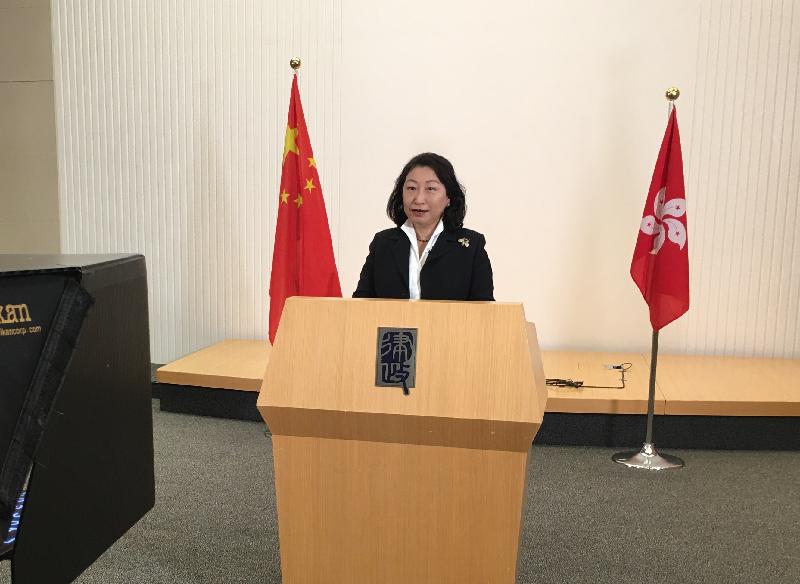
Video message by SJ at 46th session of UN Human Rights Council (with photos/video)

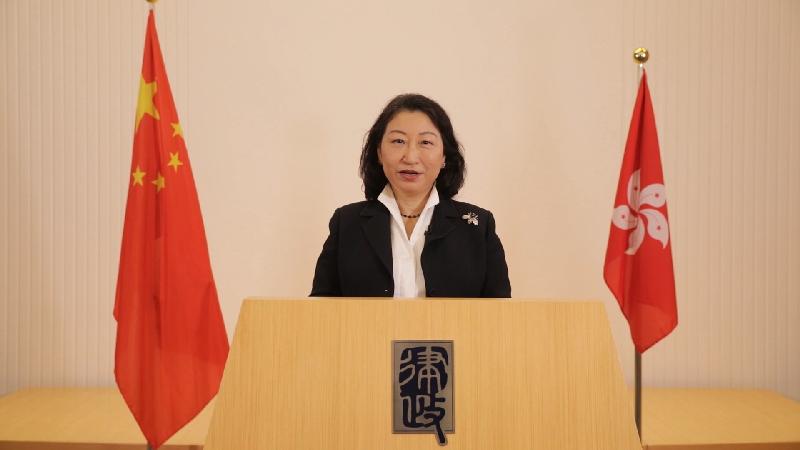
     Following is the full text of the video message by the Secretary for Justice, Ms Teresa Cheng, SC, at the 46th session of the United Nations Human Rights Council today (February 26):

Madam President,

     After the enactment of the Law of the People’s Republic of China on Safeguarding National Security in the Hong Kong Special Administrative Region, Hong Kong’s law and order is restored, and residents can resume their normal daily lives.

     In the second half of 2019, due to the civil unrest properties and facilities had been damaged, citizens arbitrarily attacked, the functioning of the legislature and government seriously disrupted, and many citizens and police officers were injured.

     To suppress these violent, subversive and terrorist activities which posed a serious threat to our national security, the Standing Committee of the National People’s Congress adopted the National Security Law in June 2020.

     Like the national security laws of many countries, it makes secession, subversion, terrorist activity, and collusion with foreign forces to endanger national security a crime. The civil unrest has since subsided and the residents can enjoy their lawful rights and freedoms.

     People are now free to travel without fearing for their personal safety; vigilantism are no longer prevalent and people are free to express different views openly; and people are more respectful of the rights of others whilst exercising their own.

     In short, Hong Kong has reverted to a safe, rational, inclusive and vibrant society.

     The National Security Law expressly provides that human rights such as freedom of speech and assembly, be protected, and legal principles such as presumption of innocence be respected and observed. The law enforcement agencies and courts of HKSAR have been entrusted by the Central Authorities to exercise jurisdiction over cases concerning national security offences. When adjudicating cases, the judges in Hong Kong remain independent and impartial in discharging their judicial duties, free from any interference.

     The National Security Law has been effective in restoring law and order and safeguarding national security. It has provided the necessary conditions for maintaining the long-term prosperity and stability of Hong Kong, and enables Hong Kong residents to enjoy their rights and freedoms in a safe and peaceful environment.

     The measures are conducive to the rule of law, the protection of human rights, and the successful implementation of the “one country, two systems” policy. This is in the long-term interests of both the country and the two systems. Thank you.

Photo  Photo  
read more

“Greater Bay Area – Starting Line to a Bright Future” ceremony concludes successfully (with photos)

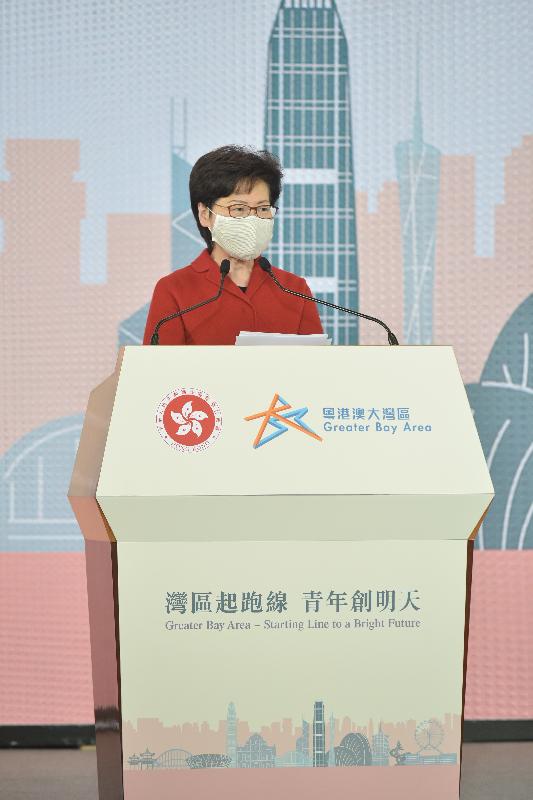
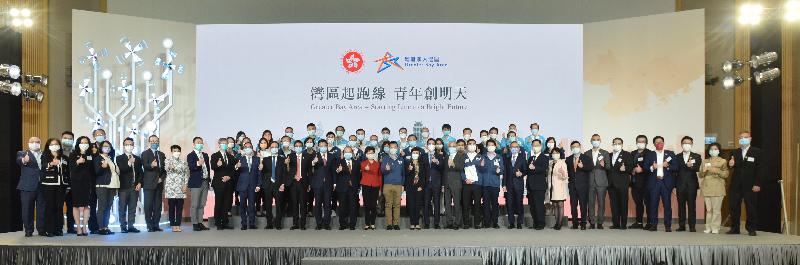
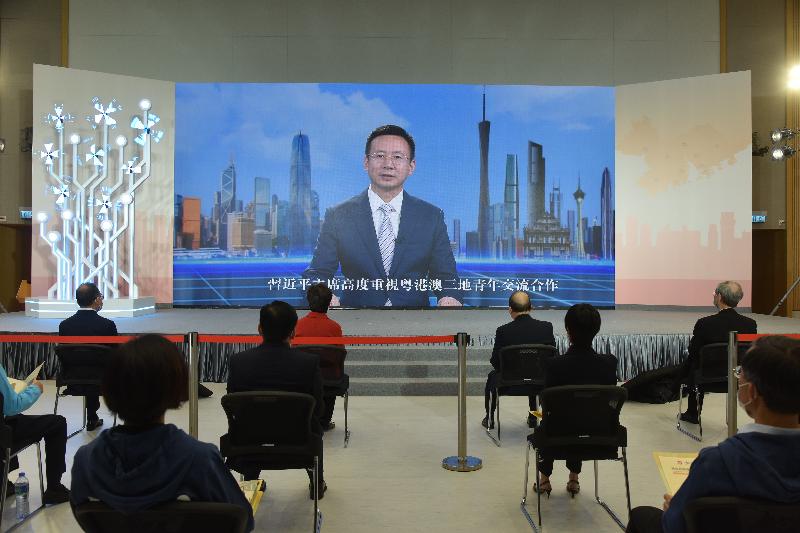
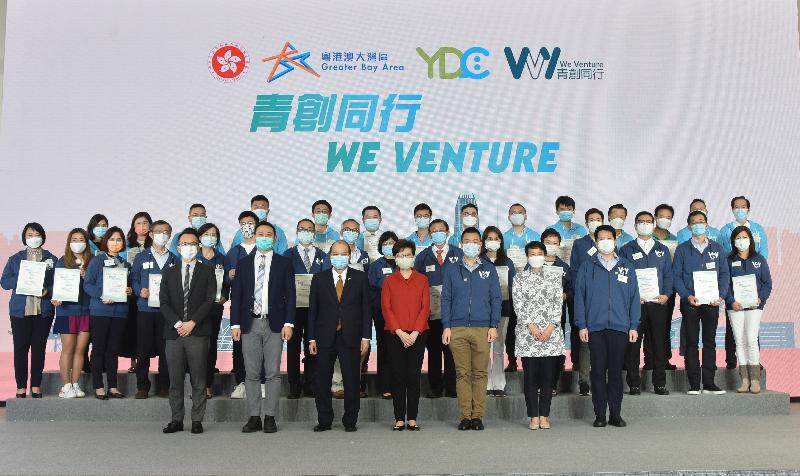
     To mark the second anniversary of the promulgation of the Outline Development Plan for the Guangdong-Hong Kong-Macao Greater Bay Area (Outline Development Plan), the Hong Kong Special Administrative Region (HKSAR) Government held a ceremony named “Greater Bay Area – Starting Line to a Bright Future” today (February 26) with a theme of youth development. The Chief Executive, Mrs Carrie Lam; the Vice-Governor of Guangdong Province, Mr Zhang Xin (via recorded video); the Chief Secretary for Administration, Mr Matthew Cheung Kin-chung; the Secretary for Constitutional and Mainland Affairs, Mr Erick Tsang Kwok-wai; the Secretary for Labour and Welfare, Dr Law Chi-kwong; the Secretary for Home Affairs, Mr Caspar Tsui; the Secretary for Innovation and Technology, Mr Alfred Sit; and the Vice-Chairman of the Youth Development Commission, Mr Lau Ming-wai, attended the ceremony.
 
     The development of the Guangdong-Hong Kong-Macao Greater Bay Area (Greater Bay Area) is a key national development strategy. Through further deepening co-operation among Guangdong, Hong Kong and Macao, the objectives of the development of the Greater Bay Area are to promote co-ordinated economic development in the Greater Bay Area, leverage the complementary advantages of the three places, and develop an international first-class bay area for living, working and travelling. The Central Government promulgated the Outline Development Plan on February 18, 2019, which sets out the directions guiding the development of the Greater Bay Area. The Greater Bay Area is one of the most open and economically vibrant regions of the country. The HKSAR Government is committed to giving new impetus to the economic development of Hong Kong through participating in the the Greater Bay Area development. In order to encourage Hong Kong people to participate more proactively in the development of the Greater Bay Area, the HKSAR Government will also step up its publicity and promotional efforts.
 
     Mrs Lam said at the ceremony, “Young people are brimming with energy and vitality, and are full of hope and vision for their future. The Greater Bay Area provides a stage to realise their aspirations.
 
     “The HKSAR Government wishes to encourage Hong Kong young people to aim high and explore opportunities beyond Hong Kong, and unleash their potential on a bigger platform through starting a new business or pursuing a career of their interest in the Greater Bay Area. With the support from our society, I am very confident that Hong Kong young people will be able to seize the opportunities of the Greater Bay Area to realise their aspirations.”
 
     Speaking via recorded video, the Vice-Governor of Guangdong Province, Mr Zhang said, “The Greater Bay Area will be prosperous and strong when its young people thrive and flourish. President Xi Jinping attaches great importance to youth exchanges among Guangdong, Hong Kong and Macao. At the grand gathering celebrating the 40th anniversary of the establishment of the Shenzhen Special Economic Zone in October last year, President Xi requested Guangdong to make full use of the major co-operation platforms among Guangdong, Hong Kong and Macao to attract more young people from Hong Kong and Macao to study, work and live in the Mainland, so as to enhance wider exchanges and deeper integration among young people from Guangdong, Hong Kong and Macao, and to strengthen their sense of belonging to the motherland.”
 
     Today’s ceremony comprised four parts, namely:
 
Part one

     Mrs Lam and Mr Zhang (via recorded video) addressed the ceremony;

Part two

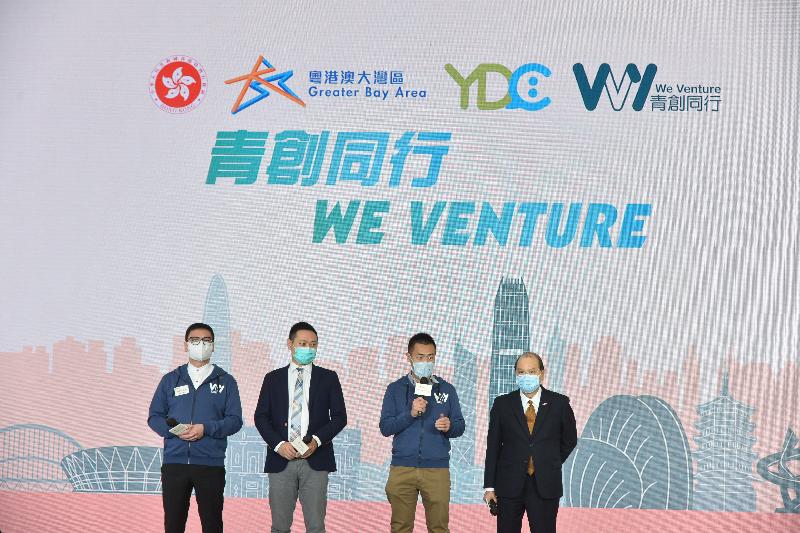
      “We Venture” launching ceremony to announce the list of funded organisations under both the “Funding Scheme for Youth Entrepreneurship in the Guangdong-Hong Kong-Macao Greater Bay Area” (Entrepreneurship Scheme) and the “Funding Scheme for Experiential Programmes at Innovation and Entrepreneurial Bases in the Guangdong-Hong Kong-Macao Greater Bay Area” (Experiential Scheme) of the Youth Development Fund (YDF). Mrs Lam presented certificates to representatives of the funded organisations to recognise their contributions for supporting youth entrepreneurship in the Greater Bay Area. The two aforementioned schemes were rolled out under the YDF by the Youth Development Commission in the same year of the promulgation of the Outline Development Plan. The Entrepreneurship Scheme aims at subsidising Hong Kong NGOs to provide start-up assistance and incubation services that befit the needs of young people who are about to start their businesses in Hong Kong and Mainland cities of the Greater Bay Area, and further helping them meet their initial capital needs, while the Experiential Scheme aims at subsidising short-term experiential programmes at the innovation and entrepreneurial bases in the Mainland cities of the Greater Bay Area, with a view to enriching Hong Kong young people’s understanding of the innovation and entrepreneurial bases, as well as the relevant policies and supporting measures on innovation and entrepreneurship in the Mainland.
 
     A sharing session was conducted before the presentation of the certificates. Mr Cheung; Mr Tsui; Mr Lau; President of Hong Kong United Youth Association, Mr Lau Ka-keung; and Founder and Chief Executive Officer of Timetable of the Tianhe Hong Kong and Macau Youth Association, Mr Andy Ng (via recorded video), shared with the audience the supporting measures for young entrepreneurs in the Greater Bay Area.
 
Part three

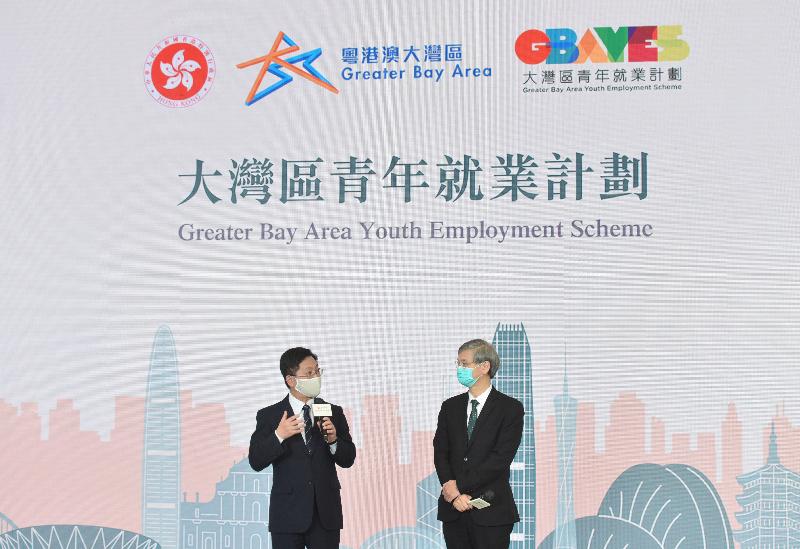
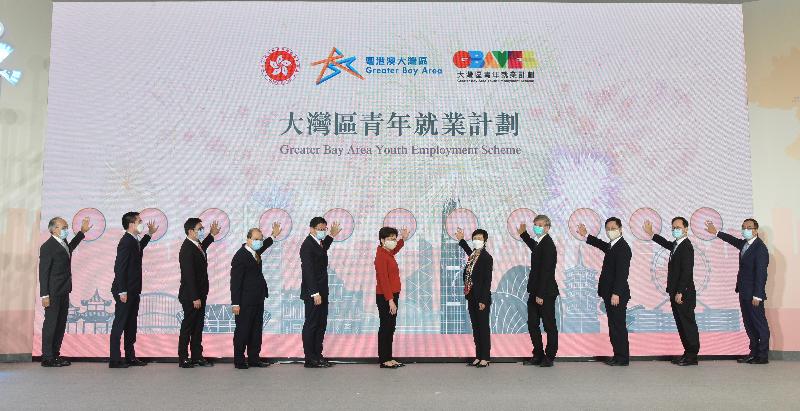
     Launching ceremony of the Greater Bay Area Youth Employment Scheme officiated by Mrs Lam, Mr Cheung, Dr Law, Mr Sit and six representatives from the employers participating in the scheme (namely Bank of China (Hong Kong) Limited, Hongkong and Shanghai Banking Corporation Limited, PricewaterhouseCoopers Hong Kong, Gold Peak Industries (Holdings) Limited, Sun Hung Kai Properties, and Rambo Chemicals (Hong Kong) Limited) and a representative from the Hong Kong General Chamber of Commerce. The scheme was announced last month (January 8). It is one of the measures promulgated by the Chief Executive in the 2020 Policy Address. It aims to encourage and support young people to work in the Mainland cities of the Greater Bay Area and leverage the opportunities for career advancement. The scheme provides 2 000 places, including 700 places designated for innovation and technology posts. The response has been favourable, with about 1 400 vacancies received since the launching of the scheme last month; and
 
Part four

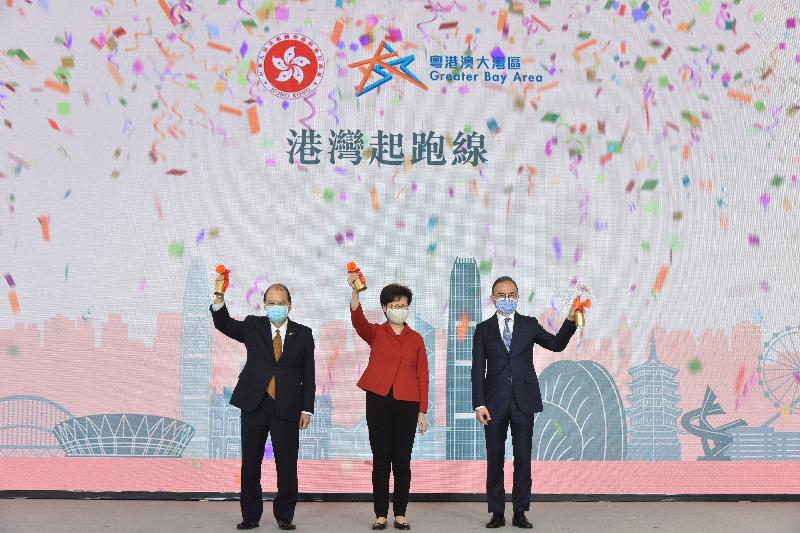
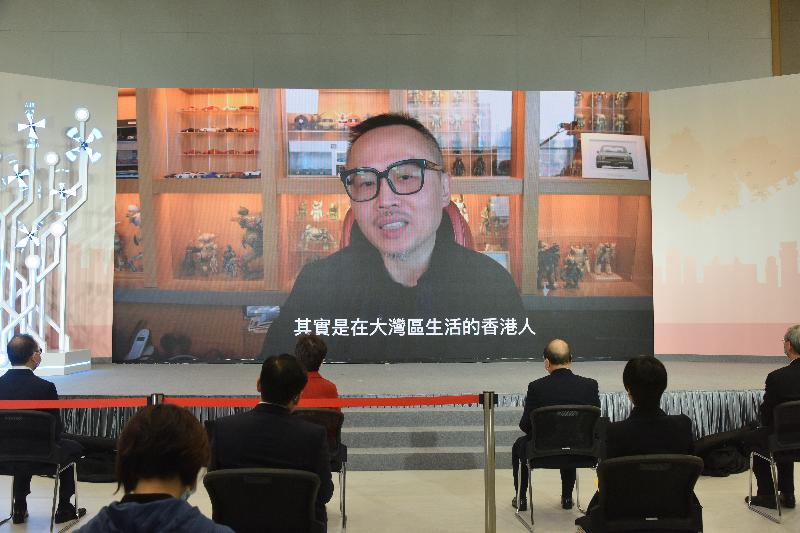
     The launching ceremony of the life record documentary “Starting Line at the Bay Area” was officiated by Mrs Lam, Mr Cheung and Mr Tsang. “Starting Line at the Bay Area” is a life record documentary produced by creative artist Mr Keith Chan featuring the life stories of ten Hong Kong people living in different Mainland cities of the Greater Bay Area. The idea is to deepen the audience’s understanding of the Greater Bay Area through the stories of their start-up businesses, their work, their life and their studies. The Guangdong-Hong Kong-Macao Greater Bay Area Development Office of the Constitutional and Mainland Affairs Bureau will carry on with its publicity efforts through different platforms to help the general public (especially the young people) and businesses better understand the opportunities brought about by the development of the Greater Bay Area. The life record documentary “Starting Line at the Bay Area” will be broadcast on channel 81 every Sunday evening from February 28.
 
     For more details about the Outline Development Plan and the latest news on the Greater Bay Area, please visit the dedicated website (bayarea.gov.hk). The video recording of the ceremony will also be uploaded onto the dedicated Greater Bay Area website (www.bayarea.gov.hk/en/symposium/index.html).

Photo  Photo  Photo  Photo  Photo  Photo  Photo  Photo  Photo  
read more

Speech by SJ at webinar “Why Hong Kong is Irreplaceable” (English only) (with photos)

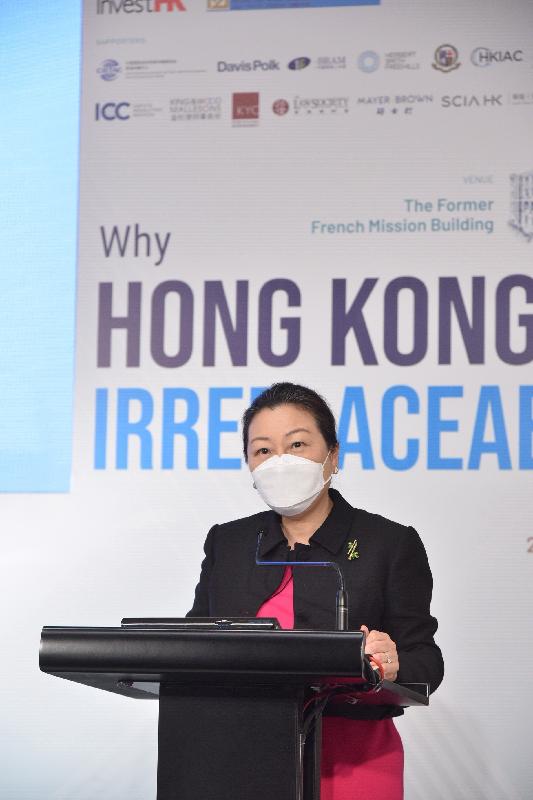
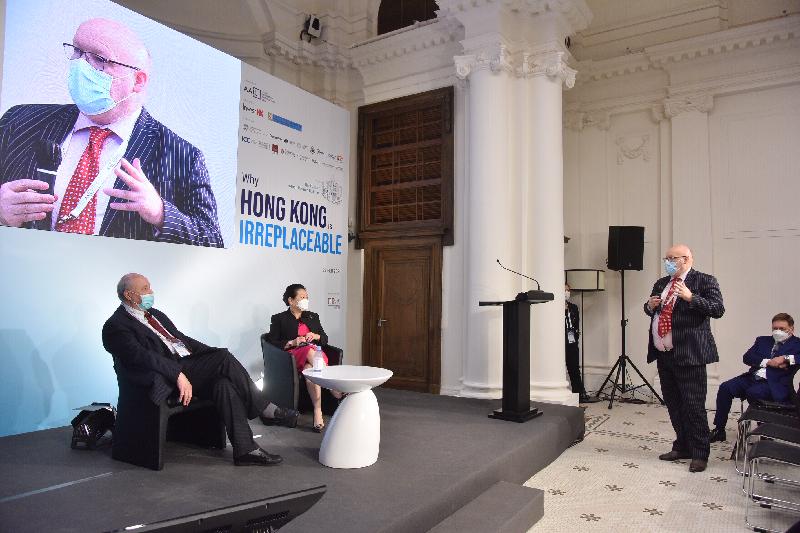
     Following is the speech by the Secretary for Justice, Ms Teresa Cheng, SC, at the webinar “Why Hong Kong is Irreplaceable” held by the Asian Academy of International Law today (February 26):

Ladies and gentlemen,
 
     As a prime venue for providing international legal and dispute resolution services, Hong Kong prides itself as having a solid foundation for the rule of law backed by an independent judiciary and an international and experienced legal community.

     In 2019, in the midst of the street violence, concerns have been expressed over Hong Kong’s status as a legal and financial centre. A seminar entitled “Is Hong Kong still irreplaceable?” was held in November 2019 in Beijing to facilitate exchanges between Hong Kong legal professionals and businesses. After frank exchanges, the participants reached a consensus that “Hong Kong is still irreplaceable”.

     Recently a media report suggested concerns about using Hong Kong as a deal-making and dispute resolution platform. It reminds us that perhaps we have not been reporting on the strengths and the development of Hong Kong enough. I am most grateful to the Asian Academy of International Law (AAIL) for organising timeously this webinar and put together international legal talents based in Hong Kong, people on the ground so to say, sharing experience about our legal services. I understand that there are nearly 1 000 people who have registered from some 58 jurisdictions providing a truly international audience. I also understand that there will be a “Why Hong Kong” series in the next few months so that any unjustified concerns will be clarified and the strengths of Hong Kong reinforced.

     You have heard Mr Eddie Yue, the Chief Executive of HKMA (Hong Kong Monetary Authority), who talked about Hong Kong’s franchise as an international financial centre. You have heard our legal talents, from the perspectives of deal-making and dispute resolution, the business opportunities and the legal services here. The experiences shared are fact-based and I hope that they will enable you to form a fair and objective opinion about Hong Kong.

     The fundamentals of Hong Kong have let us withstand and rise above the challenges that we have been facing in the past two years. The cornerstone of our society is the rule of law. The infrastructure that one looks at is not only confined to the legal infrastructure but that of the society as a whole. First let me give you some recent facts and figures about the fundamentals in the financial sector:

a) From 2009 to 2019 Hong Kong came first in Initial Public Offering fund raised for seven years. Last year, Hong Kong ranked No. 2, just after NASDAQ, raising some US$51 billion, which is an increase of over 25 per cent from 2019.

b) We have the world’s deepest Renminbi (RMB) liquidity pool outside Mainland China of over RMB600 billion, supporting the vibrant offshore RMB business. Around 70 per cent of the world’s RMB payments are settled through Hong Kong, according to the latest SWIFT statistics.

     The legal infrastructure is of course the focus today. The common law system in Hong Kong is well tested, open and transparent, rule-based, and independent. The independence of our judiciary is evidenced by the solid infrastructure that has been laid down primarily in the Basic Law – the security of tenure, the immunity of judges, the non-revolving door (that is one cannot go back to private practice after joining the bench), and importantly, the expressed provision in Article 85 of the Basic Law that guarantees judicial independence, free from any interference. The reasoned judgments made publicly available inevitably set out the legal and factual bases upon which the conclusions were drawn. The strong and independent legal fraternity in Hong Kong comprising of barristers and solicitors ensure that the rule of law is observed and respected. There are also 85 foreign law firms with 1 529 registered foreign lawyers here practicing in Hong Kong. The common law system has 150 years of history here and abundant case law has been developed providing for a business-friendly, certain and predictable legal framework for the international business community. The common law is well adapted to commercial transactions and Hong Kong law provides a very good option as the applicable law for commercial and investment transactions. With the vibrancy of the capital market, Hong Kong has the attributes to serve as an ideal venue for deal-making.

     Commercial disputes are invariably resolved by way of arbitration or mediation nowadays. Hong Kong has adopted the United Nations Commission on International Trade Law (UNCITRAL) Model Law on International Commercial Arbitration as our arbitration laws; there is no restriction on the choice of arbitrators; parties are free to use lawyers from their own jurisdiction to represent them; awards are generally upheld by local courts and enforced in other jurisdictions, including the Mainland, ensuring finality and enforceability of Hong Kong awards; third party funding is permissible; there is no issue on arbitrability of intellectual property disputes. You may think that is true of most arbitration friendly jurisdictions. In that case, I turn now to something that is unique to Hong Kong.

     Under the “one country, two systems” policy, a game-changing arrangement was made between Hong Kong and the Mainland in 2019. Parties to arbitral proceedings which are seated in Hong Kong and administered by one of the six arbitral institutions are able to seek assistance from the relevant court in the Mainland to obtain interim measures. HKIAC (Hong Kong International Arbitration Centre), for instance, has received applications to preserve assets totalling US$1.9 billion and Mainland courts have granted orders totalling US$1.5 billion. Hong Kong is the only jurisdiction outside the Mainland that can provide this service.

     Another feature unique to Hong Kong is the opportunities under the Belt and Road Initiative and in the Greater Bay Area. Take the Greater Bay Area as an example. First, Hong Kong enterprises registered in Qianhai Shenzhen can now choose Hong Kong law as the applicable law for their contracts. Secondly, Hong Kong lawyers can take a special exam and be qualified as a PRC legal practitioner in the Greater Bay Area. This means businesses will be able to secure a lawyer in Hong Kong that is qualified to advise on both Hong Kong and PRC law in commercial and investment transactions within the Greater Bay Area. Only Hong Kong lawyers can benefit from this special arrangement.

     These are made possible by reason of CEPA, the Mainland and Hong Kong Closer Economic Partnership Arrangement. Enterprises and individuals in service industries in Hong Kong can make use of preferential arrangements to carry out and expand business in most sectors in the Mainland. What I have highlighted is just the legal sector.

     Further, under the CEPA, products of Hong Kong that fulfil the CEPA rules of origin can enjoy zero tariff treatment upon importation into the Mainland. Only products of Hong Kong enjoy this treatment.

     Hong Kong investments and investors also enjoy investment protection and facilitation in the Mainland, such as simplification of formalities and requirements for investments. In 2017, the CEPA Investment Agreement has been concluded between Hong Kong and the Mainland providing for substantive protections for investments from Hong Kong.

     The CEPA Investment Agreement provides for the use of mediation as the dispute resolution mechanism. Investment mediation is an area that Hong Kong is putting a lot in to develop, working with AAIL and the UNCITRAL Working Group III in particular. We believe that much can be said about the use of mediation in resolving investment disputes as long term relationships are at stake and future opportunities can be leveraged to settle amicably. We also see great need for Lawtech and in particular the promotion of using ODR (online dispute resolution) to complement arbitration and mediation as an affordable and efficient mechanism especially for SMSEs (small and medium-sized enterprises). You have heard Thomas (Chairman of eBRAM, Dr Thomas So) and the panelists just now talking about eBRAM’s plans.

     Returning to CEPA, Hong Kong’s businesses enjoy the most preferential treatment and most favourable conditions for development in the Mainland, in particular in the Greater Bay Area. With legal and other consultancy services that can be provided, businesses using Hong Kong as a platform may well indeed get the best of both worlds.

     What about competition, the rising of other financial or legal or arbitration centres around Hong Kong? We in Hong Kong welcome and embrace competition. Fair and clean competition always results in improvements. It ensures that we are not complacent and continue to explore and look for areas to innovate, develop and improve.

     It is an objective truth that the business activities in Asia have grown and will continue to grow. Looking at the Greater Bay Area for instance, in 2019, the GDP is USD1,679.3 billion with a 4.4 per cent real GDP growth. As Eddie said, talents always follow the money. Where there are business opportunities, legal and dispute resolution services will thrive. And naturally more legal services centres will be developed in Asia. Yet, there are certain intrinsic strengths, opportunities and attributes that are unique to Hong Kong. Businesses will see for themselves where lies the greatest opportunities and find a geographic location that has the necessary infrastructure, services and talents that will best serve their interests.

     I hope that you have enough objective facts and data for you to form a fair and rational opinion about Hong Kong and I leave you to draw, what I hope is the inescapable conclusion, that Hong Kong is irreplaceable. Thank you very much.
 

Photo  Photo  
read more