Tag Archives: China

image_pdfimage_print

CHP investigates six additional confirmed cases of COVID-19

     The Centre for Health Protection (CHP) of the Department of Health (DH) announced that as of 0.00am, March 31, the CHP was investigating six additional confirmed cases of coronavirus disease 2019 (COVID-19), taking the number of cases to 11 468 in Hong Kong so far (comprising 11 467 confirmed cases and one probable case).
 
     Among the newly reported cases announced, five are imported cases and one is a local case with unknown source.
 
     A total of 132 cases have been recorded in the past 14 days (March 17 to 30), including 59 local cases of which 17 are from unknown sources.
 
     The CHP’s epidemiological investigations and relevant contact tracing on the confirmed cases are ongoing. For case details and contact tracing information, please see the Annex or the list of buildings with confirmed cases of COVID-19 in the past 14 days and the latest local situation of COVID-19 available on the website “COVID-19 Thematic Website” (www.coronavirus.gov.hk).
 
     Meanwhile, the CHP reminded those who had visited specified venues under the Prevention and Control of Disease (Compulsory Testing for Certain Persons) Regulation (Cap. 599J) to receive COVID-19 nucleic acid testing according to the compulsory testing notice. The Regulation also requires all household members of close contacts of confirmed cases to undergo a COVID-19 nucleic acid test within a specified period according to compulsory testing notices published in the Gazette. The public are also urged to seek medical attention early if symptoms develop and undergo testing as soon as possible.
 
     The Government has launched the COVID-19 Vaccination Programme. Members of the public are encouraged to get vaccinated. Details of the programme can be found at the designated website (www.covidvaccine.gov.hk).
 
     The CHP called on members of the public to avoid going out, having social contact and dining out. They should put on a surgical mask and maintain stringent hand hygiene when they need to go out. The CHP strongly urged the elderly to stay home as far as possible and avoid going out. They should consider asking their family and friends to help with everyday tasks such as shopping for basic necessities.
 
     The spokesman said, “Given that the situation of COVID-19 infection remains severe and that there is a continuous increase in the number of cases reported around the world, members of the public are strongly urged to avoid all non-essential travel outside Hong Kong.
 
     “The CHP also strongly urges the public to maintain at all times strict personal and environmental hygiene, which is key to personal protection against infection and prevention of the spread of the disease in the community. On a personal level, members of the public should wear a surgical mask when having respiratory symptoms, taking public transport or staying in crowded places. They should also perform hand hygiene frequently, especially before touching the mouth, nose or eyes.
 
     “As for household environmental hygiene, members of the public are advised to maintain drainage pipes properly and regularly pour water into drain outlets (U-traps). After using the toilet, they should put the toilet lid down before flushing to avoid spreading germs.”
 
     Moreover, the Government has launched the website “COVID-19 Thematic Website” (www.coronavirus.gov.hk) for announcing the latest updates on various news on COVID-19 infection and health advice to help the public understand the latest updates. Members of the public may also gain access to information via the COVID-19 WhatsApp Helpline launched by the Office of the Government Chief Information Officer. Simply by saving 9617 1823 in their phone contacts or clicking the link wa.me/85296171823?text=hi, they will be able to obtain information on COVID-19 as well as the “StayHomeSafe” mobile app and wristband via WhatsApp.
 
     To prevent pneumonia and respiratory tract infections, members of the public should always maintain good personal and environmental hygiene. They are advised to:
 
• Wear a surgical mask when taking public transport or staying in crowded places. It is important to wear a mask properly, including performing hand hygiene before wearing and after removing a mask;
• Perform hand hygiene frequently, especially before touching the mouth, nose or eyes, after touching public installations such as handrails or doorknobs, or when hands are contaminated by respiratory secretions after coughing or sneezing;
• Maintain drainage pipes properly and regularly (about once a week) pour about half a litre of water into each drain outlet (U-trap) to ensure environmental hygiene;
• After using the toilet, put the toilet lid down before flushing to avoid spreading germs;
• Wash hands with liquid soap and water, and rub for at least 20 seconds. Then rinse with water and dry with a disposable paper towel. If hand washing facilities are not available, or when hands are not visibly soiled, performing hand hygiene with 70 to 80 per cent alcohol-based handrub is an effective alternative;
• Cover your mouth and nose with tissue paper when sneezing or coughing. Dispose of soiled tissues into a lidded rubbish bin, then wash hands thoroughly; and
• When having respiratory symptoms, wear a surgical mask, refrain from work or attending class at school, avoid going to crowded places and seek medical advice promptly. read more

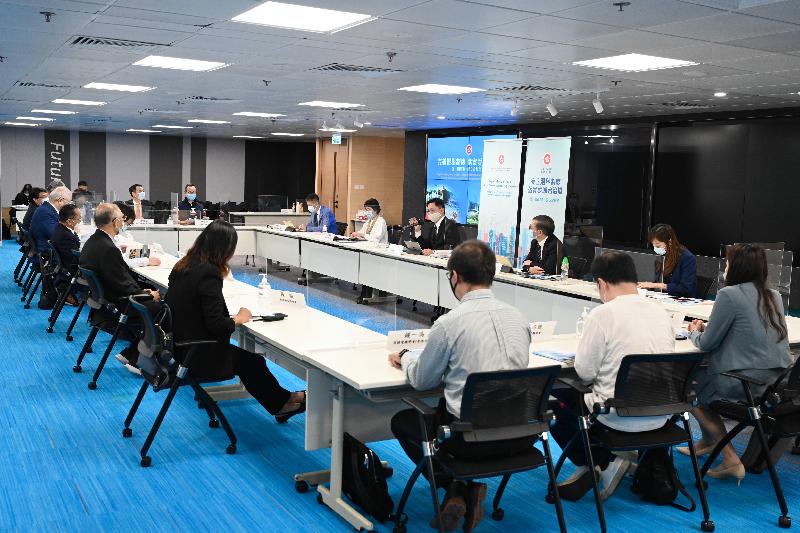
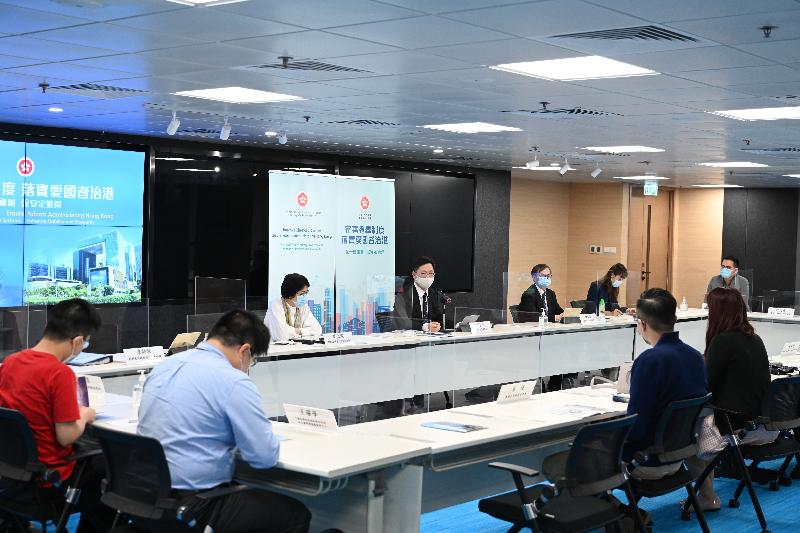
S for IT briefs I&T sector on improving electoral system (with photos)

     The Secretary for Innovation and Technology, Mr Alfred Sit, together with the Permanent Secretary for Innovation and Technology, Ms Annie Choi; the Under Secretary for Innovation and Technology, Dr David Chung; and the Political Assistant to the Secretary for Innovation and Technology, Ms Lillian Cheong, today (March 31) held three briefing sessions for the innovation and technology (I&T) sector to solicit their support for the approval by the Standing Committee of the National People’s Congress of the amended Annex I to the Basic Law on Method for the Selection of the Chief Executive of the Hong Kong Special Administrative Region and Annex II to the Basic Law on Method for the Formation of the Legislative Council of the Hong Kong Special Administrative Region and its Voting Procedures.
      
     Mr Sit said that I&T development can promote diversified economic development and is of paramount importance to Hong Kong. He strongly believes that improving the electoral system can accord with the actual situation of Hong Kong, and can better attend to the overall interests of Hong Kong society, thereby removing the obstacles to economic and social development and restoring peace to the city. It also creates a favourable environment for I&T development and drives the transformation of industries, making I&T a new impetus to promote economic development and improve people’s livelihood. He will continue to engage the sector and listen to their opinions and strive for their full support for the Government’s effort.
      
     Over 40 I&T related organisations, including trade associations, societies, research and development organisations, and Hong Kong Branches of the Chinese National Engineering Research Centres, attended the three briefing sessions today. The attendants in general supported improving the electoral system of Hong Kong, the implementation of “patriots administering Hong Kong”, and ensuring the steadfast and successful implementation of “one country, two systems”.

Photo  Photo  Photo  
read more

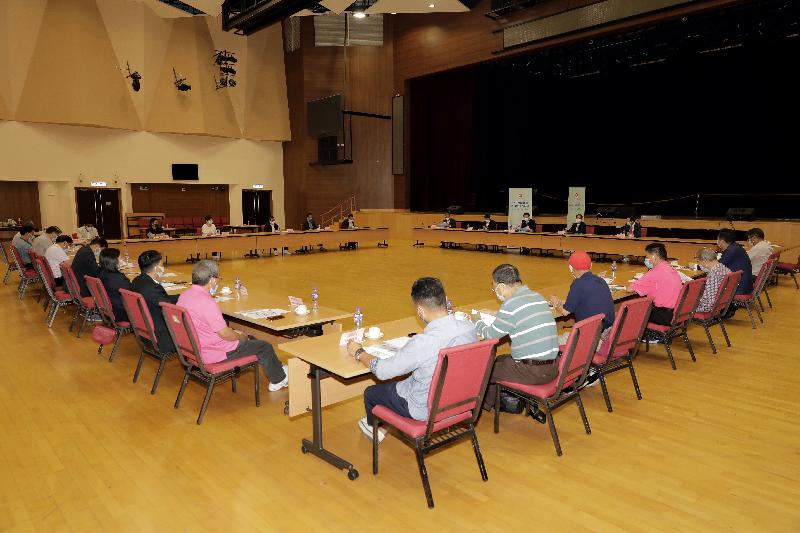
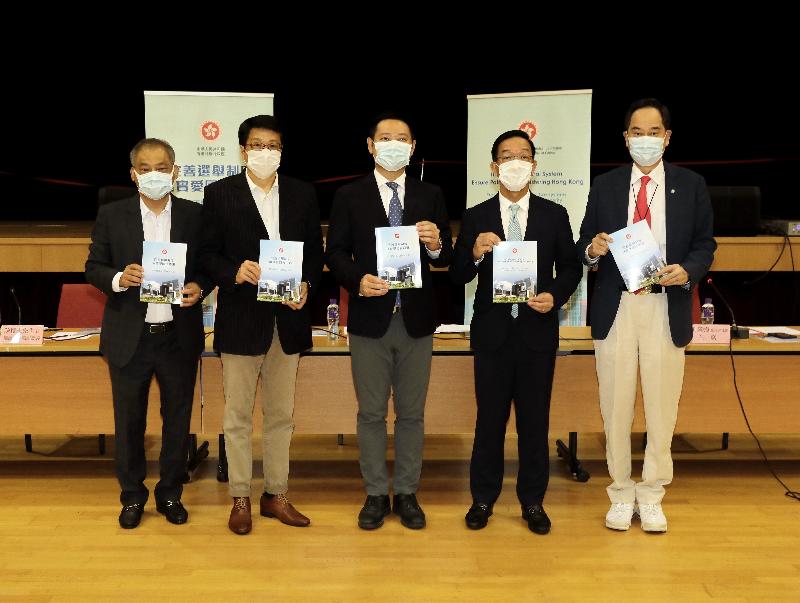
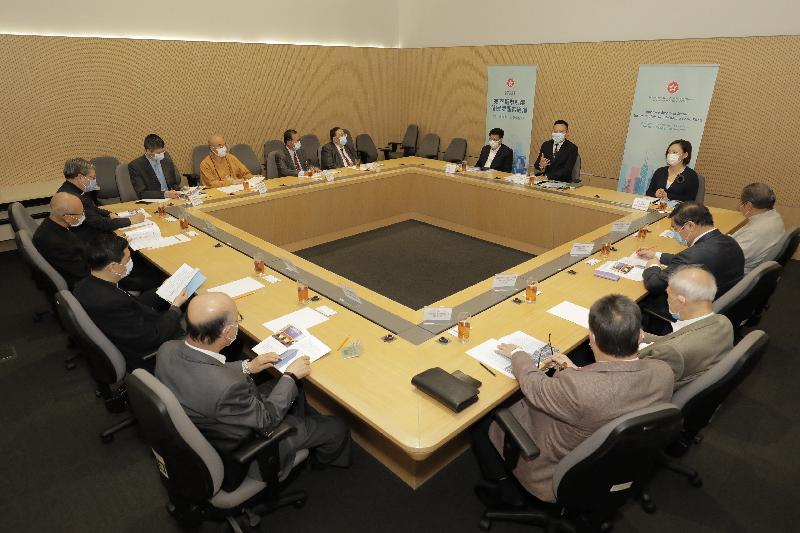
SHA holds briefing sessions on improvements to electoral system of Hong Kong (with photos/video)

     The Secretary for Home Affairs, Mr Caspar Tsui, strongly supports the amended Annex I to the Basic Law on Method for the Selection of the Chief Executive of the Hong Kong Special Administrative Region and Annex II to the Basic Law on Method for the Formation of the Legislative Council of the Hong Kong Special Administrative Region and its Voting Procedures approved by the Standing Committee of the National People’s Congress. Mr Tsui today (March 31) held two briefing sessions for the Chairman and members of the Heung Yee Kuk, and religious leaders and representatives to elaborate on the necessity and urgency to improve the electoral system.

     Mr Tsui said the improvements in the electoral system of the Hong Kong Special Administrative Region (HKSAR) will establish a political structure that upholds the “one country, two systems” principle, ensures “patriots administering Hong Kong” and reflects the actual situation of Hong Kong. It will effectively enhance the governance capability of the HKSAR, improve people’s livelihood and ensure the long-term prosperity and stability of the city. The Home Affairs Bureau will spare no effort in taking forward the relevant work.

Photo  Photo  Photo  
read more

Curriculum Development Council endorses optimising four senior secondary core subjects

The following is issued on behalf of the Curriculum Development Council:
 
     After deliberating thoroughly on the optimisation proposals put forward by the relevant committees on the four senior secondary (SS) core subjects (i.e. Chinese Language, English Language, Mathematics, and Citizenship and Social Development in lieu of Liberal Studies), as well as perusing the views gathered in the school questionnaire survey, school briefing sessions, focus groups and more, the Curriculum Development Council (CDC) and the Public Examinations Board (PEB) of the Hong Kong Examinations and Assessment Authority (HKEAA) endorsed today (March 31) the proposals to optimise the four subjects and made recommendations to the Education Bureau (EDB).
 
     As the four SS core subjects are different in nature, the optimisation proposal for each core subject is different. In optimising Chinese Language and English Language, emphasis is placed on streamlining/integrating the compulsory and elective parts, as well as reducing the number of papers in the public assessment or optimising the design of the papers. There would be no change in the curriculum and assessment of Mathematics. However, teachers and students would be clearly informed that schools could allow some students to study only the Foundation Topics and part of the Non-foundation Topics of the Compulsory Part of Mathematics in an effort to cater for learner diversity, and incorporate lessons on the Extended Part into the regular school timetable. Liberal Studies would be renamed as Citizenship and Social Development. The core content of the curriculum would cover three themes: Hong Kong, the nation and the contemporary world. While the subject would remain compulsory for public assessment, the school-based assessment component (i.e. Independent Enquiry Study) would be removed. Students would be provided with Mainland study opportunities. Overall, about 100 to 250 hours would be released upon the implementation of the proposals to optimise the four subjects, enabling schools to provide a more diversified curriculum and cater for learner diversity.
 
     The Chairperson of the CDC, Professor Tam Kar-yan, said, “I am grateful to the Task Force on Review of School Curriculum, led by Dr Anissa Chan, for putting forward recommendations on creating space for students and catering for learner diversity. The CDC has followed up on these recommendations in a focused manner.”
 
     Professor Tam added, “I am pleased that there has been an active response to the optimisation proposals from the school sector. I firmly believe that school leaders would handle change management properly upon the implementation of the optimising proposals, which could ease students’ examination stress and bring benefits to all students. Taking into consideration their contexts and needs of students, schools can flexibly use the lesson time released to create space for students, to cater for their diverse interests, abilities and aspirations, as well as to enable them to develop their talents.”
 
     Furthermore, after thorough examination, the CDC and the PEB of the HKEAA endorsed at the joint meeting today the phasing out of Combined Science and Integrated Science starting from Secondary Four in the 2021/22 school year. It is envisaged that space will be created for schools offering these subjects to optimise their curricula concurrently. Students can also choose to take STEM (science, technology, engineering and mathematics)-related elective subjects or Applied Learning courses based on their preferences.
 
     The CDC hopes that the EDB will accept the recommendations soon so that the optimisation proposals can be implemented at Secondary Four in the 2021/22 school year to benefit students as early as possible. The current SS students would continue to follow the existing curricula. read more