Tag Archives: China

image_pdfimage_print

Guangdong, Hong Kong and Macao joint maritime search and rescue exercise conducted smoothly (with photos)

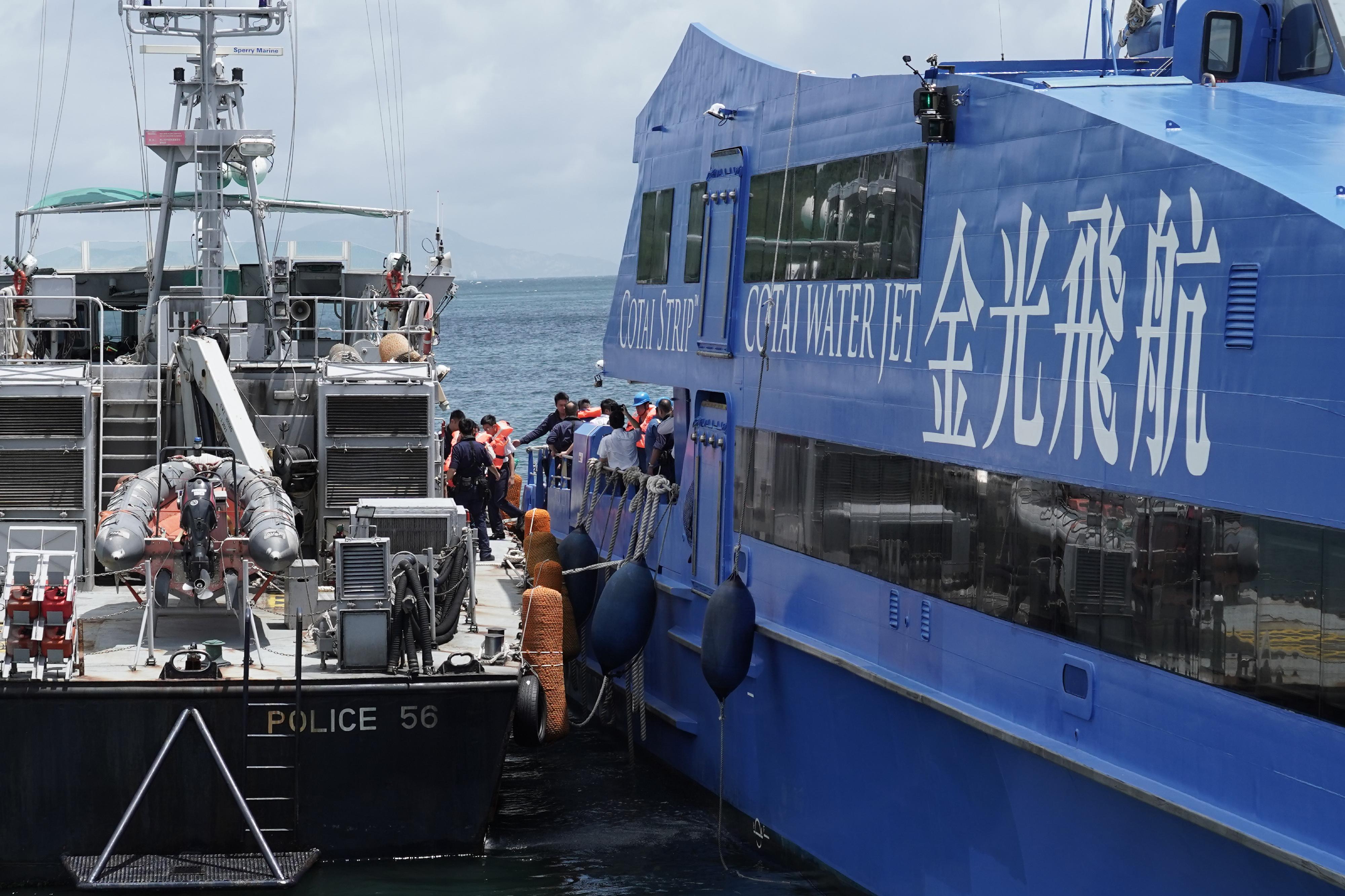
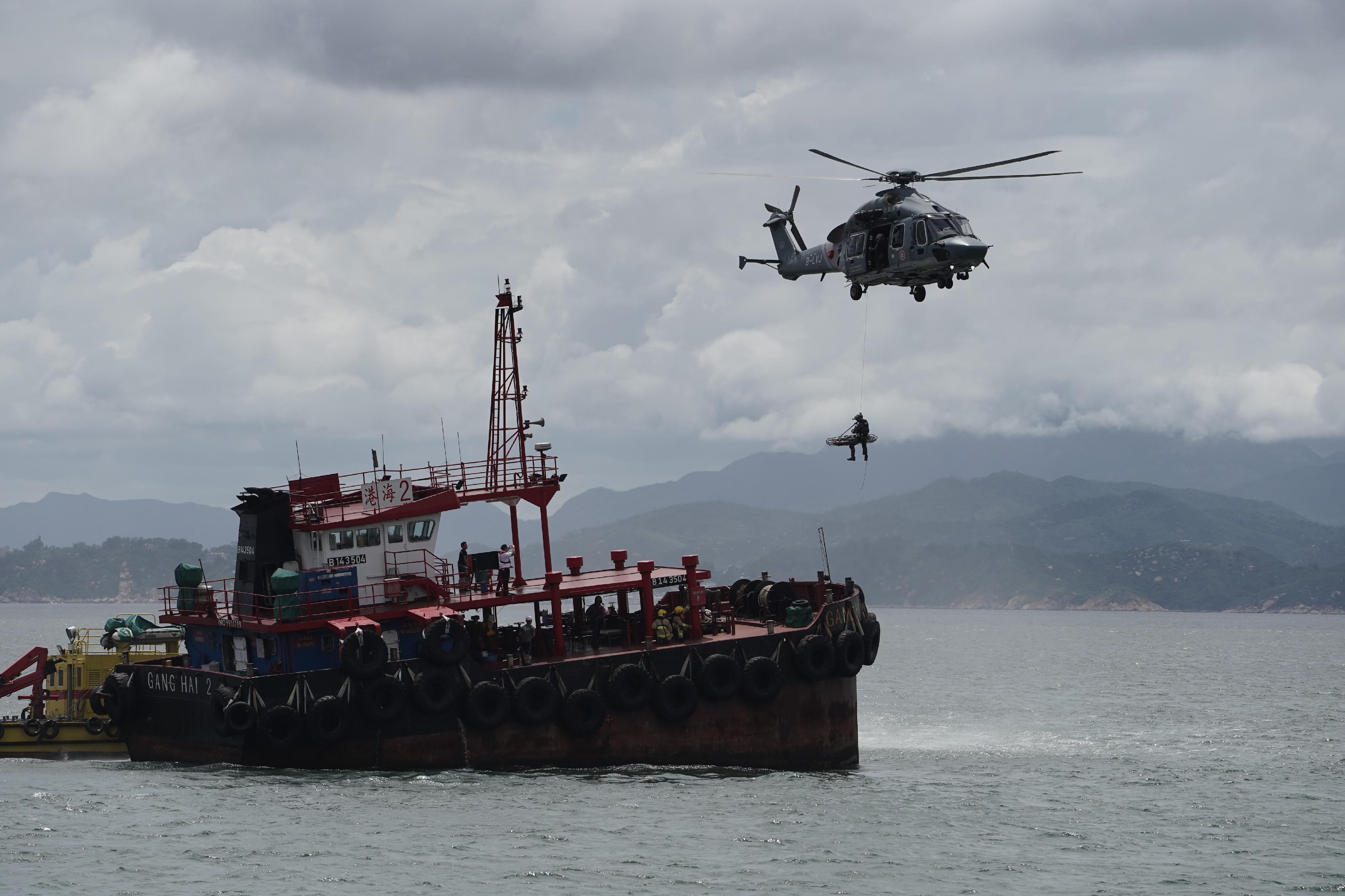
     The Marine Department (MD), in collaboration with the search and rescue (SAR) agencies in Guangdong and Macao as well as several Hong Kong government departments, including the Guangdong Rescue Co-ordination Centre, the Macao Marine and Water Bureau, the Macao Customs, the Hong Kong Police Force, the Government Flying Service, the Fire Services Department and the Civil Aid Service, smoothly conducted a joint maritime SAR exercise in the waters off Ha Mei Wan, Lamma Island, today (June 11).
 
     A spokesman for the MD said, “The objective of the SAR exercise is to test the communication efficiency, co-ordination capabilities and resource deployment among the SAR agencies in Guangdong, Hong Kong and Macao. The exercise also aims to strengthen co-operation between Hong Kong and neighbouring regional SAR centres to enhance their response capabilities in the event of future major maritime emergency incidents.”
 
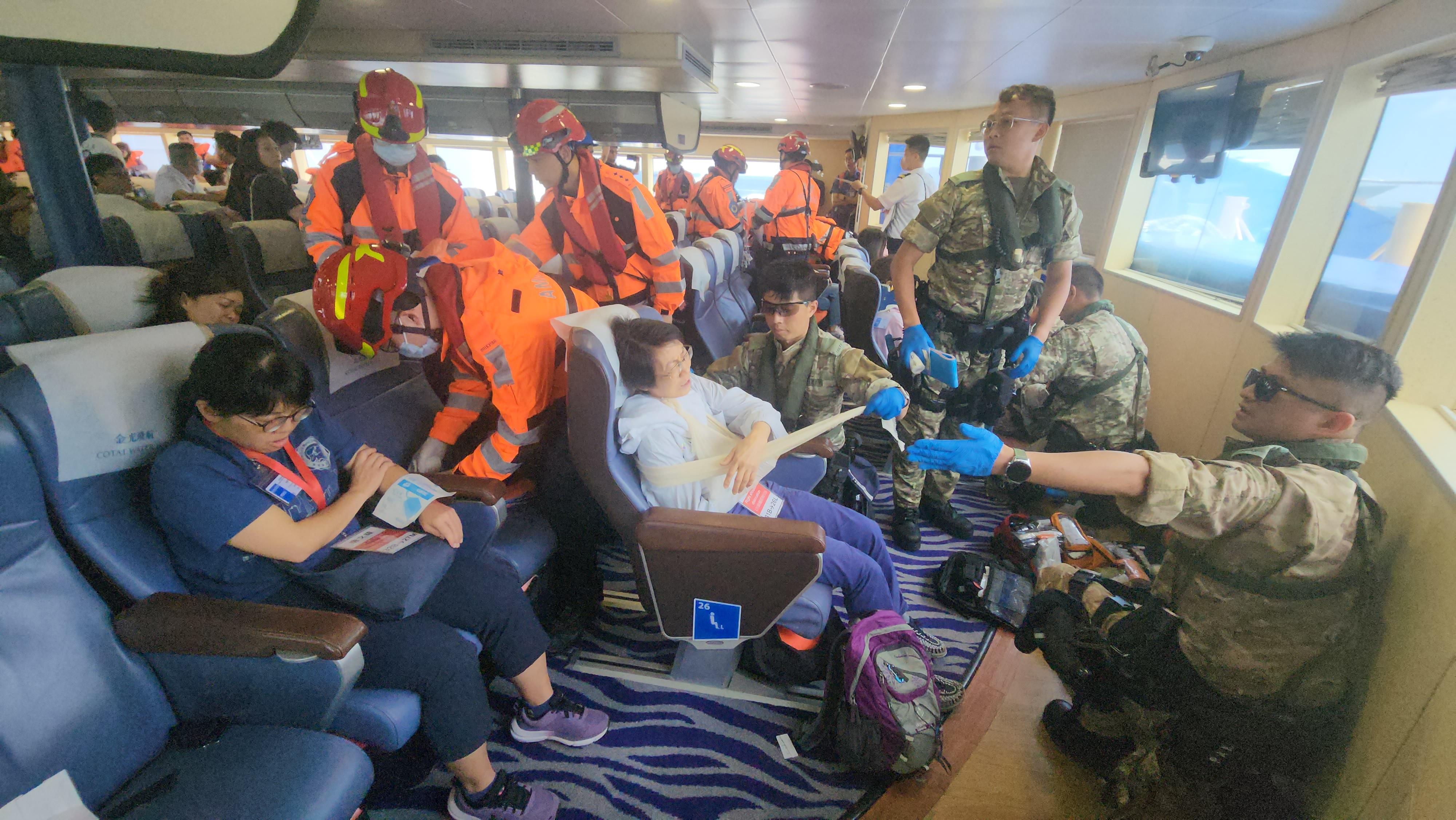
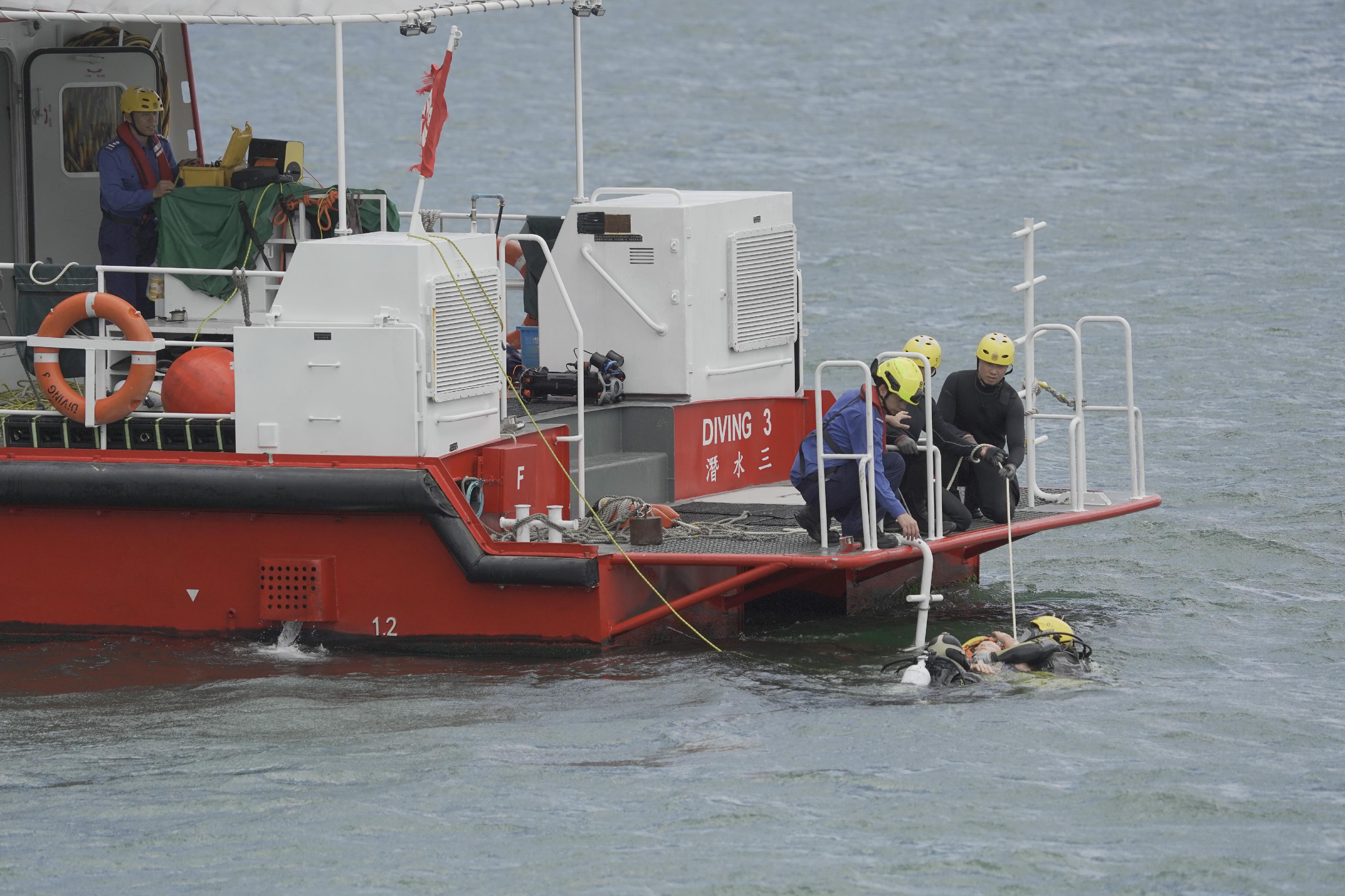
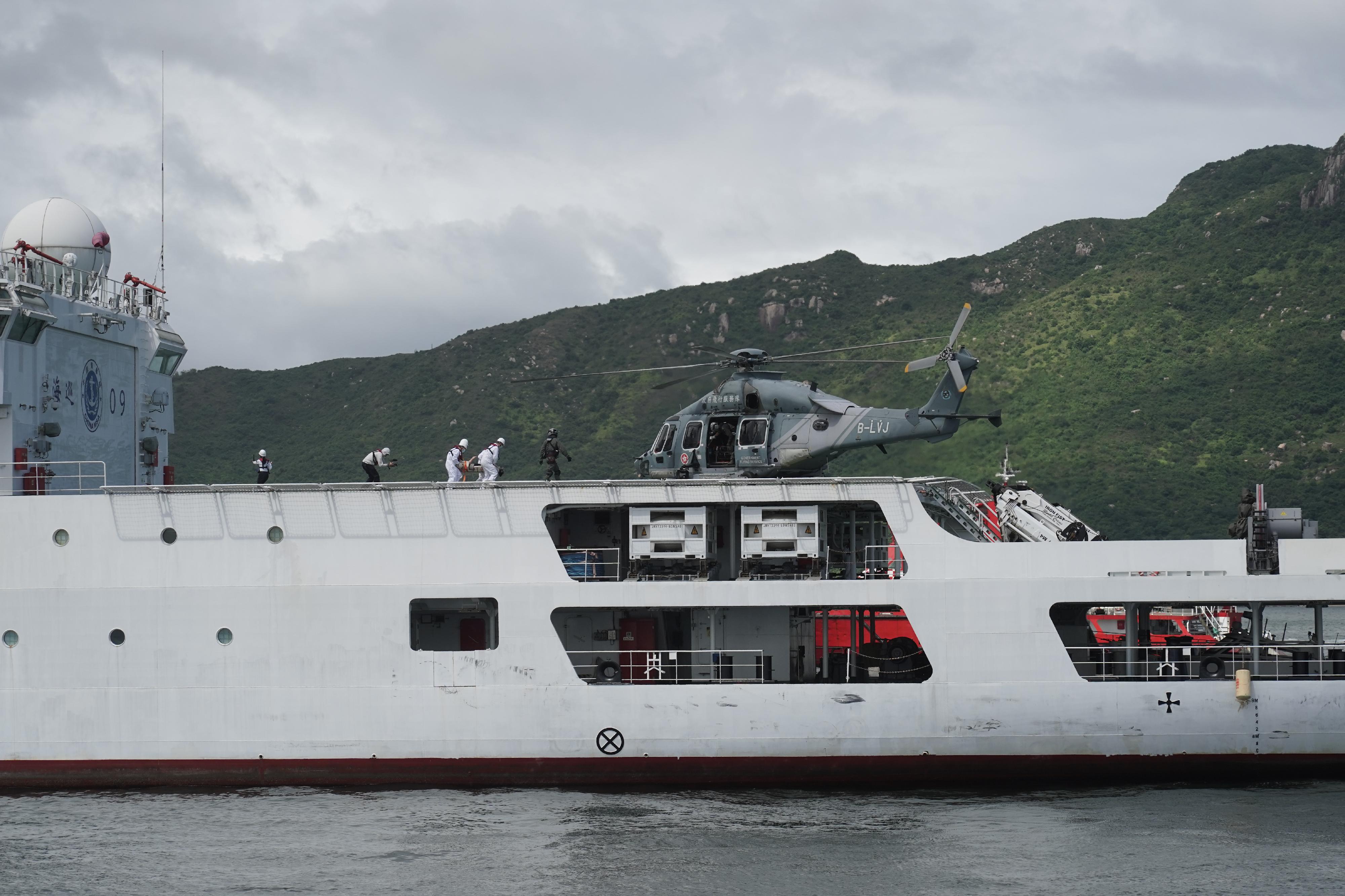
     The exercise simulated a collision between a cross-boundary high-speed passenger ferry carrying around 70 passengers from Macao to Hong Kong and a local oil tanker in the waters north of Shek Kwu Chau. The accident caused damage to the ferry’s hull; two passengers on board went missing after falling overboard, and many passengers were injured. Following the collision accident, the local oil tanker caught fire, trapping a seriously injured crew member in the engine room.
 
     Under the co-ordination of the MD’s Maritime Rescue Coordination Centre, the participating SAR units took various contingency measures to carry out SAR operations. These operations included traffic regulation in the surrounding area to ensure safety at the scene to search for and rescue the missing persons who had fallen into the sea, extinguishing the fire on board the oil tanker, providing on-the-spot first aid to the injured, and deploying a helicopter to transfer the seriously injured to hospital for treatment. The exercise lasted about three hours, mobilising 17 SAR vessels, a helicopter and a total of more than 230 people.
 
     The MD regularly conducts exercises with various SAR units and maritime stakeholders to strengthen co-operation with SAR centres in neighbouring areas and provide effective and rapid SAR services.
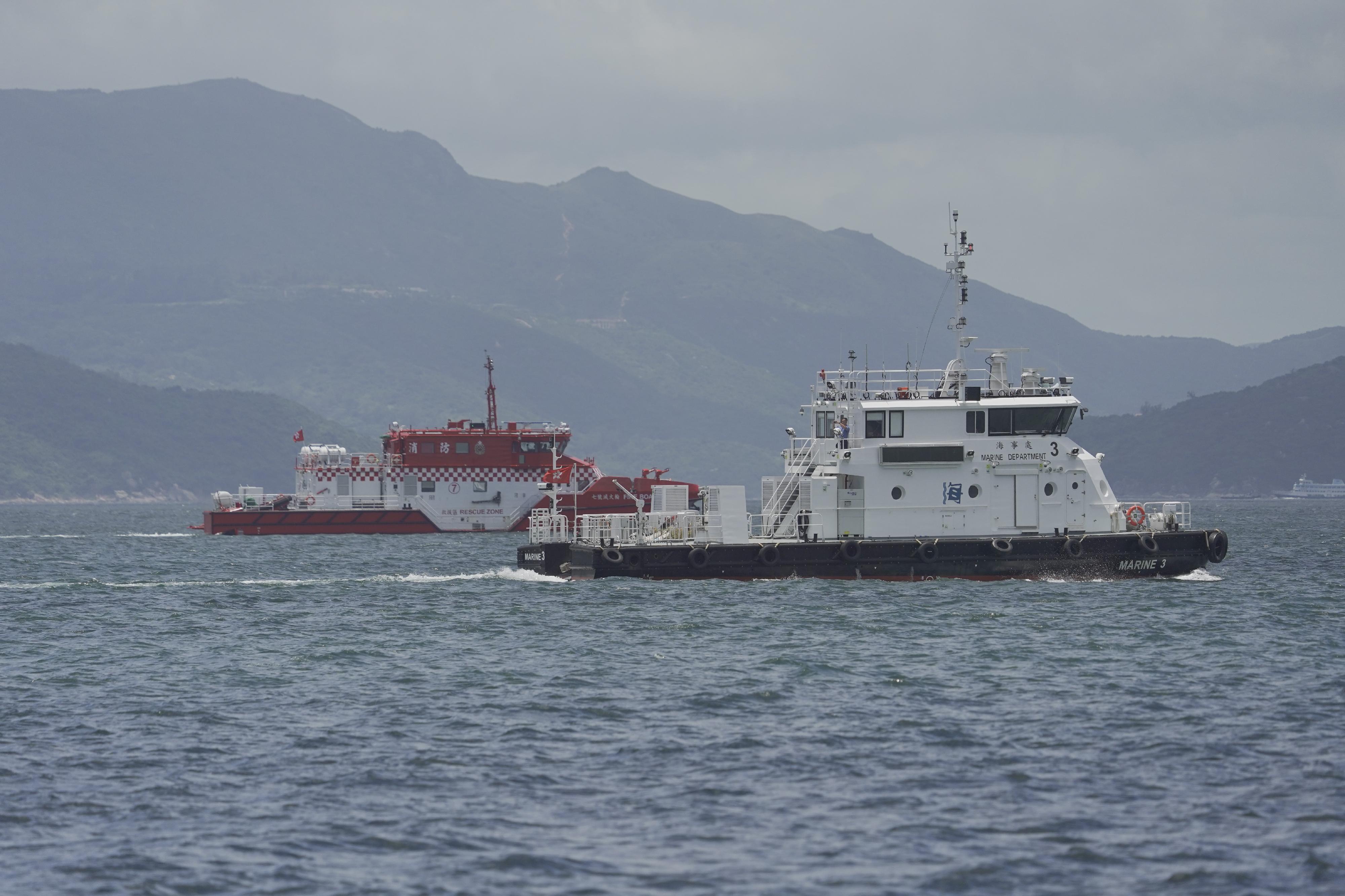
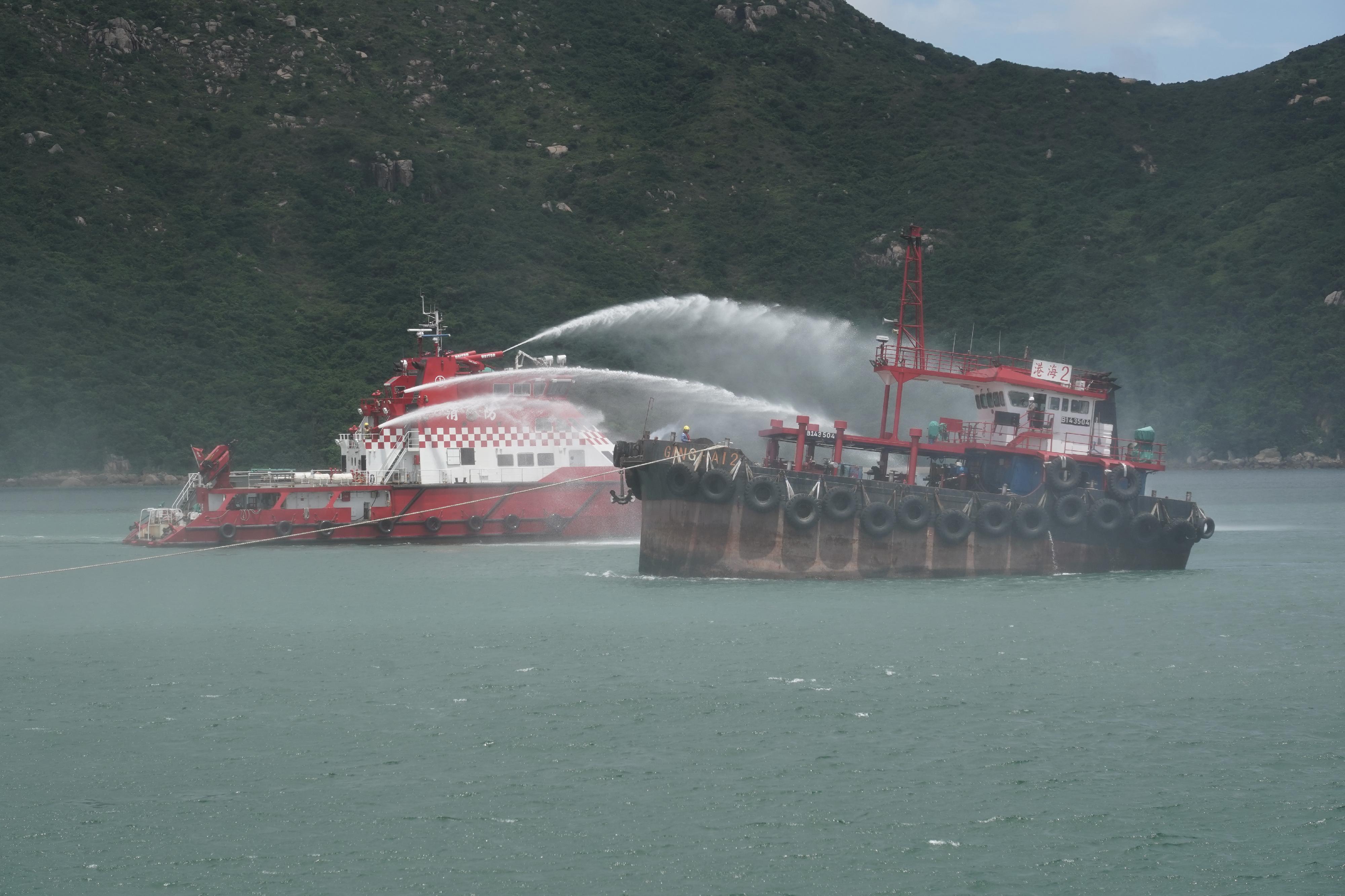
Photo  Photo  Photo  Photo  Photo  Photo  Photo  
read more

Inspection of aquatic products imported from Japan

     In response to the Japanese Government’s plan to discharge nuclear-contaminated water at the Fukushima Nuclear Power Station, the Director of Food and Environmental Hygiene issued a Food Safety Order which prohibits all aquatic products, sea salt and seaweeds originating from the 10 metropolis/prefectures, namely Tokyo, Fukushima, Ibaraki, Miyagi, Chiba, Gunma, Tochigi, Niigata, Nagano and Saitama, from being imported into and supplied in Hong Kong.
 
     For other Japanese aquatic products, sea salt and seaweeds that are not prohibited from being imported into Hong Kong, the Centre for Food Safety (CFS) of the Food and Environmental Hygiene Department is conducting comprehensive radiological tests to verify that the radiation levels of these products do not exceed the guideline levels before they are allowed to be supplied in the market.
 
     From noon on June 10 to noon today (June 11), the CFS conducted tests on the radiological levels of 190 food samples imported from Japan, which were of the “aquatic and related products, seaweeds and sea salt” category. No sample was found to have exceeded the safety limit. Details can be found on the CFS’s thematic website titled “Control Measures on Foods Imported from Japan” (www.cfs.gov.hk/english/programme/programme_rafs/programme_rafs_fc_01_30_Nuclear_Event_and_Food_Safety.html).
 
     In parallel, the Agriculture, Fisheries and Conservation Department (AFCD) has also tested 50 samples of local catch for radiological levels. All the samples passed the tests. Details can be found on the AFCD’s website (www.afcd.gov.hk/english/fisheries/Radiological_testing/Radiological_Test.html).
 
     The Hong Kong Observatory (HKO) has also enhanced the environmental monitoring of the local waters. No anomaly has been detected so far. For details, please refer to the HKO’s website (www.hko.gov.hk/en/radiation/monitoring/seawater.html).
 
     From August 24, 2023, to noon today, the CFS and the AFCD have conducted tests on the radiological levels of 142 751 samples of food imported from Japan (including 93 902 samples of aquatic and related products, seaweeds and sea salt) and 32 690 samples of local catch respectively. All the samples passed the tests. read more

LCQ6: Supply of car parking spaces

     Following is a question by Dr the Hon Ngan Man-yu and a reply by the Secretary for Transport and Logistics, Ms Mable Chan, in the Legislative Council today (June 11):

Question:

     Regarding the supply of car parking spaces, will the Government inform this Council:

(1) of the following information on parking spaces for various vehicle classes (including private cars, commercial vehicles and motorcycles) in Hong Kong from 2022 to 2024: the number of parking spaces, the district distribution, the utilisation rate, the increase or decrease in the number of parking spaces due to redevelopment, new development or other projects, with a tabulated breakdown by type of parking space (e.g. public or temporary car parks, on-street parking spaces); whether it has projected the parking space demand from this year to 2029, and of the currently planned number of parking spaces for various vehicle classes to be built, their locations, the government departments responsible for building them and their expected completion dates;

(2) whether it has plans to conduct a comprehensive review of the supply of parking spaces for various vehicle classes in the territory and study the further opening of car parks in schools and government premises in various districts in the evenings and on public holidays for public use; if so, of the details; if not, the reasons for that; and

(3) whether, on the pretext of not affecting traffic flow and road safety, it will consider increasing the number of free on-street parking spaces, extending the parking hours for night-time parking spaces and installing multi-storey stacked parking systems to improve land use efficiency; if so, of the details; if not, the reasons for that?

Reply:

President,

     In response to Oral Question 1, the Government has outlined its parking policy and I am not going to repeat it here. We will adopt a multi-pronged strategy to comprehensively increase parking supply, including leveraging technology, fostering stronger collaboration among stakeholders, and prioritising the parking needs of commercial vehicles (CVs).

     Having consulted the Transport Department (TD), a consolidated reply in response to the questions raised by Dr the Hon Ngan Man-yu is as follows:

(1) Over the past three years, the total number of parking spaces in Hong Kong has increased by more than 15 000, bringing the total to over 800 000 (Annex 1). The ratio of parking spaces to registered vehicles has improved, and the number of metered parking spaces has also grown (Annex 2). However, the recovery of some short-term tenancy (STT) car parks has led to a slight decline in CV parking spaces (Annex 3). To address this, we have implemented various measures to enhance CV parking supply. For example, public vehicle parks (PVPs) currently in operation and under construction will provide approximately 460 CV parking spaces, and we have mandated a minimum number of CV parking spaces in suitable STT car parks. The Government continues to collaborate actively with stakeholders to expand parking supply. Between 2022 and 2024, more than 25 000 additional parking spaces were introduced under urban redevelopment projects (Annex 4). Utilisation rates remain consistently high across all types of parking spaces, with metered parking spaces averaging around 90 per cent and trending upward. Among public car parks managed by the TD, utilisation rates range from approximately 80 per cent to 90 per cent, while STT car parks average around 60 per cent.

     When advancing PVP projects, the TD assesses district-level parking demand based on illegal parking occurrences and the availability of facilities near project sites. For example, priority is given to areas with a high concentration of logistics trades for additional CV parking spaces. The TD will also consider conducting studies to forecast medium-to-long-term parking needs.

     The currently operating and under-construction PVPs will provide over 3 200 parking spaces. We are also exploring the adaptive reuse of construction shafts left after the completion of the Central Kowloon Bypass, with plans to convert them into underground multi-storey car parks featuring automated parking systems (APS).

     Over the next two years, the Government will introduce 12 000 additional parking spaces, with at least 500 designated for CVs. The actual quantity will be even higher when accounting for additional CV parking spaces from upcoming STT car parks and private development projects.

     Our priority remains the expansion of CV parking spaces, particularly in areas facing shortages, and we will intensify efforts to promote APS. Through policy initiatives and co-ordinated action with districts, we are confident that Hong Kong’s parking supply will continue to improve. Projected parking space supply estimates beyond 2025 are detailed in Annex 5.

(2) The standard of parking facilities in the Hong Kong Planning Standards and Guidelines (HKPSG) will be reviewed regularly and revised when necessary to meet future transportation and policy needs. The first batch of subsidised housing planned under the revised HKPSG in 2021 (Note) is scheduled for completion in 2026, providing approximately 4 700 parking spaces across 26 subsidised housing developments. This includes 220 CV parking spaces, as well as the introduction of 33 medium/heavy goods vehicle and 18 coach/bus shared-use loading and unloading bays for night-time CV parking. The TD is closely monitoring the implementation of the revised HKPSG and will review it as needed to ensure it aligns with the latest developments.

     The Government Property Agency has opened around 1 000 parking spaces within the 12 joint-user general office buildings under its management, with some parking spaces available for public use throughout the day. Additionally, public car parks managed by the Leisure and Cultural Services Department provide more than 2 700 parking spaces for public use. The TD is actively collaborating with the Housing Department to explore the possibility of opening loading/unloading bays in five subsidised housing developments, including Sha Tin and Tsuen Wan for night-time CV parking, given the substantial parking demand from medium and heavy goods vehicles in these areas. Furthermore, the TD is working with the Education Bureau to encourage more schools to make school bus parking spaces available for student service vehicles during non-school hours, specifically to address CV parking needs.

(3) The TD has been proactively identifying suitable locations across districts to provide additional on-street parking spaces. As of 2024, more than 1 860 on-street night-time parking spaces have been designated. The free parking period for over 600 CV night-time parking spaces has been adjusted to start at 7pm, and future provisions of such spaces will aim to advance the free parking period as much as possible.

     The Government has been implementing APS projects in suitable PVPs and STT car parks, as APS can nearly double the parking capacity within the same space. PVPs currently under construction will provide 1 000 automated parking spaces. Additionally, seven private car parks and three STT car parks are already equipped with APS. The PVPs are located in Tseung Kwan O, San Po Kong, Sham Shui Po, and Ma On Shan, while the STT car parks are in Tsuen Wan, Tai Po, Sham Shui Po, and Yau Ma Tei. Various APS models are being adopted, including puzzle-stacking as proposed in the question, vertical lifting and horizontal sliding, as well as circular shaft lifting systems.

     The widespread adoption of APS in Hong Kong requires private sector involvement from the society. Both the Electrical and Mechanical Services Department and the TD have published APS implementation guidelines for industry reference. In the future, the TD will actively encourage developers to adopt APS and explore further incentive measures.

     Thank you, President.

Note: The 2021 he revised HKPSG has increased the number of ancillary parking spaces for PCs in private and subsidised housing developments, the types and numbers of parking spaces for CVs in subsidised housing development, and introduced two types of “shared-use” parking spaces, one of which is to be shared by light goods vehicles and light buses, and the other by medium/heavy goods vehicles and coaches. read more