Tag Archives: China

image_pdfimage_print

Expert Committee on Clinical Events Assessment Following COVID-19 Immunisation assesses serious adverse events relating to COVID-19 vaccination

     The Expert Committee on Clinical Events Assessment Following COVID-19 Immunisation (Expert Committee) convened a meeting today (June 1) to assess serious adverse events relating to COVID-19 vaccination.
      
     The Department of Health (DH) has put in place a pharmacovigilance system for COVID-19 immunisations, including receiving reports of Adverse Events Following Immunisation (AEFIs) related to the COVID-19 vaccines used in Hong Kong from healthcare professionals and pharmaceutical industries, and setting up the Expert Committee to provide independent assessment on the potential causal link between AEFIs and COVID-19 vaccination. The DH is also partnering with the University of Hong Kong (HKU) to conduct an active surveillance programme for Adverse Events of Special Interest under the COVID-19 Vaccines Adverse Events Response and Evaluation Programme (CARE Programme). The main purpose of the pharmacovigilance system is to detect potential signals of possible side effects of the vaccines.
      
     According to the World Health Organization (WHO), an AEFI is any medical occurrence that follows immunisation and that does not necessarily have a causal relationship with the usage of the vaccine. As endorsed by the Expert Committee, when there are obvious medical causes for certain clinical events including death cases or the events have exceeded the reporting time frame, the healthcare professionals may consider the events not fulfilling the criteria for reporting as AEFIs. On the other hand, under the CARE Programme, death cases not fulfilling reporting criteria of AEFIs are referred to HKU for surveillance and analysis. 

     With reference to the experience since the commencement of the COVID-19 Vaccination Programme, the Expert Committee reviewed the risk communication plan on clinical events following immunisation. Starting from July 2021, a monthly report on safety monitoring of COVID-19 vaccines will be published in the Government’s designated website and relevant statistics will be released through the website regularly. As endorsed by the Expert Committee, with immediate effect, public announcement on individual death cases would only be made if potential association with the vaccination is detected. 
      
     Between May 17 and May 30, 2021, the DH had received one death report fulfilling the criteria for reporting as serious AEFIs from the Hospital Authority (HA). This case involved a 44-year-old female announced on May 21. Based on the clinical information and the preliminary autopsy findings of ischaemic heart disease, the Expert Committee preliminarily considered that the case was not associated with vaccination.
      
     As of May 30, a total of 11,838 persons had been infected with COVID-19 and 210 had died of the disease in Hong Kong. Separately, about 2.364 million doses of COVID-19 vaccines had been administered for members of the public in Hong Kong. Around 1.359 million people had received at least one dose of a vaccine. In the same period, the DH received about 3289 reports of adverse events (0.14 per cent of total vaccine doses administered), including 21 death cases with vaccination within 14 days before they passed away and fulfilling the criteria for reporting as serious AEFI (0.0009 per cent of total vaccine doses administered) . So far, there is no case identified as having causal relationship with the COVID-19 vaccination. The Expert Committee considered there is no unusual pattern identified so far, and it will continue to closely monitor the situation and collect data for assessment.
      
     According to the local mortality data, in the period between February 26 and May 30 of 2019, among people aged 40 or above, there were 957 deaths (i.e. 22.4 per 100 000 population) and 1,635 deaths (i.e. 38.3 per 100 000 population) due to ischaemic heart diseases and heart disease respectively. In addition, according to information by the HA, during the period from April 26 to May 23 of 2021, the ratio of death cases out of those without a vaccination record was 54 cases for every 100 000 people, whereas the ratio of death cases for those with a vaccination record was 2.9 cases for every 100 000 people. The overall death rate is similar to that recorded in the past three years. Based on the statistical analysis of the above figures, there is no evidence that vaccination increases the risk of death for recipients.
      
     Between May 17 and May 30, 2021, the DH had received 14 reports of suspected Bell’s palsy with history of COVID-19 vaccination. These cases involved 10 males and four females between 27 and 76 years old. Four of these cases received CoronaVac vaccine and 10 received Comirnaty vaccine. The Expert Committee reviewed available clinical data of these cases and considered that eight cases required further clinical information before the assessment could be concluded. In addition, the HKU has reported the progress of the CARE Programme on Bell’s palsy to the Expert Committee.
      
     Bell’s palsy (acute peripheral facial paralysis) is a common neurologic disorder. Majority of the patients will have complete recovery even without treatment and early use of a short course of treatment within 3 days of symptoms onset will further enhance the recovery rate. According to the preliminary information collected by the HKU from HA, for people of 16 years old or above, there were on average 72.3 new cases of Bell’s palsy recorded in the period from May 17 to May 30 of 2018, 2019 and 2020.
      
     The two COVID-19 vaccines authorised for use in Hong Kong have been rigorously evaluated by the Advisory Panel on COVID-19 Vaccines established under the Prevention and Control of Disease (Use of Vaccines) Regulation (Cap. 599K) that they are safe, effective and of good quality. Current scientific evidence indicates that the benefits of the two COVID-19 vaccines outweigh their risks for use as active immunisation to prevent COVID-19. The surveillance system put in place by the DH aims at identifying potential signals that may indicate association between unknown adverse events and the vaccines. If a signal is identified and confirmed, appropriate regulatory measures would be instituted. The updated COVID-19 vaccines safety monitoring report (as at May 30) will be uploaded on June 4. read more

Speech by FS at Italian National Day celebration concert (English only) (with photos)

     Following is the speech by the Financial Secretary, Mr Paul Chan, at the Italian National Day celebration concert today (June 1):

     Consul General (Consul General of Italy in Hong Kong, Mr Clemente Contestabile), Director Wang (Director-General of the Consular Department of the Office of the Commissioner of the Ministry of Foreign Affairs of the People’s Republic of China in the Hong Kong Special Administrative Region, Mr Wang Jiarong), your excellencies, distinguished guests, ladies and gentlemen,

     Buona sera. Good evening. I’m honoured to be here in celebration of the 75th anniversary of the Italian Republic: Festa della Repubblica.

     And what better way to celebrate Republic Day than tonight’s “Concerto Italiano”, an inspired tribute to some of Italy’s, and in fact the world’s, musical masterpieces.

     No less satisfying for the music lovers is the collaboration that has made this memorable evening possible. Mr Lorenzo Iosco from Italy, the Hong Kong Philharmonic (Hong Kong Phil)’s bass clarinettist, is conducting the Hong Kong Phil’s ensemble this evening. And special guests range from Hong Kong’s internationally celebrated tenor, Warren Mok, to soprano Louise Kwong, a former member of the Young Artist Program of Rome Opera House.

     Hong Kong and Italy have long co-operated – in music, as in business, finance and much else. Our bilateral trade this past year has, unfortunately, been affected by the pandemic. No surprise there. But I’m pleased to say that nearly 10 per cent of the total merchandise trade between Italy and the Mainland last year was routed through Hong Kong.  Some US$5 billion in all.

     That speaks, and clearly, of the singular role Hong Kong plays as the multilevel bridge between the Mainland and the rest of the world.

     Consider that more than 170 Italian companies call Hong Kong home. They embrace everything from banking and fashion to food and beverage, transport and logistics, and much more. And the majority of them maintain their regional headquarters and regional offices in Hong Kong.

     They’re here because they know that Hong Kong’s deepening economic integration with the Mainland will only expand prospects for Italian companies – in Hong Kong and throughout the Mainland.

     That’s thanks to our “one country, two systems” unique arrangement, to our world-class financial and professional services sectors, to the free flow of capital, talent and information, to the rule of law and judicial independence, and to the many other advantages Hong Kong offers businesses and investors.

     Those advantages will prove particularly significant in tapping the far-reaching promise of the Guangdong-Hong Kong-Macao Greater Bay Area. The region is poised to expand Hong Kong’s marketplace tenfold, giving business and investors, as well as cultural and technology concerns, a market counting some 72 million consumers, all eager to embrace, and soon, the post-pandemic era.

     That time is coming, ladies and gentlemen. Hong Kong is in a good place now. We have worked hard and well to keep COVID-19 in check. And our vaccination programme, under way now for three months, is free to all Hong Kong residents 16 and over. 

     If you’ve yet to be vaccinated, I urge you to do so, as soon as you can. Our vaccination centres are open seven days a week, public holidays included.

     We are determined to get back to work and enjoying life, too. And it’s no surprise to this speaker that so many of the pleasures that make life enjoyable speak Italian – in design, style and, yes, wine and pasta.

     I’m confident that Italy, under its new, internationally respected Prime Minister, Mario Draghi, will emerge confident and strong – and play a pivotal role in helping the European Union do the same.

     This evening’s concert symbolises that ardent expectation. Embodies the faith the people of Italy and Hong Kong have in the future. In our shared future.

     My congratulations to the great nation of Italy on its national day.

     Consul General, ladies and gentlemen, I propose a toast to the people of the Italian Republic.
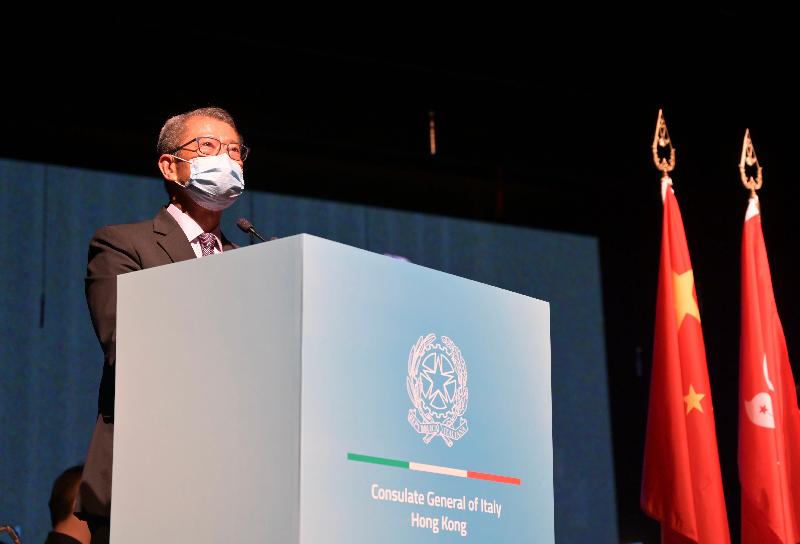
Photo  Photo  
read more

Government to gazette compulsory testing notice

     â€‹The Government will exercise the power under the Prevention and Control of Disease (Compulsory Testing for Certain Persons) Regulation (Cap. 599J) and publish in the Gazette a compulsory testing notice, which requires any person who had been present at six specified premises during the specified period (persons subject to compulsory testing) to undergo a COVID-19 nucleic acid test.

     A spokesman for the Food and Health Bureau reminded the public that persons who have completed a COVID-19 vaccination course would be taken to have complied with the requirements set out in the compulsory testing notices and hence are not required to undergo compulsory testing. Completion of the vaccination course in general means having received two doses of COVID-19 vaccine 14 days ago.

     Since there were outbreaks of upper respiratory tract infection and/or influenza-like illness in six schools, and the symptoms of the diseases concerned are similar to those of COVID-19, for prudence’s sake, three schools and the specified level of another three schools are covered in the compulsory testing notice today (June 1). Under existing practice, the Centre for Health Protection (CHP) will provide schools subject to compulsory testing with stool specimen bottles and deep throat saliva specimen collection packs direct.
      
     Details of the compulsory testing notice are in Annex 1.

     In addition, subsequent to the announcement by the CHP on the updated quarantine arrangements of local COVID-19 cases with the N501Y mutant strain, persons who resided or worked within the same building as the residence of relevant cases and had been released from the quarantine centres will be subject to compulsory testing on the third, seventh, 12th and 19th day counting from the announcement of the relevant confirmed case by the Department of Health (DH). Relevant persons have to undergo testing on specified dates. They will also be required to undergo self-monitoring until the 21st day (see the details of the buildings and dates of testing at www.coronavirus.gov.hk/pdf/CTN_Specified_premises_and_Dates_of_Testing.pdf).

     In accordance with the compulsory testing notice issued earlier, all household members of close contacts are required to undergo compulsory testing. Any person who had lived with a person placed under quarantine pursuant to section 22 of the Prevention and Control of Disease Regulation (Cap. 599A) (person under quarantine) in the same residential unit on the date of commencement of quarantine or during the 14 days before that day, and who becomes aware of the quarantine of the person under quarantine when the relevant quarantine has not yet been completed, has to undergo testing within two days of him or her becoming aware that the person under quarantine has been placed under quarantine and report to the Government the result of the test by phone (6275 6901), fax (2530 5872) or email (ct@csb.gov.hk) within three days of undergoing the test.

     Currently, there are a total of 21 community testing centres (CTCs) providing testing services for the public, including free service for persons subject to compulsory testing. Booking and walk-in services are available. Members of the public only need to provide simple personal information on the 24-hour booking system (www.communitytest.gov.hk/en). The system was enhanced to show the booking status of the centres for the coming two weeks to facilitate the public’s planning and selection of a suitable testing centre and a time slot for testing. The testing centres will accord priority to serve individuals with advance bookings. The number of tests available for appointments at CTCs has been increased to over 46 000 per day, and additional manpower has been deployed to serve the public. As of 6pm today, there were around 35 000 booking places available for tomorrow (June 2) at the CTCs, and around 86 per cent and 91 per cent availability for booking places for the coming seven days and 14 days respectively. Members of the public may call the testing centres for enquiries on the availability of bookings or walk-in quotas before visiting the centres.

      Coupled with the 21 CTCs, there will be a total of 37 CTCs/mobile specimen collection stations in various districts tomorrow to provide free service for persons subject to compulsory testing. The testing capacity should be sufficient to meet the demand. The opening dates and operating hours of the mobile specimen collection stations in various districts providing free COVID-19 nucleic acid testing services for the general public are stated in Annex 2. Persons subject to compulsory testing and those with the “LeaveHomeSafe” COVID-19 exposure notification or SMS notification from the CHP reminding them to undergo testing as soon as possible may receive free testing at CTCs or mobile specimen collection stations (if the service scope is applicable).

     Persons subject to compulsory testing may choose to undergo testing via the following routes:

1. To visit any of the mobile specimen collection stations (see the list and target groups (if applicable) at www.coronavirus.gov.hk/eng/early-testing.html) for testing;
2. To attend any of the community testing centres (see the list at www.communitytest.gov.hk/en);
3. To obtain a deep throat saliva specimen collection pack from any of the 121 post offices, vending machines set up at 20 MTR stations or 47 designated general outpatient clinics (GOPCs) of the Hospital Authority and return the specimen to one of the designated specimen collection points (see the distribution points and times, and the specimen collection points and times, at www.coronavirus.gov.hk/eng/early-testing.html);
4. To undergo testing at any of the GOPCs of the Hospital Authority as instructed by a medical professional of the Hospital Authority;
5. To self-arrange testing provided by private laboratories which are recognised by the DH and can issue SMS notifications in respect of test results (see the list at www.coronavirus.gov.hk/pdf/List_of_recognised_laboratories_RTPCR.pdf); or
6. To use a specimen bottle distributed to the relevant specified premises by the CHP (if applicable), and return the specimen bottle with the sample collected as per relevant guidelines.

     The spokesman cautioned that testing received at Accident and Emergency Departments of the Hospital Authority or during hospital stays, or testing provided by private laboratories which cannot issue SMS notifications in respect of test results, does not comply with the requirements of the aforementioned compulsory testing notice.

     “If persons subject to compulsory testing have symptoms, they should seek medical attention immediately and undergo testing as instructed by a medical professional. They should not attend the mobile specimen collection stations or the community testing centres.”

     Persons subject to compulsory testing must keep the SMS notifications containing the result of the test for checking by a law enforcement officer when the officer requires the persons to provide information about their undergoing the specified test.

     Furthermore, persons subject to testing under the compulsory testing notices should, as far as reasonably practicable, take appropriate personal disease prevention measures including wearing a mask and maintaining hand hygiene, and, unless for the purpose of undergoing the specified test, stay at their place of residence and avoid going out until the test result is ascertained as far as possible.

     Any enquiries on compulsory testing arrangements may be addressed to the hotline at 6275 6901, which operates daily from 9am to 6pm. If persons subject to compulsory testing plan to conduct testing at any of the community testing centres, they can check the centre’s appointment status in advance. The hotlines of the community testing centres are available at www.communitytest.gov.hk/en/info.

     The Government will continue to trace possibly infected persons who had been to the relevant premises, and seriously verify whether they had complied with the testing notices. Any person who fails to comply with the testing notices commits an offence and may be fined a fixed penalty of $5,000. The person would also be issued with a compulsory testing order requiring him or her to undergo testing within a specified time frame. Failure to comply with the order is an offence and the offender would be liable to a fine at level 4 ($25,000) and imprisonment for six months.

     Relevant officers of different government departments are empowered to perform certain functions under the relevant Regulations under the Prevention and Control of Disease Ordinance (Cap. 599), including requesting individuals to provide information and assistance when necessary. Any person who fails to comply with the relevant request commits an offence and would be liable to a fine at level 3 ($10,000). Collection and use of any personal data for conducting COVID-19 tests must meet the requirements under the Personal Data (Privacy) Ordinance (Cap. 486). Government departments or testing service providers which handle the relevant information may provide the data to the DH or other relevant departments for anti-epidemic purposes as necessary. The workflow does not involve the provision of any personal data to organisations or persons outside Hong Kong.

     The spokesman said, “The Government urges all individuals who are in doubt about their own health conditions, or individuals with infection risks (such as individuals who visited places with epidemic outbreaks or contacted confirmed cases), to undergo testing promptly for early identification of infected persons.” read more

Man sentenced for breaching compulsory quarantine order

     A 16-year-old man was sentenced to immediate detention in rehabilitation centre by the Tuen Mun Magistrates’ Courts today (June 1) for violating the Compulsory Quarantine of Certain Persons Arriving at Hong Kong Regulation (Cap. 599C) (the Regulation).

     The man was earlier issued a compulsory quarantine order stating that he must conduct quarantine at home for 14 days. The man was later found to have given a false residential address for use as the place of quarantine to an authorised officer at the Shenzhen Bay Control Point on October 20, 2020. Before the expiry of the quarantine order, he had also taken off his wristband without reasonable excuse nor permission given by an authorised officer and was intercepted by police at Kwun Tong on October 22, 2020. He was charged with contravening sections 8(4), 8(5) and section 9 of the Regulation and was sentenced to immediate detention in rehabilitation centre by the Tuen Mun Magistrates’ Courts today.

     Breaching a quarantine order is a criminal offence and offenders are subject to a maximum fine of $25,000 and imprisonment for six months. A spokesman for the Department of Health said the sentence sends a clear message to the community that breaching a compulsory quarantine order is a criminal offence that the Government will not tolerate, and solemnly reminded the public to comply with the regulations. As of today, a total of 141 persons have been convicted by the courts for breaching compulsory quarantine orders and have received sentences including immediate imprisonment for up to 14 weeks or a fine of up to $15,000. The spokesman reiterated that resolute actions will be taken against anyone who has breached the relevant regulations. read more