COVID-19 Vaccination Programme statistics
The COVID-19 Vaccination Programme has been implemented for 102 days since February 26, 2021. So far, about 2 679 600 doses of vaccines have been administered under the Vaccination Program… read more


The COVID-19 Vaccination Programme has been implemented for 102 days since February 26, 2021. So far, about 2 679 600 doses of vaccines have been administered under the Vaccination Program… read more
​The Chief Executive, Mrs Carrie Lam, tonight (June 7) met with representatives of Mainland and overseas art galleries via a webinar. She briefed them on Hong Kong’s growing competitive edge as an international arts and cultural hub, and that it is the best time for them to expand their presence in the city. The Secretary for Home Affairs, Mr Caspar Tsui, and the Under Secretary for Commerce and Economic Development, Dr Bernard Chan, also joined the webinar.
The webinar was organised by Art Basel, with which the Chief Executive has had close interactions over the years since Art Basel Hong Kong was hosted in Hong Kong some eight years ago. Apart from senior executives of Art Basel including its global director, Mr Marc Spiegler, the webinar was attended by a dozen of directors and founders of art galleries in major cities around the world, including New York, London, Paris, Rome, Milan, Athens, Tokyo, Seoul, Singapore, Jakarta and Mainland cities such as Beijing, Shanghai and Guangzhou.
Mrs Lam said that Hong Kong has all along been an East-meets-West hub for international arts and cultural exchanges. To promote cultural co-operation, Hong Kong has signed memoranda of understanding (MOUs) on cultural co-operation with 20 countries which facilitate cultural activities such as staff exchanges, education, training, research and business matching. The Leisure and Cultural Services Department (LCSD) had also signed MOUs with world-renowned museums such as the British Museum and the Gallerie degli Uffizi to strengthen cultural exchanges and co-operation between the parties.
“The professionalism and passion of Hong Kong’s museums are well recognised by the community of collectors and artists. In addition, Hong Kong is blessed with a rich private collection; many of the collectors are supporters of our public museums,” Mrs Lam told the participants.
“I am honoured and thrilled to receive on behalf of our public museums two remarkable donations from Chih Lo Lou Art Promotion Ltd and the family of celebrated artist Wu Guanzhong in 2018.”
Mrs Lam highlighted that Hong Kong is quickly developing into a major global art trading centre. Hong Kong’s competitive edge includes its low and simple tax regime with no customs duty, value-added taxes or estate duty on artworks, the freedom of expression enjoyed by people including artists, a robust intellectual property protection regime, and comprehensive private wealth management services available to collectors.
Mrs Lam noted that Hong Kong has been investing heavily in upgrading existing cultural hardware and building new facilities. The M+ Museum and the Hong Kong Palace Museum in the West Kowloon Cultural District, which are expected to be commissioned at the end of this year and in the middle of next year, respectively, together with the renovated and expanded Hong Kong Museum of Art, will be cultural landmarks by the Victoria Harbour. Other hardware includes the host of museums managed by the LCSD, Tai Kwun – Centre for Heritage and Arts, the PMQ as well as prime Hong Kong exhibition venues including the Hong Kong Convention and Exhibition Centre and AsiaWorld-Expo. Coupled with the recent efforts of private developers to enhance artistic elements in their properties, members of the public are now able to sample a rich and colourful diversity of arts and cultural activities all around Hong Kong.
On top of the first-class arts and cultural venues, she pointed out that Hong Kong has a vibrant art scene and plays host to a number of large-scale and well-received annual international art fairs, including Art Basel Hong Kong, Art Central and the French May Arts Festival, attracting plenty of art lovers and members of the public on a yearly basis.
She pointed out that Hong Kong’s position will be further boosted by the “Outline of the 14th Five-Year Plan for National Economic and Social Development of the People’s Republic of China and the Long-Range Objectives Through the Year 2035” approved by the National People’s Congress earlier this year, in which Hong Kong, for the first time, is encouraged to develop into a hub for arts and cultural exchanges between China and the rest of the world. She added that it echoed the directions of the Culture and Tourism Development Plan for the Greater Bay Area promulgated in December 2020, which indicated support for Hong Kong to develop into a more competitive global platform for cultural exchanges.
“Given Hong Kong’s competitive edge and bright prospects in art and cultural development, and the recent drop in rentals in the commercial property market amid the epidemic, I believe that it is the best time for international art galleries and world-renowned artists to expand their presence in Hong Kong. I welcome you all with open arms,” said Mrs Lam.
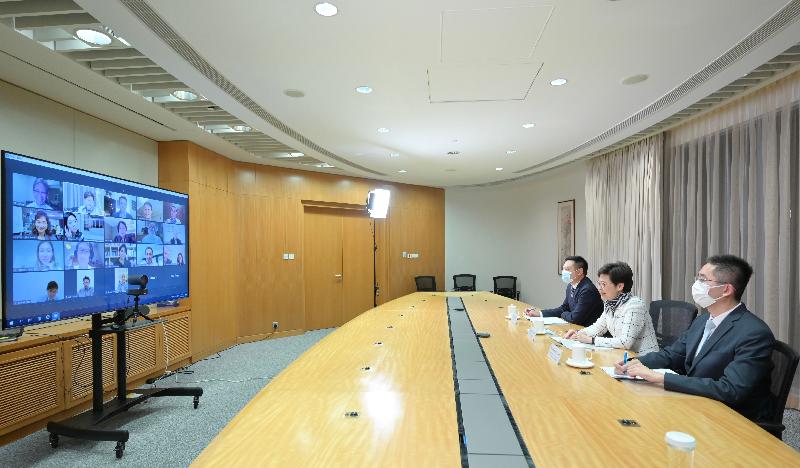
​The Chief Executive, Mrs Carrie Lam, tonight (June 7) met with representatives of Mainland and overseas art galleries via a webinar. She briefed them on Hong Kong’s growing competitive edge as an international arts and cultural hub, and that it is the best time for them to expand their presence in the city. The Secretary for Home Affairs, Mr Caspar Tsui, and the Under Secretary for Commerce and Economic Development, Dr Bernard Chan, also joined the webinar.
The webinar was organised by Art Basel, with which the Chief Executive has had close interactions over the years since Art Basel Hong Kong was hosted in Hong Kong some eight years ago. Apart from senior executives of Art Basel including its global director, Mr Marc Spiegler, the webinar was attended by a dozen of directors and founders of art galleries in major cities around the world, including New York, London, Paris, Rome, Milan, Athens, Tokyo, Seoul, Singapore, Jakarta and Mainland cities such as Beijing, Shanghai and Guangzhou.
Mrs Lam said that Hong Kong has all along been an East-meets-West hub for international arts and cultural exchanges. To promote cultural co-operation, Hong Kong has signed memoranda of understanding (MOUs) on cultural co-operation with 20 countries which facilitate cultural activities such as staff exchanges, education, training, research and business matching. The Leisure and Cultural Services Department (LCSD) had also signed MOUs with world-renowned museums such as the British Museum and the Gallerie degli Uffizi to strengthen cultural exchanges and co-operation between the parties.
“The professionalism and passion of Hong Kong’s museums are well recognised by the community of collectors and artists. In addition, Hong Kong is blessed with a rich private collection; many of the collectors are supporters of our public museums,” Mrs Lam told the participants.
“I am honoured and thrilled to receive on behalf of our public museums two remarkable donations from Chih Lo Lou Art Promotion Ltd and the family of celebrated artist Wu Guanzhong in 2018.”
Mrs Lam highlighted that Hong Kong is quickly developing into a major global art trading centre. Hong Kong’s competitive edge includes its low and simple tax regime with no customs duty, value-added taxes or estate duty on artworks, the freedom of expression enjoyed by people including artists, a robust intellectual property protection regime, and comprehensive private wealth management services available to collectors.
Mrs Lam noted that Hong Kong has been investing heavily in upgrading existing cultural hardware and building new facilities. The M+ Museum and the Hong Kong Palace Museum in the West Kowloon Cultural District, which are expected to be commissioned at the end of this year and in the middle of next year, respectively, together with the renovated and expanded Hong Kong Museum of Art, will be cultural landmarks by the Victoria Harbour. Other hardware includes the host of museums managed by the LCSD, Tai Kwun – Centre for Heritage and Arts, the PMQ as well as prime Hong Kong exhibition venues including the Hong Kong Convention and Exhibition Centre and AsiaWorld-Expo. Coupled with the recent efforts of private developers to enhance artistic elements in their properties, members of the public are now able to sample a rich and colourful diversity of arts and cultural activities all around Hong Kong.
On top of the first-class arts and cultural venues, she pointed out that Hong Kong has a vibrant art scene and plays host to a number of large-scale and well-received annual international art fairs, including Art Basel Hong Kong, Art Central and the French May Arts Festival, attracting plenty of art lovers and members of the public on a yearly basis.
She pointed out that Hong Kong’s position will be further boosted by the “Outline of the 14th Five-Year Plan for National Economic and Social Development of the People’s Republic of China and the Long-Range Objectives Through the Year 2035” approved by the National People’s Congress earlier this year, in which Hong Kong, for the first time, is encouraged to develop into a hub for arts and cultural exchanges between China and the rest of the world. She added that it echoed the directions of the Culture and Tourism Development Plan for the Greater Bay Area promulgated in December 2020, which indicated support for Hong Kong to develop into a more competitive global platform for cultural exchanges.
“Given Hong Kong’s competitive edge and bright prospects in art and cultural development, and the recent drop in rentals in the commercial property market amid the epidemic, I believe that it is the best time for international art galleries and world-renowned artists to expand their presence in Hong Kong. I welcome you all with open arms,” said Mrs Lam.
The following is issued on behalf of the Executive Council Secretariat:
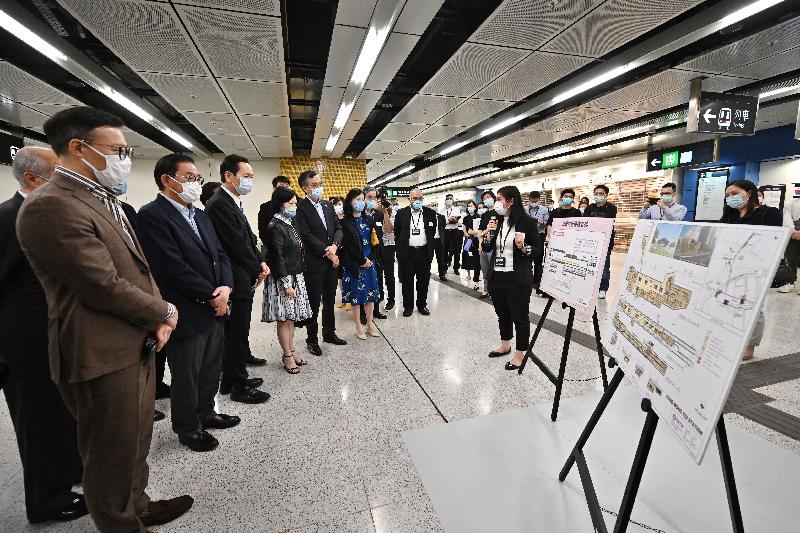
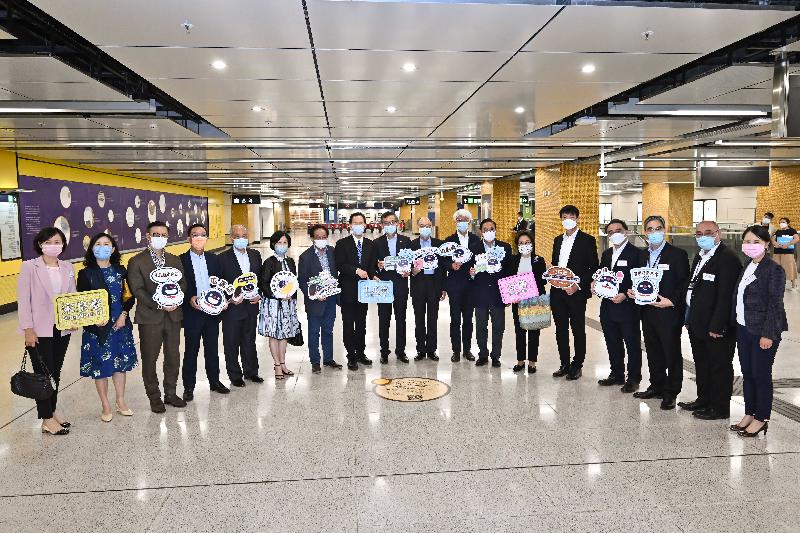
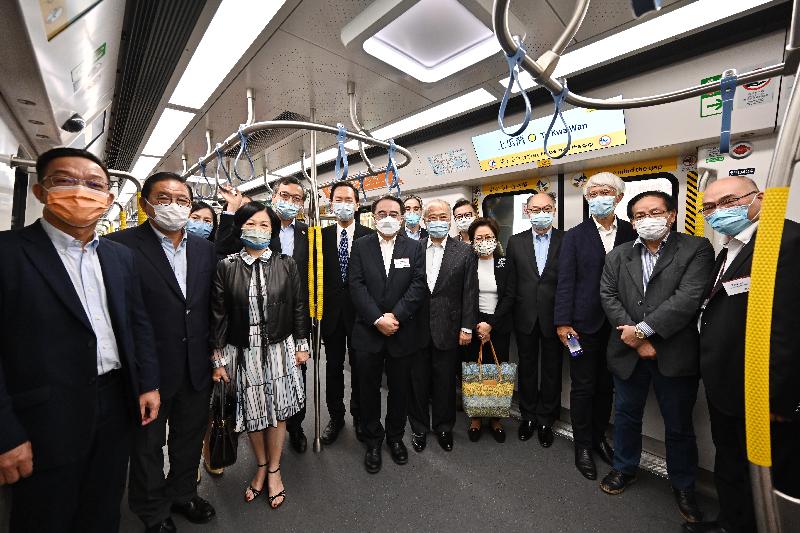
Non-official Members of the Executive Council (ExCo Non-official Members) today (June 7) visited the two new stations of the Tuen Ma Line, namely Sung Wong Toi Station and To Kwa Wan Station, to learn about the preparations for the full opening of the Tuen Ma Line on June 27.
Accompanied by the Secretary for Transport and Housing, Mr Frank Chan Fan; the Permanent Secretary for Transport and Housing (Transport), Ms Mable Chan; the Chairman of the MTR Corporation Limited (MTRCL), Dr Rex Auyeung; the MTRCL’s Chief Executive Officer, Dr Jacob Kam; and the MTRCL’s Managing Director – Operations and Mainland Business, Mr Adi Lau, the ExCo Non-official Members first visited Sung Wong Toi Station. Sung Wong Toi Station is an underground station located in the southwest of the Kai Tak Development area, neighbouring Olympic Avenue and Sung Wong Toi Garden in Kowloon City. The station design has integrated historical and modern elements, and is conveniently connected to facilities and shops in the area through multiple exits and entrances.
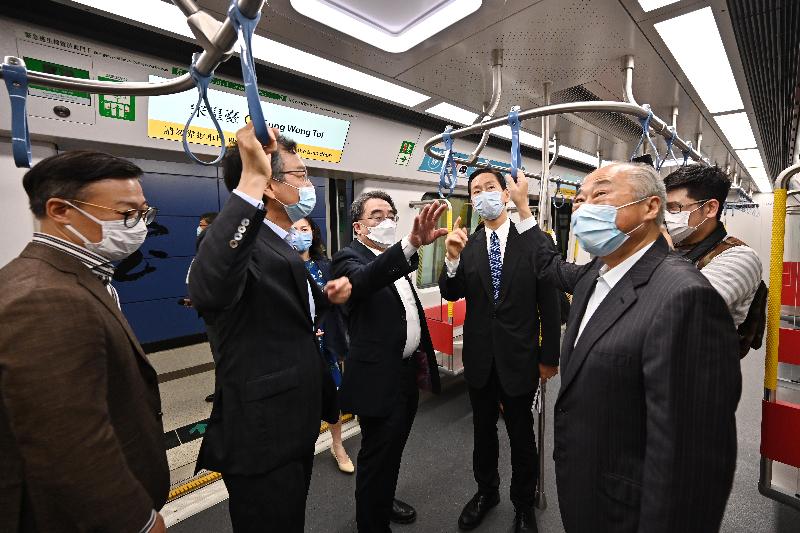
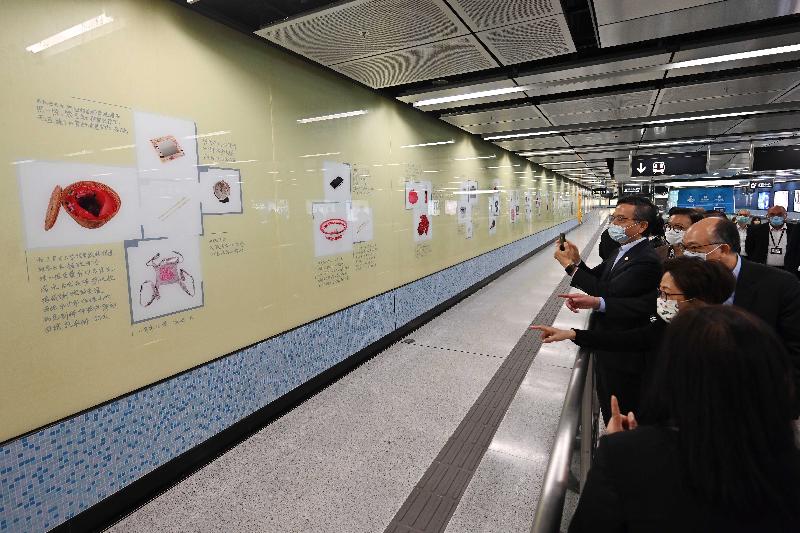
The ExCo Non-official Members then took a special train from Sung Wong Toi Station to To Kwa Wan Station. To Kwa Wan Station is constructed underneath Ma Tau Wai Road, with daily life in the community as its design motif. In particular, an art piece entitled “Home”, which was created in collaboration with the local community and showcases photographs and stories from over 100 To Kwa Wan residents, is displayed at and has transformed the station concourse into a time capsule of the To Kwa Wan community.
The ExCo Non-official Members expressed appreciation to the MTRCL for incorporating elements of the community and historic preservation in its station design, as well as introducing new concepts into the stations such as a roving service team, robot assistants and smart customer service centres which will improve the travel experience of passengers. With the full commissioning of the Tuen Ma Line and its 27 stations, the ExCo Non-official Members are hopeful that this longest railway line in Hong Kong will bring more efficient and convenient railway services to the public commuting between New Territories East, Kowloon, and the northwest of the New Territories. The ExCo Non-official Members also thanked relevant government departments and the MTRCL for the arrangements and efforts made in preparation for the commissioning of the Tuen Ma Line.
The ExCo Non-official Members joining the visit today were Convenor Mr Bernard Chan, Mrs Laura Cha, Mr Chow Chung-kong, Mr Jeffrey Lam, Mr Ip Kwok-him, Mr Joseph Yam, Mrs Regina Ip, Dr Lam Ching-choi, Mr Kenneth Lau and Mr Horace Cheung.
The Centre for Health Protection (CHP) of the Department of Health is today (June 7) investigating an outbreak of upper respiratory tract infection (URTI) at a residential child care centre (RCCC) in Yau Tsim Mong District, and appeals to members of the public and staff of institutions to stay alert and maintain strict personal and environmental hygiene.
The affected outbreak involves 26 children, comprising 17 boys and nine girls between 6 months and 3 years old, and three female staff members. They developed cough, runny nose, sore throat and fever since May 27. All sought medical attention and none required hospitalisation. They are now in stable condition.
Officers of the CHP have advised the RCCC to adopt necessary infection control measures against respiratory infections. The RCCC has been put under medical surveillance. In addition, since the symptoms of URTI are similar to those of COVID-19, for prudence’s sake, the RCCC was covered in the compulsory testing notice on June 2 to exclude the possibility of COVID-19 infection.
The public should maintain good personal and environmental hygiene against influenza and other respiratory illnesses and note the following:
• Receive seasonal influenza vaccination for personal protection;
• Surgical masks can prevent transmission of respiratory viruses from ill persons. It is essential for persons who are symptomatic (even if having mild symptoms) to wear a surgical mask;
• Wear a surgical mask when taking public transport or staying in crowded places. It is important to wear a mask properly, including performing hand hygiene before wearing and after removing a mask;
• Avoid touching one’s eyes, mouth and nose;
• Wash hands with liquid soap and water properly whenever possibly contaminated;
• When hands are not visibly soiled, clean them with 70 to 80 per cent alcohol-based handrub;
• Cover the nose and mouth with tissue paper when sneezing or coughing. Dispose of soiled tissue paper properly into a lidded rubbish bin, and wash hands thoroughly afterwards;
• Maintain good indoor ventilation;
• When having respiratory symptoms, wear a surgical mask, refrain from work or attending classes at school, avoid going to crowded places and seek medical advice promptly; and
• Maintain a balanced diet, exercise regularly, take adequate rest, do not smoke and avoid overstress.
Members of the public, particularly children, the elderly and those with chronic diseases, should wear a face mask and consult a doctor promptly if they develop symptoms of respiratory tract infection. read more