Tag Archives: China

image_pdfimage_print

Guangdong-Hong Kong-Macao Pearl River Delta Regional Air Quality Monitoring Network results for 2020 released

     Guangdong, Hong Kong and Macao released today (June 10) a report on air quality in 2020 under the Guangdong-Hong Kong-Macao Pearl River Delta Regional Air Quality Monitoring Network, showing a continuous improvement of air quality in the Pearl River Delta (PRD) in recent years.

     Overall, the air pollutant emission reduction measures implemented by Guangdong, Hong Kong and Macao have contributed to the gradual improvement of overall air quality in the PRD. The monitoring network was launched in November 2005. Compared with 2006, the average annual concentration levels of sulphur dioxide (SO2), respirable suspended particulates (RSP) and nitrogen dioxide (NO2) in 2020 decreased by 86 per cent, 49 per cent and 43 per cent, respectively. Although the other two parameters, i.e. carbon monoxide (CO) and fine suspended particulates (FSP) were only added to the monitoring network in September 2014, their average annual concentration levels also decreased by 16 per cent and 31 per cent, respectively, in 2020 when compared with those in 2015. On the other hand, the 2020 average annual concentration level of ozone (O3) increased by 27 per cent when compared with that in 2006, indicating that further alleviation of regional photochemical pollution is required. The average annual concentration levels of the above six air pollutants since 2006 are shown at the Annex.

     To continually improve regional air quality, the Hong Kong Special Administrative Region (HKSAR) Government and the Guangdong Provincial Government have long been committed to reducing emissions of air pollutants from key sources. The two governments are conducting a study on Post-2020 regional air pollutant emission reduction targets and concentration levels, with a view to formulating air pollutant emission reduction targets/levels in 2025 and 2030. In addition, the governments of Guangdong, Hong Kong and Macao will launch a three-year study from 2021 to 2024 on Characterisation of photochemical ozone formation, regional and super-regional transportation in the Greater Bay Area. Results from the study will help better understand the origins of ozone precursors, their formation mechanism and regional and super-regional transportation characteristics in the Greater Bay Area.

     Hong Kong has implemented various air pollutant emission control measures on marine and land transport, power plants and non-road mobile machinery in order to continually improve air quality. On the vehicular emission front, Hong Kong has tightened the emission standards for first registered vehicles (except for diesel private cars, motorcycles and tricycles) to Euro VI in phases according to vehicle classes, and will continue to phase out old diesel commercial vehicles. It has also stepped up emission controls against petrol and liquefied petroleum gas vehicles by using roadside remote sensing equipment. In March 2021, the HKSAR Government announced the Hong Kong Roadmap on Popularisation of Electric Vehicles, which guides Hong Kong’s future direction to attain zero vehicular emissions before 2050. As regards marine emissions, the HKSAR Government and the Guangdong Provincial Government have jointly implemented control measures to mandate vessels to use low-sulphur fuel. Hong Kong will also increase the use of natural gas in power generation, promote the local development of renewable energy and continue to tighten emission caps for power plants progressively. In addition, the emission standards for newly approved non-road vehicles have been tightened in phases to Euro VI, on par with that for the newly registered road vehicles.
 
     Guangdong Province implemented the “three-year action plans on pollution control (2018-2020)” and the “implementation plan on safeguarding blue sky (2018-2020)”. It introduced measures including deepening control of industrial enterprises; commencing volatile organic compounds monitoring and controls on enterprises; comprehensively enhancing treatments for various pollution sources, including the collection rate, operation rate and removal rate of pollutants’ treatment facilities. Guangdong Province also put forward vapour control measures in petrol filling stations, oil depots and tanker trucks, and implemented a target action plan for sensitive areas and chemical industry zones, imposing coal-to-gas switching and an in-depth treatment of coal-fired boilers with capacity of more than 35 tons of steam per hour for some industrial boilers and furnaces in the building ceramic industry. Measures on the vehicular emission front include strengthening compliance management of diesel vehicles pollution, intensifying penalties on diesel trucks’ excessive emissions through remote sensing and managing large diesel vehicle operators, and taking the national lead in adopting concessionary measures to encourage refuelling at night to reduce the impact of fuel volatilisation. Other measures include enhancing decision-making capabilities based on scientific considerations; holding expert consultation meetings on air pollution prevention and control; conducting research on meteorological conditions, variation of air quality trends and annual patterns of pollutants emission; and providing guidance to cities on tackling polluted weather effectively to further improve air quality.
 
     Macao rolled out a series of air quality improvement measures to reduce pollution from mobile and stationary sources respectively in accordance with relevant initiatives laid down in the Five-Year Development Plan of the Macao Special Administrative Region (2016-2020) and its policy objectives. Such measures include continuously optimising and improving the emission limits and measurement methods for exhaust gases from vehicles, promoting the use of electric vehicles and continuously putting forward research on controlling and reducing volatile organic compounds. Macao has been monitoring the vapour recovery systems in petrol filling stations as well as continuously overseeing the implementation status of the administrative regulation for limiting the emission standards of chemical and pharmaceutical industries, power plants and oil depots, which came into force in 2020. The Ambient Air Quality Standard was also published to further improve the air quality and safeguard the health of the public.
 
     The monitoring network, comprising total 23 air monitoring stations located in Guangdong Province, Hong Kong and Macao, monitors six major air pollutants (i.e. SO2, NO2, O3, RSP, FSP and CO). The Ecological and Environmental Monitoring Centre of Guangdong, the Environmental Protection Department of Hong Kong (HKEPD), the Macao Environmental Protection Bureau and the Macao Meteorological and Geophysical Bureau are responsible for the co-ordination, management and operation of the monitoring stations of the three sides. They will continue to release annual reports on the monitoring results and long-term pollution trends of the PRD as well as quarterly statistical monitoring results. Members of the public can visit the website of the Guangdong-Hong Kong-Macao Regional Air Quality Monitoring Information System (113.108.142.147:20047), or the websites of the Department of Ecology and Environment of Guangdong Province (gdee.gd.gov.cn), the HKEPD (www.epd.gov.hk), the Macao Environmental Protection Bureau (www.dspa.gov.mo) or the Macao Meteorological and Geophysical Bureau (www.smg.gov.mo) for the relevant annual reports and quarterly monitoring statistics. read more
CHP investigates two additional confirmed cases of COVID-19

     The Centre for Health Protection (CHP) of the Department of Health (DH) announced that as of 0.00am, June 10, the CHP was investigating two additional confirmed cases of coronavirus disease 2019 (COVID-19), taking the number of cases to 11 875 in Hong Kong so far (comprising 11 874 confirmed cases and one probable case).

     All of the newly reported cases are imported cases.
 
     A total of 36 cases have been reported in the past 14 days (May 27 to June 9) including three local cases of which one is from unknown sources.

     Separately, subsequent to the announcement by the CHP on the updated quarantine arrangements of local COVID-19 cases with the N501Y mutant strain, the CHP reminded that persons who resided or worked within the same building as the residence of relevant cases and had been released from the quarantine centres will be subject to compulsory testing on days 3, 7, 12 and 19 following the announcement of the relevant confirmed cases by the DH. A compulsory testing notice (CTN) was issued on May 7 (www.gld.gov.hk/egazette/pdf/202125151e/egn202125151354.pdf). They will also be required to undergo self-monitoring until the 21st day.

     Specified persons in relation to the following specified premises are reminded to undergo compulsory testing in accordance with the CTN tomorrow (June 11):
– Tower 6, Island Harbourview, 11 Hoi Fai Road, Tai Kok Tsui; and
– Shing Yu House, Block P, Tin Shing Court, 3 Tin Ching Street, Tin Shui Wai.
 
     Members of the public can check the deadlines of compulsory testing for respective specified premises as stipulated in the aforementioned CTN on the Government’s website (www.coronavirus.gov.hk/pdf/CTN_Specified_premises_and_Dates_of_Testing.pdf).

     The CHP’s epidemiological investigations and relevant contact tracing on the confirmed cases are ongoing. For case details and contact tracing information, please see the Annex or the list of buildings with confirmed cases of COVID-19 in the past 14 days and the latest local situation of COVID-19 available on the website “COVID-19 Thematic Website” (www.coronavirus.gov.hk).
 
     Meanwhile, the CHP reminded those who had visited specified venues under the Prevention and Control of Disease (Compulsory Testing for Certain Persons) Regulation (Cap. 599J) to receive COVID-19 nucleic acid testing according to CTNs. The Regulation also requires all household members of close contacts of confirmed cases to undergo a COVID-19 nucleic acid test within a specified period according to CTNs published in the Gazette. The public are also urged to seek medical attention early if symptoms develop, and undergo testing as soon as possible.

     The Government has launched the COVID-19 Vaccination Programme. Members of the public are encouraged to get vaccinated. Details of the programme can be found at the designated website (www.covidvaccine.gov.hk).
 
     The CHP called on members of the public to avoid going out, having social contact and dining out. They should put on a surgical mask and maintain stringent hand hygiene when they need to go out. The CHP strongly urged the elderly to stay home as far as possible and avoid going out. They should consider asking their family and friends to help with everyday tasks such as shopping for basic necessities.
 
     The spokesman said, “Given that the situation of COVID-19 infection remains severe and that there is a continuous increase in the number of cases including mutant strains reported around the world, members of the public are strongly urged to avoid all non-essential travel outside Hong Kong.
 
     “The CHP also strongly urges the public to maintain at all times strict personal and environmental hygiene, which is key to personal protection against infection and prevention of the spread of the disease in the community. On a personal level, members of the public should wear a surgical mask when having respiratory symptoms, taking public transport or staying in crowded places. They should also perform hand hygiene frequently, especially before touching the mouth, nose or eyes. Moreover, vaccination may help keep people from getting seriously ill even if they do get COVID-19, and, generally speaking, vaccines can also reduce the chance of transmission by those who have been vaccinated. People vaccinated with a COVID-19 vaccine can also generate herd immunity. Members of the public are urged to get vaccinated as soon as possible and book their vaccination appointments at the website (booking.covidvaccine.gov.hk/forms/index.jsp).
 
     “As for household environmental hygiene, members of the public are advised to maintain drainage pipes properly and regularly pour water into drain outlets (U-traps). After using the toilet, they should put the toilet lid down before flushing to avoid spreading germs.”
 
     Moreover, the Government has launched the website “COVID-19 Thematic Website” (www.coronavirus.gov.hk) for announcing the latest updates on various news on COVID-19 infection and health advice to help the public understand the latest updates. Members of the public may also gain access to information via the COVID-19 WhatsApp Helpline launched by the Office of the Government Chief Information Officer. Simply by saving 9617 1823 in their phone contacts or clicking the link wa.me/85296171823?text=hi, they will be able to obtain information on COVID-19 as well as the “StayHomeSafe” mobile app and wristband via WhatsApp.
 
     To prevent pneumonia and respiratory tract infections, members of the public should always maintain good personal and environmental hygiene. They are advised to:
 

  • Wear a surgical mask when taking public transport or staying in crowded places. It is important to wear a mask properly, including performing hand hygiene before wearing and after removing a mask;
  • Perform hand hygiene frequently, especially before touching the mouth, nose or eyes, after touching public installations such as handrails or doorknobs, or when hands are contaminated by respiratory secretions after coughing or sneezing;
  • Maintain drainage pipes properly and regularly (about once a week) pour about half a litre of water into each drain outlet (U-trap) to ensure environmental hygiene;
  • After using the toilet, put the toilet lid down before flushing to avoid spreading germs;
  • Wash hands with liquid soap and water, and rub for at least 20 seconds. Then rinse with water and dry with a disposable paper towel. If hand washing facilities are not available, or when hands are not visibly soiled, performing hand hygiene with 70 to 80 per cent alcohol-based handrub is an effective alternative;
  • Cover your mouth and nose with tissue paper when sneezing or coughing. Dispose of soiled tissues into a lidded rubbish bin, then wash hands thoroughly; and
  • When having respiratory symptoms, wear a surgical mask, refrain from work or attending class at school, avoid going to crowded places and seek medical advice promptly.
read more

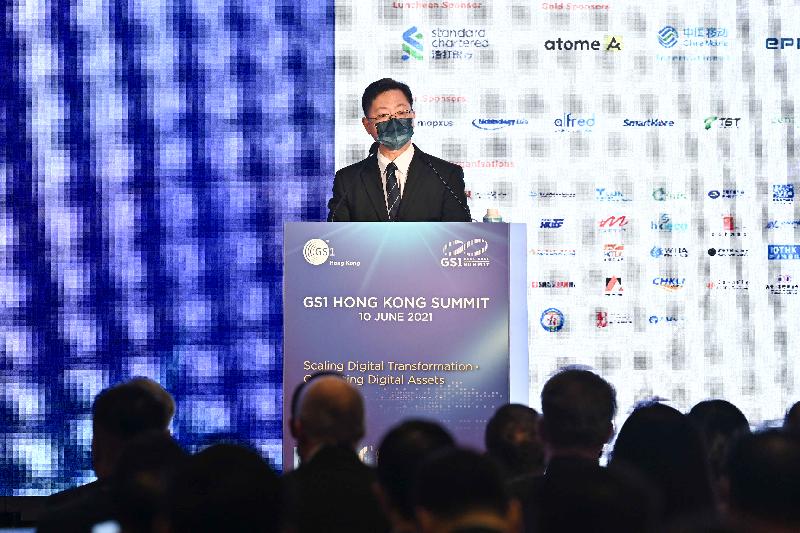
Opening address by S for IT at GS1 Hong Kong Summit (English only) (with photos)

     Following is the opening address by the Secretary for Innovation and Technology, Mr Alfred Sit, at the GS1 Hong Kong Summit this morning (June 10):

Kelvin (Chairman of the GS1 Hong Kong Board, Dr Kelvin Leung), Frankie (Legislative Council member, Mr Frankie Yick), Peter (Legislative Council member, Mr Shiu Ka-fai), May (Vice Chairman of the GS1 Hong Kong Board, Ms May Chung), Anna (Chief Executive of the GS1 Hong Kong, Ms Anna Lin), Ricky (Vice Chairman and Group Chief Executive Officer of Hong Kong Television Network Limited, Mr Ricky Wong), Victor (Government Chief Information Officer, Mr Victor Lam), distinguished guests, ladies and gentlemen,

     Good morning! I am glad to join you all here for GS1 Hong Kong’s annual flagship event. This event, which was, I understand, originally scheduled to be held last October, can finally be held in this Expo Centre where we can all say “hi” in person. I believe you all are as excited as I am.

     Let me first take this opportunity to thank GS1 for their tremendous efforts rendered to make this happen. Postponed for more than half a year, the Summit, together with the GOVirtual Business Expo cum Conference, is the first large-scale physical exhibition focusing on virtual business technology since the epidemic. As we have just overcome the fourth wave, I would say today’s summit and the Expo is indeed an opportune time for the industry to re-adjust business strategies after consolidating their experiences under the new normal, thereby creating new value for both the business community as well as Hong Kong economy.

     COVID-19 epidemic has brought suffering to all. Businesses such as retail sector, brand owners, manufacturers and key distributors have been hard hit for almost one and a half year. While unfortunately some companies were not able to survive the epidemic, those who stayed on were obliged to rethink, repurpose and rebuild their business models in order to keep up with the sales and create new value in the post-epidemic era. Some brands have in fact responded swiftly to the changing economic landscape and still managed to release new products in this challenging time. For instance, to alleviate the global shortage of essential medical devices and help patients, some companies which are well known for their electronic household appliances promptly designed new ventilators in just around 10 days. 

     We have witnessed in Hong Kong many local manufacturers and businessmen who transformed their own manufacturing facilities into dust-free clean rooms or set up new manufacturing lines in order to produce face masks for local consumption. We have demonstrated to the world our flexibility and capability at every level, from the sourcing of factory space to procuring raw materials and necessary equipment which are all concrete evidence of our strength. In the face of adversity, by and large inevitable at this time, it is important for the business sector to quickly assess business opportunities, create plans, and commit to a way forward where we could all see opportunities, and even more importantly, hope.

     Digital transformation is indeed the “hope” to businesses under the new normal. Anyone who tries to keep its presence in the sector, whichever it is, could no longer turn away from the benefit brought by the transformation. As a matter of fact, for the past few years, companies have gradually made use of robots, autonomous vehicles and drones in the automation of manufacturing and logistics operations, which have significantly reduced their reliance on labour force and potential human error. With the assistance of IoT devices, the movement of raw materials and inventory could be easily tracked. Furthermore, the implementation of blockchain technology and social media analytic tools throughout the production could provide real-time traceability at any point of the supply chain, generate and analyse useful data for management to make prompt strategic business decisions anytime, anywhere, thereby generating more new values to their products and services.
     â€‹
     The Government has made strenuous efforts in assisting enterprises throughout the anti-epidemic battle. Apart from the Distance Business Programme launched under the Anti-epidemic Fund to support enterprises to adopt information technology solutions to continue business and services during the pandemic, we also support enterprises and manufacturers through other funding schemes, for instance the Public Sector Trial Scheme, the Technology Voucher Programme and the Re-industrialisation Funding Scheme in realising and commercialising their R&D outcomes, using technological services to improve their productivity and upgrading their business processes, and setting up smart production lines in Hong Kong, all of which are conducive to the development of Industry 4.0 and smart city in the aftermath of the epidemic.

     Despite that the epidemic condition in our community is generally under control, in the light of the severity of the epidemic in some countries as well as its variants, it is difficult to say that we are safe. Vaccination is the only and obvious solution to curb the epidemic and its resurgence. I wish to take this opportunity to call on your support, as well as that from your fellow colleagues, to get vaccinated as soon as possible. With this right approach, if not the only one, I am sure that businesses can ride out the storm and become stronger, more agile, and more customer-centric than before. I wish you all a most enlightening experience here today. Thank you.

Photo  Photo  
read more