Tag Archives: China

Speech by FS at Wealth for Good in Hong Kong Summit (English only) (with photo/video)

     Following is the speech by the Financial Secretary, Mr Paul Chan, at the Wealth for Good in Hong Kong Summit today (March 26):
 
Chris (Secretary for the Financial Services and the Treasury, Mr Christopher Hui), distinguished guests, ladies and gentlemen,
 
     Good afternoon.
      
     I am delighted to welcome you to the third Wealth for Good in Hong Kong Summit.
      
     Whether you are joining us for the first time or returning, I know you will enjoy your time here in Asia’s world city. And before long, it will feel like your city too.
      
     Family offices play a vital role in preserving family wealth and building a lasting legacy for future generations. The focus extends beyond making investments that provide sustainable, long-term financial returns. You are also visionaries, philanthropists and next-generation leaders committed to creating positive social and environmental impacts that benefit humanity.
      
     We share these values deeply. That’s why we launched this Summit two years ago, bringing together principals, key decision makers and senior executives of family offices worldwide, to discuss how we could  harness wealth for good together. 
      
     This year, we are excited to feature another impressive line-up of distinguished speakers from influential families and institutions, who will share insights on subjects ranging from tech and AI to philanthropy and culture. 
 
Hong Kong, premier location for family offices
 
     Allow me to take a couple of minutes to tell you why Hong Kong is an ideal place for family offices to realise their objectives and ambitions. 
      
     To begin with, Hong Kong is Asia’s premier financial centre, offering a wide range of investment opportunities that are particularly compelling right now.   
      
     Notably, the recent boom in the Hong Kong stock market underscores this potential. The Hang Seng index rose by some 20 per cent since the beginning of this year, building on an 18 per cent increase throughout 2024. This surge reflects investor optimism about the future of technology in China and highlights Hong Kong’s essential role in connecting regional opportunities with global investors, showcasing the significant returns our market can deliver.
      
     Beyond securities, Hong Kong boasts a dynamic ecosystem of angel investments, venture capital and private equity. Capital under management by private equity firms exceeded US$230 billion last year, making us the second largest in Asia, only after the Mainland. 
      
     Our asset and wealth management industry is thriving, fuelled by the affluent population of the Greater Bay Area and the influx of ultra-high-net-worth individuals into our city. We currently manage about US$4 trillion in assets, with two-thirds originating from outside Hong Kong. By 2028, we are on track to become the world’s largest cross-border wealth management centre.
            
     In the latest Global Financial Centres Index published last week, Hong Kong continues to rank third globally. Notably, we secured the top spot worldwide for “investment management”, “insurance” and “finance”, and came third in “banking” and “business environment”.   
      
     Above all, global capital feels at ease in Hong Kong. For compelling reasons. President Xi and the Central Authorities have affirmed on multiple occasions that the “one country, two systems” arrangement will remain in place over the long term.  
      
      This means Hong Kong will continue to uphold the common law system with a judiciary exercising powers independently; safeguard the free flow of capital, goods, information and people; maintain a freely convertible currency, and keep a simple and low tax system.
      
     And here’s the real gem – we have no capital gains tax, no estate tax, and no tax on dividends. In other words, you can freely invest without the usual financial hang-ups.
      
     Then, protection of capital and private property are enshrined in our Basic Law, along with our steadfast commitment to international obligations under the United Nations, in opposition to accepting decisions unilaterally imposed by other countries.
      
     With all these, not surprisingly, more than 2,700 family offices have already chosen Hong Kong as their home, with half of them managing assets of more than US$50 million.
      
     Here, family offices can leverage a robust network of world-class service professionals, including private bankers, legal experts, accountants and investment advisers to support your endeavours. Our professionals offer a distinctive combination of global perspective and local expertise in everything they do.
      
     This year, in addition to our existing tax concessions for single family offices, we will expand exemptions for funds, enhance concessions for family offices, and boost incentives for private equity.
      
     That, ladies and gentlemen, is an invitation for all of you to join us in shaping a future where wealth creates value for everyone.

Making a real impact
 
     Family offices aspire to achieve more than just financial returns. Through my encounters with many family principals and executives, I’ve witnessed your profound desire to create a lasting impact and a brighter future for generations to come.
      
     In this city, international foundations, charitable organisations and NGOs (non-governmental organisations) come together to form a vibrant philanthropy network that not only connects funding and meaningful projects, but also amplifies your efforts and fosters collaboration. 
      
     More than that, Hong Kong’s value proposition has an additional dimension: innovation and technology.
      
     We are investing heavily in our city’s economic future to propel Hong Kong’s development in innovation and technology. Two years ago, we outlined our vision for Hong Kong to become an international green tech and green finance centre.
      
     That endeavour is progressing well. Alongside our leadership position in green finance, Hong Kong’s green tech community is thriving. In our Science Park and Cyberport, there are some 300 green start-ups specialising in energy-efficient materials, carbon capture, EV infrastructure, and much more – all keen on addressing the world’s most pressing challenges with their groundbreaking technologies. Many of these start-ups have made successful strides into global markets, creating a significant and positive impact worldwide.
      
     In a world where AI is transforming production, business and consumption models and redefining the economic competitiveness, we have a clear vision to establish AI as a core industry. By applying and integrating AI across the community, we can unlock substantial benefits for humanity.
      
     We possess strong foundational research capabilities and attract some of the brightest talent from around the world. Uniquely positioned as a convergence point for data from both the Mainland and international sources, we leverage our close collaboration with sister cities in the Greater Bay Area to amplify our strengths.
      
     And we have developed a comprehensive strategy to drive the growth of the innovation and technology sector. The Hong Kong Investment Corporation, or HKIC, established with a capital of US$8 billion, plays a vital role in this strategy. This “patient capital” supports tech firms in their nascent stages, covering hard tech, biotech, and new energy. So far, it has invested and co-invested in over 90 of such projects, attracting $4 of long-term capital for every $1 invested. The HKIC looks forward to collaborate with family offices, creating dynamic partnerships that fuel our innovation ecosystem.
 
Art, sports and lifestyle
 
     Ladies and gentlemen, beyond business and finance, Hong Kong is blessed with a thriving art and culture scene. Consider Art Basel, which has become a hallmark event of this city. Opening this Friday, it will present more than 240 galleries from over 40 countries and regions, showcasing a dazzling array of contemporary art.
      
     Indeed, in 2023, we traded more than US$13 billion in art and antiques, all tax-free. Our airport will soon feature a bespoke art storage facility to support this vibrant market.  
      
     Let’s not forget the world-class M+ and Hong Kong Palace Museum, both located in our West Kowloon Cultural District.
      
     If sport is your passion, you’ll want to be here right through the weekend. The Hong Kong Sevens kicks off this Friday at the spectacular Kai Tak Sports Park, which boasts seating for 50,000 rugby-mad fans. Bigger house. Bigger party. So why not grab your friends and prepare for a weekend of wild tries and even wilder times!
 
Looking ahead together
 
     Ladies and gentlemen, whatever your passion, Hong Kong is where you want to be.
      
     Hong Kong is of the world: a meeting point for East and West, tradition and innovation. And it is for the world: a city where your ambitions can take flight and flourish, touching lives far beyond our shores.
      
     My thanks to our Summit organisers, the Financial Services and the Treasury Bureau and Invest Hong Kong, for making this event possible.
      
     And I wish you all good health and the best of family business in the year ahead.
      
     Thank you.
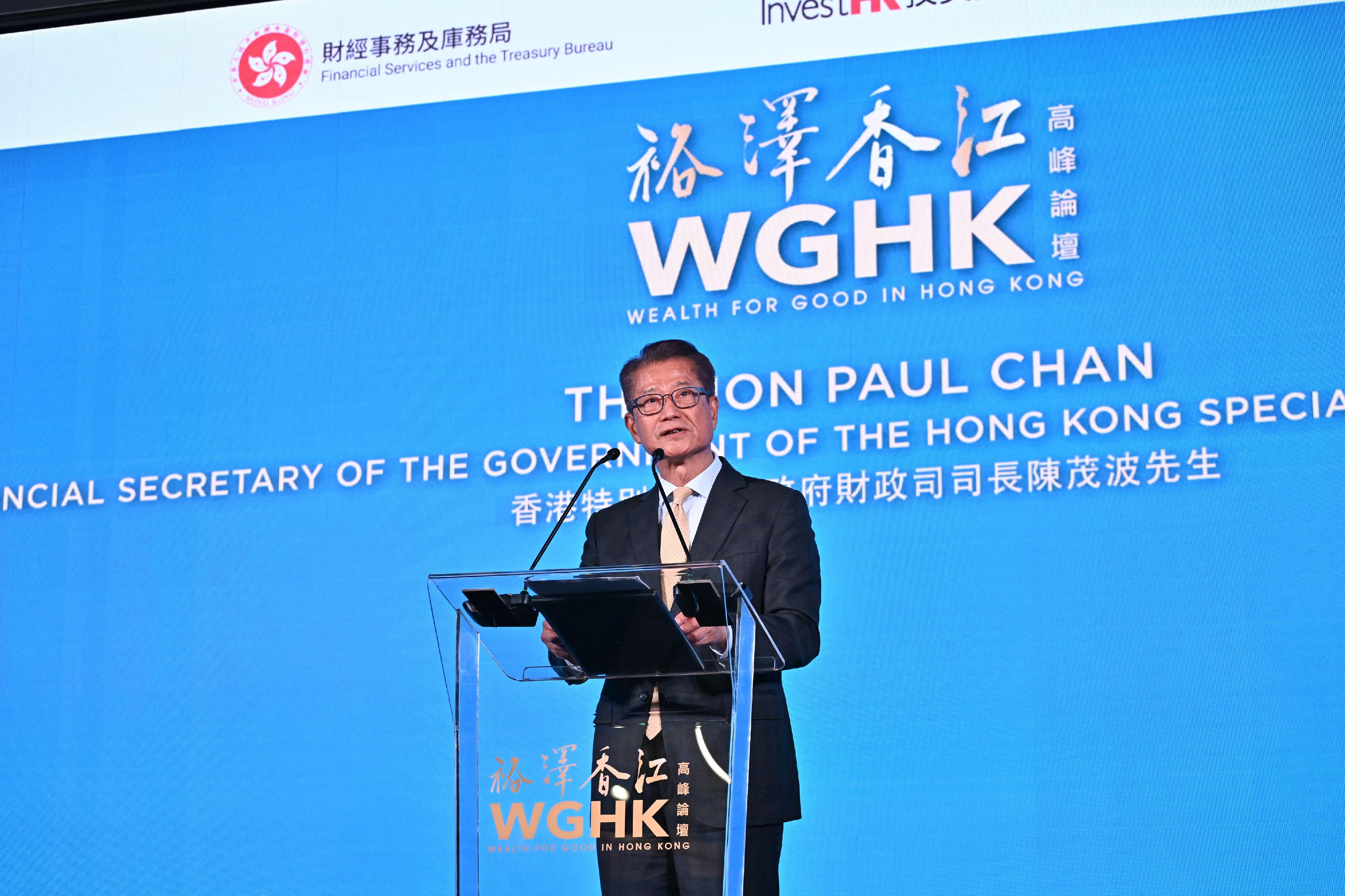
Photo  
read more

LCQ20: Health screening work conducted by Department of Health at various boundary control points

     Following is a question by the Hon Kenneth Fok and a written reply by the Secretary for Health, Professor Lo Chung-mau, in the Legislative Council today (March 26):

Question:

     There are views in the community that following the comprehensive lifting of immigration-related epidemic preventions and control measures, manpower deployment of the Department of Health (DH) to conduct health screening at various boundary control points (BCPs) is excessive, and that as the Government has already installed infra-red thermo-imaging machines at all BCPs, DH should actively explore leveraging artificial intelligence technology to enhance quarantine efficiency at BCPs. In this connection, will the Government inform this Council:

(1) whether the Government has reviewed the current staffing arrangements for health screening at various BCPs, and conducted regular assessments to ensure that the number of DH officers deployed at various BCPs is commensurate with needs, thereby avoiding potential wastage of manpower and public funds; if so, of the details; if not, the reasons for that;

(2) of the average daily number of officers deployed by DH to conduct body temperature screening of travellers at various BCPs in each of the past five years, with a breakdown by BCP as set out in the table below;
 

BCP 2020 …… 2024
       

(3) as it is learnt that the Government has installed body temperature screening facilities (including infra-red thermo-imaging machines) at all BCPs, of the relevant expenditure incurred in the past five years, including expenditure on the procurement of equipment, repair and maintenance, and operation;

(4) whether it has assessed the current operational status of the body temperature screening facilities at various BCPs (including whether their technical advantages have been maximised), and whether complementary measures have been adopted to reduce reliance on manual body temperature screening; whether the authorities have formulated plans to further enhance the effectiveness of the body temperature screening facilities at various BCPs; if so, of the details; if not, the reasons for that; and

(5) as it is learnt that mobile robots for smart fever screening developed by local innovation and technology companies have been trialed and used by government departments in recent years, whether the authorities have plans to introduce more advanced technologies (including smart body temperature screening systems) in the future and apply them at various BCPs, thereby achieving a better balance between manpower deployment and use of smart equipment, while at the same time enhancing screening efficiency and improving the arrangements for health screening work?

Reply:

President,

     In accordance with the power conferred by the Prevention and Control of Disease Ordinance of Hong Kong and with regard to the guidelines of the International Health Regulations, the Department of Health (DH) enforces various preventive measures at boundary control points (BCPs) to prevent the introduction or spreading of infectious diseases into or out of Hong Kong.  The Port Health Division under the DH carries out health screening work at each BCP (including conducting regular body temperature screening for arrivals and setting up health stations). Taking into account the design of each BCP and its traveller and vehicle flow, the Port Health Division deploys appropriate manpower to conduct body temperature screening for all arrivals; and performs, in accordance to the mechanism, further health assessments for travellers with confirmed fever or in need (such as travellers who self-reported being unwell) to understand their symptoms, travel history, contact history, etc., in order to make appropriate referrals and follow-up, including compulsory referral of persons with suspected infection of major infectious diseases to Hong Kong public hospitals for checking, suggesting other travellers with fever or in need to seek medical treatment at medical institutions with issuance of referral letters, and assisting persons in need to call for ambulance service for further treatment at Accident and Emergency Department. 

     The Hong Kong Special Administrative Region (HKSAR) Government has been maintaining close co-operation with entry-exit health inspection and quarantine authorities of the Mainland to safeguard the well-being and safety of residents and travellers of the two places. The Health Bureau and the General Administration of Customs of the People’s Republic of China (GACC) signed the Co-operation Arrangement for Entry-exit Health Inspection and Quarantine between the GACC and the Health Bureau of the HKSAR Government in 2023. Under the normalisation arrangements for epidemic prevention and control, the two parties agreed to focus on the health inspection and quarantine of their respective inbound personnel travelling between the HKSAR and the Mainland BCPs.

     The HKSAR Government will maintain close liaison with the relevant Mainland authorities and actively review the entry health inspection and quarantine arrangements (including temperature screening) from the public health perspective, taking into account factors such as cost-effectiveness and appropriateness.

     The reply, in consultation with the DH, to the question raised by the Hon Kenneth Fok’s questions is as follows: 

(1), (4) and (5) Ongoing health screening is an important element to safeguard public health and can help to identify potential infectious diseases to be imported into Hong Kong at an early stage. Currently, all BCPs between Hong Kong and the Mainland implement health screening measures for inbound travellers.

     The DH mainly deploys Infrared Thermal Imaging System at various BCPs to detect the body temperatures of multiple travellers simultaneously in order to reduce the manpower required for related work. However, drivers and all passengers in a cross-boundary private car can remain in the vehicle while passing through the kiosks of the Immigration Department, the Customs and Excise Department, and the DH without the need to get off from the vehicle or go to the traveller’s clearance hall.  Therefore, due to site constraints, the Infrared Thermal Imaging System cannot be used to measure the forehead temperature of drivers and passengers passing through the vehicle lanes. Therefore, the DH staff uses hand-held infrared thermometers to measure the body temperature of inbound passengers on board the vehicles at the DH vehicle kiosks. 

     The DH reviews the health screening arrangements from time to time and deploys appropriate manpower at various BCPs according to actual circumstances to provide appropriate services for inbound travellers. For instance, the extra personnel deployed during the COVID-19 epidemic with regard to actual need have been reduced after the epidemic, and the manpower at relevant BCPs has basically returned to the pre-epidemic level. Meanwhile, the DH also keeps a close eye on technological development and actively explores the adoption of other innovative technology with the co-operation of other departments at BCPs to reduce the manpower need for health screening and optimise the use of human resources.
 
(2) From 2020 to 2024, the average daily number of health screening shifts of the DH at various BCPs (some health screening posts involve more than one shift according to the operation of BCPs) are as follows:

 
  2020 2021 2022 2023 2024
Airport 270 244 226 125 122
Lo Wu 40 0 0 40 40
Lok Ma Chau Spur Line 30 0 0 30 30
Lok Ma Chau 90 90 111 94 94
Man Kam To 27 27 41 36 36
Sha Tau Kok 37 37 20 8 0
Shenzhen Bay 137 171 182 116 94
Hong Kong-Zhuhai-Macao Bridge 141 178 178 116 130
Heung Yuen Wai 28 28 28 68 58
Express Rail Link West Kowloon 6 6 31 51 51
Hung Hom 18 18 18 0 0
Macau Ferry Terminal 42 42 45 45 45
China Ferry Terminal 22 22 0 22 22
Total 888 863 880 751 722

     The DH redeploys health screening posts according to actual circumstances. For posts in some BCPs suspended operation would be redeployed to other BCPs.

     Health screening service of Kai Tak Cruise Terminal and Ocean Terminal were not included as they were only provided during stopover of cruises. 
 
(3) The Electrical and Mechanical Services Department is responsible for the procurement and maintenance of the Infrared Thermal Imaging System installed by the DH at various BCPs. The recurrent expenditure incurred in the past five financial years is as follows: 
 
2020-21 2021-22 2022-23 2023-24 2024-25
HK$ million
1.73 2.24 2.65 2.65 2.76
read more

LCQ5: Design of subsidised sale flats

     Following is a question by the Hon Leung Man-kwong and a reply by the Secretary for Housing, Ms Winnie Ho, in the Legislative Council today (March 26):
 
Question:

     It has been reported that some prospective owners of Home Ownership Scheme (HOS) flats were informed only after taking possession of their flats that the kitchens and toilets in their flats were prefabricated components, of which the partitioning could not be altered, and they decided to forfeit the deposit they had paid as their flats had become much less practical. There are views that the layout and design of HOS flats fail to meet the needs of the public, resulting in quite a number of owners abandoning their brand-new furniture such as pedestal toilets, lavatory basins and zinc basins. In this connection, will the Government inform this Council:

(1) of the number of applications received by the Housing Department (HD) in the past three years for altering the partitioning of subsidised sale flats and, among them, the respective numbers of applications involving alterations to kitchens and toilets;

(2) given that the subsidised sale flats of the Hong Kong Housing Society provide open kitchen units for buyers to choose from, whether the Hong Kong Housing Authority has considered increasing the supply of such units; if not, of the reasons for that; and

(3) whether the HD is aware of the wastage caused by tenants and owners of public housing units abandoning the original furniture of the units, such as, among others, countertops in kitchens, taps and zinc basins, after taking possession of their flats; if so, whether the HD will conduct a review of the indoor installations of public housing units, so as to minimize such abandonment; if not, the reasons for that?
 
Reply:

President,
 
     I would like to thank the Hon Leung Man-kwong for his concern about the construction methods, flat design and indoor provisions of the Home Ownership Scheme (HOS) flats categorised under Subsidised Sale Flats (SSF) of the Hong Kong Housing Authority (HA). My reply to the question raised by the Hon Leung Man-kwong is as follows:
 
     Since its establishment in 1973, the HA has all along been committed to enhancing the housing ladder, assisting low- to middle-income families to achieve home ownership through the sale of SSF, with a view to promoting upward mobility.
 
     In terms of design, the HA has been adopting a simple yet practical approach. The flats are designed according to basic design principles emphasising simplicity, sustainability and safety with provisions that comply with the requirements of the Buildings Ordinance and other relevant regulations. With the constraint of flat size, we understand that residents have to design the layout and partitions in a more flexible manner, so as to meet the needs of different family members. For example, families with elderly members or children will have vastly different needs. Therefore, SSF are partition-free, providing maximum flexibility for users to opt for layouts which suit their own needs at best.
 
     As for construction, as early as the 1980s, the HA has adopted off-site prefabrication technology and has had most building components prefabricated in factories and then delivered to sites for installation. Not only does this technology minimise on-site construction processes, but it also enhances site safety and environmental protection. This further boosts construction efficiency and sustains the sale of SSF at a low price.
 
     Subject to actual conditions of the site, the HA uses different prefabricated components, including precast facades, semi-precast slabs, or volumetric precast bathrooms and kitchens as building parts. For example, since 2002, i.e. more than two decades ago, the HA has been applying volumetric precast bathrooms and kitchens in public rental housing projects, and the use of volumetric precast bathrooms and kitchens were subsequently applied to HOS. So far, 22 relevant projects have been completed with a total provision of as many as 80 000 units. We noticed that for projects adopting volumetric precast bathrooms and kitchens, the required remedial works related to bathrooms and kitchens, such as water seepage, amount to at least 50 per cent less compared to traditional on-site construction projects, as reflected in the rectification list submitted by owners after flat in-take. The technology of these volumetric precast bathrooms and kitchens has been further developed and it laid the ground for Modular Integrated Construction (MiC), which is well-known to us these days. As this technology is satisfactory in terms of effectiveness and it can further enhance the overall construction quality, the HA has further extended the use of MiC to the construction of entire flats in suitable projects, in addition to bathrooms and kitchens. In March last year, the Development Bureau and the Department of Housing and Urban-Rural Development of Guangdong Province signed the Letter of Intent on Strengthening Guangdong-Hong Kong Cooperation in Construction and Related Engineering Sectors to deepen the collaboration of construction areas between Guangdong and Hong Kong, including the development of MiC as a new quality productive force to contribute to the high-quality national development, making MiC a strategic industry that expands to the international arena.
 
     Regarding household decoration works, HOS flat owners or decoration workers engaged should consult building professionals on the alteration proposals before commencing works, in addition to heeding advice in the decoration guide and confirming compliance with the deed of mutual covenant of the building. Regarding the video clips recently circulated on the Internet about decoration works of new HOS flats, I would like to draw attention to the following situations. Generally speaking, decoration works which only involve the demolition or minor addition of non-structural walls in a flat, such as altering the position of the toilet door, are exempted from prior approval and consent. If the works involve alterations to non-structural walls inside a flat, depending on the nature and scale of the works, it may be necessary to notify the Independent Checking Unit (ICU) of the Housing Bureau prior to the commencement of the works and/or upon their completion according to the Minor Works Control System. If the works involve alteration to the structure of the building or fire safety, flat owners should seek advice from building professionals to ensure that the alteration works comply with the Buildings Ordinance and relevant regulations. For example, alterations to kitchen partitioning or decoration works for conversion into an open kitchen must first be approved by the ICU. In short, regardless of construction methods, such as MiC, volumetric precast bathrooms and kitchens or planar precast components, the design and construction should be carried out in accordance with the established quality control requirements of the HA, including fabrication testing, installation and inspection procedures. Any restrictions on future modification works have no relation to the construction method used in the project, but the structural design itself. This principle has always been upheld and applicable to different SSF projects.
 
     Regarding the design of SSF, HA’s current kitchen designs aim to facilitate the habit of traditional families in cooking with open flames, and hence the kitchens are equipped with four fire-rated partition walls and fire-rated doors to comply with relevant provisions. We understand that as society constantly changes, people’s living and dietary habits also evolve, and hence residents may have new demands for the design layouts of kitchens. For example, small families of singletons or two tend to prefer simpler cooking styles. Looking ahead, in view of these changes, we are actively exploring the feasibility of adopting an open kitchen design in smaller flats to keep abreast of the times. That said, the design of open kitchens requires addition of automatic sprinkler systems and other additional fire services installations. These fire services installations will also have to be inspected annually by registered fire services installations contractors. We will conduct a comprehensive study on the construction cost effectiveness and future maintenance as well as other issues.
 
     Noting that most HOS owners carry out decoration works according to their own needs, we have decided to introduce design enhancements for HOS projects to be put up for sale starting from 2025, including removal of some provisions that many residents opined as unnecessary in resident surveys and have no relation to regulatory requirements, such as removal of kitchen cooking slab and drying rods in bathrooms to provide owners with greater flexibility in selecting preferable models.
 
     Providing simple, decent and affordable HOS has all along been the vision of the HA. In the future, we will continue to strive for excellence by introducing new materials and technologies to suit the changes in society, and ensure success in every project that we are driving. read more

LCQ21: Electronic Health Record Sharing System

     Following is a question by Reverend Canon the Hon Peter Douglas Koon and a written reply by the Secretary for Health, Professor Lo Chung-mau, in the Legislative Council today (March 26):
 
Question:
 
     Regarding the Electronic Health Record Sharing System (eHealth), will the Government inform this Council:
 
(1) of the number of healthcare providers registered with eHealth so far, together with a breakdown by type of institutions (i.e. public hospitals, public clinics, private hospitals, and private healthcare institutions (including clinics, residential care homes for the elderly and social welfare organisations providing healthcare services));
 
(2) of the number of healthcare personnel registered with eHealth so far, together with a breakdown by profession (i.e. doctors, dentists, Chinese medicine practitioners and other healthcare personnel);
 
(3) given that in the reply to my question on the Estimates of Expenditure 2024-2025, the Secretary for Health has indicated that as the health data contribution to eHealth by private healthcare institutions has remained extremely low, the Government has rolled out the eHealth Adoption Sponsorship Pilot Scheme to facilitate seamless data upload from the clinical management systems of private doctors to eHealth, and will progressively require all private healthcare institutions participating in all government-funded or subsidised health programmes to upload health records of the relevant service users onto eHealth, whether the Government has assessed the effectiveness of the aforesaid measures;
 
(4) as the Government indicated last year that it would consider amending the Electronic Health Record Sharing System Ordinance (Cap. 625) to require healthcare providers to deposit specified essential health data in the personalised eHealth accounts of members of the public and to streamline the consent process of eHealth, of the progress of the relevant legislative amendment exercise;
 
(5) as it is learnt that quite a number of members of the public, especially the elderly, choose to seek medical treatment on the Mainland at present, whether the Government will make more extensive use of electronic health records across the boundary, such as by enhancing the eHealth system to allow members of the public to upload their non-local health record information onto the eHealth for local healthcare professionals’ reference, thereby achieving the data connectivity between two places; if so, of the details; if not, the reasons for that?
 
Reply:
 
President,
 
     eHealth is a city-wide electronic health record sharing system launched by the Government in 2016 that enables citizens to authorise healthcare providers (HCPs) in the public and private sectors to view and share their electronic health records (eHRs) for healthcare purposes. Building on the strengths of the infrastructure of eHealth, the Chief Executive announced in the 2023 Policy Address the initiative to roll out a five-year development plan of eHealth+ to transform eHealth into a comprehensive healthcare information infrastructure that integrates multiple functions of data sharing, service delivery and care journey management. eHealth+ aims to facilitate care co-ordination, cross-sector collaboration, as well as health management and surveillance, thereby better serving our citizens in obtaining optimal healthcare services, and supporting the healthcare reform and various healthcare policies more effectively, such as primary healthcare and cross-boundary healthcare services. The Government is taking forward the eHealth+ plan in phases in accordance with the patient-centric principle and four strategic directions, namely, One Health Record, One Care Journey, One Digital Front Door to Empowering Tool and One Health Data Repository.
 
     In consultation with the Hospital Authority (HA), the reply to the question raised by Reverend Canon the Hon Peter Douglas Koon is as follows:
 
(1) and (2) As of end-February 2025, eHealth has covered over 80 per cent of Hong Kong’s population and the majority of public and private HCPs. The number of HCPs registered with eHealth by the type of organisation is tabulated as follows:
 

Type of HCP Number of HCPs Registered with eHealth
(on an Organisational Basis)
Number of Healthcare Service Locations Registered with eHealth
Public hospitals
(i.e. hospitals under the HA)
1 43
Public clinics
(e.g. clinics under the HA and the Department of Health)
11 390
Other public HCPs
(e.g. District Health Centres)
20 217
Private hospitals 13 43
Other private HCPs
(e.g. clinics, residential care homes for the elderly, and social welfare organisations providing healthcare services)
3 681 6 018
Total 3 726 6 711

     Besides, as of end-February 2025, about 58 800 healthcare professionals (HCProfs) have registered with eHealth. The number of registered HCProfs by profession is tabulated as follows: 
 
Type of HCProf Number of HCProfs Registered with eHealth Percentage of Registered HCProfs
Doctor 13 190 82%
Dentist 1 731 60%
Chinese medicine practitioner 966 9%
Other HCProfs
(include nurse, pharmacist, and radiographer)
42 940 48%
Total 58 827 49%

(3) and (4) Under the strategic development direction of One Health Record, the Government seeks to consolidate the longitudinal eHRs of citizens that are spread across a multitude of healthcare processes into their personal eHealth accounts. A comprehensive eHR profile enables the HCPs authorised by citizens to respond to their health needs more effectively, thus enhancing clinical outcomes and saving costs of the care process. Nevertheless, while private HCPs have been actively using eHealth in supporting clinical processes as evidenced by the fact that nearly 60 per cent of eHR access by HCPs as of end-February 2025 were by private HCPs, more than 99 per cent of some 4.5 billion eHRs shared on eHealth are from public HCPs.  

     The Government has been taking a multi-pronged approach to encourage and facilitate the deposit of citizens’ eHRs into eHealth by private HCPs, thereby assisting citizens in accessing, managing and using their own eHRs during the healthcare process more conveniently. Last year, the Government launched a platform enabling self-service data compliance testing to simplify the technical testing procedures, and provided dedicated technical support to healthcare institutions. The Government also rolled out the eHealth Adoption Sponsorship Pilot Scheme (the Pilot Scheme) by partnering with electronic medical record (eMR) solutions vendors and medical groups to co-fund system enhancements in achieving seamless eHR sharing between eHealth and eMR systems in the market. With the Government’s endeavours, the eHRs deposited by private HCPs into eHealth in a year increased from 2.19 million in 2023 to 3.67 million in 2024. From July 2023 to February 2025, about 80 private HCPs (involving around 480 private doctors and 200 service locations) connected to eHealth and deposited more than 1.12 million eHRs through the Pilot Scheme.  

     In future, the Government will continue to collaborate with the private healthcare sector to enhance the connectivity between eHealth and their eMR solutions. In particular, given the positive impacts of the Pilot Scheme, the Government has progressively expanded the Scheme to include more eMR solution vendors, medical groups and other sectors, including Chinese medicine. The Government will also launch the eHealth+ accreditation scheme in 2025 to enable citizens to easily identify if an HCP has the capability to deposit health records into their personal eHealth accounts and the extent of data involved, with a view to facilitating citizens in choosing suitable HCPs after making reference to such information, thereby ensuring that their medical records will be deposited in their personal eHealth accounts. 

     Besides, the Government introduced the Electronic Health Record Sharing System (Amendment) Bill 2025 (the Amendment Bill) into the Legislative Council to provide a legal framework to assist citizens in building a more comprehensive eHR. Among other things, the Amendment Bill will streamline the consent mechanism such that once citizens agree to join eHealth, their HCPs will be able to deposit health data into their personal eHealth accounts. Meanwhile, citizens will continue to retain full control over their personal data and can grant individual HCPs access to their eHealth records at their own will. The Amendment Bill will also empower the Secretary for Health to require specified HCPs to deposit specified important health data into the personal eHealth accounts of citizens registered with eHealth with their consents, in order to assist citizens in accessing and controlling of their key health information.  

     The Government will continue to provide support and collaborate with the private healthcare sector to enable the majority of private HCPs to seamlessly connect with eHealth and will also consider providing additional assistance to healthcare institutions and HCProfs that are less prepared for digitalisation.

(5) With the ever-tighter economic and social integration between Hong Kong and the Mainland, Hong Kong citizens making use of healthcare services in the Mainland, especially in the Guangdong-Hong Kong-Macao Greater Bay Area (GBA), is becoming more common. To support citizens’ cross-boundary healthcare needs, the Government has been working to enable citizens to self-carry their eHRs for cross-boundary uses via eHealth to enhance the continuity of care across the boundary. Among other things, the Government in 2024 introduced the “Cross-boundary Health Record” (CBHR) and “Personal Folder” functions in the eHealth mobile application (eHealth App) at the University of Hong Kong-Shenzhen Hospital (HKU-SZH) and seven medical institutions under the Elderly Health Care Voucher (EHCV) Greater Bay Area Pilot Scheme. The CBHR function enables eligible Hong Kong elderly persons using EHCV at specified healthcare institutions to apply for a copy of their eHRs in eHealth over the past three years through the eHealth App in advance. HCProfs of the specified healthcare institutions can then access and browse the relevant eHRs by scanning the QR codes presented by the elderly person at the time of consultation to assist in diagnoses and treatment. The “Personal Folder” function enables citizens to deposit eHRs obtained during consultations within and outside Hong Kong to their personal eHealth accounts on their own to facilitate storage and use of eHRs, including access by Hong Kong HCPs authorised by users through the eHealth system during follow-up care.
   
     The feedback on relevant cross-boundary functions has been positive. The Government will continue to streamline the workflow and improve the user experience, and extend the relevant cross-boundary functions to more medical institutions under cross-boundary healthcare collaboration programmes in a progressive manner, as well as enhance the role of eHealth as the core system for cross-boundary health data sharing. The Government noted that citizens carrying their own eHRs for cross-boundary use each time is not the most convenient, secure, and effective way for both citizens and HCPs. For example, given the more stringent technical requirements, it is difficult for citizens to self-upload high-resolution radiology images to their eHealth accounts. In accordance with the current legislation, HCPs outside Hong Kong are unable to register with eHealth. To support citizens’ needs more effectively, the Government proposed in the Amendment Bill to empower the Commissioner for the Electronic Health Record to recognise individual HCPs and public health record systems outside Hong Kong, subject to sufficient protection of data privacy and system security as well as due compliance with specified requirements and conditions. This will enable citizens to use their eHRs across the boundary in a more convenient and secure manner. If an individual citizen uses services at a recognised HCP outside Hong Kong, he/she can choose to authorise the HCP to securely access his/her eHealth records and deposit the health records of the services received into his/her personal eHealth account, with a view to enhancing the quality and safety of cross-boundary healthcare services. HCPs outside Hong Kong can only access and deposit citizens’ eHealth records when a registered citizen provides explicit consent when using its services. Under no other circumstances will eHealth records be transmitted across the boundary. read more