Tag Archives: China

image_pdfimage_print

Phishing emails related to BNP Paribas Securities Services

The following is issued on behalf of the Hong Kong Monetary Authority:

     The Hong Kong Monetary Authority (HKMA) wishes to alert members of the public to a press release issued by BNP Paribas Securities Services relating to phishing emails, which has been reported to the HKMA. A hyperlink to the press release is available on the HKMA website.
      
     The HKMA wishes to remind the public that banks will not send SMS or e-mails with embedded hyperlinks which direct them to the banks’ websites to carry out transactions. They will not ask customers for sensitive personal information, such as login passwords or one-time password, by phone, email or SMS (including via embedded hyperlinks).
      
     Anyone who has provided his or her personal information, or who has conducted any financial transactions, through or in response to the emails concerned, should contact the bank using the contact information provided in the press release, and report the matter to the Police by contacting the Cyber Security and Technology Crime Bureau of the Hong Kong Police Force at 2860 5012. read more

LCQ19: Rodent prevention and control

     Following is a question by the Hon Vincent Cheng and a written reply by the Secretary for Food and Health, Professor Sophia Chan, in the Legislative Council today (April 27):
 
Question:
 
     It has been reported that the overall Rodent Infestation Rate for 2021 announced earlier by the Food and Environmental Hygiene Department (FEHD) has failed to reflect the actual situation of rodent infestation, and rodent infestation is still extensive in hygiene black spots (e.g. markets) in many districts. In this connection, will the Government inform this Council:
 
(1) of the number of complaints about rodent infestation received by the FEHD in each month of last year, with a breakdown by District Council (DC) districts;
 
(2) of the respective numbers of dead rodents collected and live rodents caught during the year-end clean-up operation conducted by the FEHD early this year, with a breakdown by DC districts;
 
(3) given that the FEHD piloted an enhanced version of the anti-rodent operations in designated target areas in Sham Shui Po, Wan Chai and Yuen Long at the end of last year, of the details and effectiveness of the operations concerned;
 
(4) given that at present, the FEHD conducts two rounds of territory-wide anti-rodent campaigns and anti-rodent operations in designated target areas every year, whether the Government will regularise the two anti-rodent operations and conduct them on a monthly basis instead; if so, of the details; if not, the reasons for that;
 
(5) of the public markets under the FEHD in which intensive anti-rodent operations were conducted last year, as well as the details and effectiveness of such operations;
 
(6) whether it will extend the rodent control pilot scheme implemented in Yeung Uk Road Market, Tsuen Wan to markets and cooked food hawker bazaars in Sham Shui Po and Yau Tsim Mong District; if so, of the timetable; if not, the reasons for that; and
 
(7) whether it will re-launch the territory-wide cleansing campaign in order to step up efforts on rodent prevention and control; if so, of the timetable and scale of the campaign; if not, the reasons for that?
 
Reply:
 
President,
 
     The reply to the question raised by the Hon Vincent Cheng is as follows:
 
(1) The numbers of rodent infestation complaints received by the Food and Environmental Hygiene Department (FEHD) by District Council (DC) districts in each month in 2021 are at Annex 1.
 
(2) The numbers of dead rodents collected and live rodents caught by the FEHD in 2021 by DC districts are at Annex 2. The FEHD does not keep separate breakdowns of the figures on dead rodents collected and live rodents caught during the year-end clean-up campaign.
 
(3), (4) and (7) Apart from the routine anti-rodent work, the FEHD conducts two rounds of territory-wide and inter-departmental anti-rodent campaign each year, with each round lasting for 10 weeks. The objectives of the campaign are to step up rodent prevention and control in target areas and to remind the public of the importance of rodent prevention and control. The first round of the territory-wide and inter-departmental anti-rodent campaign for 2022 was launched on January 3; and the second round will commence on July 4. During the campaign, the FEHD will, in collaboration with the relevant departments, strengthen inspections and carry out anti-rodent work in target places in the territory (including public markets/municipal services buildings, hawker bazaars, typhoon shelters and lanes adjacent to food premises, etc.).
 
     To intensify rodent prevention and control work in all districts, the FEHD conducts two rounds of eight-week anti-rodent operations in designated target areas immediately after each round of the territory-wide and inter-departmental anti-rodent campaign starting from 2017. Based on an array of factors, such as the Rodent Infestation Rate, the number of rodent infestation complaints, district feedback, etc., the FEHD designates target areas. Measures will then be taken to enhance the environmental hygiene and step up the anti-rodent and related enforcement work in the areas, in a bid to control rodent infestation in a more focused manner. 
 
     In 2021, the FEHD conducted two rounds of anti-rodent operations in designated target areas in May and November respectively. An enhanced version of the anti-rodent operations in designated target areas was featured, for the first time, in Sham Shui Po, Wan Chai and Yuen Long Districts during the second round of the operations. Under the enhanced version of the operations, the scope of rodent control was expanded. Large-scale and targeted anti-rodent operations were conducted in more rodent black spots, including public markets, municipal services buildings as well as hawker bazaars and rear lanes adjacent to food premises, etc. Compared with the first round of the operations in the same year, the enhanced version of the anti-rodent operations in designated target areas launched in the aforesaid three districts has recorded improved overall effectiveness. Amongst, there were significant improvements in rat holes filling, dead rodents collection and poisonous baits placement, etc. under the enhanced version of the operations during the second round. 
 
     In 2022, the FEHD will conduct the anti-rodent operations in designated target areas in May and October respectively. It plans to carry out the enhanced version of the operations mentioned above in Central and Western, Southern, Wong Tai Sin, Kowloon City, Tsuen Wan and Tai Po Districts during the first round of the operations in May.
 
     Currently, the two rounds of territory-wide and inter-departmental anti-rodent campaign and anti-rodent operations in designated target areas conducted every year, on top of the routine anti-rodent work, last for a total of 36 weeks. The prevailing arrangements are considered effective and capable of attracting the community and the public to respond to and to take part in the anti-rodent operations. The FEHD has no plan to launch these anti-rodent operations on a monthly basis at this stage.
 
     The FEHD is also committed to strengthening routine anti-rodent work. The Financial Secretary announced in the 2022-23 Budget Speech that a total funding of $500 million would be allocated within two years for the FEHD to enhance environmental hygiene services, including stepping up measures on rodent control. In this connection, the FEHD will initiate territory-wide night rodent control operations in all districts, including forming the overnight rodent control teams and setting rodent traps in the small hours in 2022-23 and 2023-24 with a view to strengthening rodent prevention and control at black spots in the districts.
 
     In addition to the aforementioned anti-rodent operations, the Government has all along been committed to enhancing its work on environmental cleanliness and pest control and raising public awareness on environmental hygiene. The FEHD carries out the territory-wide and inter-departmental anti-mosquito campaigns, the year-end clean-up campaigns, etc. every year. It will continue to closely monitor the hygienic condition of each district and carry out clean-up and pest control campaigns in the territory when circumstances so require.
 
(5) Since 2020, the FEHD has been progressively rolling out the intensive anti-rodent operation at its public markets. At present, the operation covers 73 FEHD’s markets with relatively high patronage rate. A list of these markets is at Annex 3. Specifically, FEHD’s contractors will thoroughly clear the refuse and clean the passageways and drains in the markets every night after their opening hours so as to eliminate food sources of rodents. Traps will also be placed extensively in market areas in the small hours to strengthen anti-rodent efforts. The FEHD also requires market stall tenants to complement its efforts by conducting cleansing and disinfection at their stalls, clearing their disused articles, and putting their goods (especially food items) in proper storage, so as to keep their stalls and the common areas in a clean and sanitary condition and eliminate rodents’ food sources and hiding places.
 
     For the markets concerned, after the commencement of the intensive anti-rodent operation, the total number of dead rodents collected and live rodents caught has increased by about 20 per cent on average; while the number of complaints has decreased by about 20 per cent on average. It demonstrates the effectiveness of the operation.
 
     After summarising the experience and effectiveness of the operation and making reference to the views of overseas rodent experts, the FEHD has decided to extend the intensive anti-rodent operation to all of the 96 public markets and 11 hawker bazaars under its management by end-May 2022.
       
(6) To further improve the hygiene of public markets, the FEHD has geared with the Electrical and Mechanical Services Department (EMSD) to launch a pilot scheme in Yeung Uk Road Market, Tsuen Wan. Under the pilot scheme, the Internet of Things solution will be deployed to strategically set up wireless motion detection sensors, rodent traps, bait boxes, etc for stepping up the monitoring of rodent infestation in markets and improving rodent prevention and control work, so that more focused improvement measures and follow-up actions can be taken. The FEHD has been installing these rodent control devices in phases, with a view to implementing the scheme in June 2022. Subject to its effectiveness, the FEHD and the EMSD will consider whether to further expand the scheme.  read more

LCQ22: Prevention of cruelty to animals

     Following is a question by the Hon Elizabeth Quat and a written reply by the Secretary for Food and Health, Professor Sophia Chan, in the Legislative Council today (April 27):

Question:

     The findings of a survey revealed that there were a total of 335 cases of suspected animal cruelty between 2013 and 2019, with the majority of these cases involving traumatic physical injury to animals or neglect, and nearly one third of the animals being already dead when they were found. Regarding the prevention of cruelty to animals, will the Government inform this Council:
 
(1) given that the Government proposes to amend the Prevention of Cruelty to Animals Ordinance (Cap. 169) to enhance animal welfare, whether the Government will, by making reference to the practices of the relevant authorities of the United Kingdom, Queensland of Australia and Singapore, enact the Animal Welfare Ordinance to impose a positive duty of care of animals on persons in charge of animals, and require them to take necessary measures to prevent unnecessary physical and mental sufferings to animals; if so, of the details; if not, the reasons for that;
 
(2) whether the existing statutory requirements on animal breeding apply to the breeding of cats; if not, of the reasons for that, and whether it will consider bringing cats under regulatory control, so as to ensure that cats will not suffer as a result of being forced to breed;
 
(3) whether it will consider afresh extending the microchipping requirement to cover cats, so as to help cat owners reclaim their missing cats and prevent the abandonment of cats by irresponsible owners; if so, of the details; if not, the reasons for that;
 
(4) as it has been reported that some microchipped dogs were found to have expired dog licences or the dog owners could not be located due to incorrect information contained in the microchips, of the measures put in place by the Government to improve the microchips and the management of dog licences, so as to prevent owners from abandoning their dogs; and
 
(5) whether any legislation is currently in place to regulate animal release activities; if so, of the details, and whether it has reviewed if such legislation can effectively regulate the relevant activities and trades; if such legislation is not in place, whether the Government will, by following the practice of the authorities of the Taiwan region, enact legislation to prohibit unauthorised animal release activities, so as to avoid inflicting sufferings on animals after they are released?

Reply:

President,

     The reply to the question is as follows:

(1) The Government proposes to amend the Prevention of Cruelty to Animals Ordinance (Cap. 169) (the Ordinance) to further safeguard animal welfare. Proposed amendments include introducing a positive “duty of care” on persons responsible for animals to provide for their welfare needs; enhancing the provisions for prevention of animal cruelty, including the increase in the penalties and the introduction of an indictable offence; and enhancing enforcement powers to prevent animal cruelty and protect animals from suffering (including physical and mental suffering), etc. The Government will brief the Legislative Council Panel on Food Safety and Environmental Hygiene on the proposed amendments in May 2022 and expect to introduce the amendment bill to the Legislative Council in the second half of this year. 

(2) Requirements regarding dog breeder licences under the Public Health (Animals and Birds) (Trading and Breeding) Regulations (Cap. 139B) do not apply to other animals. Nevertheless, currently any person selling or offering to sell animals (including cats) must apply for an Animal Trader Licence. Any person who contravenes the said requirement is liable on conviction to a fine at level 6 (currently $100,000). Furthermore, the Government proposes to amend the Ordinance by introducing a positive “duty of care” on persons responsible for animals (including animal breeders), requiring them to take reasonable steps to meet the welfare needs of the animals, including protection from pain, suffering and injury, etc.

(3) Regarding the requirement of microchipping, currently under the Rabies Regulation (Cap. 421A), any dog over the age of five months must be vaccinated, implanted with a microchip and licensed. The legislation concerned aims to better prevent and control the spread of rabies. Since the transmission risk of rabies through cats is relatively lower than that through dogs, there is no imminent need to mandate microchipping for cats. Notwithstanding, the Agriculture, Fisheries and Conservation Department (AFCD) is currently proactively considering to require all cats sold by licensed animal traders to be microchipped, through revising the Code of Standards for Licensed Animal Traders, to facilitate identification of owners and assist owners to find their cats that have gone astray. The AFCD will consult the trade on the aforementioned requirement within this year.

(4) The AFCD has enhanced enforcement action in relation to dog licensing and microchipping, including arranging officers to conduct regular dog licence inspections at various public places where dogs gather (such as dog gardens). During the inspections, AFCD staff will issue a written request to dog keepers if they find dogs without valid dog licences. These dog keepers will be requested to license their dogs or renew the licence within seven days and present the valid dog licence at the designated Animal Management Centres under the AFCD to ensure compliance with the written requests concerned, and the AFCD may otherwise take enforcement action against dog keepers who violate the requirements.

     Apart from enhancing enforcement, the AFCD will endeavor to remind animal keepers of the requirement to renew licences, including revising the application form for dog licences, specifying that contact information of applicants will be used for notifications on licence renewal. The AFCD will notify dog keepers when their dog licences are about to expire, requesting them to renew the licenses within the specified period and reminding them of the legal consequences in case of non-compliance. The AFCD will also consider enhancing arrangements for dog licence applications and relevant communications to facilitate the public in handling applications.

     The AFCD will continue to implement publicity and public education events to raise awareness of animal keepers to comply with the requirements regarding licensing and microchipping in the Rabies Regulation (Cap. 421A).

(5) Regarding release of animals, we have consulted the Environment Bureau. Animal release activities are not prohibited under the current legislation. However, improper release of animals, including placing animals in an unsuitable habitat, might affect their survival. If the released species is an alien species or is incompatible with the local ecology, it could compete for resources with the native species and adversely affect the local ecology. Therefore, the Government does not encourage the public to take part in animal release activities on their own.

     Currently, under the Ordinance, any act that involves animal cruelty, causing any unnecessary suffering to an animal contravenes the Ordinance. An offender shall be liable on conviction to a fine of up to $200,000 and imprisonment for three years. In order to further safeguard animal welfare in Hong Kong, the Government proposes to amend the Ordinance, including specifying that the release of an animal leading to unnecessary suffering of that animal, is an act of cruelty to animals, and proposing to increase the penalties concerned.

     On the other hand, the Government believes it is important to strengthen public education so as to raise the public’s attention to animal release, and remind them to think carefully before participating in any such activities to avoid effects on the natural environment. The AFCD works with organisations concerned about animal release activities to educate the public on the potential impact of animal release activities and remind the public to think carefully before participating in animal release, including through the use of promotional materials such as posters. The AFCD also appeals to the public to consider taking other virtuous actions in lieu of animal release, such as tree-planting, making donation to wild animal rescue organisations or environmental organisations, assisting in the rescue of local animals and protection of their habitats, and participating in relevant voluntary services, etc. The AFCD will continue to partner with organisations concerned about animal release activities in the promotion work on this front. read more

Commissioner for Innovation and Technology inspects trial of anti-epidemic technology solution (with photos)

     The Commissioner for Innovation and Technology, Ms Rebecca Pun, visited the Yue Wan Estate at Chai Wan today (April 27) to inspect the trial of a project funded by the Public Sector Trial Scheme (PSTS) to combat the COVID-19 epidemic under the Innovation and Technology Fund (ITF), and met with the representatives from the Hong Kong University of Science and Technology (HKUST) and the Housing Department, which participated in the project.
 
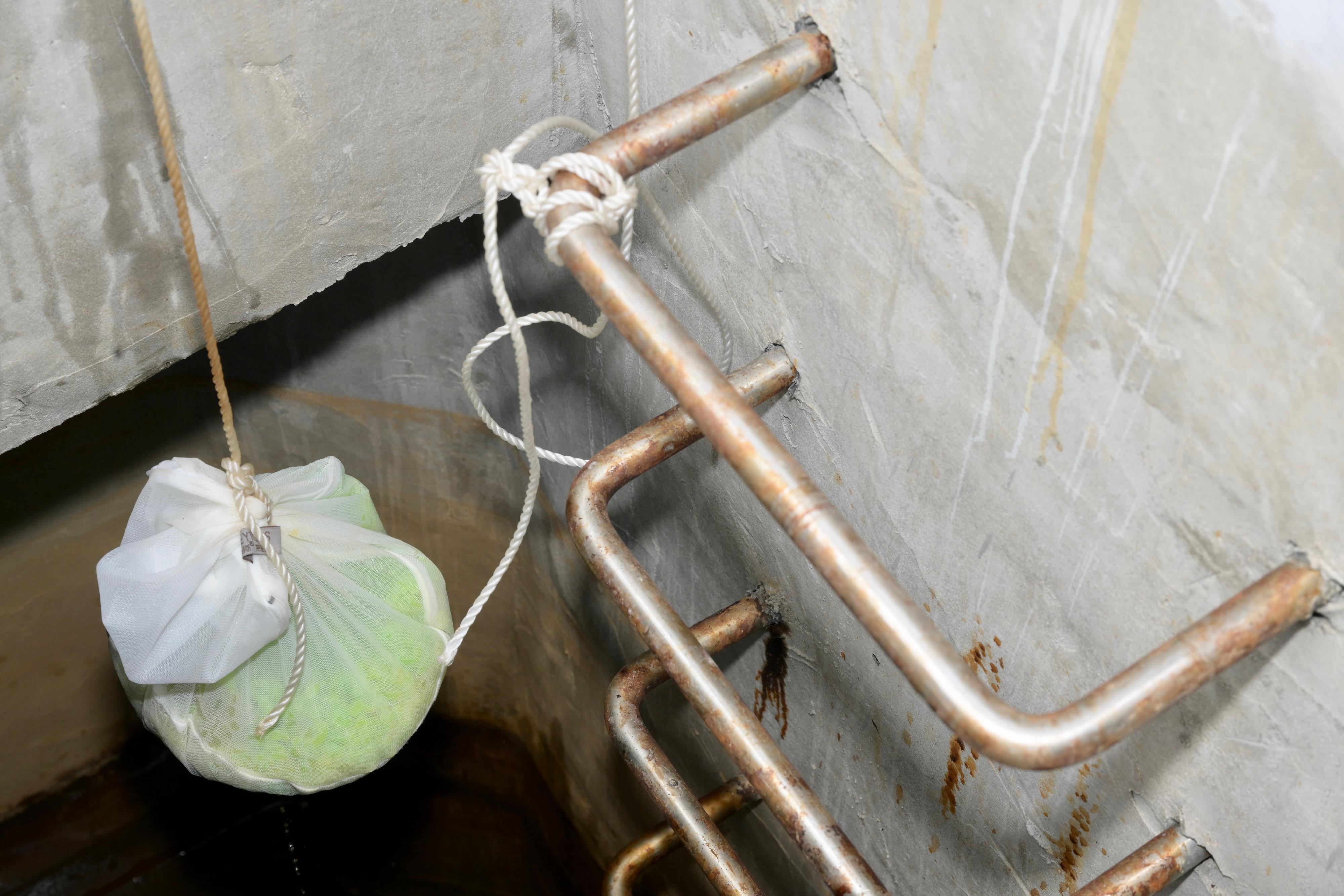
     Accompanied by Professor Yeung King-lun of the Department of Chemical and Biological Engineering and Division of Environment and Sustainability of the HKUST, and Assistant Director of Housing Mr Michael Hong, Ms Pun visited Yue Wan Estate at Chai Wan under the Housing Authority (HA) to inspect the conduct of a trial project funded by the special call for projects under the PSTS. The project involves an antimicrobial hydrogel for use in flush toilets, which has been developed by Professor Yeung and funded to conduct trials in elderly homes operated by the Haven of Hope Christian Service. The test result showed that the antimicrobial hydrogel could effectively reduce more than 95 per cent of viable microbes and inactivate more than 99 per cent of viral particles in toilet flush water, with the antimicrobial hydrogel could remain effective up to 60 days. In view of the positive results from an earlier field trial, the Innovation and Technology Commission (ITC) further provided funding for the trial of the antimicrobial hydrogel in three public housing blocks (ranging from 22 to 39 storeys high) under the HA with a total of over 2 880 flats.
 
     The antimicrobial hydrogel dissolves in the flushing water tank of the buildings such that the flushing water with antibacterial and antiviral properties will disinfect the toilet every time the residents flush the toilet, preventing vertical transmission of sewage containing pathogens to other residents. Compared to disinfection methods using detergents or bleach, the antimicrobial hydrogel is colourless and odourless, and therefore will not cause any inconvenience to residents. In addition, the antimicrobial hydrogel is mild in nature and will neither react with other chemicals in the flushing water to release substances that are harmful to the human body, nor will it cause any structural impact on the drainage pipes of the buildings.
 
     Ms Pun said, “The ITC has been committed to supporting the application of technology in the community to combat the epidemic since the outbreak of COVID-19 in Hong Kong, which includes providing funding support for trials of Research and Development (R&D) outcomes that can help combat the epidemic in the community to integrate technology into daily life. The ITC launched a special call under the PSTS for combating COVID-19 in March 2020 and approved 63 projects in the same year, including the antimicrobial hydrogel project we inspected today. The responses from the 57 participating local public sector organisations were very positive, providing trial venues and actual operating environments to the applicant organisations with a view to facilitating the early implementation of R&D outcomes.
 
     “We are pleased to see that innovation and technology (I&T) products developed by local universities can be applied in public housing estates to prevent the spread of the epidemic and protect the health of the public. This arrangement also demonstrates the willingness of government departments to try out local technological inventions to jointly support I&T development in Hong Kong. If the outcome of this trial is satisfactory, we will discuss with colleagues at the Housing Department on how to promote the adoption of hydrogel to other public housing estates.”
 
     The ITC will continue to provide funding to organisations in the field of R&D and application of technologies to support the community’s continued efforts in combating the epidemic so that the general public may resume normal life as soon as possible.
 
     So far, 52 out of a total of 63 approved projects under the PSTS special call have been completed, and the remaining trials of projects will be completed within this year.
 
     The list of the approved projects under the special call for the PSTS is available on the website of the ITF (www.itf.gov.hk/en/funding-programmes/facilitating-technology/psts/psts-covid-19/index.html).

Photo  Photo  Photo  
read more