Tag Archives: China

image_pdfimage_print

S for IT visits MARS Centre (with photos)

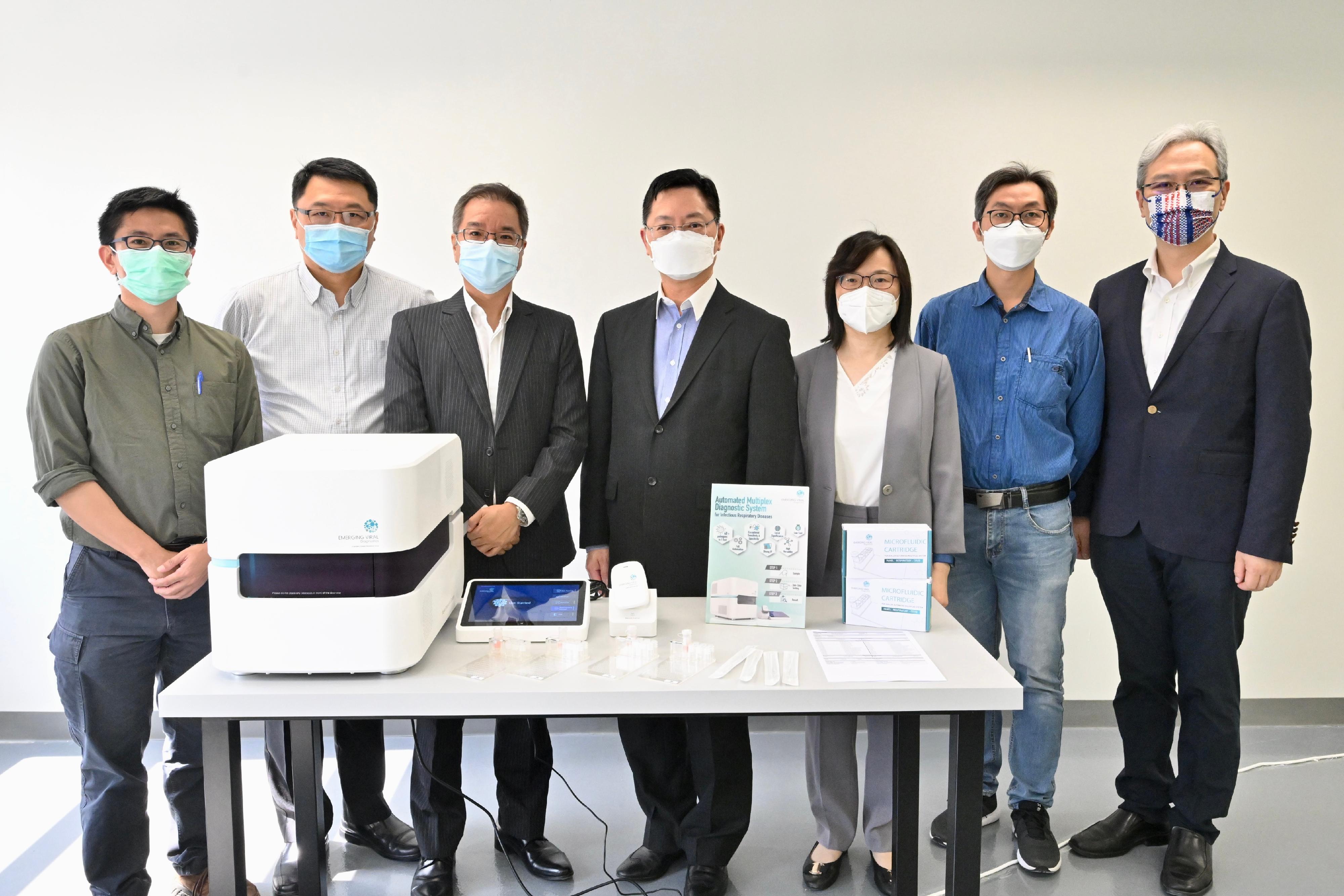
     The Secretary for Innovation and Technology, Mr Alfred Sit, together with the Commissioner for Innovation and Technology, Ms Rebecca Pun, inspected the MARS Centre at Tai Po InnoPark today (May 5). They visited three enterprises located in the MARS Centre to learn about how the integration of advanced manufacturing and scientific research capabilities speeds up local research and development (R&D) and the manufacturing process, thereby increasing the local supplies of personal protection equipment and medical diagnostic systems. These products all require very high standards of precision, hygiene procedures and quality at different stages of the production cycle.

     The visit was conducted in the company of the Chairman of the Board of Directors of the Hong Kong Science and Technology Parks Corporation, Dr Sunny Chai. The three enterprises focus on developing next generation magnetic resonance imaging, innovative and automated multiple point-of-care diagnostic systems for detecting infectious respiratory diseases and the manufacture of face masks respectively. Two of them have received support from funding programmes administered by the Innovation and Technology Commission in different stages of development, including the Innovation and Technology Support Programme and the Public Sector Trial Scheme, which help turn their R&D outcomes into products and start their production lines in Hong Kong.

     Mr Sit said, “In view of the surging demand for anti-epidemic items under the epidemic, we have refurbished an industrial building at Tai Po InnoPark as the MARS Centre to offer a high-specification fully-serviced production base for medical supplies, with a view to allowing Hong Kong to leverage its strengths in life and health sciences. It also accelerates local R&D and the production process, promotes commercialisation of R&D results, and responds positively to the needs of the community by offering medical supplies to meet local demands at critical times.
 
      “The positive response from the industry to the high-specification industrial facilities affirms the directions in the setting up of high value-added and technology-intensive manufacturing processes and production lines in Hong Kong, and supports industry with innovation and technology (I&T). Commissioned in late 2021, the MARS Centre has a high occupancy rate of 96 per cent. Ten local and international enterprises focusing on medical goods and production of relevant products and services are expected to move in by the middle of this year. It is conducive to driving re-industrialisation with I&T and assist in the anti-epidemic work in Hong Kong.”

     Several new infrastructures driving re-industrialisation have been completed in recent years. The MARS Centre is one of them, along with the Data Technology Hub and the Advanced Manufacturing Centre located in Tseung Kwan O InnoPark. The construction of the Microelectronics Centre in Yuen Long InnoPark is also in progress and is expected to commence operation in 2024. It will provide essential infrastructure to support the development and pilot production/manufacturing of microelectronics products and attract enterprises that produce microelectronics products and related industries, which helps promote the development of high value-added industries. In view of the enthusiastic response from the industry to the new infrastructures, the HKSTPC has started to plan for the construction of a second Advanced Manufacturing Centre to further support the development of re-industrialisation in Hong Kong.

     Mr Sit added, “The Government is committed to promoting re-industrialisation and fostering I&T application and smart production in recent years to attract more high value-added and technology-intensive manufacturing processes and production lines to set up operations in Hong Kong to enhance the I&T ecosystem. This can open up new industries, drive the transformation of the economy and enhance competitiveness, thereby developing a stronger I&T platform and contributing to Hong Kong’s development into an international I&T hub.”
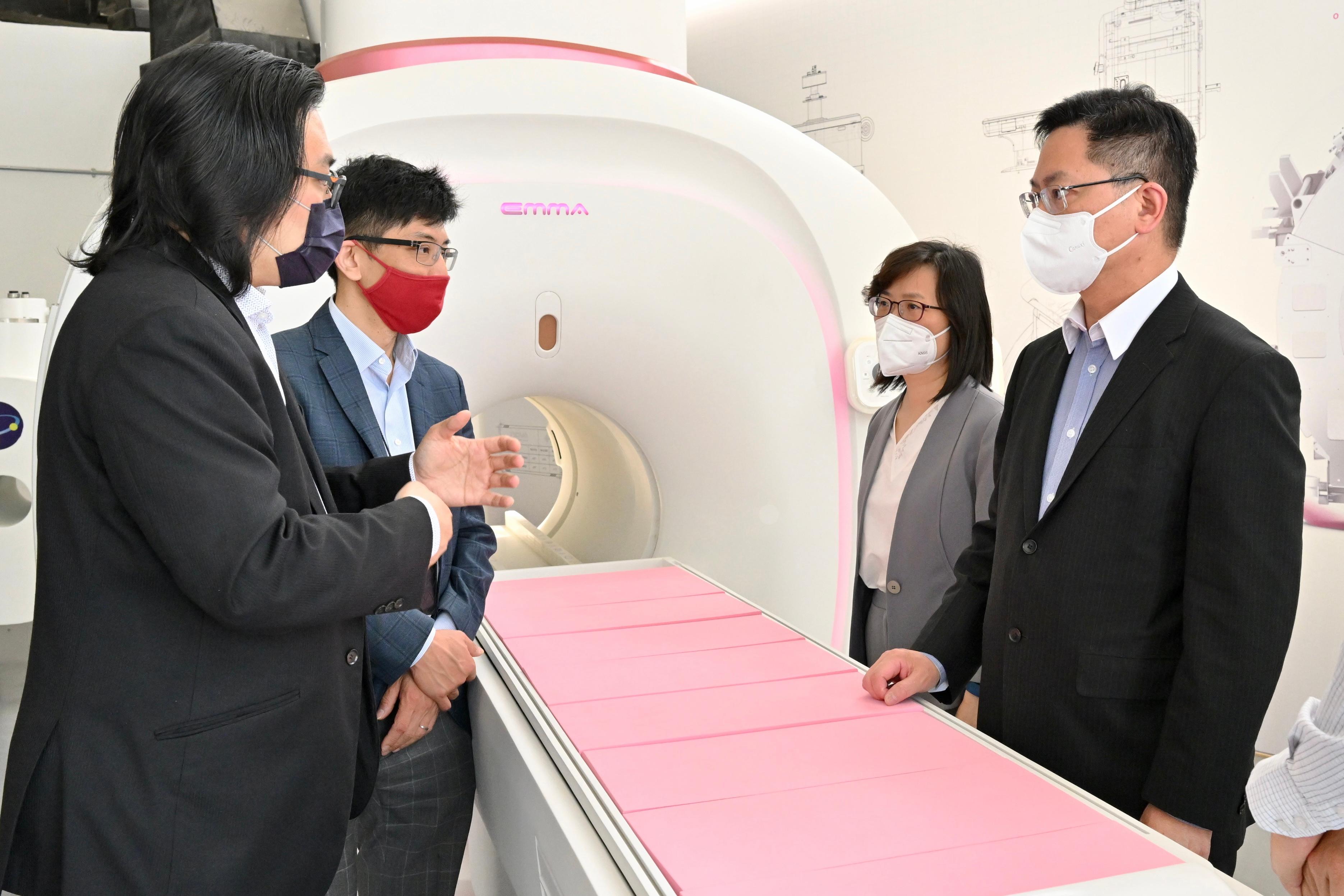
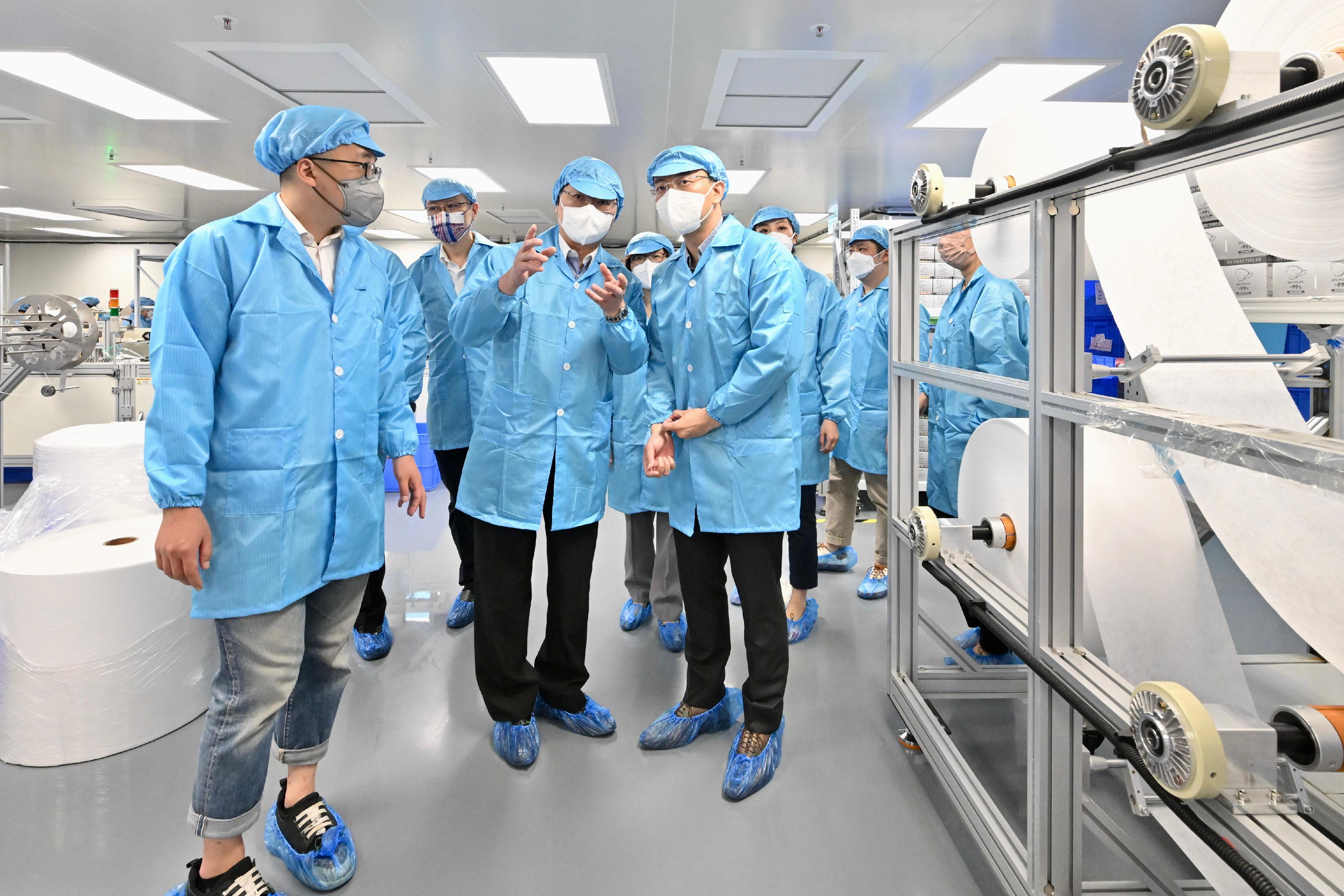
Photo  Photo  Photo  
read more

UNCITRAL Working Group III on ISDS Reform – Forum for Further Preparatory Work on Investment Mediation held today (with photos)

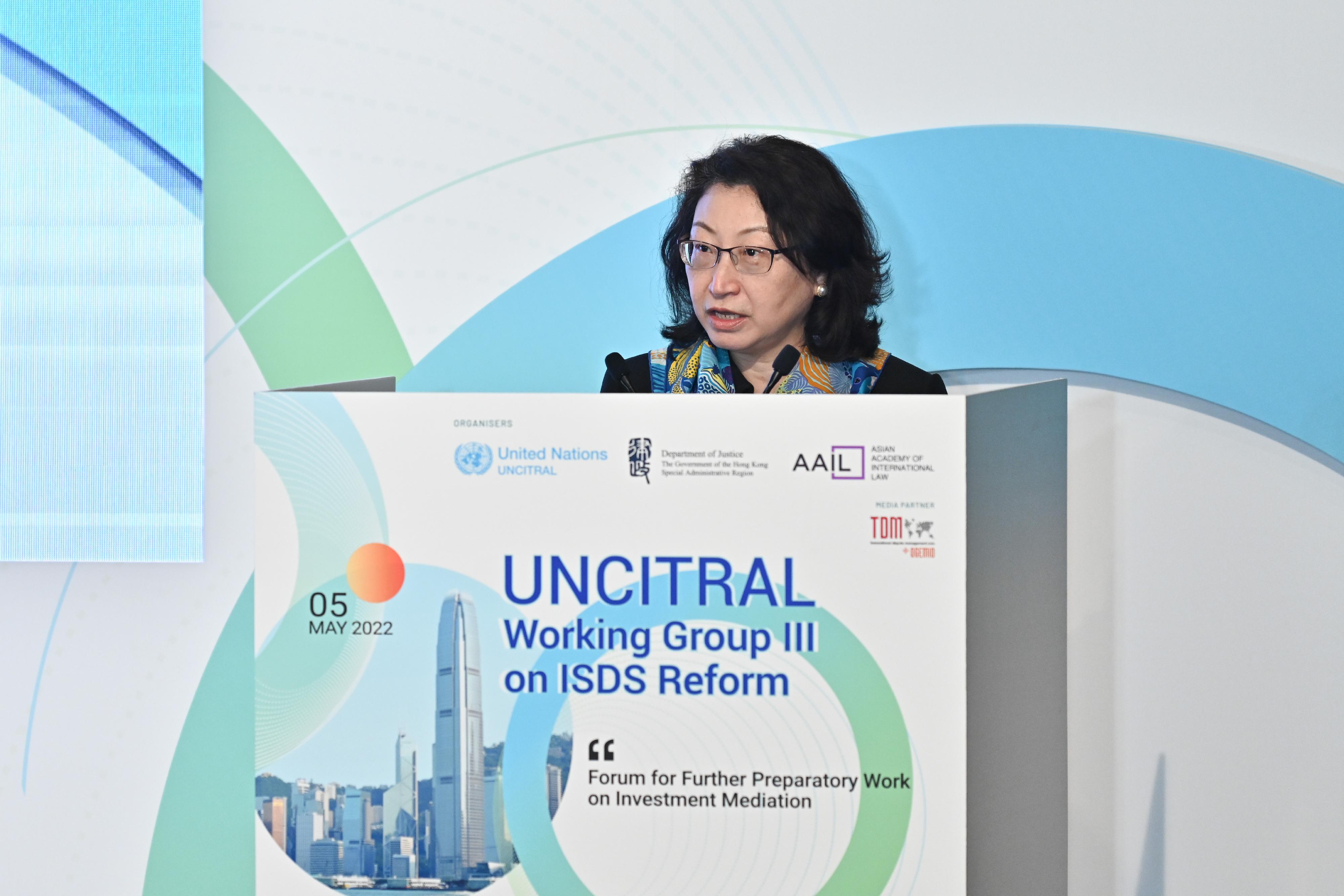
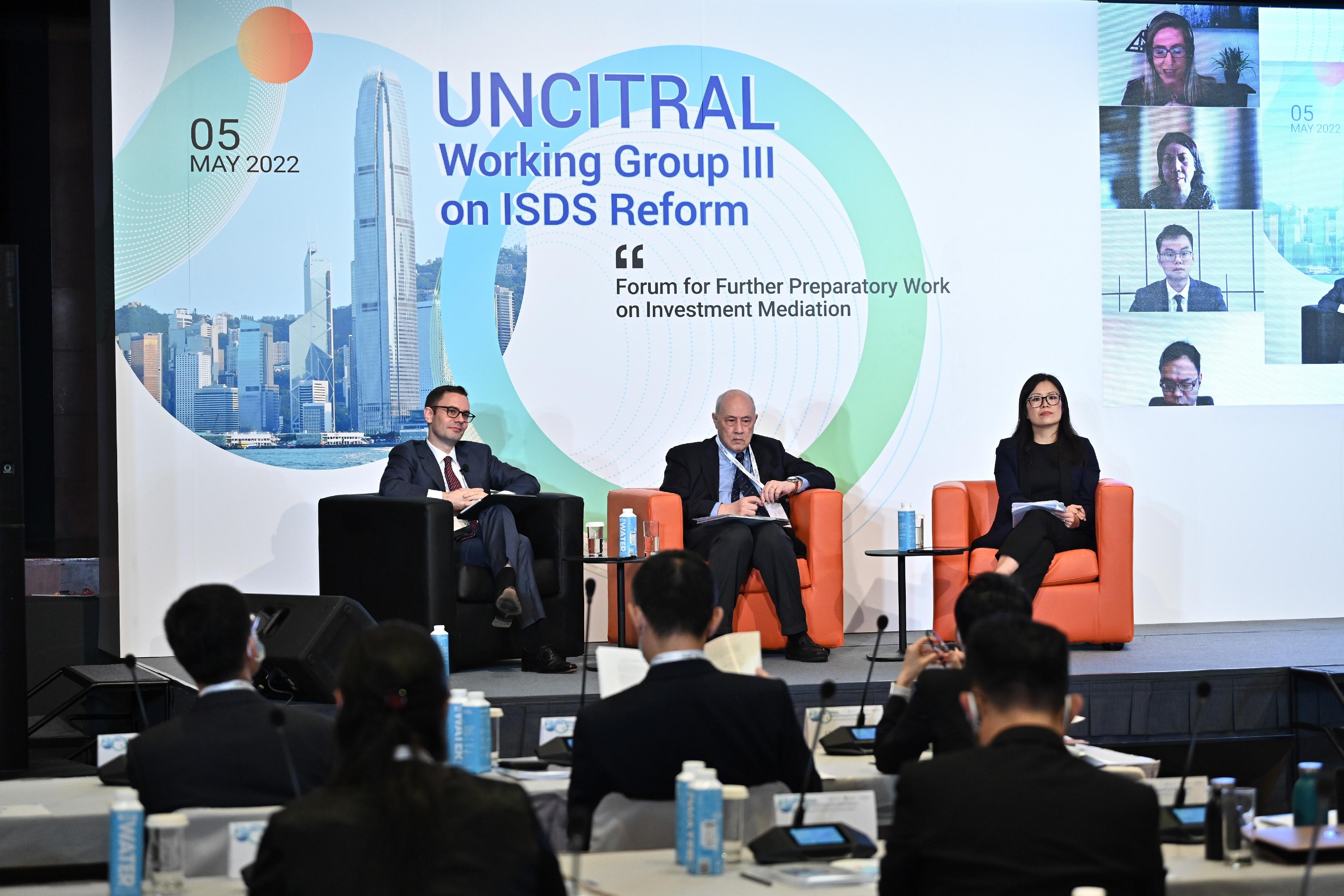
     Preceded by the Pre-intersessional Meeting in November 2020 and the Inter-Sessional Meeting of Working Group III of the United Nations Commission on International Trade Law (UNCITRAL) in October 2021, the Department of Justice (DoJ) co-organised again with UNCITRAL and the Asian Academy of International Law, with support from the Central People’s Government, the first-ever UNCITRAL Working Group III on ISDS Reform – Forum for Further Preparatory Work on Investment Mediation (Preparatory Forum) in hybrid mode in the Hong Kong Special Administrative Region (HKSAR) today (May 5) during Mediation Week 2022 – “Mediate First, Harmony from Now to Beyond”. The Preparatory Forum has attracted around 500 registered participants from 68 jurisdictions to attend.
 
     Since 2017, the DoJ has been participating as members of the Chinese delegation of the UNCITRAL Working Group III, which has been entrusted with the mandate to work on the possible reform of investor-state dispute settlement (ISDS reform), including mediation.
 
     The Secretary of the UNCITRAL, Ms Anna Joubin-Bret, in her opening remarks expressed appreciation to China’s continued support for the work of Working Group III on investment mediation. The Deputy Director-General of the Department of Treaty and Law of the Ministry of Foreign Affairs of the People’s Republic of China, Dr Sun Jin, emphasised the many benefits of international mediation as a peaceful and rule-of-law based means of dispute resolution conducive towards promoting harmony and multilateralism.
 
     The Preparatory Forum started off with a panel of renowned practitioners and academics sharing their experience and insights to facilitate Working Group III in considering the designs of model clauses and guidelines on investment mediation. The seminar portion illustrated that getting the frameworks right, overcoming psychological barriers through education and unlocking mediation’s synergy with other ISDS reform options are the three keys in promoting the greater use of investment mediation.
 
     Following the seminar portion of the Preparatory Forum, Working Group III delegations proceeded with a closed-door roundtable discussion on the formulations of the draft model clauses and guidelines on investment mediation. The Commissioner of Inclusive Dispute Avoidance and Resolution Office of the DoJ, Dr James Ding, moderated a discussion on the draft model clauses and experts from the HKSAR also contributed suggestions and ideas, with reference to the Mainland and Hong Kong Closer Economic Partnership Arrangement Investment Mediation Rules, to facilitate the Working Group in developing the texts on investment mediation.
 
     As remarked by the Secretary for Justice, Ms Teresa Cheng, SC, the HKSAR stands ready to contribute in an appropriate capacity to the work of the UNCITRAL Working Group III on investment mediation and looks forward to opportunities to welcome delegations of Working Group III to meet again in person soon in the city. It is expected that the continued participation of the HKSAR in the work of the UNCITRAL Working Group III on investment mediation would strengthen the city’s status as a leading centre for international legal and dispute resolution services.

Photo  Photo  
read more

Update on supplies from Mainland

     The Task Force of Supplies from the Mainland led by the Transport and Housing Bureau (THB) has been working closely with the Guangdong Provincial Government and the Shenzhen Municipal People’s Government to explore various means to stabilise the supply of goods from the Mainland to Hong Kong. In addition to road transport arrangements, transportation of goods by water and railway is already in service.
 
     A spokesperson for the THB said that the “Sea Express” water transportation service from the Mainland to Hong Kong has been fully launched and its capacity is rising to increase the supplies of fresh food, other daily necessities and manufacturing materials. The current supply of fresh food from the Mainland is stable.
 
     Currently, there are three water transportation routes between Hong Kong and Shenzhen, namely (1) from Shenzhen Yantian International Container Terminals to Hong Kong Kwai Tsing Container Terminals (KTCT); (2) from Shenzhen DaChan Bay Terminals to KTCT; and (3) from China Merchants Port (South China) Management Center (Shenzhen Mawan, Shekou and Chiwan Container Terminals) to Hong Kong River Trade Terminal and elsewhere. Together with the water transportation routes from other cities in Guangdong Province, including the routes from Guangzhou Lianhuashan Port, Nansha Port, Huadu Port, Zhongshan Huangpu Port and Zhuhai Doumen Port to different terminals in Hong Kong, the water transport capacity amounts to tens of thousands of tonnes daily.
 
     The spokesperson said today (May 5) that Shenzhen operated 43 cargo vessel trips and transported around 3 790 twenty-foot equivalent units (TEUs) of cross-boundary supplies by water yesterday (May 4), equivalent to about 15 600 tonnes of goods, of which around 10 TEUs (about 30 tonnes) were fresh food and around 3 780 TEUs (about 15 570 tonnes) were non-fresh food, according to information from the Mainland authorities.
 
     Since the launch of services from the three ports in Shenzhen since February 18 to yesterday, a total of around 300 520 TEUs of cross-boundary supplies have been transported, equivalent to about 1 586 920 tonnes of goods, of which around 1 580 TEUs (about 13 570 tonnes) were fresh food and around 298 940 TEUs (about 1 573 350 tonnes) were non-fresh food.
 
     To further ensure a stable goods supply to Hong Kong through land transport, a trial run of cargo transfer was conducted by the THB at a yard situated on Kam Pok Road, San Tin, Yuen Long, and it was completed smoothly. The THB will continue to work with the Mainland authorities to fully take forward cargo transfer arrangements on the Hong Kong side. It is a contingency measure in response to the latest epidemic situation in the city so as to reduce the risk of epidemic transmission in both the Mainland and Hong Kong, ensuring both smooth cross-boundary land transport and a stable goods supply to Hong Kong.
 
     Meanwhile, to avoid a spillover of the epidemic, the Transport Department (TD) has arranged for dedicated staff to conduct rapid antigen tests for cross-boundary goods vehicle drivers at various land boundary control points (BCPs) from February 28 onwards. Only drivers with a negative result are allowed to enter the Mainland. In order to further improve the accuracy of the tests, the TD has already switched to use rapid nucleic acid tests at the BCPs. Starting from April 21, the sampling method for rapid nucleic acid tests has been further changed to nasopharyngeal swabs. A total of 2 150 rapid nucleic acid tests were conducted yesterday in which nine drivers preliminarily tested positive. The TD has passed the cases to the Department of Health for follow-up.
 
     The THB will closely monitor the situation and co-operate with the Mainland authorities to facilitate and implement various measures to ensure a stable goods supply to Hong Kong, with a view to complementing the supply through road, water and railway transport, enhancing capacity and efficiency as well as optimising the flow of cross-boundary supplies. read more