Tag Archives: China

image_pdfimage_print

Record of discussion of meeting of Exchange Fund Advisory Committee Currency Board Sub-Committee held on October 20

The following is issued on behalf of the Hong Kong Monetary Authority:
 
(Approved for Issue by the Exchange Fund Advisory Committee on November 23, 2022)

Report on Currency Board Operations (June 24 – October 10, 2022)
————————————————————————————
 
     The Currency Board Sub-Committee (Sub-Committee) noted that the Hong Kong dollar (HKD) traded within a range of 7.8359 – 7.8500 against the US dollar (USD) during the review period. Along with the increases in the target range for the US federal funds rate, the weak-side Convertibility Undertaking (CU) was triggered multiple times during the review period and the HKMA bought HK$114.68 billion under the weak-side CU. The Aggregate Balance fell correspondingly to HK$120.89 billion. The HKD interbank interest rates increased during the review period, with the 1-month HKD interbank rate rising to 2.40 per cent. Following the increase in the US federal funds target range in September, many banks raised their Best Lending Rates by 12.5 basis points, marking the first increase since 2018. Overall, the HKD exchange and interbank markets continued to trade in a smooth and orderly manner.
      
     The Sub-Committee noted that the Monetary Base decreased to HK$1,926.05 billion at the end of the review period. In accordance with the Currency Board principles, all changes in the Monetary Base had been fully matched by changes in foreign reserves.
      
     The Report on Currency Board Operations for the review period is at Annex.
 
Monitoring of Risks and Vulnerabilities
——————————————

     â€‹The Sub-Committee noted that as global inflation was likely to stay elevated given the high energy prices, persistent supply chain disruptions and tight labour markets, the US Federal Reserve (Fed) and other major central banks had frontloaded monetary tightening, fuelling the risks of a global slowdown. In the Euro Area, stagflation risks were particularly notable, while in the UK, the government’s announcement of a debt-financed tax cut package had resulted in repricing of UK assets. 

     The Sub-Committee noted that the Mainland Chinese economy continued to face downside risks to growth amid the still subdued property market and new COVID-19 outbreaks. In the Asian region, weakened demand from the US and other major economies could weigh on export growth, while any aggressive monetary tightening could undermine domestic demand.

     The Sub-Committee noted that in Hong Kong, domestic economic activities had generally stabilised further stepping into Q3, with the rolling out of the Phase II Consumption Voucher Scheme. While worsened global economic prospects had continued to weigh on Hong Kong’s merchandise exports, the recent adjustments to quarantine restrictions might help inbound tourism and exports of services. Meanwhile, the housing market had softened in Q3 as market sentiment turned more cautious amid rising interest rates.

A Monitoring Framework for Assessing Hong Kong Dollar Liquidity
————————————————————————-

     The Sub-Committee noted a paper that proposed a monitoring framework for assessing HKD liquidity. read more

LCQ8: Enhancing judicial efficiency

     Following is a question by Dr the Hon Junius Ho and a written reply by the Chief Secretary for Administration, Mr Chan Kwok-ki, in the Legislative Council today (November 30):

Question: 

     Some stakeholders in the legal sector have relayed that 25 years have passed since Hong Kong’s return to the motherland, but the reform of the judicial system has still made no headway, and court operations are stuck in a groove with low efficiency. In this connection, will the Government inform this Council:

(1) whether it has formulated a specific timetable for implementing judicial reform; if so, of the details; and

(2) whether it will, by making reference to the practice of Mainland courts, introduce relevant technologies to the Judiciary, so as to enable its courts to conduct more remote hearings and expedite the preparation of transcripts of court proceedings; if so, of the details?

Reply:

President,

     Having consulted the Judiciary, my reply to Dr the Hon Junius Ho’s question is as follows:  

(1) The Judiciary has always attached great importance to implementing judicial reforms with a view to enhancing the efficiency, effectiveness, accountability and transparency of judicial work and court operations. Major measures in recent years include the Civil Justice Reform, the review of family procedural rules, the review of the handling mechanism for complaints against judicial conduct, updating the Guide to Judicial Conduct, enhancing administrative procedures to expedite the processing of cases, and strengthening judicial education. Major details of the aforementioned measures are summarised in the ensuing paragraphs.

(a) Civil Justice Reform

     The Civil Justice Reform, which came into effect in 2009, had given the Court more powers to manage the progress of cases, streamline and improve civil procedures, encourage and facilitate settlement between parties, and enable judicial resources to be better distributed and utilised.

(b) Review of family procedural rules 

     The review seeks to reform the procedural rules of the family justice system with a view to enhancing its efficiency and cost-effectiveness, as well as reducing its adversarial nature. 

     To implement the reforms, the Judiciary intends to introduce the Family Procedure Bill (FPB) as a new primary legislation to provide a clear legal basis for the making of a set of consolidated and streamlined court rules for family proceedings. The FPB received positive response during public consultation between February and April 2022. The Judiciary briefed the Legislative Council (LegCo) Panel on Administration of Justice and Legal Services in August 2022 and Members expressed their strong support for the FPB. The Judiciary is refining the Bill in light of views received and aims to introduce the FPB to the LegCo in early 2023.

(c) Review of the mechanism for handling complaints against judicial conduct

     The Judiciary completed a review and put in place a two-tier structure for handling complaints against judicial conduct commencing August 2021 with a view to enhancing the transparency and accountability of the mechanism. Under the two-tier structure, a Panel of Judges comprising more than one judge at High Court level would investigate pursuable complaints against judicial conduct which are serious or complex, or have aroused wide public attention (Tier One). All cases investigated by the Panel of Judges in Tier One would be reviewed by the Advisory Committee on Complaints against Judicial Conduct (Advisory Committee) (Tier Two). The Advisory Committee, chaired by the Chief Justice of the Court of Final Appeal (CJ), comprises senior judges and members from the community with expertise and experience in judicial/professional/public services. Since August 2021, seven cases attracting massive complaints were put forward for consideration by the Advisory Committee and the decisions of the Chief Justice were made public on the Judiciary’s website. 

(d) Updating of the Guide to Judicial Conduct

     Given the increasingly complex conditions in which judging takes place, and the increased public interest in the work of judges and judicial officers, the CJ set up a Working Party in 2021 to review the Guide to Judicial Conduct. Arising from this review, the 2022 Guide to Judicial Conduct was published in May this year. The Guide had been revised to take into account the impact of information technology developments, particularly the use of social media in the daily life, inclusion of general principles for handling cases involving public controversies, and guidance on behaviour in court and making comments on parties and other persons when performing judicial functions, etc.

(e) Enhancing the administrative procedures to expedite the processing of cases 

     The Judiciary has been making pro-active and dedicated efforts to enhance the efficiency in processing cases in court through multi-pronged measures which include: 

(i) using alternative means of disposal for civil proceedings (including judicial reviews) such as remote hearings and paper disposals where appropriate to provide the court with more flexible means of disposing with court proceedings, particularly during unforeseen circumstances, such as a prolonged epidemic;

(ii) more pro-active case management (including imposing a tight procedural timetable), providing additional court facilities, and making the best possible use of courtrooms and facilities to increase its functional capacity (such as broadcasting of proceedings in different court premises) to facilitate expeditious handling of cases with priority given to those related to the 2019 anti-extradition amendment bill incidents and national security;

(iii) making greater use of technology to enhance the efficiency of conducting court business, such as implementing an integrated Court Case Management System (iCMS) for handling court-related documents and payments through an electronic mode, expanding of the scope of e-appointment system for registry services, as well as using e-bundles, and digital evidence and exhibits handling system at court hearings; and

(iv) issuing new Practice Directions in May 2022 to give guidance on the timeframes within which judgments in different types of hearings in the High Court, the District Court (DC), the Lands Tribunal and the Family Court are normally expected to be handed down.  

(f) Strengthening of judicial education

     To help maintain and further develop the professional qualities and efficiency of judges, the Judiciary has been making efforts to strengthen and expand the work of the Hong Kong Judicial Institute (HKJI), in providing continuing judicial education for judges. Workloads permitting, judges will be given more “protected time” to attend judicial seminars and workshops on subjects such as court craft, judicial ethics, judgment writing and sentencing. In 2021, the HKJI has been organising a series of seminars on Chinese Law and legal system, which covers subjects such as the Constitution of the People’s Republic of China, Basic Law and National Security Law. Continued efforts will also be made to organise exchange programmes in this regard. 

(2) The Judiciary has been making on-going efforts to make use of technology to enhance the efficiency of court operations. In recent years, the Judiciary has launched a number of new initiatives. The major technology initiatives being pursued include the development of the iCMS across various levels of courts by phases to facilitate court users in handling court-related documents and making payments electronically. The iCMS was first rolled out in the DC on May 6, 2022. At present, the iCMS can be used for Personal Injuries Action, Tax Claims and Civil Actions of the DC. The Judiciary is planning to extend the iCMS to the summons cases at the Magistrates’ Courts and the Employees’ Compensation Cases at the DC in December 2022. Implementation of the iCMS for court users at other levels of courts will progress incrementally from 2024. 

     Remote hearing is another technology initiative. The Judiciary has been promoting the wider use of remote hearings for civil proceedings since April 2020. Over 1 600 remote hearings (including video-conferencing and phone hearings) have been conducted so far. The Judiciary is working on the draft Courts (Remote Hearing) Bill to provide Judges and Judicial Officers with the flexibility to order remote hearings as appropriate, having regard to all relevant circumstances, as well as the dual requirements of open justice and fairness. The Bill seeks to remove legal obstacles to the general application of remote hearings to criminal proceedings and provide express provisions setting out how matters should be handled when a hearing is conducted remotely. A three-month public consultation on the draft Bill was launched in June 2022. The Judiciary aims to introduce the Bill to the LegCo next year.

     On preparation of transcripts, parties to a court proceeding can apply for transcripts of court hearings and special requests for expedited service can be made in case of urgency. The Judiciary will normally be able to provide transcripts upon request in 24 hours to 45 days depending on the urgency of the request and the duration of the hearings concerned. The Judiciary has been conducting pilot tests on speech recognition software products with a view to making use of this technology in recording court proceedings where appropriate in the longer term, given the need to secure a sufficiently accurate level for the Cantonese language in Hong Kong courts.  read more

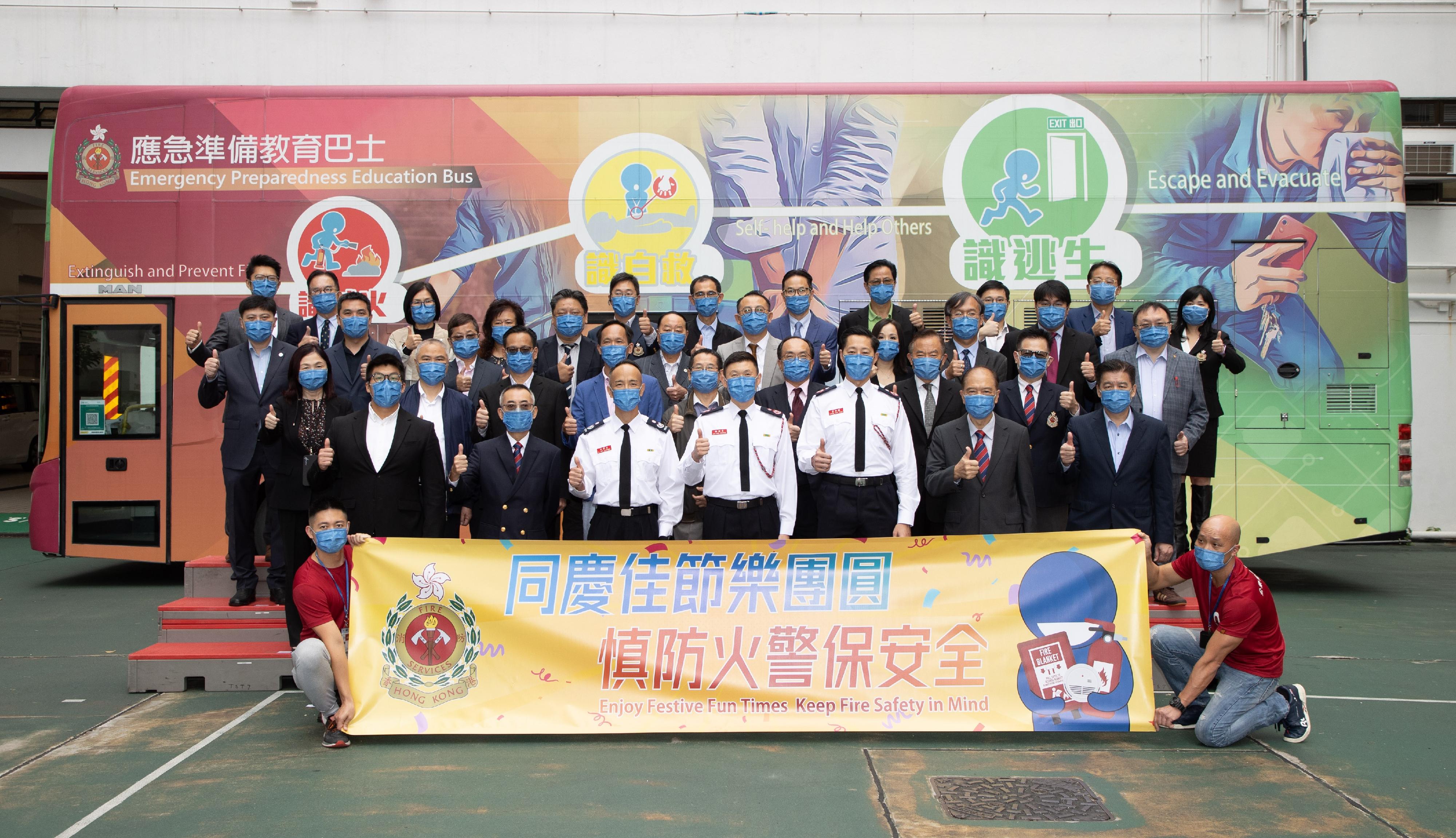
FSD holds ceremony to launch fire safety activities today (with photos)

     The Fire Services Department (FSD) today (November 30) held a launching ceremony of the Fire Safety Activities during Festive Season Campaign 2022 at Tsim Sha Tsui Fire Station. The FSD will organise a series of fire safety promotional and educational activities, and also conduct fire safety inspection and enforcement operations to enhance the public’s fire safety awareness during the festive season. The campaign strives to convey fire safety messages over the festive season to various sectors of the community.
 
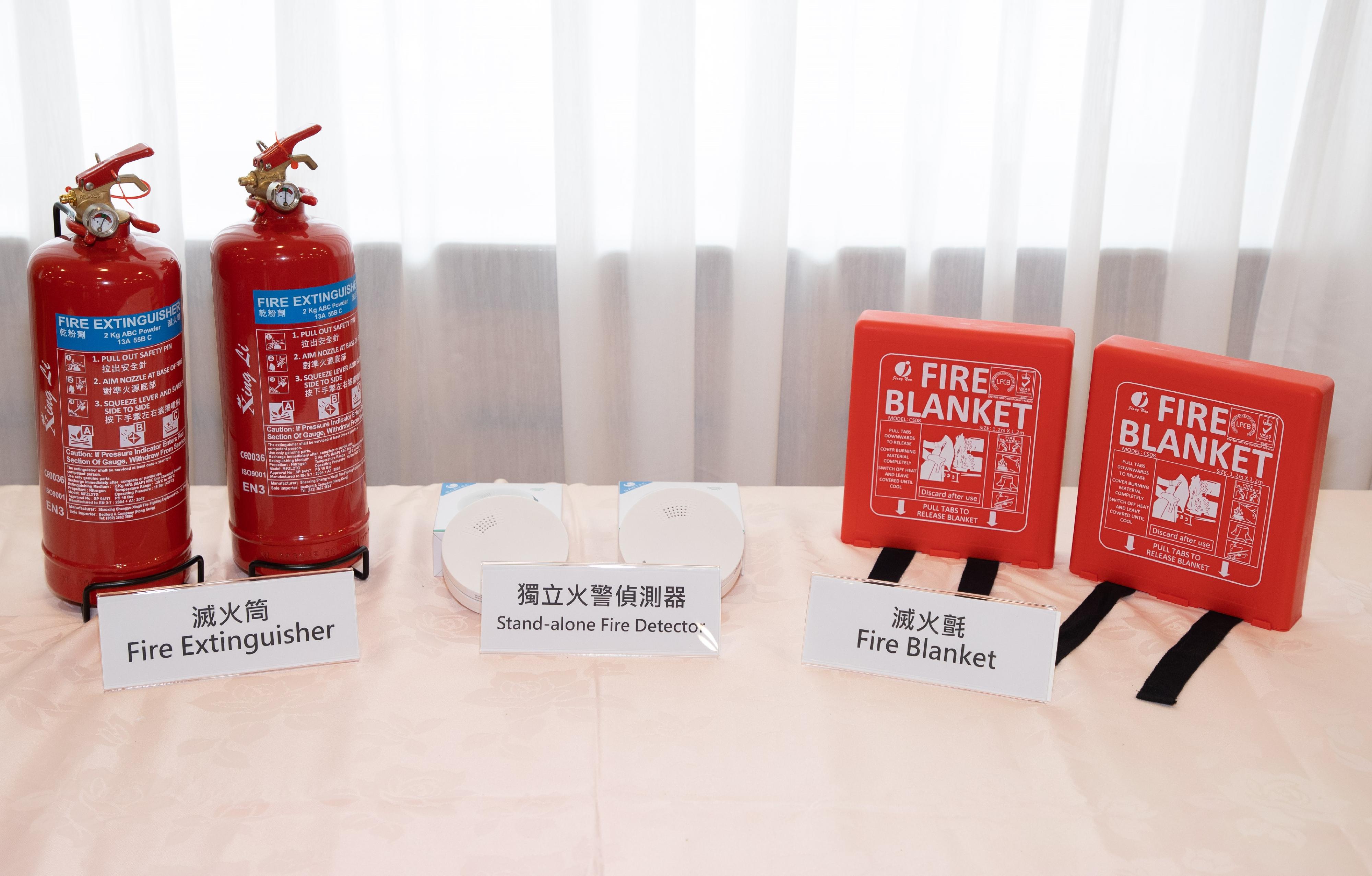
     Speaking at the ceremony, the Deputy Director of Fire Services (Public Safety and Corporate Strategy), Mr Derek Armstrong Chan, said a series of promotional and educational activities targeting residential units, industrial buildings, shops and vessels will be held in various districts across the territory in the coming three weeks starting today. These activities include fire safety carnivals, fire station open days, fire safety education bus parades, distribution of portable fire service equipment as well as installation of stand-alone fire detectors for residents in need.
 
     In the meantime, the FSD will also step up fire safety inspection and enforcement operations in various districts to enhance public fire prevention awareness and fire safety at various kinds of premises.
 
     Apart from the assistance offered by the District Offices, the campaign also gained support from collaborative partners including the Fire Services Department Community Collaboration Network, which was newly set up this year, the Fire Safety Ambassador Honorary Presidents’ Association, District Fire Safety Committees as well as Fire Safety Ambassadors. This demonstrates the concerted efforts on fire prevention promotion to be disseminated to all sectors of the community.
 
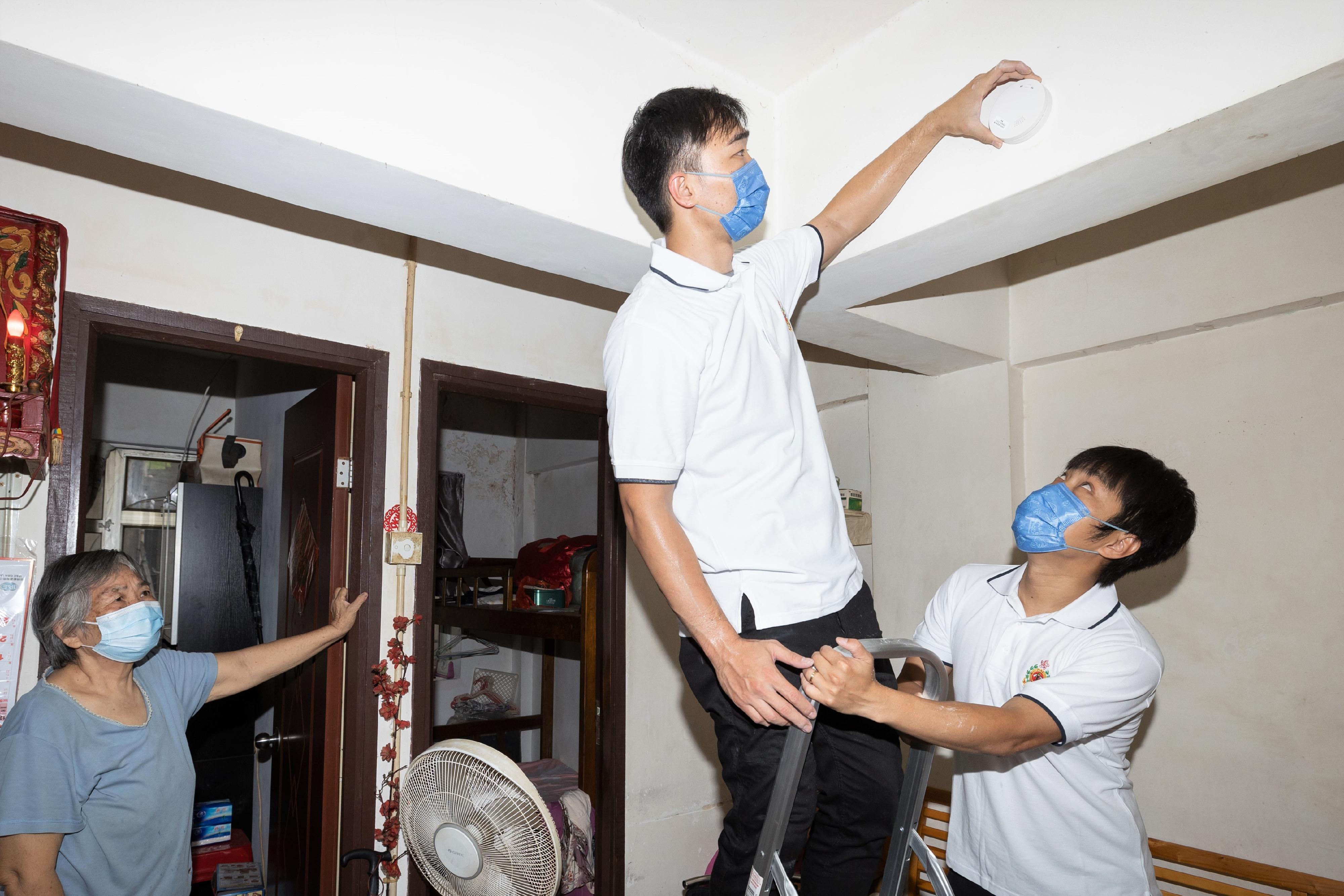
     After the ceremony, Mr Chan, accompanied by community members, visited Tsuen Wan to distribute firefighting equipment to needy households, while off-duty fire services personnel took the opportunity to install stand-alone fire detectors for them.

Photo  Photo  Photo  Photo  Photo  Photo  
read more

Key statistics on operating characteristics of import/export, wholesale and retail trades, and accommodation and food services sectors in 2021

     According to the results of the 2021 Annual Survey of Economic Activities – Import/Export, Wholesale and Retail Trades, and Accommodation and Food Services Sectors released today (November 30) by the Census and Statistics Department (C&SD), total receipts (i.e. sales and other receipts) of the import/export, wholesale and retail trades, and accommodation and food services sectors amounted to $5,533.2 billion in 2021, representing an increase of 19.9% compared with 2020; on a per establishment basis, total receipts increased by 19.6% compared with 2020 to $37.9 million in 2021.
      
     Operating expenses, cost of goods sold and compensation of employees of the above sectors altogether amounted to $5,129.4 billion in 2021, representing an increase of 19.9% compared with 2020; on a per establishment basis, they altogether increased by 19.5% compared with 2020 to $35.1 million in 2021.
      
     Gross surplus of the sectors, which is equal to total receipts less operating expenses, cost of goods sold and compensation of employees, increased by 20.1% compared with 2020 to $403.9 billion in 2021; on a per establishment basis, gross surplus was $2.8 million in 2021, which increased by 19.8% compared with 2020. For all these sectors taken together, gross surplus accounted for 7.3% of total receipts in 2021, which was similar to that in 2020.
      
     Industry value added of the sectors, which is a measure of their total contribution to Hong Kong’s Gross Domestic Product, amounted to $615.3 billion in 2021, which increased by 16.8% compared with 2020; on a per establishment basis, industry value added was $4.2 million in 2021, which increased by 16.5% compared with 2020.
      
     According to the survey results, it was estimated that the aforementioned sectors comprised some 146 000 establishments and engaged about 945 300 persons, or an average of 6.5 persons per establishment, in 2021.
      
     In the import/export trade, total receipts amounted to $4,632.1 billion while operating expenses, cost of goods sold and compensation of employees totalled $4,260.8 billion in 2021. Gross surplus increased from $303.3 billion in 2020 to $371.3 billion in 2021, accounting for 8.0% of total receipts in 2021. Industry value added increased by 15.6% compared with 2020 to $490.1 billion.
      
     In the wholesale trade, total receipts amounted to $308.2 billion while operating expenses, cost of goods sold and compensation of employees totalled $299.6 billion in 2021. Gross surplus increased from $6.1 billion in 2020 to $8.6 billion in 2021, accounting for 2.8% of total receipts in 2021. Industry value added increased by 20.6% compared with 2020 to $21.8 billion.
      
     In the retail trade, total receipts amounted to $446.9 billion while operating expenses, cost of goods sold and compensation of employees totalled $427.0 billion in 2021. Gross surplus decreased from $20.7 billion in 2020 to $19.9 billion in 2021, accounting for 4.5% of total receipts in 2021. Industry value added increased by 14.4% compared with 2020 to $54.5 billion.
      
     In the accommodation services sector which covers hotels, guesthouses, boarding houses and other establishments providing short term accommodation, total receipts amounted to $25.0 billion while operating expenses, cost of goods sold and compensation of employees totalled $24.8 billion in 2021. Gross surplus changed from a deficit of $1.4 billion in 2020 to a surplus of $0.2 billion in 2021, accounting for 1.0% of total receipts in 2021. Industry value added increased sharply by 80.6% compared with 2020 to $11.0 billion.
      
     In the food services sector which mainly covers restaurants, total receipts amounted to $121.0 billion while operating expenses, cost of goods sold and compensation of employees totalled $117.2 billion in 2021. Gross surplus decreased from $7.5 billion in 2020 to $3.8 billion in 2021, accounting for 3.1% of total receipts in 2021. Industry value added increased by 22.2% compared with 2020 to $37.8 billion.
      
     Selected statistics for the import/export, wholesale and retail trades, and accommodation and food services sectors in 2020 and 2021 are shown in the attached table.
      
     More detailed survey results on the import/export, wholesale and retail trades, and accommodation and food services sectors will be given in the report “Key Statistics on Business Performance and Operating Characteristics of the Import/Export, Wholesale and Retail Trades, and Accommodation and Food Services Sectors in 2021”. Users can download this report at the website of C&SD (www.censtatd.gov.hk/en/EIndexbySubject.html?pcode=B1080014&scode=540) as from end-December 2022.
      
     Users who have enquiries about the survey results may contact the Distribution Services Statistics Section of the C&SD (Tel: 3903 7399; email: asw@censtatd.gov.hk). read more