Tag Archives: China

image_pdfimage_print

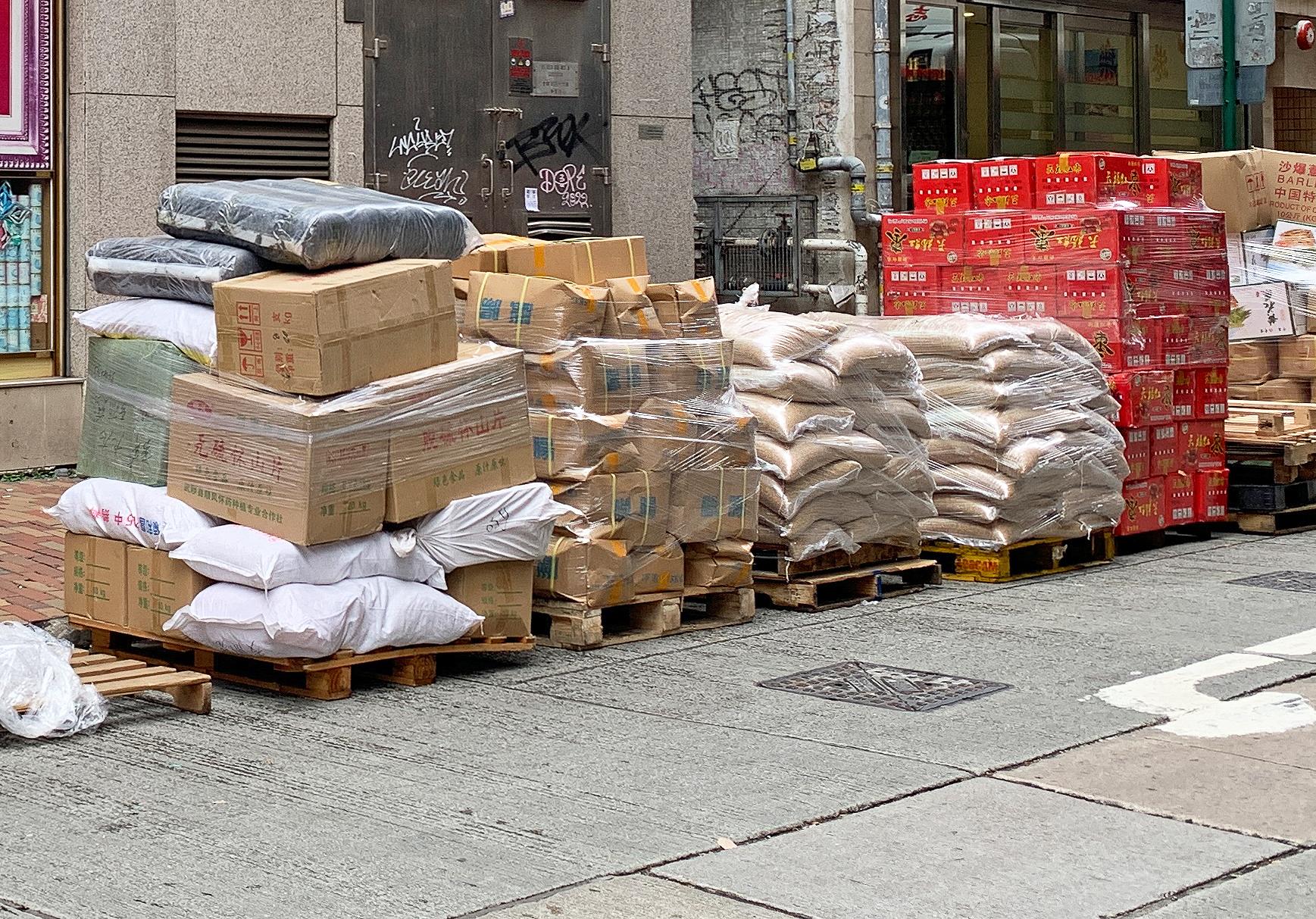
Office of The Ombudsman announces results of direct investigation into Government’s regulation of illegal occupation or obstruction of streets by goods and miscellaneous articles (with photo)

The following is issued on behalf of the Office of The Ombudsman:
 
     The Ombudsman, Ms Winnie Chiu, today (February 16) announced at a press conference the results of the direct investigation into the Government’s regulation of illegal occupation or obstruction of streets by goods and miscellaneous articles, identifying three major areas for improvement; namely enforcement actions, inter-departmental joint operations and the complaint referral mechanism.
 
     The investigation by the Office of The Ombudsman revealed that the Food and Environmental Hygiene Department (FEHD) enforcement actions were ineffective in curbing irregularities. As a result, in some street obstruction black spots with frequent inspections, the enforcement figure was not high but the obstruction of streets persisted. There was also a severalfold variation in the FEHD’s inspection and enforcement statistics on different black spots, reflecting possible inconsistencies in the intensity of inspection and enforcement by different District Environmental Hygiene Offices. Moreover, the existing penalty is inadequate to deter repeated offenders and serious cases such as large-scale occupation of pavement areas by goods and miscellaneous articles.
 
     The Office considers that the FEHD should use various data, including number and types of shops and past statistics on inspection and enforcement, as parameters for an holistic analysis in order to formulate effective plans for inspection and enforcement. The FEHD should also step up the monitoring at the central level of the arrangements for inspection and enforcement as well as resource utilisation across District Environmental Hygiene Offices, and identify any marked discrepancies requiring adjustment. To increase the non-compliance cost of street obstructions and for more effective control over repeated and persistent offenders, the Environment and Ecology Bureau and the FEHD should review comprehensively the existing penalties under the law, including raising the maximum penalty imposed by means of summons and the level of fixed penalty, and favourably exploring the introduction of a progressive penalty system under the fixed penalty provision.
 
     On the other hand, in recent years, the FEHD and the Police have been progressively conducting joint operations in various districts. Apart from prosecuting offenders, they have seized and confiscated goods or miscellaneous articles in public places to strengthen the deterrent effect. The Office considers that the authorities should explore the feasibility of empowering FEHD staff to remove, seize and detain goods and miscellaneous articles causing illegal occupation or obstruction of streets, so as to allow greater flexibility in enforcement planning and better use of the Police’s manpower.
 
     The investigation also revealed that when following up on cases of unauthorised occupation by high-mobility articles, the Lands Department (LandsD) merely focused on making referrals to other law enforcement departments without rendering assistance to them from the perspective of tackling illegal occupation of government land. Moreover, the LandsD’s enforcement figures on shopfront platforms, which are among its major enforcement targets, has been on a downward trend in recent years. In this regard, the LandsD should establish a co-ordination mechanism enabling other departments to seek its assistance where necessary, and step up its enforcement against unauthorised extensions of business areas with shopfront platforms.
 
     District Offices under the Home Affairs Department (HAD) organise inter-departmental joint operations on a need basis. The investigation reveals that the practices of and the number of joint operations conducted by different District Offices varied considerably. While some District Offices organised over 100 joint operations over the past few years, some did not organise any operations in the same period. Furthermore, a case study reveals that even though the District Office concerned attempted to organise joint operations, the situation remained a stalemate when the District Office was unable to resolve expeditiously departments’ disputes on their enforcement responsibilities.
 
     The Office reckons that the HAD should supervise District Offices with regards to a more active performance of their role in co-ordinating district affairs and problem solving among departments, and encourage other departments to make good use of their co-ordinating role, so as to ensure timely handling of inter-departmental cases of illegal occupation or obstruction of streets by goods and miscellaneous articles. As for unsettled irregularities or unresolved disputes on enforcement responsibilities after District Offices’ intervention, the HAD should decisively escalate the matter to the Steering Committee on District Administration (note) for early consensus building through high-level negotiation. At the same time, the Steering Committee on District Administration should favourably consider establishing a standing mechanism at the central level to regularly review completed inter-departmental cases requiring a longer processing time in various districts, with a view to ascertaining whether systemic issues are involved, and making improvements where necessary.       
 
     Complaints about illegal occupation or obstruction of streets are mainly received by 1823, which could refer most of the complaints to the appropriate departments for follow-up under the prevailing mechanism. Nevertheless, for cases with unclear demarcation of responsibilities, 1823 could only mediate between the departments with no power to instruct any of them to take follow-up actions. This was inevitably inefficient and cumbersome. The Office had earlier launched a direct investigation to examine the effectiveness of 1823 in handling complaints and enquiries, and will include the above observations in the investigation and explore improvement measures.    
 
     Ms Chiu said, “Illegal occupation or obstruction of streets by goods and miscellaneous articles has been an issue of wide public concern. The Office receives a large number of related complaints every year. We are pleased that the Government has earlier set up the District Matters Co-ordination Task Force, led by the Deputy Chief Secretary for Administration, to tackle illegal occupation or obstruction of streets more effectively by launching the Government Programme on Tackling Hygiene Black Spots and reviewing the existing penalties, and more, coupled with continuous education and publicity. The Office believes that, under the Task Force’s leadership, various departments can handle the problem more systematically. The Office hopes that the relevant bureaux and departments can implement our recommendations promptly so as to further enhance the effectiveness of regulation and enforcement.”
 
     The Ombudsman has made 14 recommendations to the Government. Details can be found in paragraph 6.46 of Chapter 6 of the investigation report. The relevant bureaux and departments have generally accepted the Office’s recommendations.
 
     The full investigation report has been uploaded to the website of the Office of The Ombudsman at www.ombudsman.hk for public viewing.
 
Note: Chaired by the Permanent Secretary for Home and Youth Affairs and comprising directorate officers of departments, the Steering Committee on District Administration is a standing inter-departmental co-ordination platform tasked to tackle district affairs such as street management issues, including environmental hygiene problems, illegal occupation of Government land and street obstruction by shops.
Photo  
read more

Office of The Ombudsman announces results of direct investigation into Government’s enforcement against unauthorised building works in New Territories Exempted Houses (with photos)

The following is issued on behalf of the Office of The Ombudsman:
      
     The Ombudsman, Ms Winnie Chiu, today (February 16) announced at a press conference the completion of the direct investigation into the Government’s enforcement against unauthorised building works (UBWs) in New Territories Exempted Houses (NTEHs) and made 11 recommendations for improvement to the Buildings Department (BD) and the Lands Department (LandsD). 
      
     In April 2012, the Government implemented an enhanced enforcement strategy against UBWs in NTEHs. The BD, as the enforcement authority, takes priority actions against UBWs constituting imminent danger, UBWs under construction or newly completed ones (Note), and existing UBWs not posing imminent danger but constituting serious contravention of the law and posing higher potential risks that are first-round targets, while the LandsD plays a supporting role in BD’s enforcement by providing relevant information.
      
     Investigation by the Office of The Ombudsman reveals that the number of reports of UBWs received by the BD had risen from 2 127 in 2012 (since April) to 8 552 in 2021. As at the end of 2021, nearly half of the removal orders issued by the BD were against UBWs built after the implementation of the enhanced strategy (i.e. UBWs under construction or newly completed). Around one quarter of the removal orders issued against UBWs under construction were outstanding while the deadline for removal had passed, among which about 68 per cent were issued in or before 2018. Removal orders regarding newly completed UBWs revealed a similar problem. This shows that BD’s enforcement actions have been ineffective in curbing the proliferation of UBWs. In some of the cases studied, the BD took nine to 18 months after site inspection to issue a removal order against UBWs under construction, which is an obvious failure to meet the objective of taking “immediate” enforcement action.   
      
     Moreover, the progress of large-scale operations for the identification of first-round targets has been slow. In the past decade, the BD completed inspections of only about 46 per cent of recognised villages in the territory. On the whole, as at the end of 2021, 2 016 (about 37.4 per cent) of the 5 384 removal orders issued by the BD were outstanding while the deadline for removal had passed. The Office randomly checked some long-standing non-compliant cases and found that BD’s issuance of removal orders was followed by years of inaction.
      
     The Office’s investigation also reveals that among the 972 convictions for non-compliance with removal orders in the past decade, the average fine was about $9,500 only and there were only nine cases (involving three NTEHs) in which imprisonment was imposed. The average fine upon re-conviction for persistent non-compliance increased to about $13,400 only. The Office finds the existing penalty insufficient to deter non-compliance. On the other hand, as the BD has not made use of the information collected from its enforcement actions to compile statistics on UBWs, it is difficult for the Department to make systematic assessment of the effectiveness of the enhanced strategy and the changes after its implementation. There is also room for improvement in the mechanism for information exchange and co-ordination between the BD and the LandsD.     
      
     Ms Chiu said, “It is commendable of the Government to have implemented the enhanced strategy with a clear policy objective to step up enforcement against UBWs in NTEHs. Nevertheless, our findings reveal multiple inadequacies in the actual implementation of the strategy in the past decade that inhibit full accomplishment of the policy objective. While we acknowledge the continuous effort of the BD in curbing UBWs, the slow progress of large-scale operations and the backlog of cases reflect that the Department may not have the capacity to manage all necessary enforcement actions. The BD should consolidate its experience in implementing the enhanced strategy in the past decade, holistically review the policy and resource utilisation and explore how the limited resources can be utilised pragmatically to target the most serious types of UBWs and repeated offenders for the time being. The Department should in tandem formulate performance indicators for measuring effectiveness in accordance with the policy objective.”
      
     The Office’s major recommendations made to the BD include:
 

  • review the existing guidelines and set clearer internal targets for processing tasks other than site inspections regarding UBWs under construction;
  • explore streamlining the enforcement procedures for tackling UBWs under construction;
  • review the existing arrangements for consultants’ submission of work reports regarding large-scale operations and proactively identify areas for streamlining (such as more extensive use of electronic submission of reports), as well as explore measures to expedite the vetting of consultants’ reports;
  • step up the monitoring of follow-up and enforcement actions on UBWs in NTEHs and the clearance of backlog cases of non-compliance in accordance with the internal timetable;
  • reflect to the Court the seriousness of cases involving flagrant contravention of the law or continuing irregularities and step up prosecutions against persistent non-compliant owners for greater deterrent effect;
  • compile statistics on UBWs based on the information collected from follow-up and enforcement actions for analysis purposes; and
  • holistically review the policy of the enhanced strategy and resource utilisation, explore how the limited resources can be utilised pragmatically to target the most serious types of UBWs and repeated offenders for the time being, and in tandem formulate performance indicators for measuring effectiveness in accordance with the policy objective.
 
     The Office also recommends that the BD and the LandsD regularly monitor pending cases with information outstanding to ensure there is no delay or omission in information exchange. The two departments should also consider setting up an interdepartmental liaison group to strengthen co-ordination and enhance the effectiveness of handling special cases.
      
     The BD and the LandsD have generally accepted the Office’s recommendations.
      
     The full investigation report has been uploaded to the website of the Office of The Ombudsman at www.ombudsman.hk for public viewing.
 
Note: Newly completed UBWs refer to UBWs completed on or after June 28, 2011.
Photo  Photo  
read more

Woman convicted of operating money service online without licence

     A woman was fined $8,000 today (February 16) at the Kwun Tong Magistrates’ Courts after being convicted of operating a money service without a valid licence.

     In March last year, Customs officers initiated an investigation against a woman who was suspected of operating a remittance business without a licence via a social media platform. After an in-depth investigation, Customs officers discovered that the woman used her personal bank account to operate the remittance business.

     Under the Anti-Money Laundering and Counter-Terrorist Financing Ordinance, a person who wishes to operate a remittance or money changing service needs to first obtain a licence from the Customs and Excise Department. The maximum penalty for such operators without a valid licence upon conviction is a fine of $100,000 and imprisonment for six months.

     Customs reminds consumers to procure services from licensed money service operators. A register of licensees is accessible from the website of Customs’ Money Service Operators Licensing System at eservices.customs.gov.hk/MSOS/wsrh/001s1?request_locale=en.

     Members of the public may report any suspected unlicensed money service operation to Customs’ 24-hour hotline 2545 6182 or its dedicated crime-reporting email account (crimereport@customs.gov.hk). read more

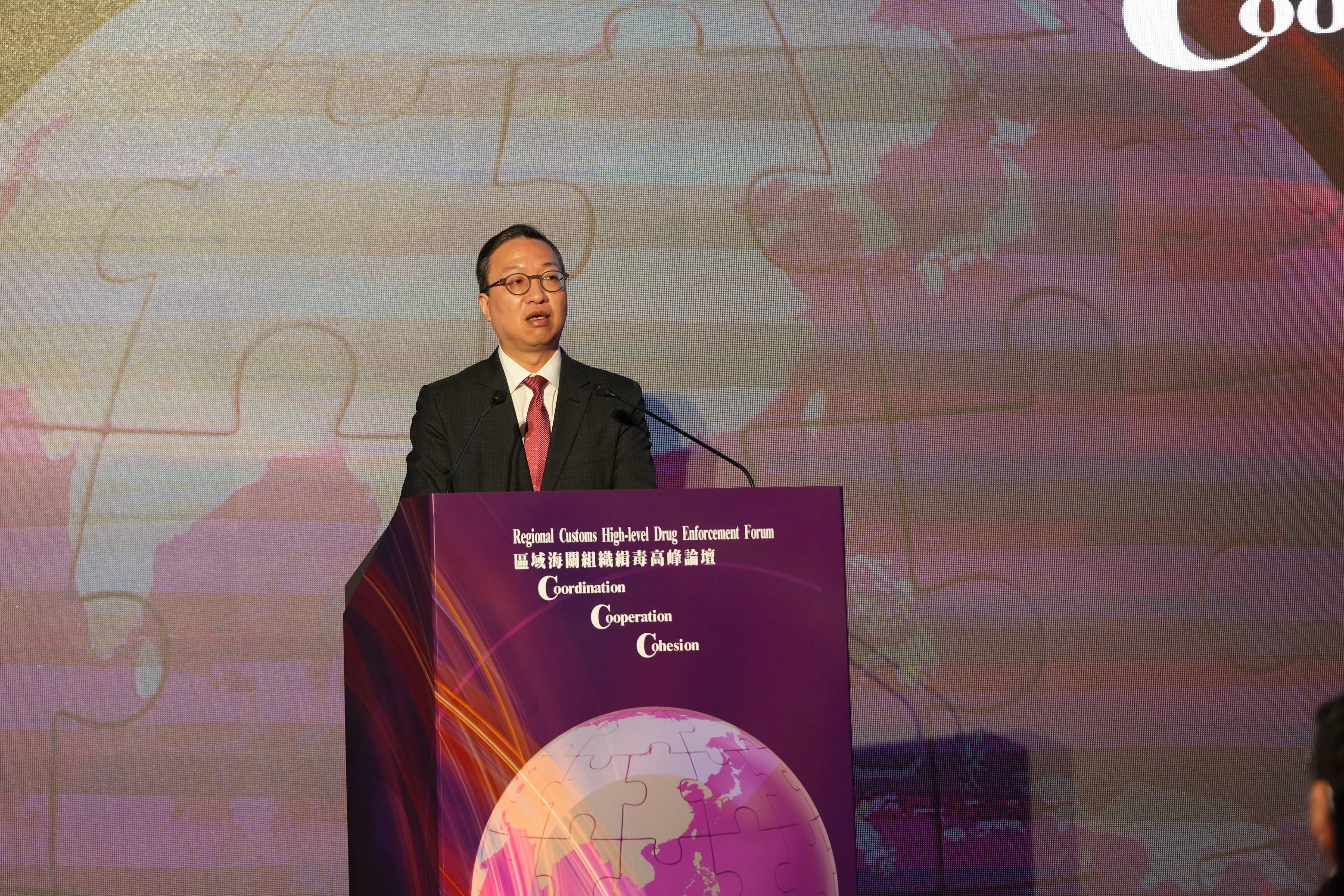
Speech by SJ at Regional Customs High-level Drug Enforcement Forum (English only)(with photo)

     Following is the speech by the Secretary for Justice, Mr Paul Lam, SC, at the Regional Customs High-level Drug Enforcement Forum today (February 16):

Mr Wang (Vice-minister of the General Administration of Customs, Mr Wang Lingjun), distinguished guests, ladies and gentlemen,

     Good morning. I am delighted to join you all at this Regional Customs High-level Drug Enforcement Forum today.

     This is the very first time for our Customs and Excise Department of the Hong Kong Special Administrative Region (HKSAR) to host such a high-level forum. This Forum indeed testifies that Hong Kong is back to the centre stage after three challenging years caused by the COVID-19 pandemic. It is also an opportune time for authorities in the region to gather and discuss, in person, the latest drug-related issues, promote multi-agency co-operation, and enhance international intelligence exchange. I wish to extend a very warm welcome to our friends from different parts of the world to be here with us to share the common goal of combating transnational drug activities.

     While travelling in the past few years has been substantially hampered by border closures and travel restrictions, the drug problem knows no boundaries. Its transnational nature certainly requires different jurisdictions to co-operate and co-ordinate closely on a wide range of issues.

Multipronged anti-drug strategy

     To effectively address drug issues, the HKSAR Government has all along been adopting a multipronged anti-drug strategy, and taking active steps on various fronts. Externally, we have established extensive networks with our counterparts, including many of you, as well as actively participating in international and regional drug forums, with a view to keeping abreast of the latest world drug scene. Locally, our Government spares no effort to tackle the problem through (1) preventive education and publicity, (2) treatment and rehabilitation services, (3) policy researches and (4) legislation and law enforcement.

Legislation and law enforcement

     As the Secretary for Justice of the HKSAR Government, let me focus on the last point – legislation and law enforcement, which is what my colleagues in the Department of Justice play a vital role.

     To keep Hong Kong’s anti-drug work in line with the latest international standards, the HKSAR Government updates our relevant local legislations from time to time to include new emerging substances under statutory control. The key considerations are, of course, to keep abreast of the global drug trends, as well as to achieve the overarching goal of protecting public health.

     A recent example is the new legislative control of clonazolam in Hong Kong, which came into effect in December 2022. Clonazolam is now under the same strict control as other dangerous drugs under the Dangerous Drugs Ordinance, Chapter 134 of the Hong Kong Law, meaning that trafficking (including importing and exporting) and illicit manufacturing of clonazolam is prohibited.

     As to law enforcement, the Department of Justice provides professional legal advice and conducts criminal prosecutions, with a view to assisting law enforcement agencies to handle cases expeditiously and effectively.

     I must highlight that it is never a prosecutor’s duty to obtain a conviction by all means. The role of the prosecutor is to act in an impartial manner, as a “minister of justice”, by fairly and objectively assisting the Court to ascertain the truth and to do justice between the community and the accused according to law and evidence. Convictions of drug offenders and the punishments imposed on them serve as an effective deterrence to potential drug offenders and the general public.

Mutual legal assistance

     We will not have a chance to win this formidable war against drugs on our own. The HKSAR is committed to co-operating with foreign jurisdictions in combating crimes, including drug-related offences. Under the Mutual Legal Assistance in Criminal Matters Ordinance, Chapter 525 of the Hong Kong Law, law enforcement authorities in the HKSAR are able to provide assistance to authorities abroad who are investigating or prosecuting criminal offences overseas.

     The HKSAR has signed bilateral mutual legal assistance agreements with a number of foreign jurisdictions, 21 of which are currently in force. Many of you are representing those jurisdictions, including Belgium, Denmark, Indonesia, India, Israel, Italy, Japan, Korea, Malaysia, the Philippines, Poland and Sweden.

     In addition to bilateral agreements, the multilateral treaty of the United Nations Convention Against Illicit Traffic in Narcotic Drugs and Psychotropic Substances 1988, which contains provision for mutual legal assistance between the parties to the Convention, also applies to the HKSAR.

     Our local legislations, together with those international conventions and bilateral agreements, collectively form a sound legal basis of the HKSAR for joint international efforts to bring drug offenders to justice and to confiscate the proceeds of their crimes.

Closing

     Ladies and gentlemen, you would certainly agree that young people are our future. As remarked by President Xi Jinping on July 1 last year in Hong Kong, “Hong Kong will prosper only when its young people thrive.” To create a better future for our next generation, we must tackle the drug problem and develop a drug-free community. To this end, we look forward to forging closer ties with every one of you, which should be a win-win strategy to all of us. That is why we cherish very much the opportunity today for exchanging views and sharing drug enforcement experiences.

     Lastly, I wish to thank the Customs and Excise Department for organising this dynamic and rewarding event. I wish you all a very fruitful and insightful Forum today, and a very pleasant stay in Hong Kong. Thank you very much.

Photo  
read more