Tag Archives: China

image_pdfimage_print

LCQ13: Persons holding Two-way Exit Permit with endorsement for visiting relatives

     â€‹Following is a question by the Hon Luk Chung-hung and a written reply by the Acting Secretary for Security, Mr Michael Cheuk, in the Legislative Council today (May 24):

Question:

     According to the requirements of the Mainland authorities, Mainland residents holding Exit-entry Permits for Travelling to and from Hong Kong and Macao (commonly known as “Two-way Exit Permits”) may, if they have relatives who are settled, residing on a long-term basis, studying or working in Hong Kong, apply for an endorsement for visiting relatives and be permitted to stay in Hong Kong for not more than 90 days upon each entry. In addition, it is learnt that some Mainland relatives of Hong Kong residents, while waiting for the issuance of the Permits for Proceeding to Hong Kong and Macao (commonly known as “One-way Permits” (“OWPs”)) by the Mainland authorities, apply for Two-way Exit Permits with an endorsement for visiting relatives in order to have an early family reunion and take care of their relatives in Hong Kong, and then return to the Mainland to re-apply for the endorsement upon expiry of the existing one. As such, they keep travelling back and forth between the two places. There are views that while foreign nationals may, in their capacity as dependents, apply to take up employment in Hong Kong without being subject to restrictions, Two-‍way Exit Permit holders who are Chinese nationals waiting for the issuance of their OWPs are not entitled to the same treatment, indicating that there is unfairness in the system, and the potential labour force in Hong Kong society is being wasted. In this connection, will the Government inform this Council:

(1) of the number of Mainland residents holding Two-way Exit Permits with an endorsement for visiting relatives who stayed in Hong Kong in the past five years and, among them, the number of those who have applied to the Mainland authorities for OWPs;

(2) of the total number of applications for an extension of stay received by the Immigration Department (ImmD) from Mainland residents holding Two-way Exit Permits with an endorsement for visiting relatives during the outbreak of the Coronavirus Disease 2019 epidemic and, among them, the number of applications approved;

(3) whether ImmD has compiled statistics on the demographic and social characteristics, such as gender, age, place of origin and educational attainment, of Mainland residents who had applied for OWPs and were holding Two-way Exit Permits with an endorsement for visiting relatives in the past five years, as well as the length of time they waited for the issuance of OWPs; and

(4) whether the Government will explore with the Mainland authorities to allow Mainland residents who have applied for OWPs and are holding Two-way Exit Permits with an endorsement for visiting relatives to work in Hong Kong, so as to supplement Hong Kong’s labour force and enable them to adapt to the life in Hong Kong beforehand?

Reply:

President,

     The immigration policy on entry of dependants to Hong Kong and the Permit for Proceeding to Hong Kong and Macao (commonly known as “One way Permit” (OWP)) scheme have different eligibility criteria and serve different policy objectives. The immigration policy on entry of dependants to Hong Kong is not a family reunion policy. Instead, it allows those who are able to provide care and financial support to their dependants to sponsor their non-local dependants to come to reside in Hong Kong. The policy also ensures that Hong Kong will continue to attract and retain people with the right talent and skills to come to and remain in Hong Kong by giving them the choice of bringing in their non-local dependants to live with them in Hong Kong. 

     The policy objective of the OWP scheme is to allow Mainland residents to come to Hong Kong for family reunion in an orderly manner. Mainland residents who meet the eligibility criteria laid down by the Mainland authorities may apply to come to settle in Hong Kong. Separately, Mainland residents who wish to enter Hong Kong as a visitor for other purposes such as visiting relatives, taking up employment, etc, are required to obtain an Exit-entry Permit for Travelling to and from Hong Kong and Macao (commonly known as “Two-way Permit” (TWP)) and the relevant exit endorsement from the Mainland authorities. 

     The application, approval and issuance of OWPs, TWPs and exit endorsements fall within the remit of the Mainland authorities.

     The reply to the question raised by the Hon Luk Chung-hung is as follows:

(1) The number of visits to Hong Kong by TWP holders with exit endorsements for visiting relatives in Hong Kong in the past five years is tabulated as follows:
 

2019 2020 2021 2022 2023
(January to April)
3 313 927 285 844 47 776 50 846 595 438

     Since TWP holders are not required to declare to the Immigration Department (ImmD) whether they have applied for OWP, the ImmD does not have the relevant information.

(2) In view of the special difficulties encountered by some visitors departing or arriving in Hong Kong due to the impact of the COVID-19 epidemic, the ImmD has exercised discretion to allow some Mainland visitors (including TWP holders with exit endorsements for visiting relatives in Hong Kong) to extend their stay in Hong Kong, having regard to the actual circumstances of individual cases, so as to reduce the need for compulsory quarantine as a result of travelling between the two places.

     The number of applications for extension of stay from TWP holders with exit endorsements for visiting relatives in Hong Kong in the past five years is tabulated as follows:
 
  2019 2020 2021 2022 2023
(January to April)
Number of applications 905 132 591 142 071 132 666 14 322
Number of approved applications 842 125 826 132 812 122 520 14 253
Note: The cases approved in a year may not be the applications submitted in the same year.

(3) Since TWP holders are not required to declare to the ImmD whether they have applied for OWP, the ImmD does not have the requested information.    

     Separately, a data collection mechanism has been set up by the ImmD to collect data on the demographic and social characteristics of OWP holders when they first entered Hong Kong. After analysing and collating the results of the data collected in the survey, the results are issued periodically in the form of quarterly reports and uploaded to the website of the Home Affairs Department (HAD).

     In 2022, there were 21 214 OWP holders arrived Hong Kong and their demographic and social characteristics are tabulated as follows:
 
Demographic and social characteristics 2022
Sex
  Male 8 923
  Female 12 291
Age
  0-4 1 201
  5-14 3 184
  15-24 3 060
  25-34 4 626
  35-44 4 441
  45-54 2 966
  55-64 1 299
  65+ 437
Educational attainment (aged 15 and over)
  No schooling/kindergarten 273
  Primary 1 509
  Secondary 10 821
  University/post-secondary 4 226
Province of origin
  Guangdong Province 15 573
  Fujian Province 2 252
  Others 3 389

     For details, please refer to the relevant reports on the website of the HAD at www.had.gov.hk/en/public_services/services_for_new_arrivals_from_the_mainland/surveys.htm

(4) Persons who are allowed to enter Hong Kong as visitors (including Mainland visitors holding TWP and exist endorsement for visiting relatives in Hong Kong) are not allowed to accept paid or unpaid employment in Hong Kong, nor to establish or participate in any business under the prevailing arrangement.

     Unless a person has the right of abode or right to land in the Hong Kong Special Administrative Region, he/she is required to apply for a visa/entry permit to work, establish or join in any business. In processing each application, the ImmD will examine whether the applicant meets the specific eligibility criteria under the admission scheme concerned and the normal immigration requirements, and consider each application on its own merits, so as to ensure that only applicants who meet the relevant immigration policies will be admitted into Hong Kong for employment.

     At present, Mainland residents may come to work in Hong Kong through various schemes, including the Admission Scheme for Mainland Talents and Professionals and the Supplementary Labour Scheme. read more

SEE attends Third Belt and Road Energy Partnership Forum (with photos)

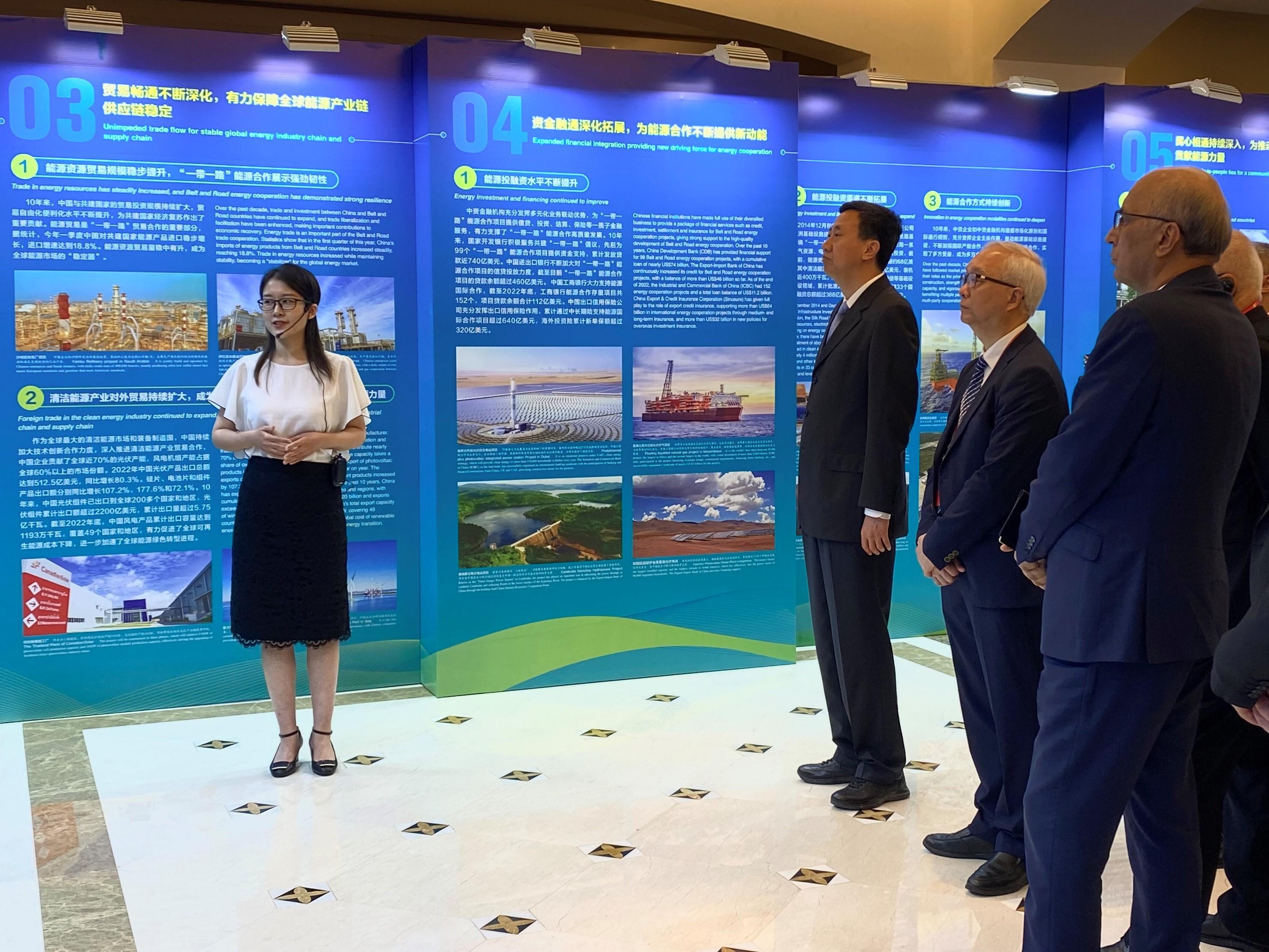
 ã€€ã€€ The Secretary for Environment and Ecology, Mr Tse Chin-wan, today (May 24) attended the Third Belt and Road Energy Partnership Forum in Xiamen to discuss various co-operation issues that include safeguarding energy security and the promotion of green energy transformation.
 
        The Forum was organised by the National Energy Administration. The theme for this year is “Stepping Towards High-quality Energy Development”. In delivering his speech, Mr Tse highlighted the decarbonisation strategies set out by the Hong Kong Special Administrative Region (HKSAR) Government to achieve carbon neutrality before 2050 with a view to aligning with the national “dual carbon” targets.
 
        “The Government announced in 2021 the Hong Kong’s Climate Action Plan 2050, setting out the ‘net-zero electricity generation’ decarbonisation strategy. Electricity generation is the largest source of carbon emissions in Hong Kong. Through strengthening regional energy co-operation, we strive to increase the use of zero-carbon energy in electricity generation by raising its share in the fuel mix to around 60 per cent to 70 per cent before 2035,” Mr Tse said.
 
         Mr Tse also pointed out that the two power companies in Hong Kong have been contributing to the development of the electricity industry in the nation and Belt and Road countries. They have been endeavouring to develop clean energy and promote low-carbon transformation, which also provides opportunities for the exchange of technology and experience for energy management talent.
 
         Mr Tse continued that, with the staunch support of the country and under the “one country, two systems” principle, Hong Kong has the advantages of enjoying strong support of the motherland and being closely connected to the world. The HKSAR Government will take the initiative to dovetail with national strategies such as high-quality Belt and Road development, and contribute to the sustainable development of the nation with its strengths.
 
         Mr Tse also visited the Exhibition on the 10th Anniversary of Belt and Road Energy Cooperation at the Forum. The Exhibition showcased the achievements of Belt and Road energy co-operation projects over the past decade. The projects have injected new impetus for world economic prosperity and social development, provided new solutions for the reform of the global energy governance system and made new contributions to the happiness of people in the Belt and Road countries.
 
        Mr Tse will return to Hong Kong tomorrow morning (May 25).

Photo  Photo  
read more

Results of Language Proficiency Assessment for Teachers released

     The Education Bureau (EDB) today (May 24) announced that candidates of the Language Proficiency Assessment for Teachers (LPAT) 2023 will receive results notices by post from the Hong Kong Examinations and Assessment Authority (HKEAA) from tomorrow (May 25). 
 
     A total of 1 475 candidates sat for the English Language papers while 1 810 sat for the Putonghua papers this year. The results of the assessment are as follows:
 
English Language papers:
 

  Number of Candidates Number and Percentage of Candidates Meeting LPR*
(Level 3 or above)
Reading 1 041 857 (82.3%)
Writing 1 068 491 (46.0%)
Listening 944 742 (78.6%)
Speaking 948 630 (66.5%)
Classroom Language Assessment (For teachers only) 454 426 (93.8%)
 
Putonghua papers:
 
  Number of Candidates Number and Percentage of Candidates Meeting LPR*
(Level 3 or above)
Listening and Recognition 1 257 560 (44.5%)
Pinyin 1 229 704 (57.3%)
Speaking 570 459 (80.5%)
Classroom Language Assessment (For teachers only) 489 441 (90.2%)
 
* LPR = Language Proficiency Requirement
 
     A spokesman for the EDB said, “The EDB administers the LPAT every year to provide a channel for teachers and people aspiring to be English or Putonghua teachers to attain the LPR. Candidates of the LPAT include members of the public and teachers teaching subjects other than the two languages.”
 
     Candidates who have not received the results notices by next Monday (May 29) may contact the HKEAA on 3628 8860.
 
     Applications for rechecking of results will be accepted on or before May 31. Candidates will be informed individually of their appeal results by June 29.
 
     The Assessment Reports, which provide observations on candidates’ performance, including their strengths and areas for improvement, will be released in July through the websites of the HKEAA (www.hkeaa.edu.hk) and the EDB (www.edb.gov.hk) for the reference of candidates, schools and teacher education institutions. The question papers, together with a CD for the listening papers, suggested answers and Assessment Reports, will be available for sale in July.
 
     Those who intend to attain the LPR in future can do so through assessment and/or exemption. The next call for online applications to sit for the LPAT will be announced later on the HKEAA website, while applications for exemption from the LPR are accepted all year round and processed in two batches. The EDB will announce the details in a circular memorandum.
  read more

Pay Trend Survey Committee holds meeting

The following is issued on behalf of the Pay Trend Survey Committee:
 
     The Pay Trend Survey Committee (PTSC) met today (May 24) to consider the findings of the 2023 Pay Trend Survey (PTS).
              
     The survey findings indicate that the following average pay adjustments have been awarded by the surveyed companies over the 12-month period from April 2, 2022, to April 1, 2023:
 

  Basic Pay Indicator + Additional Pay Indicator = Gross Pay Trend Indicator
Lower Salary Band
(below $24,670 per month)
4.61% + 1.05% = 5.66%
Middle Salary Band
($24,670 – $75,620 per month)
5.45% + 0.23% = 5.68%
Upper Salary Band
($75,621 – $154,690 per month)
4.52% + -0.61% = 3.91%
 
     The 2023 PTS was conducted by the Pay Survey and Research Unit of the Joint Secretariat for the Advisory Bodies on Civil Service and Judicial Salaries and Conditions of Service based on an improved methodology as approved by the Chief Executive-in-Council in March 2007.
 
     The survey findings reflect the pay trend in 108 surveyed companies covering 136 971 employees over the 12-month period from April 2, 2022, to April 1, 2023. The survey takes into account adjustments to basic salary and additional payments awarded to employees of the surveyed companies attributable to factors in relation to the cost of living, general prosperity and company performance, general changes in market rates, merit and inscale increment, in accordance with the improved survey methodology.

     A breakdown of the 108 companies by size is as follows:
 
  No. of Companies
Larger companies
(employing 100 or more staff)
81 (75%)
Smaller companies 
(employing 50 – 99 staff)
27 (25%)
Total:  108 (100%)
 
     The distribution of the 136 971 employees by the three salary bands is as follows:
 
  No. of Employees
Lower Salary Band
(below $24,670 per month)
60 112 (43.9%)
Middle Salary Band
($24,670 – $75,620 per month)
64 877 (47.4%)
Upper Salary Band
($75,621 – $154,690 per month)
11 982 (8.7%)
Total:  136 971 (100%)

     The PTSC met today to verify and consider the 2023 PTS Report. The two representatives of the Standing Commission on Civil Service Salaries and Conditions of Service, the representative of the Standing Committee on Disciplined Services Salaries and Conditions of Service, the Secretary General of the Joint Secretariat for the Advisory Bodies on Civil Service and Judicial Salaries and Conditions of Service, the two representatives of the Civil Service Bureau, the two Staff Side Representatives of the Senior Civil Service Council, the three Staff Side Representatives of the Model Scale 1 Staff Consultative Council, the two Staff Side Representatives of the Police Force Council and the two Staff Side Representatives of the Disciplined Services Consultative Council validated the survey findings.
 
     The meeting was chaired by the Chairperson of the PTSC, Mr Laurence Li, SC, who is a member of the Standing Commission on Civil Service Salaries and Conditions of Service.

     Mr Li said, “The 2023 PTS was conducted in accordance with the agreed methodology and in a professional and objective manner. The PTSC will submit the Pay Trend Survey Committee Report to the Government for consideration. 
 
     “The relevant pay trend indicators are yielded from the pay trends in the private sector companies as revealed by the survey. Civil service pay adjustment is, however, a separate matter. I understand that in accordance with the established practice, the Chief Executive-in-Council will take into account the pay trend indicators derived from the PTS and other pertinent considerations before making a decision on the 2023-24 civil service pay adjustment,” he added.
 
     Mr Li expressed the PTSC’s sincere appreciation for the co-operation and assistance rendered by the companies to the Pay Survey and Research Unit. read more