Tag Archives: China

image_pdfimage_print

CFS urges public not to consume a kind of apple carbonated soft drink with possible presence of precipitate, mould and yeast

     The Centre for Food Safety (CFS) of the Food and Environmental Hygiene Department today (May 30) urged the public not to consume a kind of apple carbonated soft drink imported from Taiwan as the product might contain precipitate, mould and yeast. The trade should stop using or selling the product concerned immediately if they possess it.

     Product details are as follows:

Product name: Apple sidra
Brand: Apple sidra
Place of origin: Taiwan
Importers: (i) Huang Ju Food (International) Co., Limited (hotline: 3425 4799); and (ii) International Leadway Limited (hotline: 2350 6863)
Volume: (i) 330ml and 600ml; and (ii) 600ml and 1 250ml

     A spokesman for the CFS said, “The CFS through its Food Incident Surveillance System noted a notification from the Taiwan Food and Drug Administration that the above-mentioned product was being recalled in Taiwan due to the presence of precipitates, mould and yeast. Upon learning of the incident, the CFS immediately contacted local importers for follow-up. Preliminary investigation revealed that the above-mentioned importers had imported into Hong Kong the product concerned.”

     For the sake of prudence, the CFS has instructed the above-mentioned importers to stop sales and remove from shelves the affected products, and to initiate a recall. Enquiries about the recall can be made to the importers’ hotlines during office hours.

     The spokesman advised members of the public to stop consuming the affected product and seek medical treatment if they feel unwell after consuming the product concerned.

     The CFS will continue to closely monitor the situation and take appropriate follow-up actions. read more

Government lowers response level in relation to COVID-19 epidemic to Alert level

     The Government announced today (May 30) the lowering of the response level under the Preparedness and Response Plan for Novel Infectious Disease of Public Health Significance from the Emergency to Alert level with immediate effect, having taken into account the World Health Organization (WHO)’s latest advice on the COVID-19 epidemic situation (i.e. the COVID-19 epidemic situation no longer constitutes a public health emergency of international concern), as well as having assessed the latest local situation, risks and mutation of COVID-19 strains.
 
     A Government spokesman said, “The lowering of the response level from the Emergency to Alert level marks a major milestone in Hong Kong people’s fight against the epidemic over the past three years. Thanks to the support from and high compliance with various anti-epidemic measures by citizens and all sectors of the community all along, Hong Kong has achieved outcomes in combating the epidemic at the current stage. We are also grateful to our country for the unwavering support to Hong Kong, in particular during the most severe period of the fifth wave of the epidemic. The Central People’s Government and the Guangdong Provincial Government co-ordinated supplies at the request of the Hong Kong Special Administrative Region Government, as well as arranged medical support teams and expert delegations to come to Hong Kong, providing assistance to the city at critical times. We would like to take this opportunity to express our gratitude to members of the public and all sectors in the community again for their hard work in combating the epidemic, as well as to our country’s continued support to Hong Kong for its anti-epidemic work.”
 
     In the light of the lowering of the response level, the command structure of the Government has been adjusted. From now on, under the Alert level, the cross-bureaux/interdepartmental response work of the Government will be co-ordinated and steered by the Health Bureau (HHB) in lieu of the Anti-epidemic Steering Committee chaired by the Chief Executive (CE) when the Emergency level was activated. Relevant bureaux/departments are tasked to continue to take charge of subsequent follow-up work. The structure of the Command and Coordination Group (CCG) and the COVID-19 Expert Advisory Panel are also disbanded at the same time.
 
     The spokesman said, “The Government is earnestly thankful to the experts for their valuable advice based on scientific and data evidence. They have been helping Hong Kong advance its anti-epidemic work.”
 
     Moreover, the Government will adjust the remaining measures and arrangements in relation to the epidemic accordingly.  Among others, the Hospital Authority Central Command Committee, Emergency Executive Committee, and Emergency Operation Command will cease operation. The epidemic situation will be monitored by clusters instead. The Emergency Response Centre under the Centre for Health Protection (CHP) of the Department of Health will cease operation as well. The CHP will no longer announce the newly recorded positive nucleic acid test laboratory detections and newly recorded death cases related to COVID-19 on the COVID-19 thematic website daily. However, relevant surveillance data will be announced as usual in the weekly publication COVID-19 & Flu Express.
 
     In response to the spread of COVID-19, the Government launched the Preparedness and Response Plan for Novel Infectious Disease of Public Health Significance on January 4, 2020, and activated the Serious Response Level on the same date. In view of the ensuing epidemic development, the Government subsequently raised the response level to Emergency on January 25 of the same year, and that has lasted for more than three years. Having regard to the epidemic development, the Government has been summing up experiences in stages to optimise the epidemic responses on all fronts from time to time. While the virus has been evolving, the prevention and treatment capacities of the local healthcare system and the handling capacity of the society as a whole have been enhanced significantly with the concerted efforts of the whole community. The risk posed by COVID-19 to local public health has thus been significantly reduced to date.
 
     Upon the cancellation of the arrangement of issuing isolation orders from January 30 this year, the Government has gradually established a system of the “new normal”. With the lifting of the mandatory mask-wearing requirements from March 1, all social distancing measures applicable to the general public were lifted and the society has fully resumed normalcy. Under the prevailing system of the “new normal”, COVID-19 is managed as an upper respiratory tract illness while anti-epidemic measures are now focusing on the protection of the high-risk groups. In this connection, having considered the WHO’s latest advice and the assessment by the HHB, the CCG chaired by the CE has made the aforesaid decision to lower the response level.
 
     The spokesman emphasised, “The WHO has pointed out that the pandemic is still ongoing. Meanwhile, the activity level of COVID-19 in Hong Kong still remains high. The Government will therefore continue to closely monitor the latest situation and risks of COVID-19 and other infectious diseases with an emphasis on protecting high-risk groups and keep a close watch of the WHO’s latest assessments, making every effort to safeguard public health. We again strongly call on the citizens who have not completed the first three doses of vaccine, as well as persons in the high-risk groups who have yet to receive a booster dose per experts’ recommendation, to get vaccinated as early as possible for protection of themselves and their family.” read more

Transcript of remarks by STL on bus fares at media session

     Following is the transcript of remarks by the Secretary for Transport and Logistics, Mr Lam Sai-hung, on the fare increase applications from franchised bus operators, at a media session today (May 30):
 
Reporter: How would you assess the price raise effect on people’s livelihood?
 
Secretary for Transport and Logistics: Nearly 90 per cent of passengers would pay less than $0.5 extra per trip, and nearly all passengers would pay no more than $1 extra per trip. So I think it would be affordable for the general public. When we talk about the fare increase, it is important that, on the one hand, it should be affordable for the passengers, but on the other hand we have to maintain the financial sustainability of the bus companies. That is why we came to these levels of fare increase. Most of the bus companies will increase their fares by between 4 to 5 per cent.
 
(Please also refer to the Chinese version of the transcript.) read more

Central Bank of United Arab Emirates and Hong Kong Monetary Authority strengthen financial co-operation (with photos)

The following is issued on behalf of the Hong Kong Monetary Authority: 

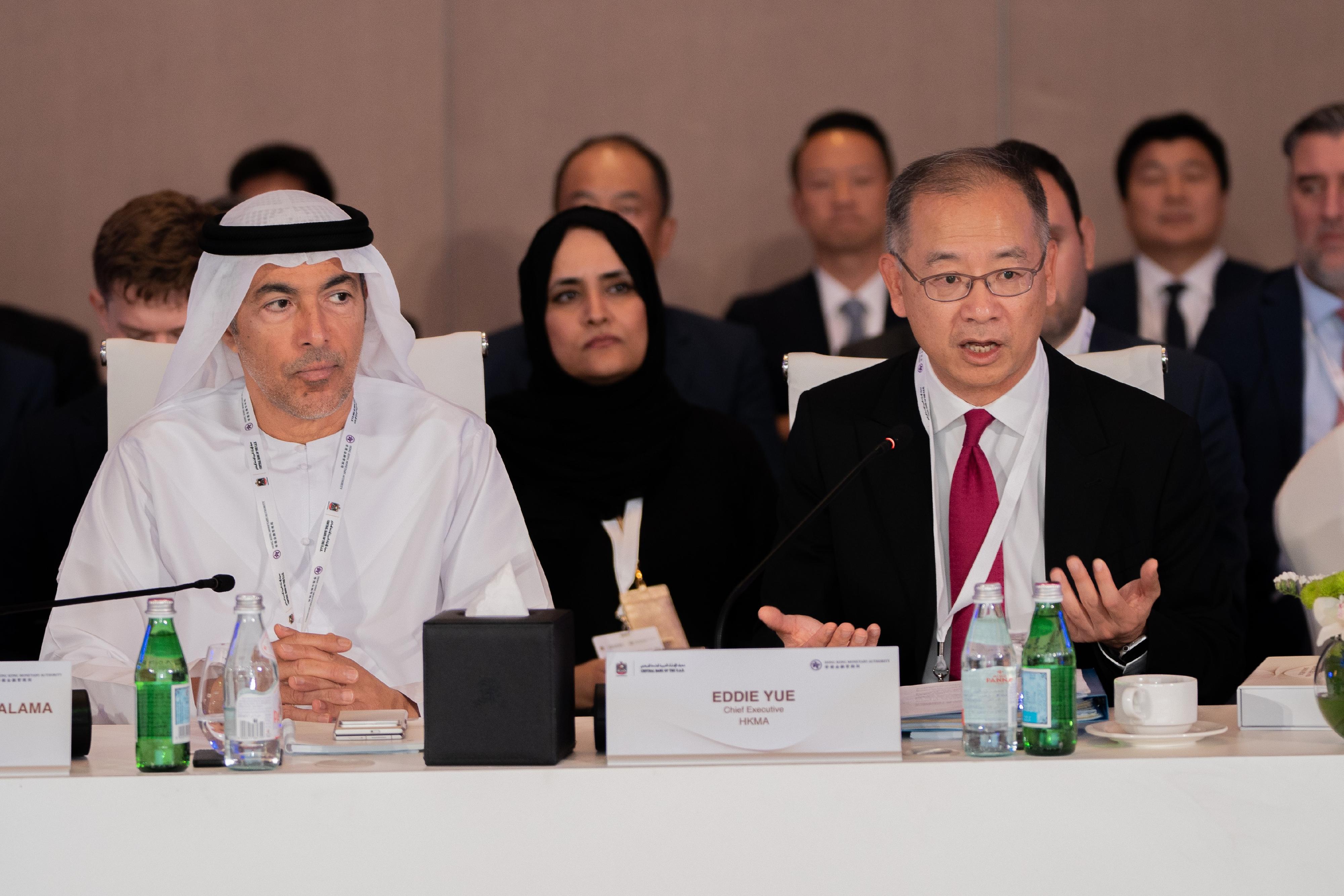
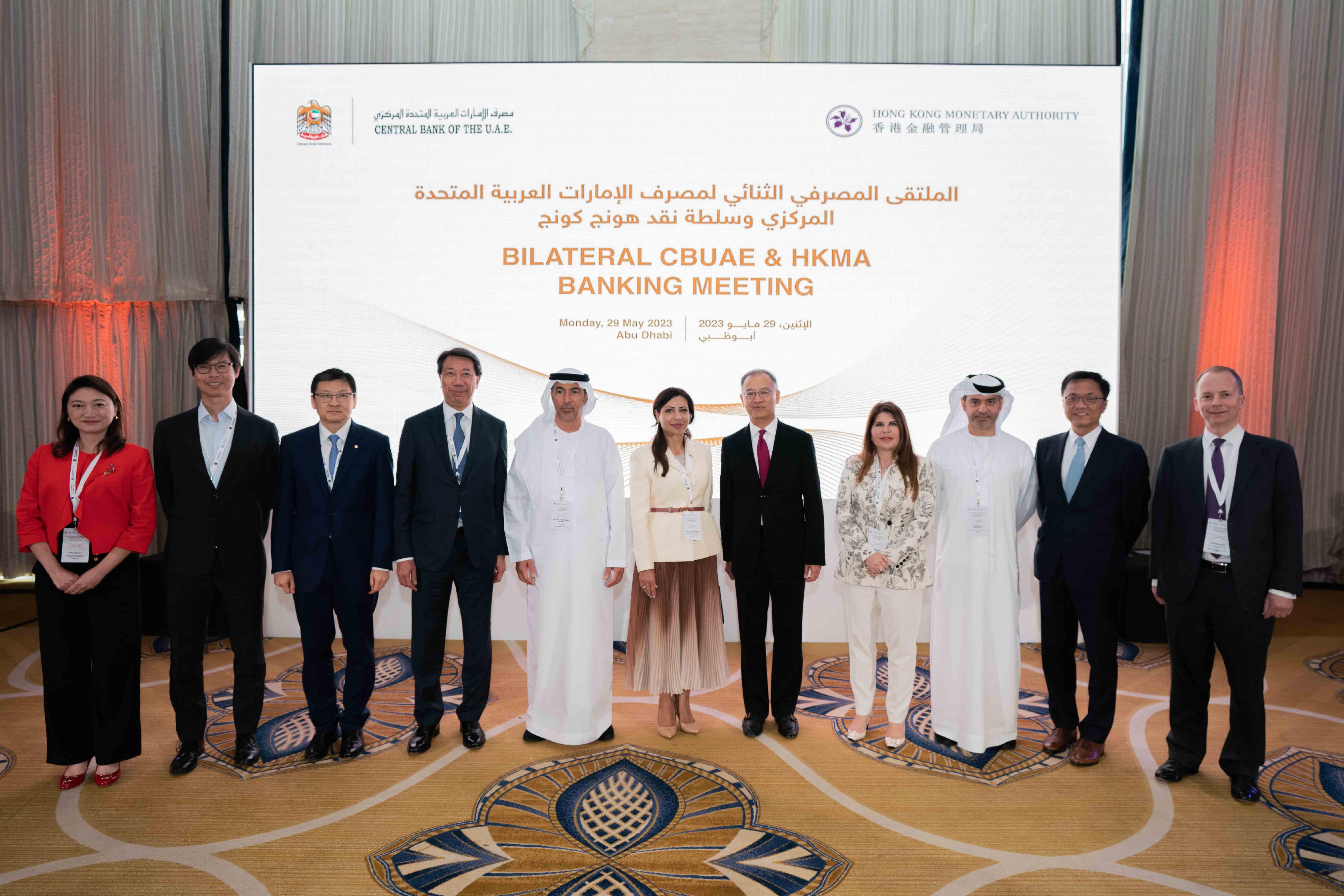
     The Central Bank of the United Arab Emirates (CBUAE) and the Hong Kong Monetary Authority (HKMA) held a bilateral meeting in Abu Dhabi on May 29 (Abu Dhabi time) to enhance collaboration between the financial services sectors of the two jurisdictions. 

     During the meeting, the CBUAE and the HKMA discussed a number of collaborative initiatives and agreed to strengthen co-operation in three major areas including financial infrastructure, financial market connectivity between the two jurisdictions and virtual asset regulations and developments. In addition, the two central banks facilitated discussions between their respective innovation hubs on joint fintech development initiatives and knowledge sharing efforts.

     A joint working group led by the CBUAE and the HKMA, with support from the relevant stakeholders of the two jurisdictions’ banking sectors, will be formed to take forward the agreed initiatives.

     Following the bilateral meeting, the two central banks, joined by senior executives from the United Arab Emirates (UAE) and Hong Kong banks, conducted a seminar on key opportunities to pursue between Hong Kong and the UAE. The seminar covered discussions on possible arrangements to facilitate better cross-border trade settlement, how UAE corporates can better utilise the Hong Kong financial infrastructure platforms to access Asia and the Mainland markets, as well as financial and investment solutions and capital markets opportunities in the Guangdong-Hong Kong-Macao Greater Bay Area.

     Banks operating in the UAE that participated in the seminar included First Abu Dhabi Bank, Abu Dhabi Islamic Bank, Emirates NBD, Industrial and Commercial Bank of China, Bank of China, HSBC and Standard Chartered, whilst participation from banks operating in Hong Kong included Bank of China, Citi, HSBC and Standard Chartered.

     The Governor of the CBUAE, H.E. Khaled Mohamed Balama, said: “We are pleased to have welcomed the Hong Kong Monetary Authority and its delegation to the UAE as we look to build on our central banks’ existing and robust relations. During the day’s discussions, we explored deepening collaboration across several important areas including financial market infrastructure development and mutual opportunities for growth in digitisation and technological advancement.”

     H.E. Khaled Mohamed Balama added, “We look forward to a longstanding engagement with the HKMA and the Hong Kong financial services sector more broadly, and we will continue collaborating with and exchanging knowledge in these mutual areas of interest.” 

     The Chief Executive of the HKMA, Mr Eddie Yue, said, “These events enhanced the collaboration between the central banks of Hong Kong and the UAE in a number of important areas, and provided a platform for financial institutions and corporates from Hong Kong and the UAE to step up exchange and collaboration. Hong Kong and the UAE are two financial centres sharing many complementary strengths and mutual interests, and there is much room for market participants from these two places to work together and build up the connectivity.”

     Mr Yue added, “We look forward to continued collaboration with the CBUAE and to more exchange between the Hong Kong and the UAE financial sectors, and would welcome the UAE stakeholders’ visit to Hong Kong in the near future.”

Photo  Photo  
read more